Uploaded Tactic
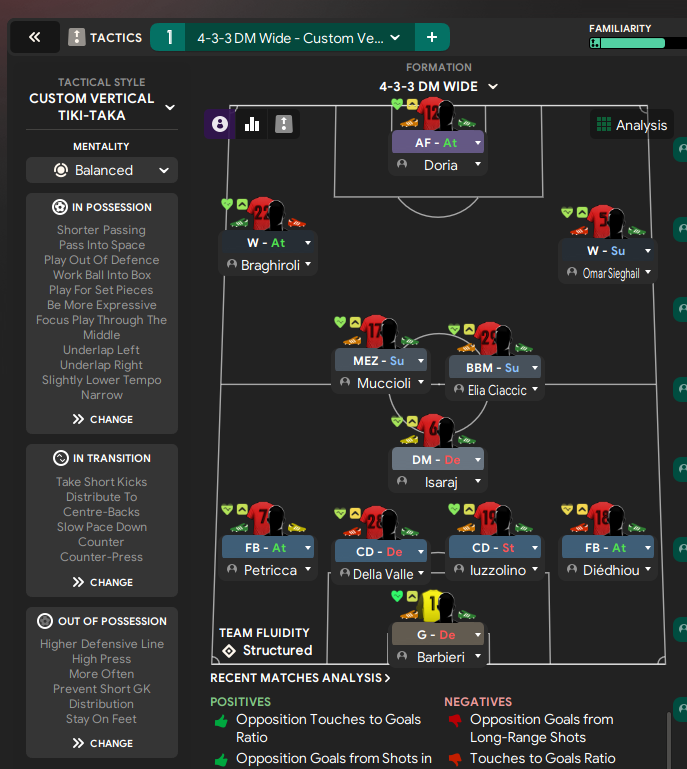
Formation & Style
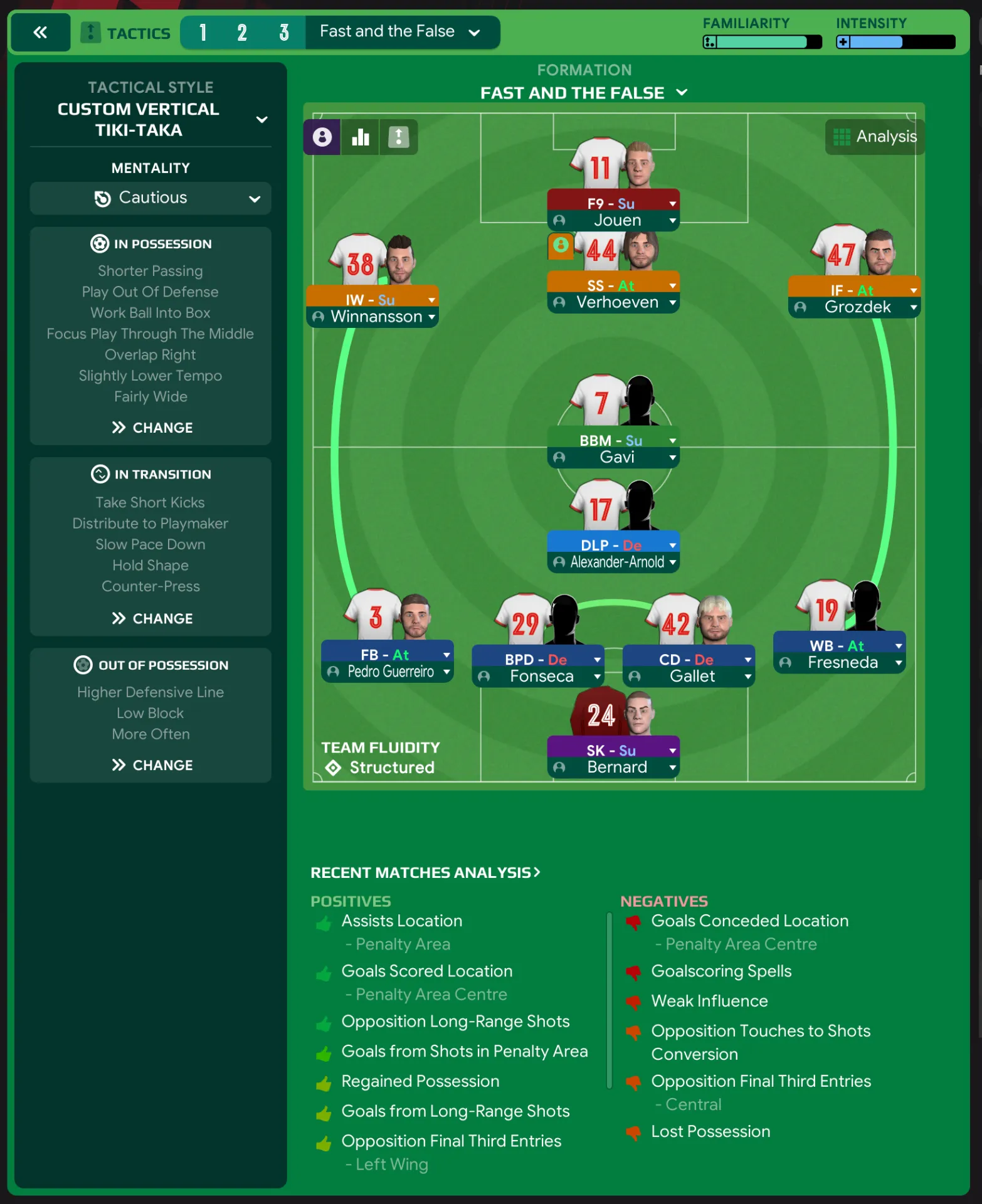
Tactical Style:Custom Vertical Tiki-Taka
Mentality:Balanced
Formation:4-3-3 DM Wide
Team Fluidity:Structured
In Possession
Shorter Passing
Pass Into Space
Play Out Of Defence
Work Ball Into Box
Be More Expressive
Focus Play Through The Middle
Underlap Left
Underlap Right
Slightly Lower Tempo
Narrow
In Transition
Take Short Kicks
Distribute To Centre-Backs
Slow Pace Down
Counter
Counter-Press
Out of Possession
Higher Defensive Line
High Press
More Often Prevent Short GK Distribution
Stay On Feet
Team Shape Without Ball
Shape:4-1-4-1
Description:Defensive solidity with a clear line of defense and a lone screening midfielder.
Evidence:DM at [3,3] and two CD at [2,2] and [2,3] provide structure.
Team Shape With Ball
Shape:4-3-3
Description:Dynamic attacking shape with width provided by wingers and a central forward playing off their movement.
Evidence:AF at [6,3], W at [5,1] and [5,2] creates a fluid front three.
Phase Description
Attacking Play
Focuses on possession through short passes and building play from the back, with wingers stretching the defense and creating space.
Defensive Transition
Attempts to regain possession quickly and drop into defensive shape after losing the ball.
Main Focus
Creating scoring opportunities through intricate passing and maintaining possession.
Key Strengths
Fluid Attacking Movement
The combination of wingers and a forward allows for fluid movement and interchange.
Midfield Control
Having a strong midfield presence allows for better ball control and transition.
Solid Defensive Setup
A compact defense ensures better coverage and resilience against attacks.
Conflicting Directions
Underlap Instruction Conflicts
While the team has underlap instructions, it may conflict with the high width from wingers.
High Defensive Line Risks
A higher defensive line may leave more space behind for quick counter-attacks.
Narrow Play Potential
Narrow attacking play could lead to congested midfield space, limiting attacking options.
Tactical Suggestions
Adjust Width in Attacking Phase
Consider widening play during attacks to enable spaces for central players.
Tweak Defensive Line
Evaluate whether the current high line is suitable based on opponent's pace.
Utilize More Counter Attacks
Enhance the use of counter-attacking play when possession is lost.
Ask Questions About Your Lineup
Related Tactics
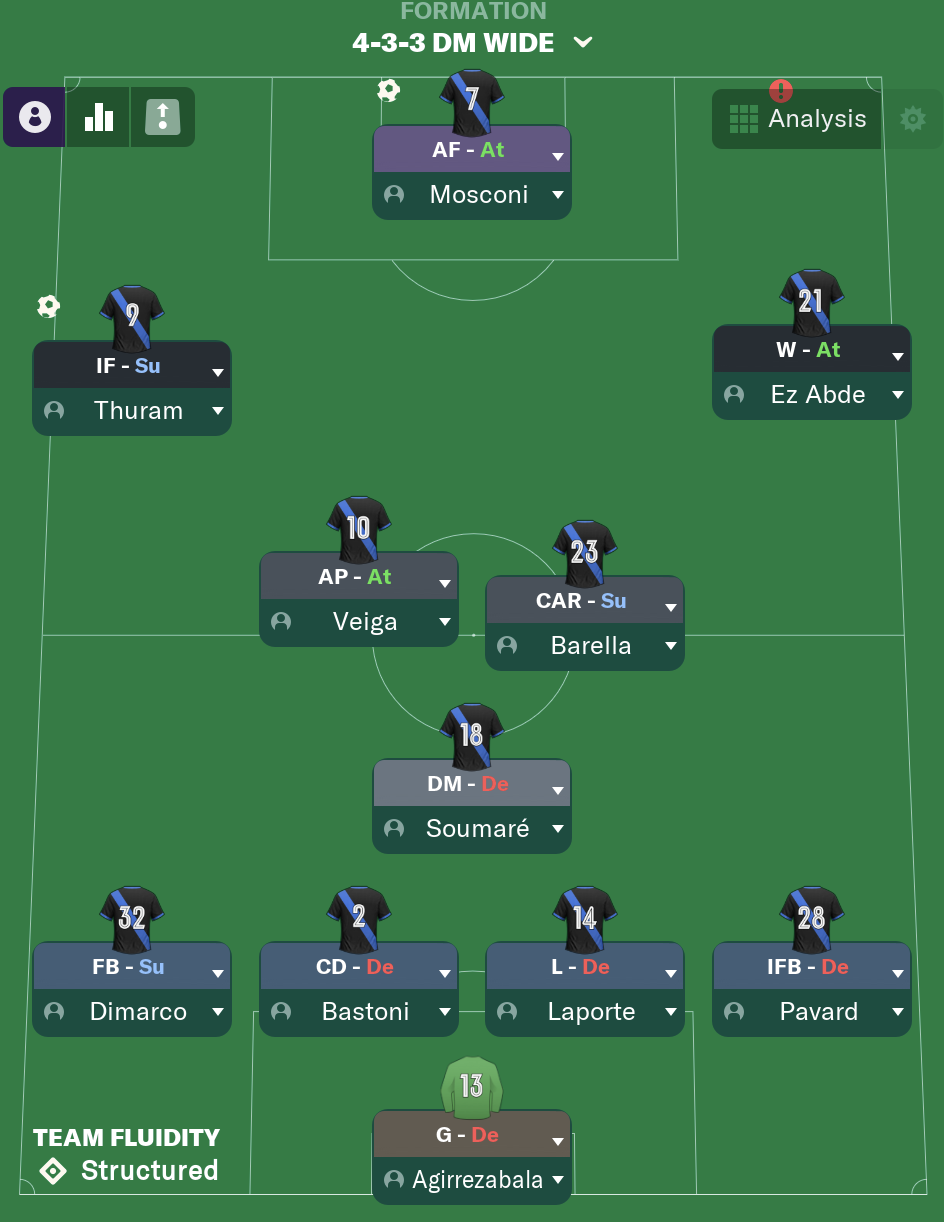
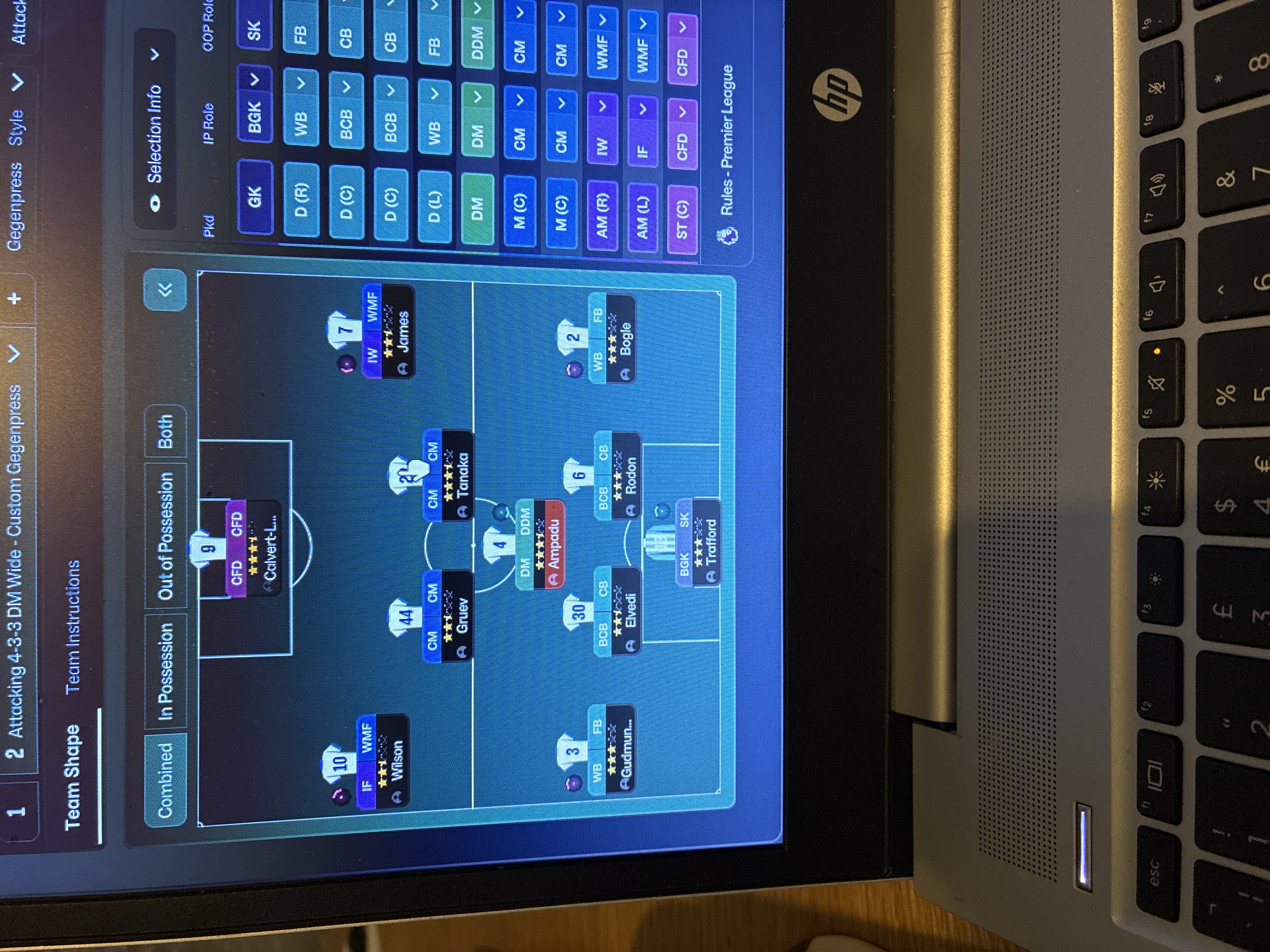
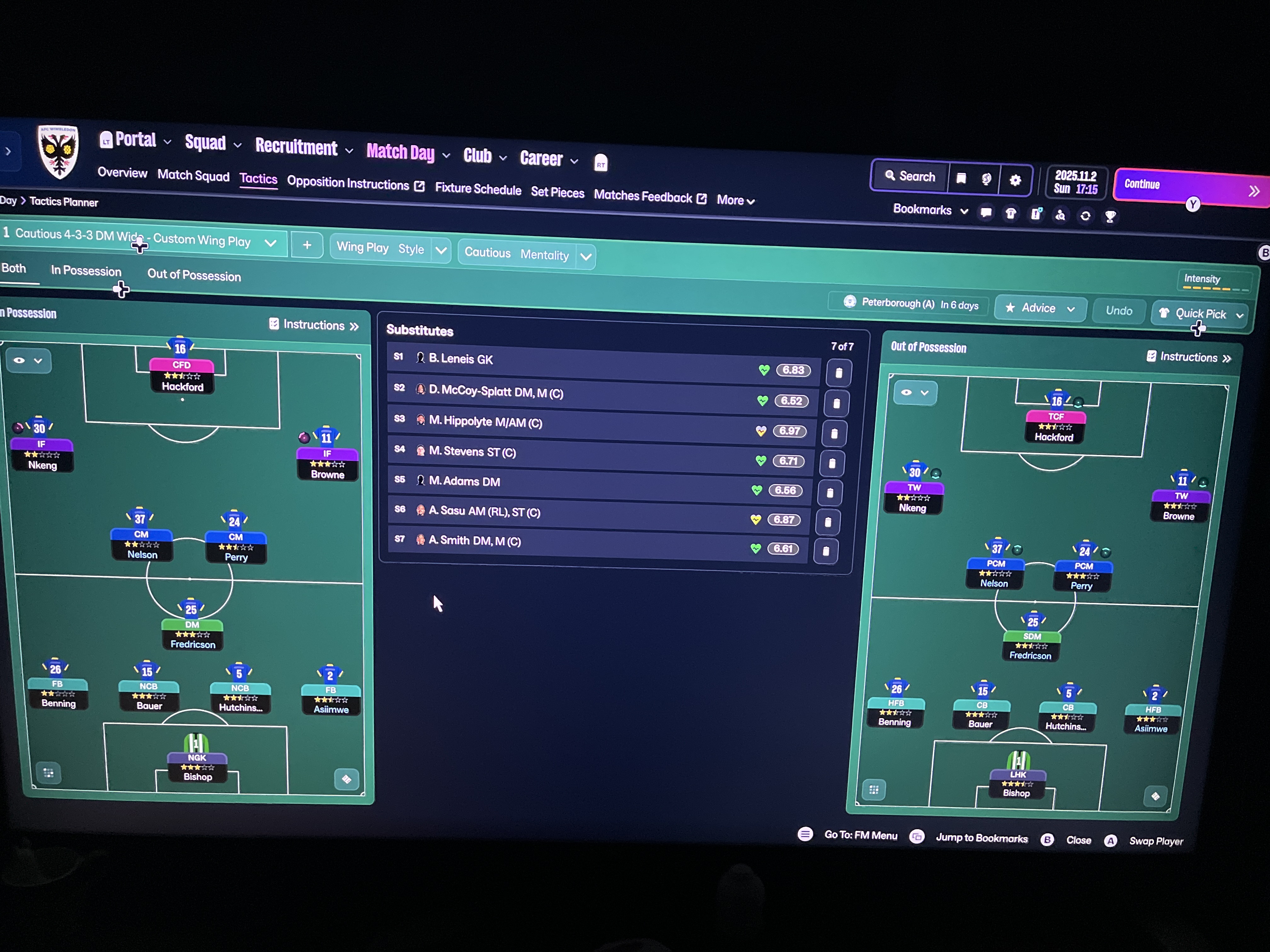
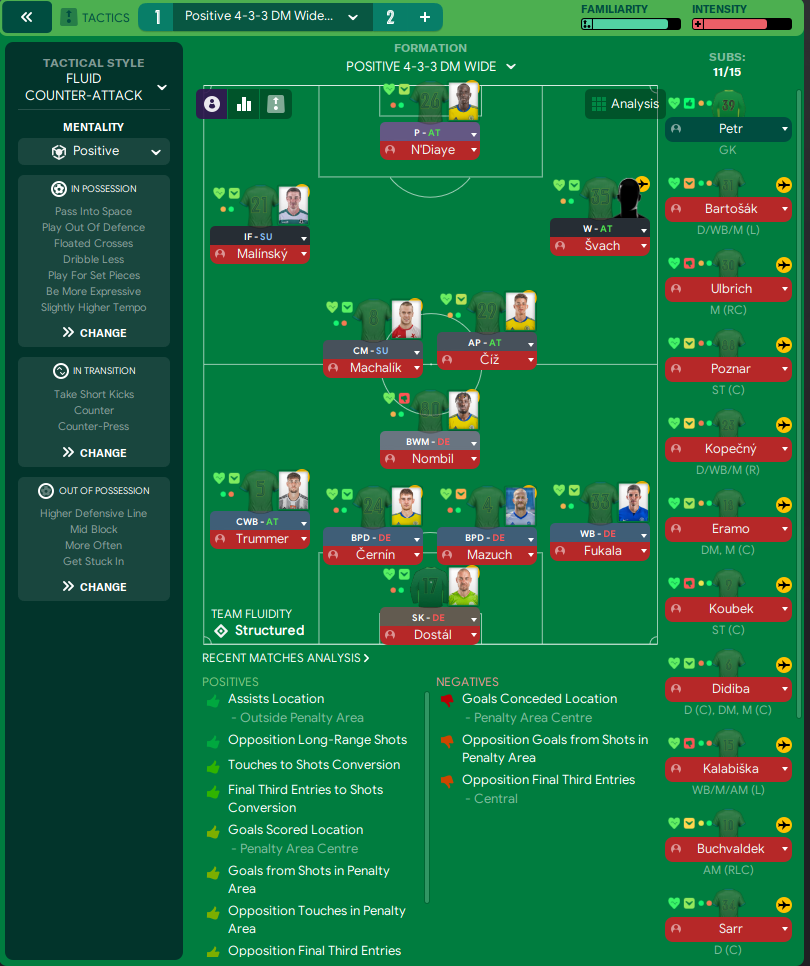
More Custom Vertical Tiki-Taka tactics
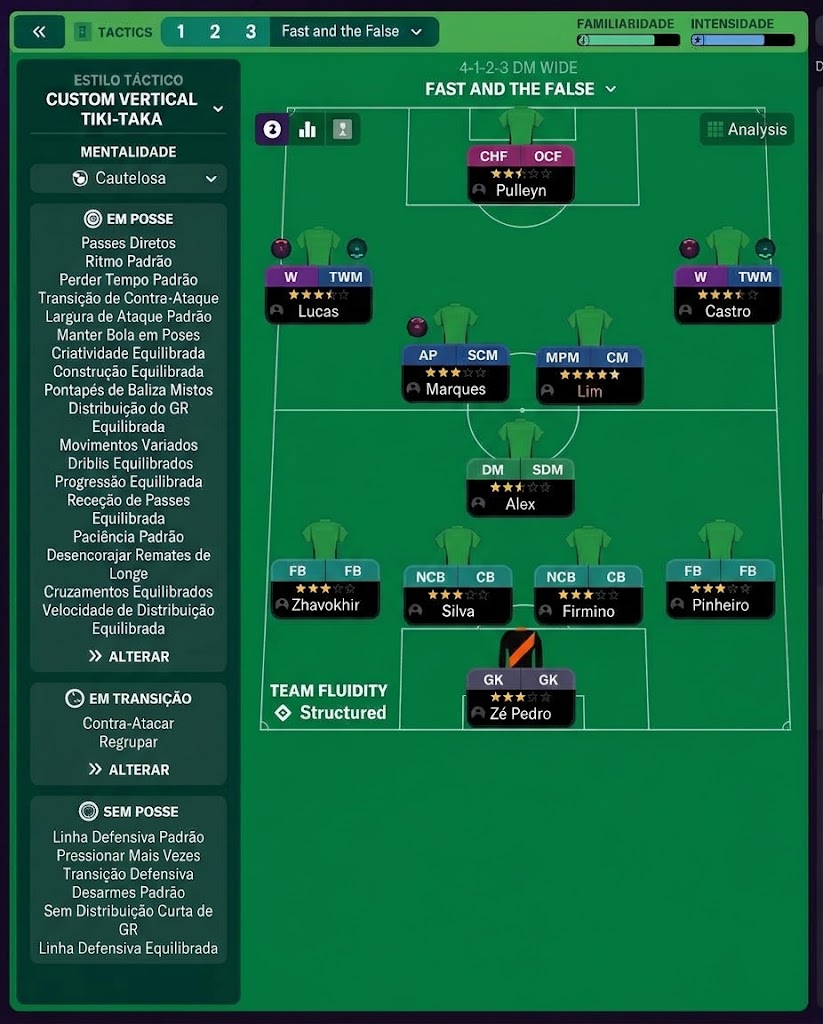
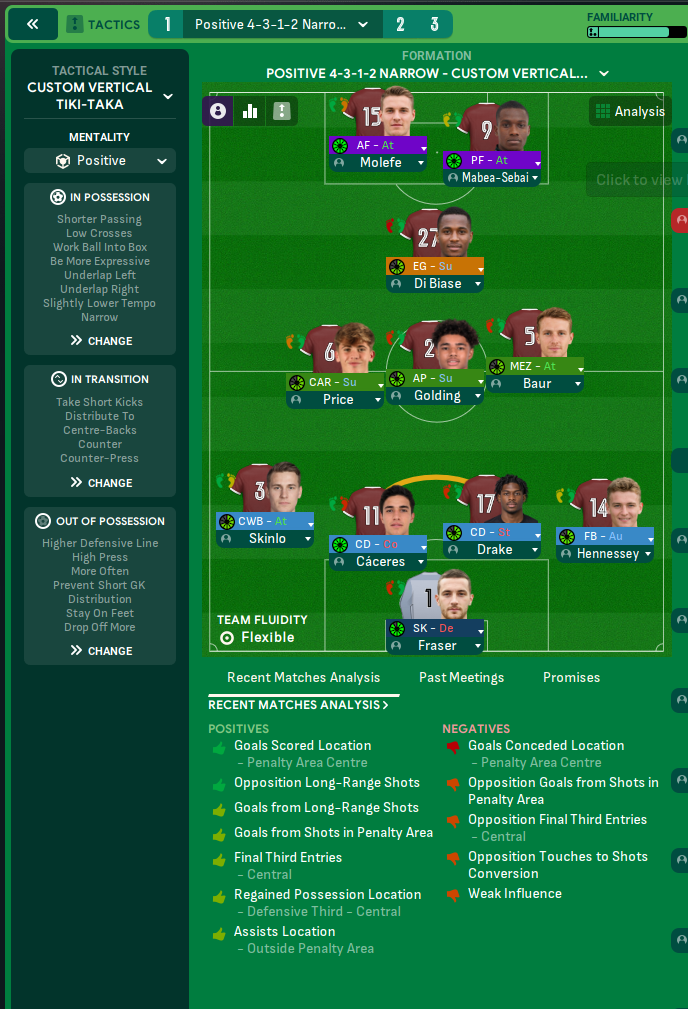
Guides for this formation
The tactical theory behind the 4-3-3 DM Wide: roles, instructions, and the trade-offs that decide whether the system holds up.
Foundations
Understanding the 4-3-3 Formation
Master the classic 4-3-3: player roles, tactical variations, and the trade-offs that decide whether it sings or stalls.
Read guide
Player pairings
Midfield Trios
Holder, runner, creator: the role distribution rule for three-man midfields, the AMC variants, and the antipatterns that break them.
Read guide
Playing styles
Gegenpressing: A Full Guide
Klopp-style gegenpressing in FM, including squad profile, line-and-press pairing, sustainable workload, and the antipatterns to avoid.
Read guide