
4-3-3 DM Wide
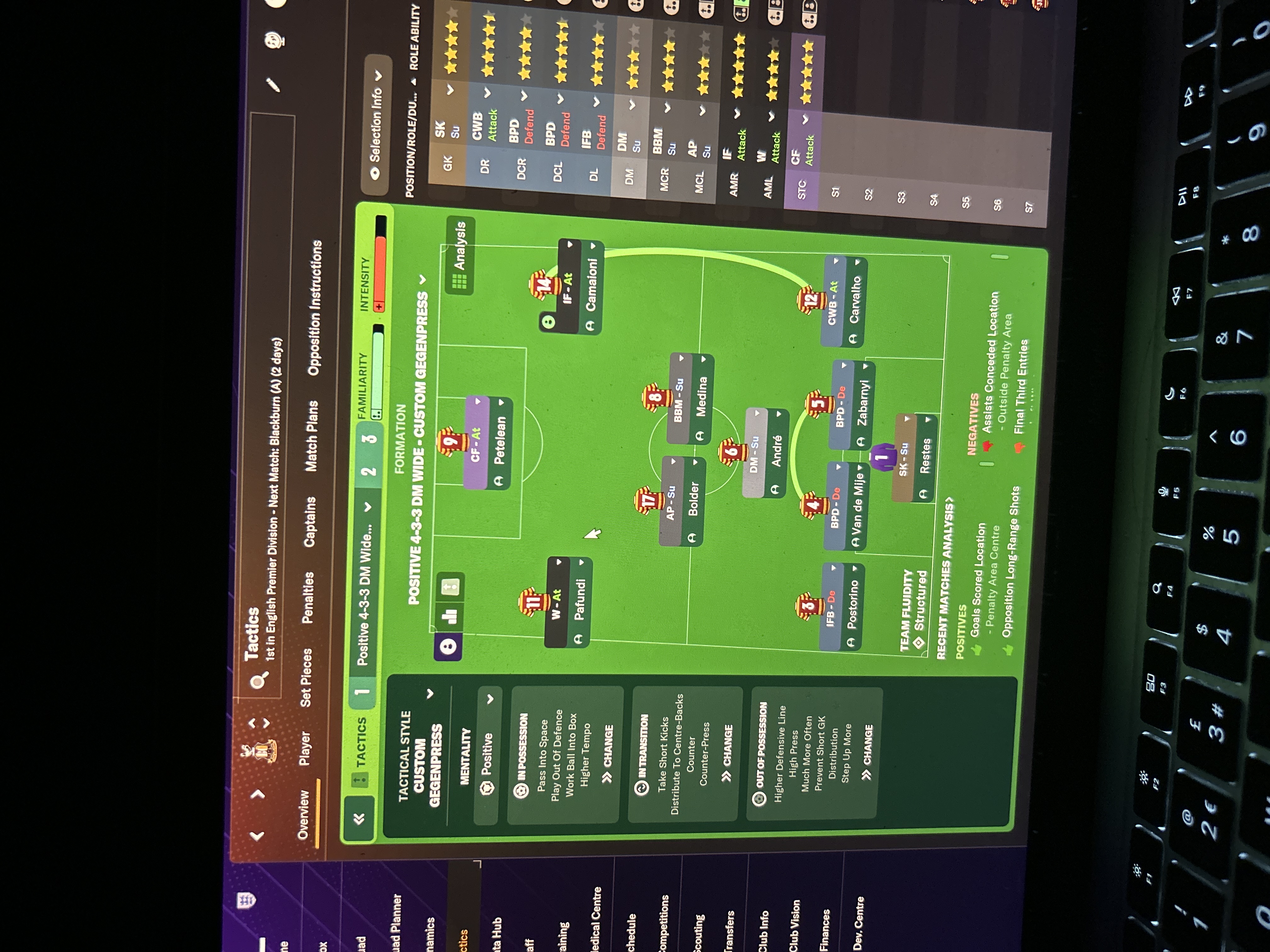
The gegenpress style ensures the team can regain possession quickly after losing it, which can disrupt opponents' build-up play.
Loading tactical analysis...
Gegenpress
Positive
4-3-3 DM Wide
Structured
Pass Into Space
Play Out of Defence
Work Ball Into Box
Higher Tempo
Take Short Kicks
Distribute To Centre-Backs
Counter
Counter-Press
Higher Defensive Line
High Press
Much More Often
Prevent Short GK Distribution
Step Up More
CF
Advanced Forward
Attack
W-At
Winger
Attack
IF-At
Inside Forward
Attack
BBM
Box to Box Midfielder
Support
DM
Defensive Midfielder
Support
IBS
Inverted Wing Back
Defend
BPD
Ball Playing Defender
Defend
CWB
Complete Wing Back
Attack
SK
Sweeper Keeper
Support
The gegenpress style ensures the team can regain possession quickly after losing it, which can disrupt opponents' build-up play.
The combination of wingers, an advanced forward, and inside forwards provides multiple attacking options, allowing for unpredictability in the final third.
The structured team fluidity may limit individual creativity, contrasting with the planned attacking variety.
While playing a high defensive line, the aggressive pressing may leave gaps that faster opponents can exploit.
How does the team cope when the opponent changes their build-up play?
Is the attacking fluid enough to break down well-organized defenses?
Are the wingers and inside forwards exploiting space effectively?
What strategies are in place for defending against counter-attacks?
Is the midfield sufficiently solid against pressing teams?
How can the team maintain possession under high pressing?
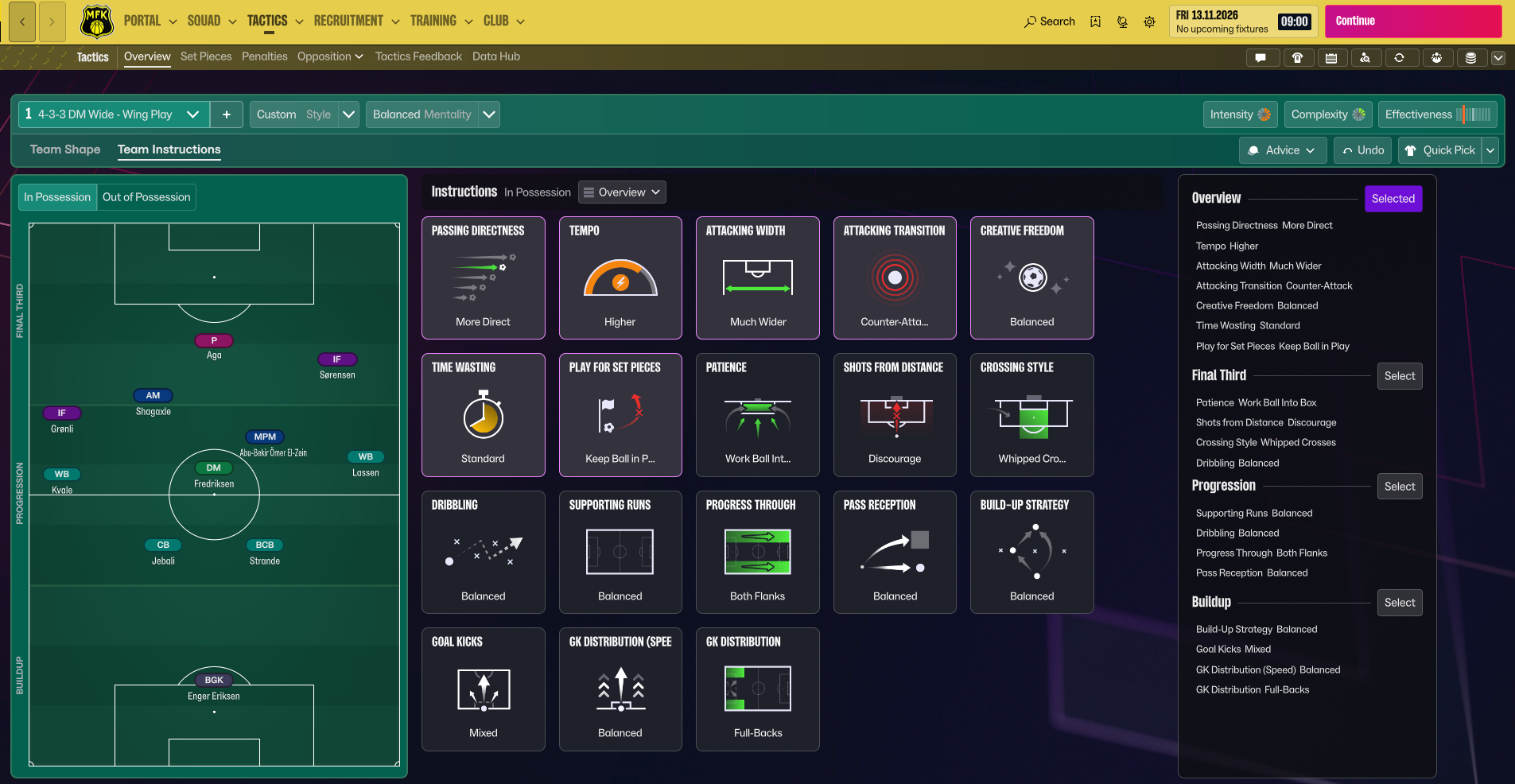
wing play
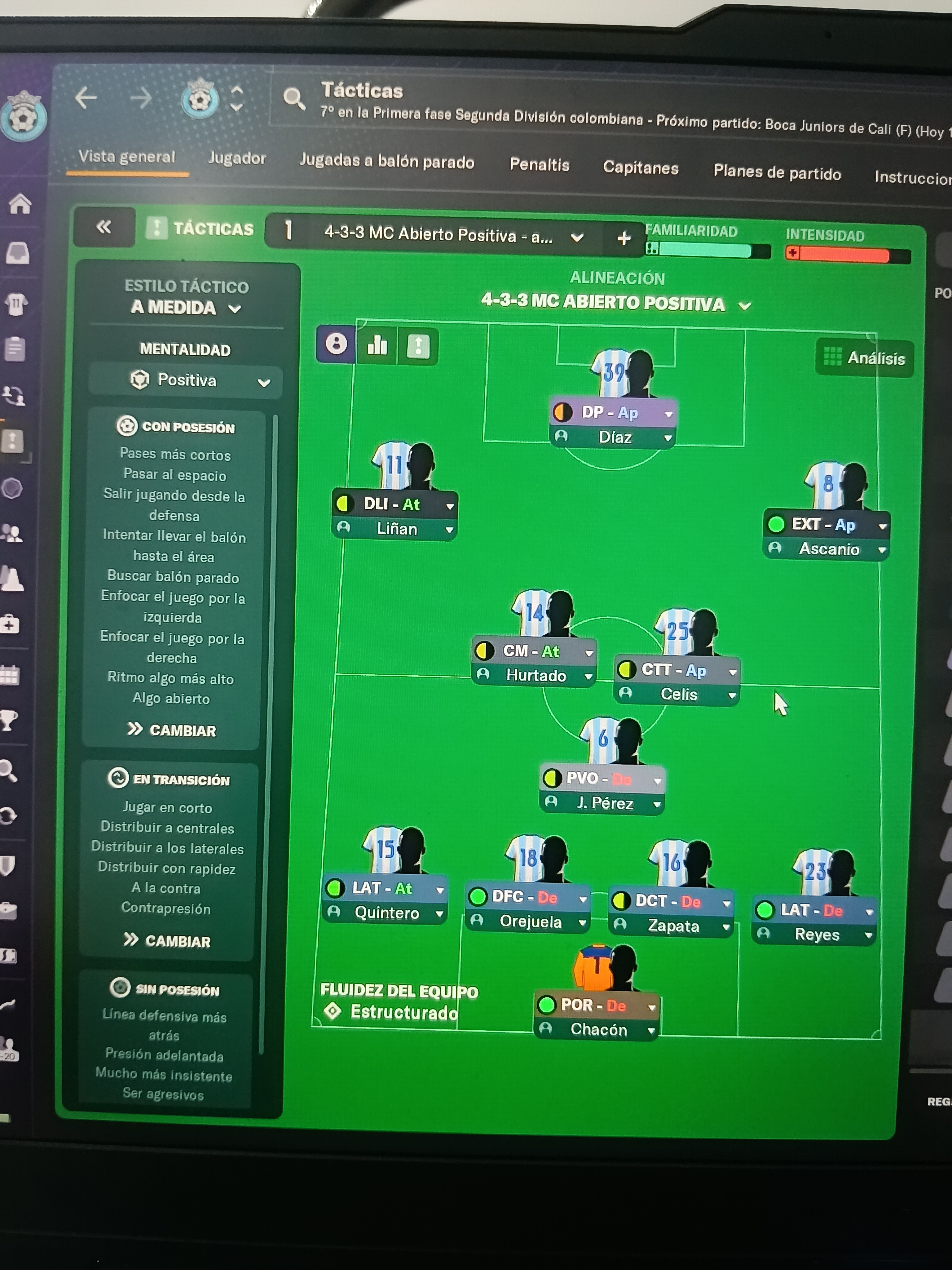
Gegenpress
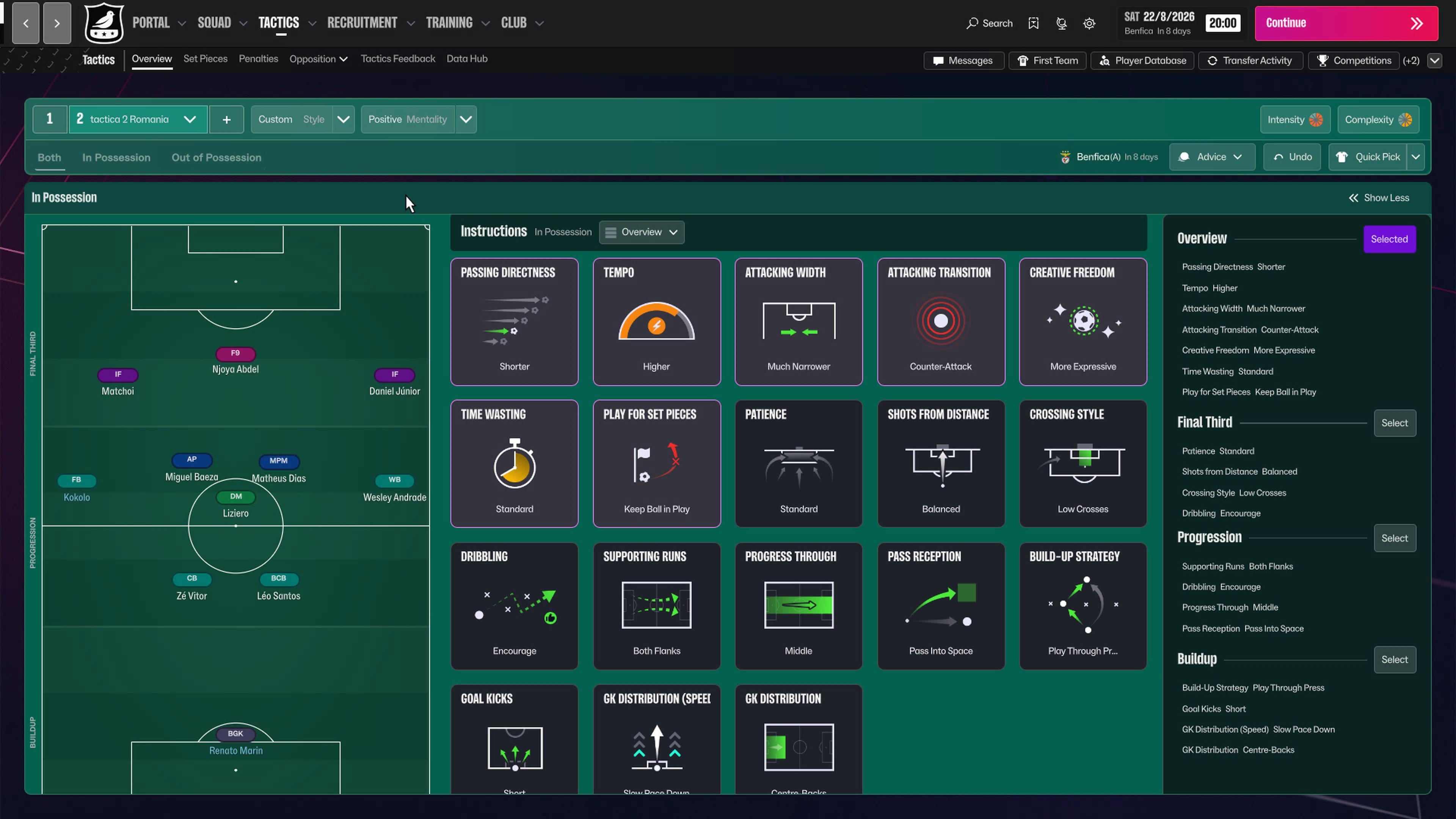
vertical tiki taka
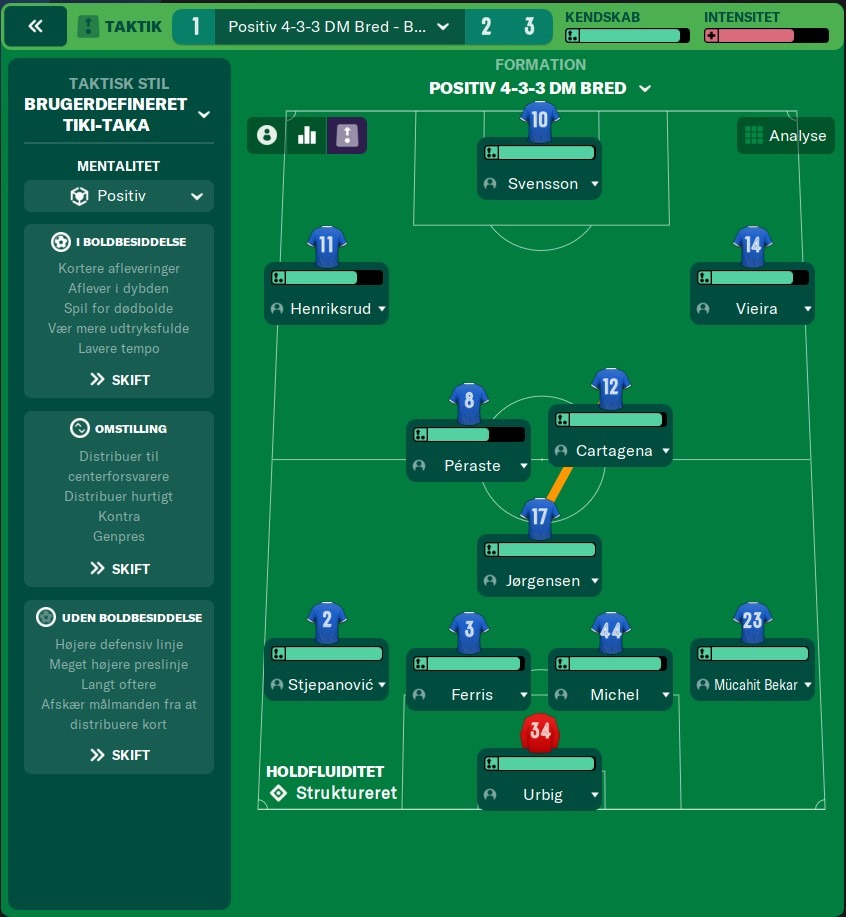
Tiki-Taka
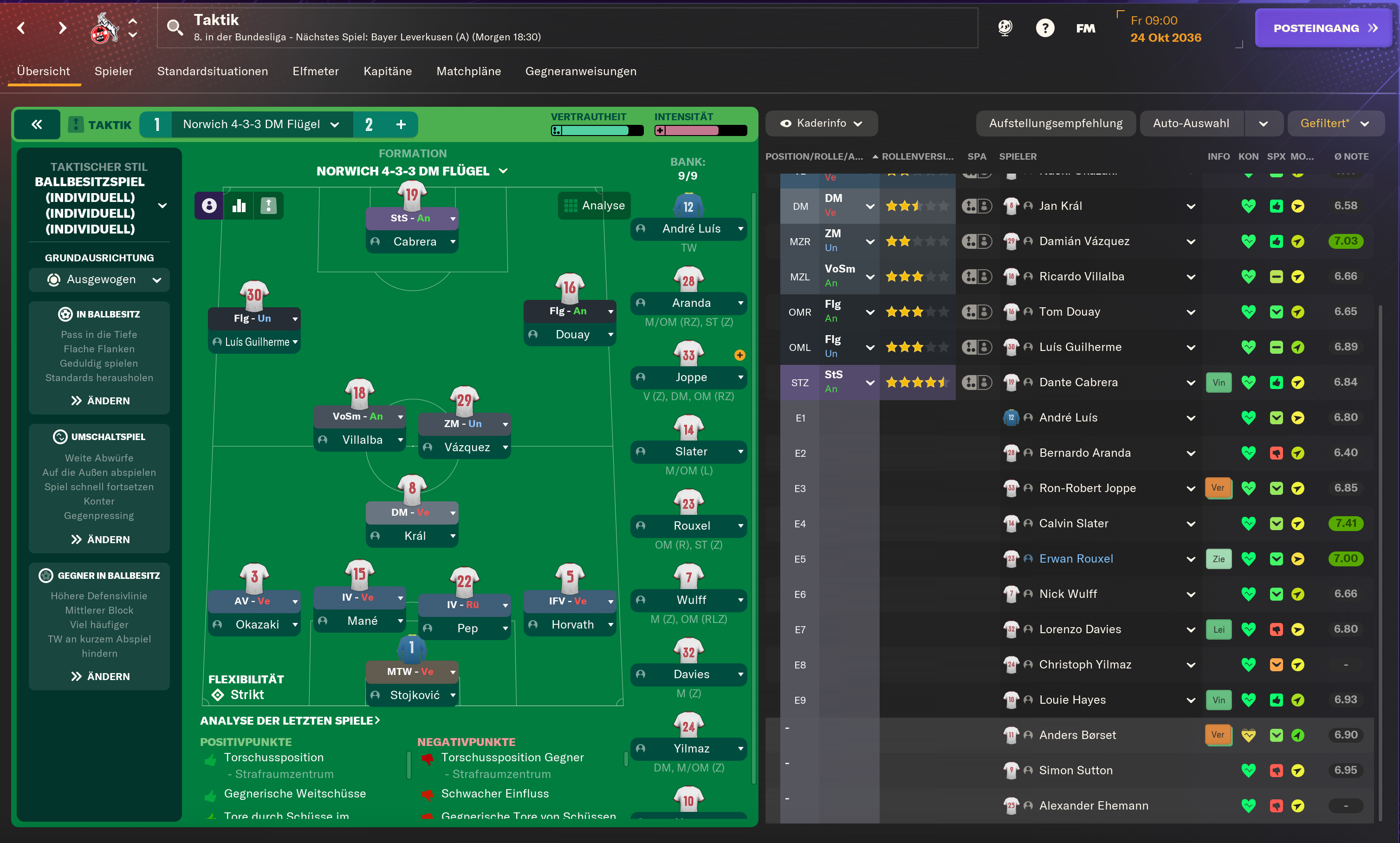
Wing Play
Vertical Tiki-Taka
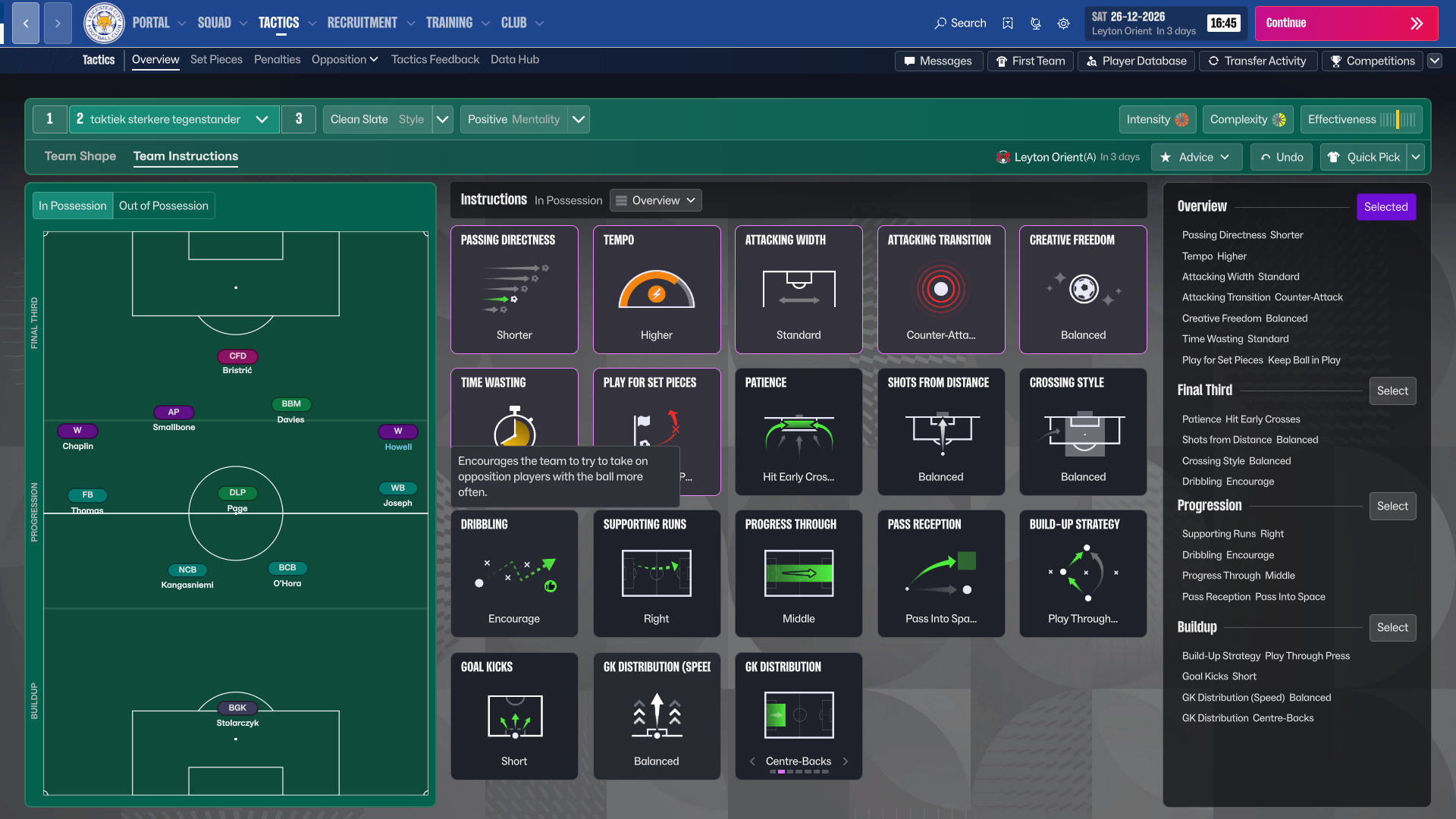
clean slate
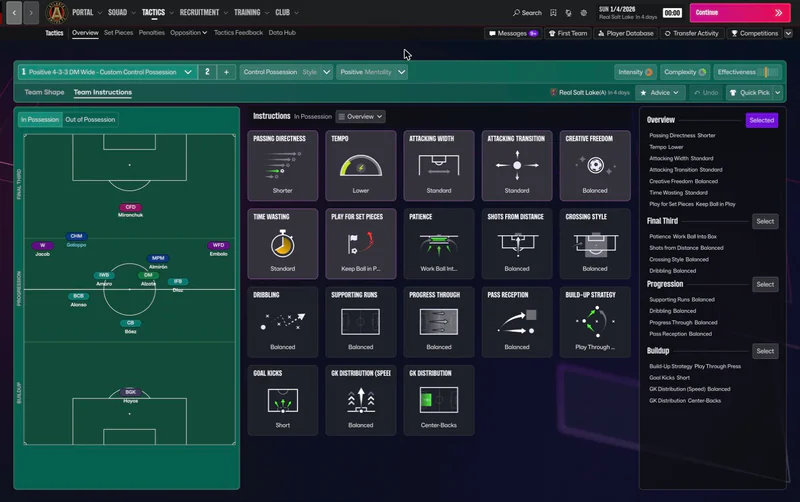
control possession
The tactical theory behind the 4-3-3 DM Wide: roles, instructions, and the trade-offs that decide whether the system holds up.
Klopp-style gegenpressing in FM, including squad profile, line-and-press pairing, sustainable workload, and the antipatterns to avoid.
Why circulation density and zonal occupation aren't the same thing in FM, and the half-space occupation rule that decides build-up.
Pass map, average position, xG, possession by zone: what each tablet panel tells you in FM and the tactical change it should trigger.



