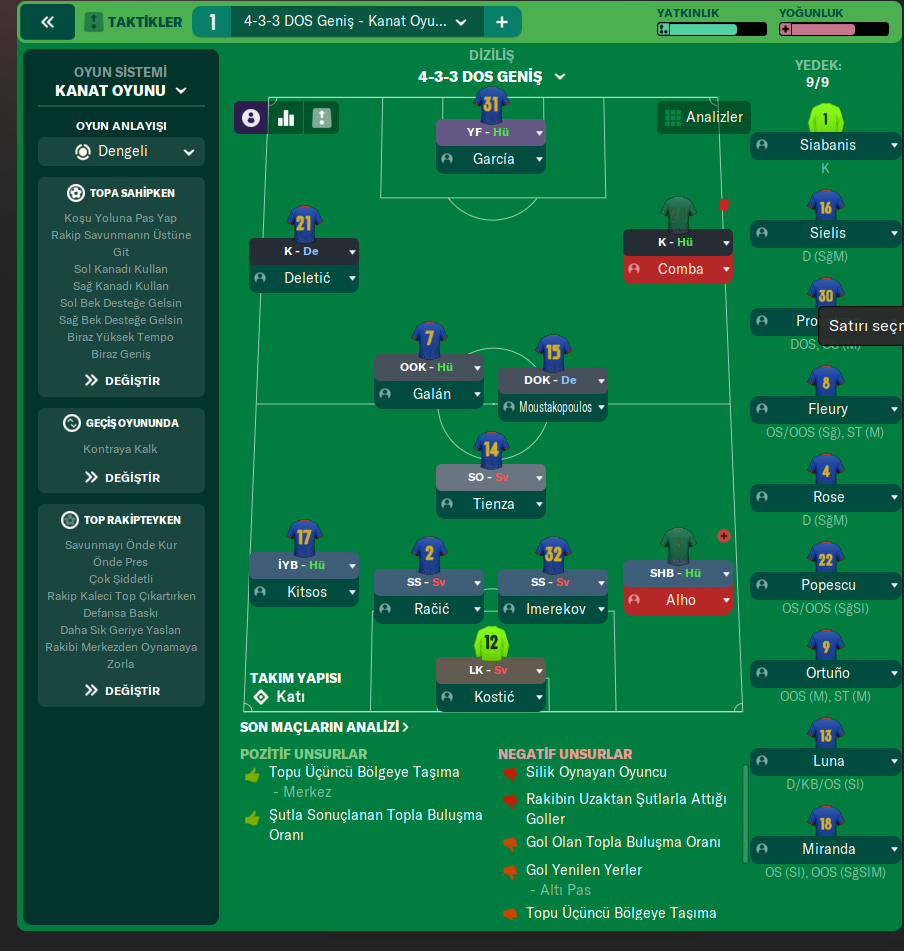
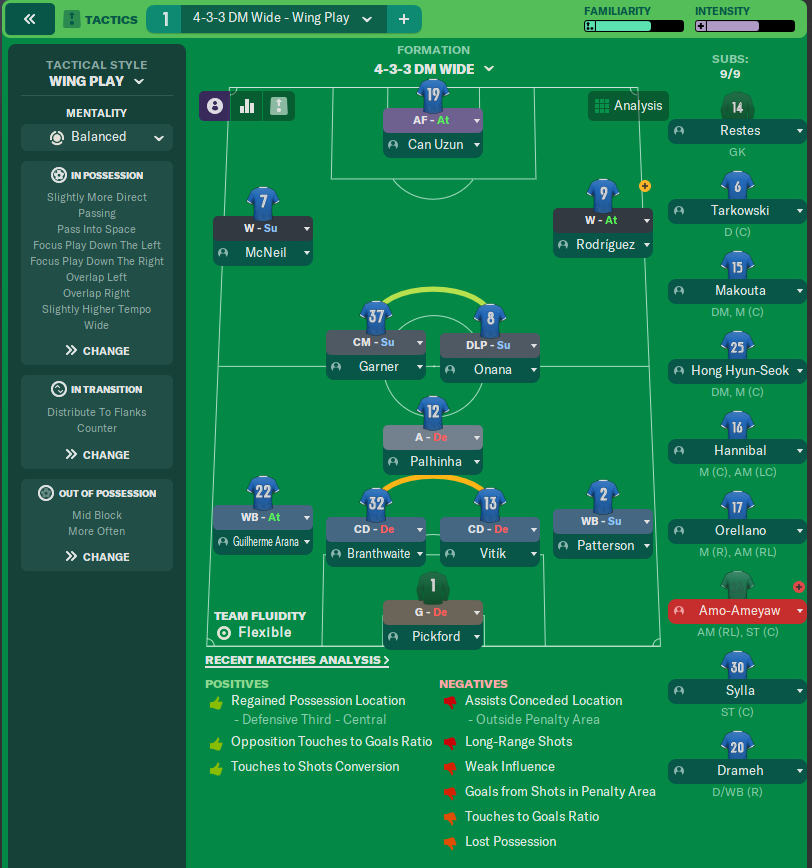
4-3-3 DM Wide
Utilizing wingers and overlapping full-backs provides effective width and stretches the opposition defense.
Loading tactical analysis...
Wing Play
Balanced
4-3-3 DM Wide
Flexible
Slightly More Direct Passing
Pass Into Space
Focus Play Down The Left
Focus Play Down The Right
Overlap Left
Slightly Higher Tempo
Distribute To Flanks
Counter
Mid Block
More Often
AF
Advanced Forward
Attack
W
Winger
Attack
CM
Central Midfielder
Support
DLP
Deep-Lying Playmaker
Support
A
Anchor
Defend
WB
Wing-Back
Attack
Utilizing wingers and overlapping full-backs provides effective width and stretches the opposition defense.
The combination of a Deep-Lying Playmaker and supporting midfielders fosters creativity and control in the midfield.
Wingers on attack duty may conflict with overlapping full-backs, leading to overcrowding on the flanks.
Mid-block may lead to confusion if players attempt to pressure too high, undermining shape.
How can the balance between width and central penetration be improved?
What adjustments are needed for better defensive coverage in midfield?
How can we enhance the interplay between the winger and overlapping full-backs?
What modifications can increase the effectiveness of counter-attacks?
How should we adapt the pressing style to maximize defensive stability?
Is there a need for a target man to add another dimension to the attack?
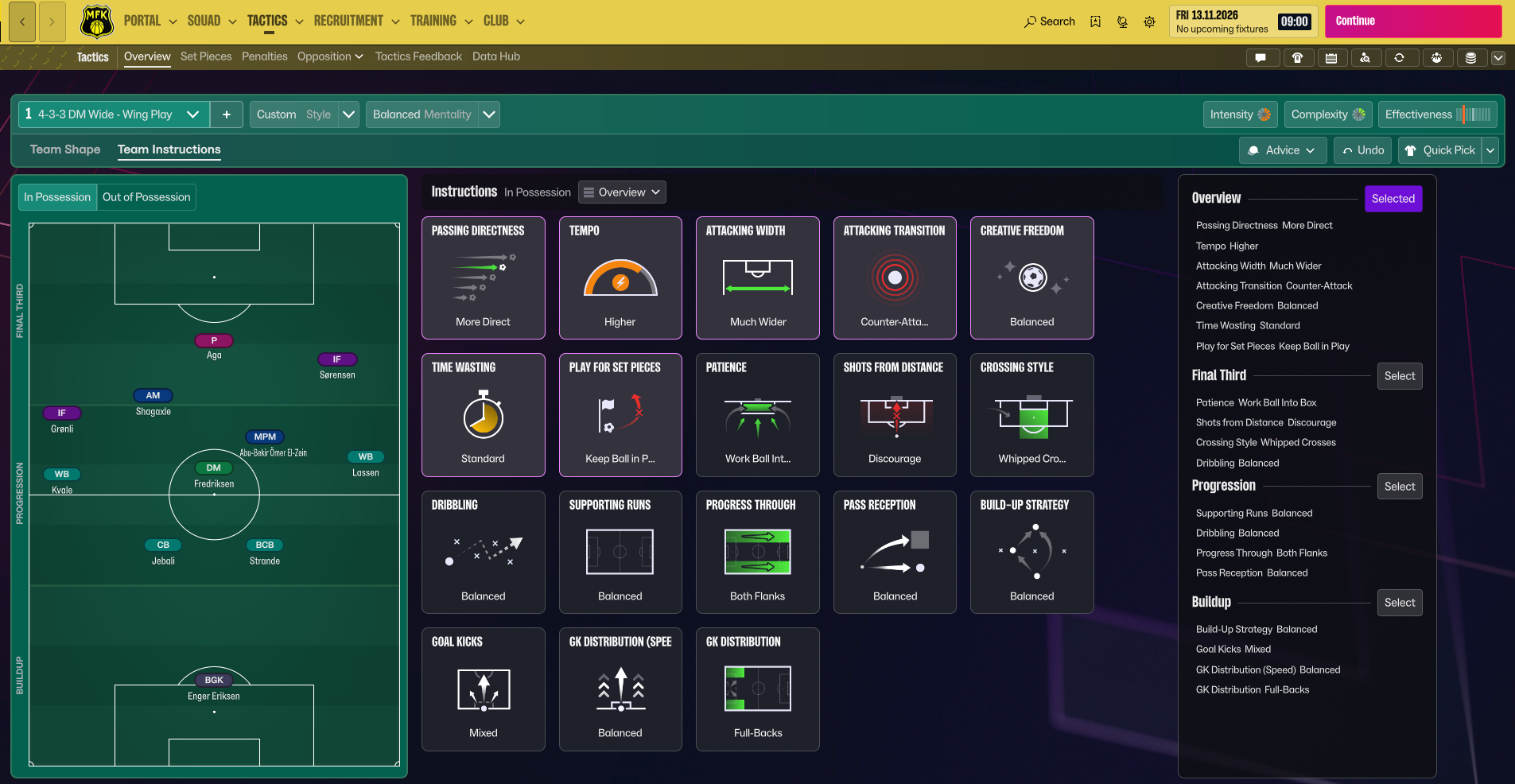
wing play
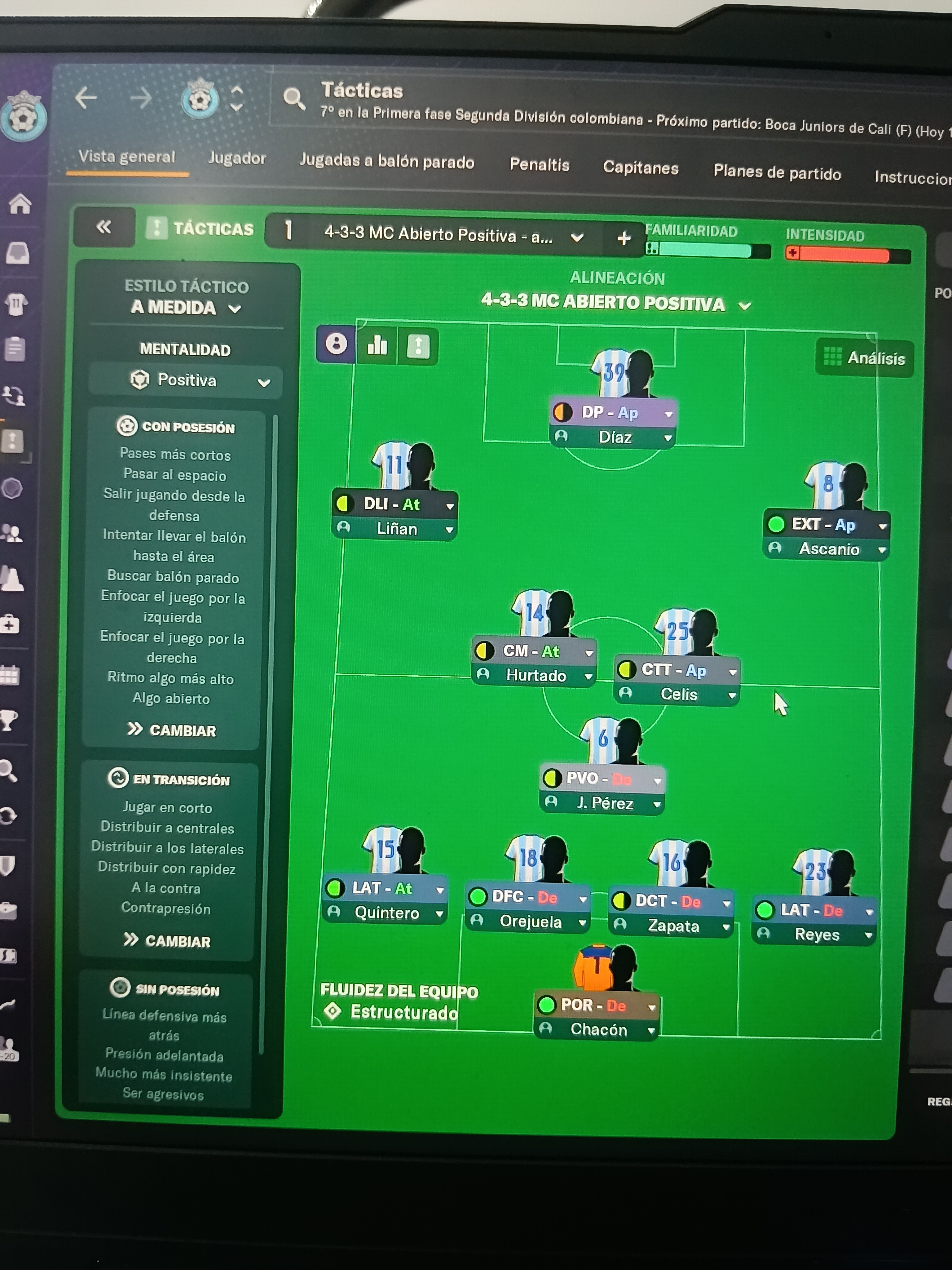
Gegenpress
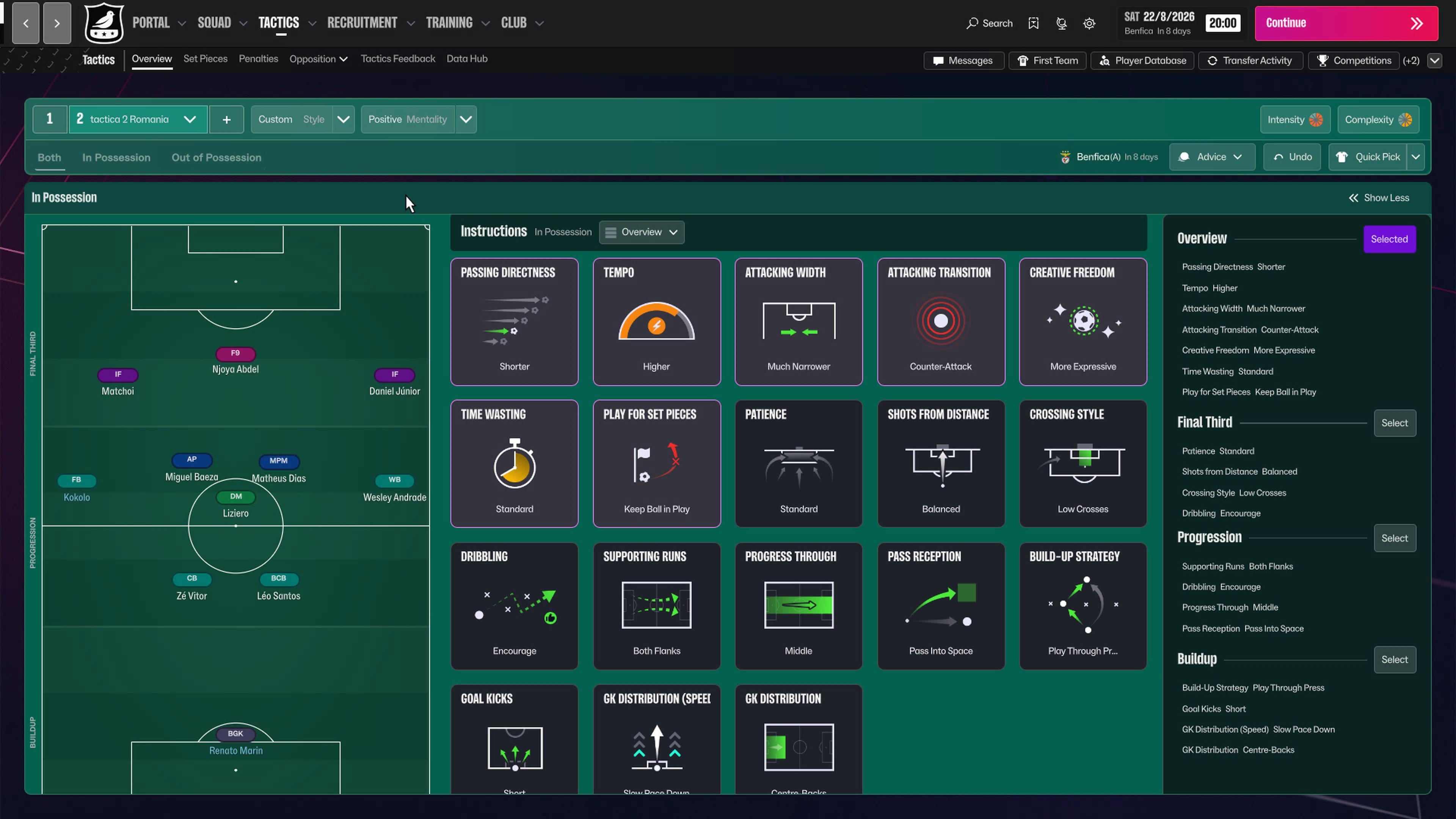
vertical tiki taka
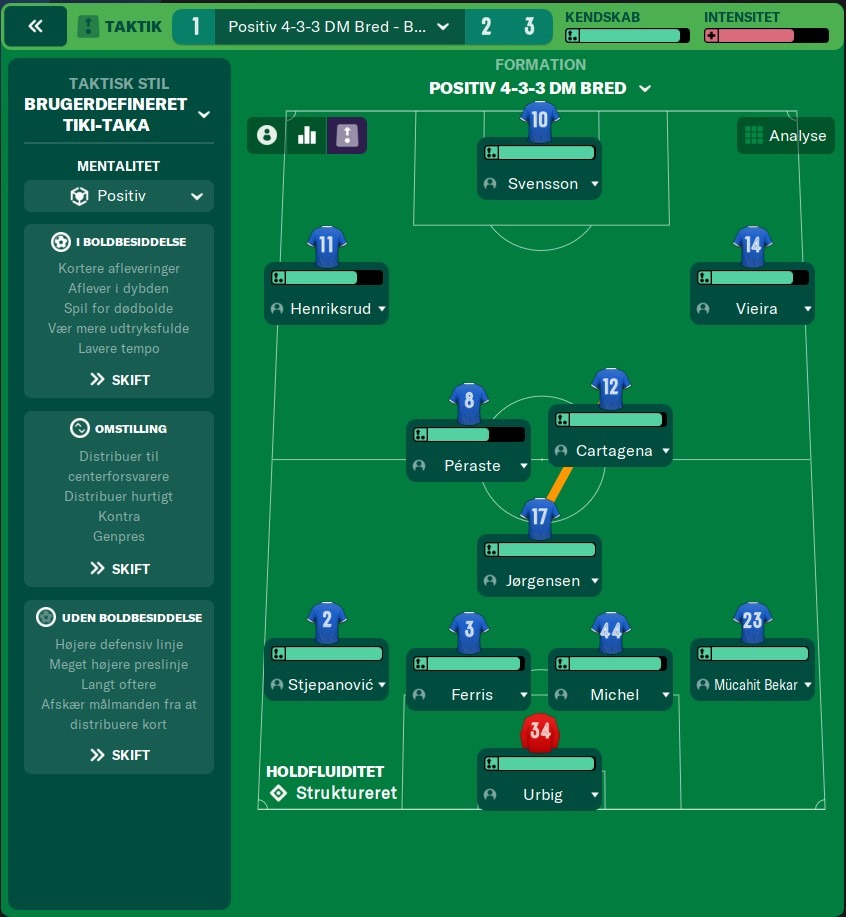
Tiki-Taka
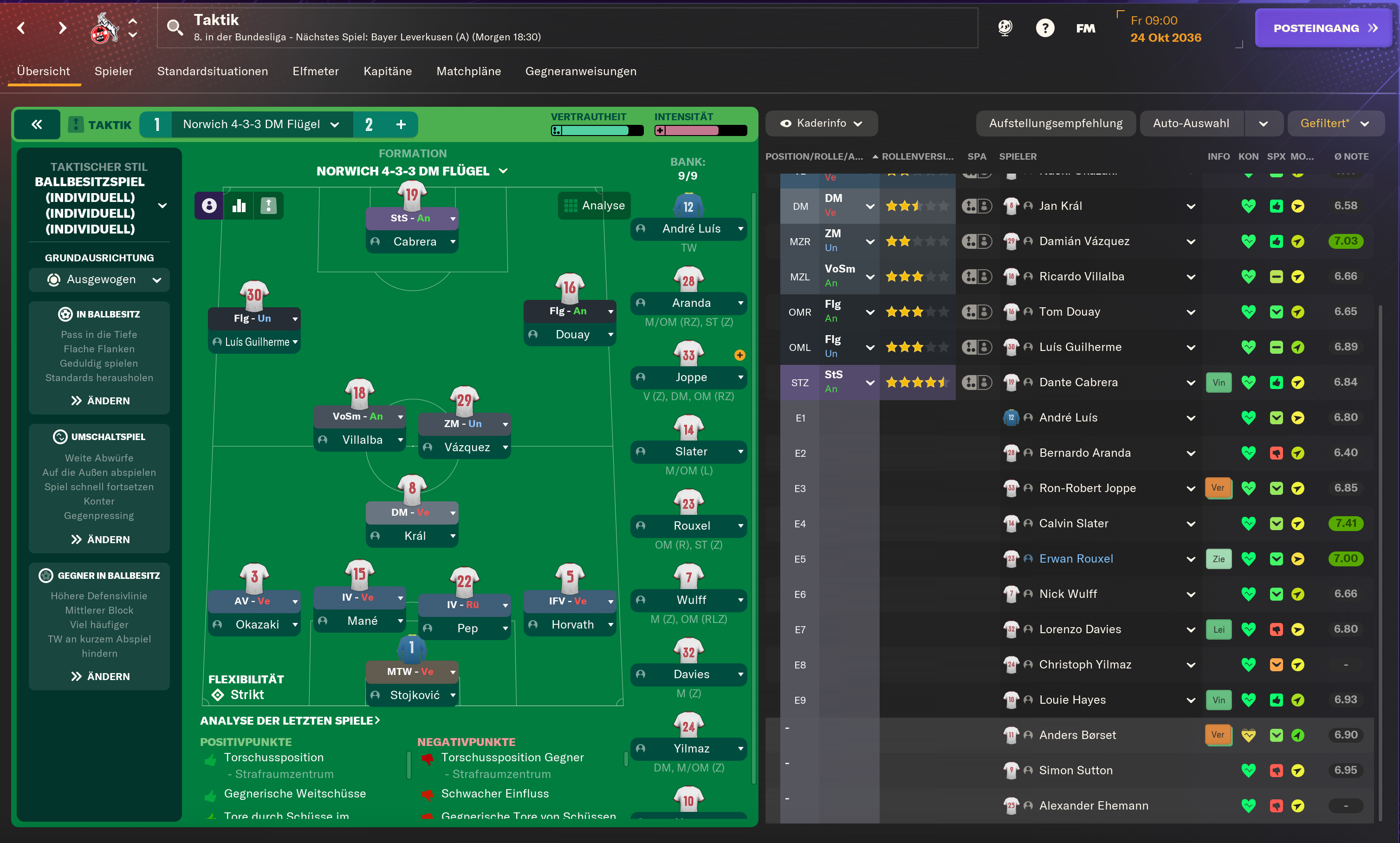
Wing Play
Vertical Tiki-Taka
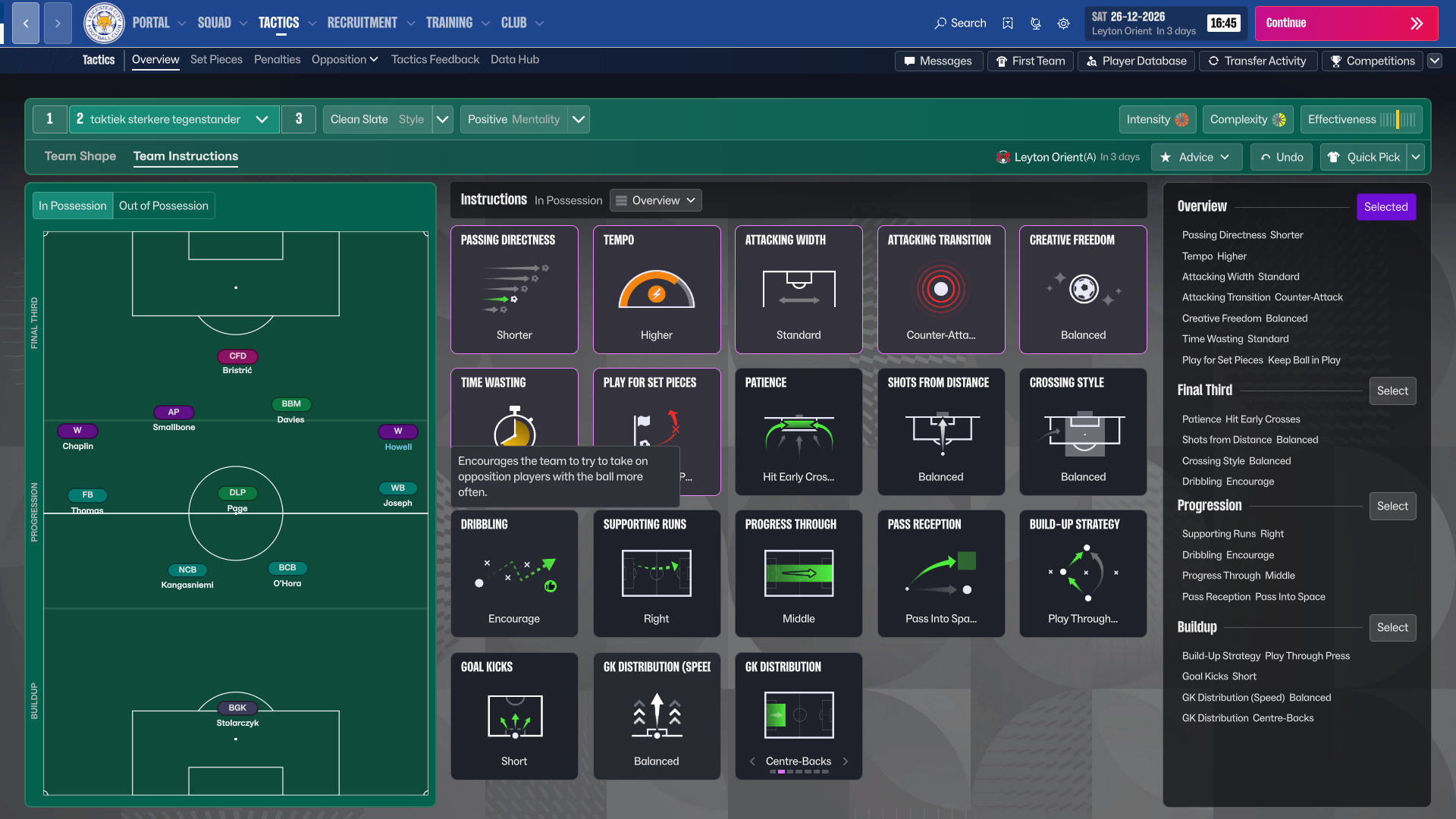
clean slate
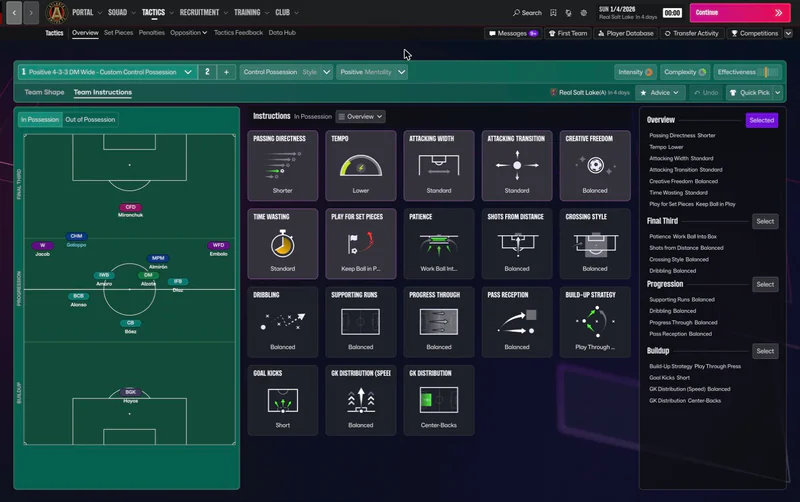
control possession
The tactical theory behind the 4-3-3 DM Wide: roles, instructions, and the trade-offs that decide whether the system holds up.
Master the classic 4-3-3: player roles, tactical variations, and the trade-offs that decide whether it sings or stalls.
Holder, runner, creator: the role distribution rule for three-man midfields, the AMC variants, and the antipatterns that break them.
The five seconds after losing the ball decide most matches. Counter-press, drop-and-recover, and how to know which one you should be doing.