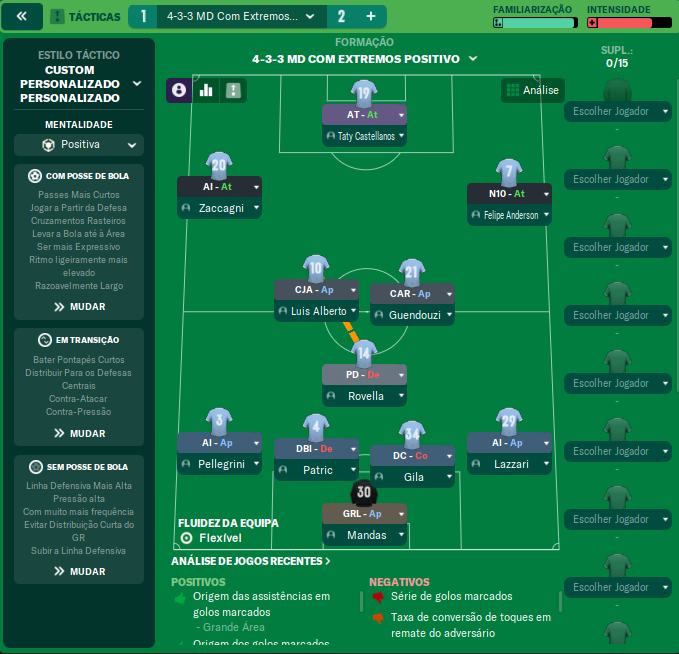
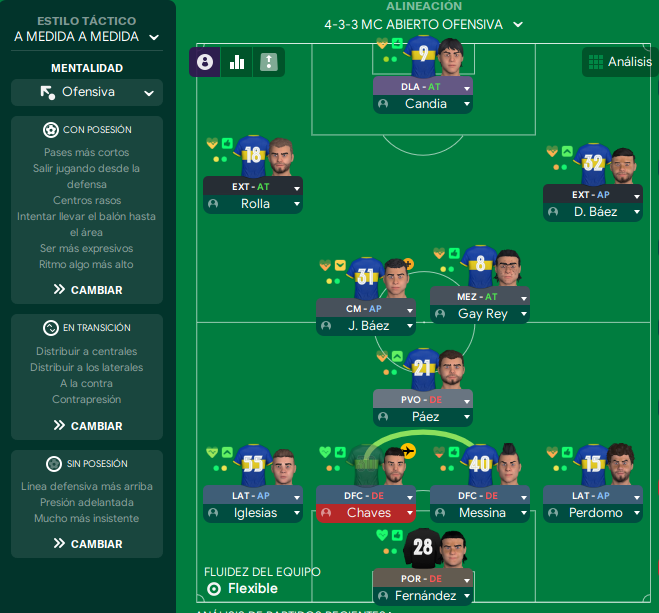
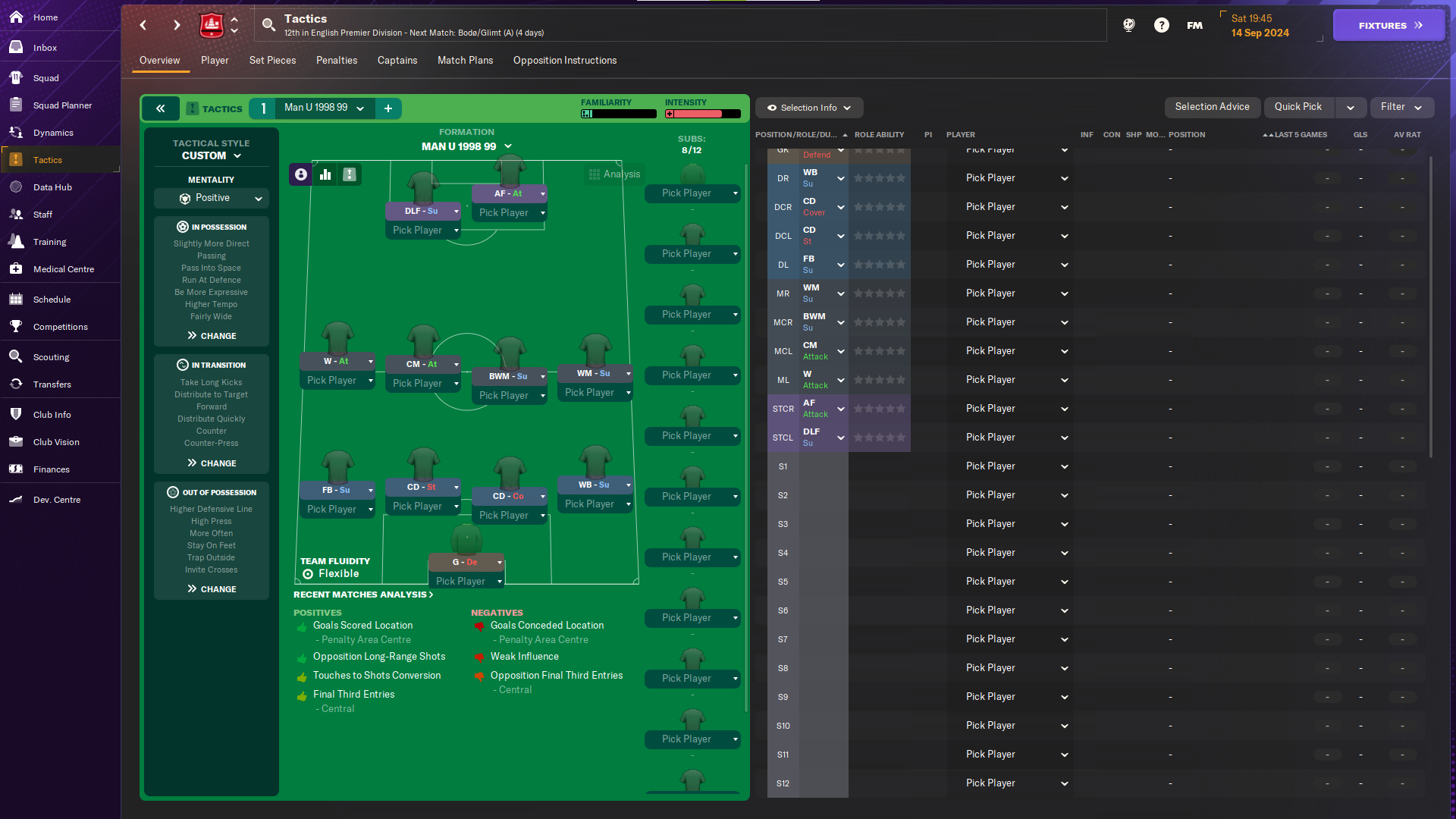
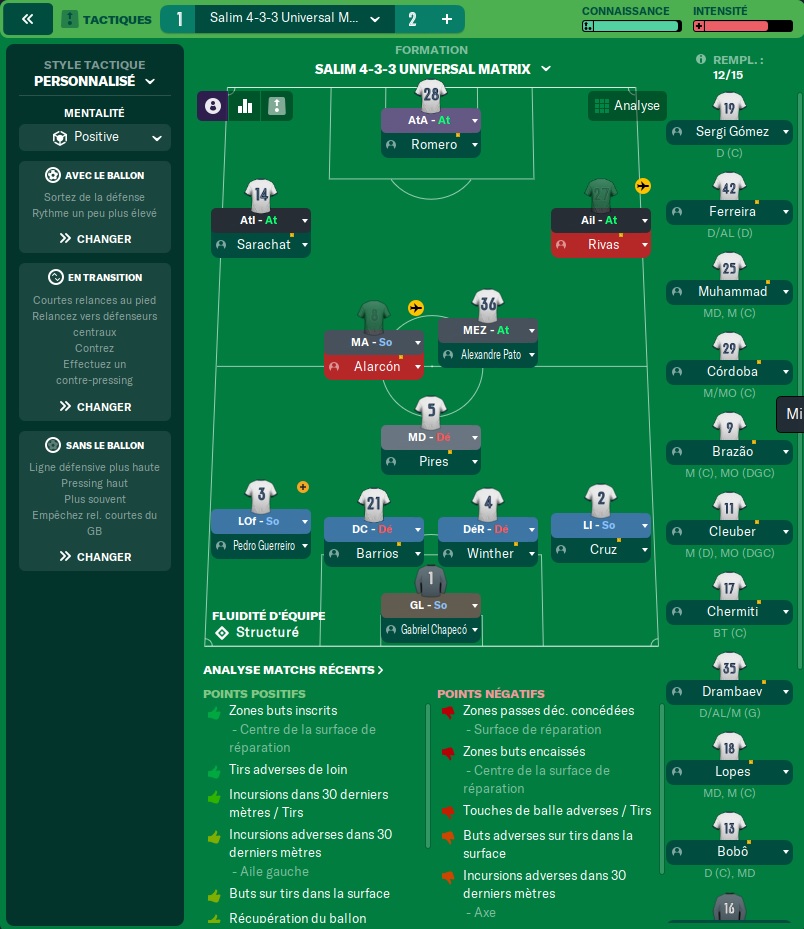
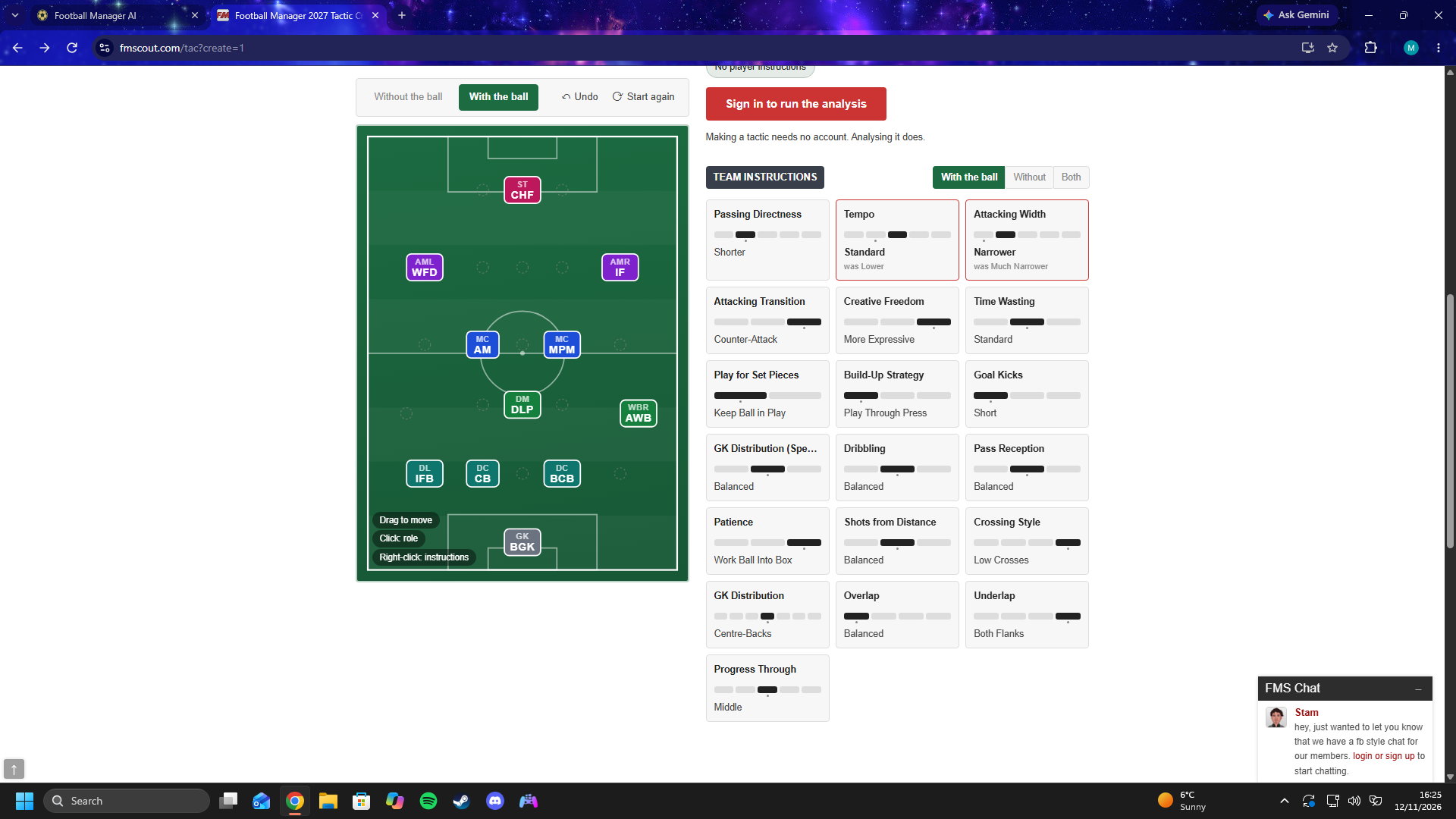
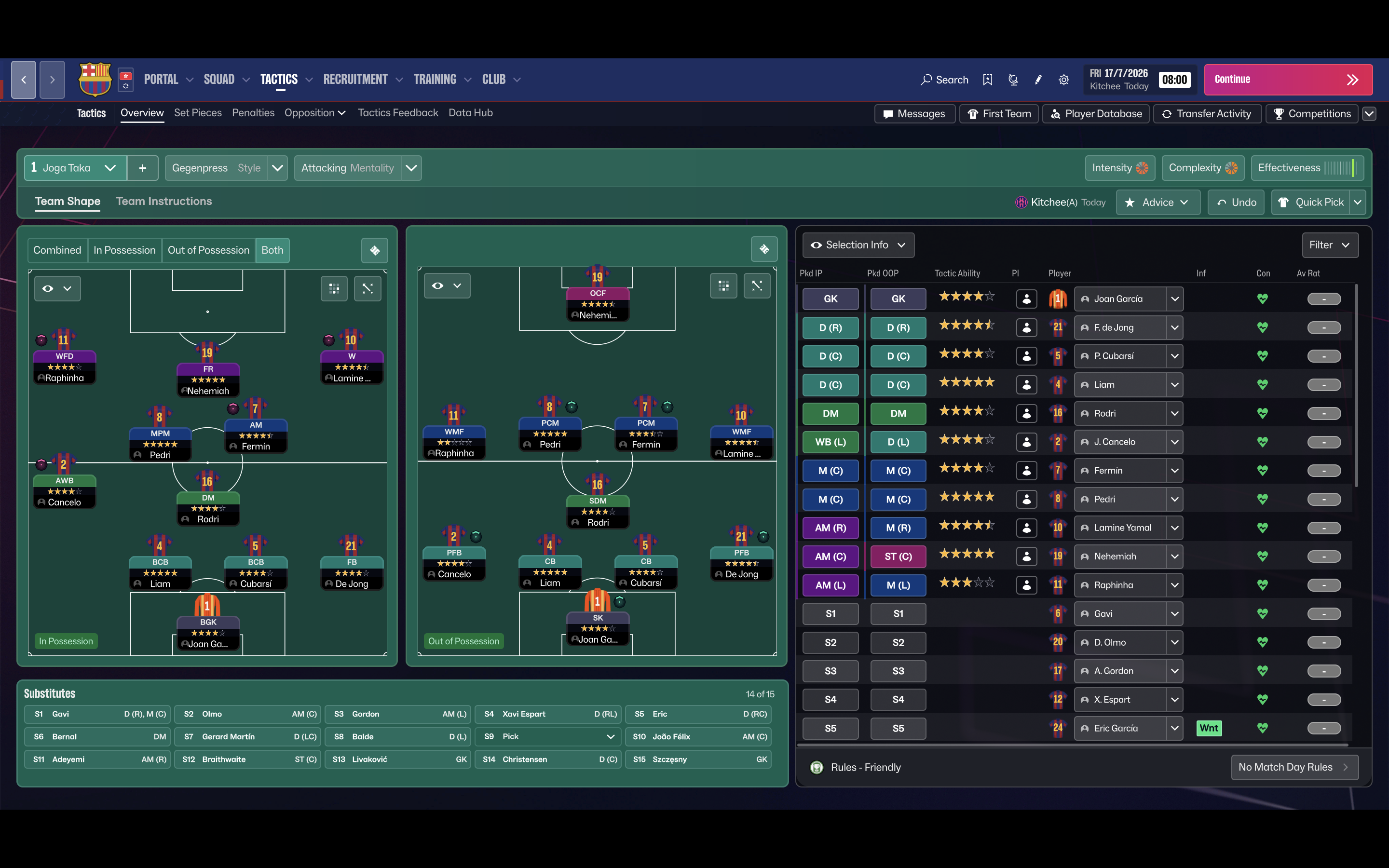
4-3-3
Utilize attacking full-backs to create overloads in wide areas. The combination of an Inside Forward and Winger provides width and variety in attack.
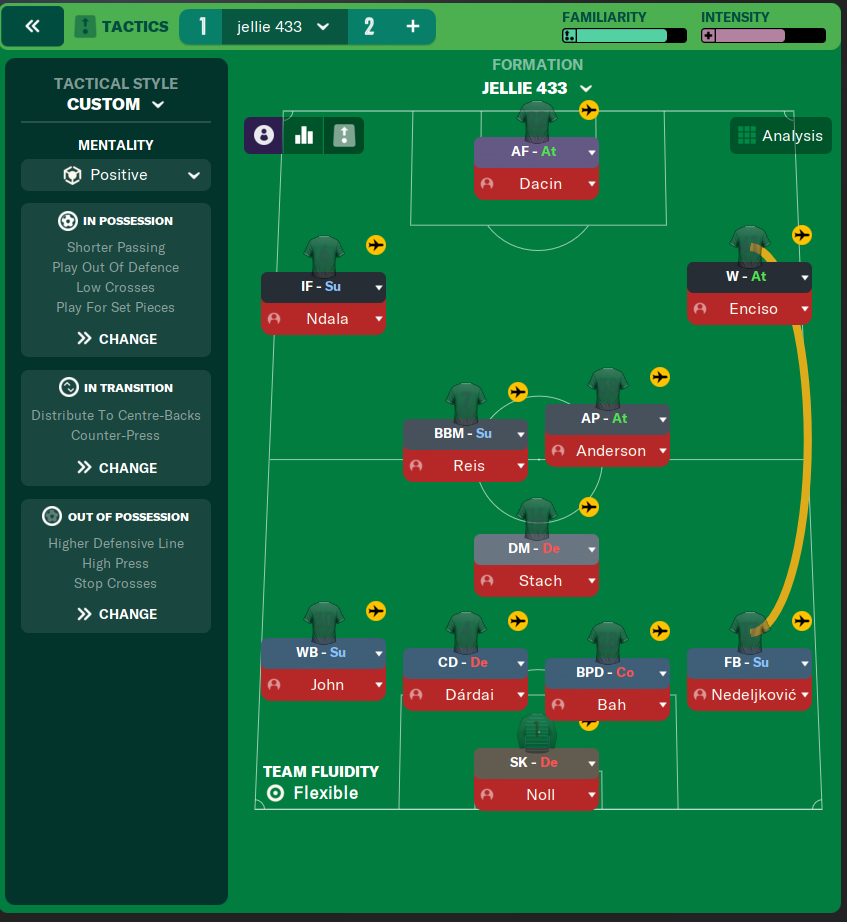
Loading tactical analysis...
Custom
Positive
4-3-3
Flexible
Shorter Passing
Play Out Of Defence
Low Crosses
Play For Set Pieces
Distribute To Centre-Backs
Counter-Press
Higher Defensive Line
High Press
Stop Crosses
GK
Sweeper Keeper
Defend
DEF
Ball-Playing Defender
Defend
DEF
Centre-Back
Defend
DEF
Wing-Back
Support
DEF
Full-Back
Support
DM
Defensive Midfielder
Defend
CM
Box-to-Box Midfielder
Support
CM
Advanced Playmaker
Attack
AM
Inside Forward
Support
AM
Winger
Attack
ST
Advanced Forward
Attack
Focus on width through wingers and quick passing in the central areas to create goal-scoring opportunities.
Aggressive counter-press to regain possession quickly after losing the ball.
Utilize attacking full-backs to create overloads in wide areas.
4-1-4-1
Solid defensive shape with DM shielding the back four and contributing to both defense and build-up.
DM at [3,3] with a duty of Defend assists in maintaining shape.
4-3-3
Fluid attacking shape with emphasis on wingers and a central forward exploiting spaces.
AM line includes IF-S and W-A, creating width and depth.
The combination of an Inside Forward and Winger provides width and variety in attack.
IF-S at [6,2] and W-A at [6,5] create space for AF-A at [6,3].
A Box-to-Box Midfielder complements the more static roles, covering transition phases.
BBM-S at [4,3] supports both defensive duties and forward runs.
High pressing and a higher defensive line may leave spaces behind.
High Press with Higher Defensive Line could be vulnerable to counter-attacks.
Three central players without clear roles could lead to overlapping responsibilities.
CM roles might clash, particularly with a similar attacking focus.
Defensive Transitions
Exposed to quick counter-attacks when losing the ball.
High Press and higher defensive line increases vulnerability.
Midfield Overcrowding
Excessive movement may lead to confusion in central areas.
BBM-S, AP-A in close proximity without clear roles.
WB-S and AP-A
WB-S overlaps with AP-A creating space for runs into the box.
Both roles at [4,2] and [4,3] work well for attacking overloads.
IF-S and AF-A
The Inside Forward's tendency to cut inside creates space for the Advanced Forward.
IF-S at [6,2] provided ample space for AF-A at [6,3].
How can player roles be adjusted to improve defensive stability?
What areas of the pitch require more coverage during transitions?
Should the attacking strategy focus more on central play versus wide play?
The tactical theory behind the 4-3-3: roles, instructions, and the trade-offs that decide whether the system holds up.
Build the patient, control-the-tempo style without watching your opponents counter through the gaps you leave behind.
Master the classic 4-3-3: player roles, tactical variations, and the trade-offs that decide whether it sings or stalls.
Protect a 1-0, chase a 1-0, hold a draw away. How to manage game state in FM through duties and roles, not by lurching to Defensive.