4-3-3
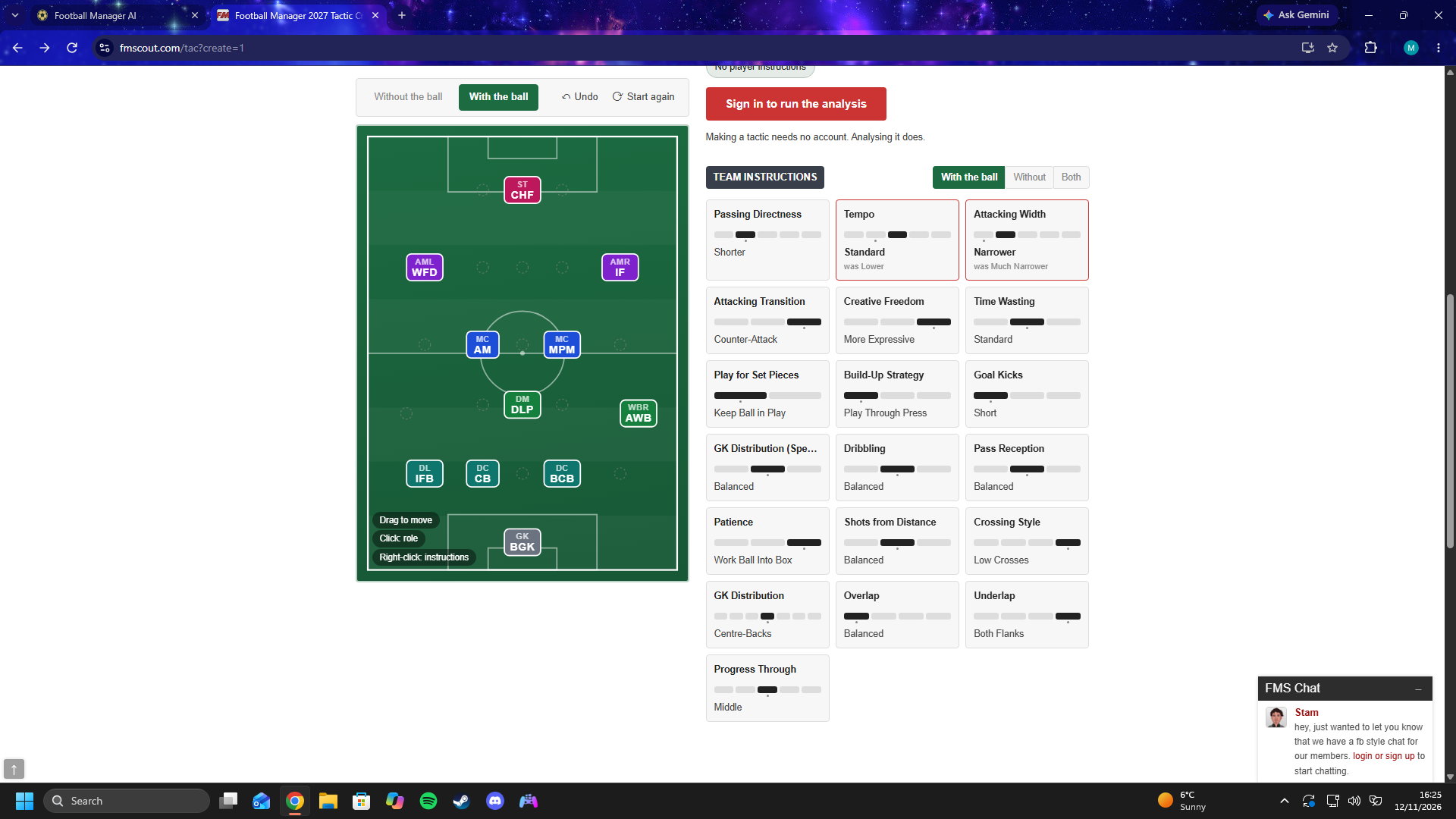
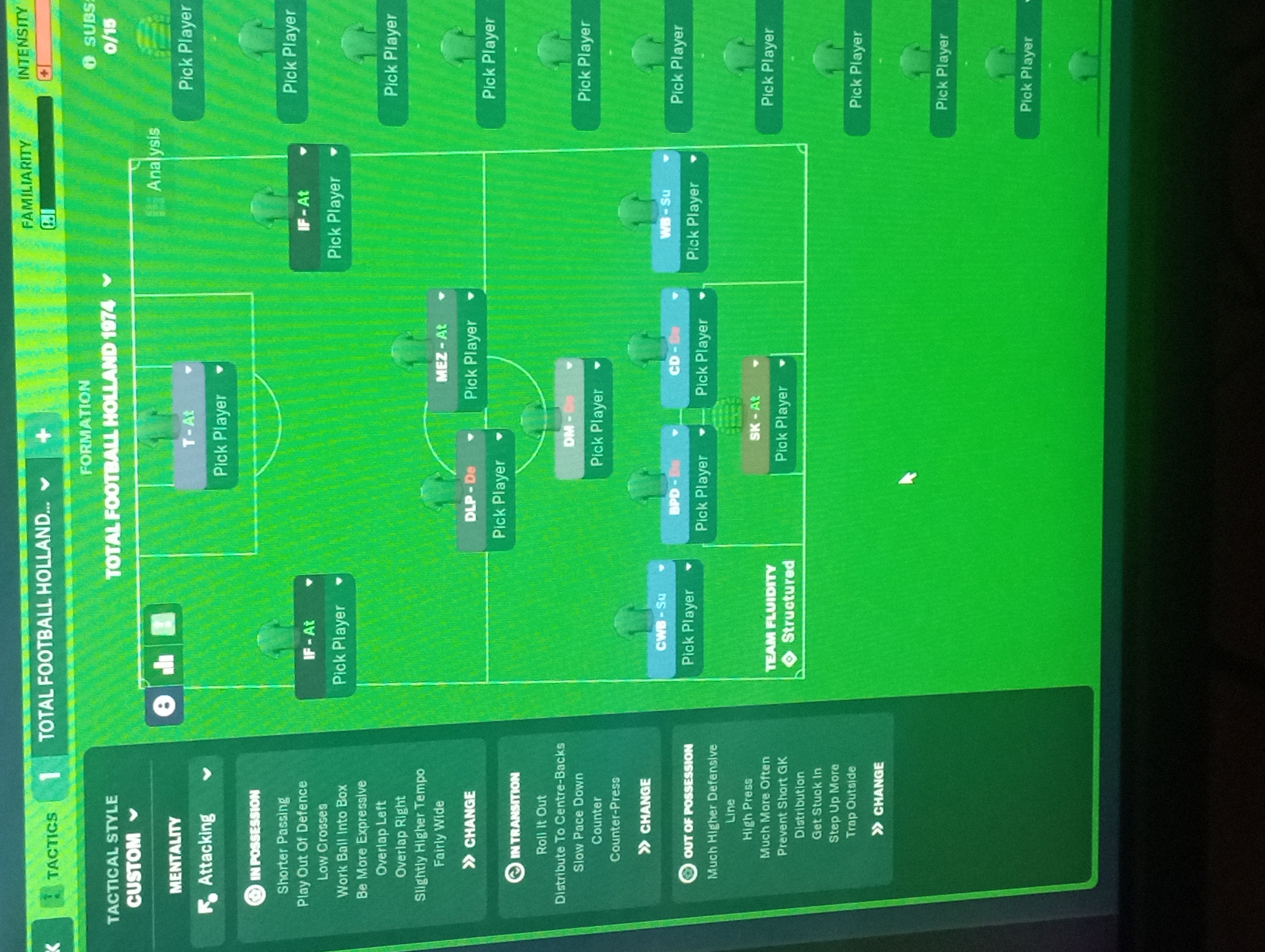
The use of Inside Forwards and a Target Man creates dynamic attacking combinations, allowing for effective goal-scoring opportunities.
Loading tactical analysis...
Total Football
Attacking
4-3-3
Structured
Shorter Passing
Play Out Of Defence
Low Crosses
Work Ball Into Box
Be More Expressive
Overlap Left
Slightly Higher Tempo
Roll It Out
Distribute To Centre-Backs
Slow Pace Down
Counter
Counter-Press
Much Higher Defensive Line
High Press
Much More Often
Prevent Short GK Distribution
Get Stuck In
Step Up More
Trap Outside
ST
Target Man
Attack
IF
Inside Forward
Attack
CWB
Complete Wing-Back
Support
DLP
Deep-Lying Playmaker
Defend
MEZ
Mezzala
Attack
DM
Defensive Midfielder
Support
BPD
Ball Playing Defender
Defend
CD
Central Defender
Defend
WB
Wing-Back
Support
SK
Sweeper Keeper
Attack
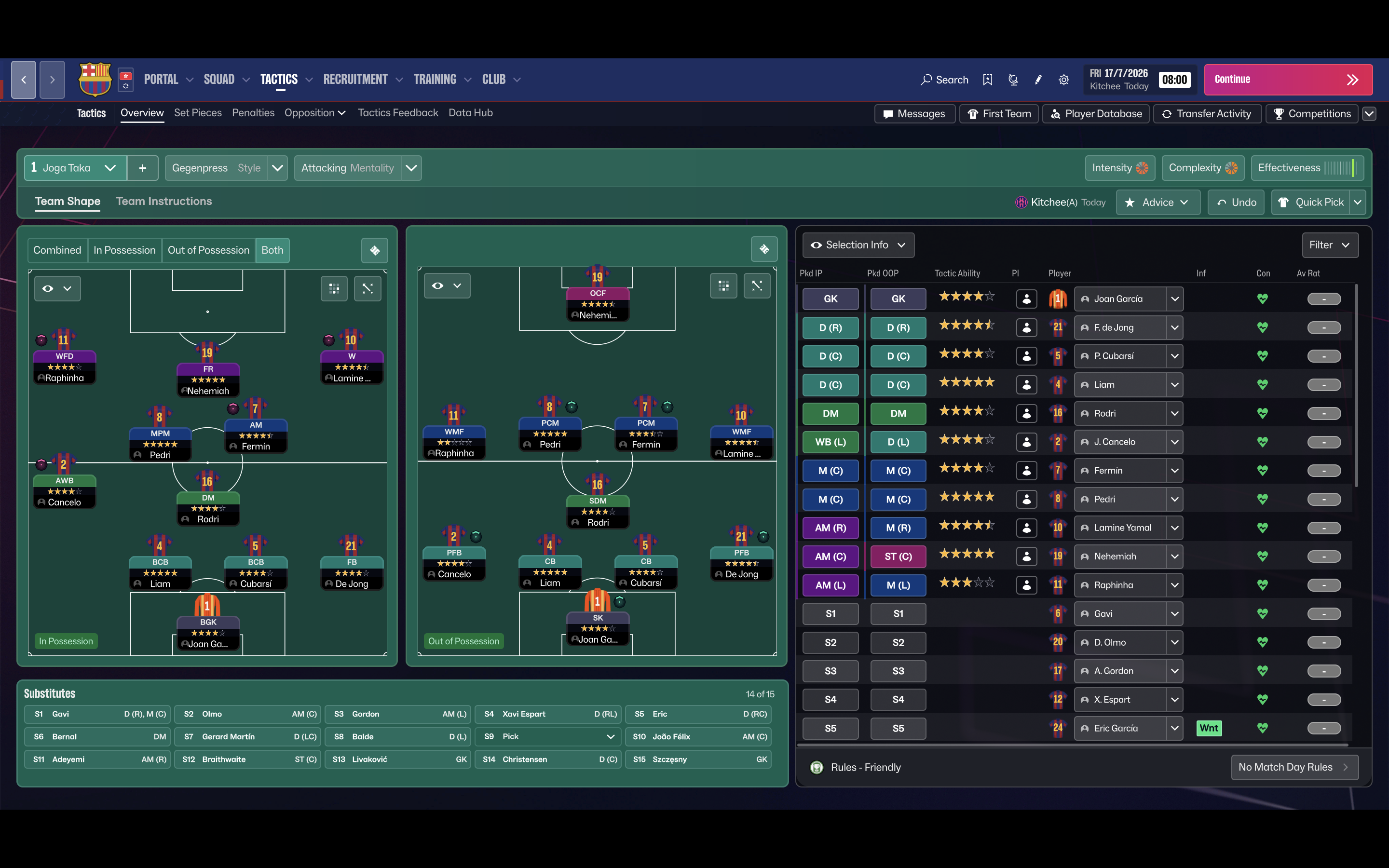
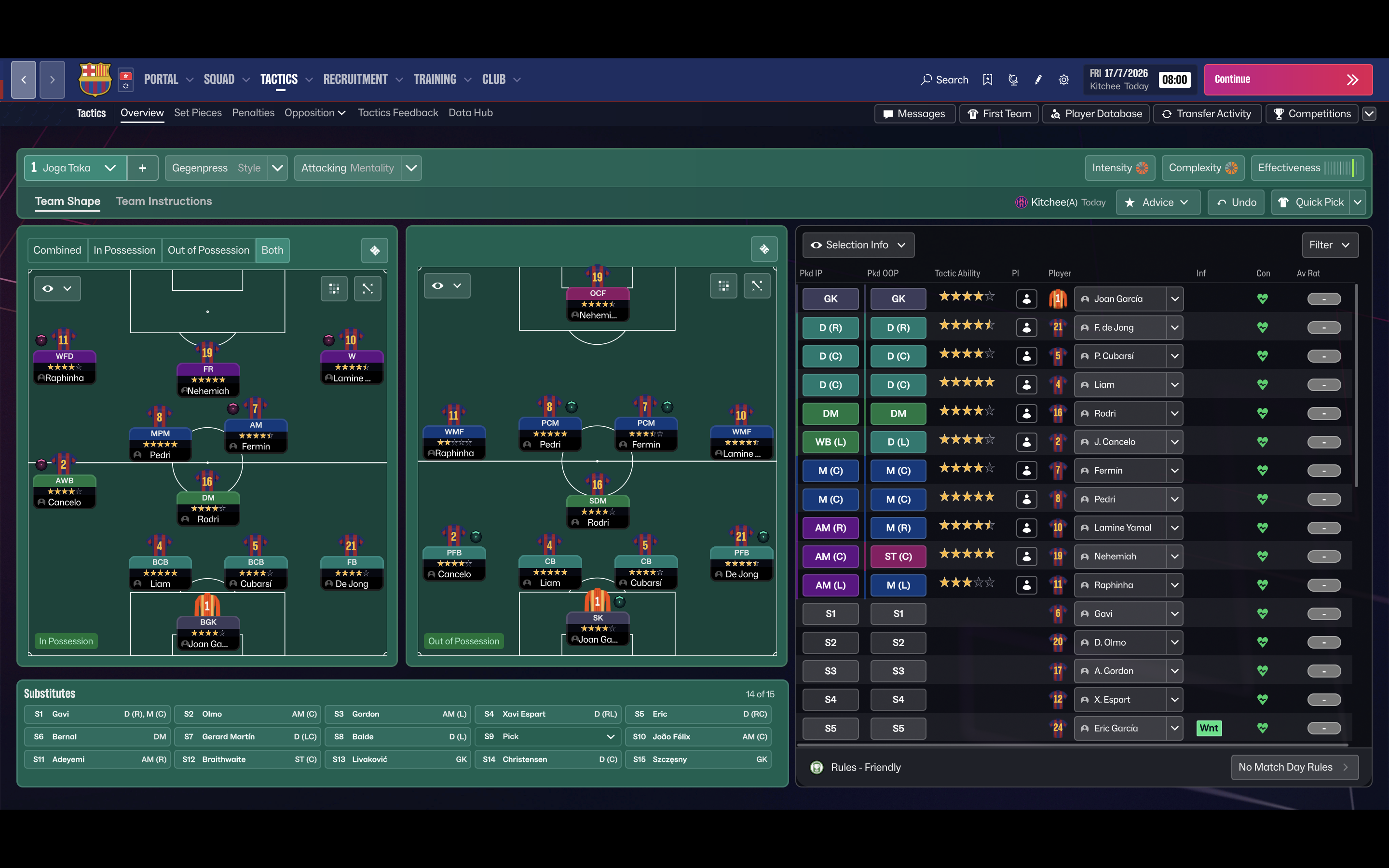
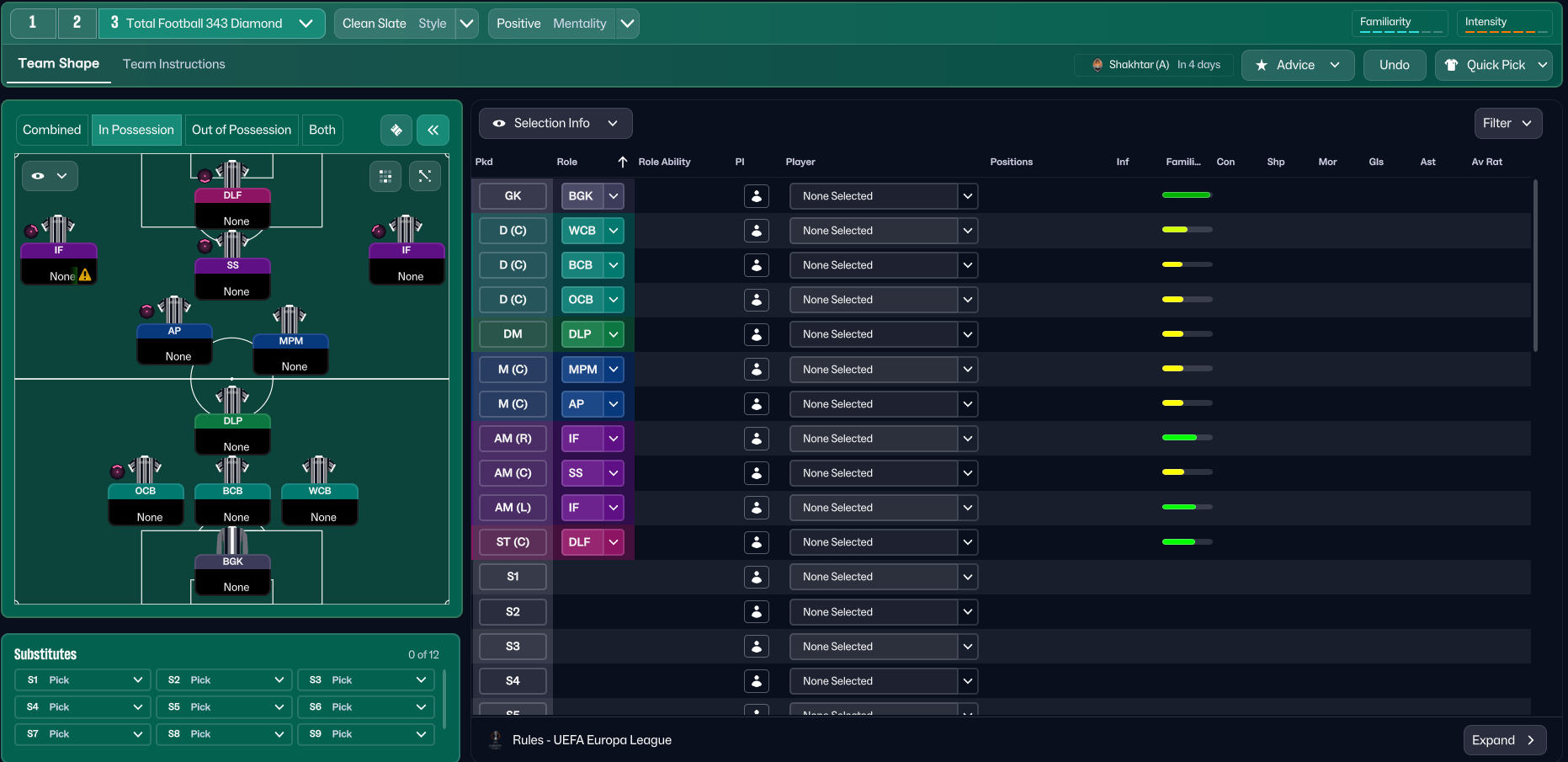
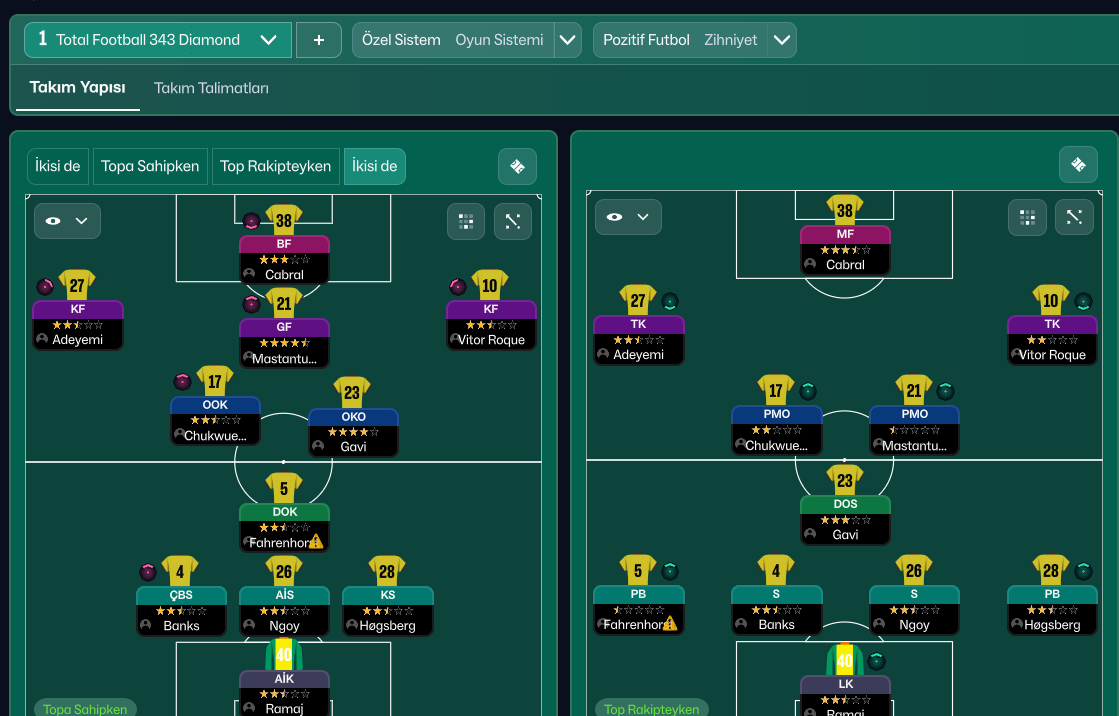
The use of Inside Forwards and a Target Man creates dynamic attacking combinations, allowing for effective goal-scoring opportunities.
The Deep-Lying Playmaker combined with a Mezzala facilitates both defensive solidity and forward progression, ensuring control in midfield.
A much higher defensive line can be risky against fast opposition forwards, possibly leading to vulnerability in counter-attacks.
The Sweeper Keeper's attacking mentality might conflict with a high press, potentially leading to rushed long balls that lose possession.
How can we better utilize the width of the pitch with our attacking players?
How adaptable is our formation against various opposition strategies?
Are the player roles working effectively in unison, or do they need adjustment?
What adjustments can we make to our defensive line to increase stability?
How can we improve our counter-attacking efficiency?
Is our pressing intensity appropriate for our player conditioning and strengths?
The tactical theory behind the 4-3-3: roles, instructions, and the trade-offs that decide whether the system holds up.
Holder, runner, creator: the role distribution rule for three-man midfields, the AMC variants, and the antipatterns that break them.
Klopp-style gegenpressing in FM, including squad profile, line-and-press pairing, sustainable workload, and the antipatterns to avoid.
How Mentality, Duty, and Role interact in FM, why duty trumps mentality every time, and the role-on-top-of-duty composition rules.