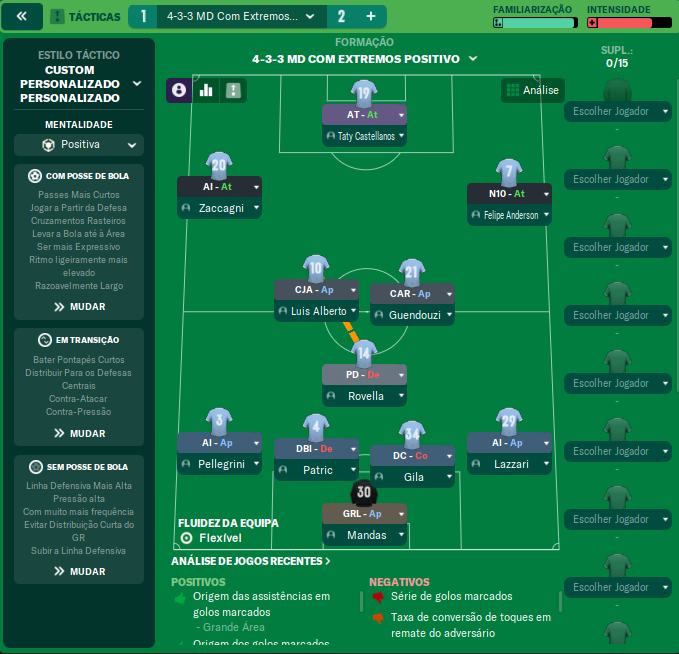
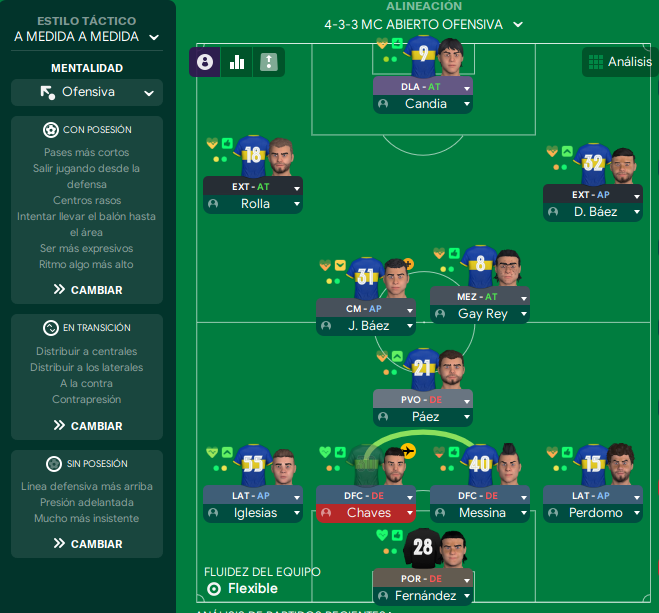
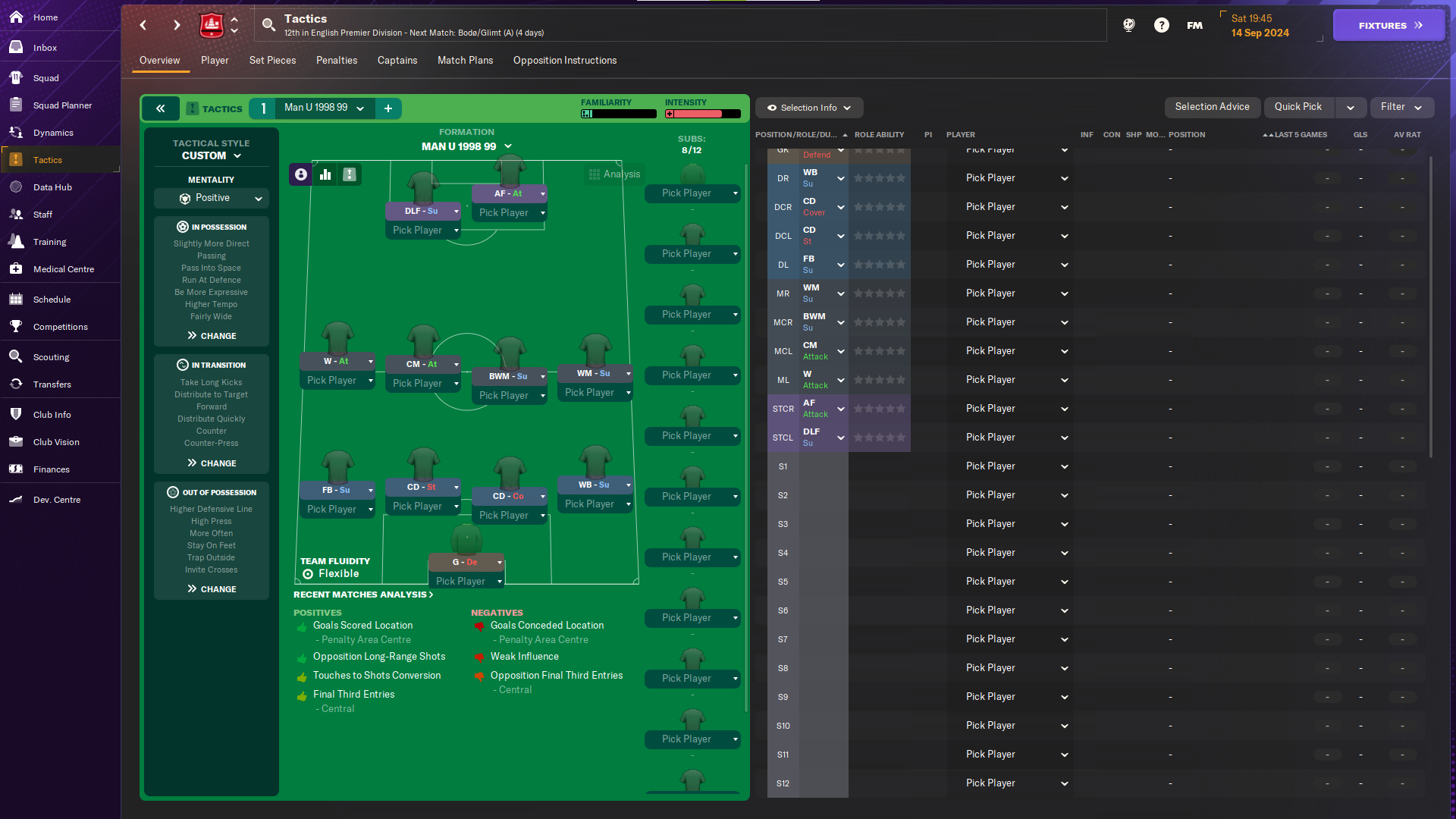
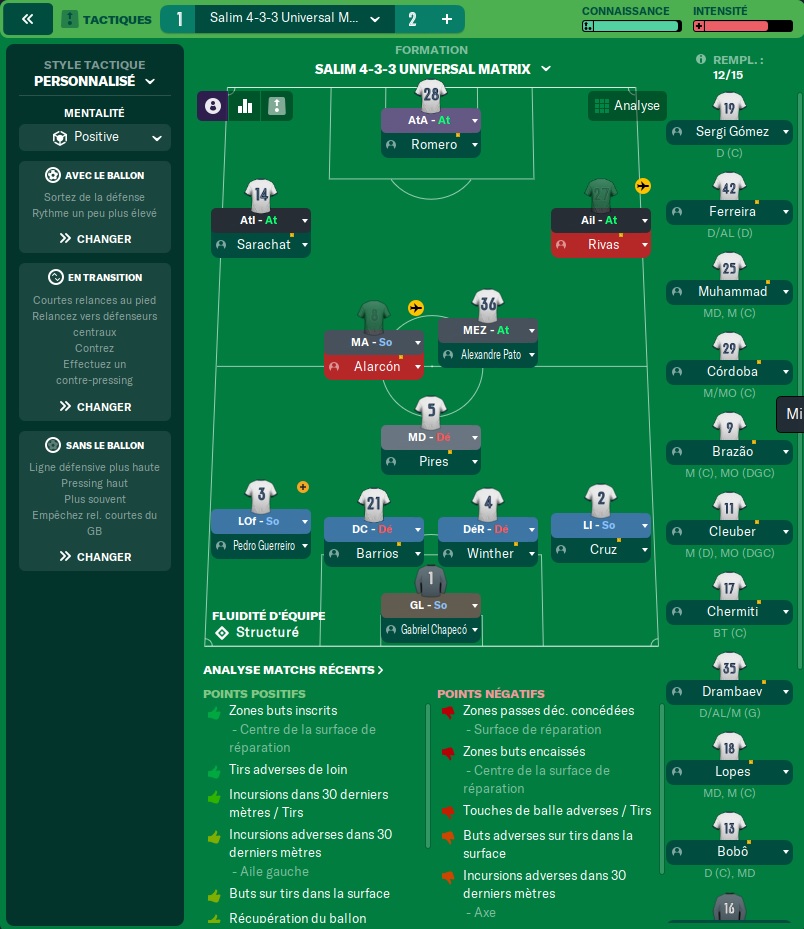
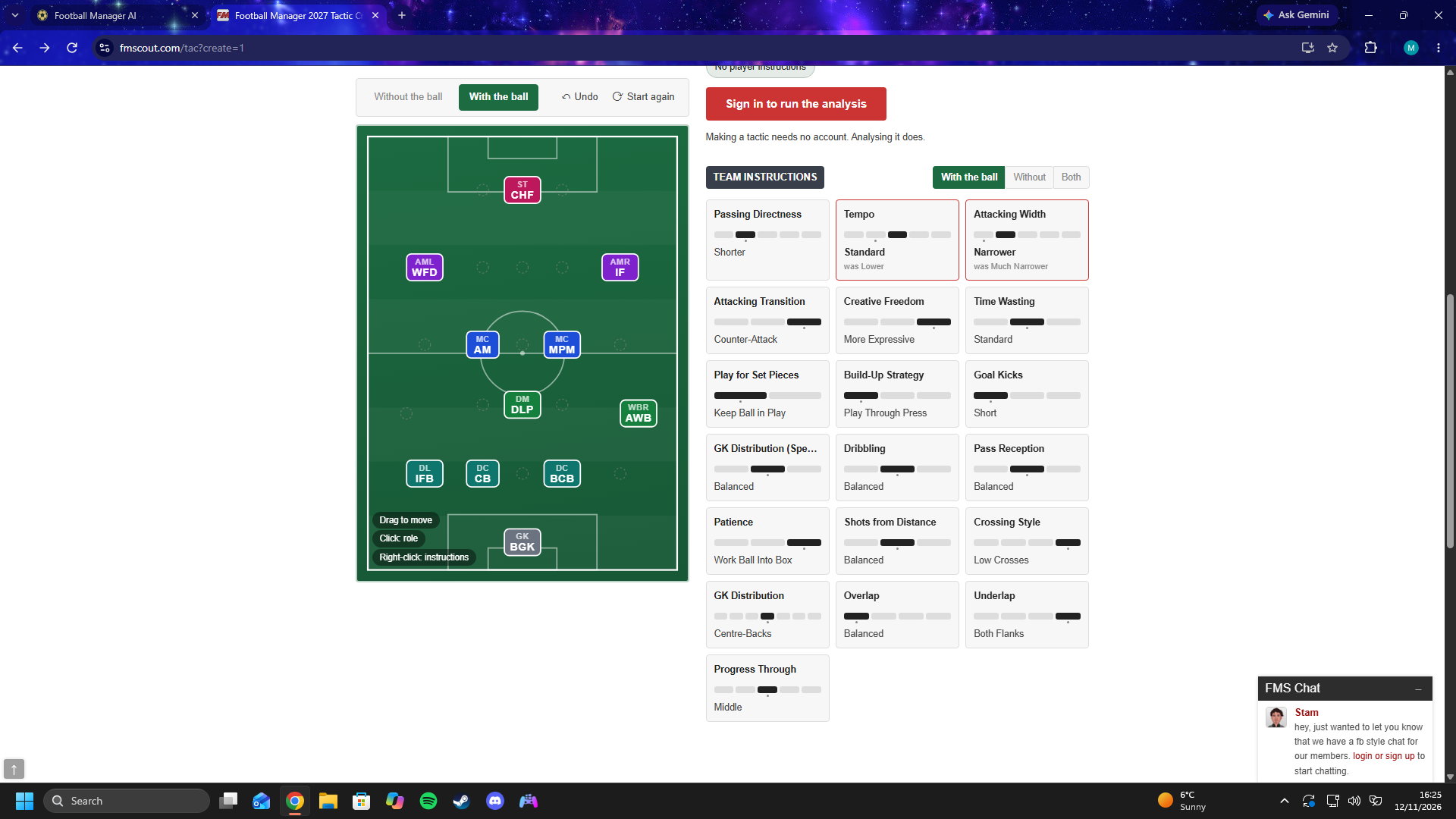
4-3-3
Creating goal-scoring opportunities through wide play. Utilizes the width of the pitch to destabilize the opposition.
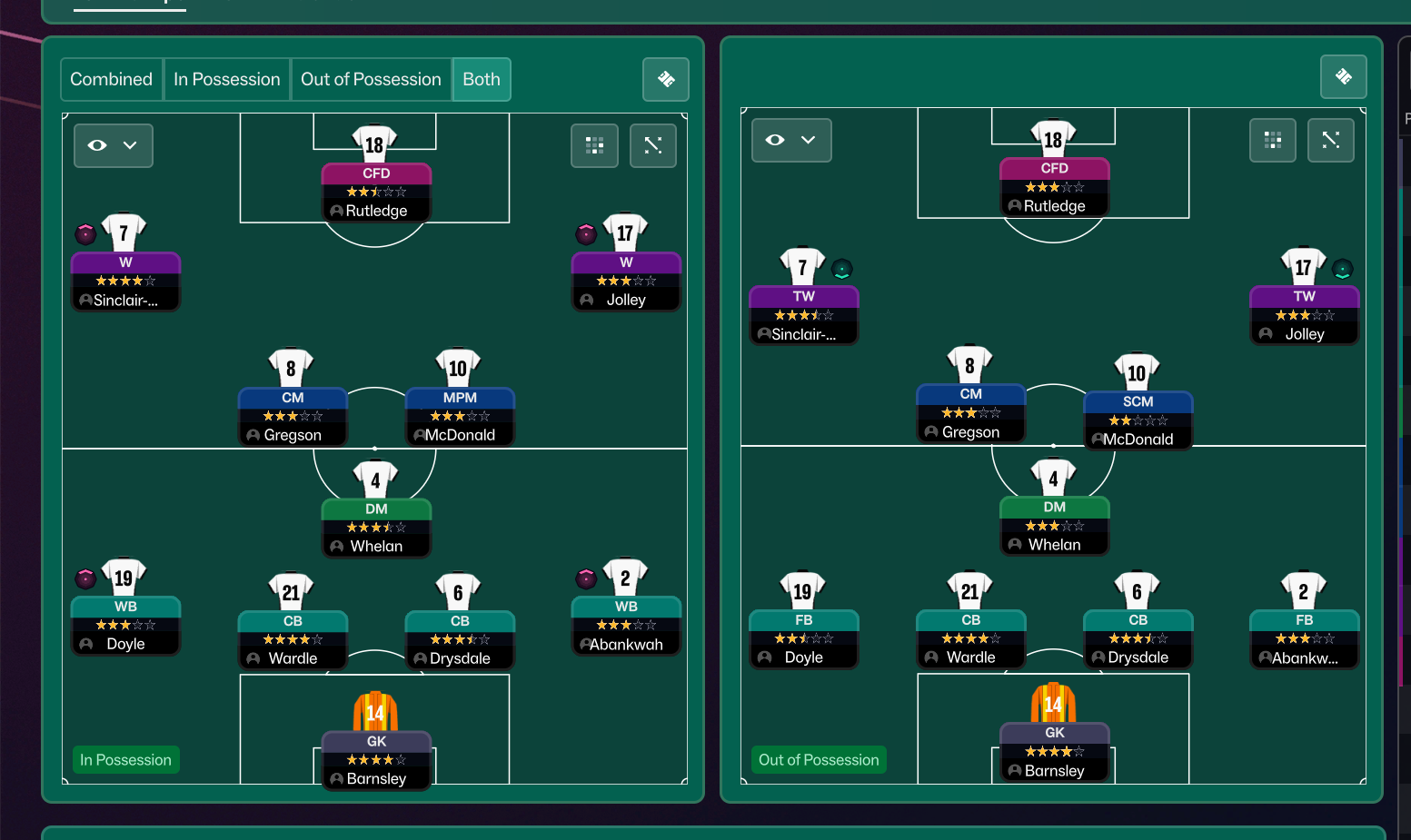
Loading tactical analysis...
4-3-3
Play Out of Defence
Work Ball Into Box
Create Overlapping Chances
Counter-Press
Counter
Higher Defensive Line
Higher Line of Engagement
Use Offside Trap
GK
G
CB
CB
CB
CB
WB
WB
At
DM
DM
CM
MPM
CM
CM
W
W
CF
CFD
W
TW
Focuses on building play patiently and utilizing width to create chances.
Immediately pressures opponents to regain possession quickly.
Creating goal-scoring opportunities through wide play.
Compact and High
Defensive line is pushed up the pitch, employing an offside trap.
Higher Defensive Line and Use Offside Trap
Fluid Width
Attacking players stretch the opposition, creating spaces for midfield runners.
WB at [2,1] and W at [6,1], [6,5] create width.
Utilizes the width of the pitch to destabilize the opposition.
W at [6,1], [6,5] allow flank play with overlap from WB.
Balanced midfield ensures protection for defence.
DM at [3,1] and 2x CM roles provide coverage.
High defensive line can expose team to fast breaks.
Higher Defensive Line and Counter-Press may leave gaps if the press fails.
Might neglect central attacking options due to a wide focus.
Heavy reliance on width can lead to a lack of central presence.
Defensive Stability
The high press can leave the backline exposed.
Higher Line of Engagement and High Defensive Line.
Width Dependency
Heavy reliance on wide play may allow for central defensive setups by opponents.
W and WB roles may become predictable.
CM (MPM) and W (TW)
Midfielder can find the winger in space for quick attacks.
MPM at [3,3] with TW at [6,5].
WB and W
Overlapping wing-back provides support and unpredictability.
WB at [2,1] overlaps W at [6,1].
How effective is the current pressing strategy in your matches?
Have you considered varying the tactical approach based on opponent strengths?
What are your thoughts on transitioning between attacking and defensive shapes?
The tactical theory behind the 4-3-3: roles, instructions, and the trade-offs that decide whether the system holds up.
Why circulation density and zonal occupation aren't the same thing in FM, and the half-space occupation rule that decides build-up.
Build the patient, control-the-tempo style without watching your opponents counter through the gaps you leave behind.
Counter-Press, Regroup, Stand Off, Trigger Press: what each pressing instruction does in FM and how to pair them without contradicting.