Uploaded Tactic
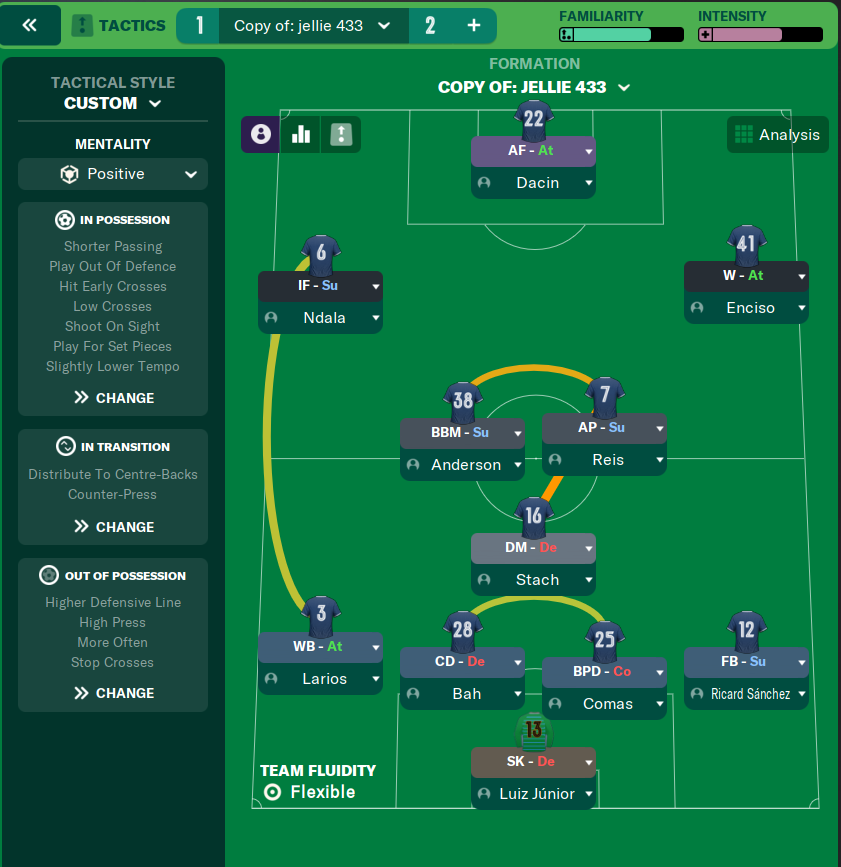
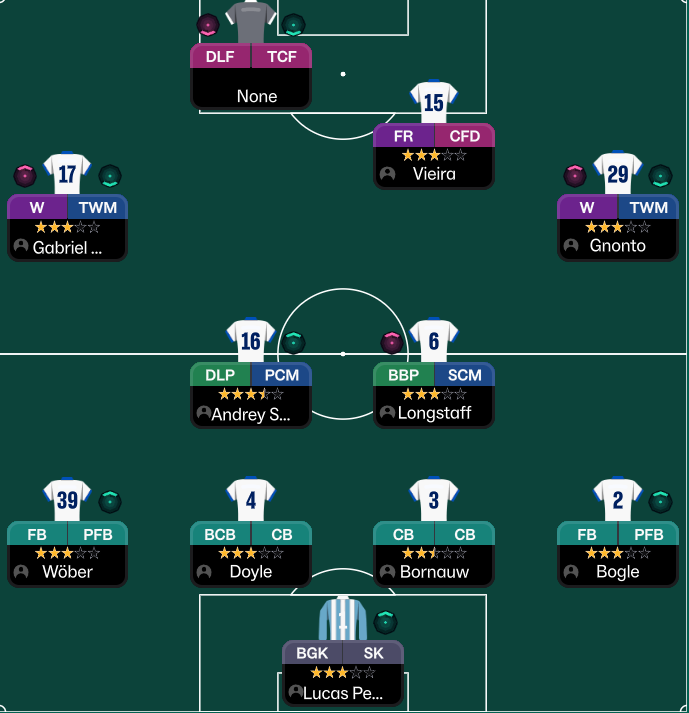
Formation & Style
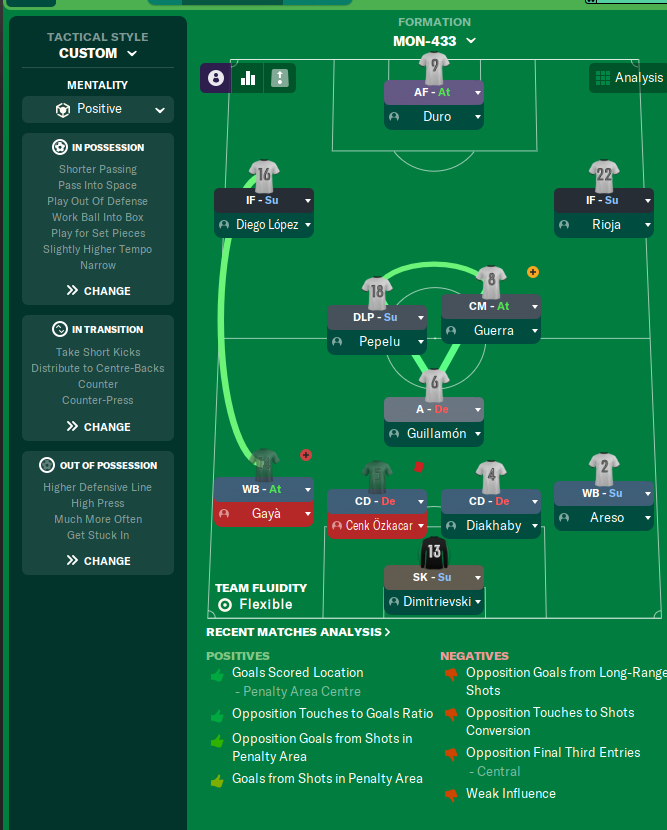
Tactical Style:Custom
Mentality:Positive
Formation:4-3-3
Team Fluidity:Flexible
In Possession
Shorter Passing
Play Out Of Defence
Hit Early Crosses
Low Crosses
Shoot On Sight
Play For Set Pieces
Slightly Lower Tempo
In Transition
Distribute To Centre-Backs
Counter-Press
Out of Possession
Higher Defensive Line
High Press
More Often
Stop Crosses
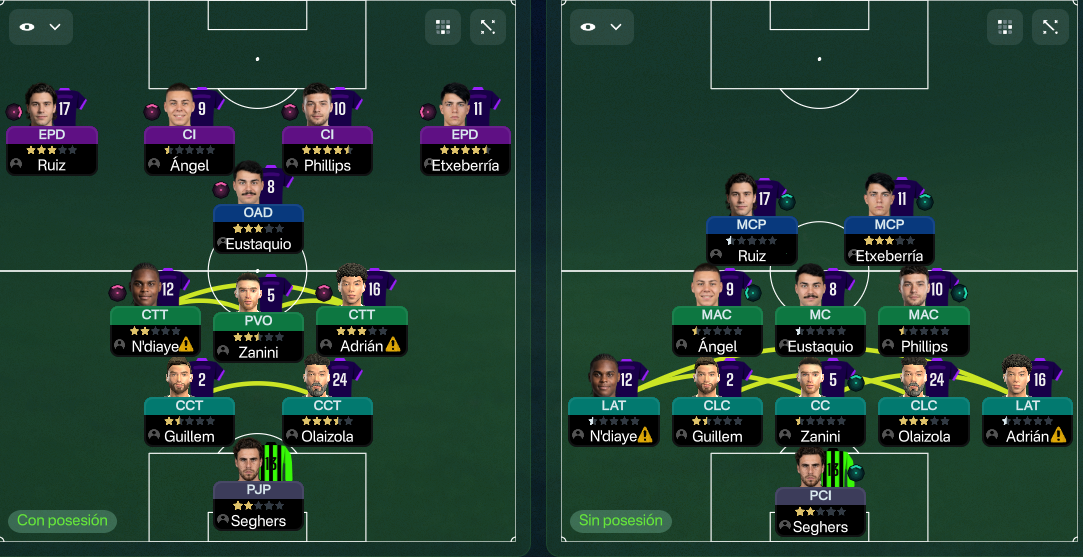
Team Shape Without Ball
Shape:High Press
Description:Aggressively presses opponents to regain possession, supported by a higher defensive line.
Evidence:The combination of 'Higher Defensive Line' and 'High Press'
Team Shape With Ball
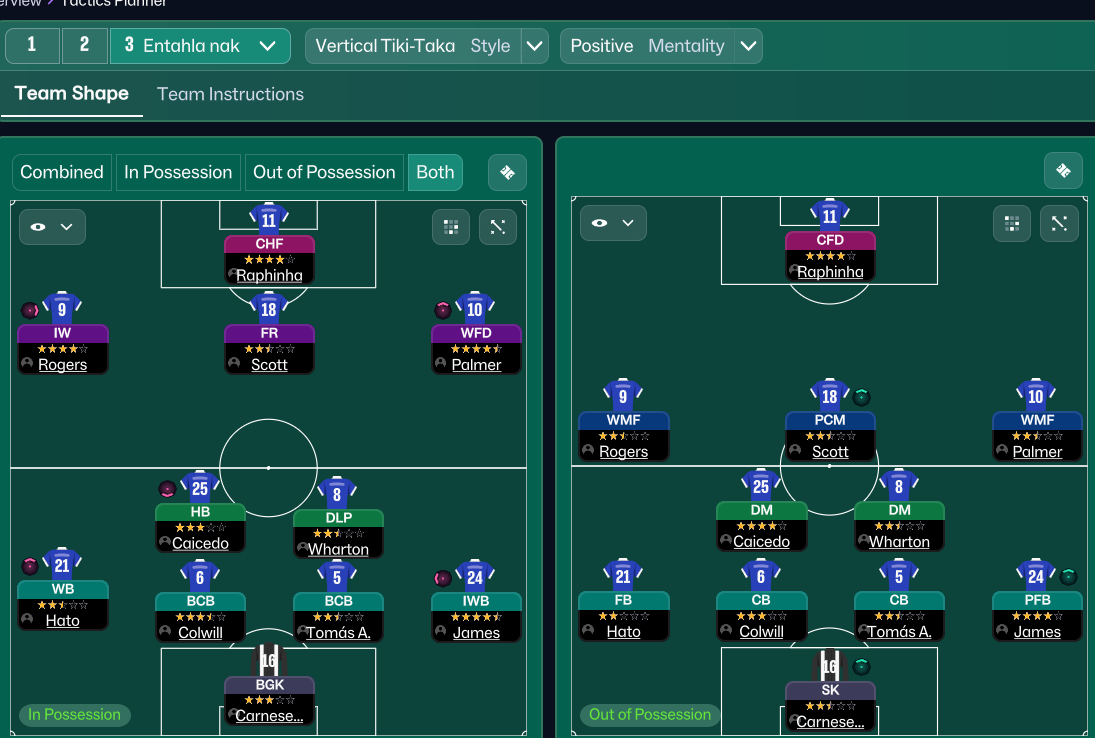
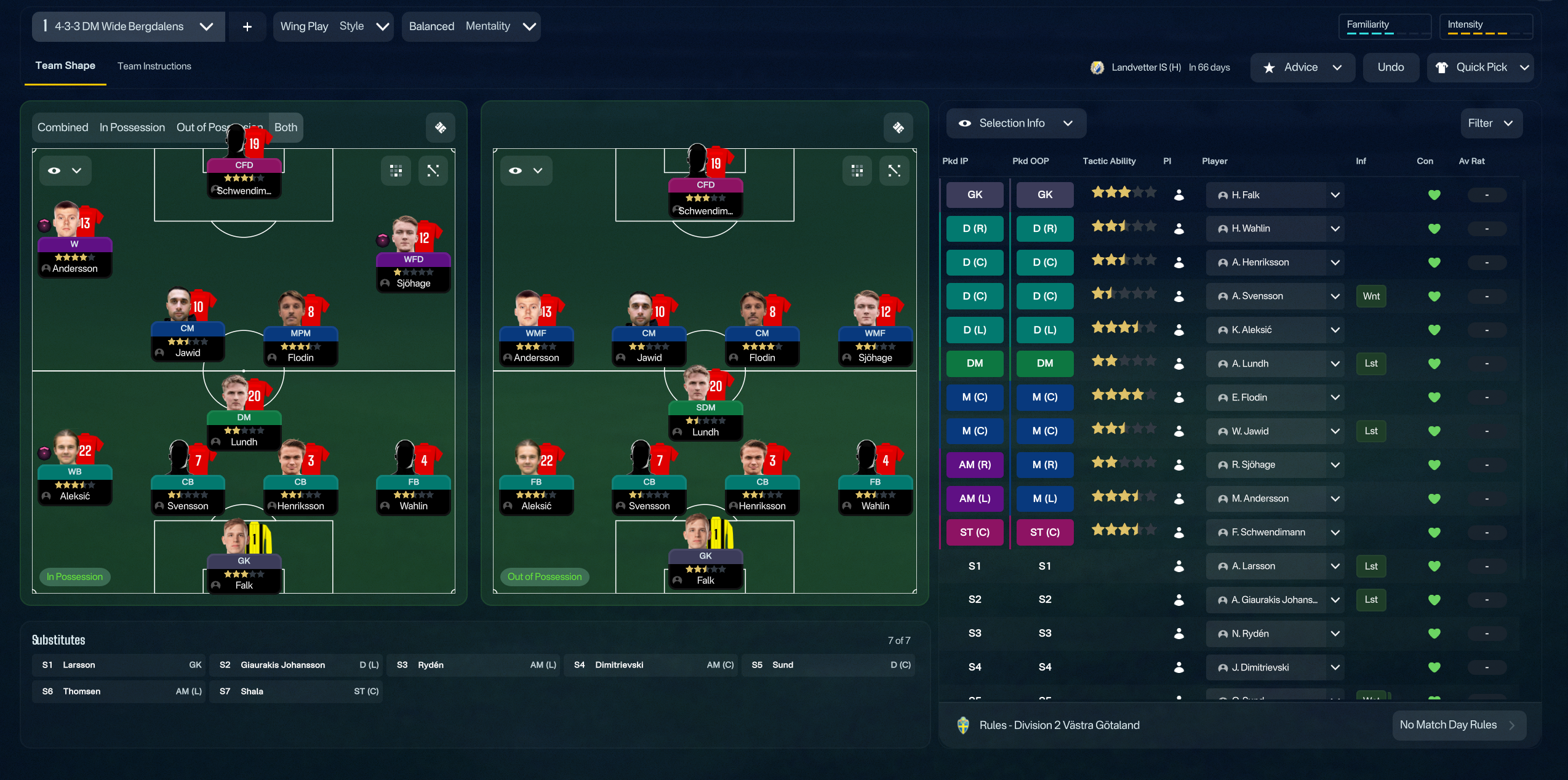
Shape:Fluid 4-3-3
Description:Employs quick attacking transitions with inside and wide options for flexibility in attack.
Evidence:Players like 'Inside Forward' and 'Winger' with early crossing instructions.
Phase Description
Attacking Play
Utilizes width and quick transitions with early crosses and shooting opportunities.
Defensive Transition
Quickly reorganizes to prevent counter-attacks; focused on maintaining structure.
Main Focus
Creating goal-scoring opportunities through fluid play and exploiting spaces.
Key Strengths
Fluid Attack
The combination of the Advanced Forward and Inside Forward creates multiple attacking lanes.
Midfield Control
The Box-to-Box Midfielder and Advanced Playmaker enhance ball retention and distribution.
Defensive Stability
A solid back line with a mix of Centre-Back and Ball-Playing Defender roles supports build-up and recovery.
Conflicting Directions
High Defensive Line Issues
A higher defensive line may expose the back line to through balls if the press is bypassed.
Over-reliance on Crossing
Heavily relying on crossing may limit options against well-organized defenses.
Counter-Press Dependency
The success of the counter-press relies on maintaining high stamina and tactical discipline.
Tactical Suggestions
Consider Transitional Defense
Evaluate a drop in defensive line during transitions to protect against quick counters.
Alternative Attack Strategies
Incorporate more through-the-middle play to diversify offensive tactics.
Player Rotation
Rotate players in the midfield to maintain energy and adaptability during matches.
Ask Questions About Your Lineup
Related Tactics
Guides for this formation
The tactical theory behind the 4-3-3: roles, instructions, and the trade-offs that decide whether the system holds up.
Foundations
Understanding the 4-3-3 Formation
Master the classic 4-3-3: player roles, tactical variations, and the trade-offs that decide whether it sings or stalls.
Read guide
Player pairings
Midfield Trios
Holder, runner, creator: the role distribution rule for three-man midfields, the AMC variants, and the antipatterns that break them.
Read guide
Playing styles
Gegenpressing: A Full Guide
Klopp-style gegenpressing in FM, including squad profile, line-and-press pairing, sustainable workload, and the antipatterns to avoid.
Read guide