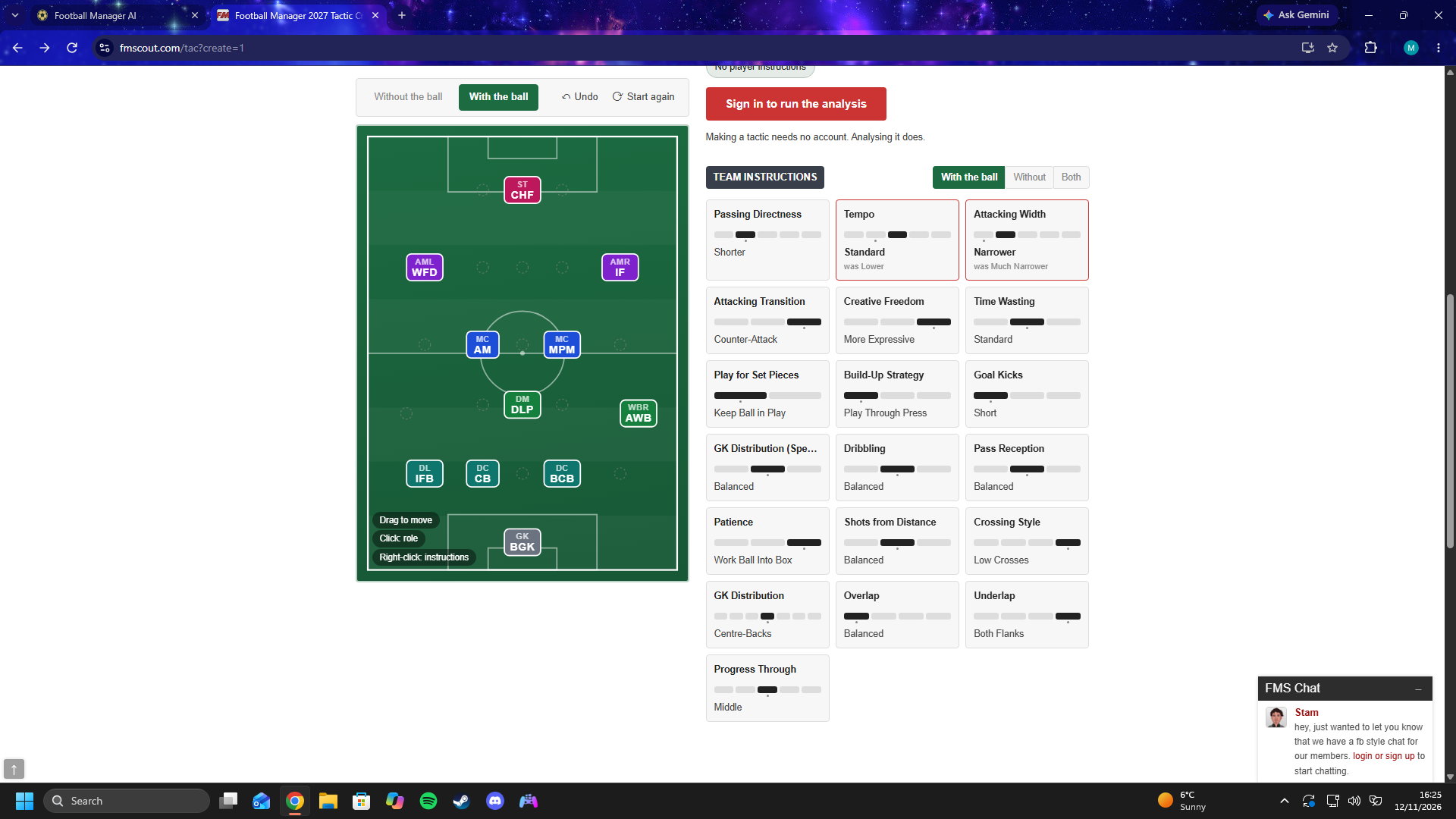
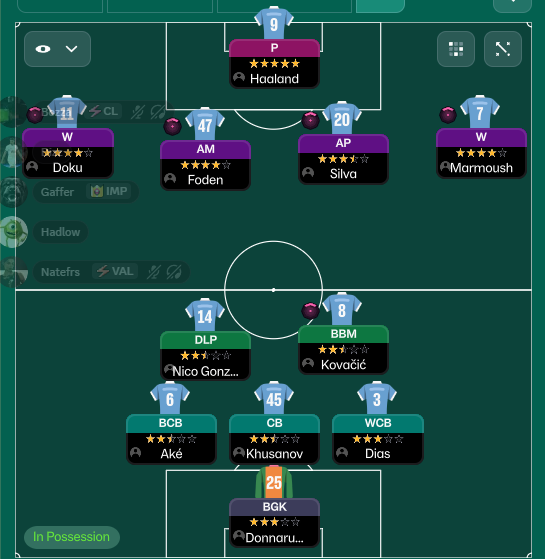
4-3-3
Ball progression from the defence through the midfield to creating chances for the forwards. Utilizing wingers allows for stretching the opposition and…
Loading tactical analysis...
4-3-3
Work Ball Into Box
Play Out of Defence
Run At Defence
Counter-Press
Counter
Higher Defensive Line
Higher Line of Engagement
Prevent Short GK Distribution
GK
Goalkeeper
Defend
CB
Ball-Playing Defender
Defend
CB
Centre-Back
Defend
WCB
Wide Centre-Back
Defend
DLP
Deep-Lying Playmaker
Support
BBM
Box-to-Box Midfielder
Support
AM
Attacking Midfielder
Support
AP
Advanced Playmaker
Support
W
Winger
Attack
W
Winger
Attack
P
Pressing Forward
Attack
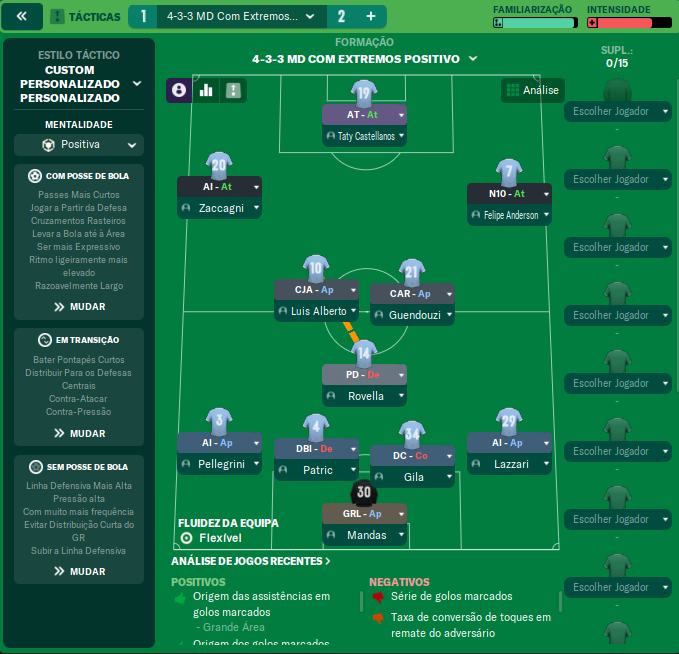
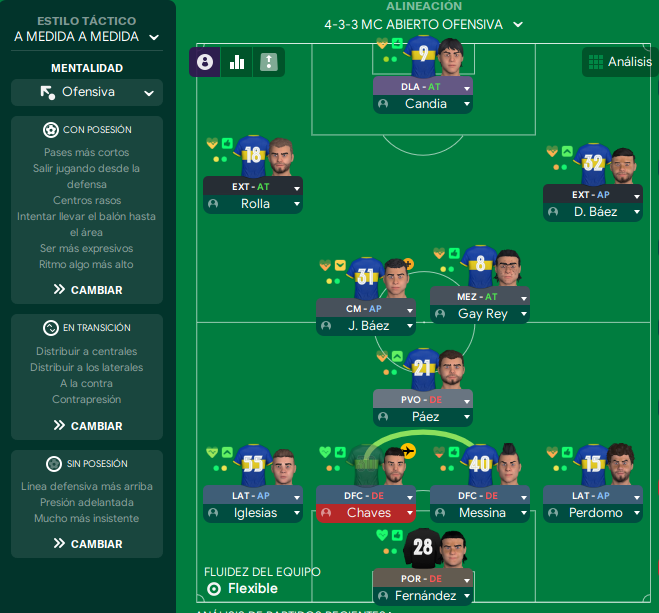
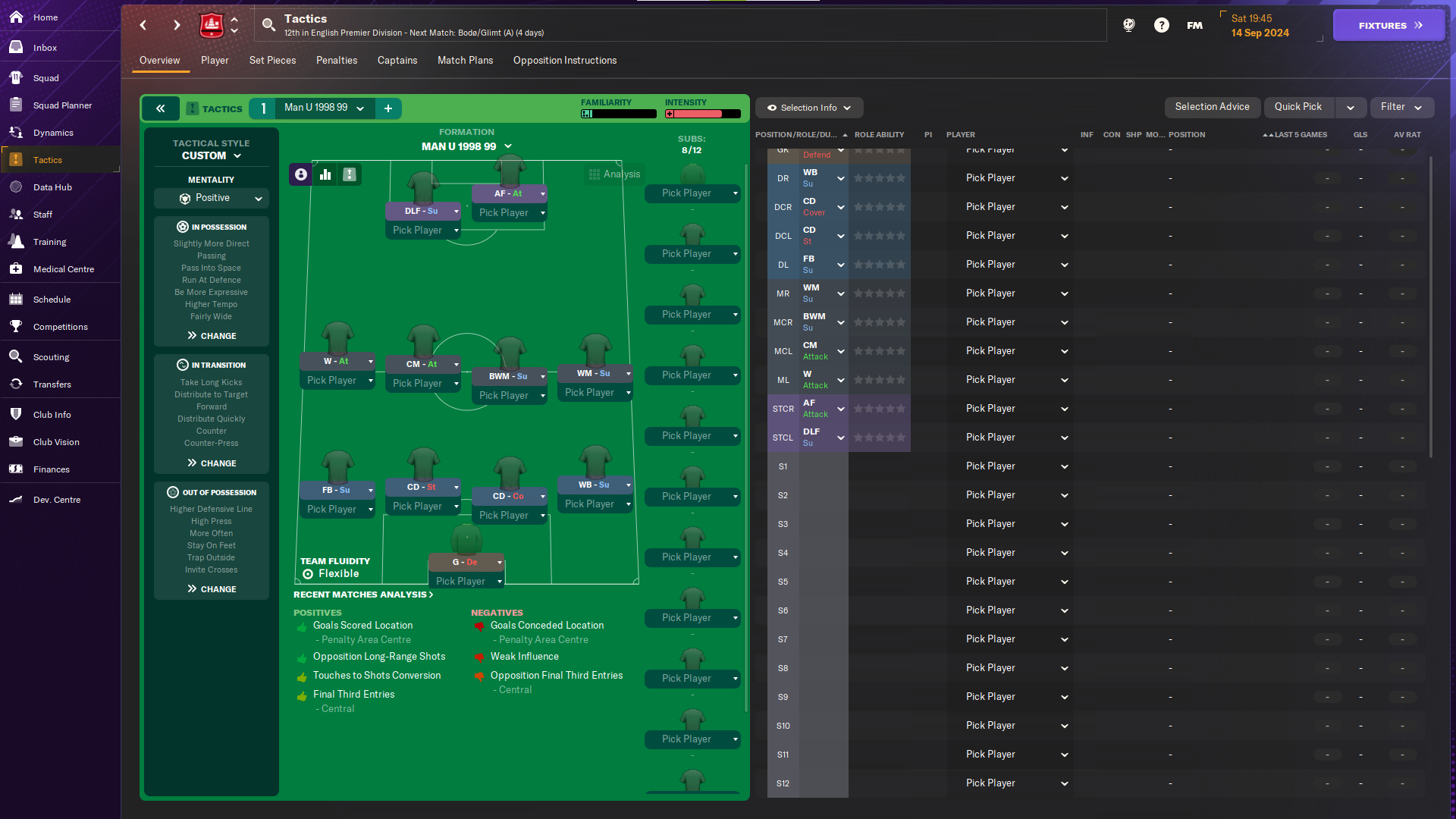
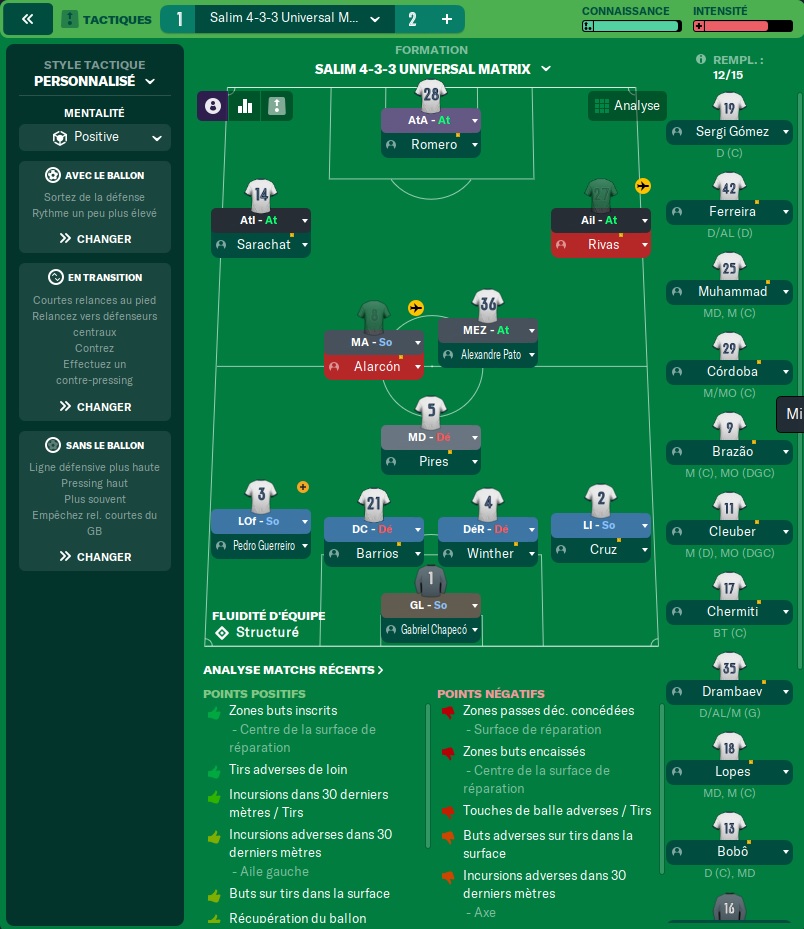
Focuses on quick passing through the midfield with wide players stretching the defence.
Utilizes a counter-press to regain possession quickly after losing the ball.
Ball progression from the defence through the midfield to creating chances for the forwards.
Compact 4-3-3
The team retains a compact shape to limit space for the opposition, especially through the midfield.
CB at [2,2], WCB at [2,3], and DLP at [3,2] contribute to defensive compactness.
Fluid 4-3-3
The formation allows for fluid movements from the wide players and interplay through the midfield.
Wingers at [6,1] and [6,5] provide width while the AM at [5,3] looks to occupy central spaces.
Utilizing wingers allows for stretching the opposition and creating chances from the flanks.
W at [6,1] and [6,5] provide offensive width, supporting P at [6,3].
Strong midfield partnership facilitates transitions from defense to attack.
DLP-S at [3,2] along with BBM at [3,3] ensure effective ball distribution.
Both wide defenders may leave spaces if pushed too high, risking counter-attacks.
WCB at [2,3] and BCB at [2,2] should ensure balanced pushing forward.
Overlapping movements in midfield could lead to congestion and loss of possession.
DLP-S and BBM-S need to maintain width to avoid crowding.
Defensive Width
Wide defenders may be isolated if the ball is lost, creating space for opposition wingers.
Higher defensive line increases risk of wide players exploiting space.
Midfield Coverage
If DLP-S and BBM-S aren't disciplined, opponents can exploit central gaps.
Midfielders must remain central to maintain shape against counters.
DLP-S and BBM-S
Complement each other with possession, maintaining balance between defense and attack.
DLP-S at [3,2] distributing while BBM-S at [3,3] supports and covers.
Wingers and Striker
Wingers provide width and assists while the striker offers focal point in the box.
W at [6,1] and [6,5] contributing to goalscoring opportunities for P at [6,3].
How can the team maintain defensive solidity during aggressive pressing?
What adjustments can be made against teams with strong central play?
How important is the role of substitutes in maintaining the team's press?
The tactical theory behind the 4-3-3: roles, instructions, and the trade-offs that decide whether the system holds up.
Holder, runner, creator: the role distribution rule for three-man midfields, the AMC variants, and the antipatterns that break them.
Klopp-style gegenpressing in FM, including squad profile, line-and-press pairing, sustainable workload, and the antipatterns to avoid.
Pass map, average position, xG, possession by zone: what each tablet panel tells you in FM and the tactical change it should trigger.