Uploaded Tactic
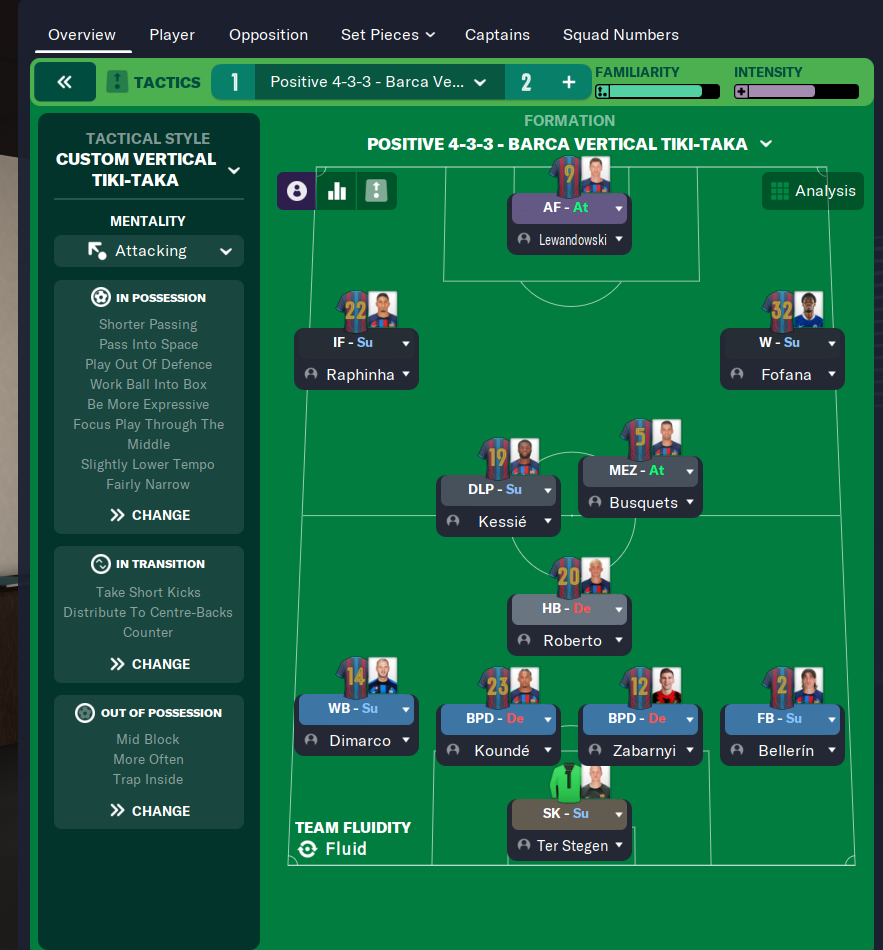
Formation & Style
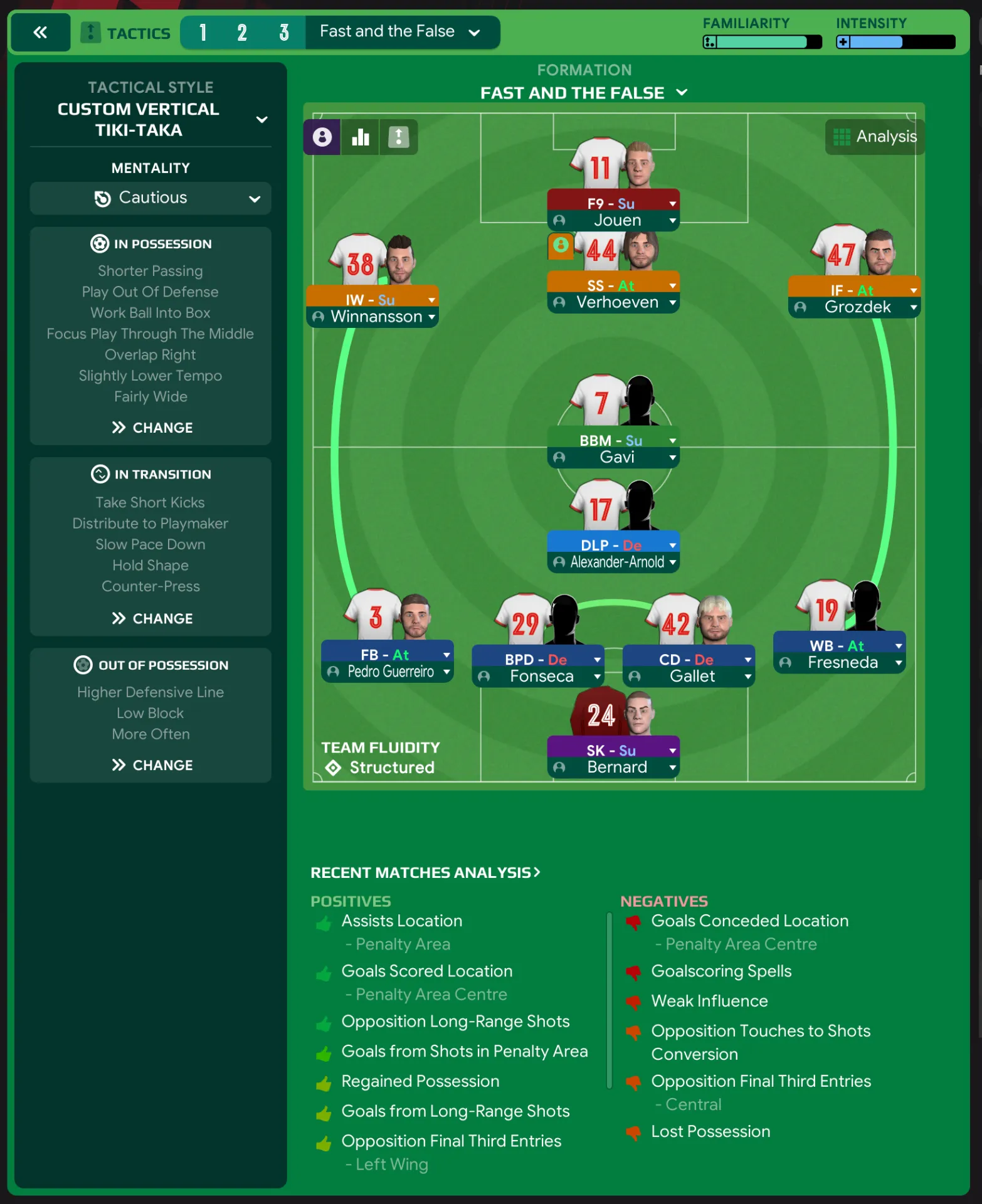
Tactical Style:Custom Vertical Tiki-Taka
Mentality:Attacking
Formation:4-3-3
Team Fluidity:Fluid
In Possession
Shorter Passing
Pass Into Space
Play Out Of Defence
Work Ball Into Box
Be More Expressive
Focus Play Through The Middle
Slightly Lower Tempo
Fairly Narrow
In Transition
Take Short Kicks
Distribute To Centre-Backs
Counter
Out of Possession
Mid Block
More Often
Trap Inside
Team Shape Without Ball
Shape:Mid Block
Description:The team engages in a mid-block, maintaining shape and pressing when the opponent enters the half.
Evidence:Mid Block instruction and Trap Inside.
Team Shape With Ball
Shape:Fluid and Attacking
Description:Utilizing width with Winger and Inside Forward while Advanced Forward seeks to penetrate defensive lines.
Evidence:Attacking mentality and positive tactical style emphasize vertical play.
Phase Description
Attacking Play
Focus on possession with short passing and vertical movement, utilizing the Mezzala and Inside Forward to create inside channels.
Defensive Transition
Quickly regroup into a mid-block setup to regain possession and counter effectively.
Main Focus
Utilizing width and quick interchanges to break down opposing defenses.
Key Strengths
Positional Play
The shape allows for effective control of space, enabling players to find pockets to receive and distribute.
Dynamic Movement
Players make intelligent runs, creating multiple threats in attack due to the fluidity of roles.
Ball Retention
Short, concise passing combined with players capable of maintaining possession leads to fewer turnovers.
Conflicting Directions
Mid Block vs High Press
The mid-block setup conflicts with high pressing systems, reducing effectiveness in regaining quick possession.
Narrow Width vs Opponent's Width
A fairly narrow playstyle might be vulnerable against teams utilizing high wingers or wing-backs.
Defensive Solidity vs Offensive Fluidity
Overcommitting in attack may leave gaps during transitions if not well-timed.
Tactical Suggestions
Adjust Width in Attack
Consider expanding width in attacking phases to stretch the opposition and create more space in the middle.
Enhanced Defensive Cover
Implement additional covering roles or adjust the duties of wing-backs to provide better defensive stability.
Increase Pressing Intensity
Consider raising the pressing efforts to disrupt opponents more effectively when regaining possession.
Ask Questions About Your Lineup
Related Tactics
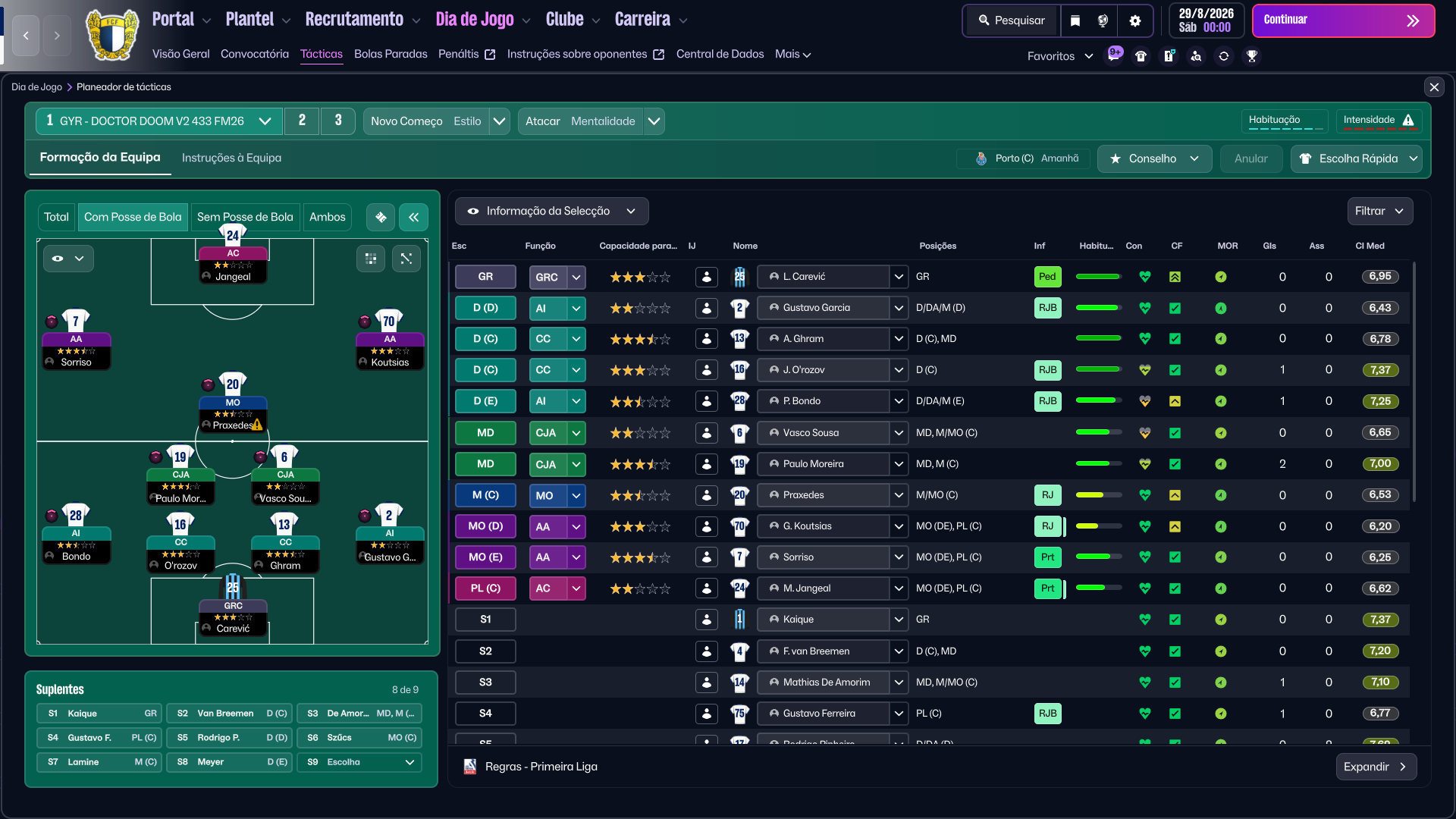
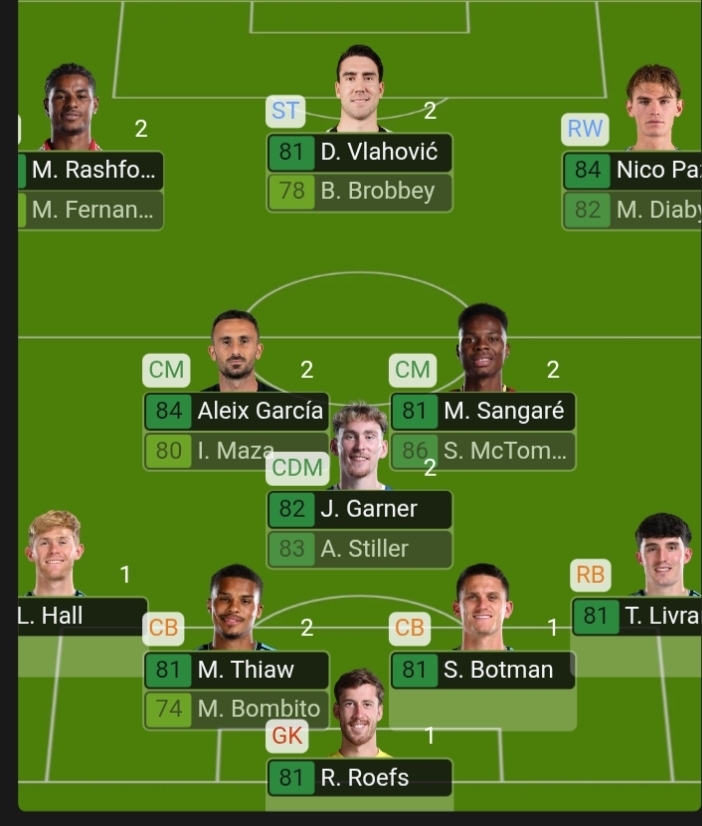
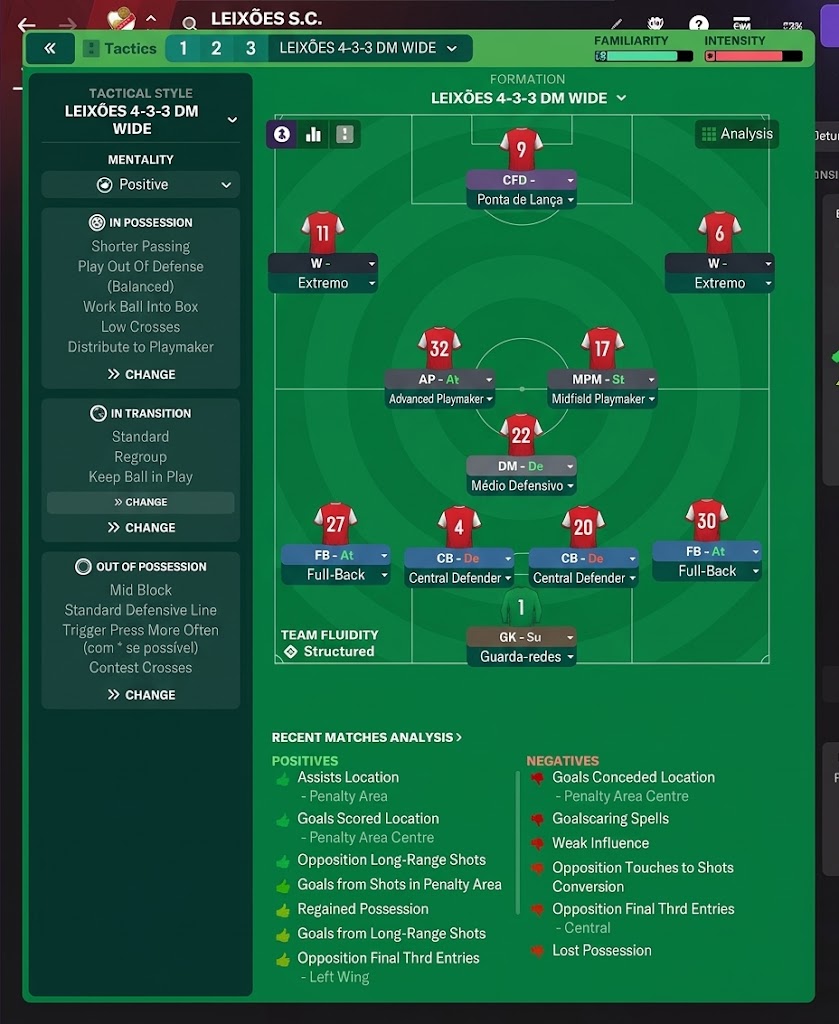
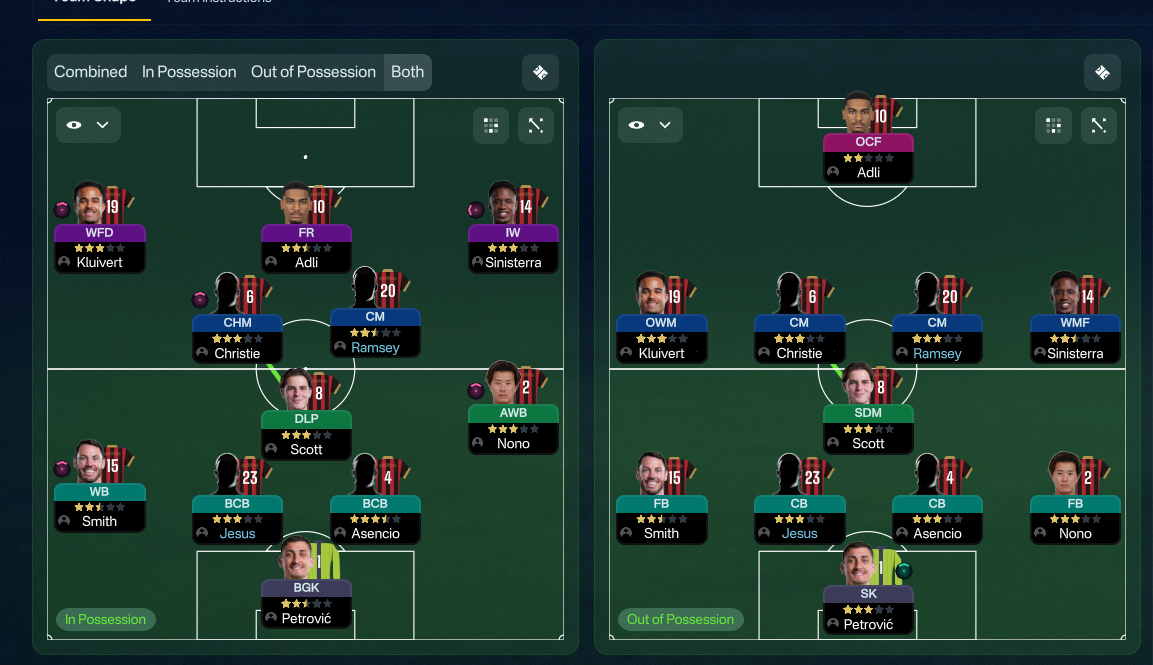
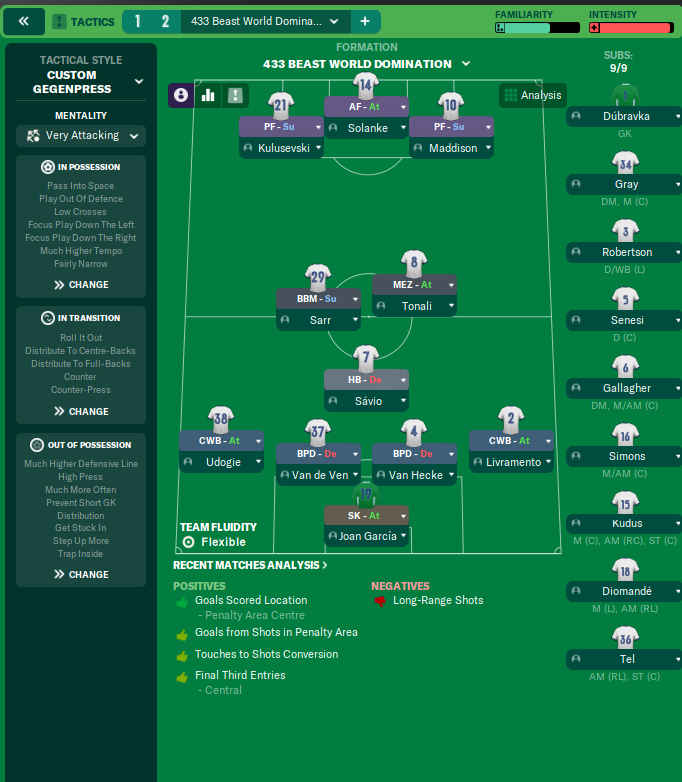
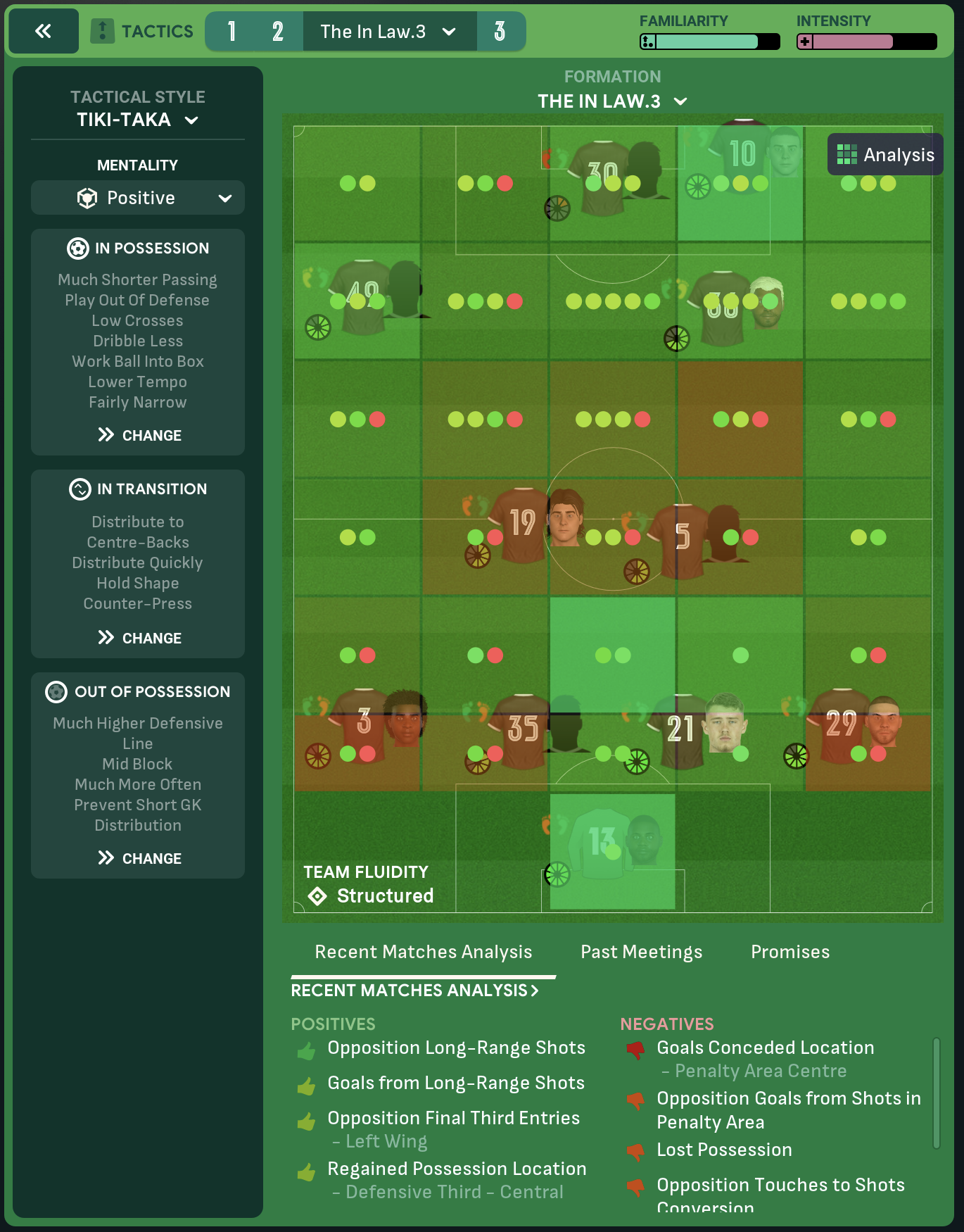
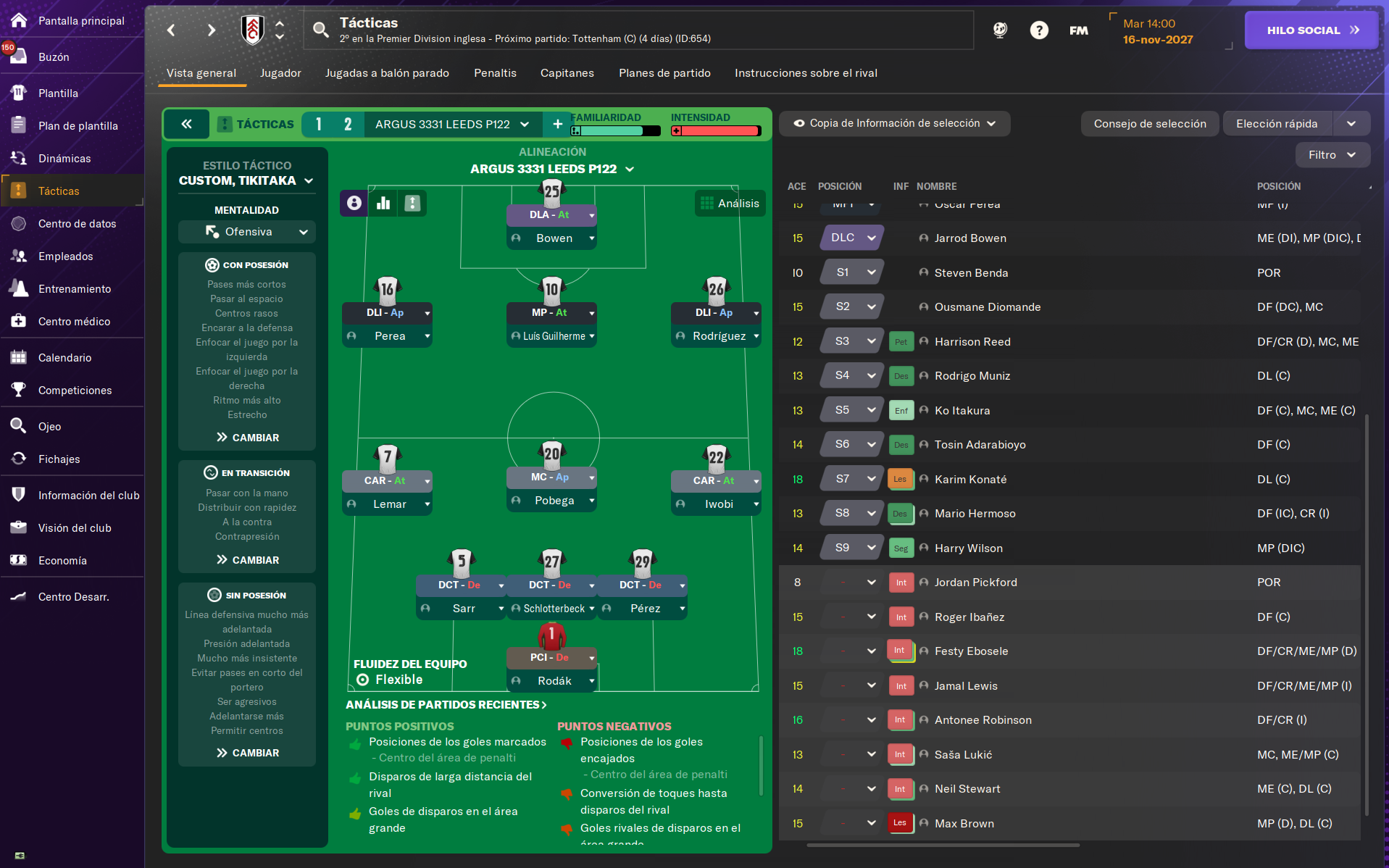
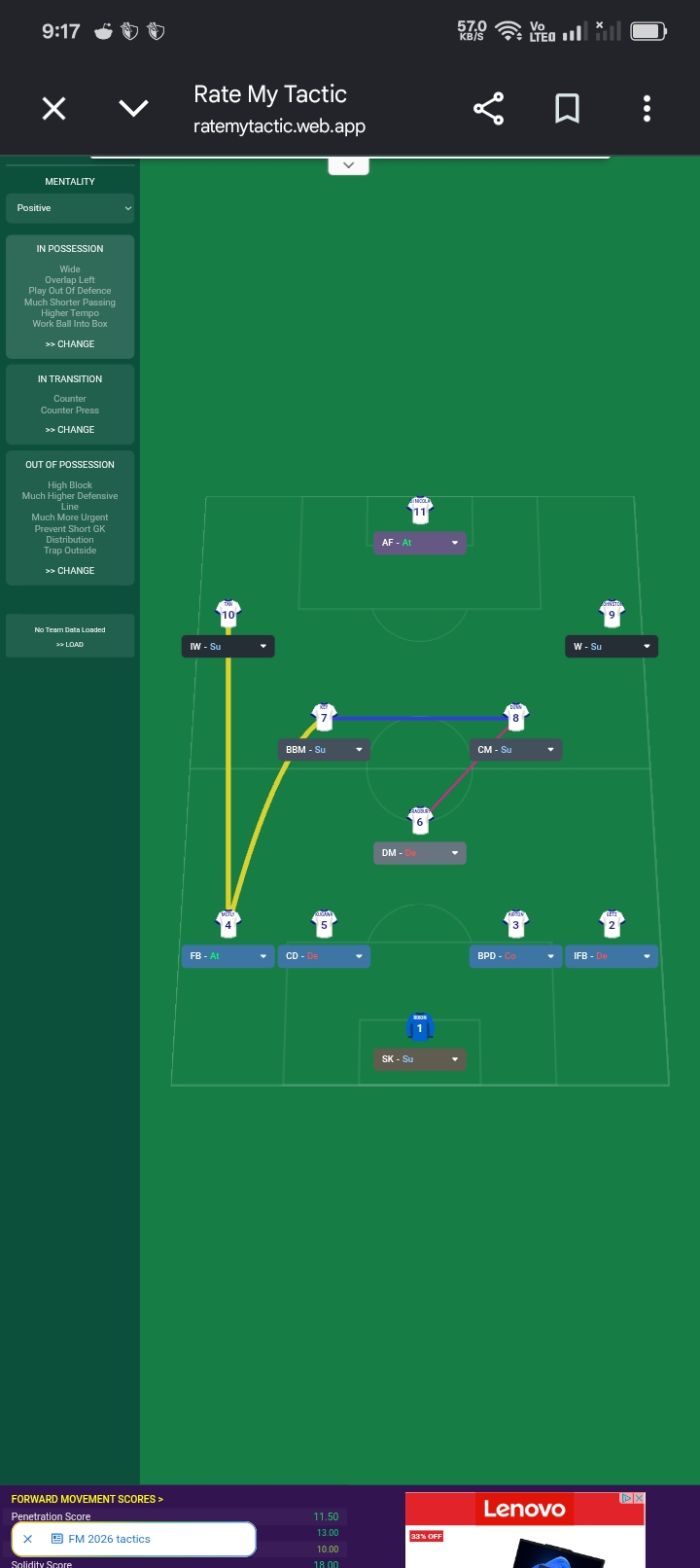
More Custom Vertical Tiki-Taka tactics
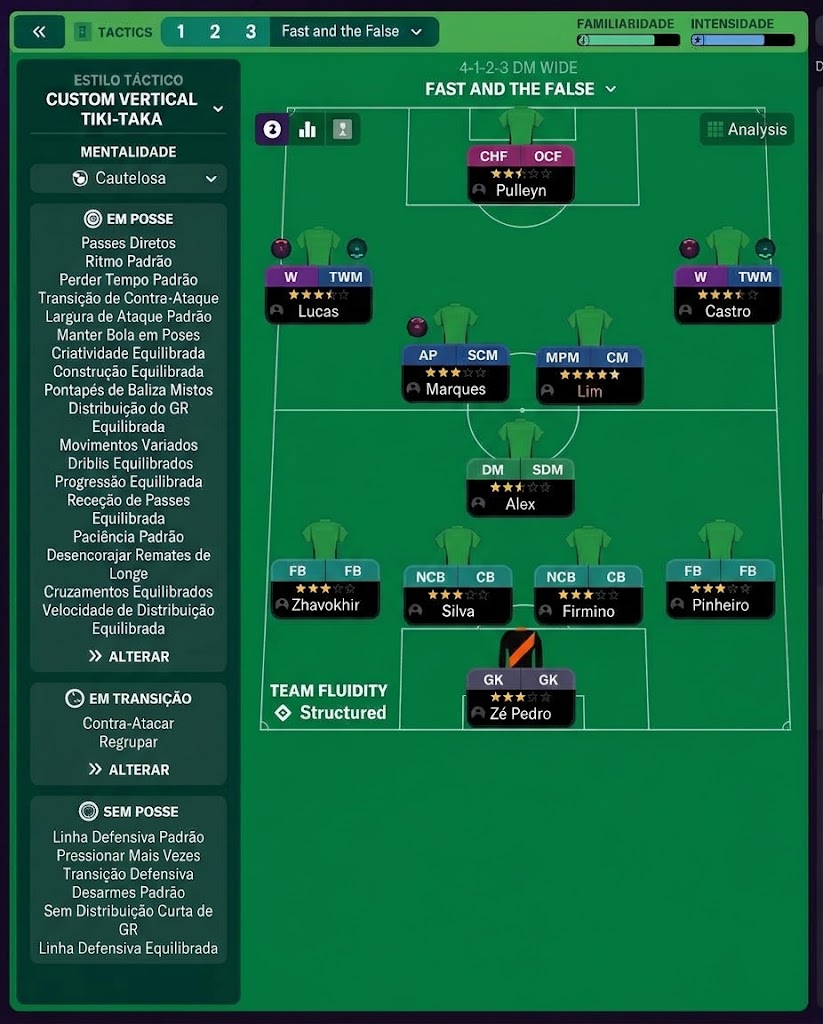
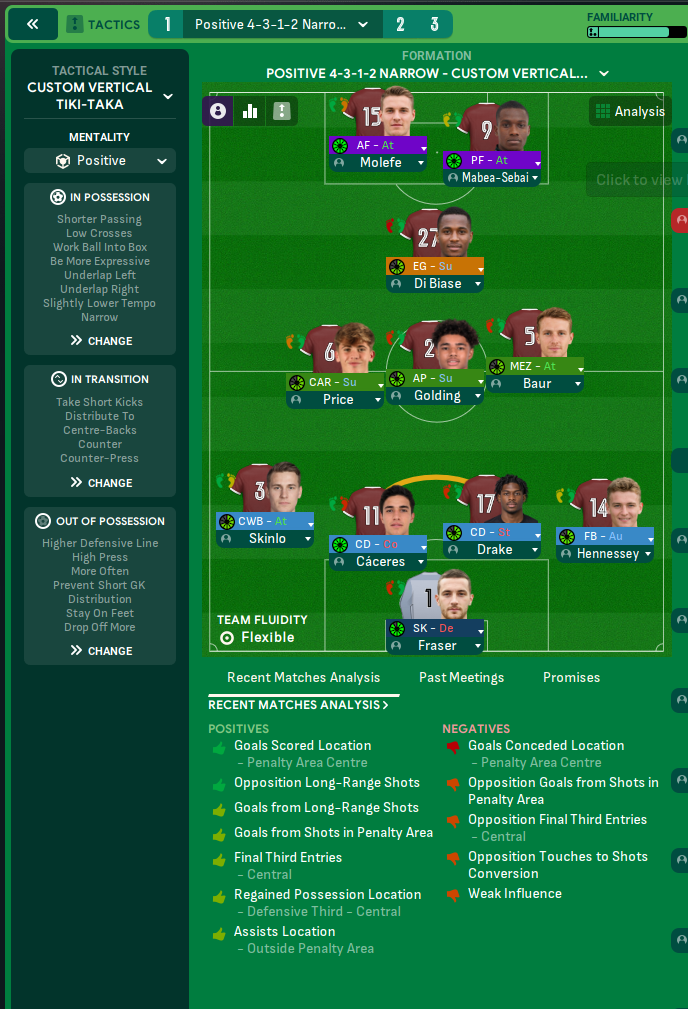
Guides for this formation
The tactical theory behind the 4-3-3: roles, instructions, and the trade-offs that decide whether the system holds up.
Foundations
Understanding the 4-3-3 Formation
Master the classic 4-3-3: player roles, tactical variations, and the trade-offs that decide whether it sings or stalls.
Read guide
Player pairings
Midfield Trios
Holder, runner, creator: the role distribution rule for three-man midfields, the AMC variants, and the antipatterns that break them.
Read guide
Playing styles
Gegenpressing: A Full Guide
Klopp-style gegenpressing in FM, including squad profile, line-and-press pairing, sustainable workload, and the antipatterns to avoid.
Read guide