Uploaded Tactic
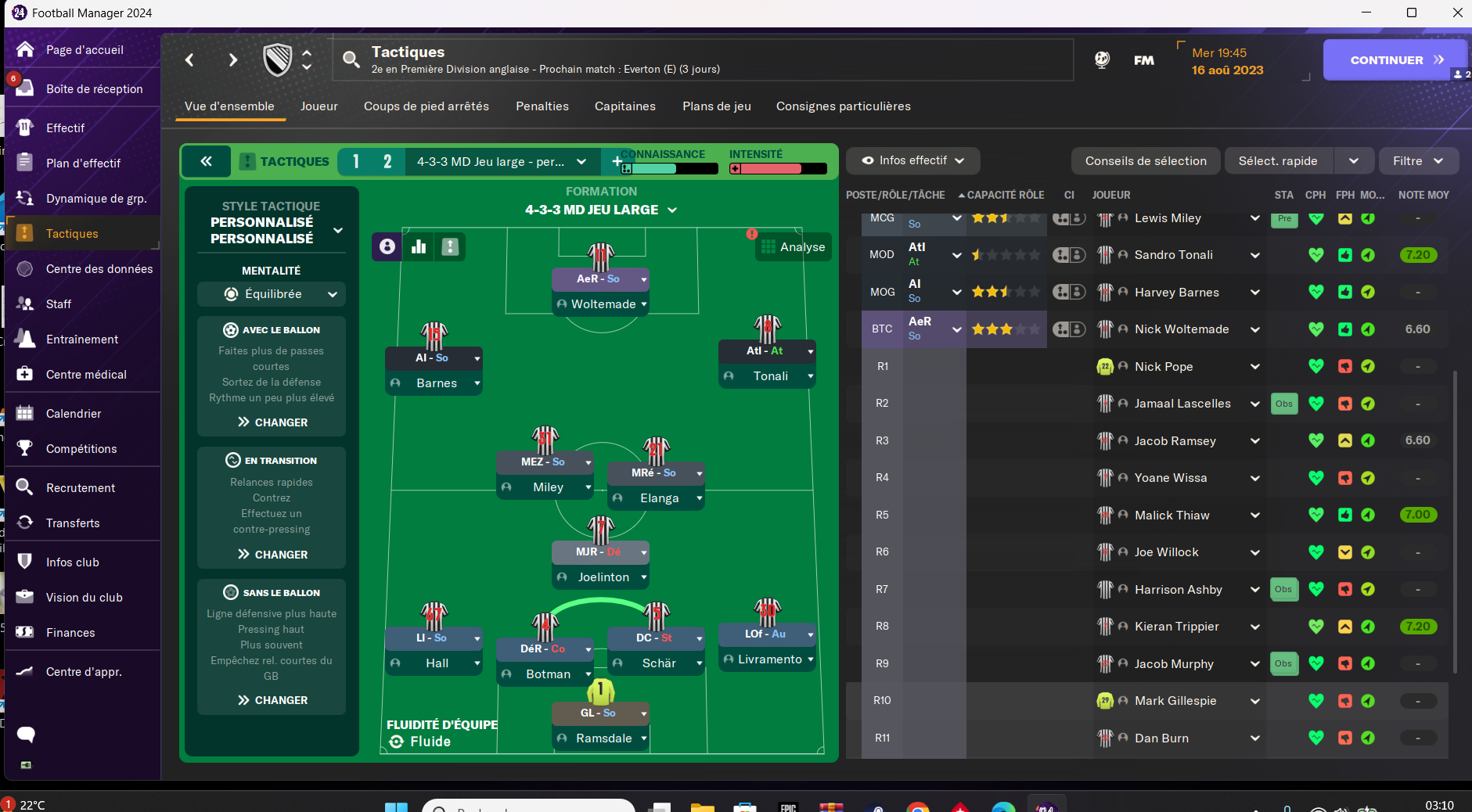
Formation & Style
Tactical Style:Balanced
Mentality:Equilibré
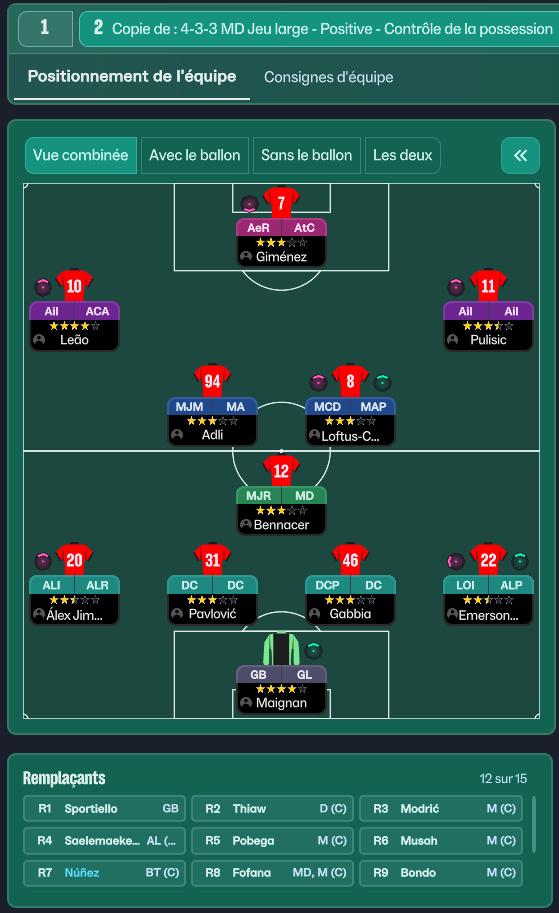
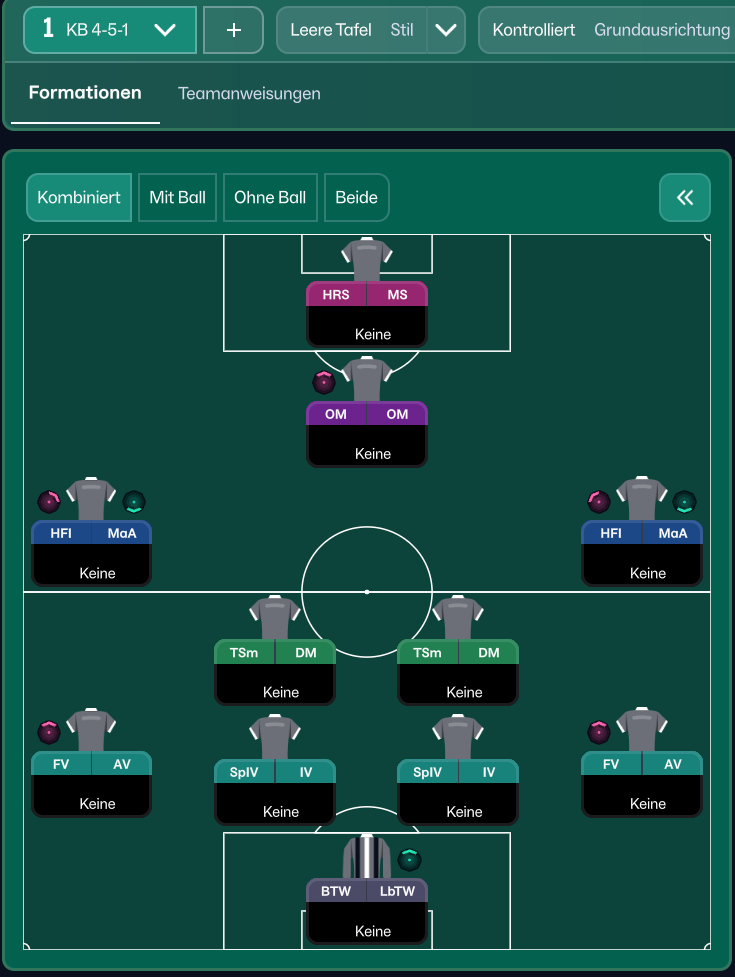
Formation:4-3-3 Wide
Team Fluidity:Fluide
In Possession
Faites des passes courtes
Rythme un peu plus élevé
Sortez de la défense
In Transition
Relances rapides
Contre
Effectuez un contre-pressing
Out of Possession
Ligne défensive plus haute
Pressing haut
Empêcher les passes courtes du gardien
Team Shape Without Ball
Shape:High Line
Description:A compact shape that presses high up the pitch to win the ball back.
Evidence:Defensive players positioned to engage the opposition quickly (Pressing haut) with a high defensive line.
Team Shape With Ball
Shape:Wide Play
Description:Exploiting the flanks with overlapping runs from wing-backs and inside forwards cutting in.
Evidence:Use of CWB at [2,4] and IF at [6,2] creating width in attacking phases.
Phase Description
Attacking Play
Fluid passing game with emphasis on short, quick transitions into attack.
Defensive Transition
Immediate pressing upon losing the ball to regain possession quickly.
Main Focus
Utilizing width through wing-backs and inside forwards to stretch the opposition.
Key Strengths
Fluid Attack
Quick passing and positioning allow for creating chances efficiently.
High Pressing
Immediate pressure on the opponent after losing possession can lead to regaining possession quickly.
Wide Playmaking
Utilizing width effectively helps create space for central players.
Conflicting Directions
Balance vs. Risk
Maintaining a balanced approach can sometimes lack aggression in high-stakes situations.
Over-reliance on Wings
With heavy emphasis on wing play, central attacks may be neglected.
Pressing Commitment
High pressing can leave spaces if players are caught out of position.
Tactical Suggestions
Adjust Mentality
Consider switching to a more aggressive mentality in critical matches for more attacking intent.
Diversify Attacking Channels
Integrate more central plays to balance the attack and avoid dependency on the wings.
Fine-tune Defensive Shape
Set a deeper defensive line against fast counter-attacks to reduce vulnerability.
Ask Questions About Your Lineup
Related Tactics
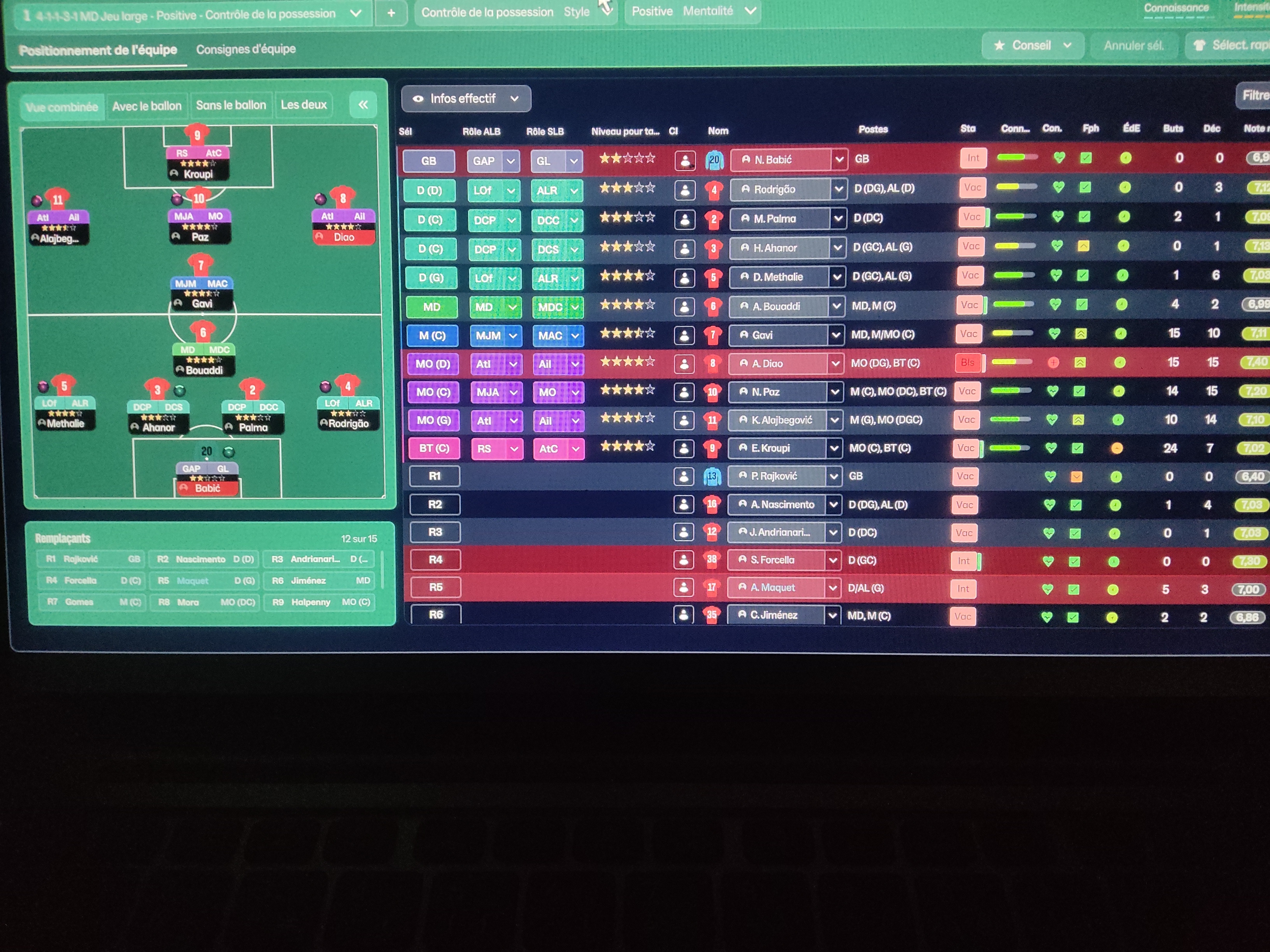
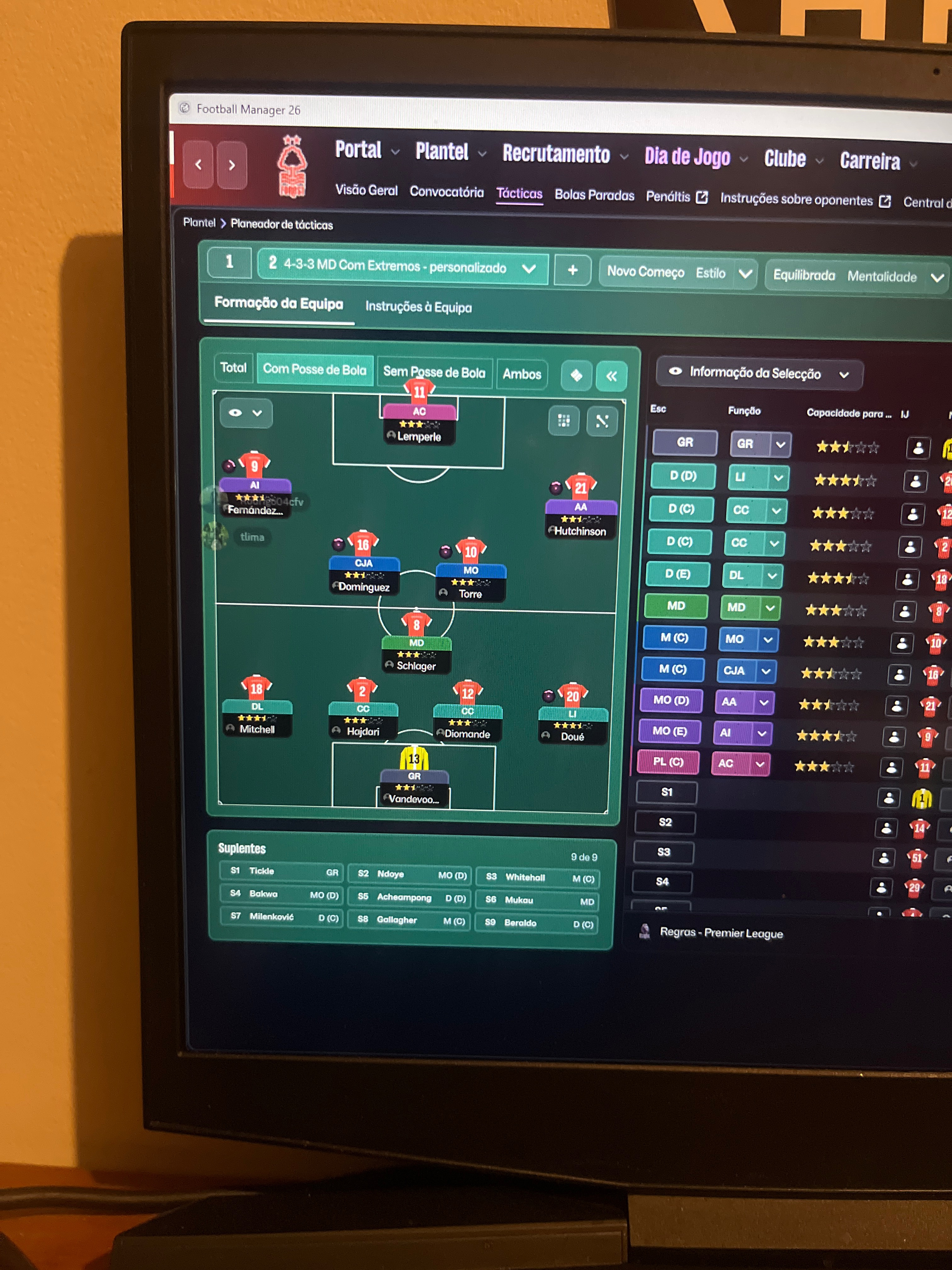
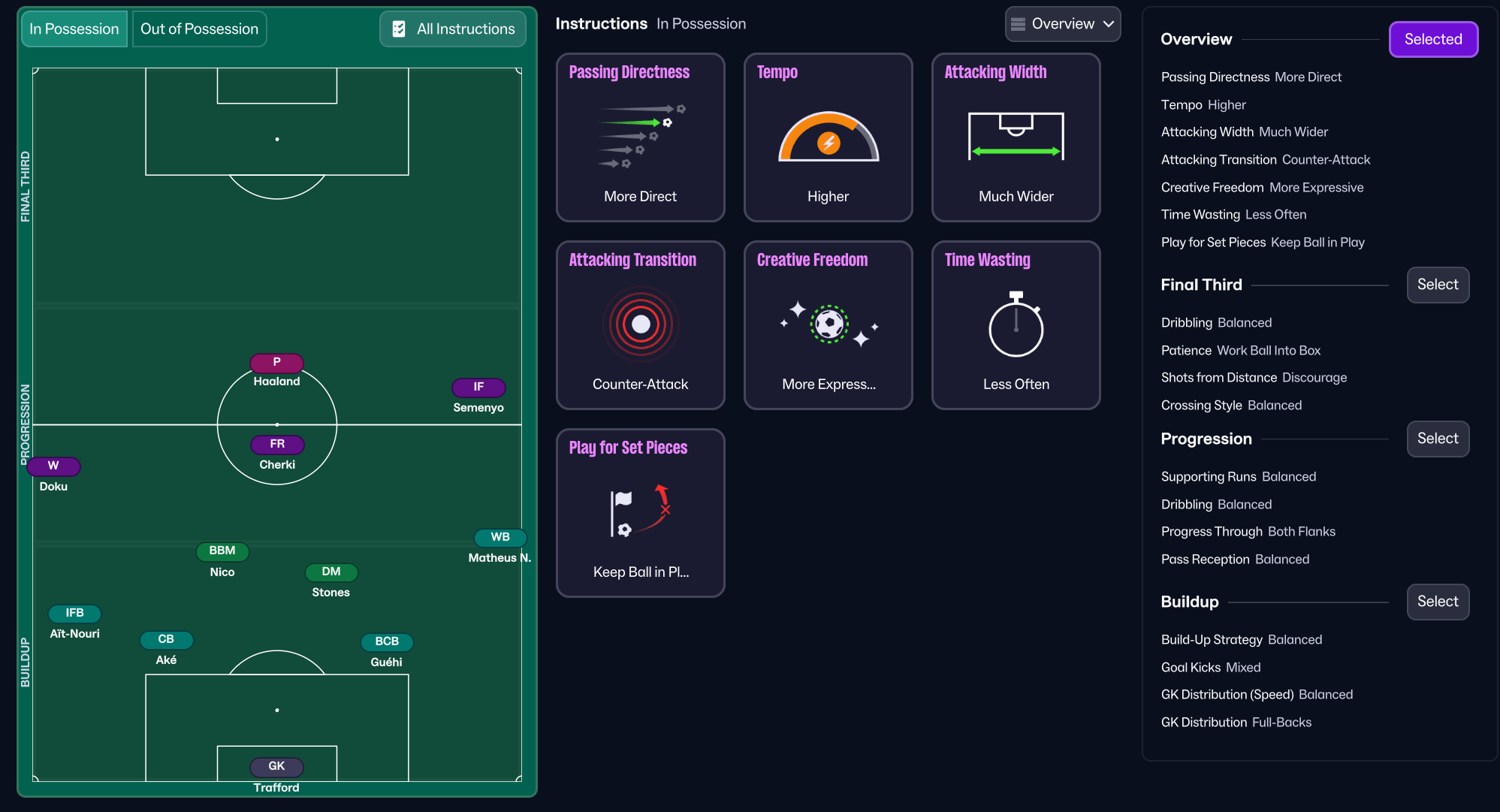
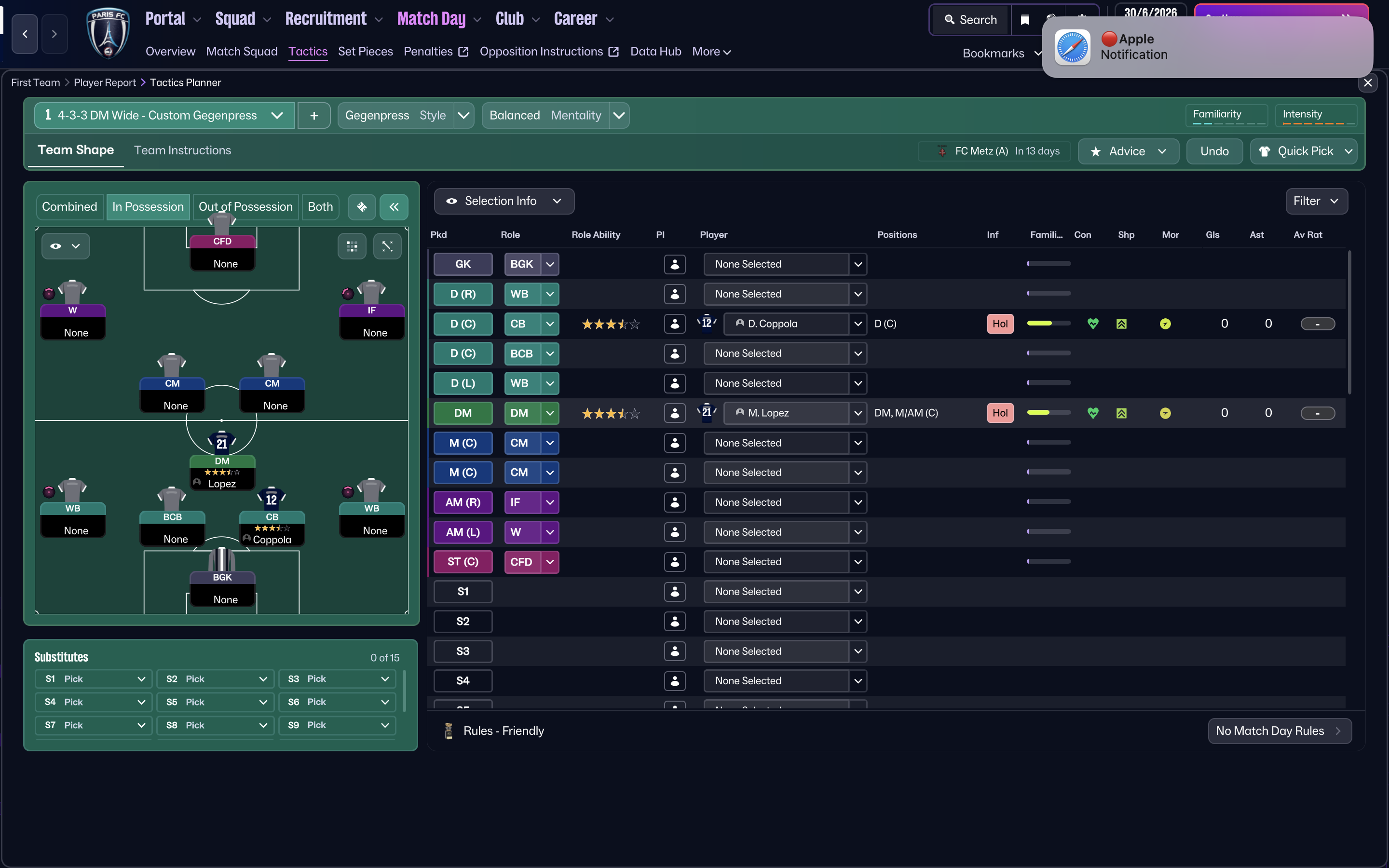
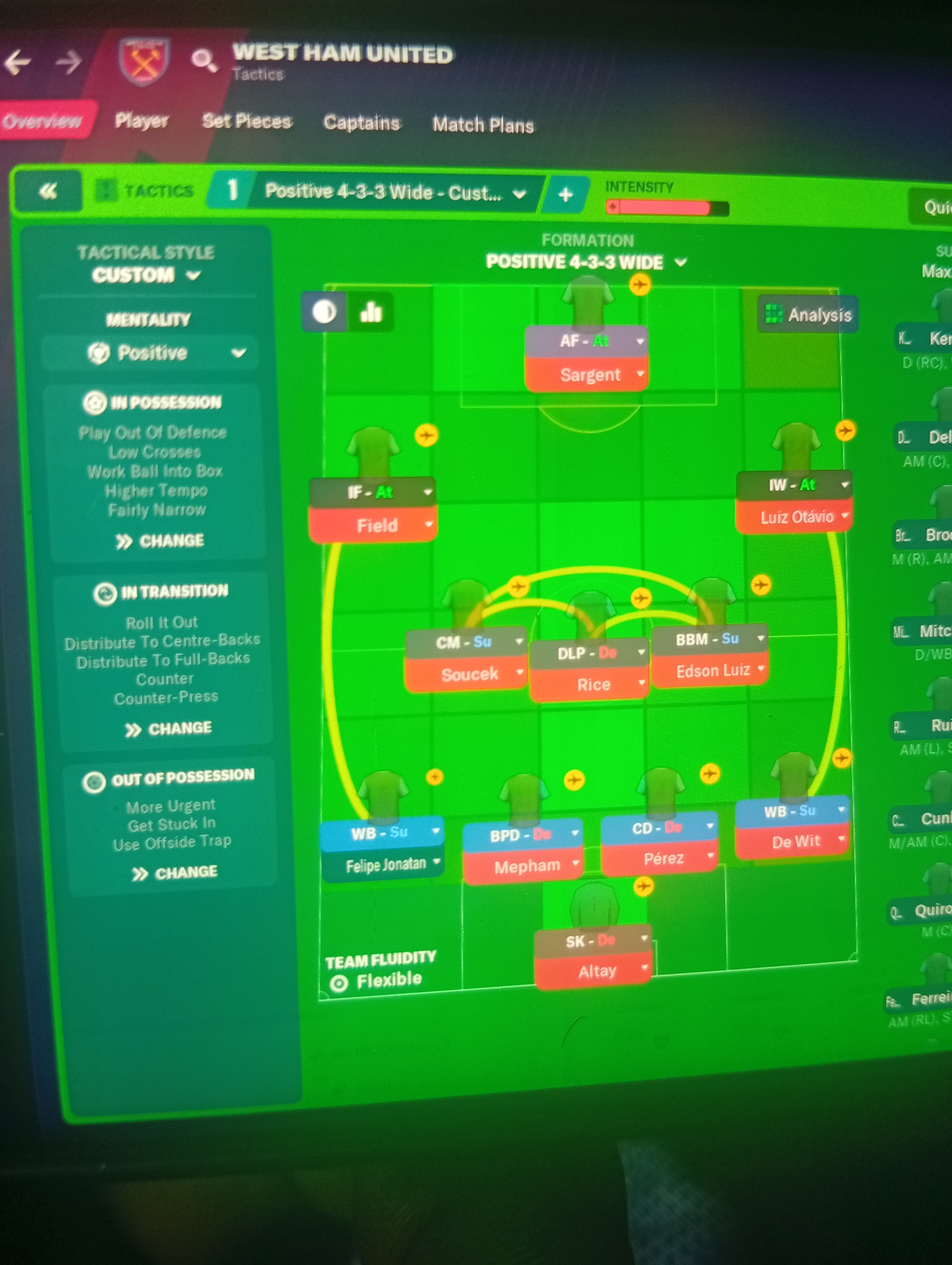
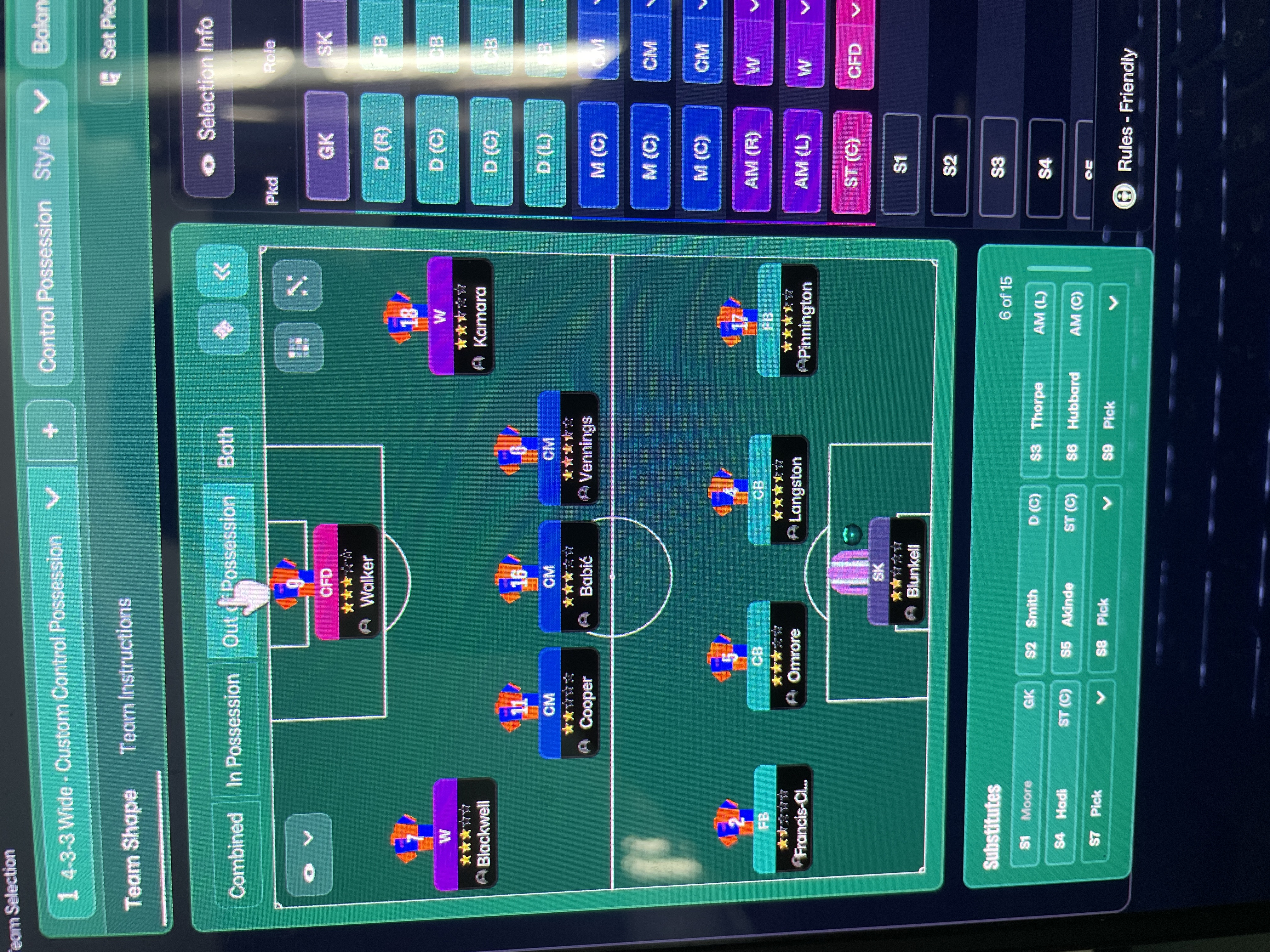
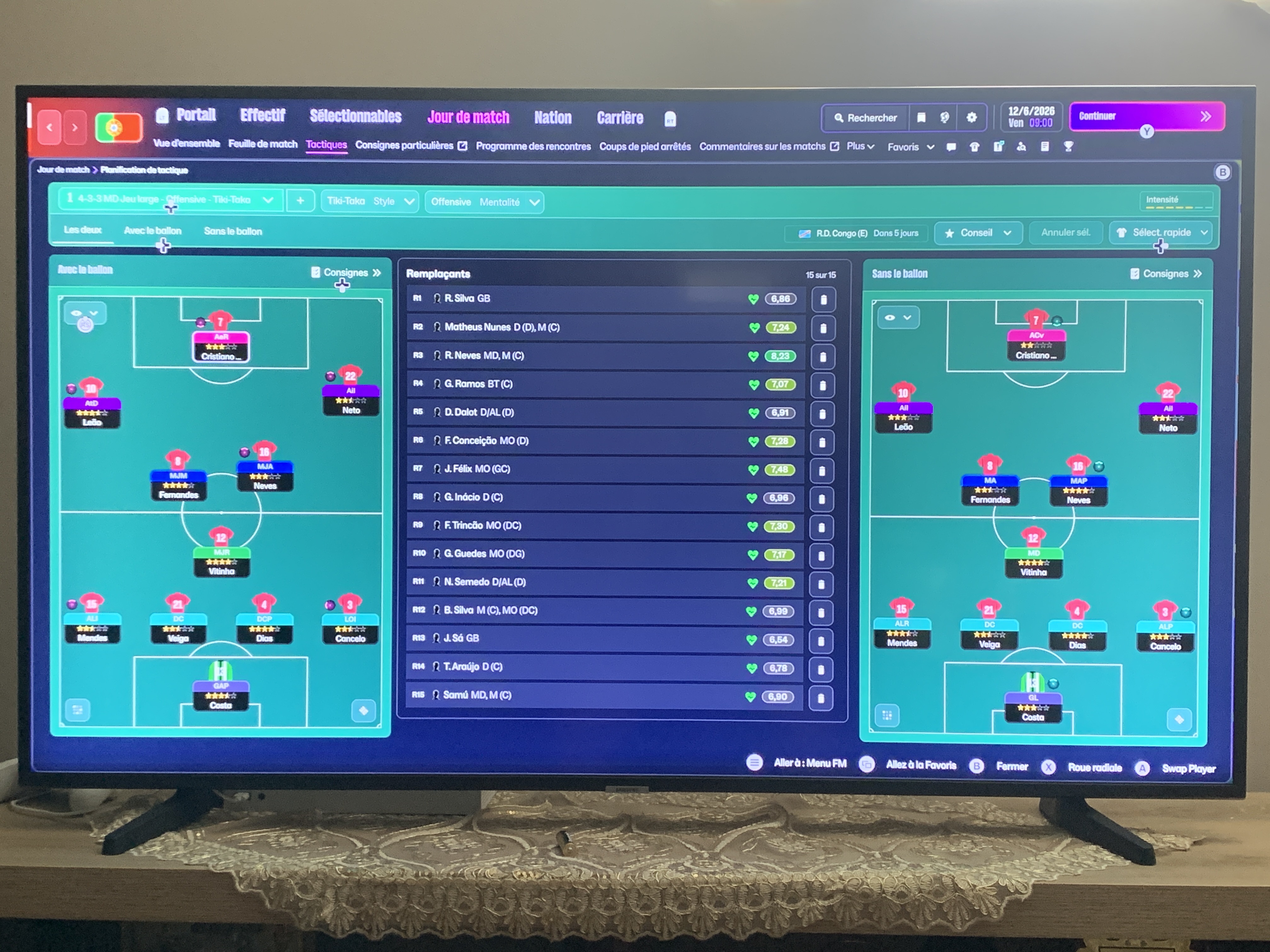
More Balanced tactics
Guides for this formation
The tactical theory behind the 4-3-3 Wide: roles, instructions, and the trade-offs that decide whether the system holds up.
Foundations
Understanding the 4-3-3 Formation
Master the classic 4-3-3: player roles, tactical variations, and the trade-offs that decide whether it sings or stalls.
Read guide
Player pairings
Midfield Trios
Holder, runner, creator: the role distribution rule for three-man midfields, the AMC variants, and the antipatterns that break them.
Read guide
Playing styles
Gegenpressing: A Full Guide
Klopp-style gegenpressing in FM, including squad profile, line-and-press pairing, sustainable workload, and the antipatterns to avoid.
Read guide