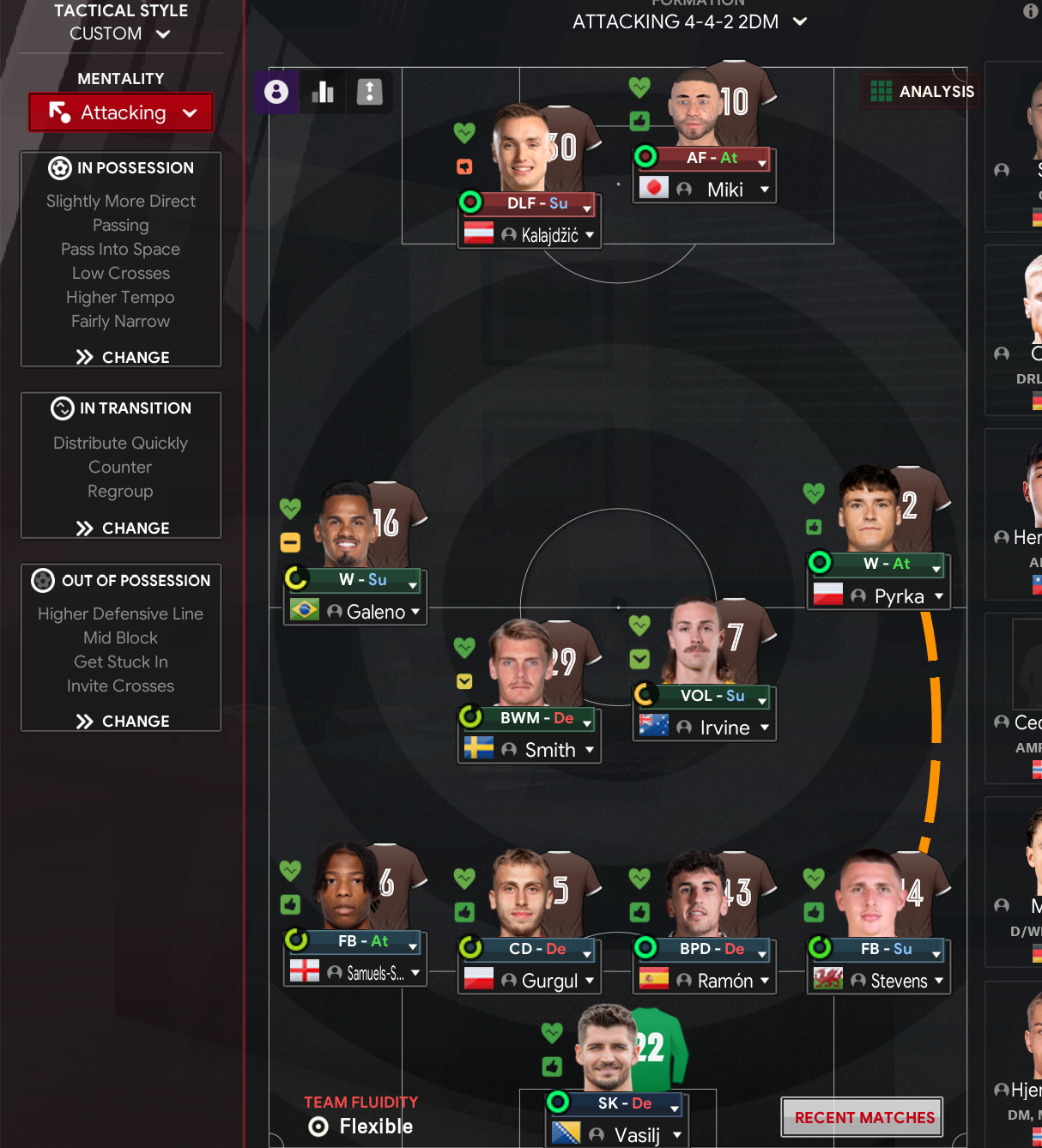
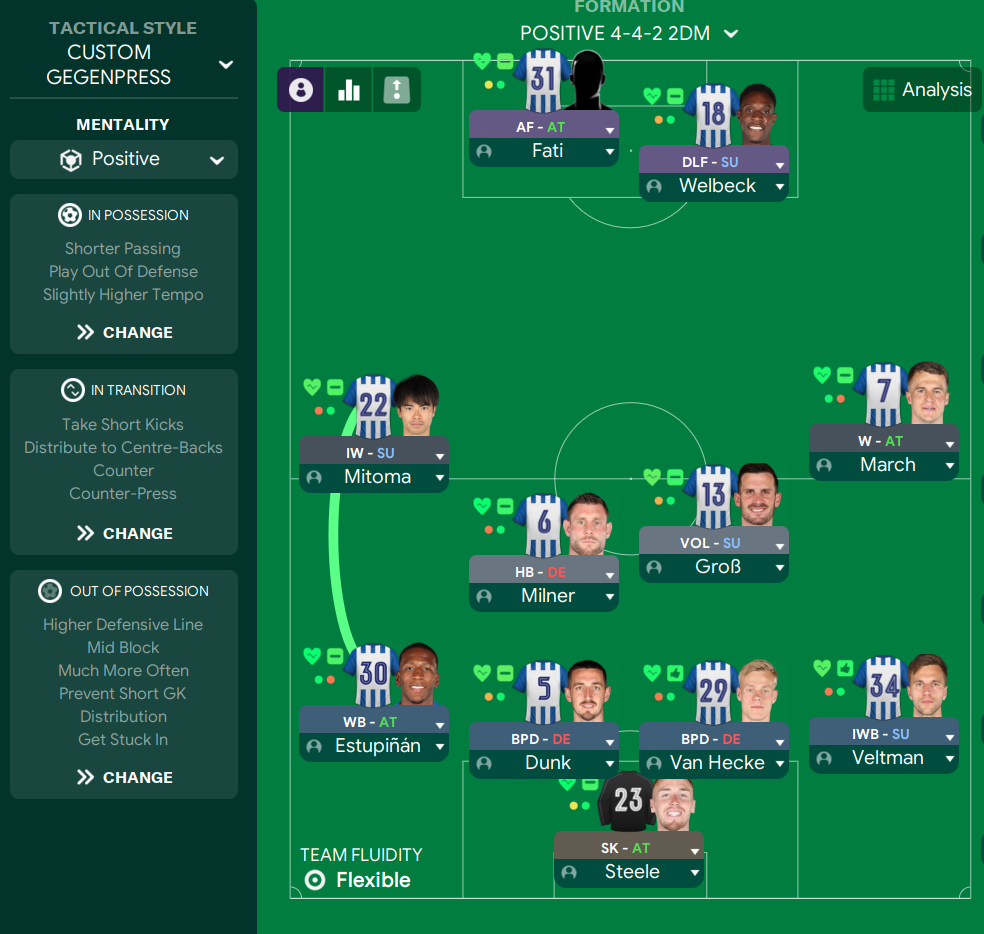
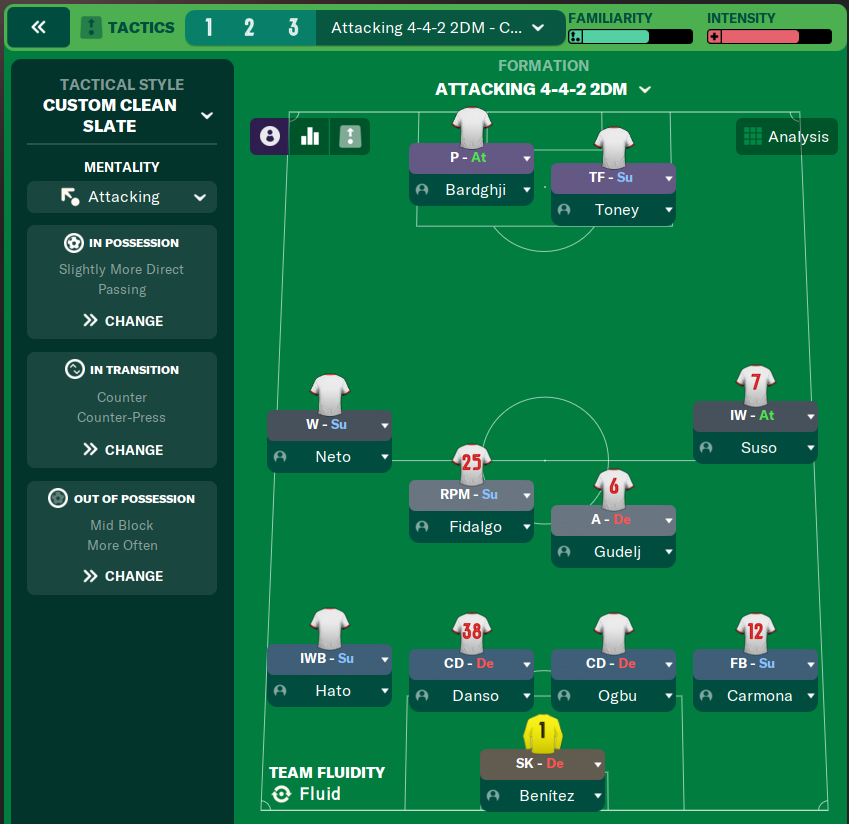
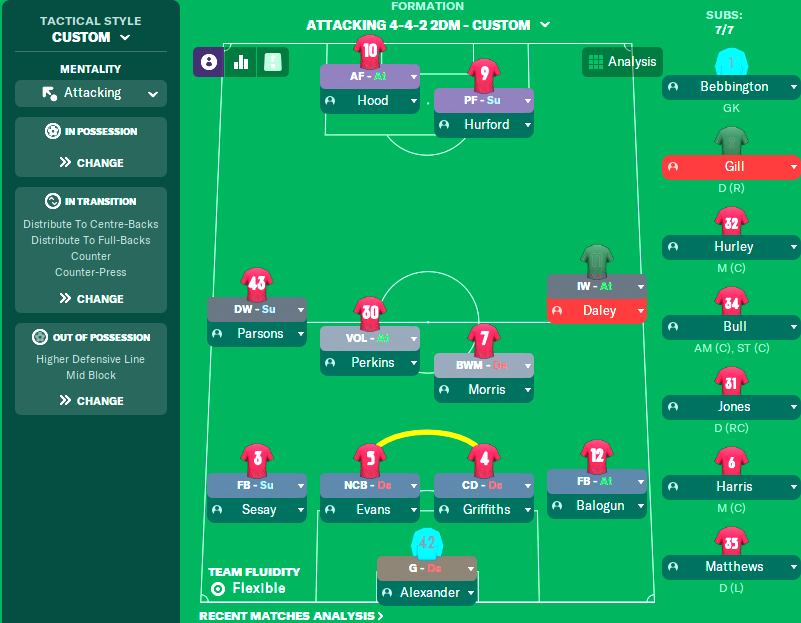
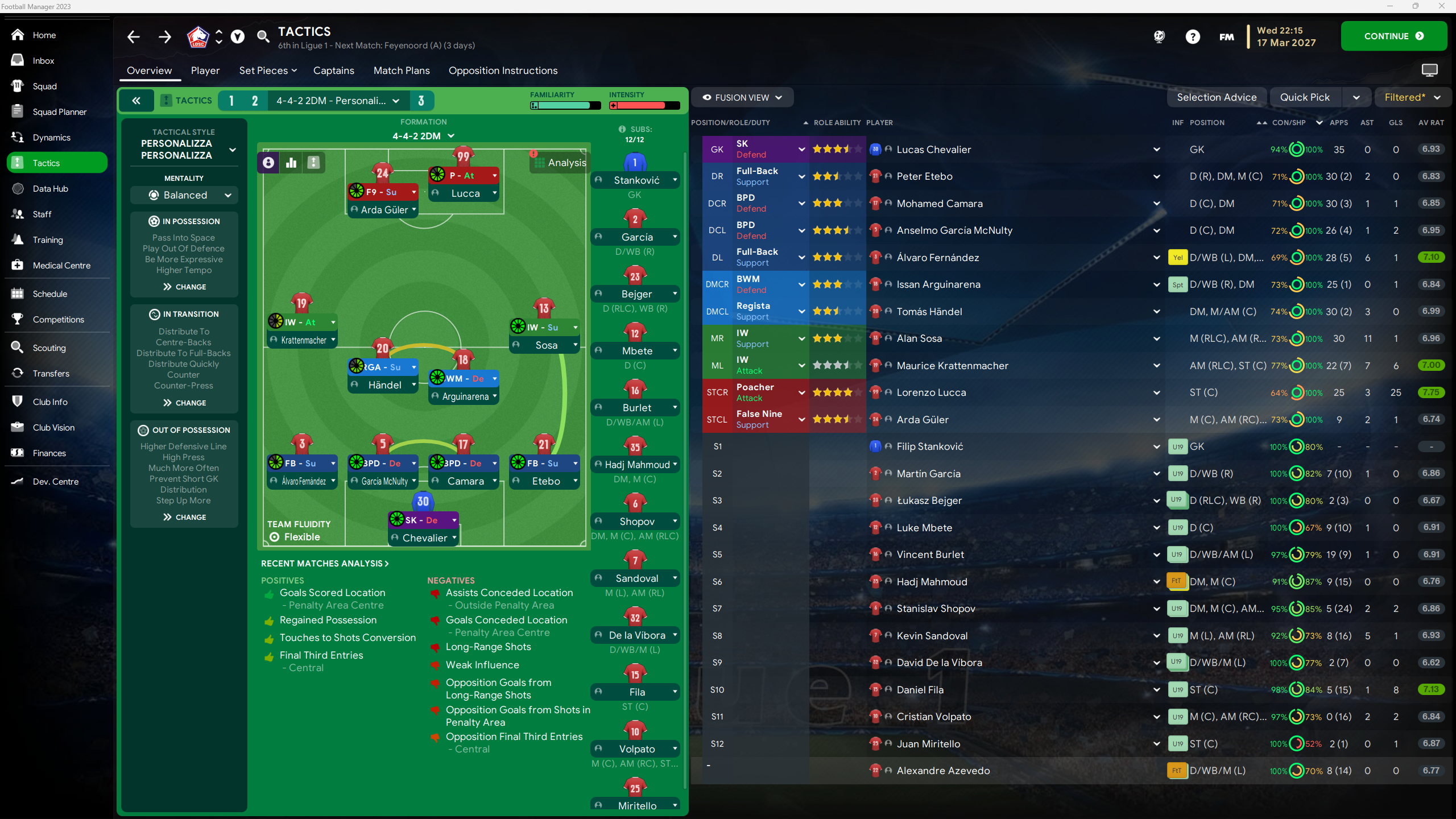
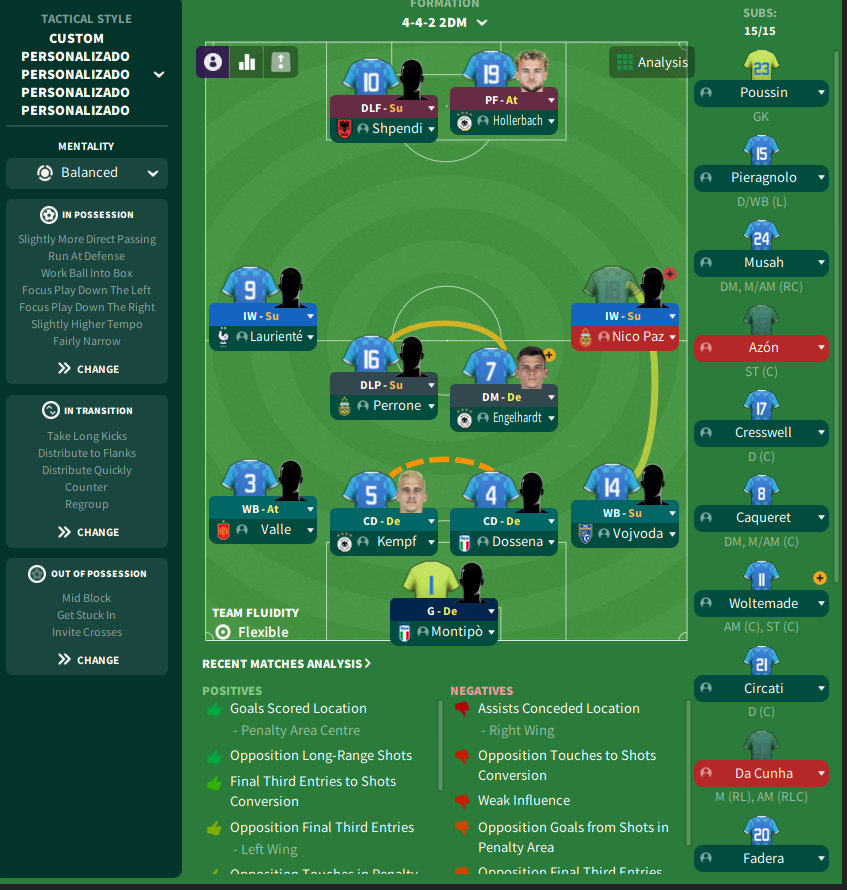
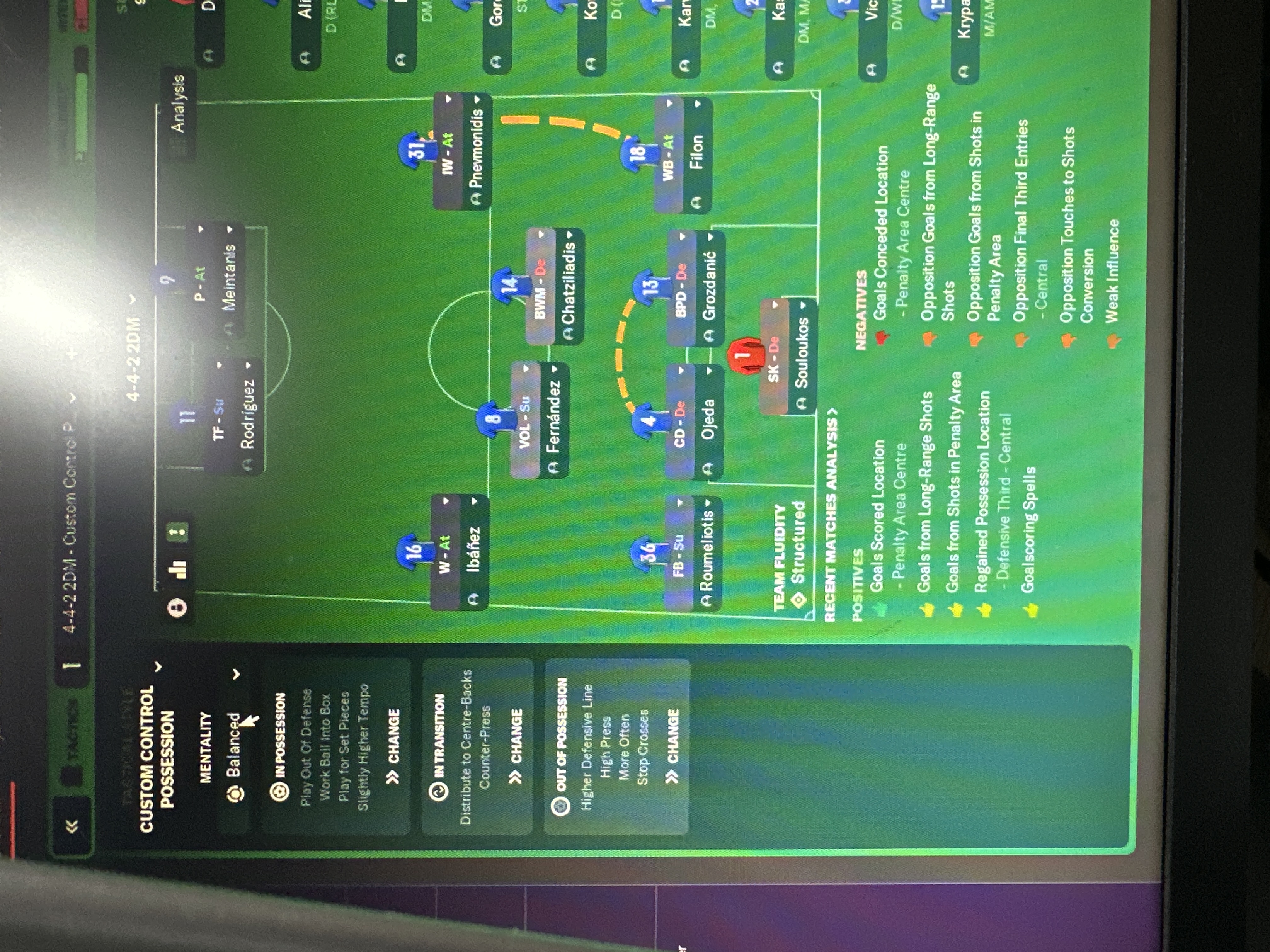
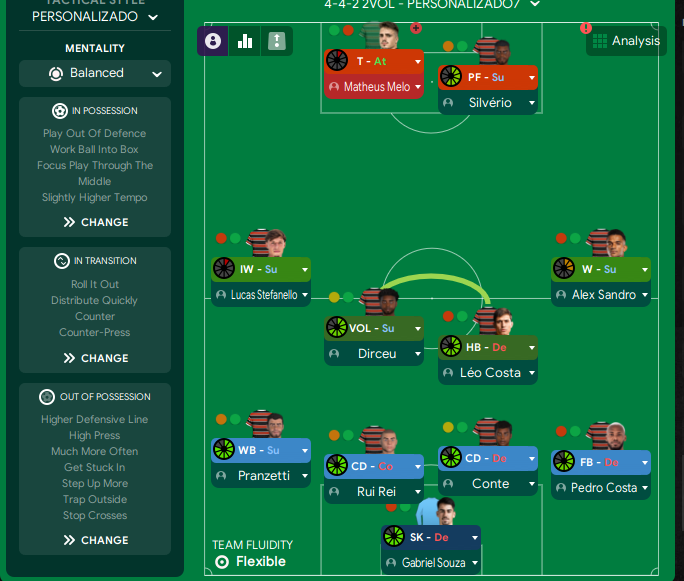
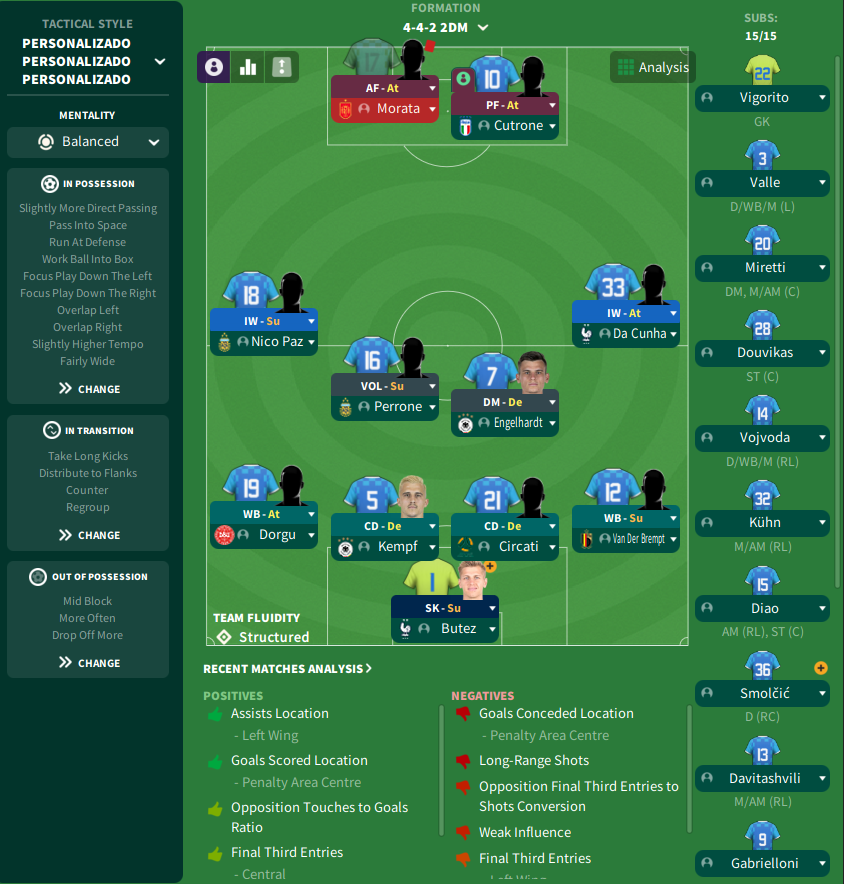
4-4-2 DM
Utilizes width effectively, allowing inside forwards and wing backs to stretch the opposition's defense.
Loading tactical analysis...
Balanced
Balanced
4-4-2 DM
Structured
Slightly More Direct Passing
Pass Into Space
Run At Defense
Focus Play Down The Left
Focus Play Down The Right
Overlap Left
Overlap Right
Slightly Higher Tempo
Take Long Kicks
Distribute to Flanks
Counter
Regroup
Mid Block More Often
Drop Off More
AF
Advanced Forward
Attack
PF
False Nine
Attack
IW
Inside Forward
Attack
WB
Wing Back
Attack
VOL
Volante
Support
DM
Defensive Midfielder
Defend
CD
Centre Back
Defend
SK
Sweeper Keeper
Support
Utilizes width effectively, allowing inside forwards and wing backs to stretch the opposition's defense.
The Volante role supports both defense and transition, providing stability.
Inside forwards and overlapping wing backs may clash, potentially leading to congested attacking zones.
A higher tempo with a structured approach can lead to rushed decisions and loss of possession.
How can I optimize the link-up play between the inside forwards and the strikers?
Is the midfield structure providing sufficient cover for the defense?
Should I consider reducing the tempo to maintain possession more effectively?
Are the current player roles maximizing their individual strengths?
How can I enhance our set-piece effectiveness given the current setup?
What adjustments can be made to improve our defensive stability against quick counterattacks?
The tactical theory behind the 4-4-2 DM: roles, instructions, and the trade-offs that decide whether the system holds up.
Sit deep, win the ball, and break in three passes. The roles, instructions, and squad profile that make it work.
Double pivots and flat pairs in 4-2-3-1 and 4-4-2: when each pairing works, when it collapses, and the AMC unicorn that rescues both.
What Higher Tempo, Wider, and Narrower actually do in FM, plus the dial contradictions and antipatterns players run into most often.