Uploaded Tactic
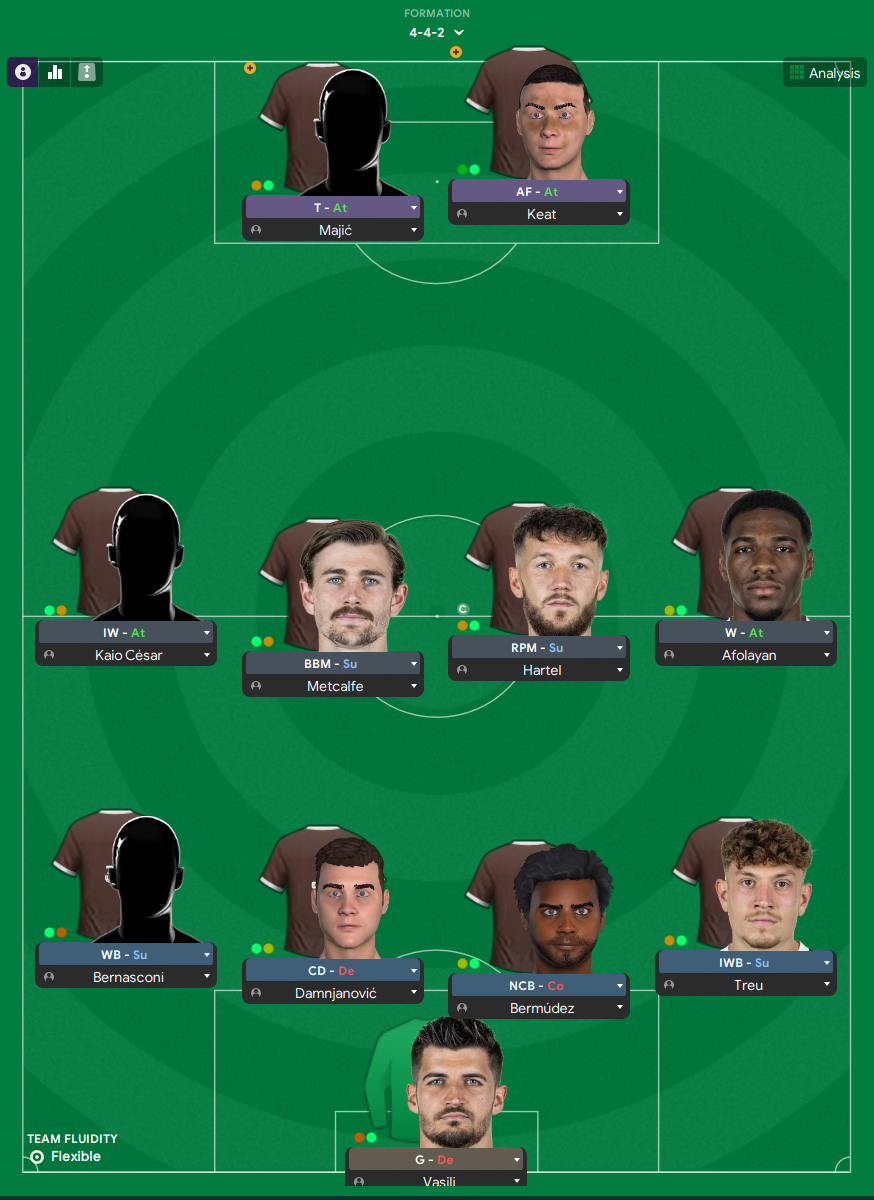
Formation & Style
Tactical Style:Balanced
Mentality:Positive
Formation:4-4-2
Team Fluidity:Flexible
In Possession
Play Out of Defence
Focus Play Down the Flanks
Be More Expressive
In Transition
Counter
Counter-Press
Out of Possession
Higher Defensive Line
Higher Line of Engagement
Prevent Short GK Distribution
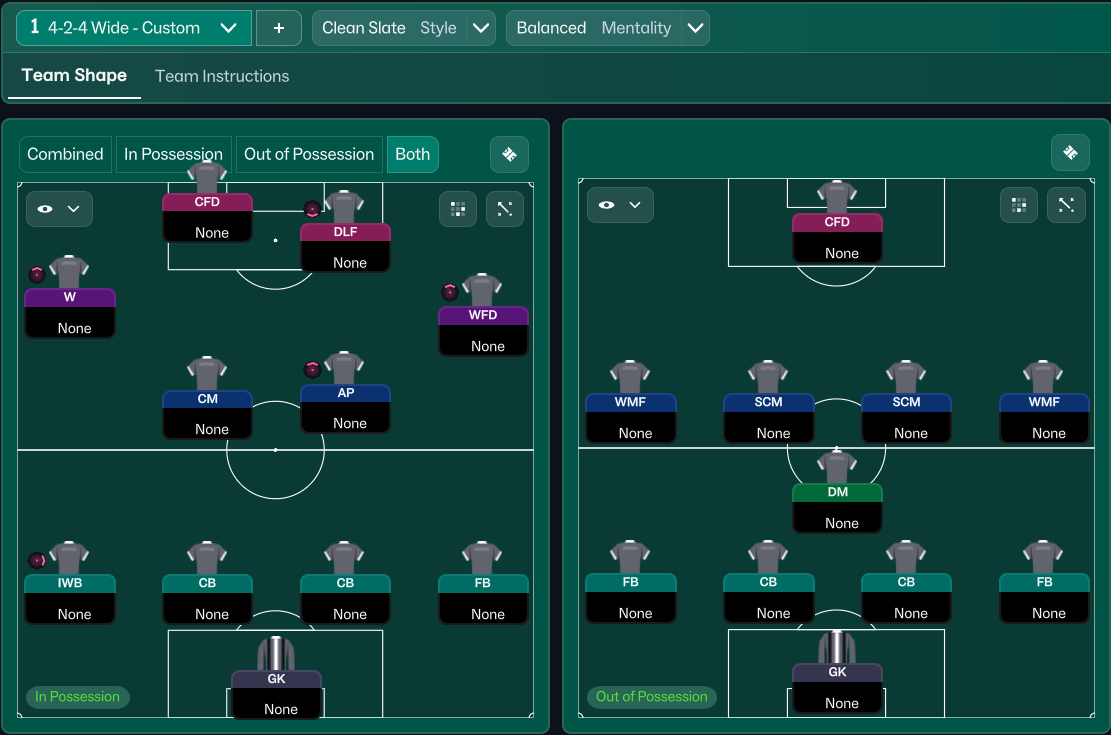
Team Shape Without Ball
Shape:4-4-2
Description:Standard flat defensive setup with strong coverage in channels.
Evidence:CBs at [2,2] and [2,3] prevent central penetration.
Team Shape With Ball
Shape:4-4-2
Description:Wide attacking approach utilizing wingers and full-backs to stretch the defense.
Evidence:W and IW at [6,1] and [6,2] bringing width.
Phase Description
Attacking Play
Utilizes width with wingers and overlapping full-backs for quick transitions into the attack.
Defensive Transition
Quickly recovers shape and presses opponents high to regain possession.
Main Focus
To create opportunities through a blend of width and central play.
Key Strengths
Width and Versatility
The use of inside forwards and wingers creates multiple width options and allows for fluid attacking play.
Strong Midfield Presence
Combining BBM and RPM gives both stability and creativity for transitions and buildup.
Dual Striker Threat
The combination of a target man and an advanced forward can exploit defensive weaknesses.
Conflicting Directions
Heavy Pressing
A very aggressive high press may overwhelm the midfielders and expose the defense.
Inflexible Formation
A strict adherence to the 4-4-2 may limit adaptability in matches against varying tactical setups.
Vulnerable Flanks
The reliance on wing play exposes wing-backs if caught out of position.
Tactical Suggestions
Consider a More Fluid Approach
Adjusting to a more fluid formation could yield better results against versatile teams.
Improve Recovery Shape
Focusing on quick recovery in transitions will help in regaining possession faster.
Strengthen Central Defense
Adding more robust roles in central defense could mitigate issues with direct opponent play.
Ask Questions About Your Lineup
Related Tactics
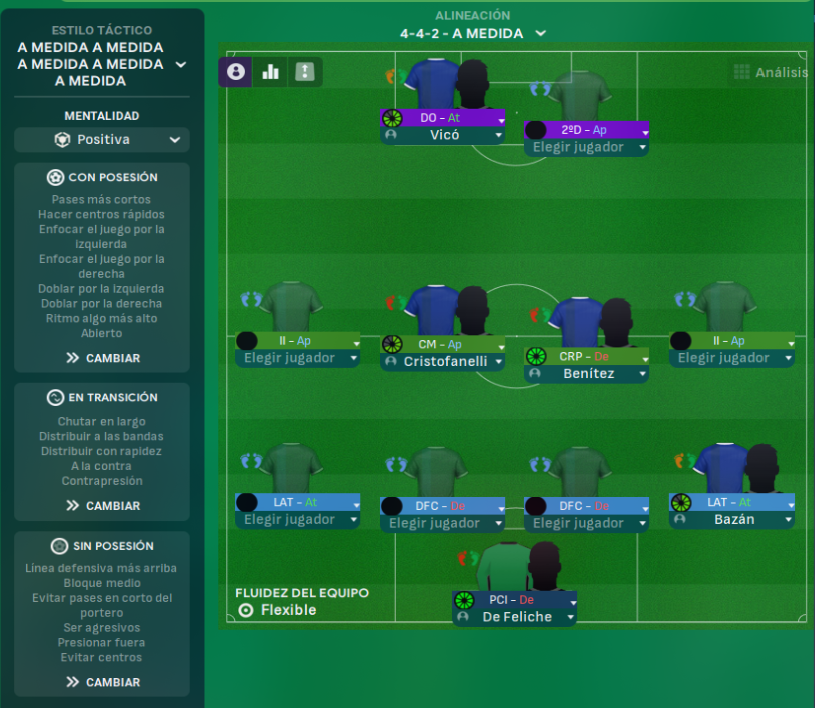
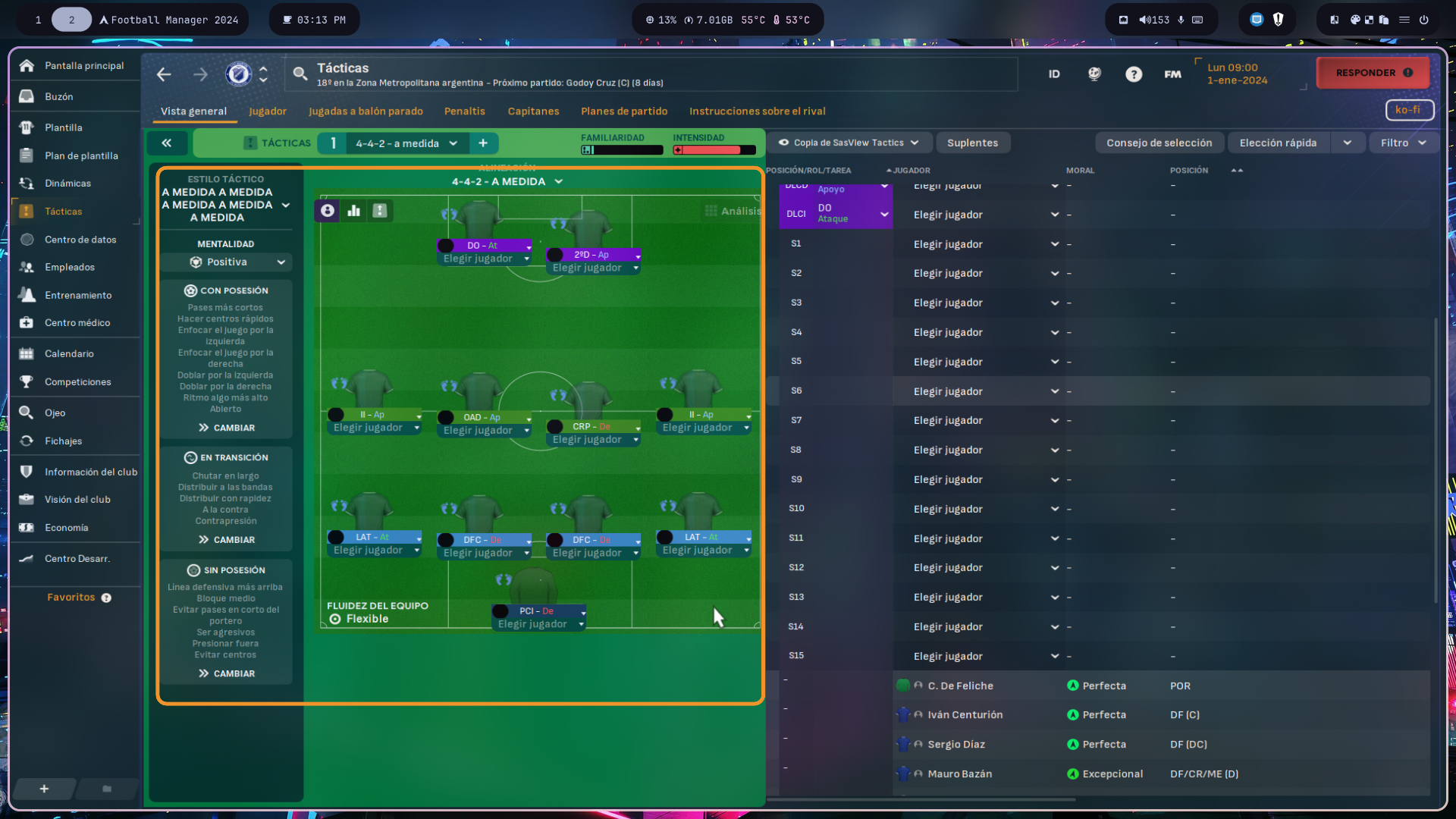
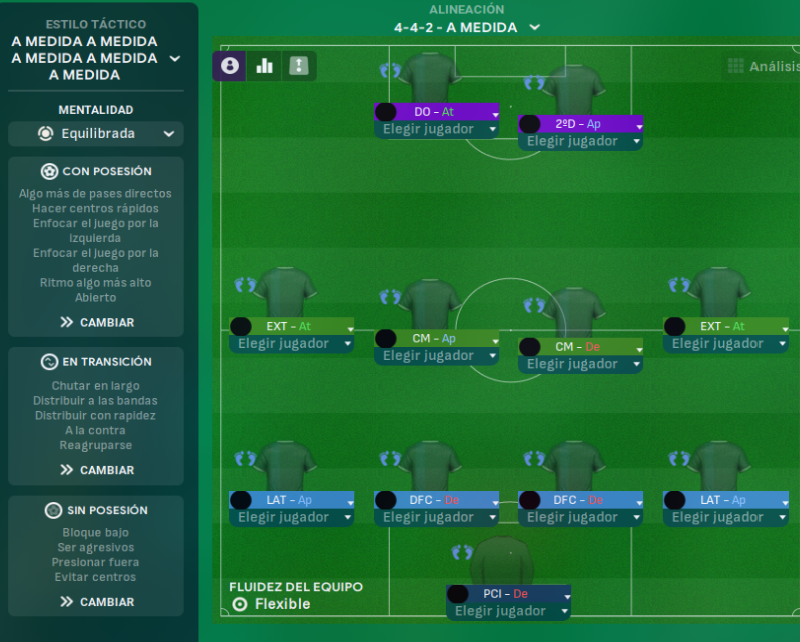

More Balanced tactics
Guides for this formation
The tactical theory behind the 4-4-2: roles, instructions, and the trade-offs that decide whether the system holds up.
Player pairings
Midfield Pairs in 4-2-3-1 and 4-4-2
Double pivots and flat pairs in 4-2-3-1 and 4-4-2: when each pairing works, when it collapses, and the AMC unicorn that rescues both.
Read guide
Playing styles
Direct, Vertical Football
Long-ball football done well in FM. When direct, vertical play is the right choice, and what the Direct Passing TI actually changes.
Read guide
Playing styles
Counter-Attacking Excellence
Sit deep, win the ball, and break in three passes. The roles, instructions, and squad profile that make it work.
Read guide