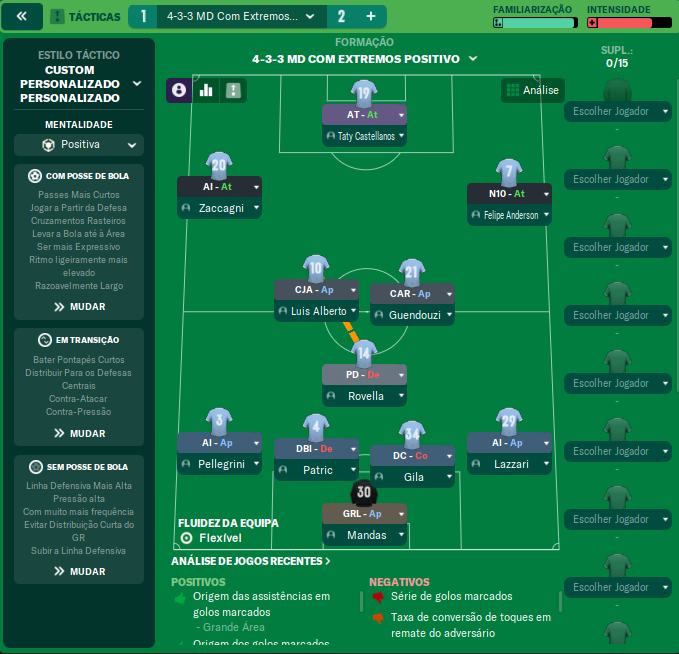
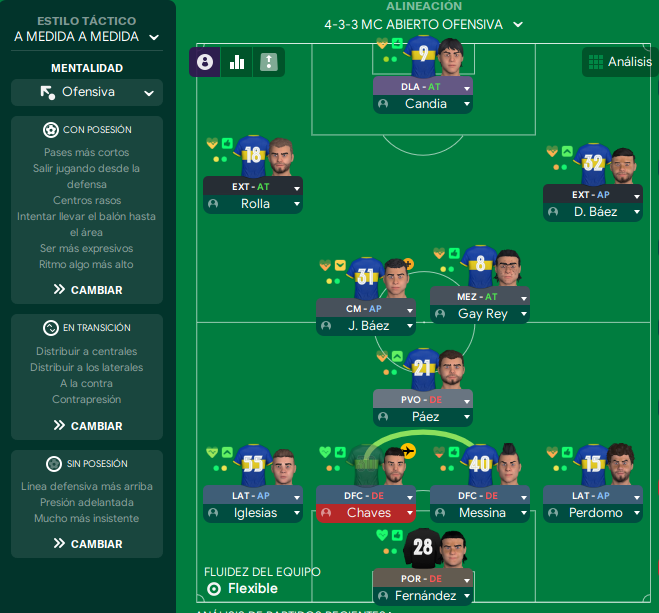
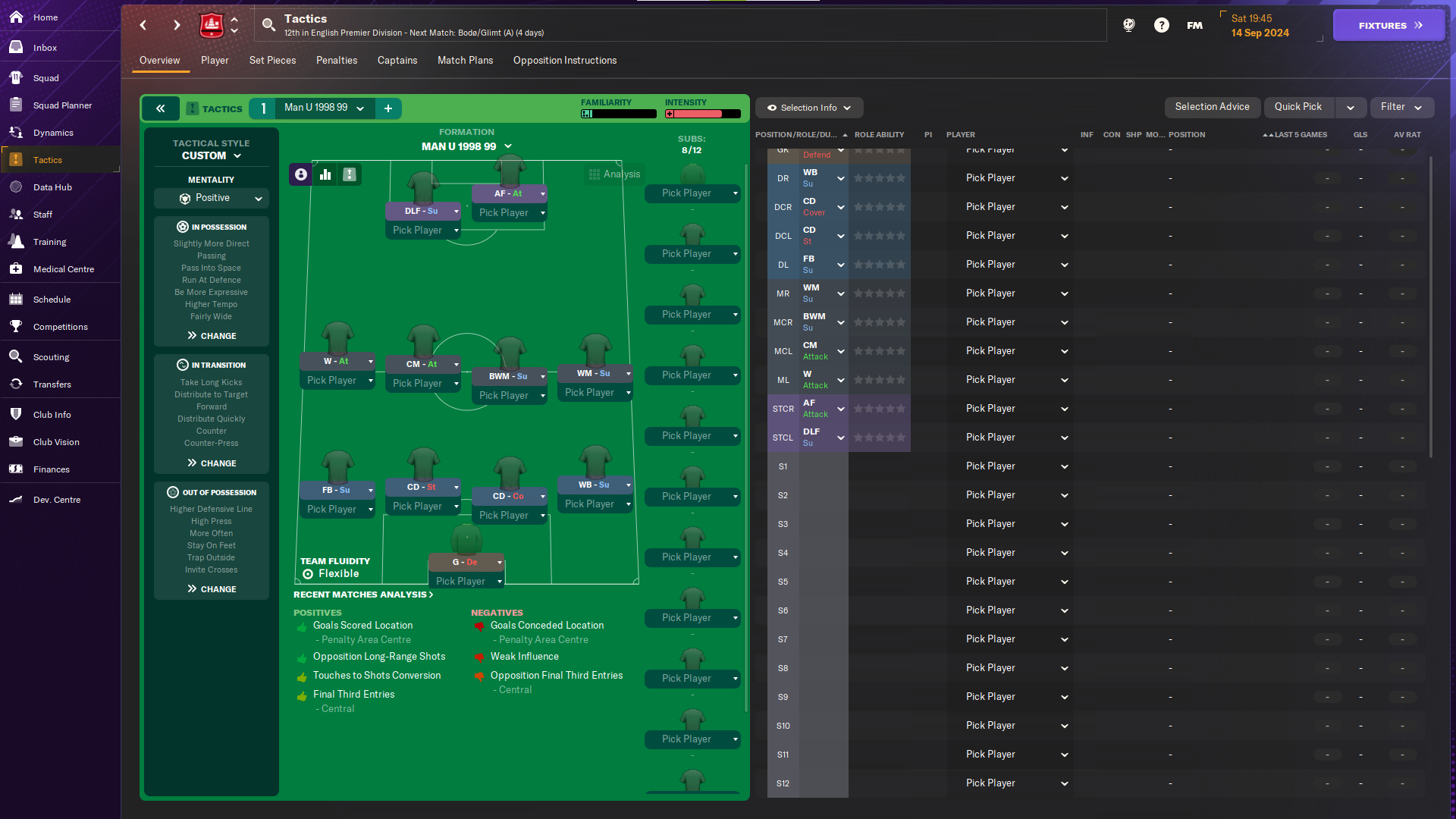
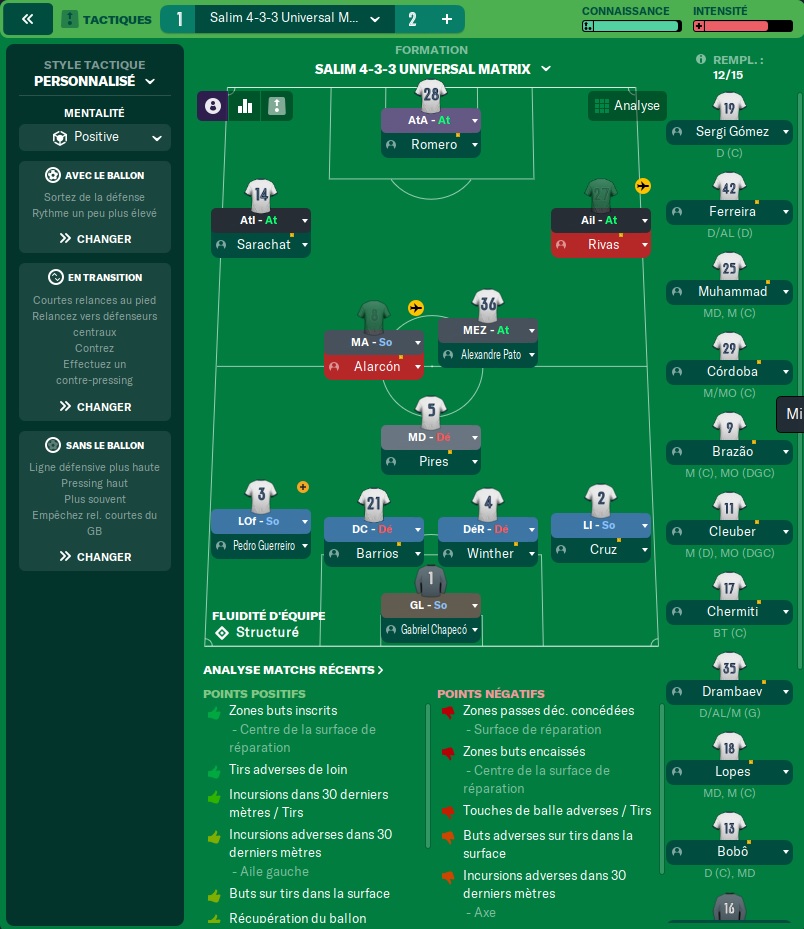
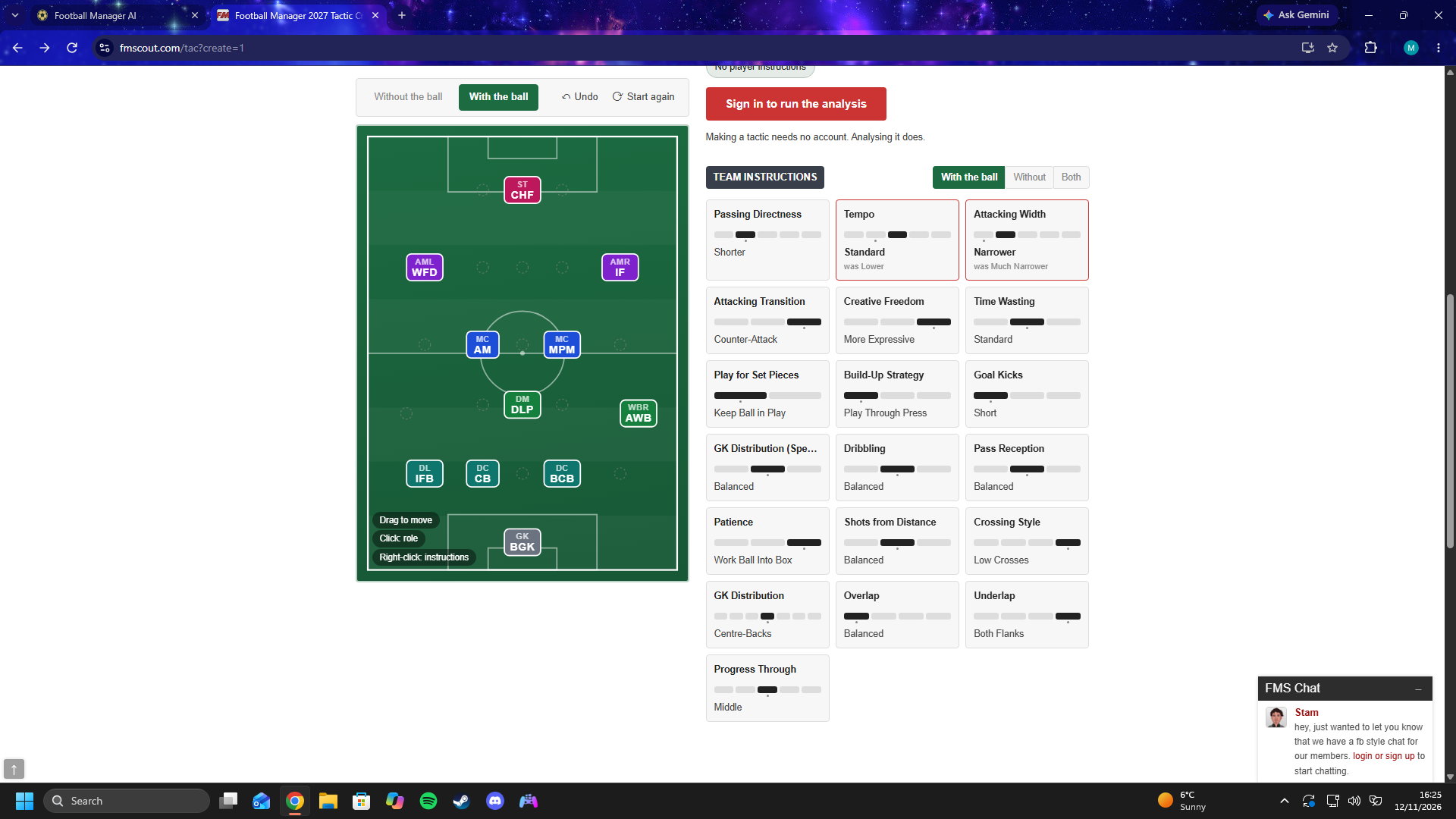
4-3-3
Creating goal-scoring opportunities through various attacking channels while maintaining defensive solidity. The team's setup has proven effective at…
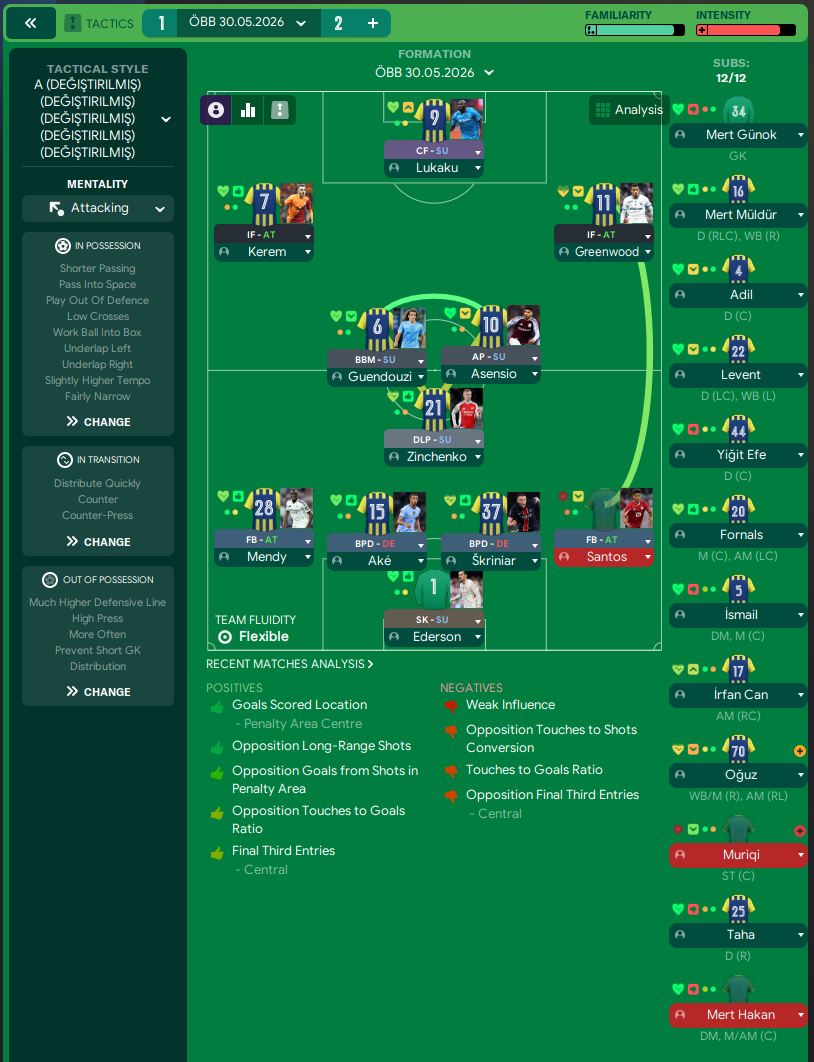
Loading tactical analysis...
Flexible
Attacking
4-3-3
Flexible
Shorter Passing
Pass Into Space
Work Ball Into Box
Low Crosses
Distribute Quickly
Counter
Much Higher Defensive Line
High Press
More Often
Prevent Short GK Distribution
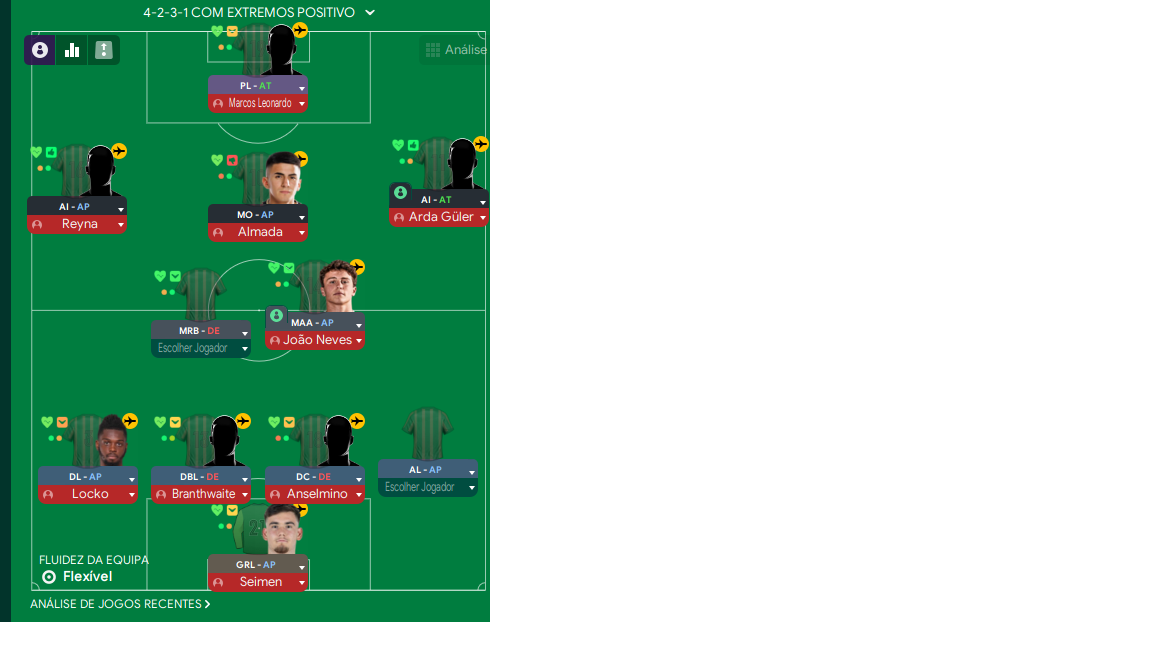
GK
Sweeper Keeper
Support
DL
Full-Back
Attack
DC
Ball-Playing Defender
Defend
DC
Ball-Playing Defender
Defend
DR
Full-Back
Attack
MC
Deep-Lying Playmaker
Support
MC
Box-to-Box Midfielder
Support
MC
Advanced Playmaker
Support
AML
Inside Forward
Attack
AMC
Complete Forward
Support
AMR
Inside Forward
Attack
Utilizes width through inside forwards and overlapping full-backs, focusing on short, quick passes in and around the penalty area.
Quick recovery and immediate pressure is applied after losing the ball, trying to regain possession efficiently.
Creating goal-scoring opportunities through various attacking channels while maintaining defensive solidity.
Compact
A compact shape that applies pressure high up the pitch, aiming to win the ball back quickly while maintaining defensive structure.
Setup of full-backs and central defenders offers balance and coverage.
Dynamic
A dynamic attacking shape where players interchange fluidly and occupy different zones to maximize goal threat.
Inside forwards paired with a complete forward facilitate attacking combinations.
The team's setup has proven effective at scoring from central areas, leveraging player movement and positioning.
Goals scored location indicates high efficacy in the penalty area centre.
The high press enables the team to put opponents under consistent pressure, forcing errors.
Application of high press and much higher defensive line as tactical instructions.
While the attacking style is productive in creating chances, the team struggles with converting those into goals.
Opposition touches to shots conversion shows weaknesses in finishing.
A compact shape may invite pressure through the centre, especially with a high defensive line.
Opposition final third entries suggest teams exploit this central vulnerability.
Defensive Transition
High pressing might leave space behind for quick opposing counter-attacks.
Recent matches analysis highlights vulnerability in transitions.
Central Vulnerability
Compact midfield and high defensive line might expose the team to central attacks.
Noted weaknesses in opposition final third entries centrally.
DLP-S at [3,3] + BBM-S at [3,2]
The dynamic between these roles allows for fluid transitions between defense and attack.
DLP-S provides key distribution while BBM-S supports offensive movements.
FB-A at [2,1] + IF-A at [6,1]
Overlap from the full-back creates space for the inside forward, enhancing wing play.
FB-A's attacking duty aligns with IF-A's inverted movement pattern.
How can finishing drills be incorporated into training effectively?
What adjustments can we make to the team's defensive line without compromising attacking intent?
Would a change to a more defensive-minded midfielder improve overall team balance?
The tactical theory behind the 4-3-3: roles, instructions, and the trade-offs that decide whether the system holds up.
Holder, runner, creator: the role distribution rule for three-man midfields, the AMC variants, and the antipatterns that break them.
Klopp-style gegenpressing in FM, including squad profile, line-and-press pairing, sustainable workload, and the antipatterns to avoid.
The five seconds after losing the ball decide most matches. Counter-press, drop-and-recover, and how to know which one you should be doing.