Fluid 4-3-3 DM Wide (Positive) Tactic
4-3-3 DM Wide
Injecting creativity from the midfield and using dynamic forwards to exploit defensive gaps. Utilizing wingers and wing backs creates opportunities to…
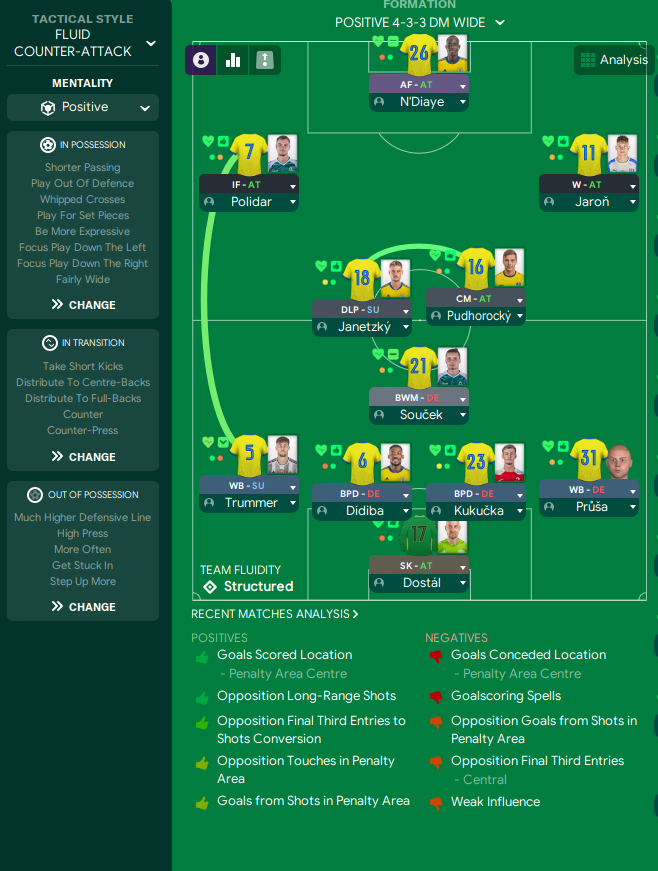
Loading tactical analysis...
Formation and style
Fluid
Positive
4-3-3 DM Wide
Structured
In possession
Shorter Passing
Play Out Of Defence
Whipped Crosses
Play For Set Pieces
Be More Expressive
Focus Play Down The Left
Focus Play Down The Right
Fairly Wide
In transition
Take Short Kicks
Distribute To Centre-Backs
Distribute To Full-Backs
Counter
Counter-Press
Out of possession
Much Higher Defensive Line
High Press
More Often
Get Stuck In
Step Up More
Player roles
GK
Sweeper Keeper
Attack
CB
Ball-Playing Defender
Defend
CB
Ball-Playing Defender
Defend
WB
Wing Back
Support
WB
Wing Back
Defend
DM
Deep-Lying Playmaker
Support
CM
Central Midfielder
Attack
BWM
Ball-Winning Midfielder
Defend
IF
Inside Forward
Attack
W
Winger
Attack
AF
Advanced Forward
Attack
Phase description
Focuses on utilizing the width provided by wingers and wing backs, enabling quick counter-attacks.
Emphasis on pressing high and regaining possession quickly to maintain offensive pressure.
Injecting creativity from the midfield and using dynamic forwards to exploit defensive gaps.
Team shape defence
3-2-4-1
The shape allows for compactness and width, providing options to press and recover during transitions.
BWM-D at [3,2] and DLP-S at [3,3] facilitates effective defensive coverage.
Team shape attack
3-3-3-1
Three-pronged attack with width to stretch defenders and create space in central positions.
IF-A at [6,1], W-A at [6,2], and AF-A at [6,3] for varied attacking options.
Key strengths
Wide Play
Utilizing wingers and wing backs creates opportunities to spread defenses.
W-A at [6,2] and WB-SU at [2,1] combined with 'Focus Play Down The Left' and 'Focus Play Down The Right'.
Midfield Control
Deep-lying playmaker supports transitions and ball distribution.
DLP-S at [3,3] enables effective control and distribution.
Conflicting tactics
Defensive Vulnerability
High defensive line might expose space behind against fast counter-attacks.
Much Higher Defensive Line may lead to issues with pacey opposition forwards.
Transition Risks
Commitment to a high press may leave gaps when possession is lost.
Counter-Pressing strategy could lead to vulnerabilities.
Risk exposures
Risk Exposures
Items
Defensive Transition
High press leaves potential gaps for opposition counter-attacks.
High Press and Much Higher Defensive Line create space behind.
Wide Areas
Inside forwards may isolate the wing backs if not supported.
IF-A at [6,1] and WB-SU at [2,1] could lead to unbalanced flanks.
Role synergies
Role Synergies
Items
BWM-D and DLP-S
Provides balance between defensive solidity and creative play from deep.
BWM-D at [3,2] supports while DLP-S at [3,3] facilitates transitions.
IF-A and W-A
Creates dynamic attacking opportunities through interchanging positions.
IF-A at [6,1] can cut inside while W-A at [6,2] stretches the defense.
Suggested questions
How well does the current system cope with quick counter-attacks?
Are the wing backs getting enough support during defensive phases?
Is the midfield adequately covering both attacking and defensive responsibilities?
Related Tactics
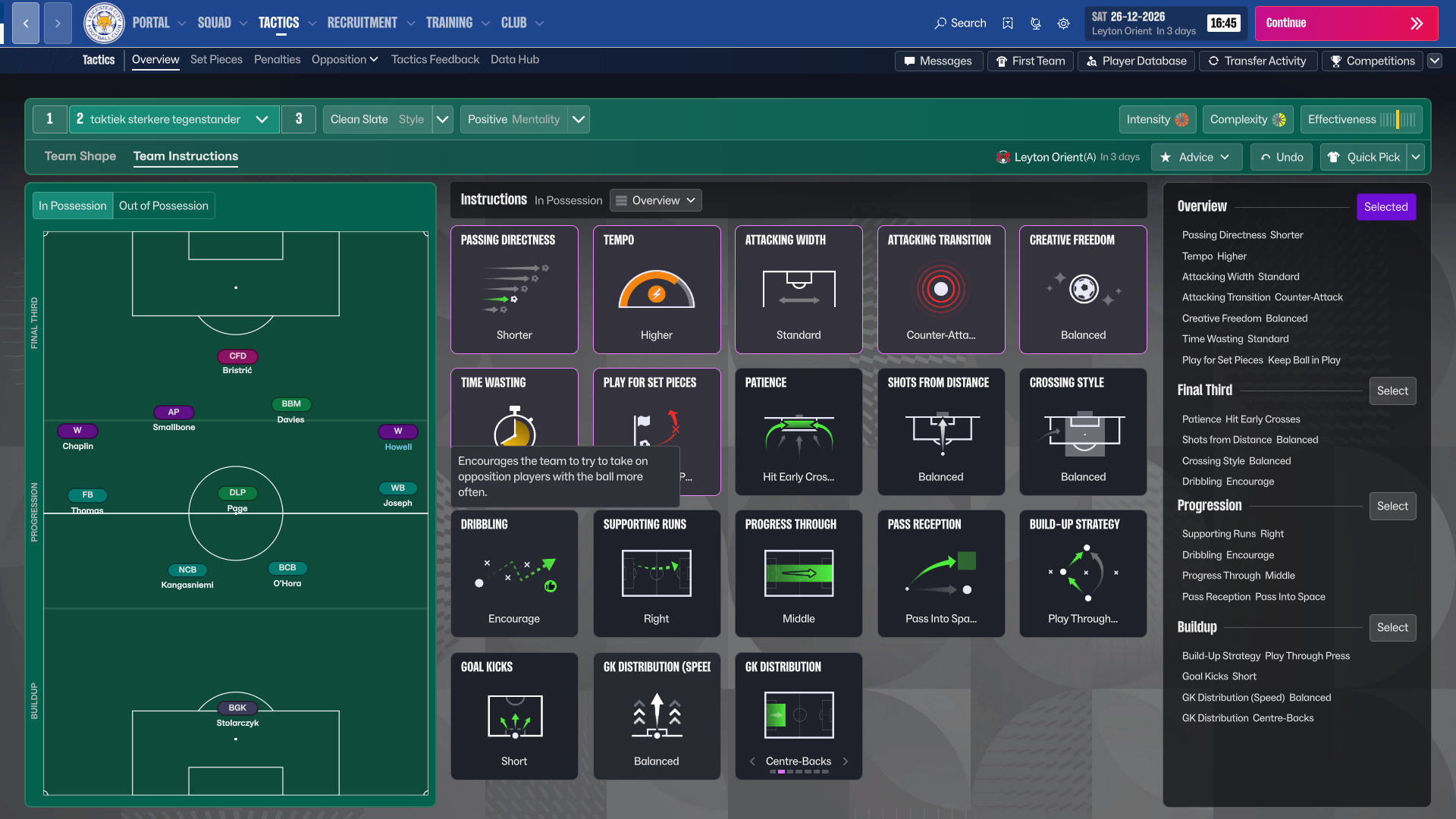
4-3-3 DM Wide Formation
clean slate
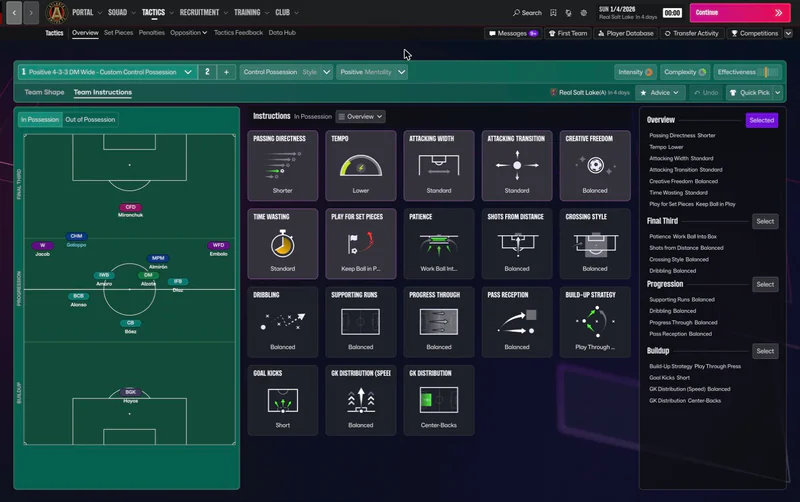
Control Possession 4-3-3 DM Wide
control possession
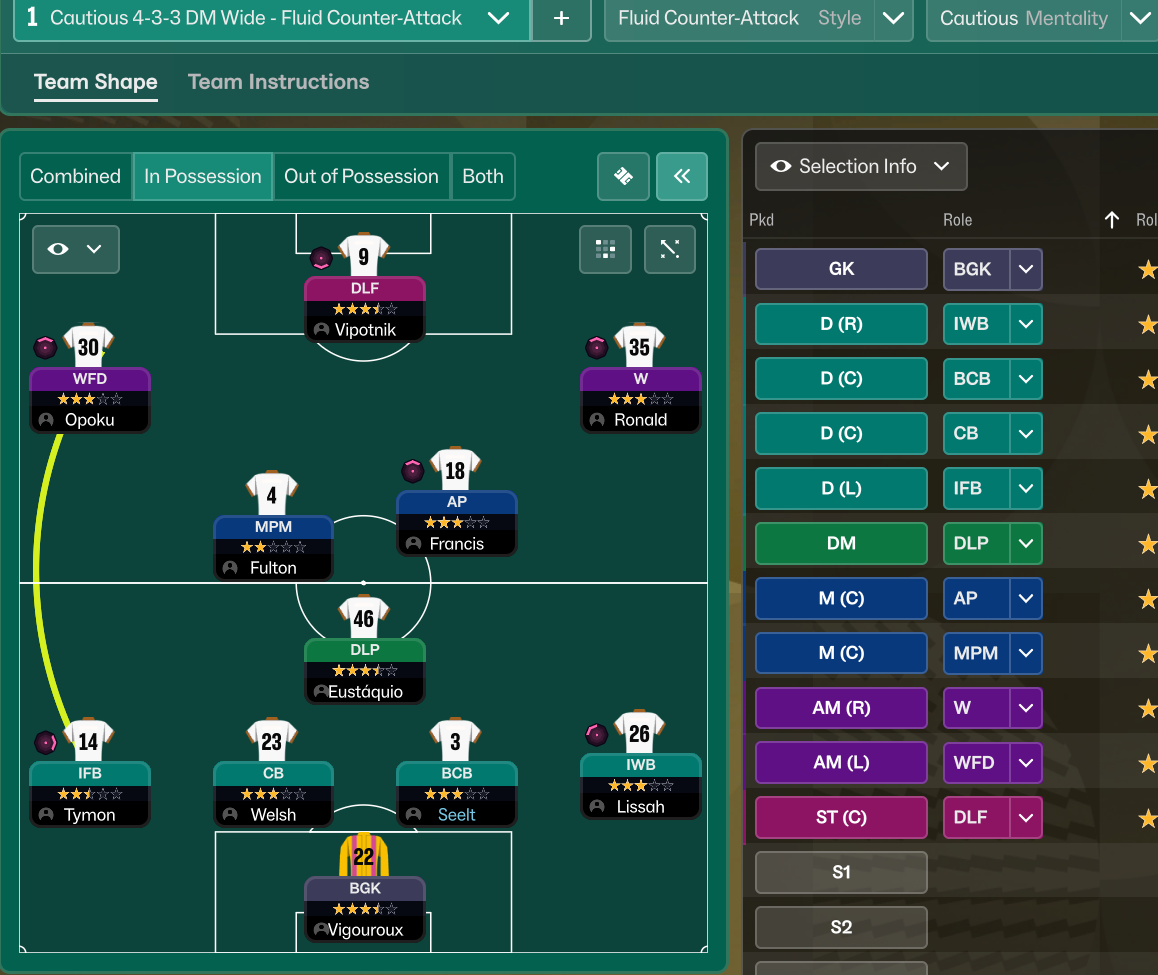
Fluid Counter-Attack 4-3-3 DM Wide
Fluid Counter-Attack
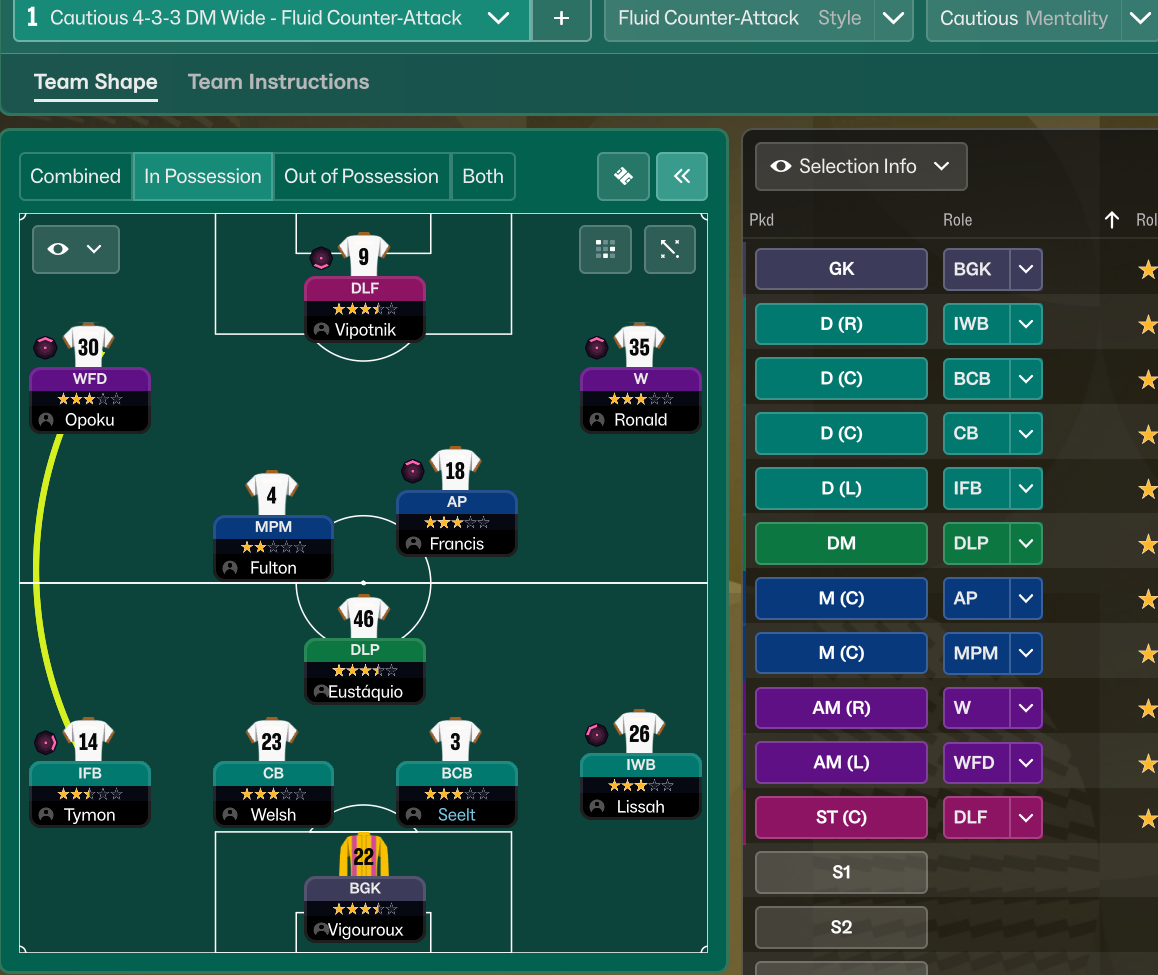
Fluid Counter-Attack 4-3-3 DM Wide
Fluid Counter-Attack
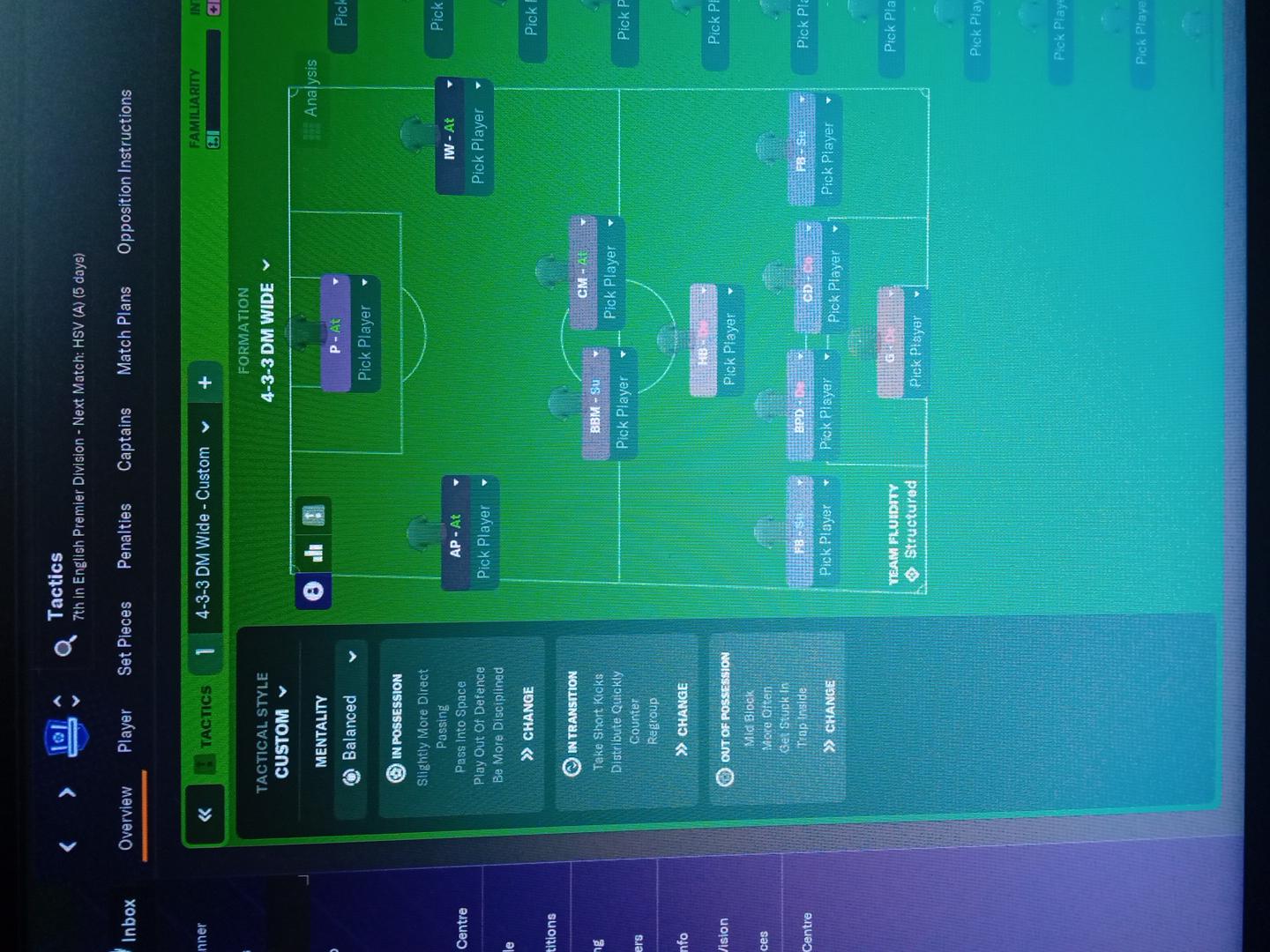
4-3-3 DM Wide Formation
Custom
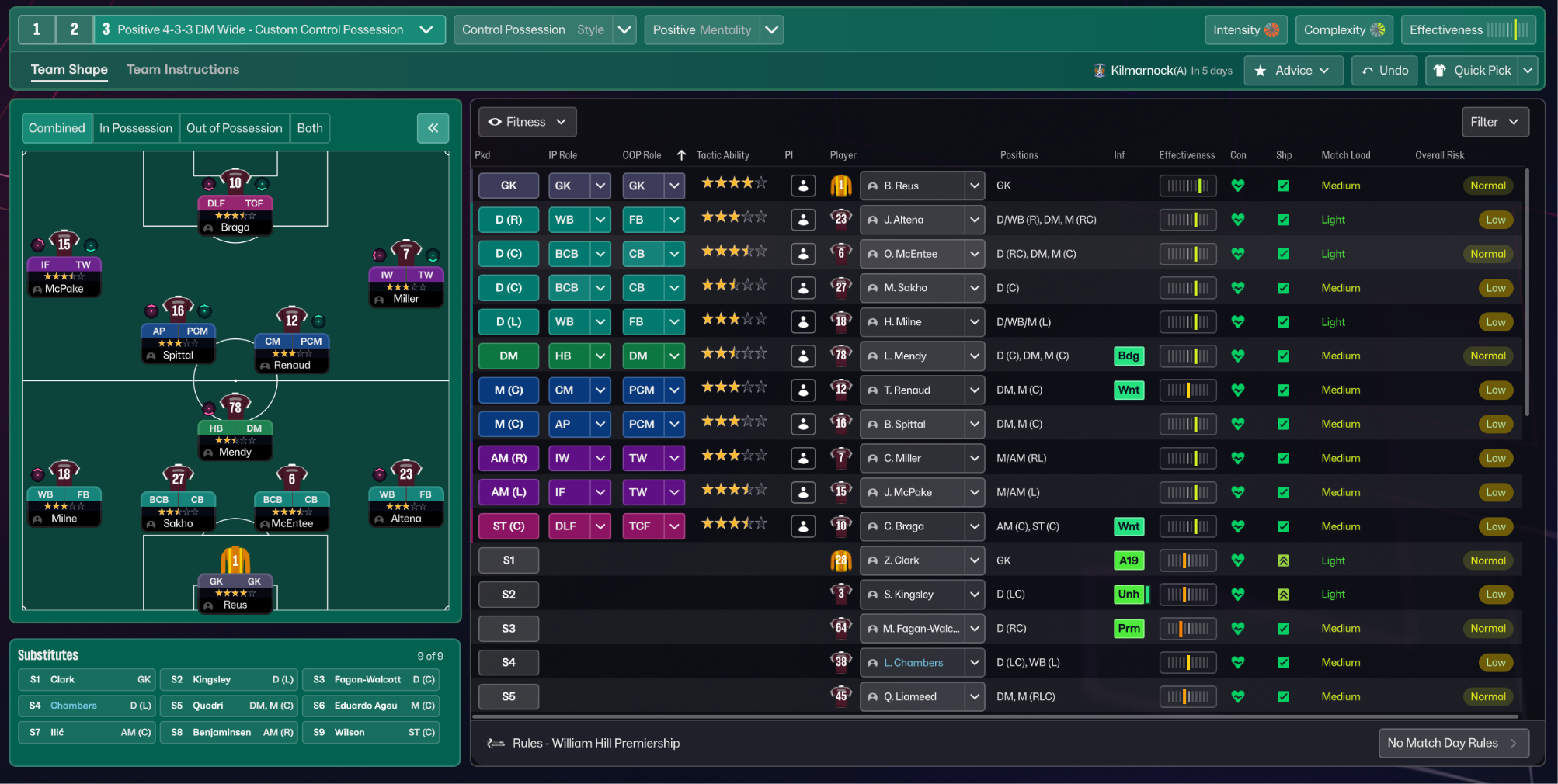
Control Possession 4-3-3 DM Wide
Control Possession
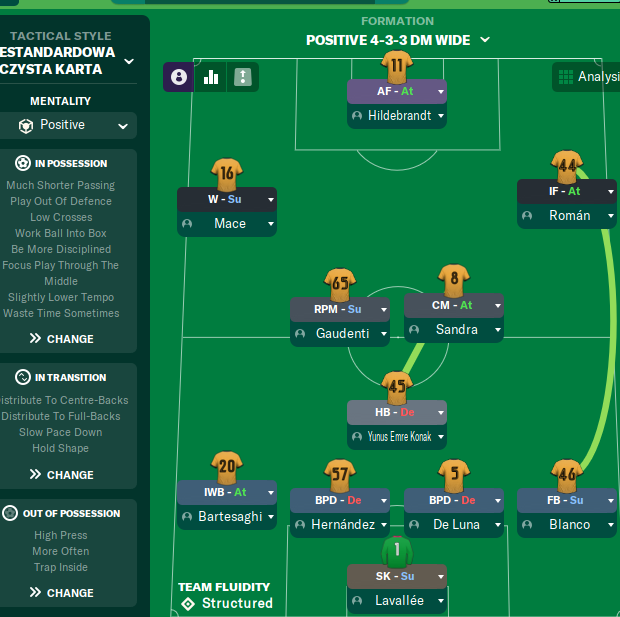
Positive 4-3-3 DM Wide
Positive
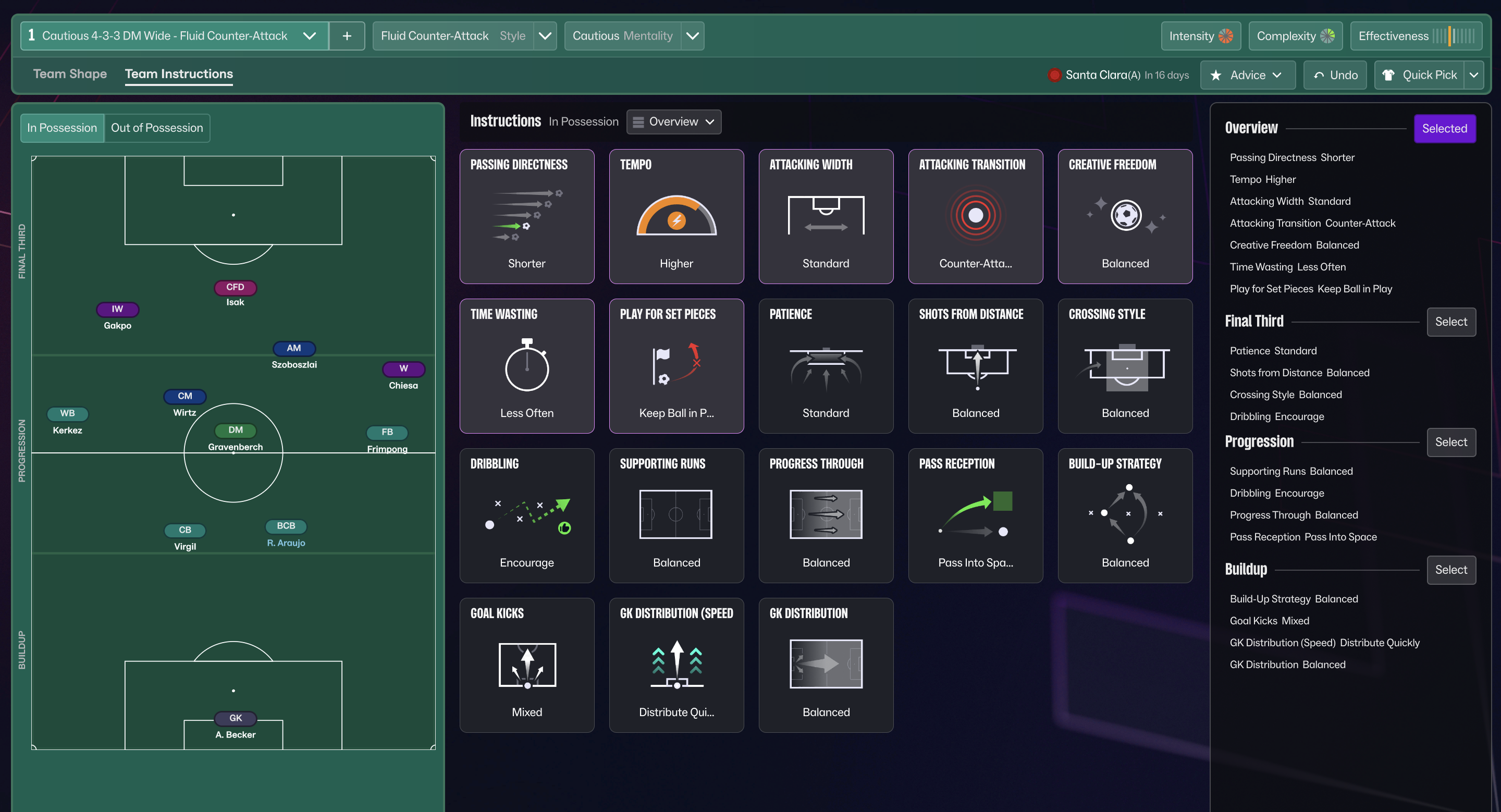
Fluid Counter-Attack 4-3-3 DM Wide
Fluid Counter-Attack
More Fluid tactics
Guides for this tactic
The tactical theory behind the 4-3-3 DM Wide: roles, instructions, and the trade-offs that decide whether the system holds up.
Playing styles
Gegenpressing: A Full Guide
Klopp-style gegenpressing in FM, including squad profile, line-and-press pairing, sustainable workload, and the antipatterns to avoid.
Read guide
Playing styles
Tiki-Taka vs Positional Play
Why circulation density and zonal occupation aren't the same thing in FM, and the half-space occupation rule that decides build-up.
Read guide
Foundations
Wing Play vs Central Play
Build through the wide areas or through the middle? A working framework for picking the right one for your squad.
Read guide