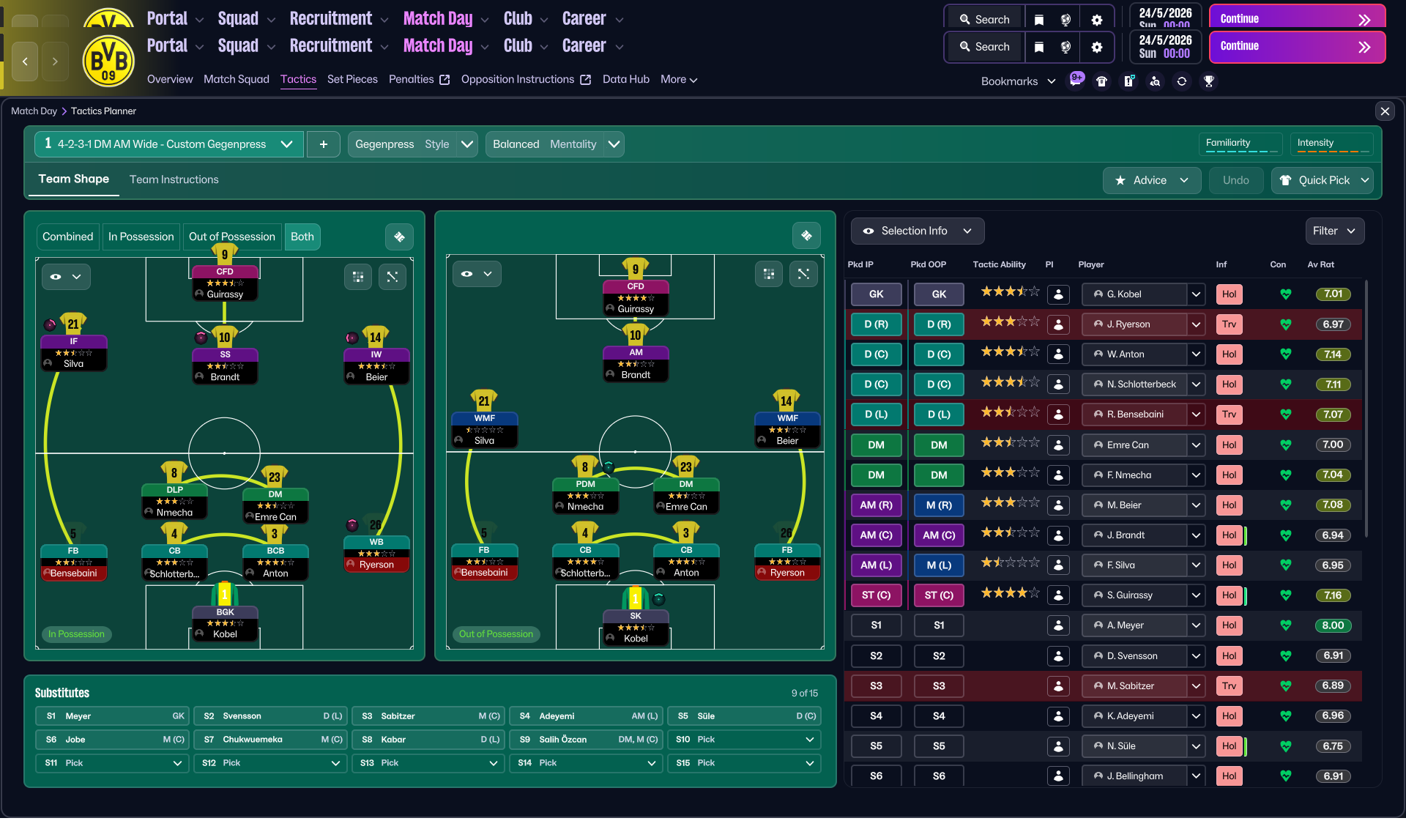
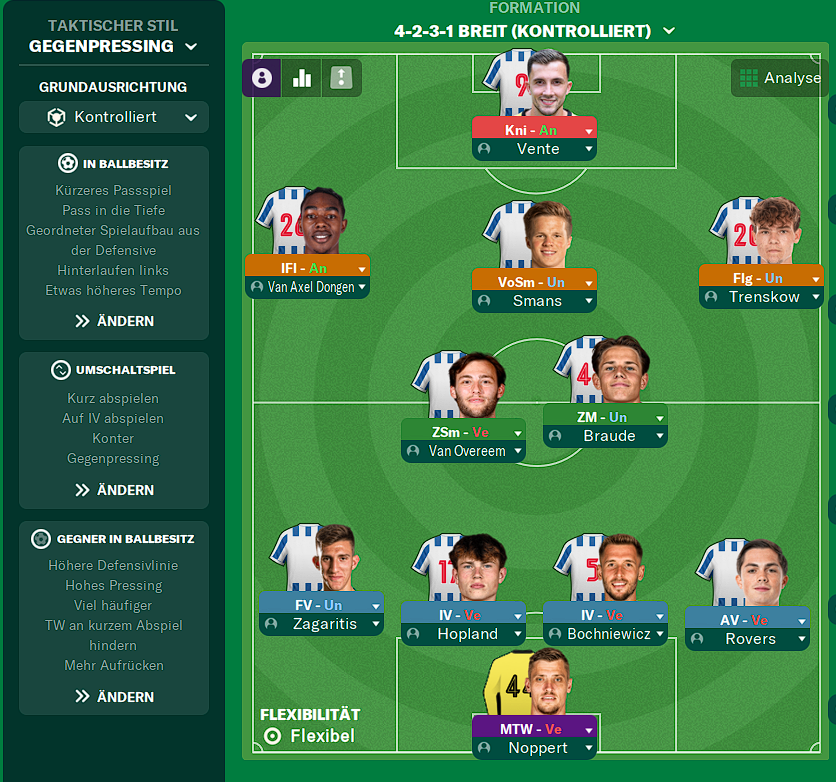
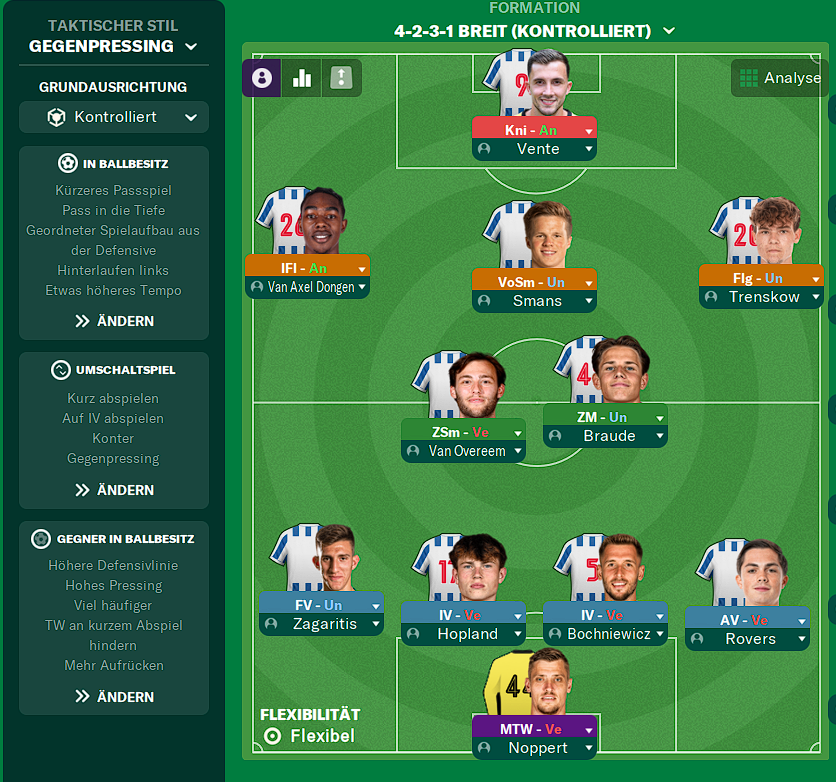
Gegenpress 4-2-3-1 DM Wide (Controlled) Tactic
4-2-3-1 DM Wide
Leverage possession to create goal-scoring opportunities in transitional phases. The ability to quickly transition from defense to attack using quick…
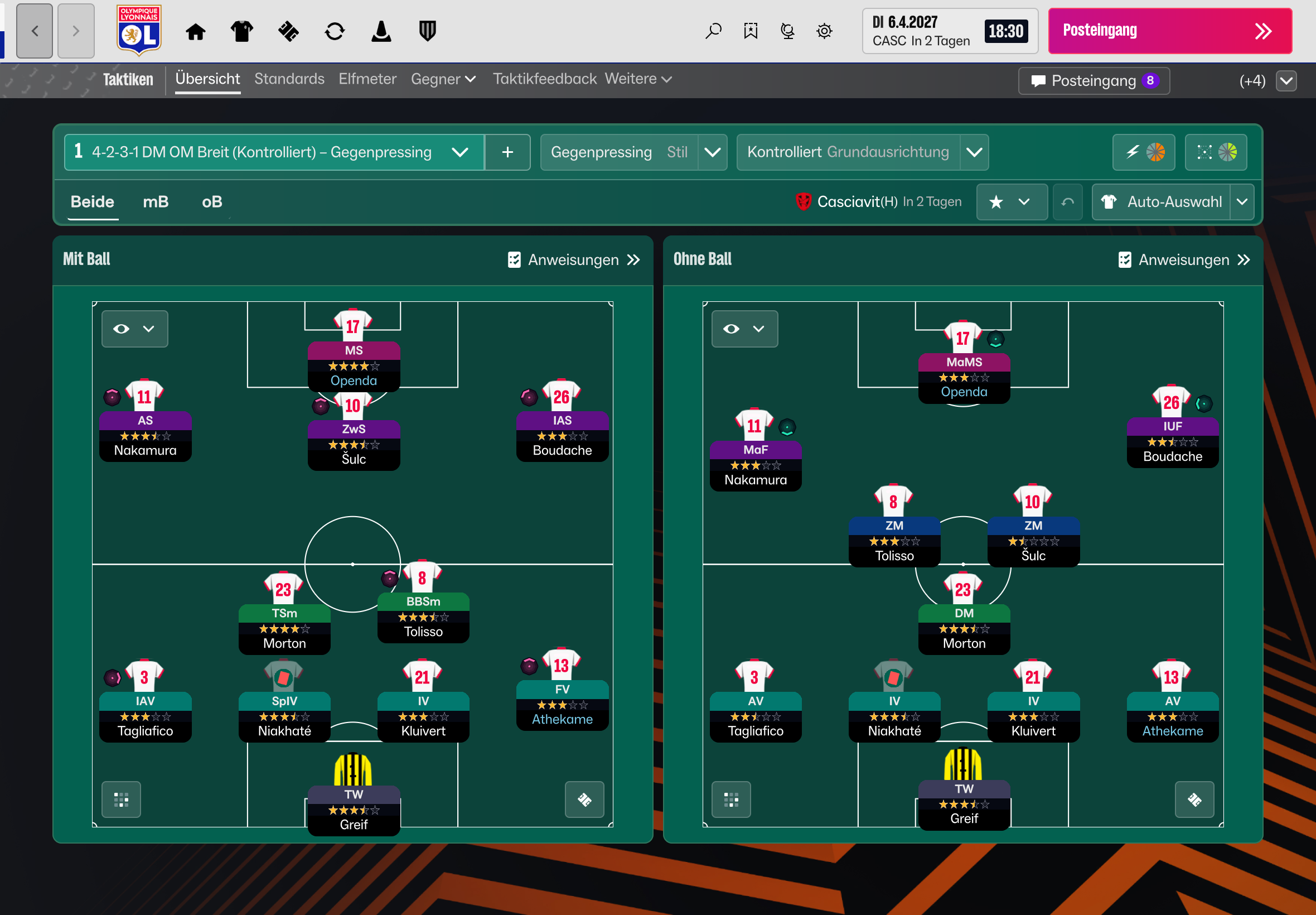
Loading tactical analysis...
Formation and style
Gegenpressing
Controlled
4-2-3-1 DM Wide
Moderate
In possession
Play Out of Defence
Focus Through Middle
Be More Expressive
In transition
Counter-Press
Counter
Goalkeeper Distribution: Distribute Quickly
Out of possession
Higher Line of Engagement
Higher Defensive Line
Use Offside Trap
Player roles
GK
Goalkeeper
Defend
LB
Full-Back
Support
CB
Centre-Back
Defend
CB
Centre-Back
Defend
RB
Full-Back
Support
DM
Ball-Winning Midfielder
Support
CM
Central Midfielder
Support
CM
Advanced Playmaker
Support
LW
Inside Forward
Attack
RW
Inside Forward
Attack
ST
Advanced Forward
Attack
Phase description
The team focuses on quick transitions and utilizing width through the inside forwards.
Quickly reorganizes into a solid block to press opponents high.
Leverage possession to create goal-scoring opportunities in transitional phases.
Team shape defence
4-2
Organized defensive structure with the double-pivot supporting the defense.
CBs at [2,2] and [2,3], DM at [3,3] supporting.
Team shape attack
4-3
Width provided by inside forwards stretching opposition, with a central focus.
Inside Forwards at [6,2] and [6,4], ST at [6,3].
Key strengths
Fluid Transition
The ability to quickly transition from defense to attack using quick passes and space exploitation.
Transition strategies include 'Counter' and 'Counter-Press'.
Attacking Diversity
Utilizes both central and wide areas effectively to create chances.
Use of 'Focus Through Middle' and 'Width' in attacking movement.
Conflicting tactics
Potential Overcommitment
Increased pressing might leave spaces open for counter-attacks.
High pressing instructions could expose defensive line against speedy opponents.
Overemphasis on Width
Heavy reliance on wide play may lead to predictability.
Inside Forwards may become isolated without sufficient central support.
Risk exposures
Risk Exposures
Items
Defensive Vulnerability
High engagement can compromise defensive solidity.
Highlighted by the 'Use Offside Trap' and high pressing.
Central Midfield Weakness
Limited numbers in central areas may lead to being outnumbered.
Only 3 central players versus possible 4-5 from the opponent.
Role synergies
Role Synergies
Items
Ball-Winning Midfielder and Central Midfielder
Provides balance between defensive stability and creating offensive opportunities.
DM at [3,3] and CM at [4,3] supporting tactical transitions.
Inside Forwards and Advanced Forward
Creates a dynamic attacking front that pulls defenders out of position.
IFs at [6,2] and [6,4] with AF at [6,3] engaging the defense.
Suggested questions
How do we ensure compactness without losing attacking fluidity?
What adjustments can be made against teams with strong counter-attacking capabilities?
Should we consider varying our pressing intensity based on opponent strengths?
Related Tactics
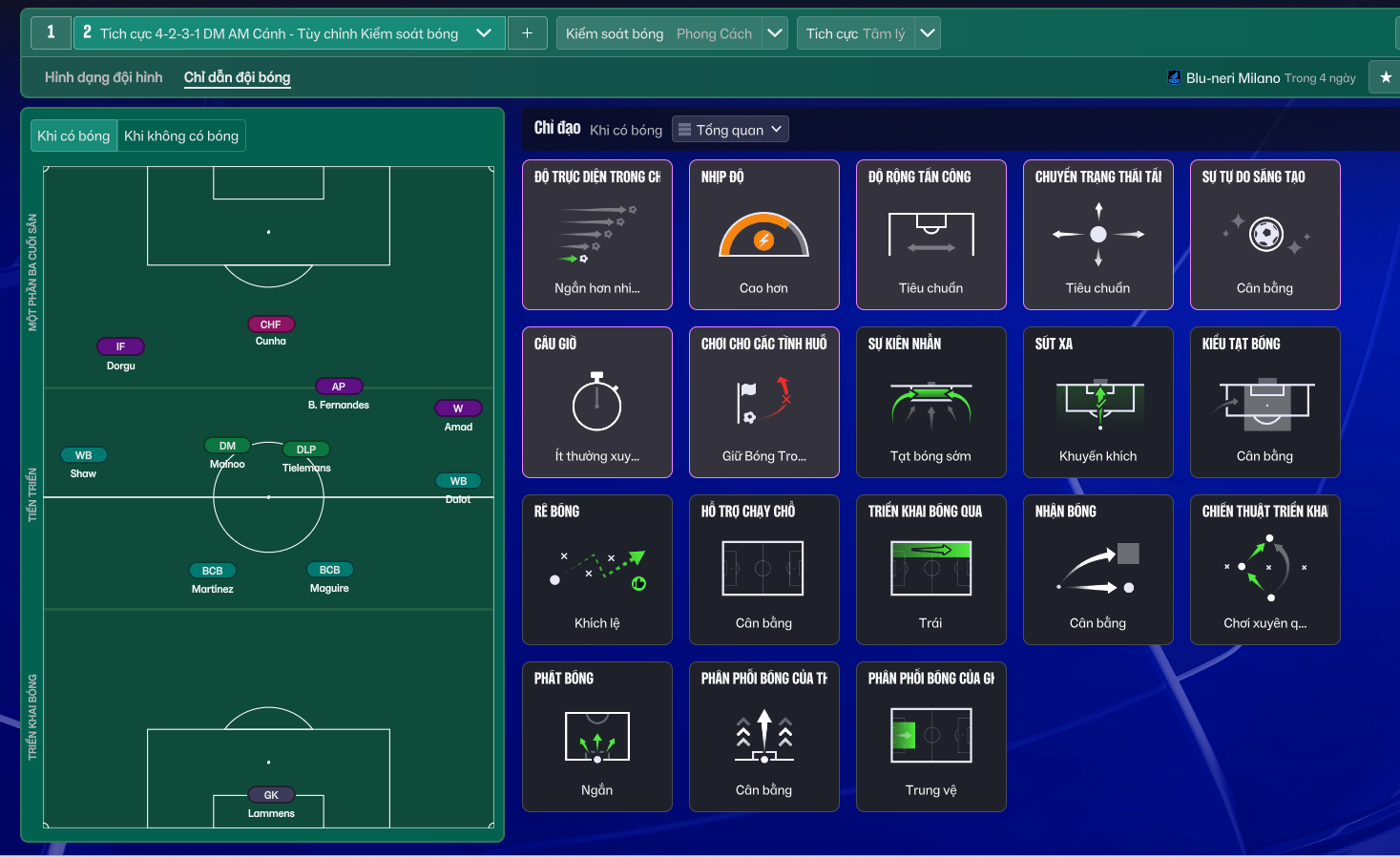
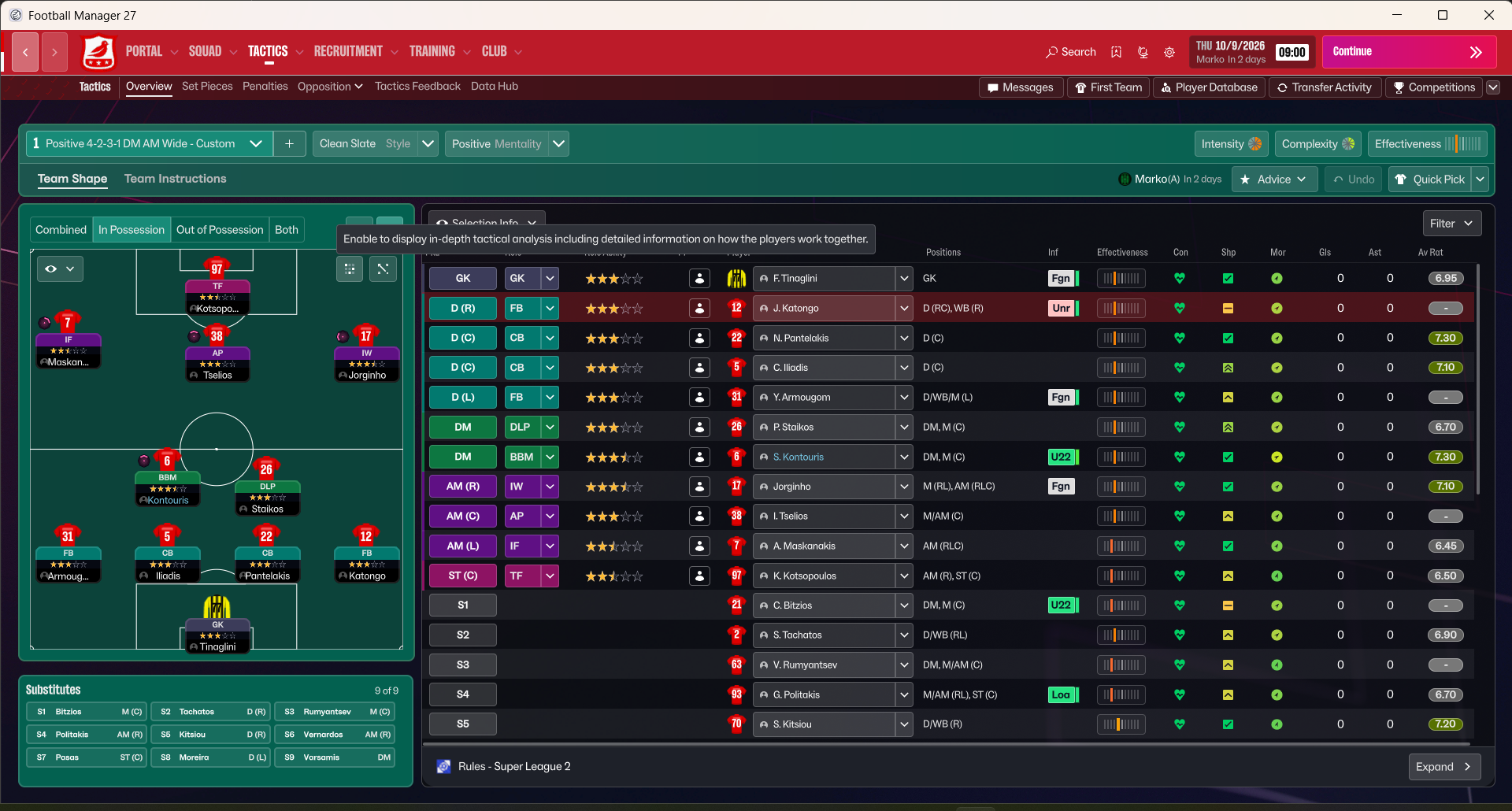
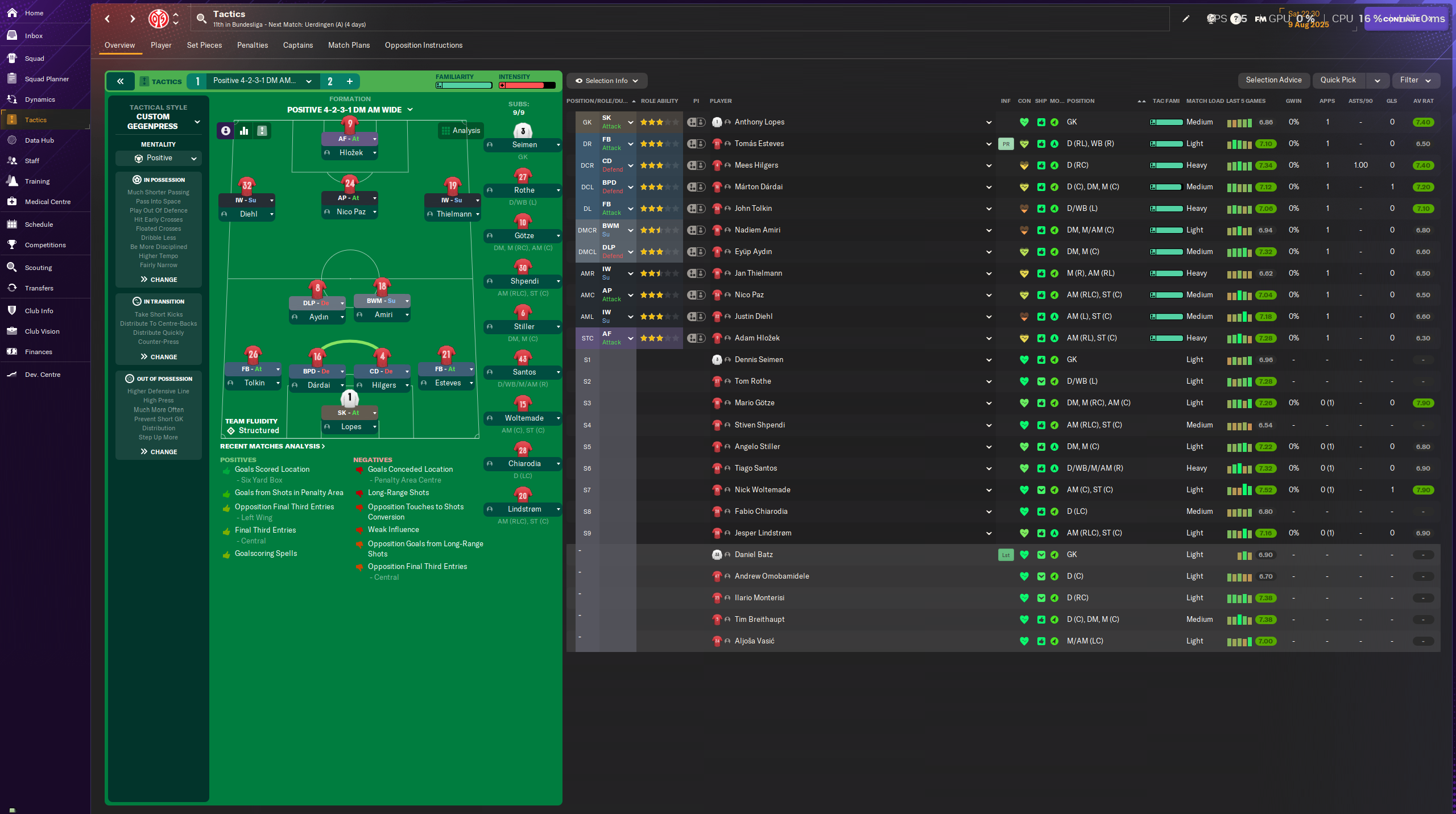
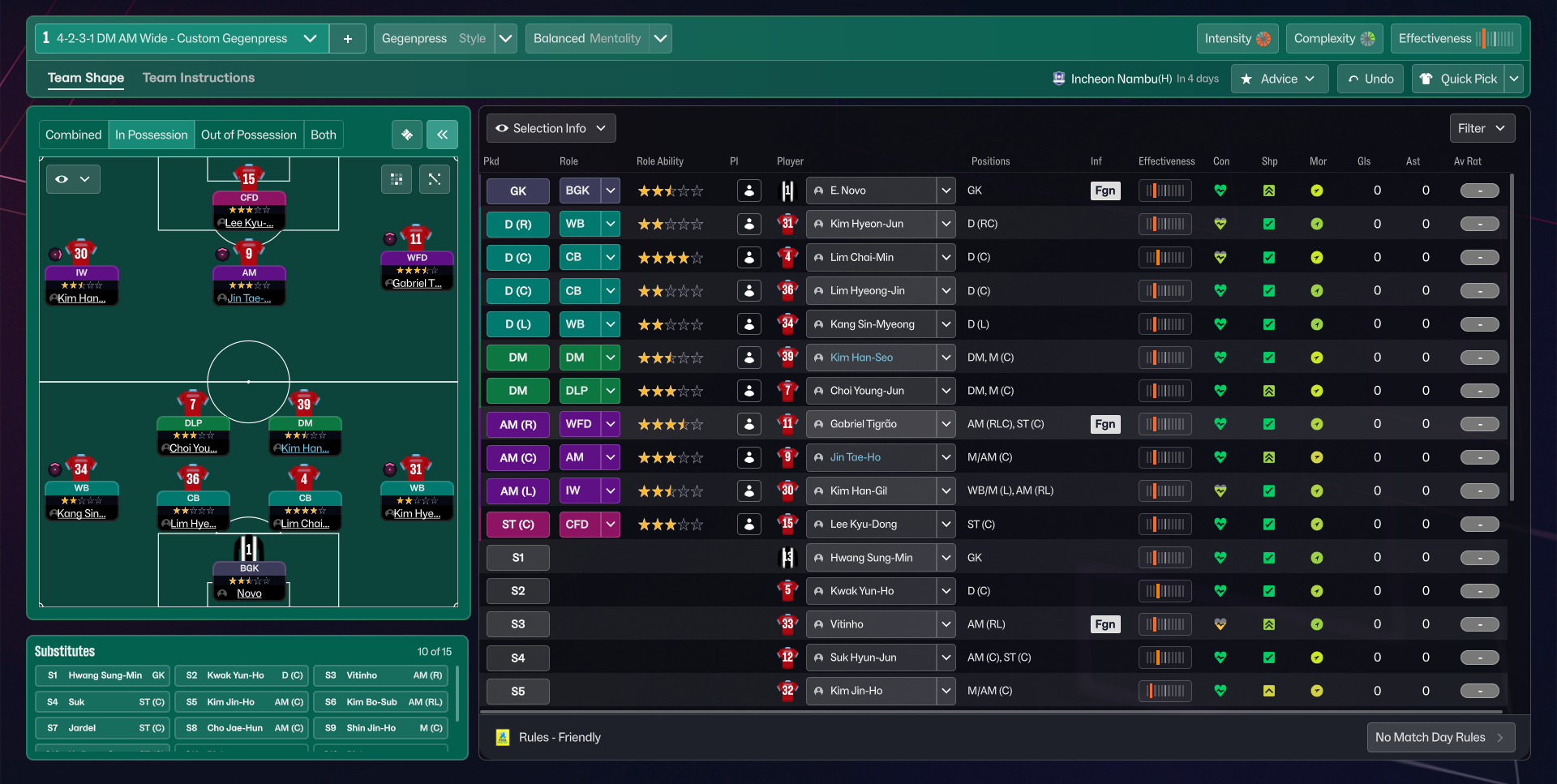
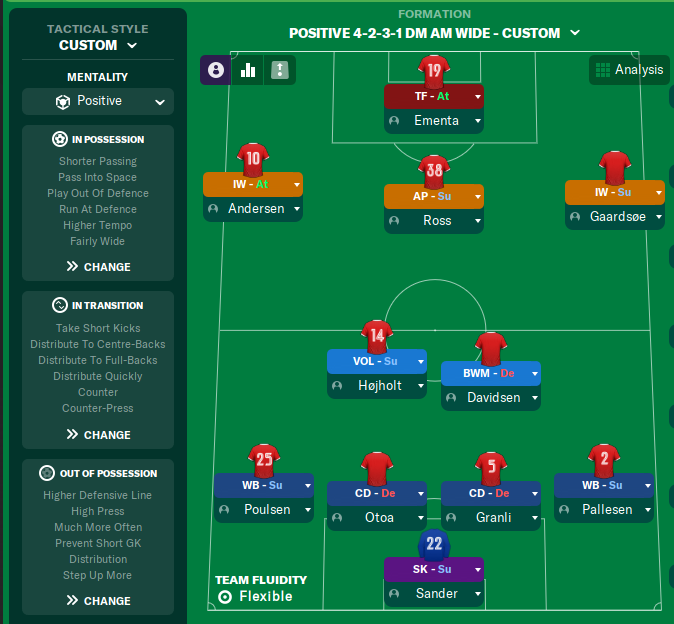
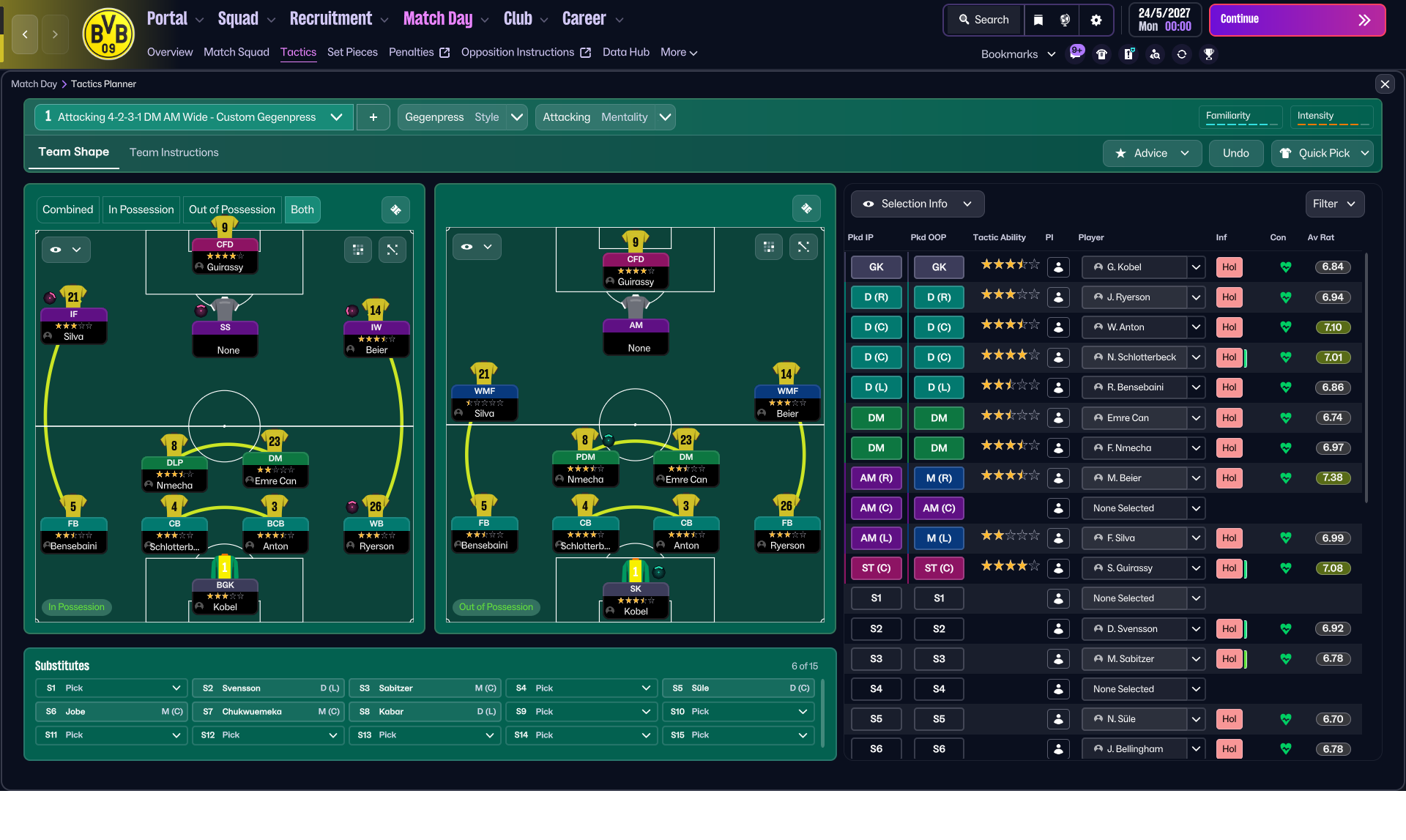
More Gegenpressing tactics
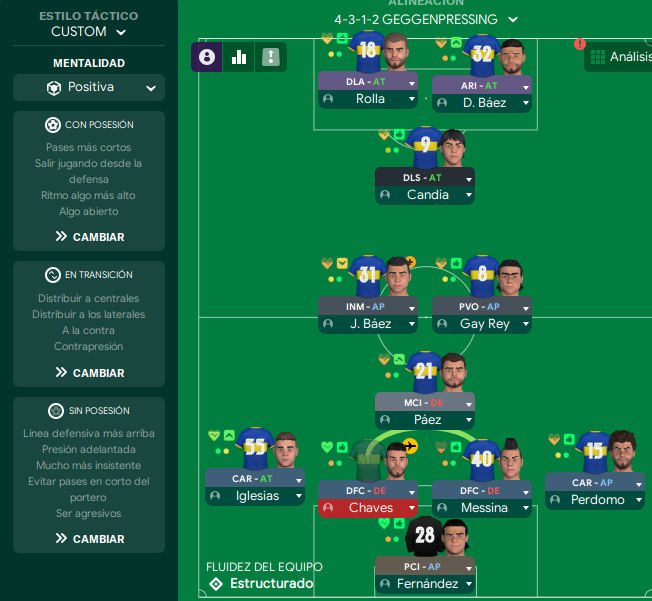
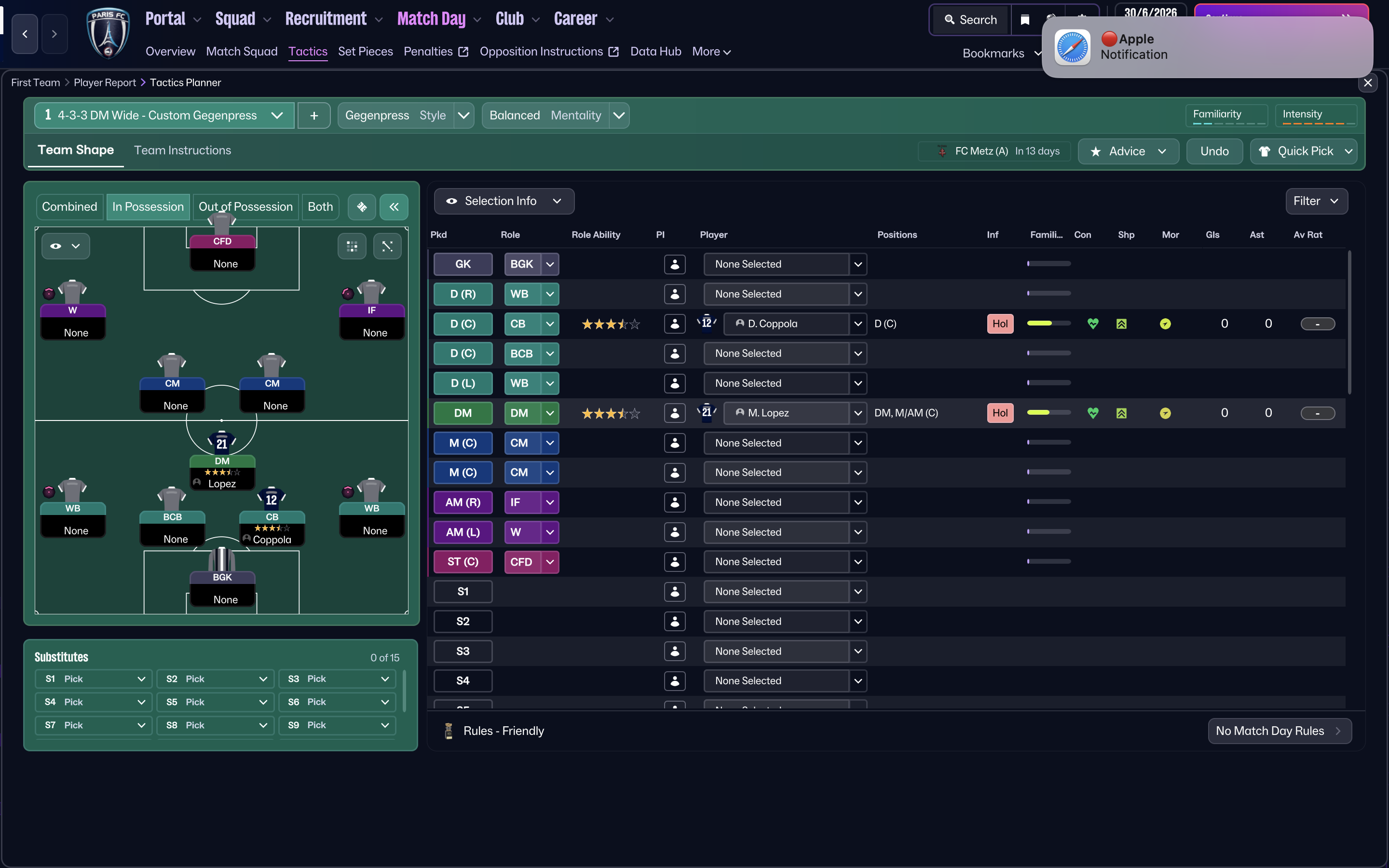
Guides for this tactic
The tactical theory behind the 4-2-3-1 DM Wide: roles, instructions, and the trade-offs that decide whether the system holds up.
Player pairings
Midfield Pairs in 4-2-3-1 and 4-4-2
Double pivots and flat pairs in 4-2-3-1 and 4-4-2: when each pairing works, when it collapses, and the AMC unicorn that rescues both.
Read guide
Playing styles
Gegenpressing: A Full Guide
Klopp-style gegenpressing in FM, including squad profile, line-and-press pairing, sustainable workload, and the antipatterns to avoid.
Read guide
Match preparation
Reading the Match Tablet
Pass map, average position, xG, possession by zone: what each tablet panel tells you in FM and the tactical change it should trigger.
Read guide