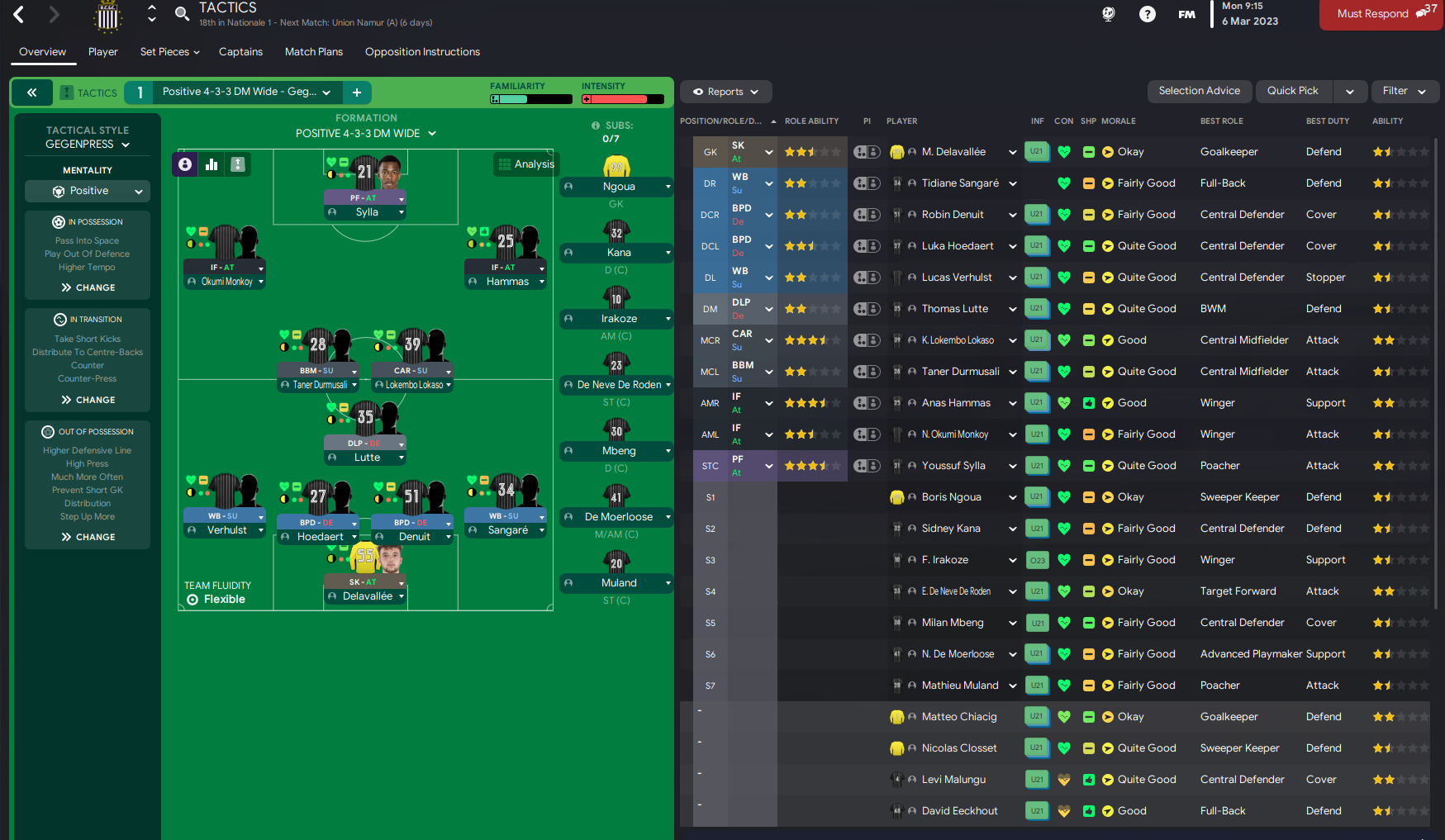
Uploaded Tactic
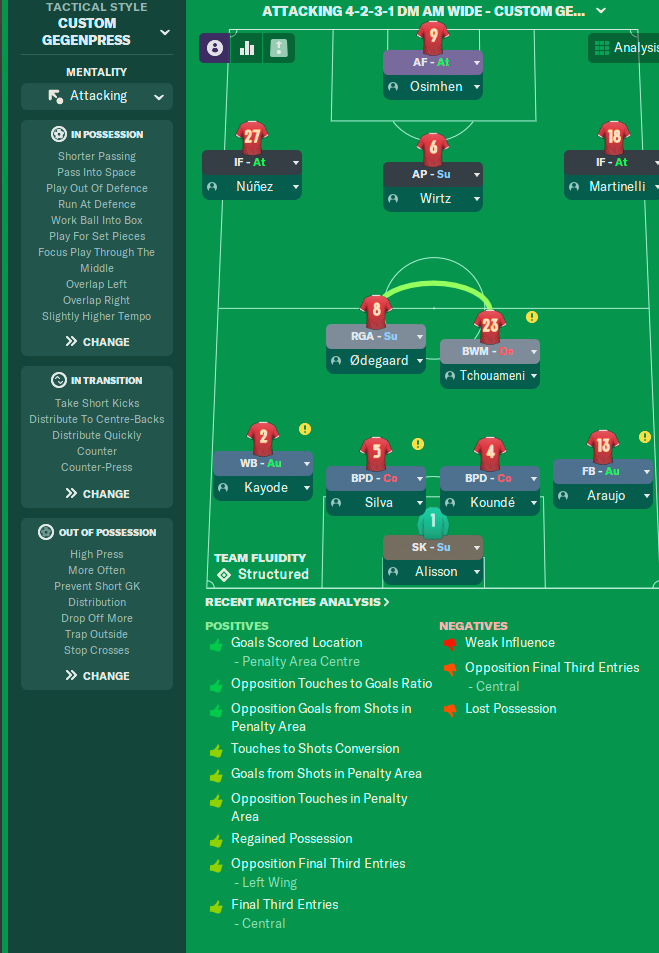
Formation & Style
Tactical Style:Gegenpress
Mentality:Attacking
Formation:4-2-3-1 Wide
Team Fluidity:Structured
In Possession
Shorter Passing
Pass Into Space
Play Out Of Defence
Work Ball Into Box
Focus Play Through The Middle
Overlap Left
Overlap Right
Play For Set Pieces
Slightly Higher Tempo
In Transition
Take Short Kicks
Distribute To Centre-Backs
Counter
Counter-Press
Out of Possession
High Press
More Often
Prevent Short GK Distribution
Drop Off More
Trap Outside
Stop Crosses
Team Shape Without Ball
Shape:4-2
Description:Compact shape with two defensive midfielders providing cover for the defense and breaking up opposition play.
Evidence:BWM-D at [3,3] and RGA-S at [3,4] with a 4-man defense.
Team Shape With Ball
Shape:4-3
Description:Utilizes width with overlapping wing backs and inside forwards to penetrate defensive lines.
Evidence:Wing Backs at [2,2] and [2,4] provide width while the inside forwards at [6,1] and [6,5] look to attack spaces.
Phase Description
Attacking Play
The team looks to control possession through shorter passing while playing out from the back and focusing on attacking through the middle and wings.
Defensive Transition
The team transitions quickly to a counter-pressing setup upon losing the ball, looking to regain possession high up the pitch.
Main Focus
To exploit spaces in the attacking third through quick interplay and movement.
Key Strengths
Scoring from Penalties
The team excels at scoring from penalty areas, showcasing a strong finishing ability in crucial zones.
Regaining Possession
Effective in winning the ball back quickly through pressing and positioning.
Attacking Width
Utilization of wing play through overlapping full-backs and inside forwards creates diverse attacking opportunities.
Conflicting Directions
Central Focus
The over-reliance on attacking centrally may leave the flanks underutilized, limiting width in play.
High Risk of Losing Possession
Counter-pressing can lead to exposure if the initial press is bypassed, resulting in quick breakaway chances for opponents.
Weak Influence of Full-backs
If full-backs do not provide adequate support in attack, the team may struggle to create width and overloads.
Tactical Suggestions
Enhance Full-Back Activity
Instruct full-backs to join the attack more often to create width and provide additional support.
Balance Central & Wing Play
Encourage wingers and inside forwards to interchange positions to confuse defenses and create space.
Cover for Counter-Press
Ensure players are in suitable positions to recover quickly if the initial press fails.
Ask Questions About Your Lineup
Related Tactics
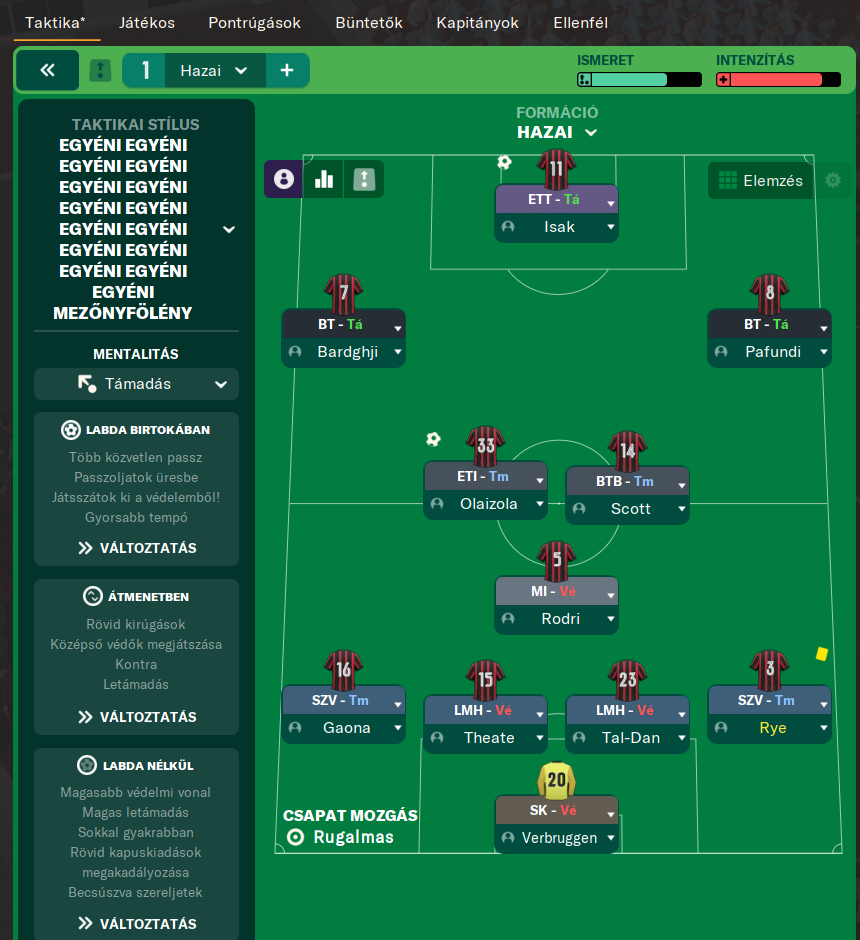
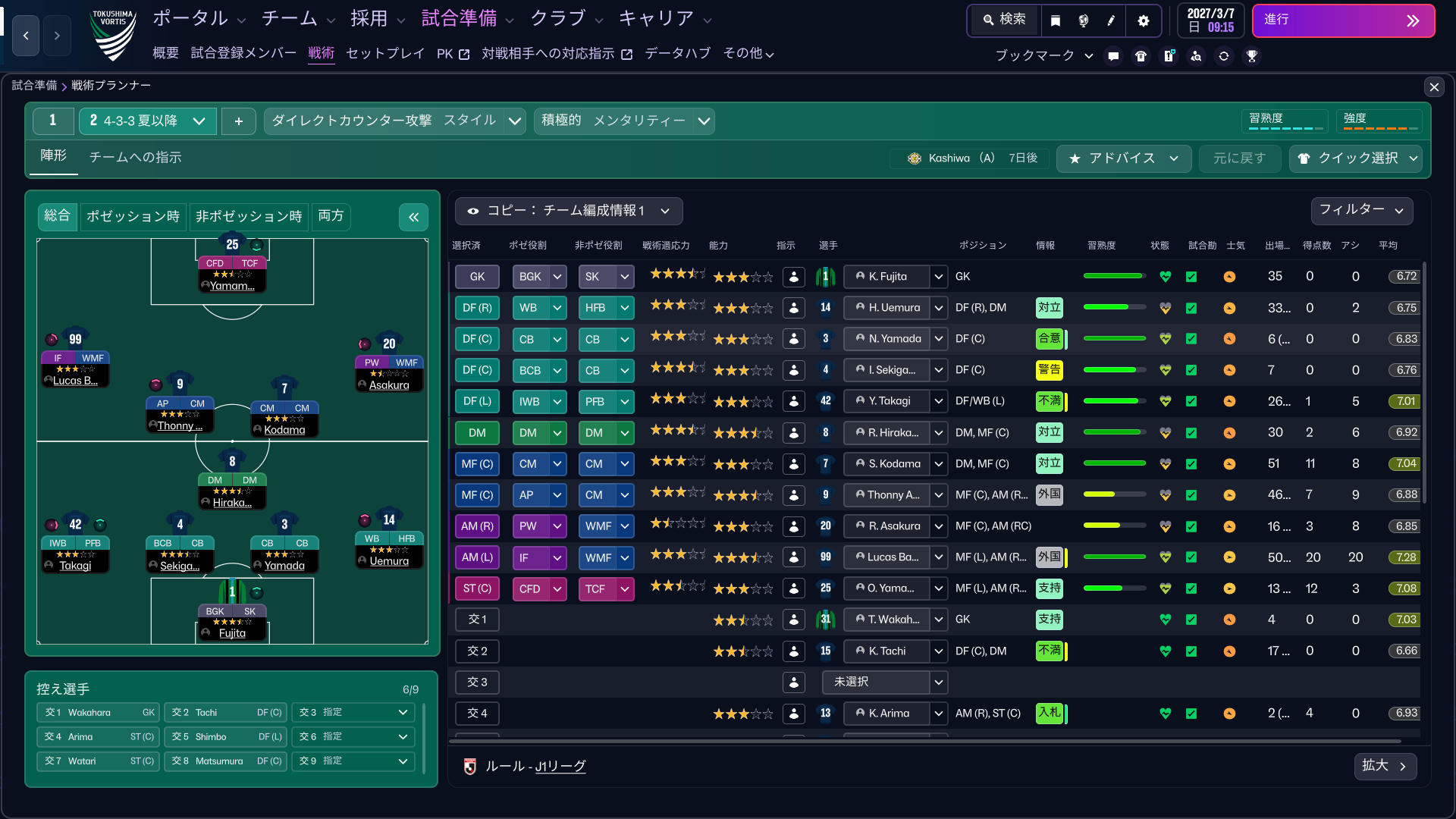
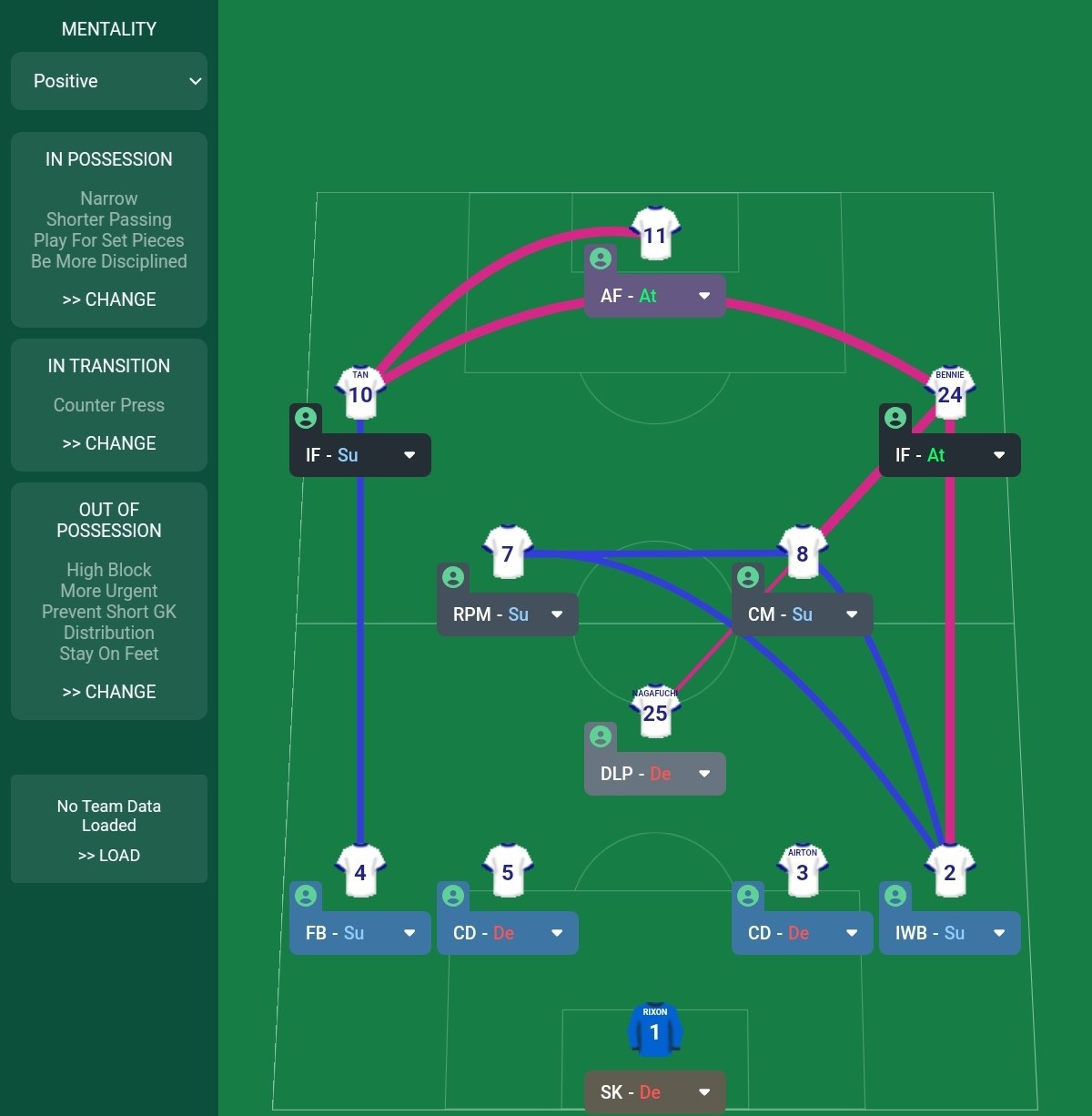
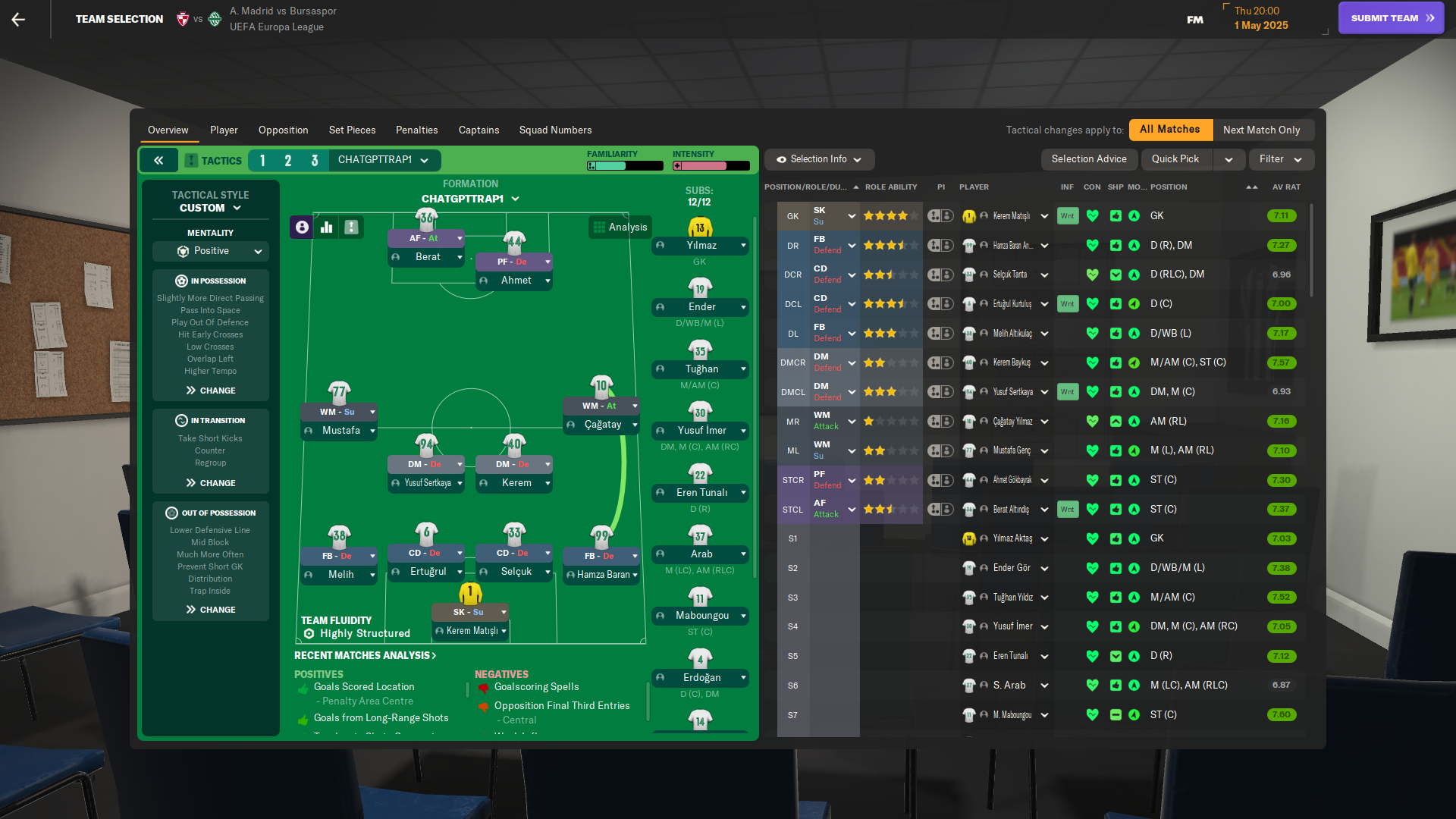
More Gegenpress tactics
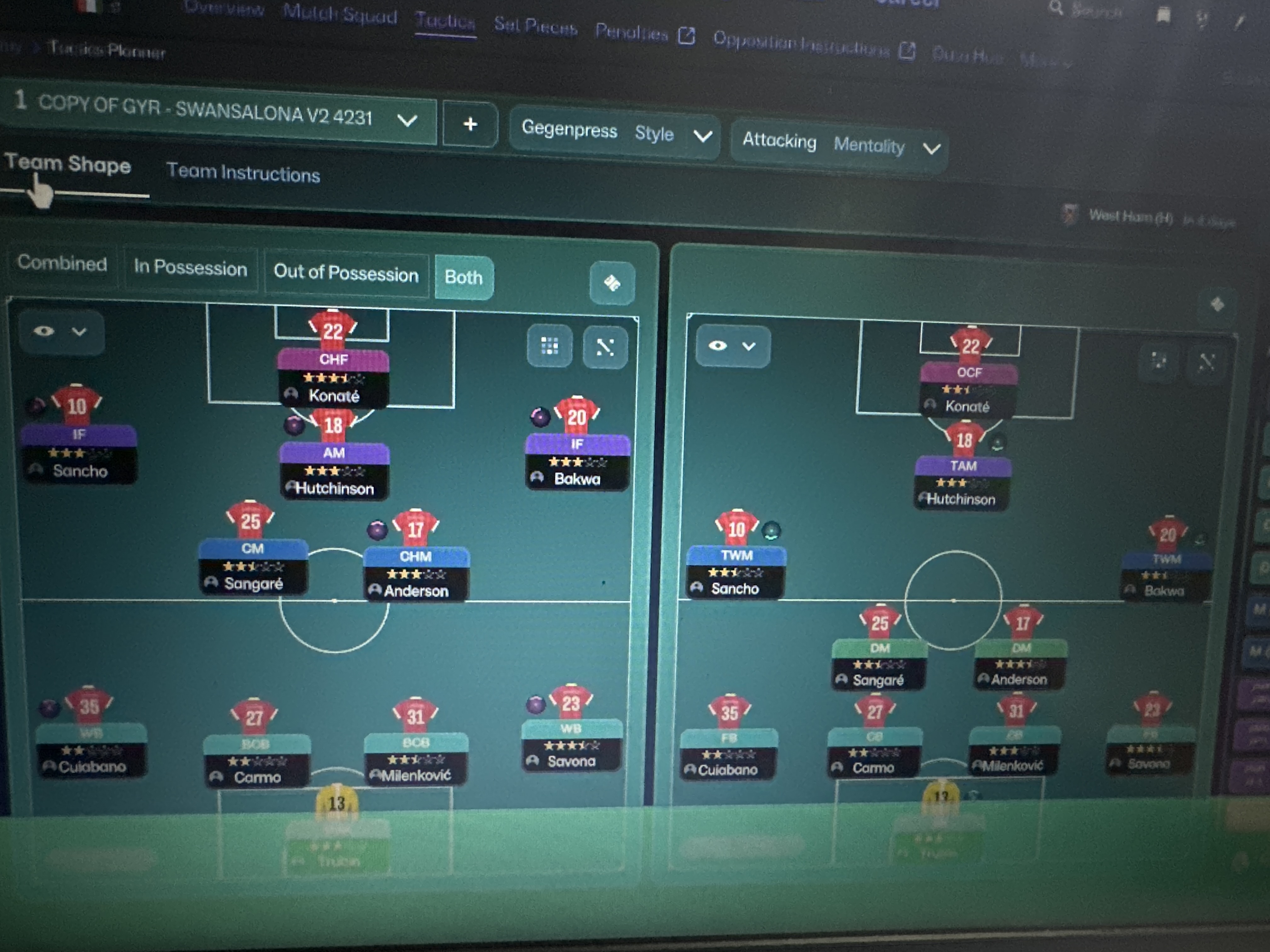
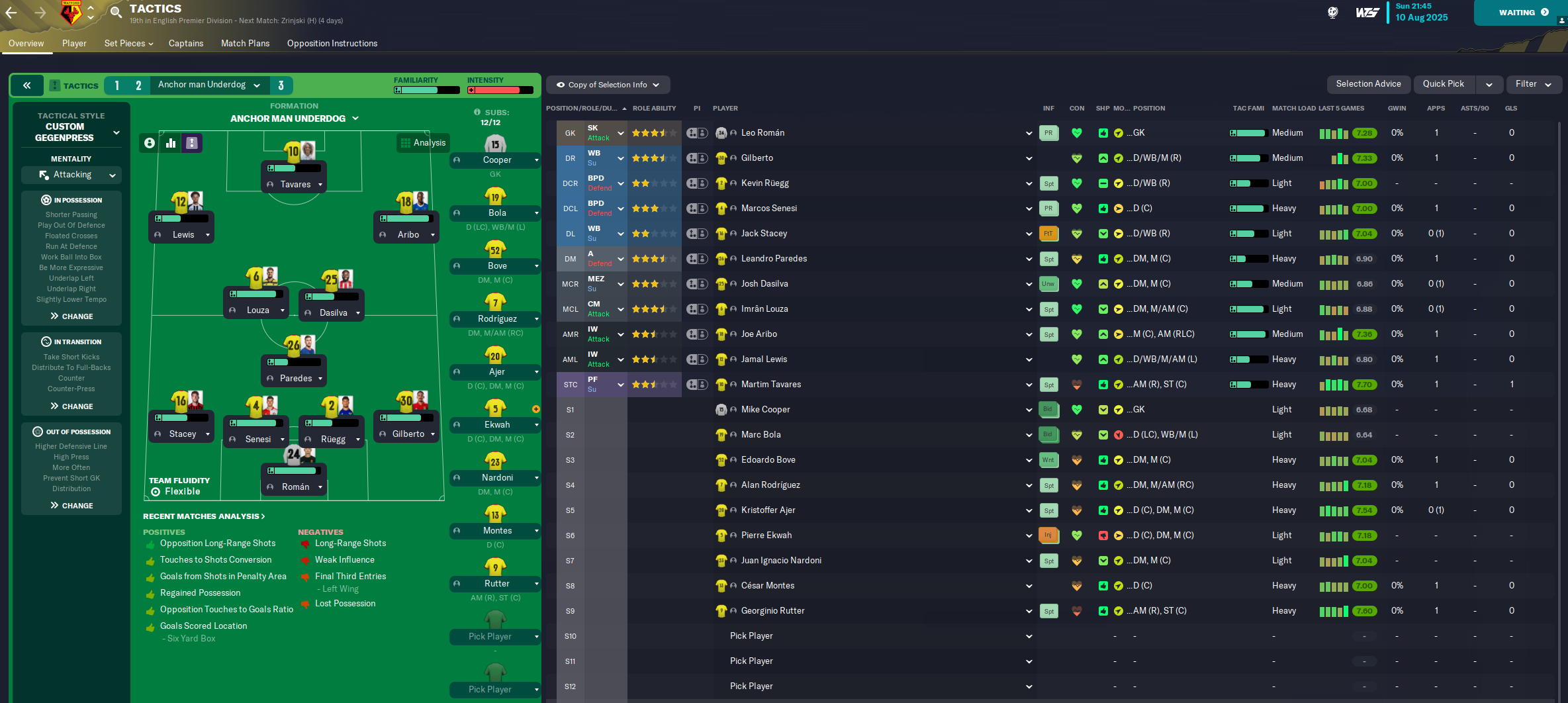
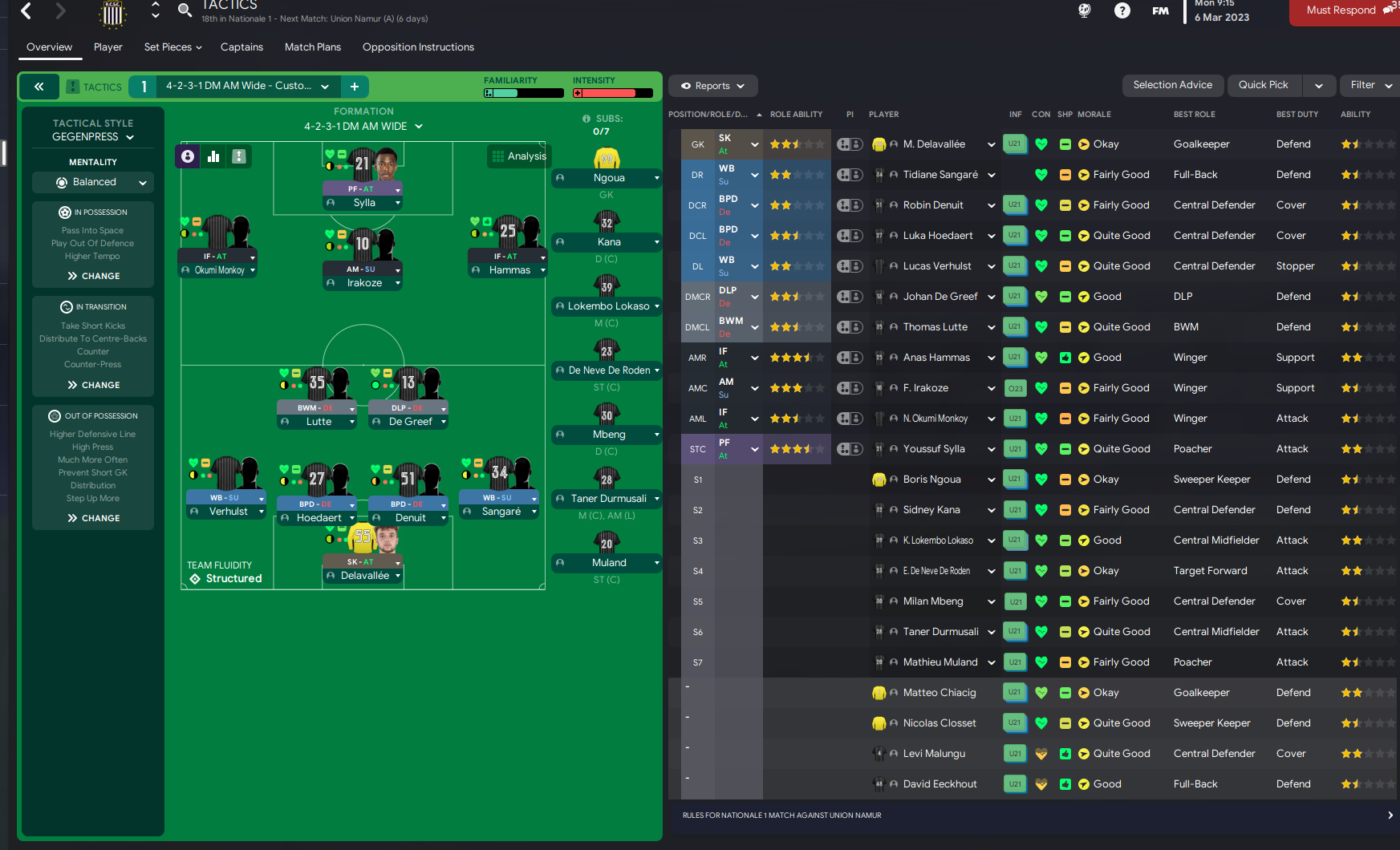
Guides for this formation
The tactical theory behind the 4-2-3-1 Wide: roles, instructions, and the trade-offs that decide whether the system holds up.
Player pairings
Midfield Pairs in 4-2-3-1 and 4-4-2
Double pivots and flat pairs in 4-2-3-1 and 4-4-2: when each pairing works, when it collapses, and the AMC unicorn that rescues both.
Read guide
Playing styles
Gegenpressing: A Full Guide
Klopp-style gegenpressing in FM, including squad profile, line-and-press pairing, sustainable workload, and the antipatterns to avoid.
Read guide