Uploaded Tactic
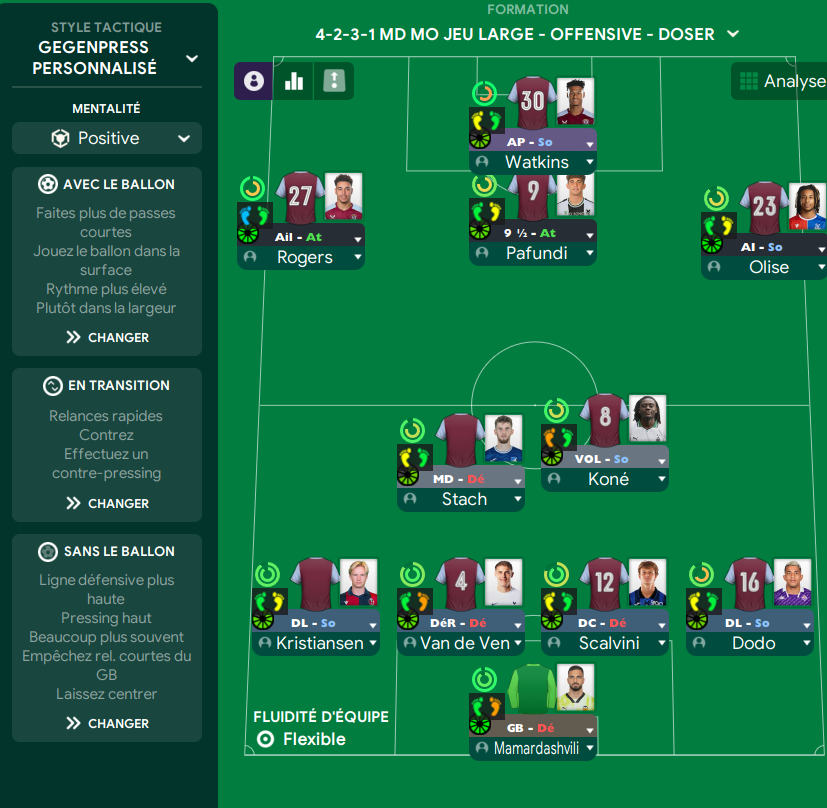
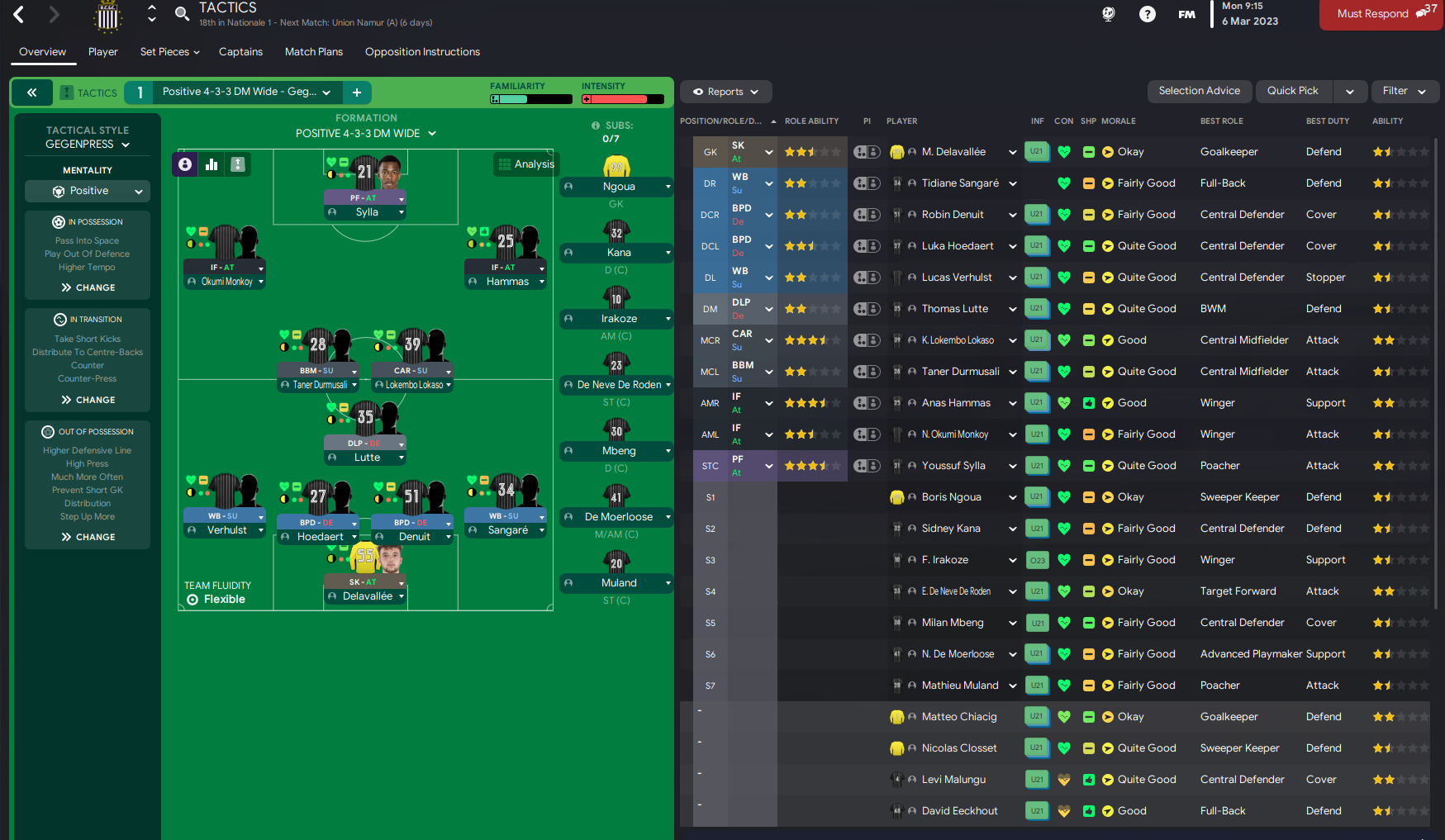
Formation & Style
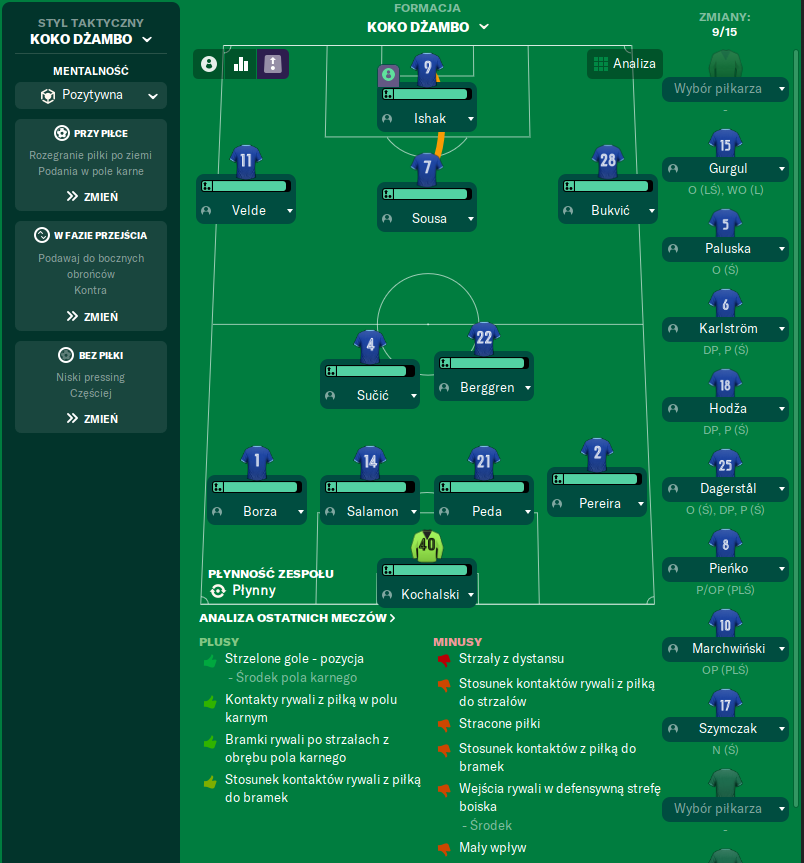
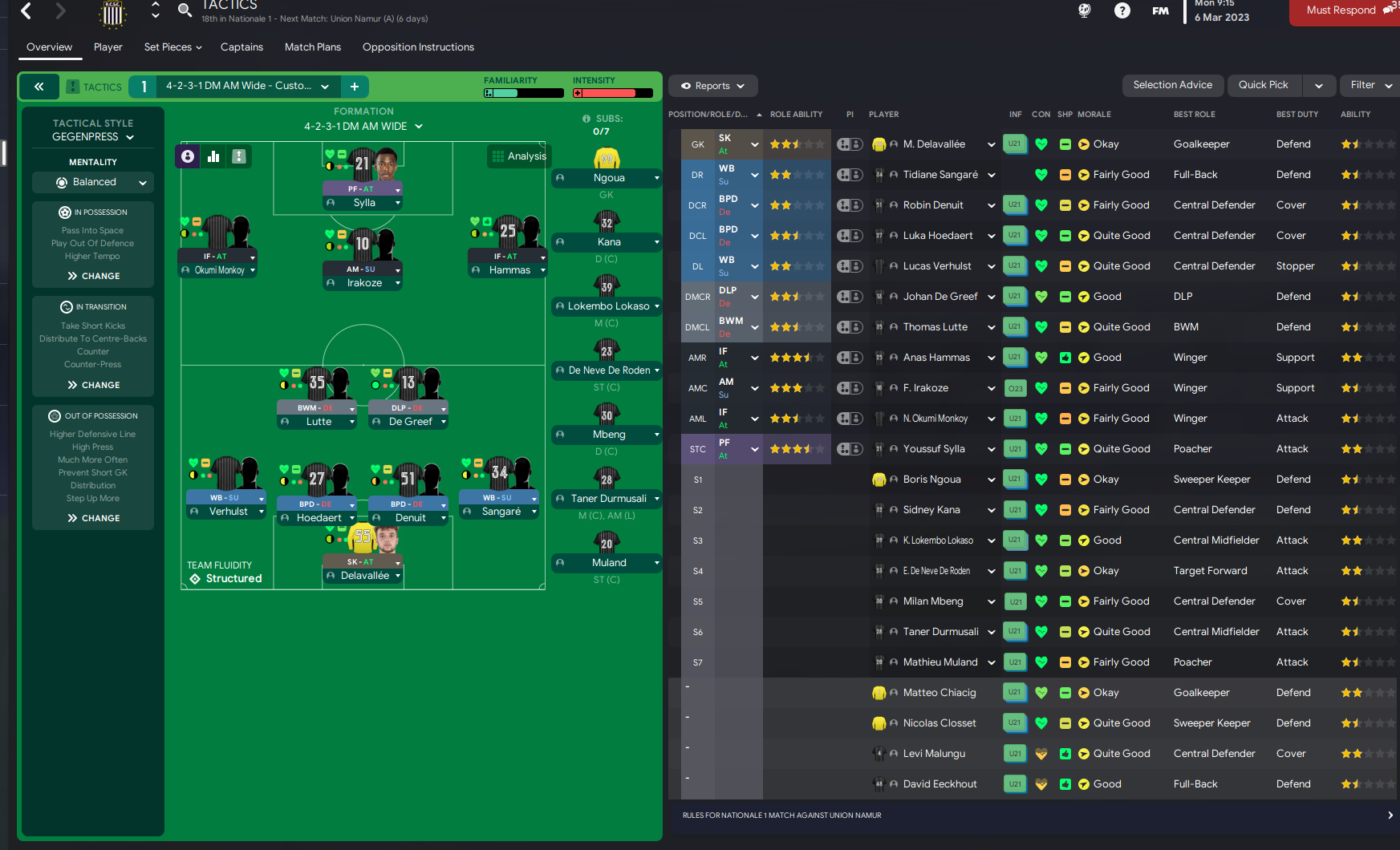
Tactical Style:Gegenpress
Mentality:Positive
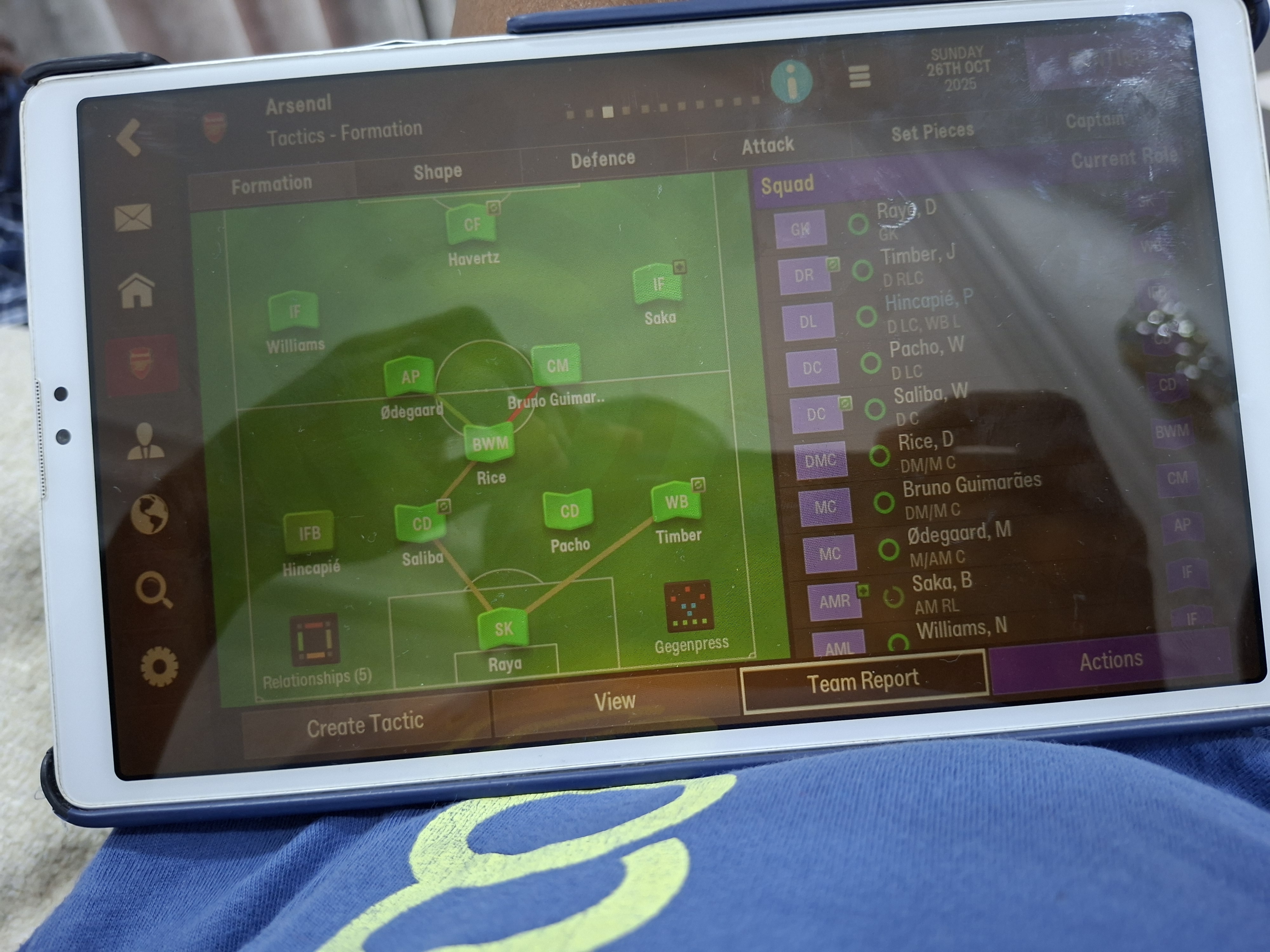
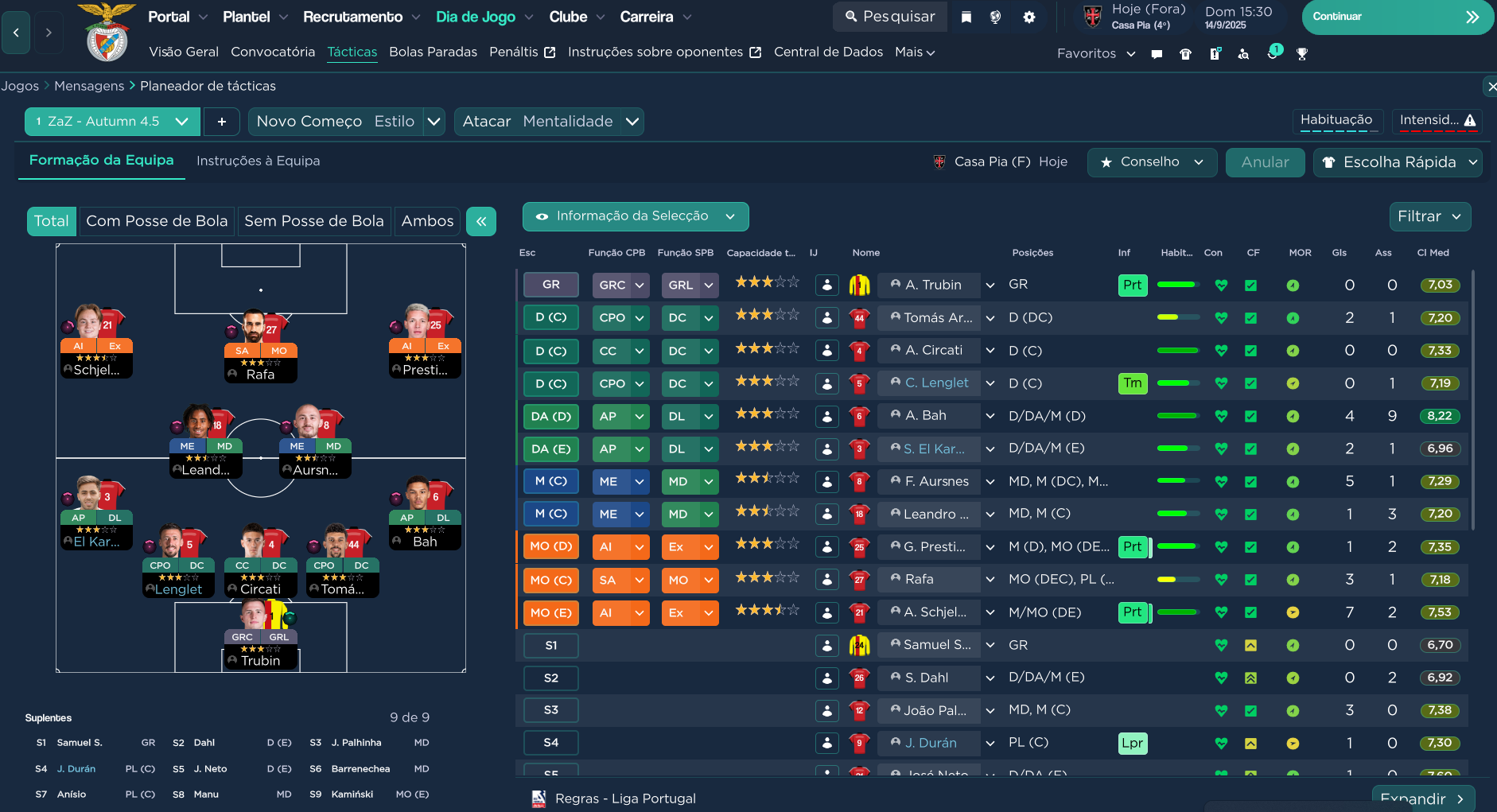
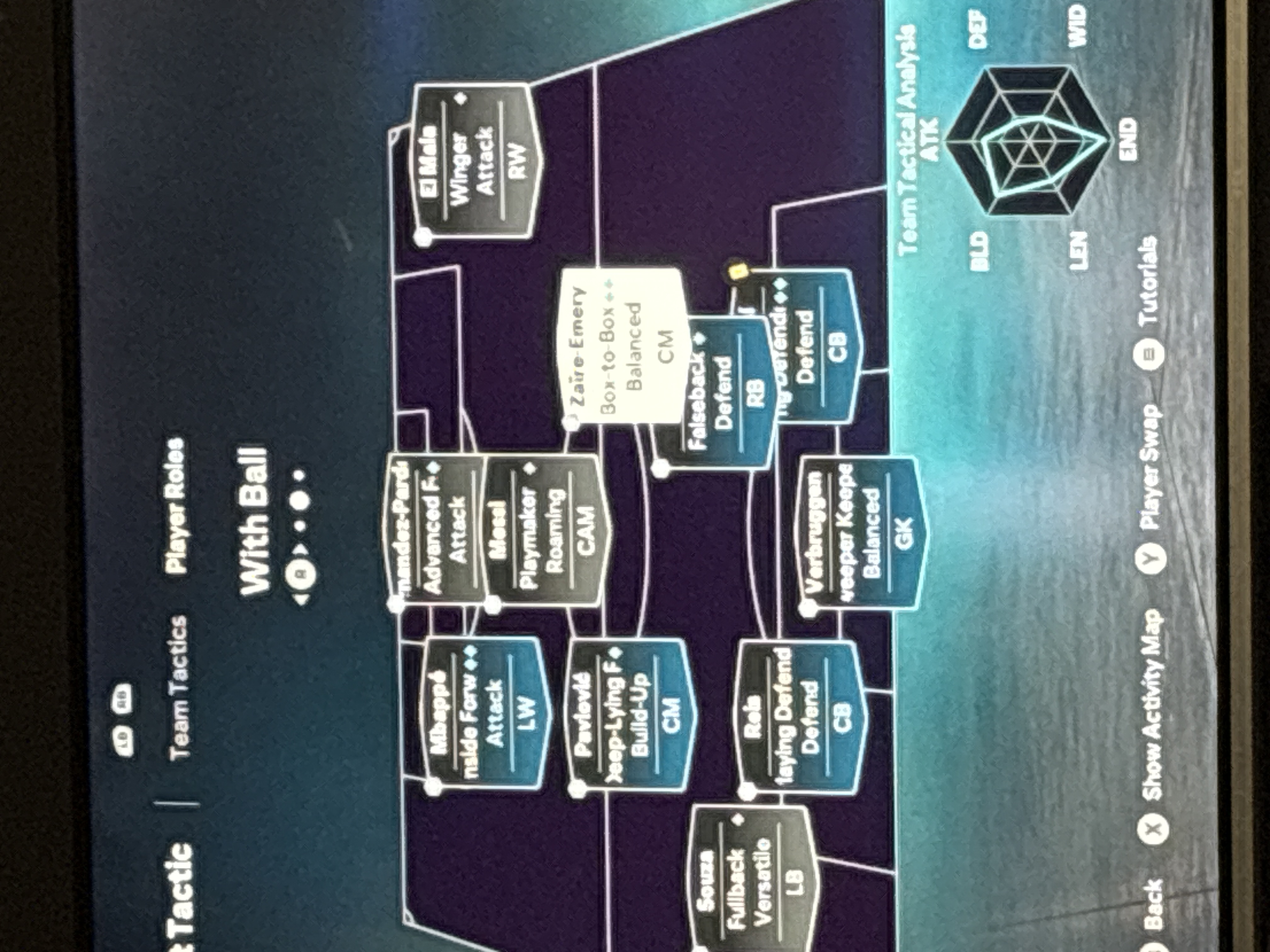
Formation:4-2-3-1 Wide
Team Fluidity:Flexible
In Possession
Make more passes
Play the ball into space
Higher tempo
Play wider
In Transition
Quick counter
Counter-pressing
Out of Possession
Higher Defensive Line
Much Higher Defensive Line
High pressing
Prevent Short GK Distribution
Team Shape Without Ball
Shape:4-2
Description:The team forms a compact shape defensively, with a solid back four supported by two central midfielders.
Evidence:Higher Defensive Line set by instructions with two central midfielders.
Team Shape With Ball
Shape:4-3
Description:Attacking emphasis on width from wing-backs and movement from the front three.
Evidence:Advanced Playmaker and Inside Forward roles create offensive dynamism.
Phase Description
Attacking Play
Focus on quick transitions and exploiting space with overlapping wing-backs.
Defensive Transition
Pressing immediately after losing the ball to regain possession quickly.
Main Focus
Utilize width and quick passing to create goal-scoring opportunities.
Key Strengths
Fast Transitioning
Quick counters capitalize on the opponent's vulnerabilities.
Width in Attack
Wing-backs provide options on the flanks while strikers and advanced playmakers exploit central areas.
High Pressing
Immediate pressing upon losing possession disrupts opponents’ build-up play.
Conflicting Directions
Lack of Defensive Cover
Two-wide players may leave central areas vulnerable, especially when wing-backs push high.
Over-reliance on Pressing
High pressing may lead to fatigue if not managed effectively during a match.
Potential Midfield Overload
A concentrated attacking setup may lead to half-spaces being neglected during defensive transitions.
Tactical Suggestions
Adjust Wing-Back Duty
Consider using one wing-back as a full-back to maintain defensive solidity.
Central Midfielder Role Revision
Adding a Deep-Lying Playmaker could help maintain possession and offer support in central areas.
Monitor Player Fatigue
Evaluate player fitness regularly to manage high pressing and tempo demands.
Ask Questions About Your Lineup
Related Tactics
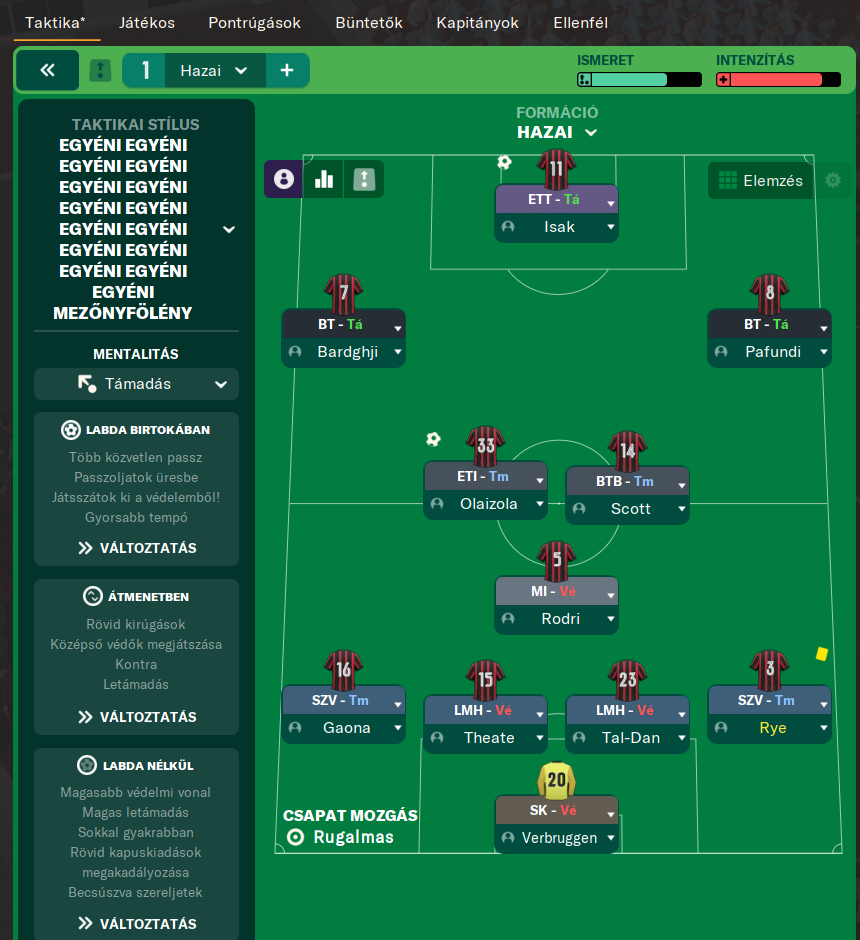
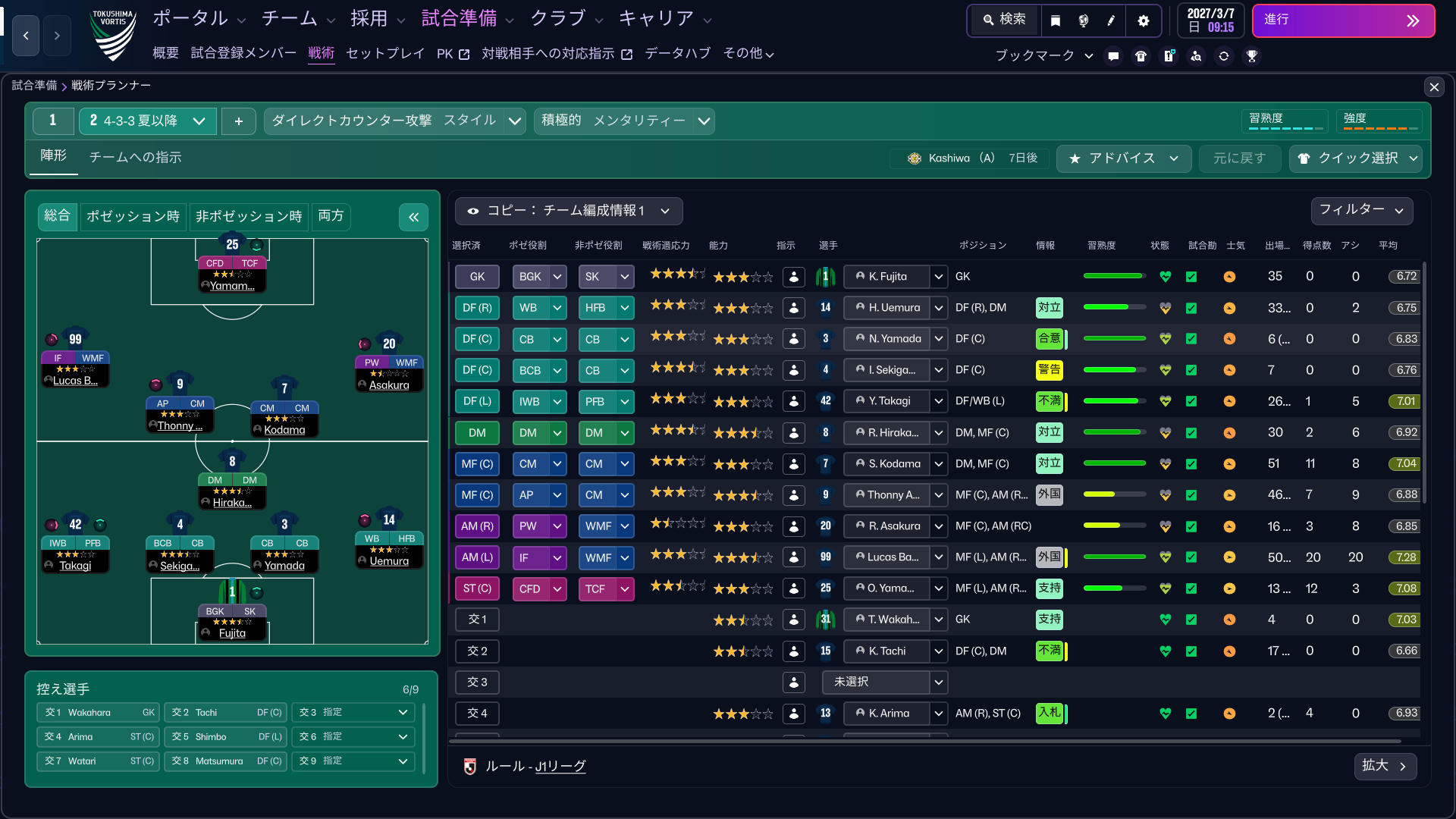
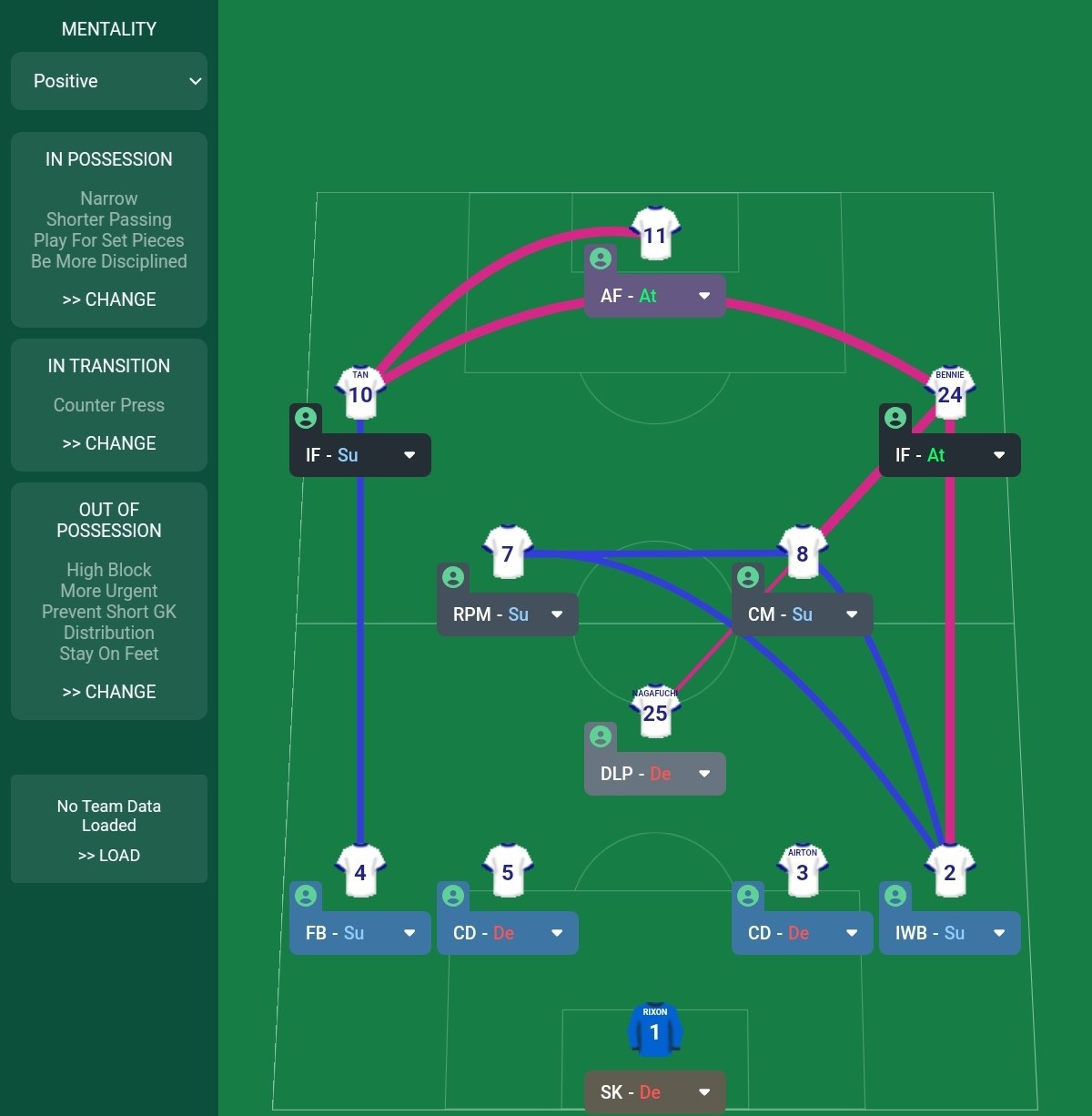
More Gegenpress tactics
Guides for this formation
The tactical theory behind the 4-2-3-1 Wide: roles, instructions, and the trade-offs that decide whether the system holds up.
Player pairings
Midfield Pairs in 4-2-3-1 and 4-4-2
Double pivots and flat pairs in 4-2-3-1 and 4-4-2: when each pairing works, when it collapses, and the AMC unicorn that rescues both.
Read guide
Playing styles
Gegenpressing: A Full Guide
Klopp-style gegenpressing in FM, including squad profile, line-and-press pairing, sustainable workload, and the antipatterns to avoid.
Read guide