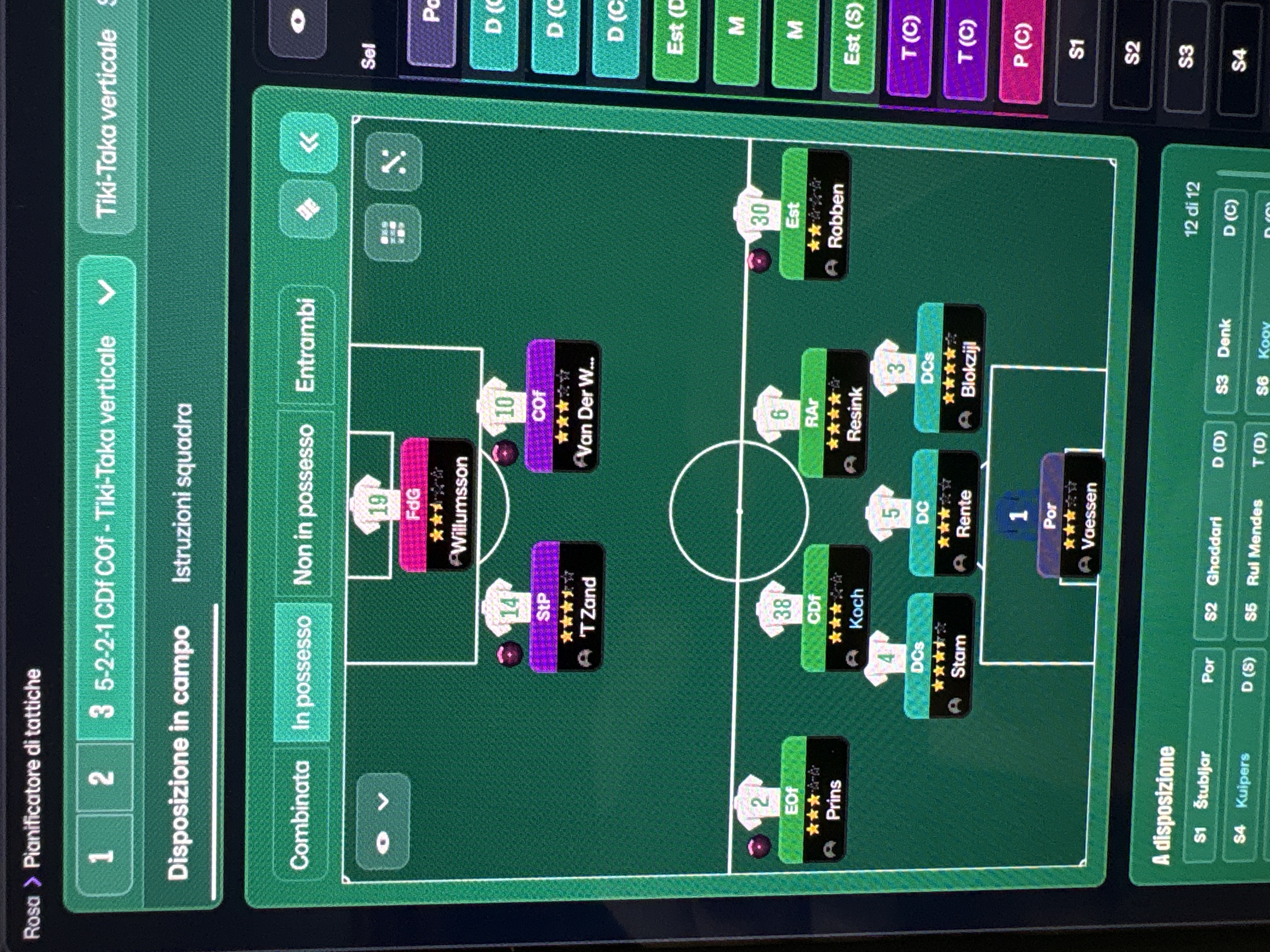
Uploaded Tactic
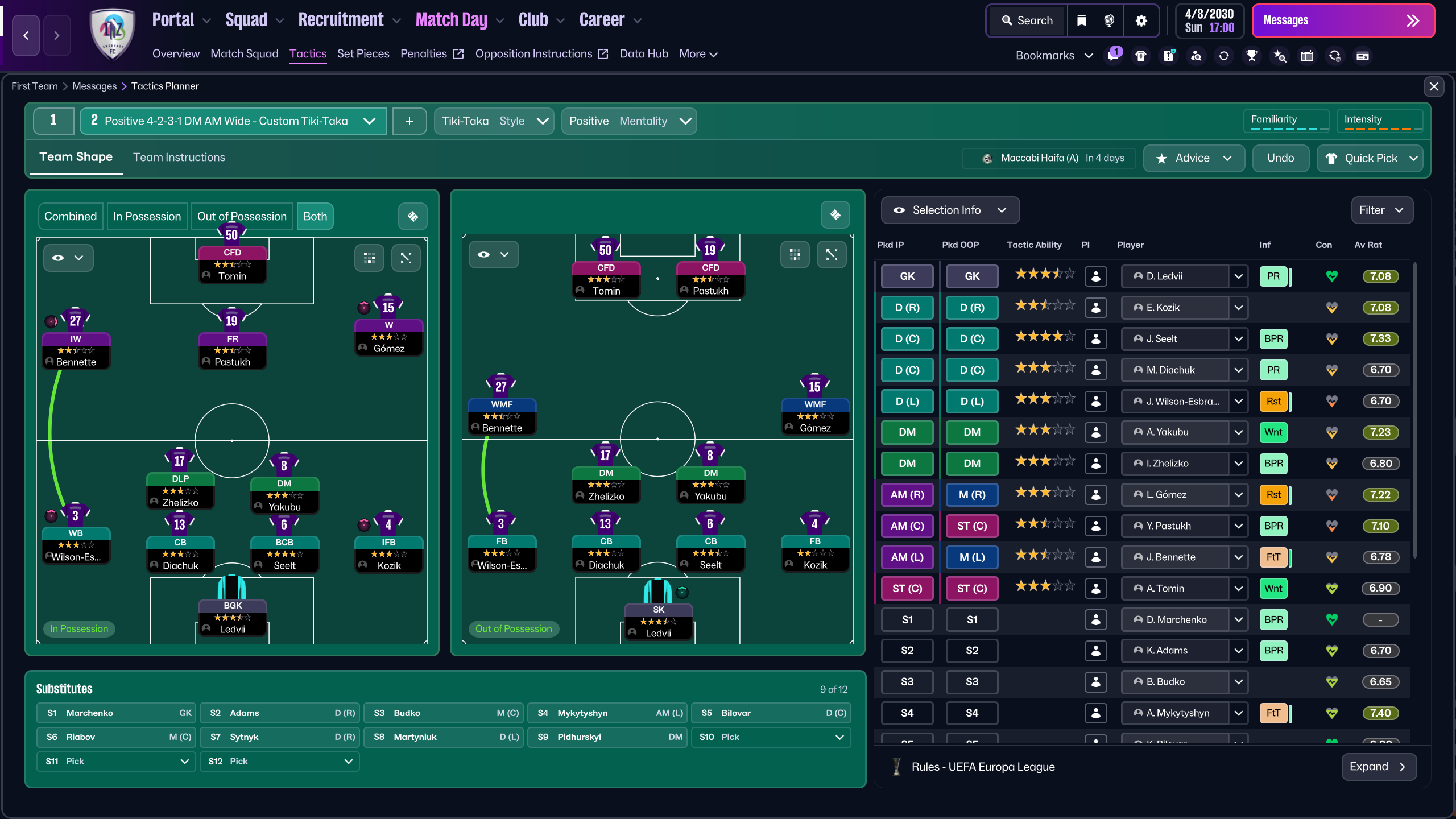
Formation & Style
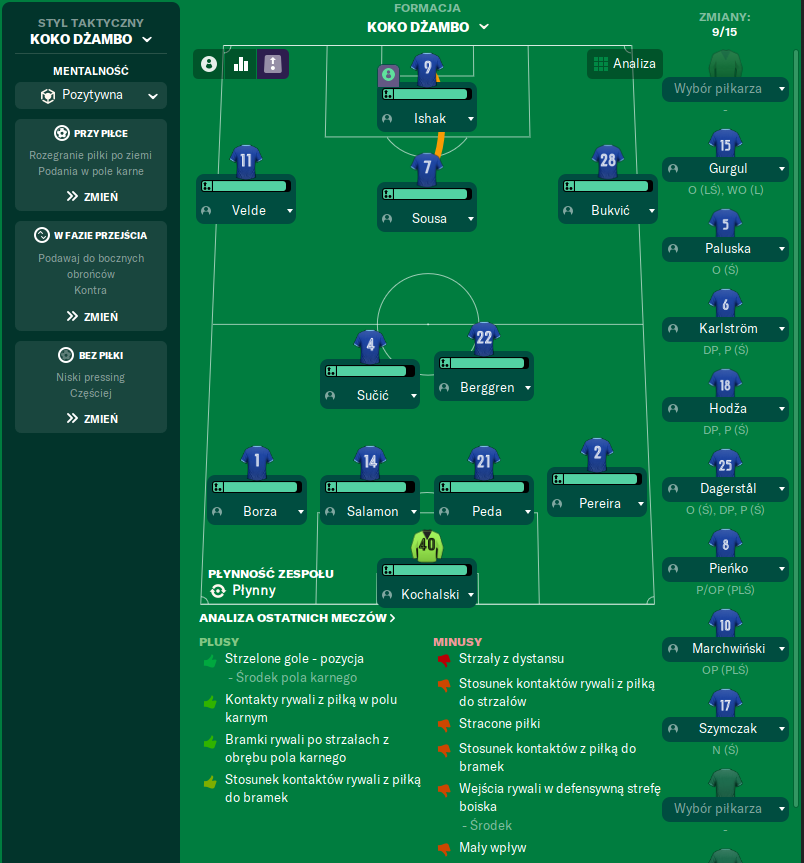
Tactical Style:Tiki-Taka
Mentality:Positive
Formation:4-2-3-1 Wide
Team Fluidity:Structured
In Possession
Shorter Passing
Work Ball Into Box
Play Out of Defence
Overlap Left
Overlap Right
In Transition
Counter-Press
Counter
Out of Possession
Higher Defensive Line
Higher Line of Engagement
Prevent Short GK Distribution
Trigger Press More Often
Team Shape Without Ball
Shape:Compact Flat 4
Description:Defensive shape prioritizing compactness and quick recovery when the ball is lost.
Evidence:Higher Defensive Line combined with a Higher Line of Engagement allows pressure on the opposition in their half.
Team Shape With Ball
Shape:Fluid Wing Play
Description:Utilizes width to stretch the opposition and create spaces for central players.
Evidence:Overlap instructions for both wide midfielders enhance attack diversity while short passing maintains possession.
Phase Description
Attacking Play
The team looks to maintain possession and utilize quick, short passes to break down opposition defenses, primarily focusing on creating chances through the wings.
Defensive Transition
Upon losing possession, the team engages in a counter-press to regain the ball quickly, transitioning into an attacking phase when successful.
Main Focus
Key players in wide areas supporting the central forward to exploit defensive weaknesses.
Key Strengths
Possession Retention
Short passing combined with Play Out of Defence enhances ball retention.
Wide Attacking Options
Wide midfielders contribute significantly to attacking threats from the flanks.
Defensive Stability
The double pivot and CB roles cushion against counter-attacks and maintain a strong base.
Conflicting Directions
Higher Line of Engagement vs Defensive Solidity
While pressing high can win the ball back quickly, it risks leaving gaps behind against quick transitions.
Flank Dependency
Relying heavily on wide players for creativity could be problematic if tightly marked.
Overlapping Play vs Central Avenues
Where wing play dominates, central players may find less involvement if not balanced.
Tactical Suggestions
Adjust Defensive Width
Consider ensuring defenders are not too wide, keeping a compact structure.
Include Central Playmakers
Incorporating a more forward-thinking central midfielder could balance possession and playmaking.
Rotate Flank Roles
To break down compact defenses, intermittently rotating who attacks the flanks can confuse defenders.
Ask Questions About Your Lineup
Related Tactics
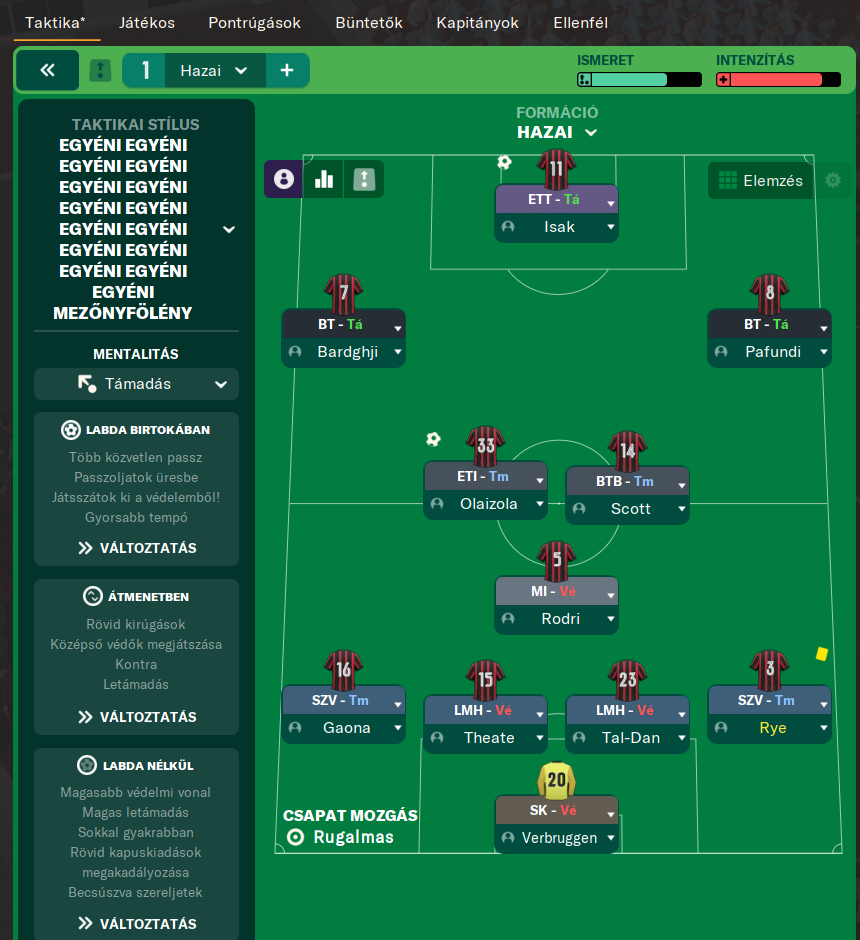
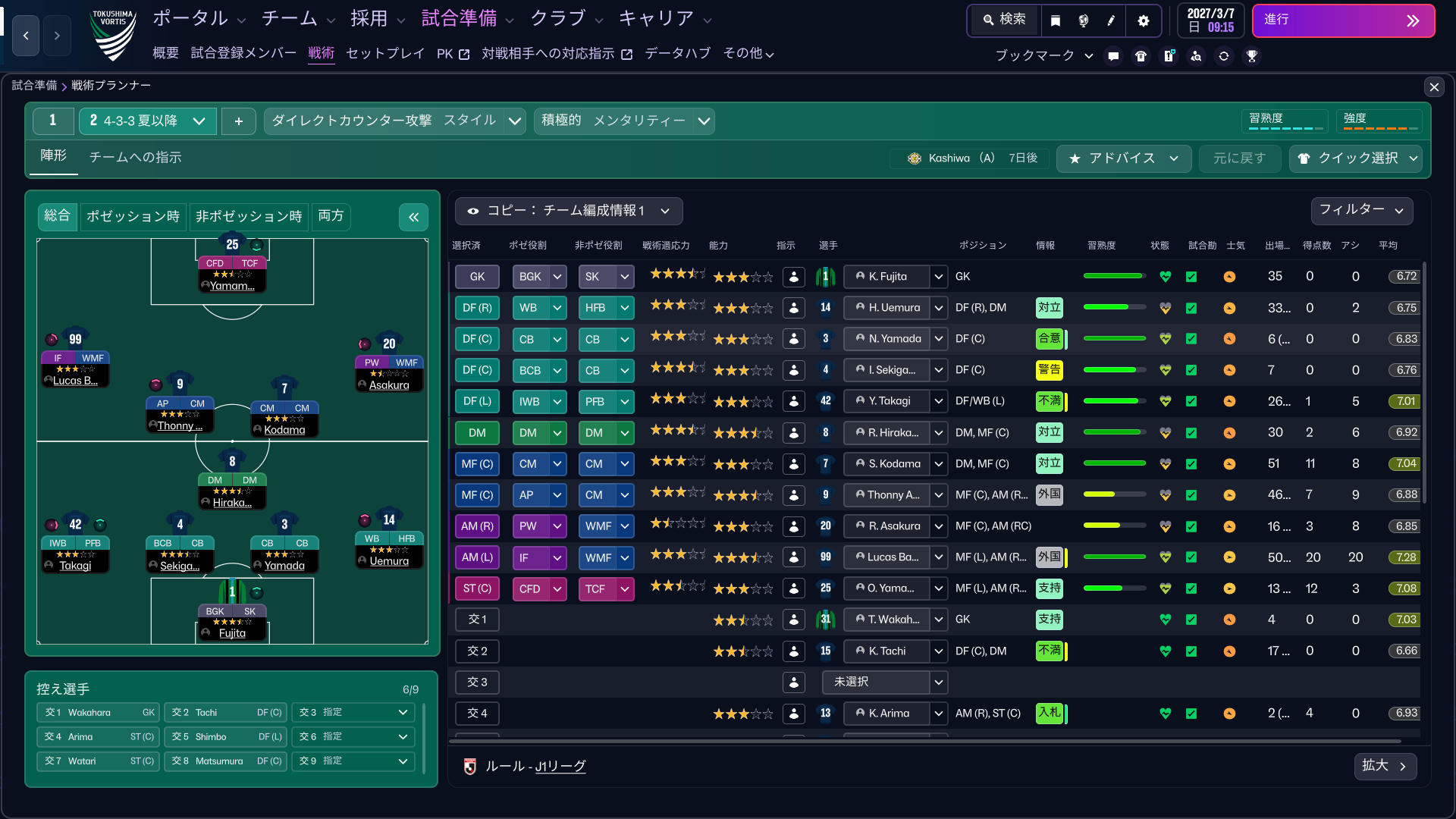
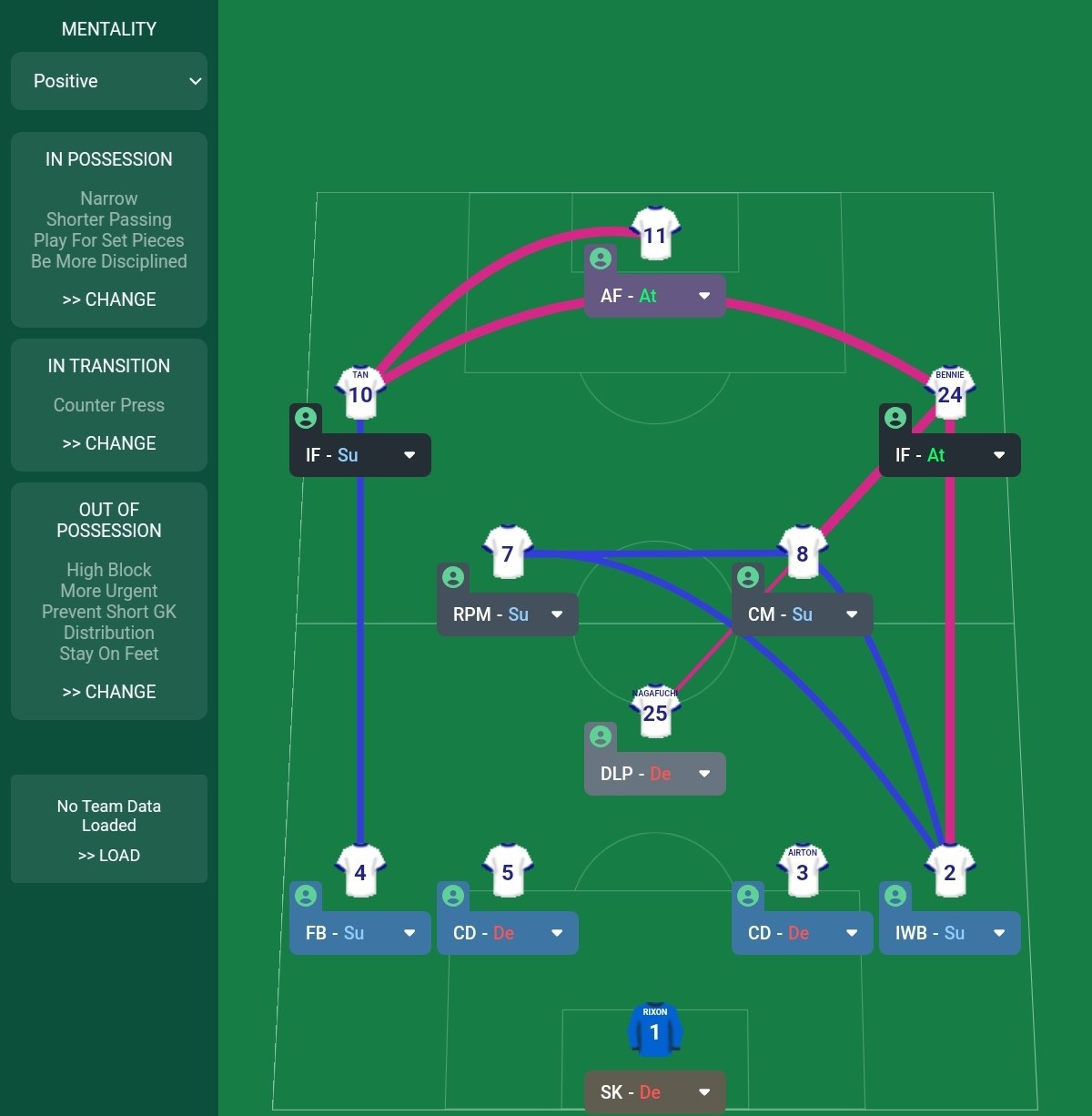
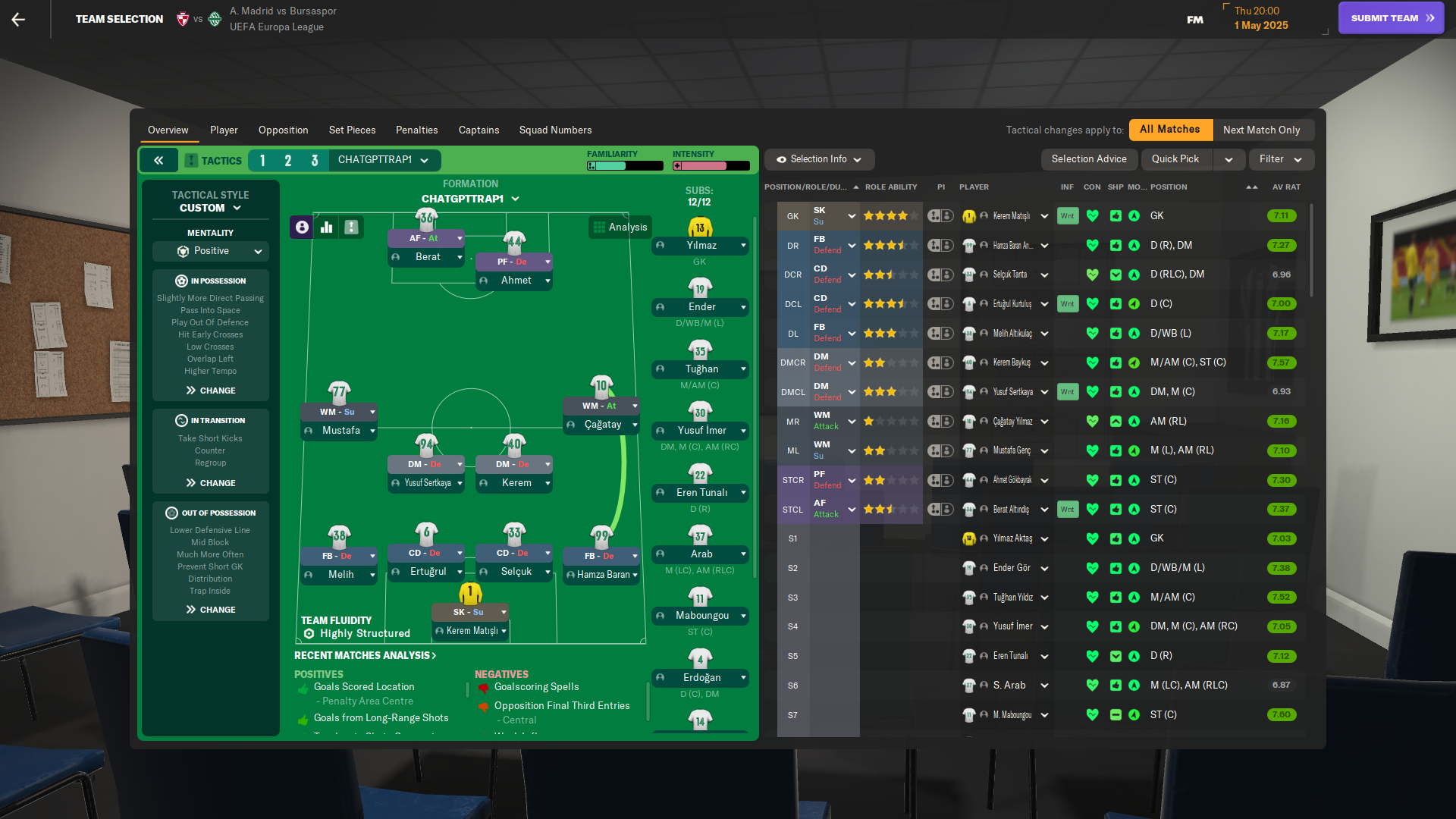
More Tiki-Taka tactics
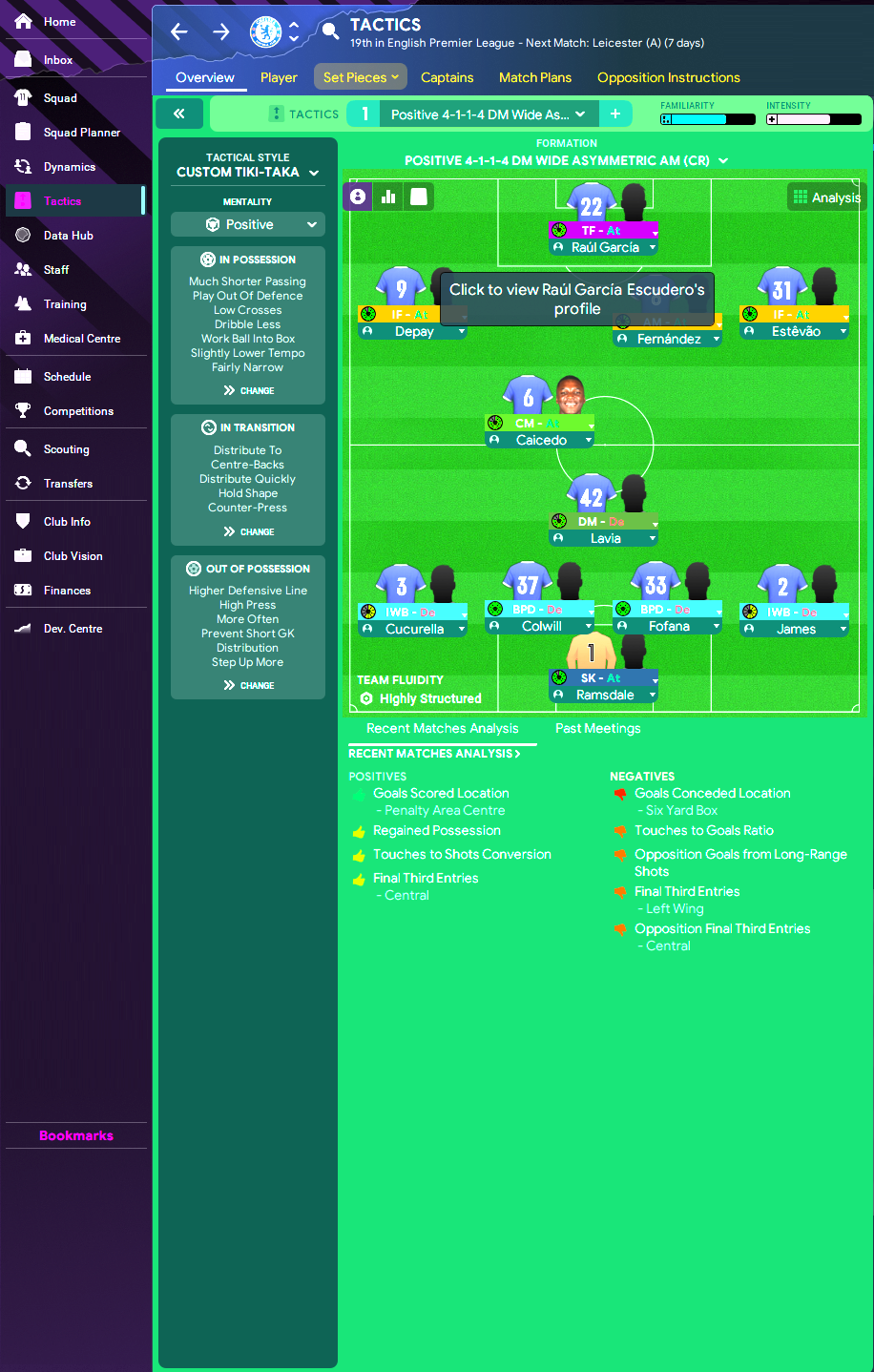
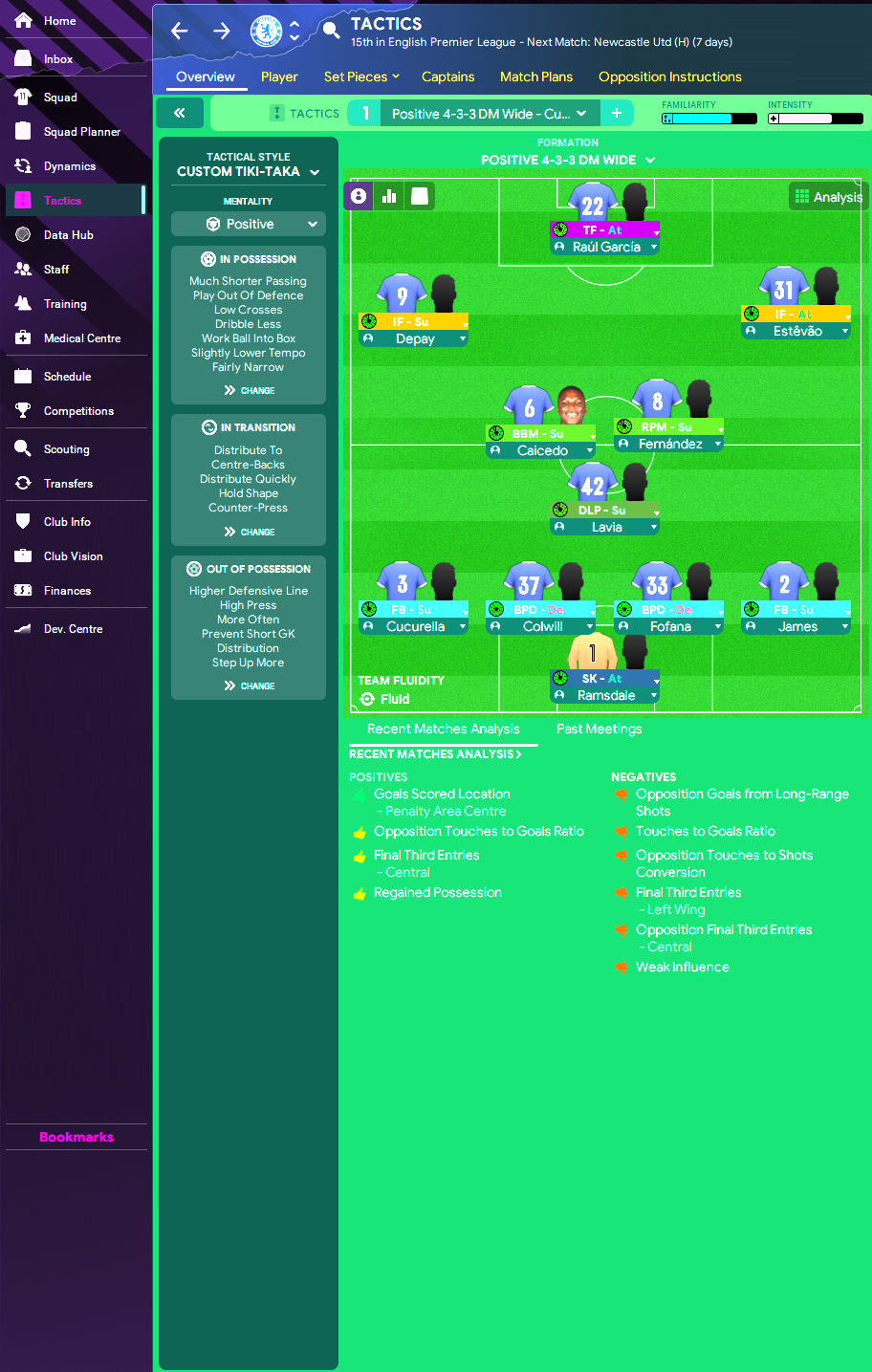
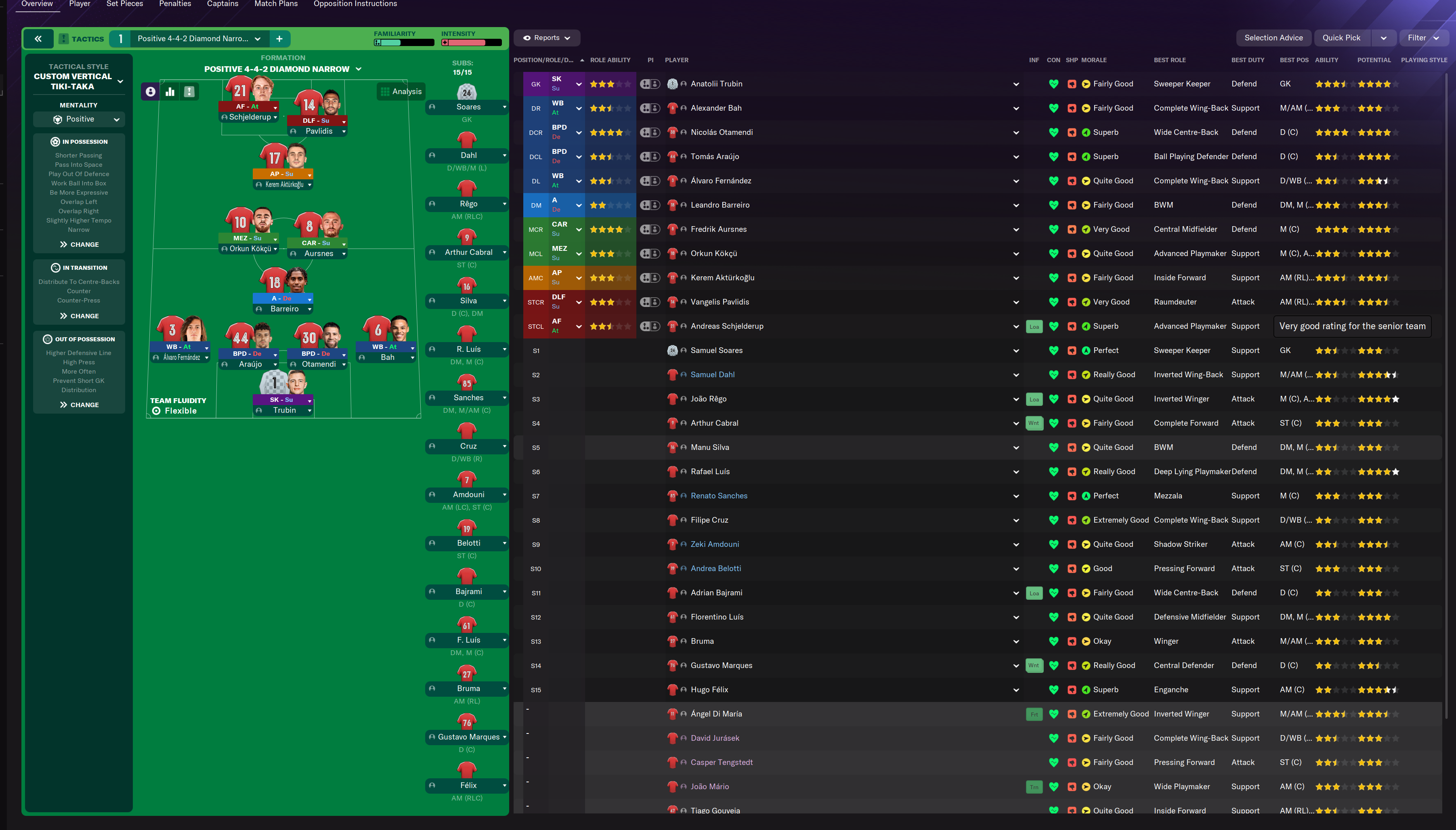
Guides for this formation
The tactical theory behind the 4-2-3-1 Wide: roles, instructions, and the trade-offs that decide whether the system holds up.
Player pairings
Midfield Pairs in 4-2-3-1 and 4-4-2
Double pivots and flat pairs in 4-2-3-1 and 4-4-2: when each pairing works, when it collapses, and the AMC unicorn that rescues both.
Read guide
Playing styles
Gegenpressing: A Full Guide
Klopp-style gegenpressing in FM, including squad profile, line-and-press pairing, sustainable workload, and the antipatterns to avoid.
Read guide