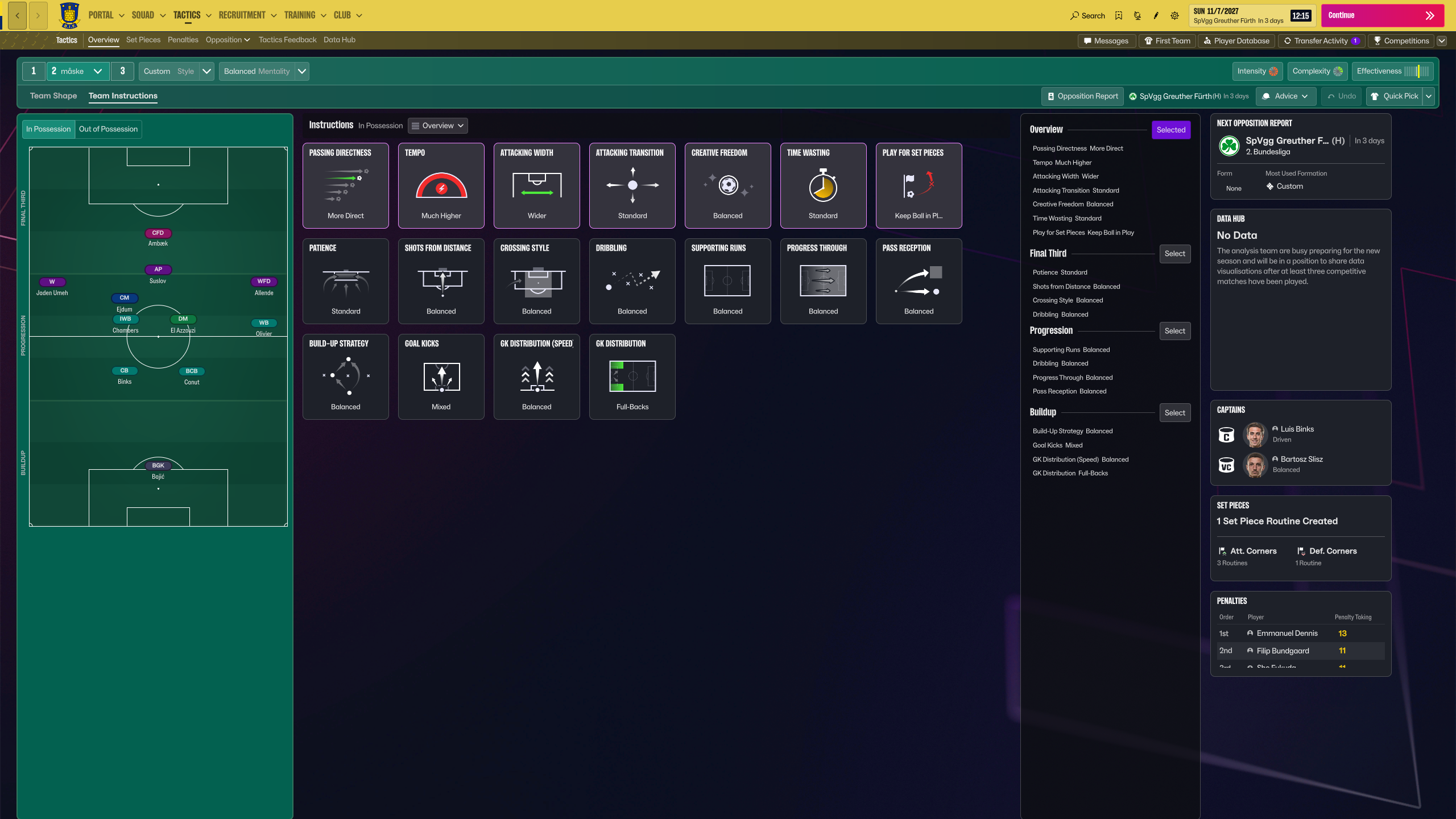
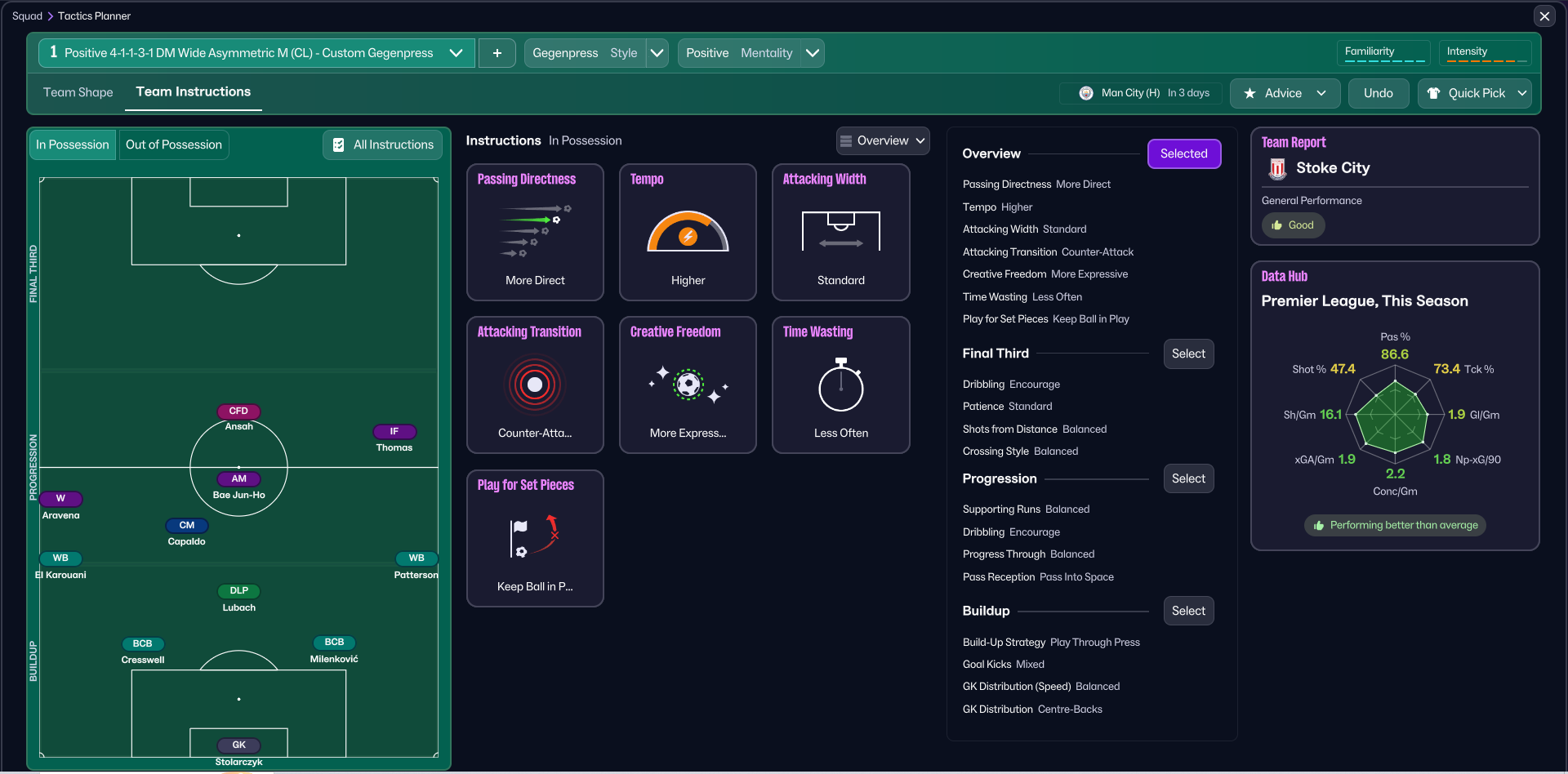
4-2-3-1 DM Wide
Winning the ball high and attacking quickly through the flanks. High Press, Much More Often Trigger Press, Counter-Press and Get Stuck In all point the…
Loading tactical analysis...
4-2-3-1 DM Wide
4-1-4-1 DM
4-2-3-1(2)
Positive
Gegenpress
1
3
Ball-Playing Goalkeeper
Sweeper Keeper
2
2
Ball-Playing Center-Back
Centre-Back
2
4
Ball-Playing Center-Back
Centre-Back
3
1
Full Back
Full Back
3
5
Wing Back
Full Back
3
2
Box-To-Box Midfielder
Defensive Midfielder
3
4
Defensive Midfielder
Defensive Midfielder
4
3
Advanced Playmaker
Tracking Centre Forward
5
1
Inside Forward
Tracking Wide Midfielder
5
5
Inside Winger
Tracking Wide Midfielder
6
3
Center Forward
Center Forward
Shorter
Higher
Wider
Counter-Attack
Balanced
Less Often
Keep Ball in Play
Work Ball Into Box
Balanced
Balanced
Balanced
Overlap Balanced
Balanced
Both Flanks
Pass to Feet
Play Through Press
Short
Balanced
Center-Backs
High Press
Higher
Balanced
Much More Often
Counter-Press
Get Stuck In
No
Trap Outside
Trap Outside
Balanced
High Press, Much More Often Trigger Press, Counter-Press and Get Stuck In all point the same way, so the team should win the ball high and quickly.
Tracking Wide Midfielder at [5,1] and [5,5] and Tracking Centre Forward at [4,3] out of possession support a front line that presses hard.
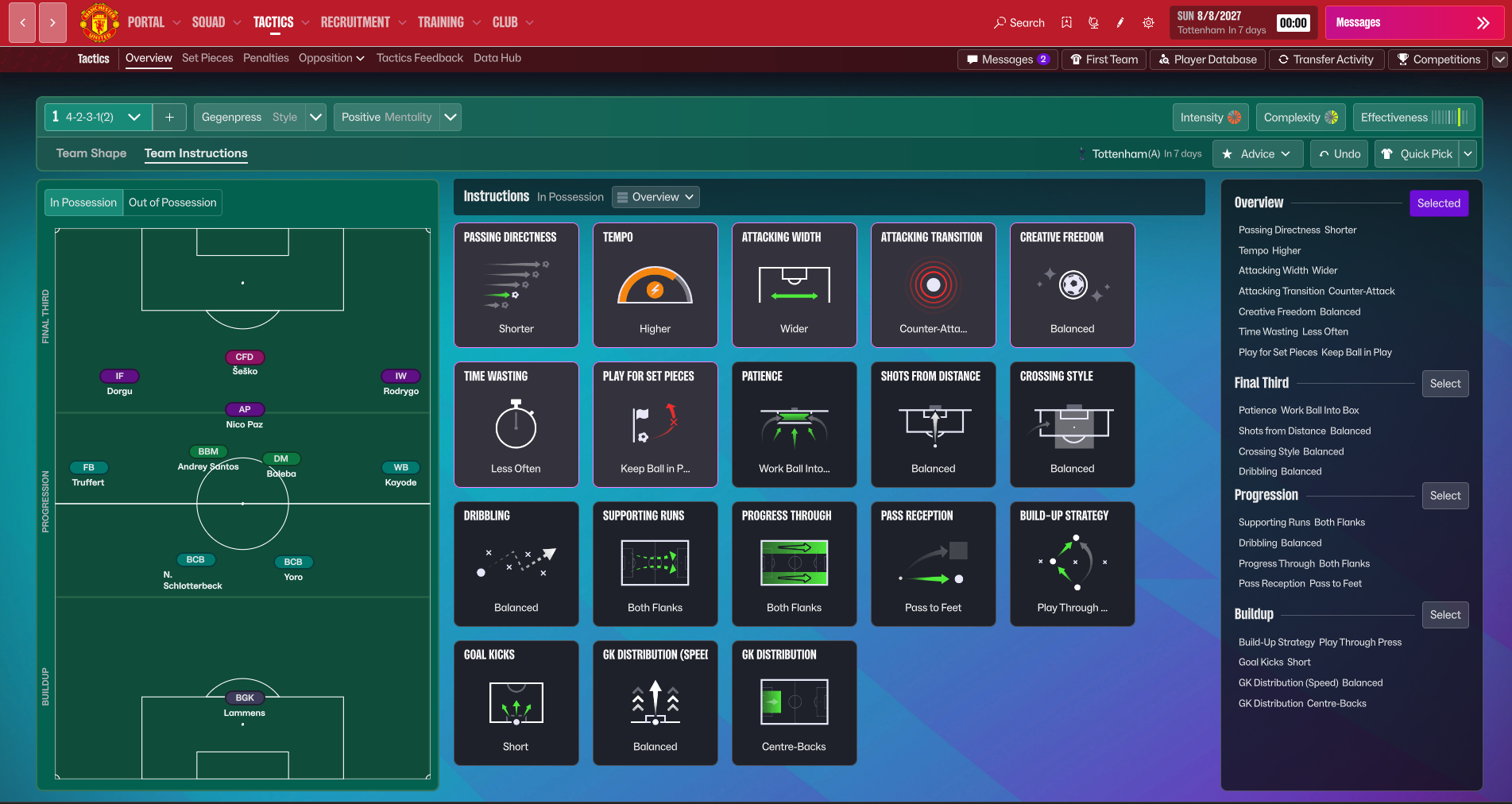
Shorter passing, Play Through Press, short goal kicks and Centre-Backs distribution suit a Ball-Playing Goalkeeper and two Ball-Playing Centre-Backs.
Ball-Playing Goalkeeper at [1,3], Ball-Playing Centre-Back at [2,2] and [2,4].
Counter-Attack and Higher tempo push for quick vertical play, but Shorter passing, Pass to Feet and Work Ball Into Box ask for patient, controlled build-up. The two approaches pull against each other.
Advanced Playmaker at [4,3] and Centre Forward at [6,3] are asked to link patiently while the transition setting rewards speed.
Wide stretching and Trap Outside in the press leave long gaps between lines, which makes the short passing game harder to support.
Inside Winger at [5,5] and Full-Back at [3,1].
Space behind the high line
A Higher line combined with Much More Often pressing and Get Stuck In leaves space behind if the press is beaten.
Ball-Playing Centre-Back at [2,2] and [2,4] play as Centre-Back out of possession, with Sweeper Keeper at [1,3] covering.
high
Stamina and fatigue
Constant maximum pressing with Counter-Press and Get Stuck In is very demanding, so intensity may drop late in matches.
Tracking Wide Midfielder at [5,1] and [5,5] and Box-To-Box Midfielder at [3,2] do a lot of running.
medium
Ball-Playing Goalkeeper with Ball-Playing Centre-Backs
They give a secure start to build-up and play through the press.
Ball-Playing Goalkeeper [1,3], Ball-Playing Centre-Back [2,2] and [2,4].
Advanced Playmaker behind Centre Forward
The Advanced Playmaker supplies the Centre Forward and the wide forwards.
Advanced Playmaker [4,3] and Centre Forward [6,3].
Do your players have the stamina to sustain a Much More Often press for the whole match?
Do you want to counter quickly or keep possession?
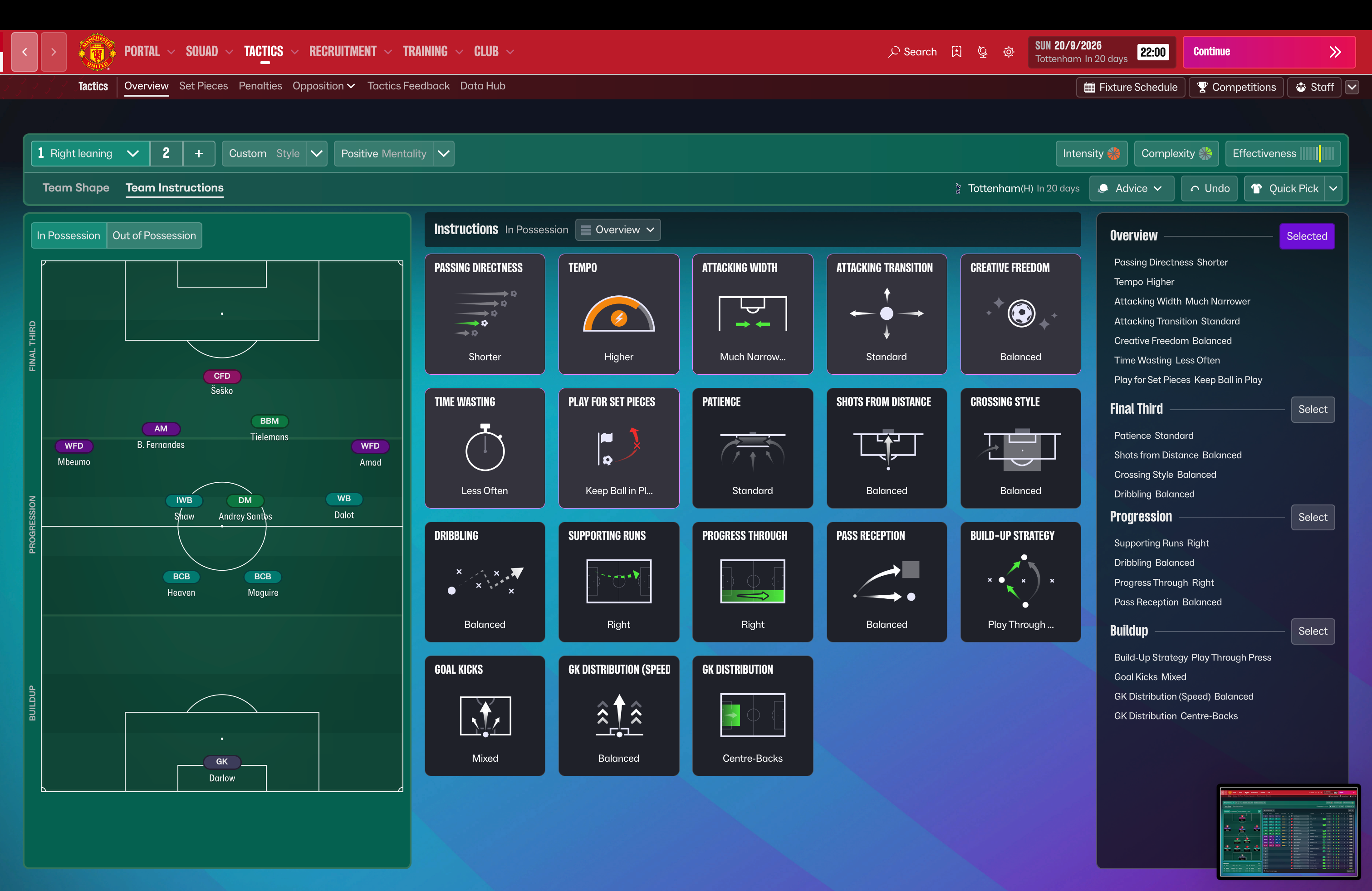
This is a committed Gegenpress with sensible build-up roles, but its settings pull in different directions. Counter-Attack and Higher tempo clash with Shorter passing, Pass to Feet and Work Ball Into Box, and the extreme pressing combined with a Higher line is risky. Soften the transition and the press and the system becomes more balanced and sustainable.
Short, patient build-up through the Ball-Playing Goalkeeper and Centre-Backs, with a wide front line feeding the Centre Forward.
An immediate Counter-Press and aggressive hunting of the ball in a 4-1-4-1 shape.
Winning the ball high and attacking quickly through the flanks.
clean slate
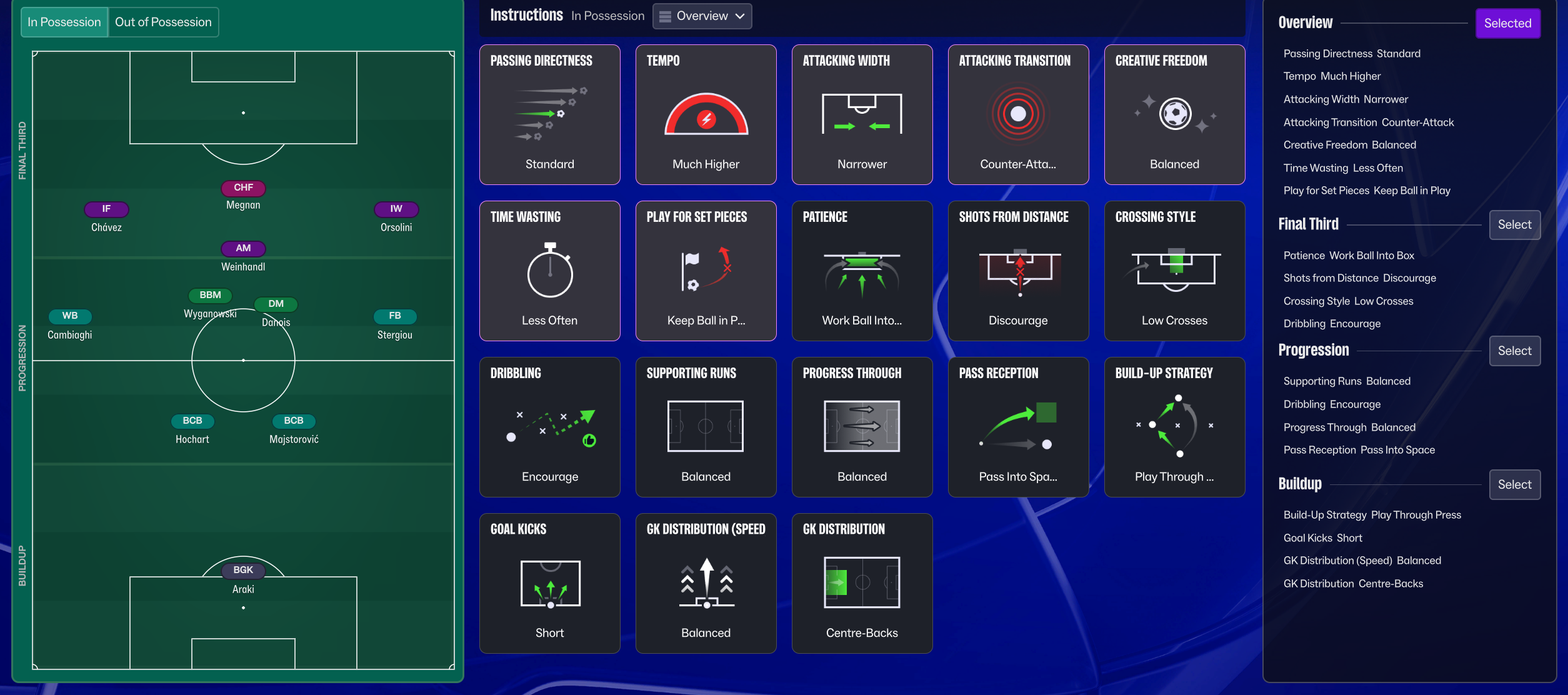
clean slate
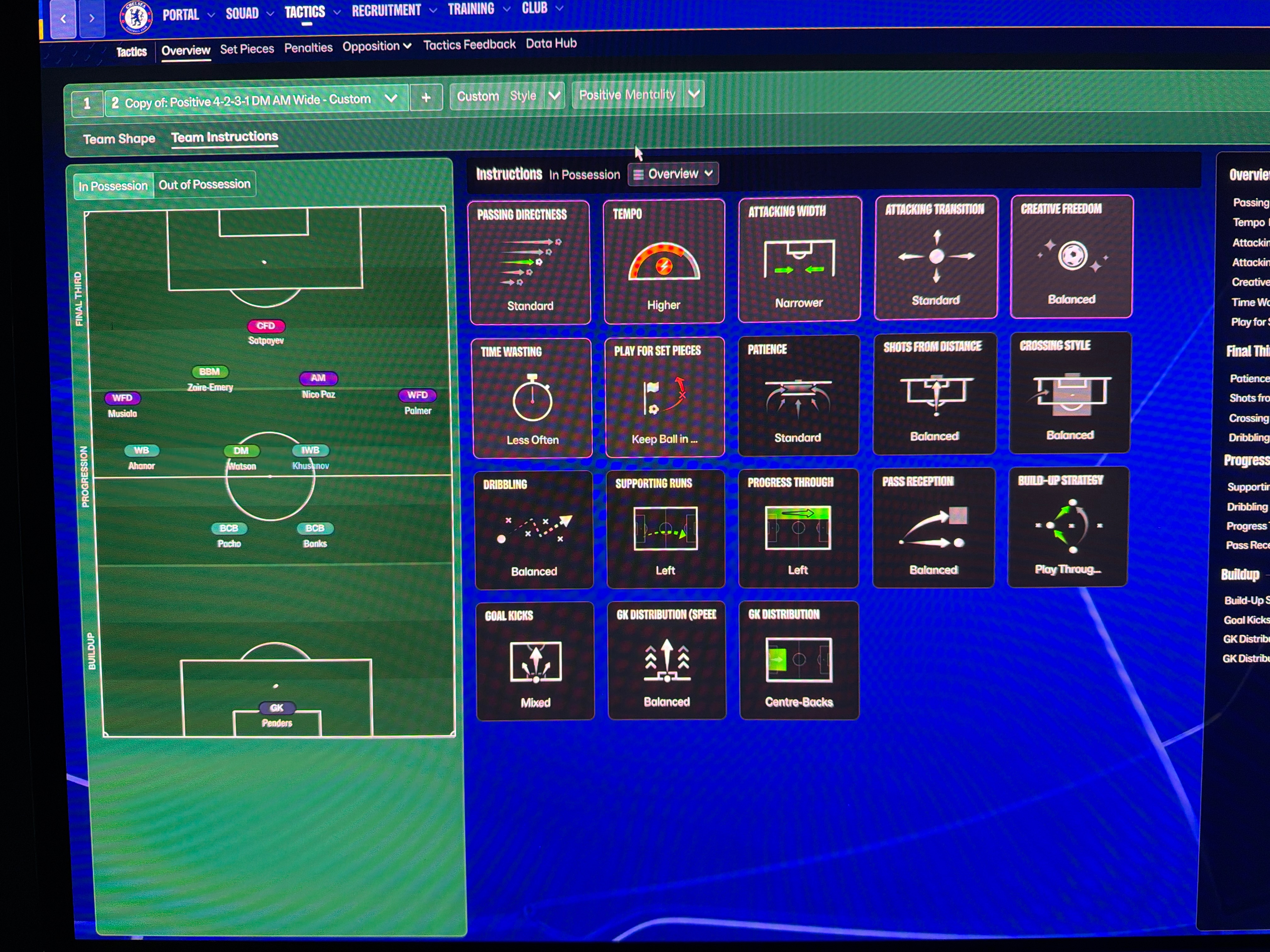
clean slate
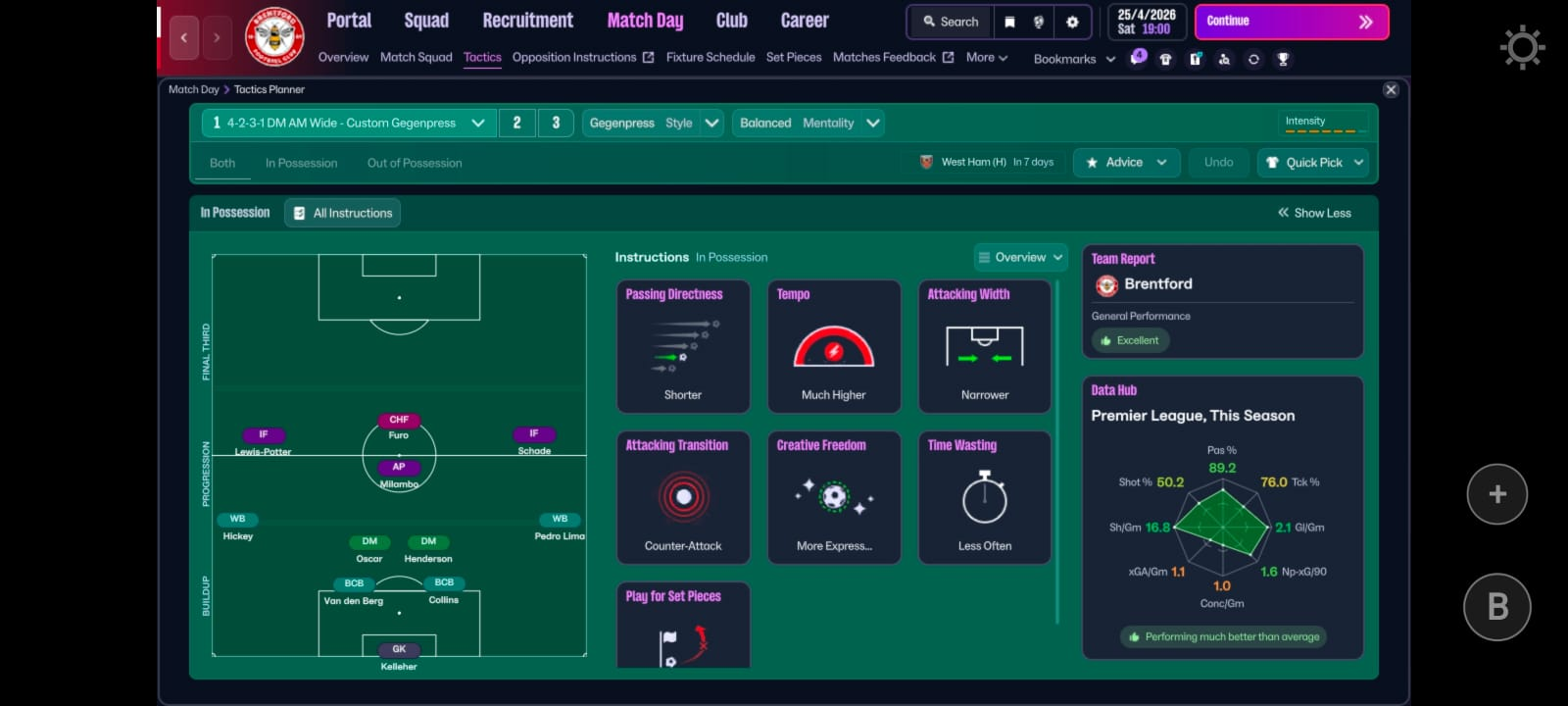
gegenpress
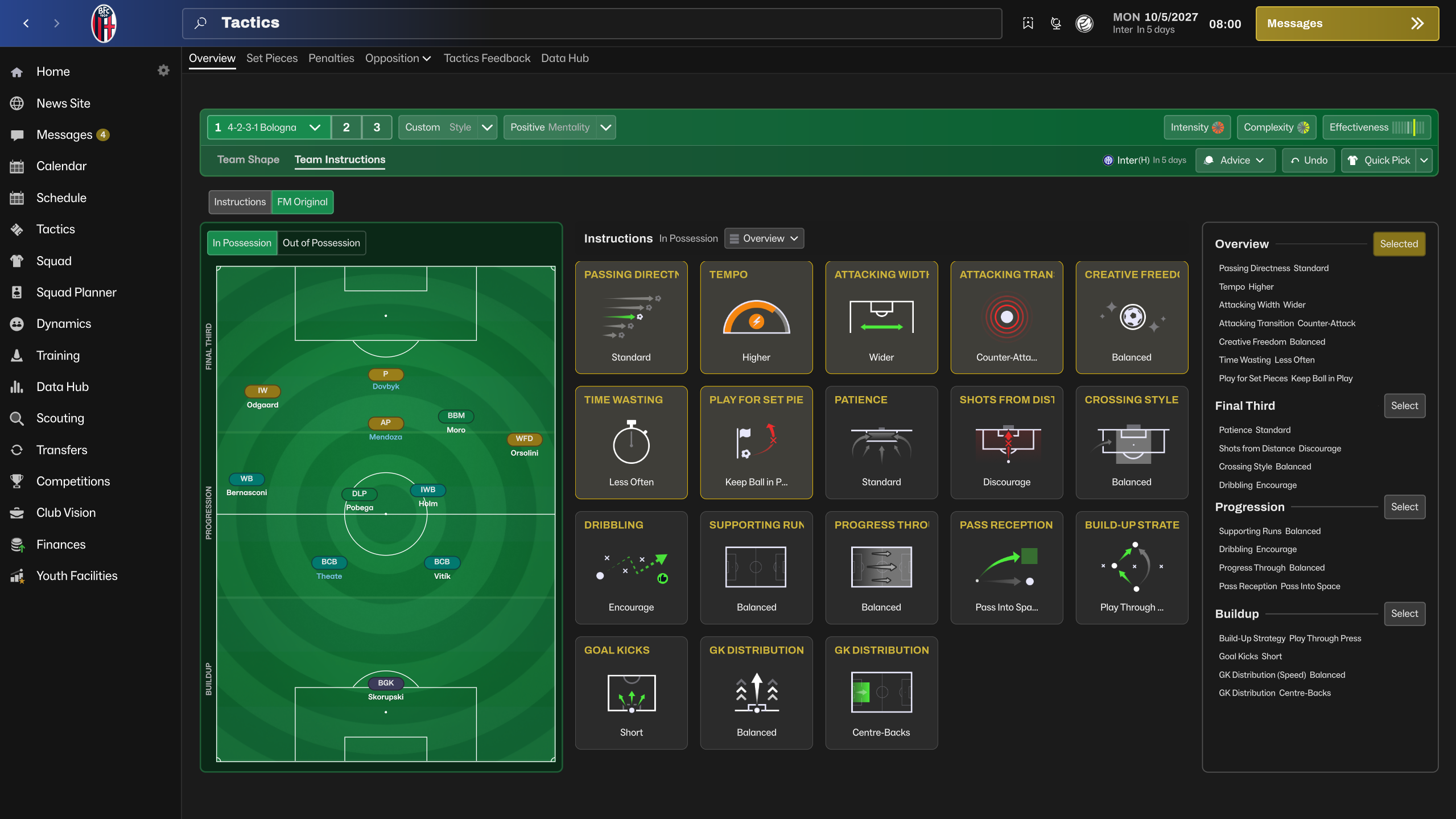
clean slate
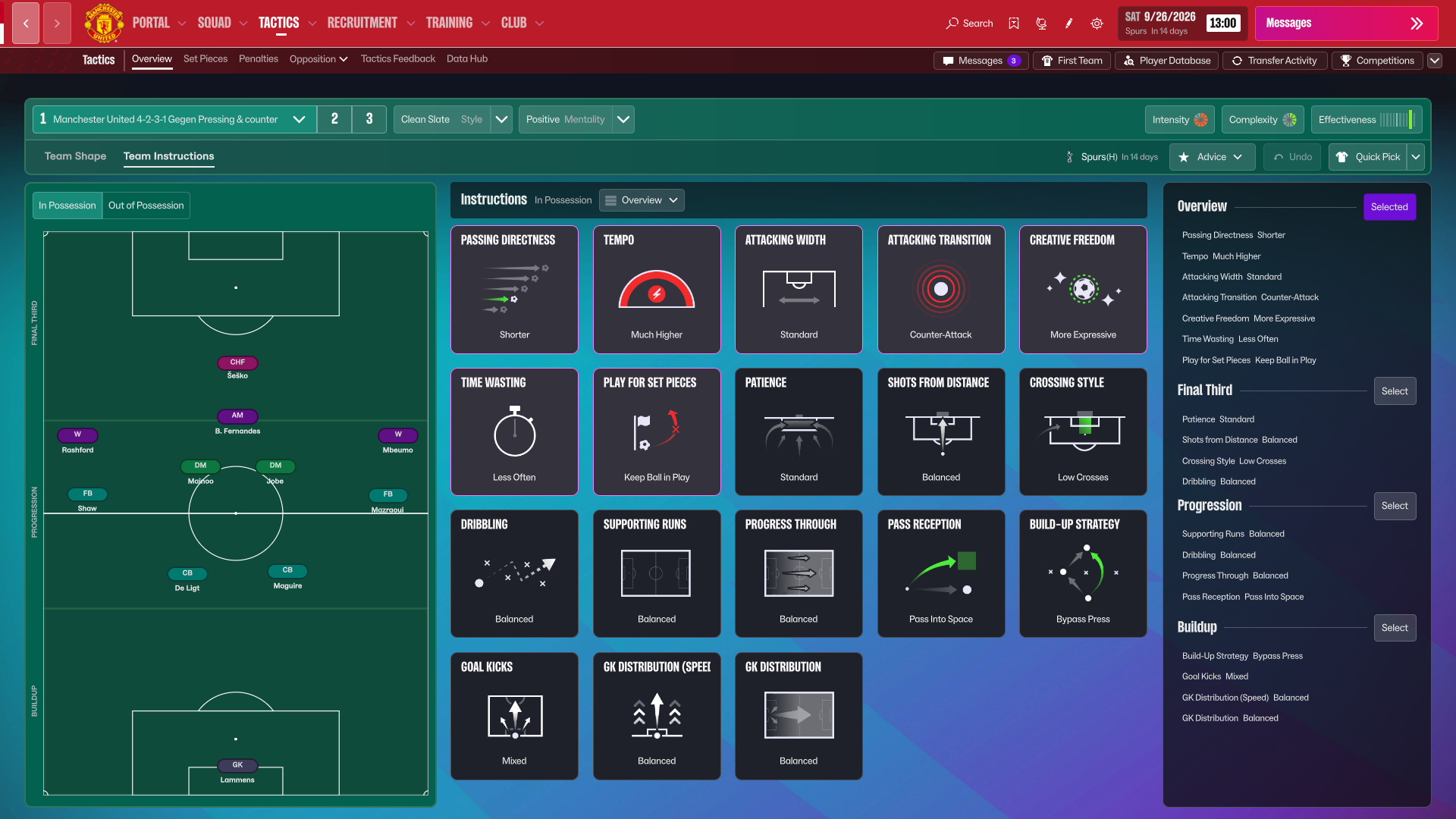
clean slate
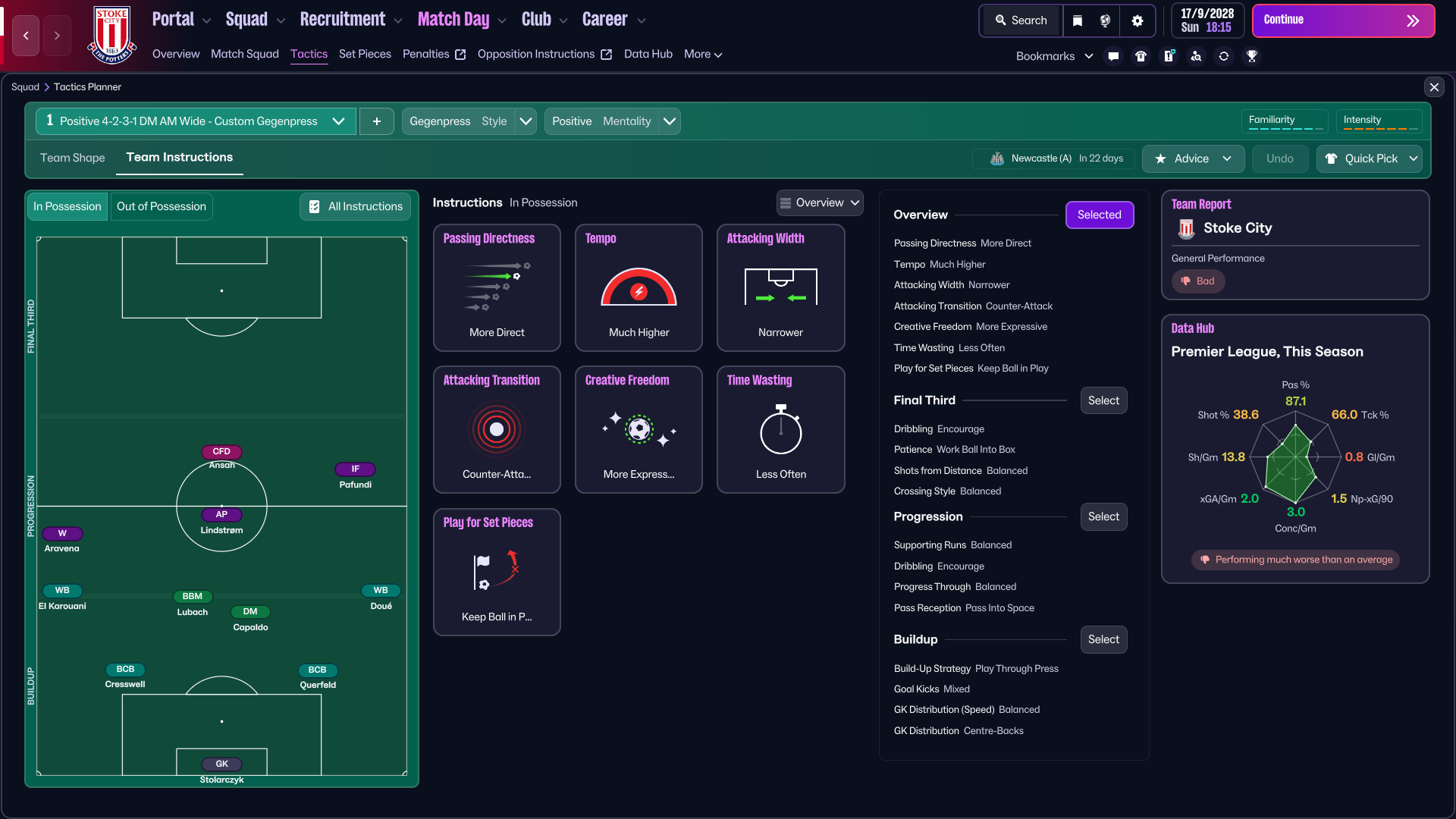
gegenpress
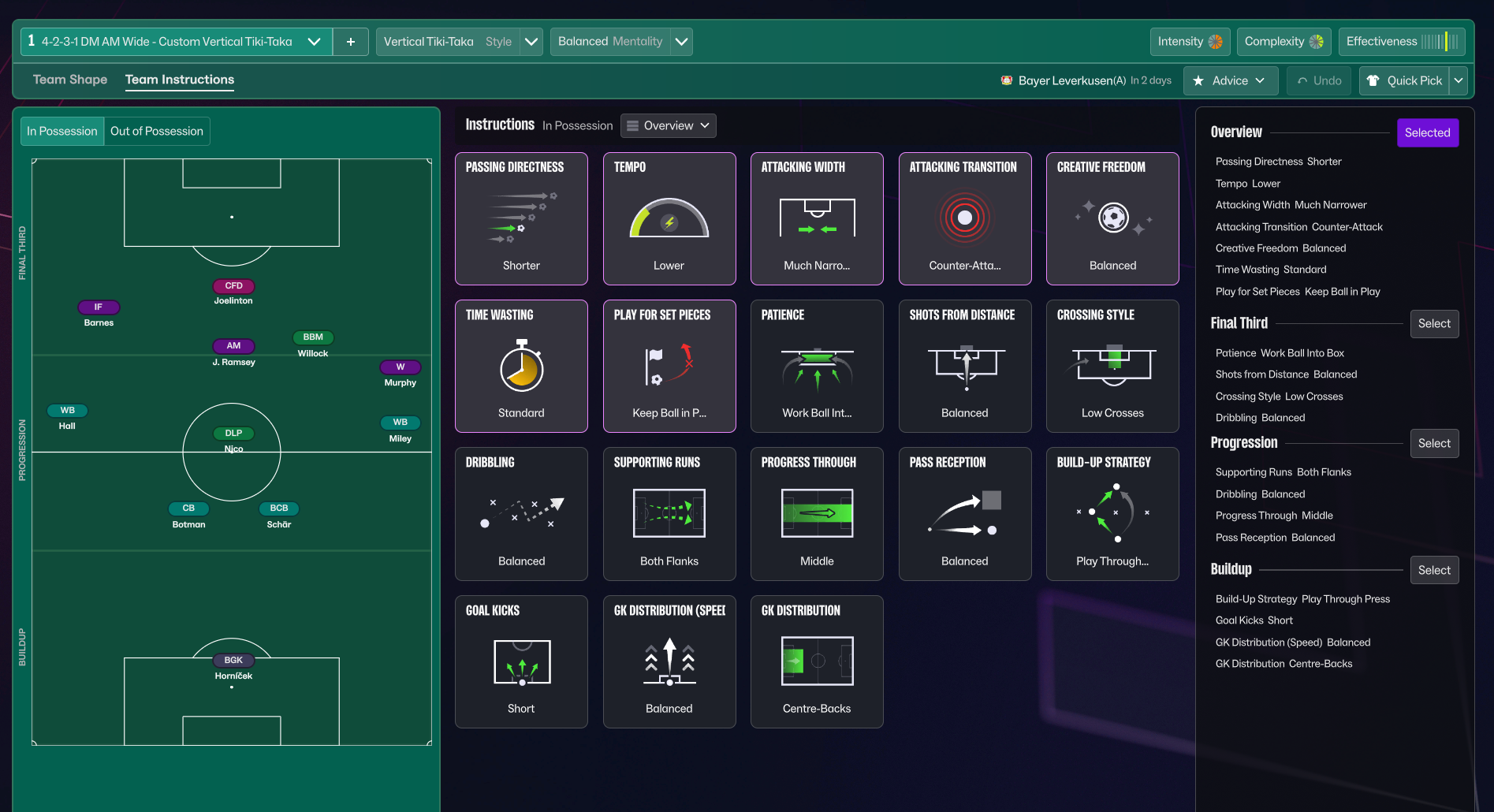
vertical tiki taka
The tactical theory behind the 4-2-3-1 DM Wide: roles, instructions, and the trade-offs that decide whether the system holds up.
Double pivots and flat pairs in 4-2-3-1 and 4-4-2: when each pairing works, when it collapses, and the AMC unicorn that rescues both.
Klopp-style gegenpressing in FM, including squad profile, line-and-press pairing, sustainable workload, and the antipatterns to avoid.
FM27 keeps FM26's tactic system. Here is what stays the same, the small changes that can catch you out, and what the new Tactical Effectiveness system asks of you.