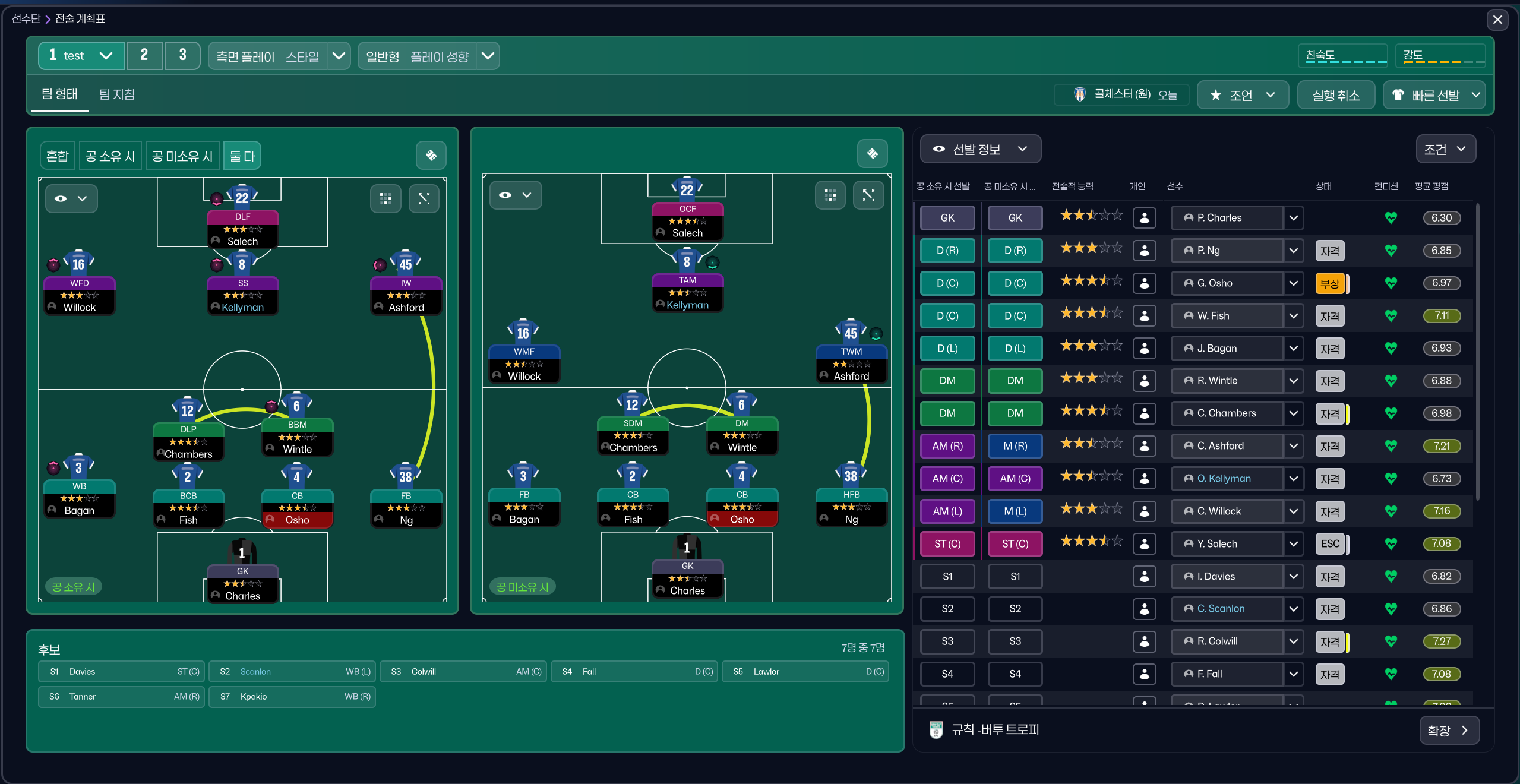
Uploaded Tactic
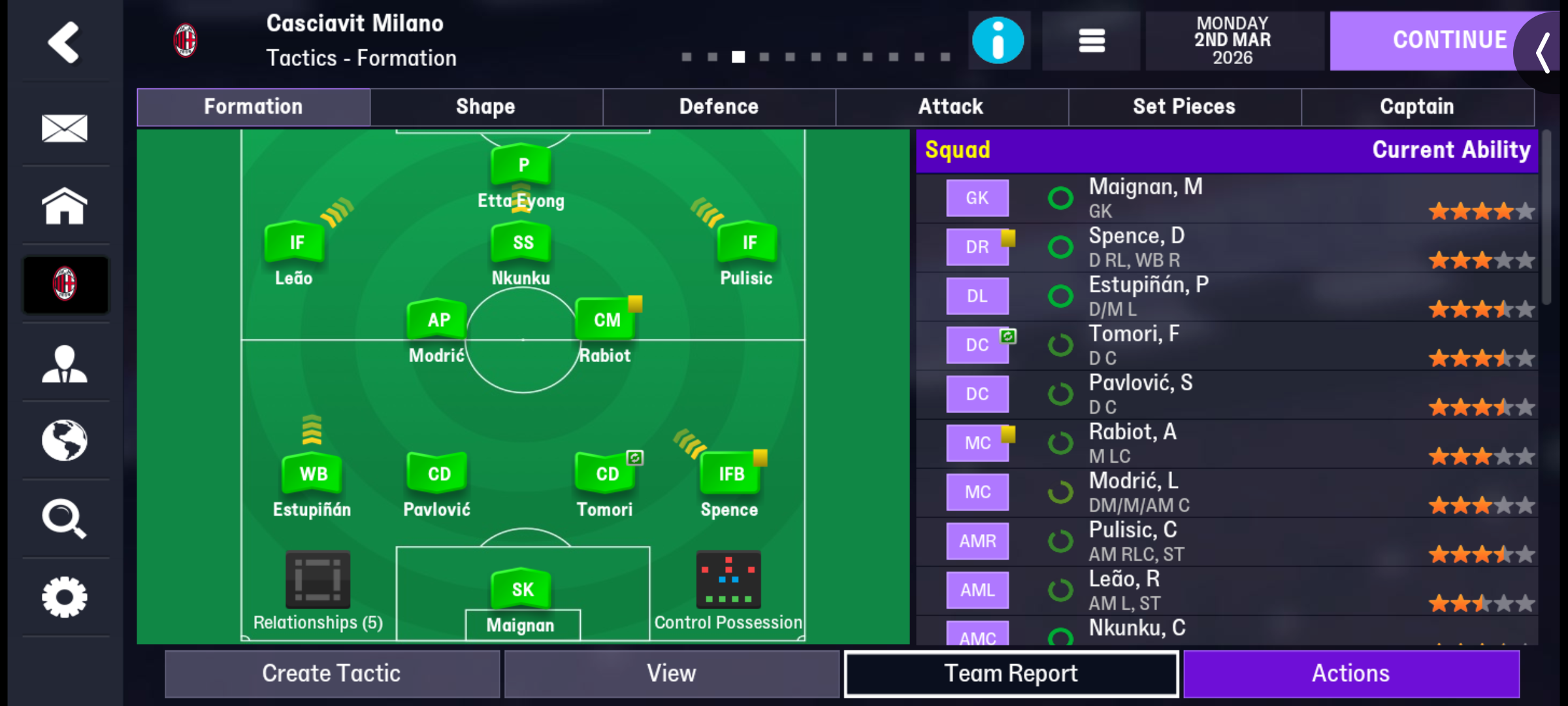
Formation & Style
Tactical Style:Control Possession
Mentality:Attacking
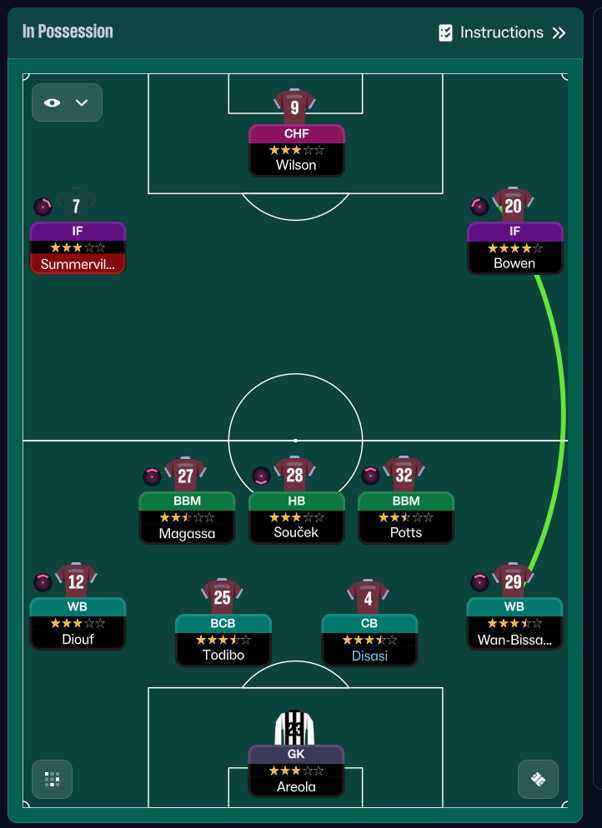
Formation:3-2-2-3
Team Fluidity:Structured
In Possession
Focus play down the flanks
Use of width with wing-backs and inside forwards
Short passing to maintain possession
In Transition
Counter-Press after losing possession
Counter quickly when possession is won
Out of Possession
Higher defensive line
Press more often to regain possession
Team Shape Without Ball
Shape:Compact back three
Description:Defensive line stays tight and organized, providing cover for each other.
Evidence:Utilizing three centre-backs (CB at [2,2], [2,3], [2,4]) allows for a solid foundation.
Team Shape With Ball
Shape:Fluid attacking shape
Description:Wingers and shadow striker position themselves to exploit spaces left by defenders.
Evidence:Inside forwards at [5,2] and [5,4] alongside shadow striker at [6,3] create versatile attacking options.
Phase Description
Attacking Play
Utilizes wing-backs to stretch the game, aiming for quick exchanges to break defensive lines.
Defensive Transition
Immediate pressing to recover possession, focusing on high intensity.
Main Focus
Control of the midfield to dictate play.
Key Strengths
Strong Wing Play
Utilizes wing-backs effectively to provide width.
Fluid Attack Structure
Combination of roles allows dynamic attacking patterns.
Tactical Flexibility
Ability to adjust from wing-focused to central control.
Conflicting Directions
Paltry Defensive Midfield Presence
No dedicated defensive midfield role, risking counterattacks.
High Line Vulnerability
High defensive line may leave gaps for fast opponents.
Reliance on Width
Dependence on wing-backs could be detrimental against narrow formations.
Tactical Suggestions
Introduce a Defensive Midfielder
Adding a DM would help in shielding the defence.
Adjust Defensive Line
Consider dropping the defensive line to mitigate counter threats.
Balance Wing and Central Play
Incorporate central strategies to alleviate over-reliance on wings.
Ask Questions About Your Lineup
Related Tactics
More Control Possession tactics
Guides for this formation
The tactical theory behind the 3-2-2-3: roles, instructions, and the trade-offs that decide whether the system holds up.