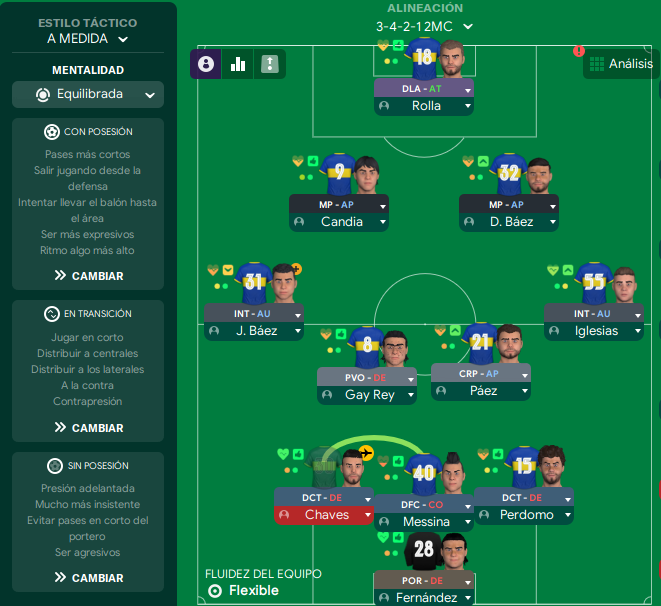
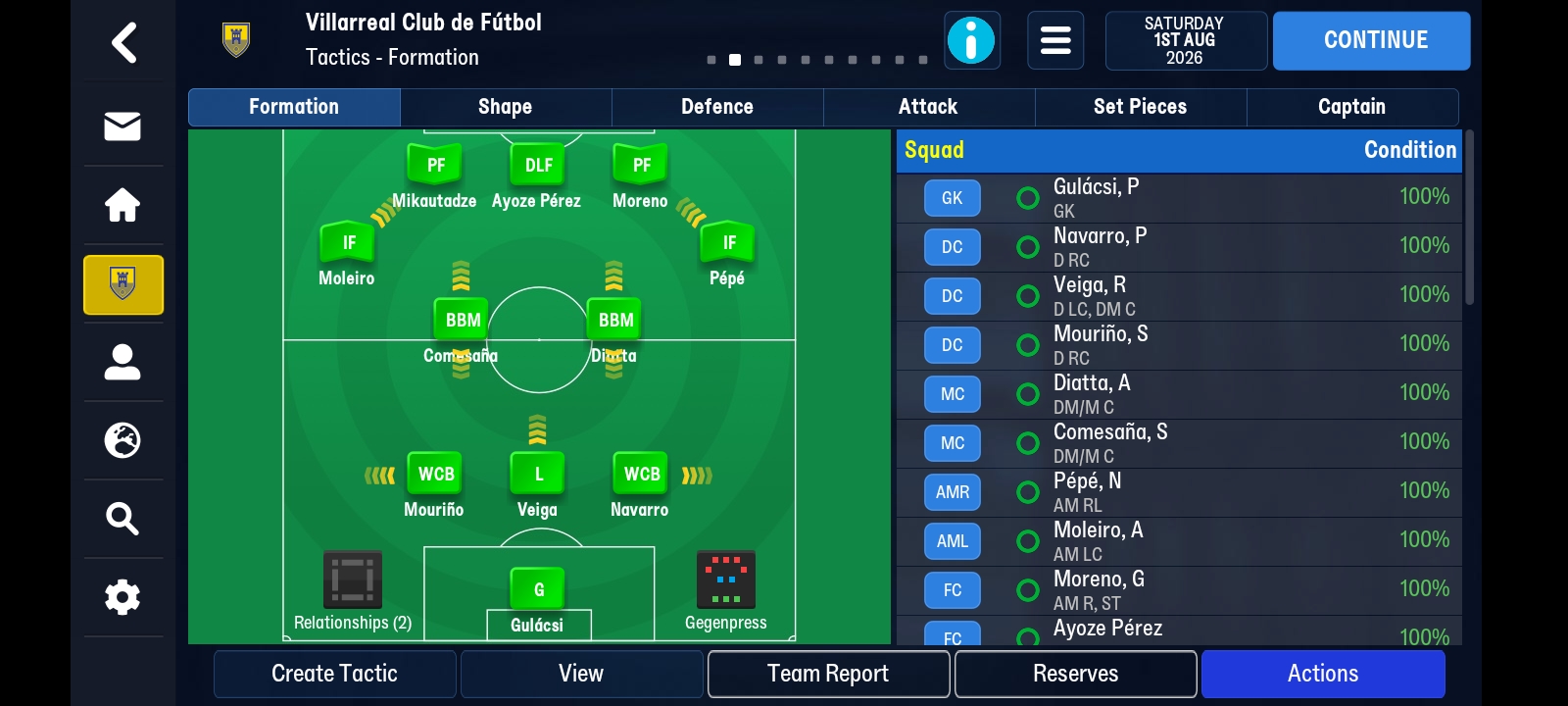
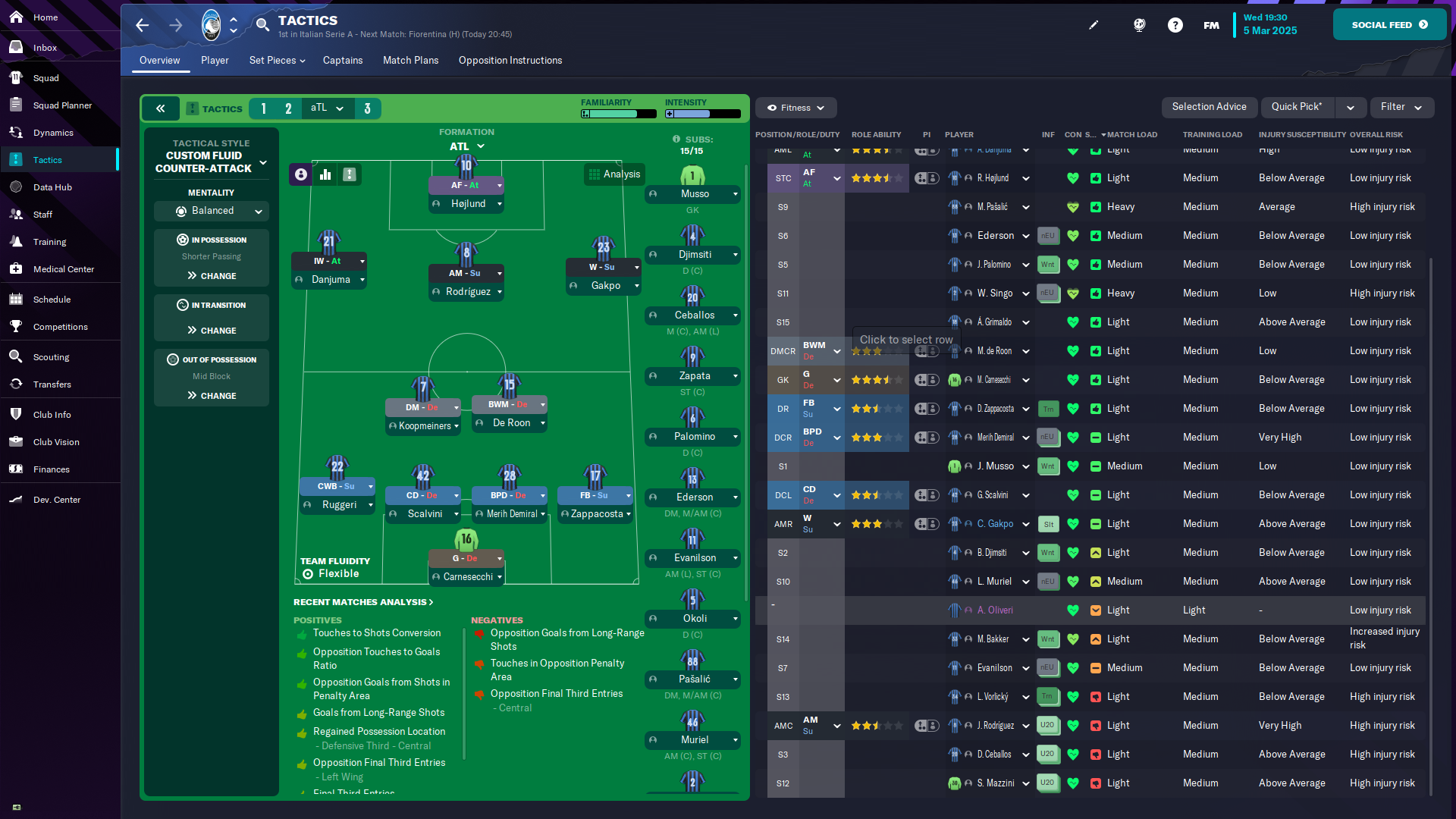
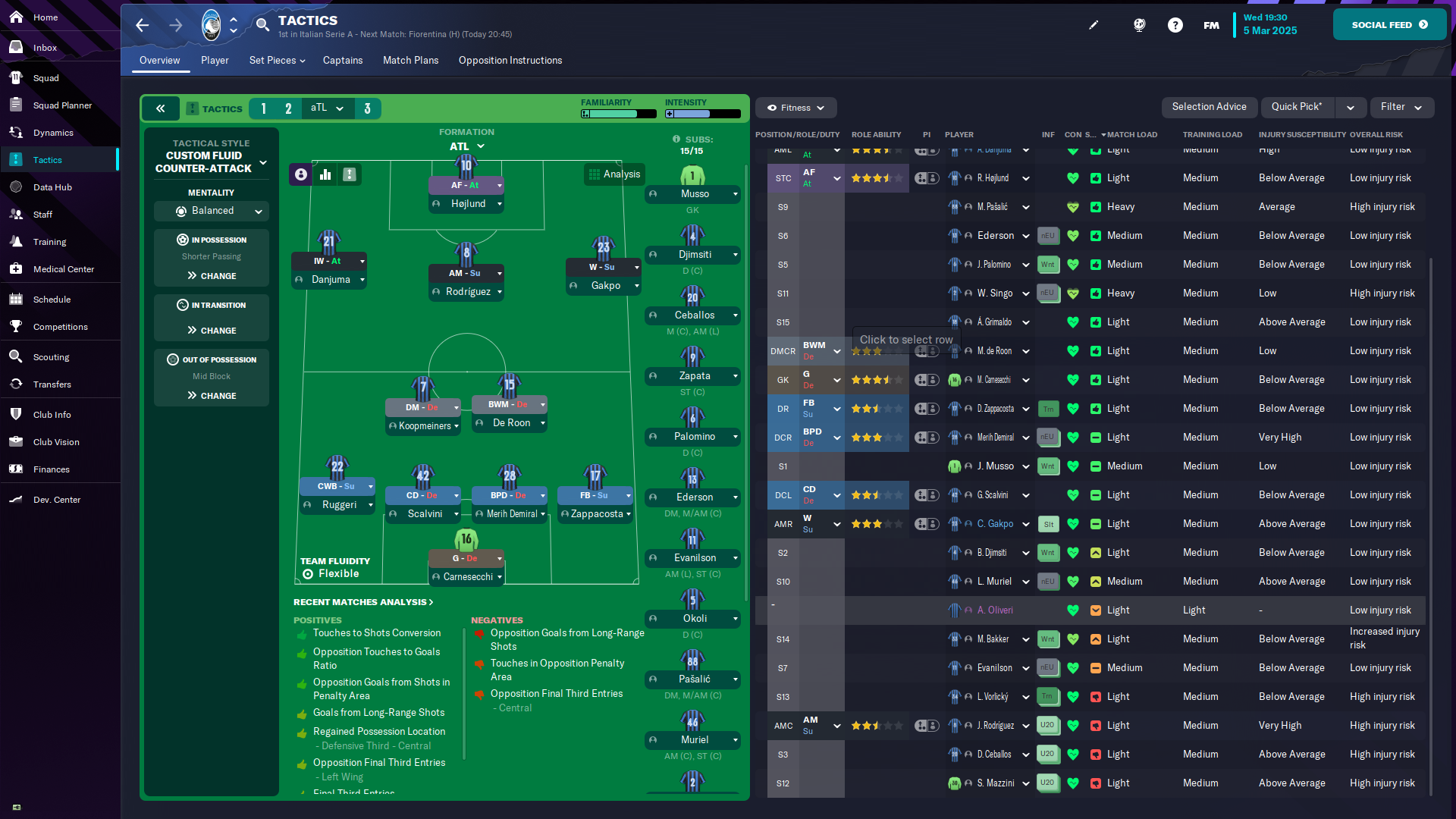
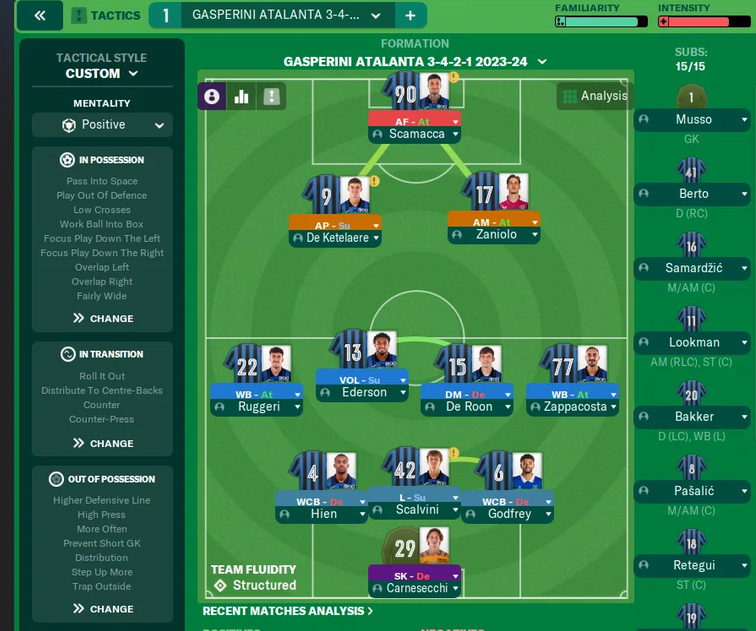
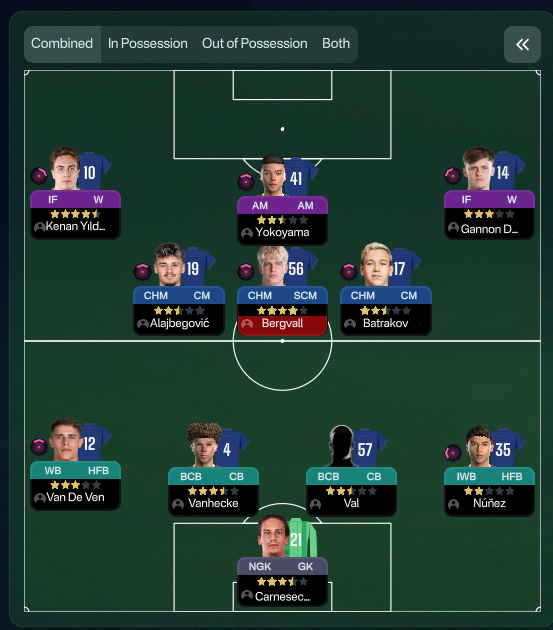
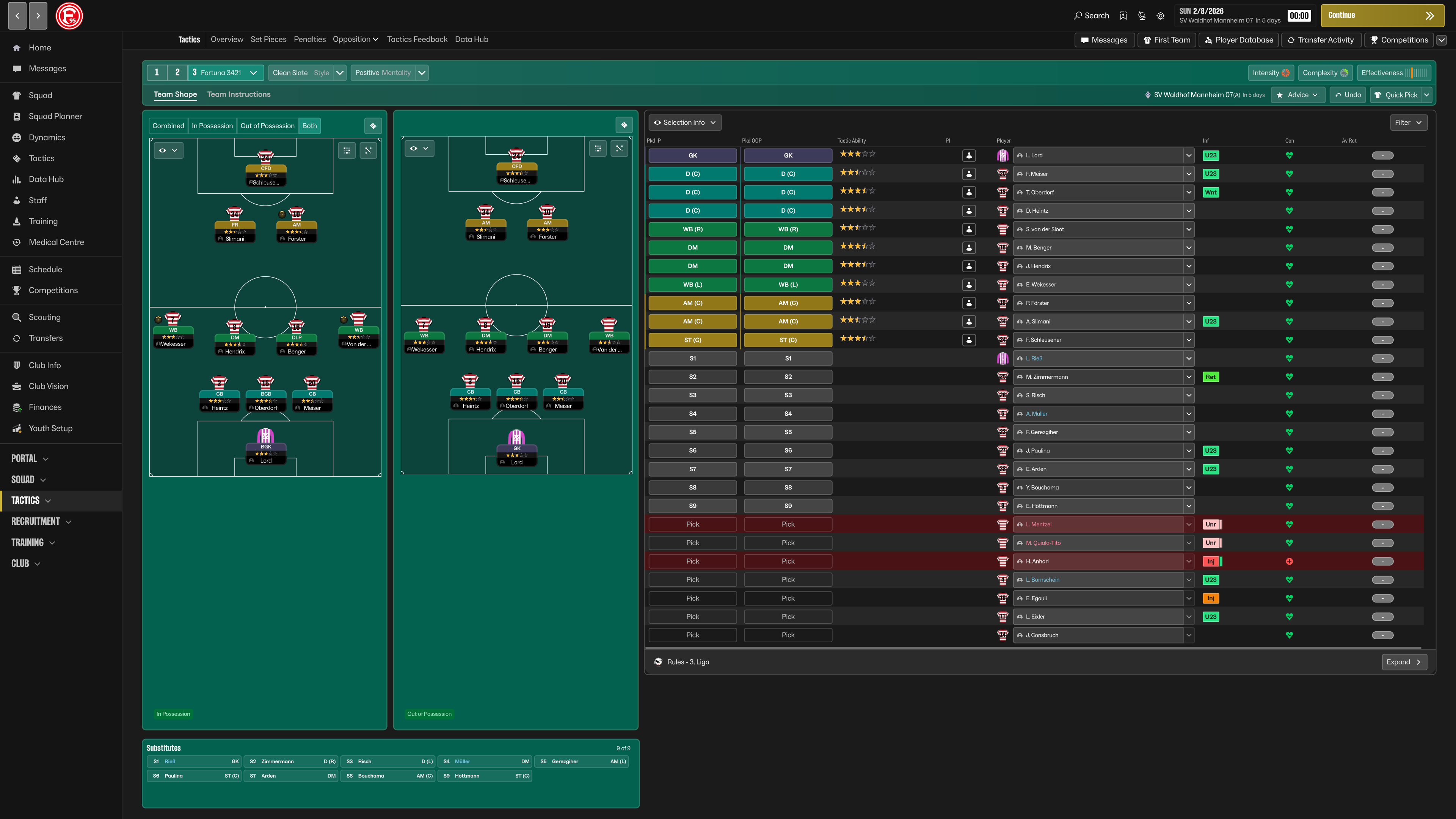
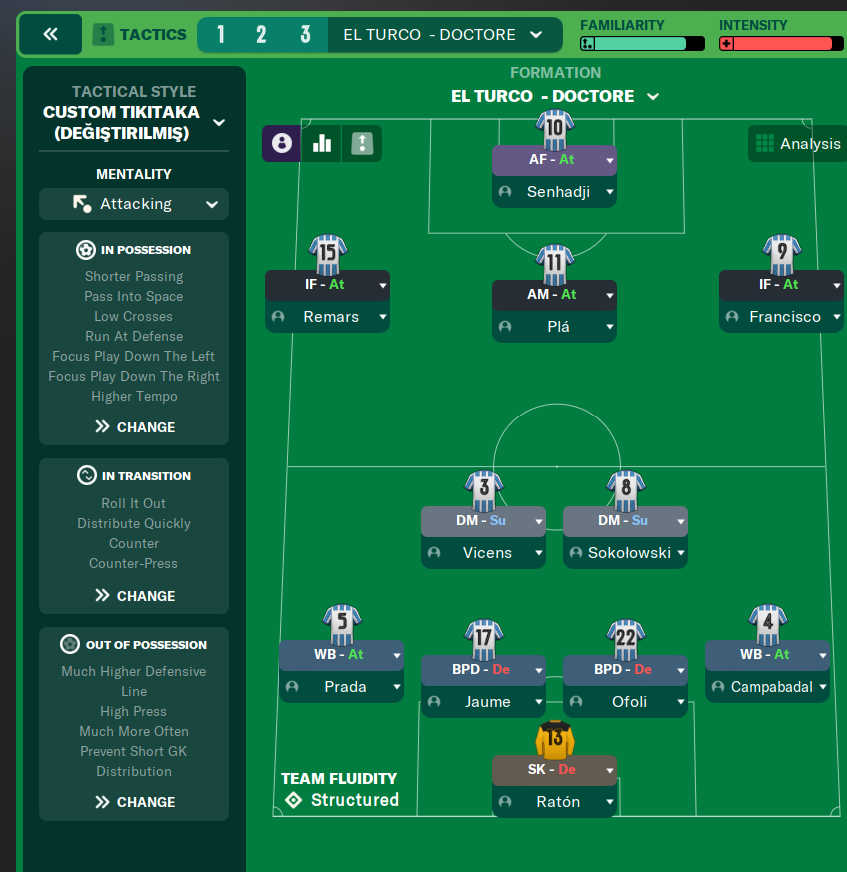
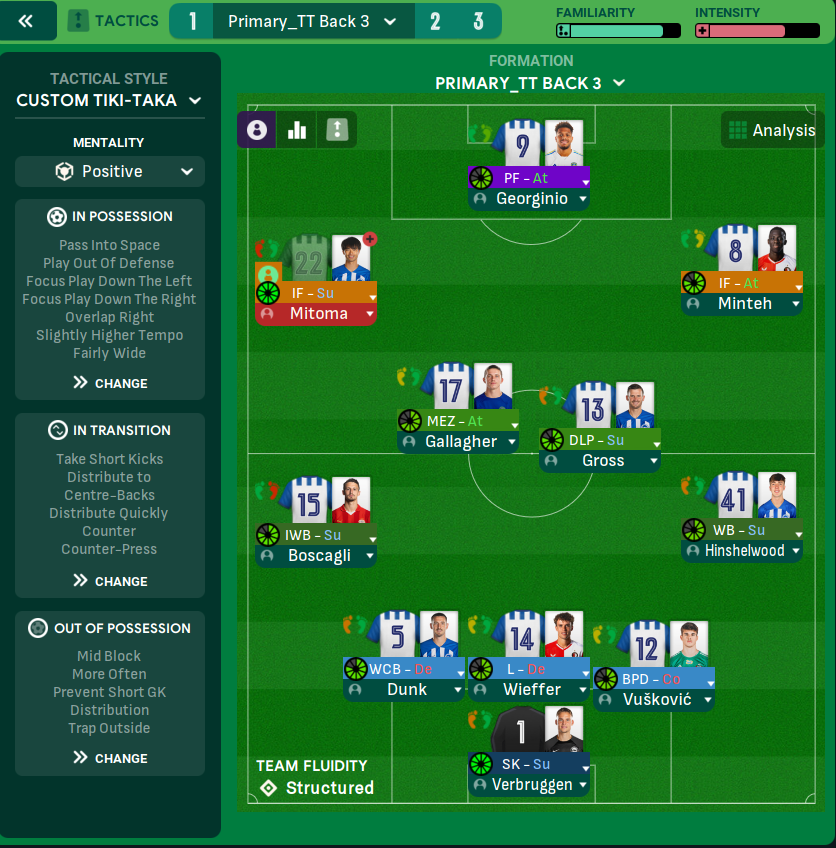
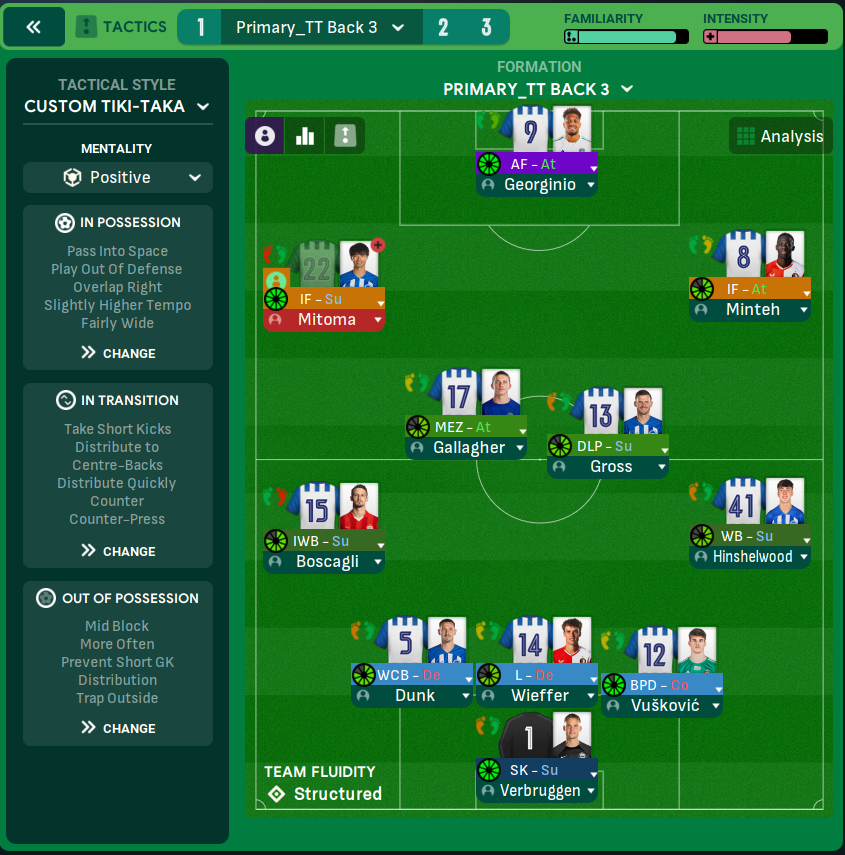
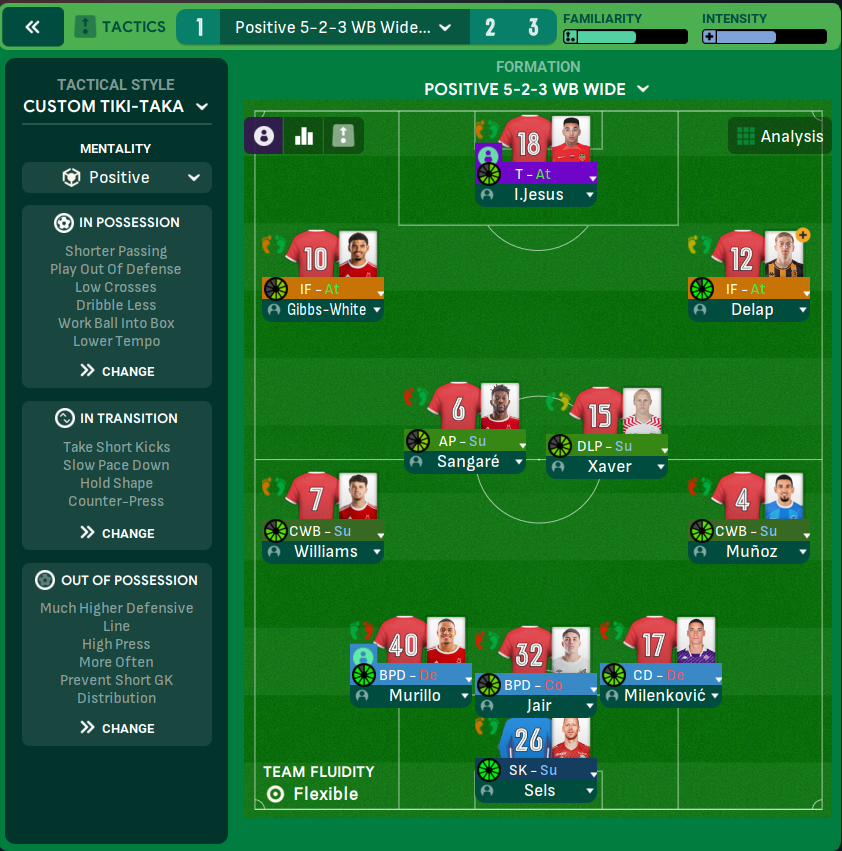
3-4-2-1
The Tiki-Taka style emphasizes short passing and maintaining possession, creating controlled attacking opportunities.
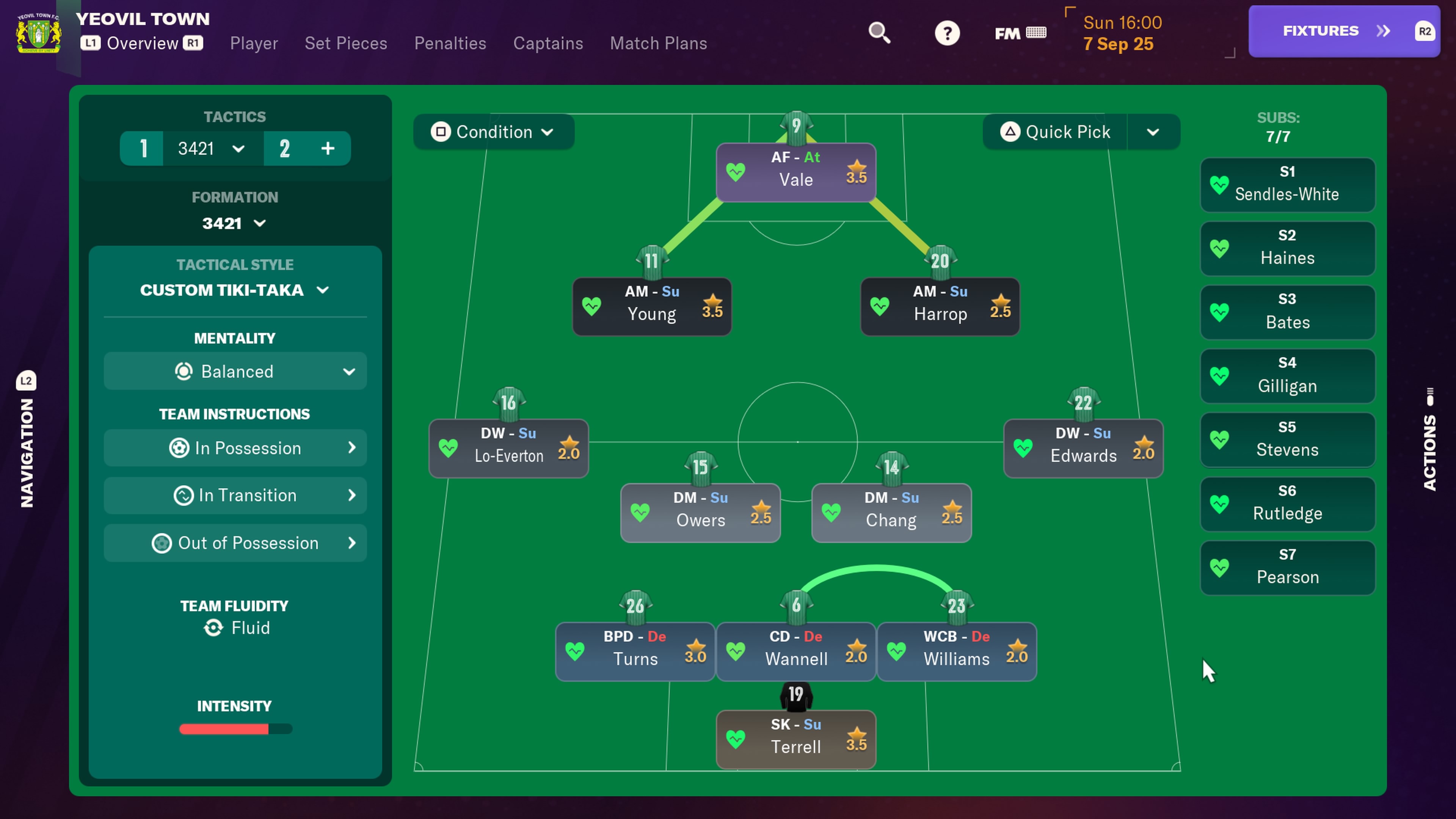
Loading tactical analysis...
Custom Tiki-Taka
Balanced
3-4-2-1
Fluid
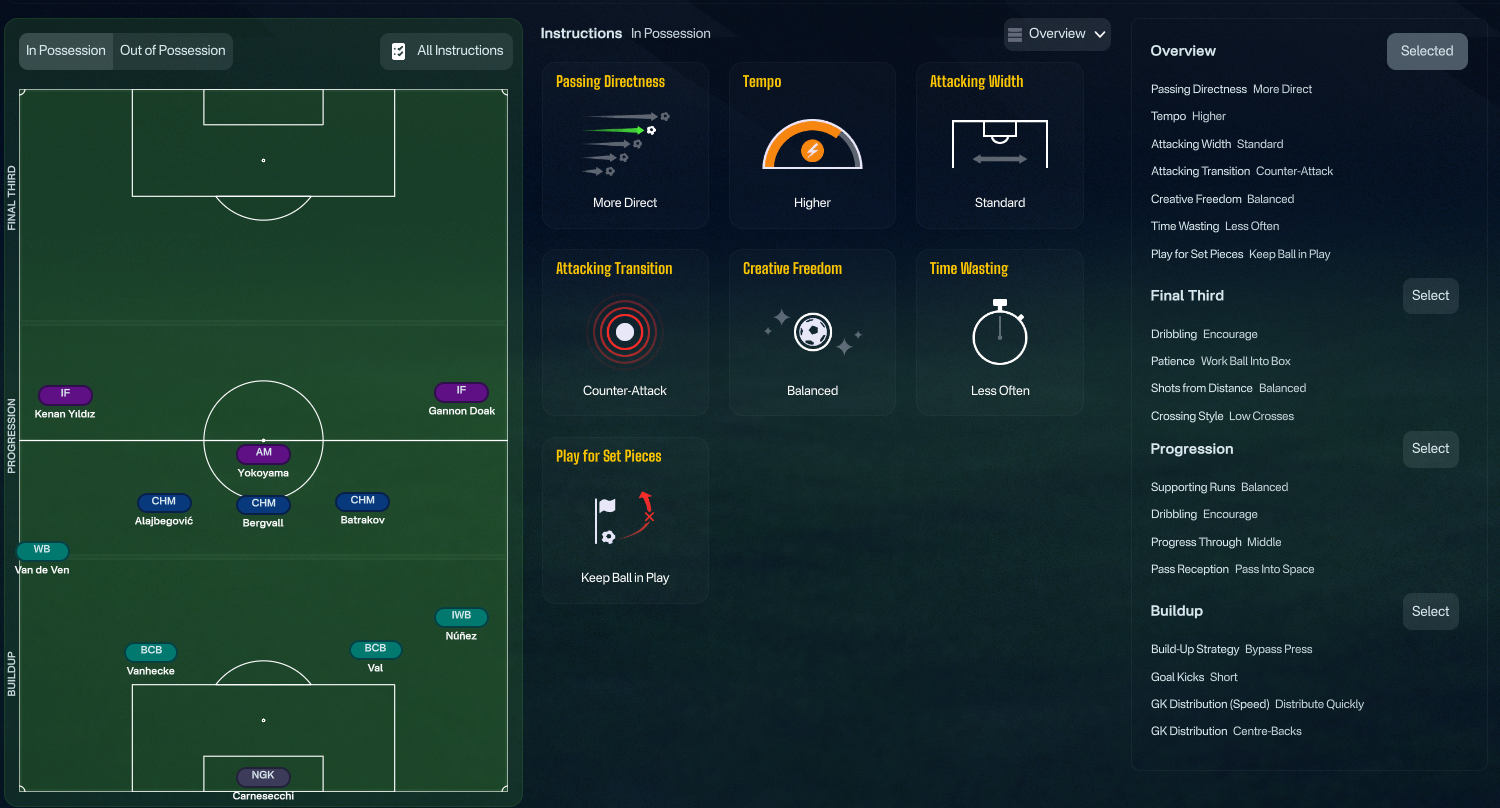
Shorter Passing
Work Ball Into Box
Overlapping Fullbacks
Counter-Press
Counter
Higher Defensive Line
Compact Shape
AF
Advanced Forward
Attack
AM
Support
Support
BPD
Ball Playing Defender
Defend
CD
Central Defender
Defend
WCB
Wide Centre Back
Defend
DM
Defensive Midfielder
Support
DW
Wing Back
Support
The Tiki-Taka style emphasizes short passing and maintaining possession, creating controlled attacking opportunities.
With fluid team shape, players can interchange positions, making it difficult for opponents to mark.
With several players focused on defensive duties, it may limit offensive support in transitional phases.
High pressing may clash with a fluid approach, leading to potential disorganization during transitions.
How can I enhance the attacking support from my midfield?
What adjustments can be made to improve my team's defensive compactness?
Are the current roles of my wing backs effectively utilized?
How can I best maintain possession against teams that press high?
What strategic changes can be implemented during the second half?
How can I adapt my tactics against teams with strong wing play?
The tactical theory behind the 3-4-2-1: roles, instructions, and the trade-offs that decide whether the system holds up.
Mentality, duty, role, instruction, sub. The change hierarchy from lightest to heaviest intervention, and 60th-minute patterns by game state.
Pass map, average position, xG, possession by zone: what each tablet panel tells you in FM and the tactical change it should trigger.
FM27 keeps FM26's tactic system. Here is what stays the same, the small changes that can catch you out, and what the new Tactical Effectiveness system asks of you.