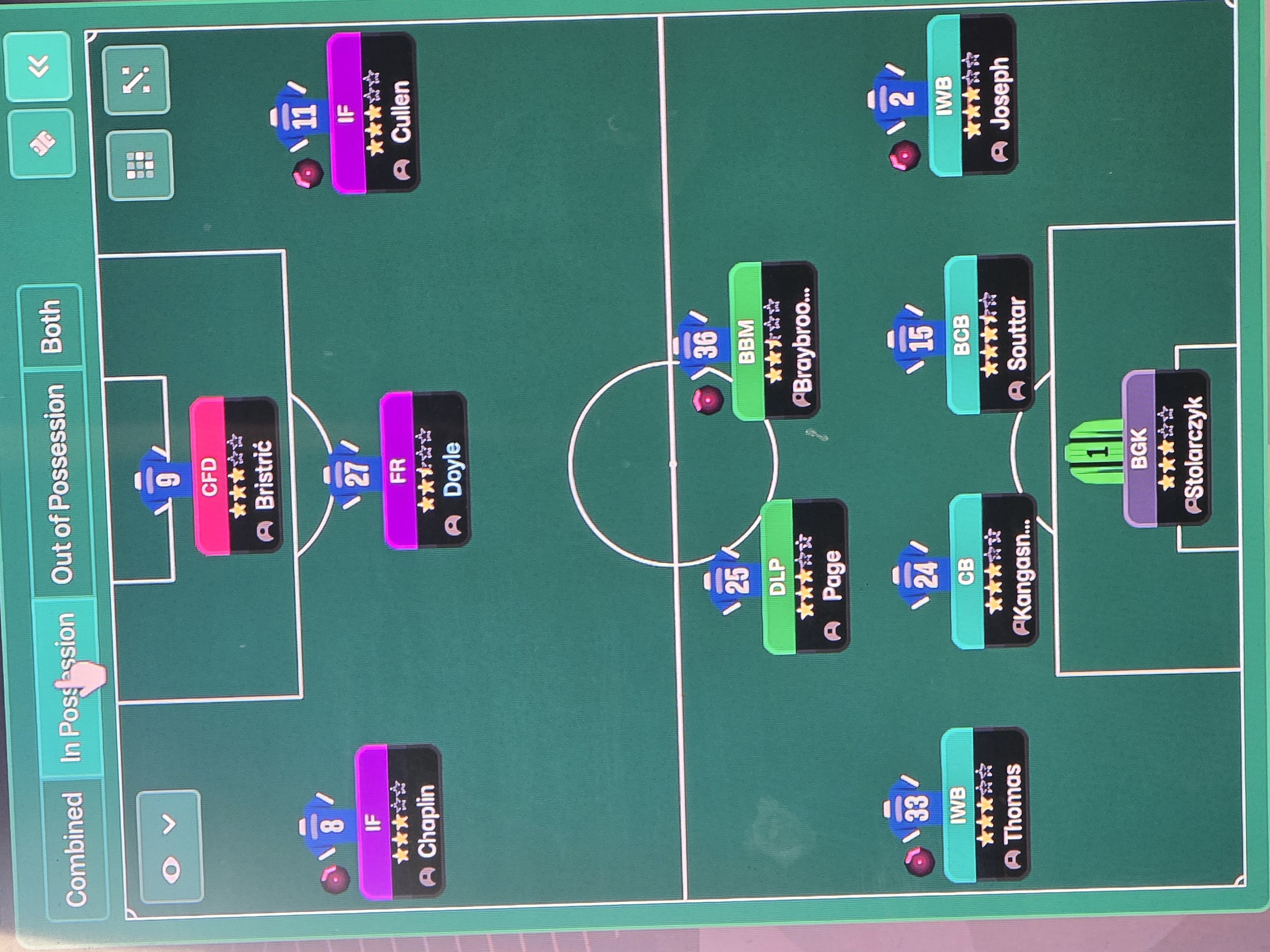
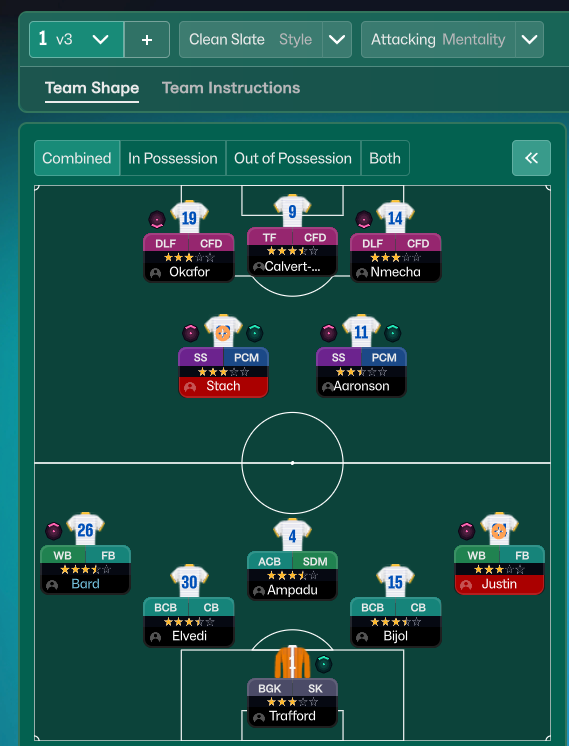
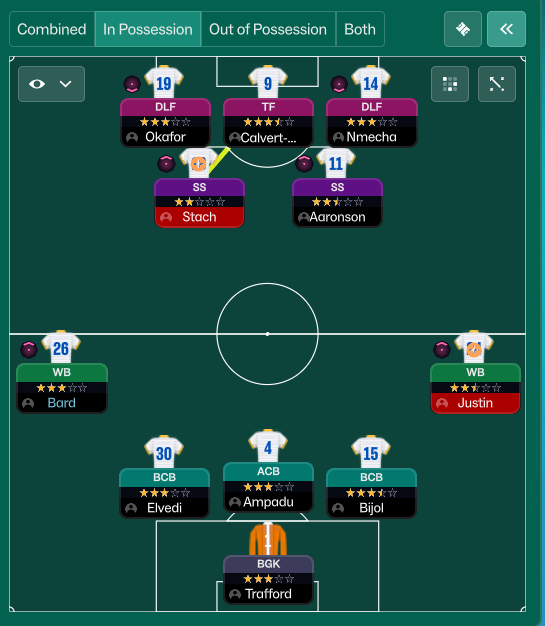
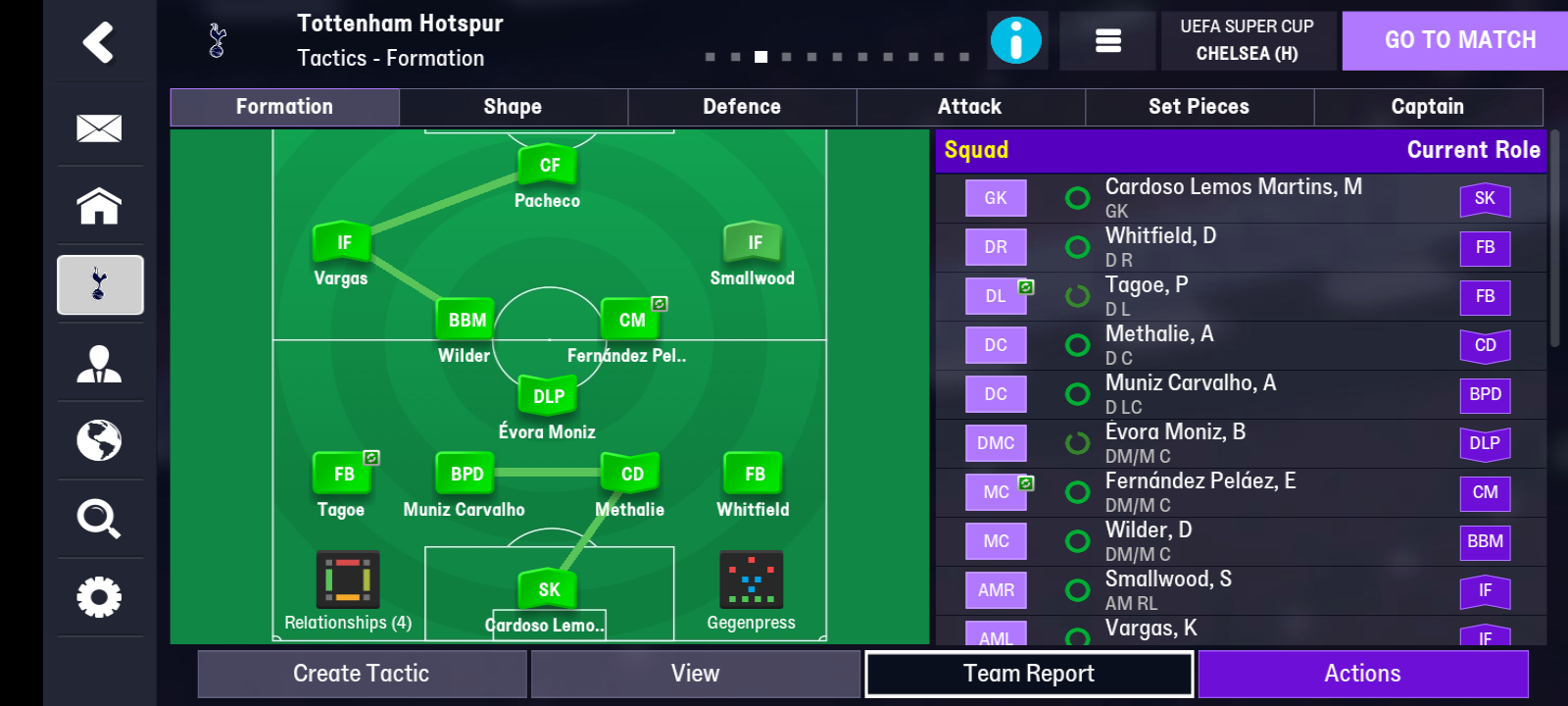
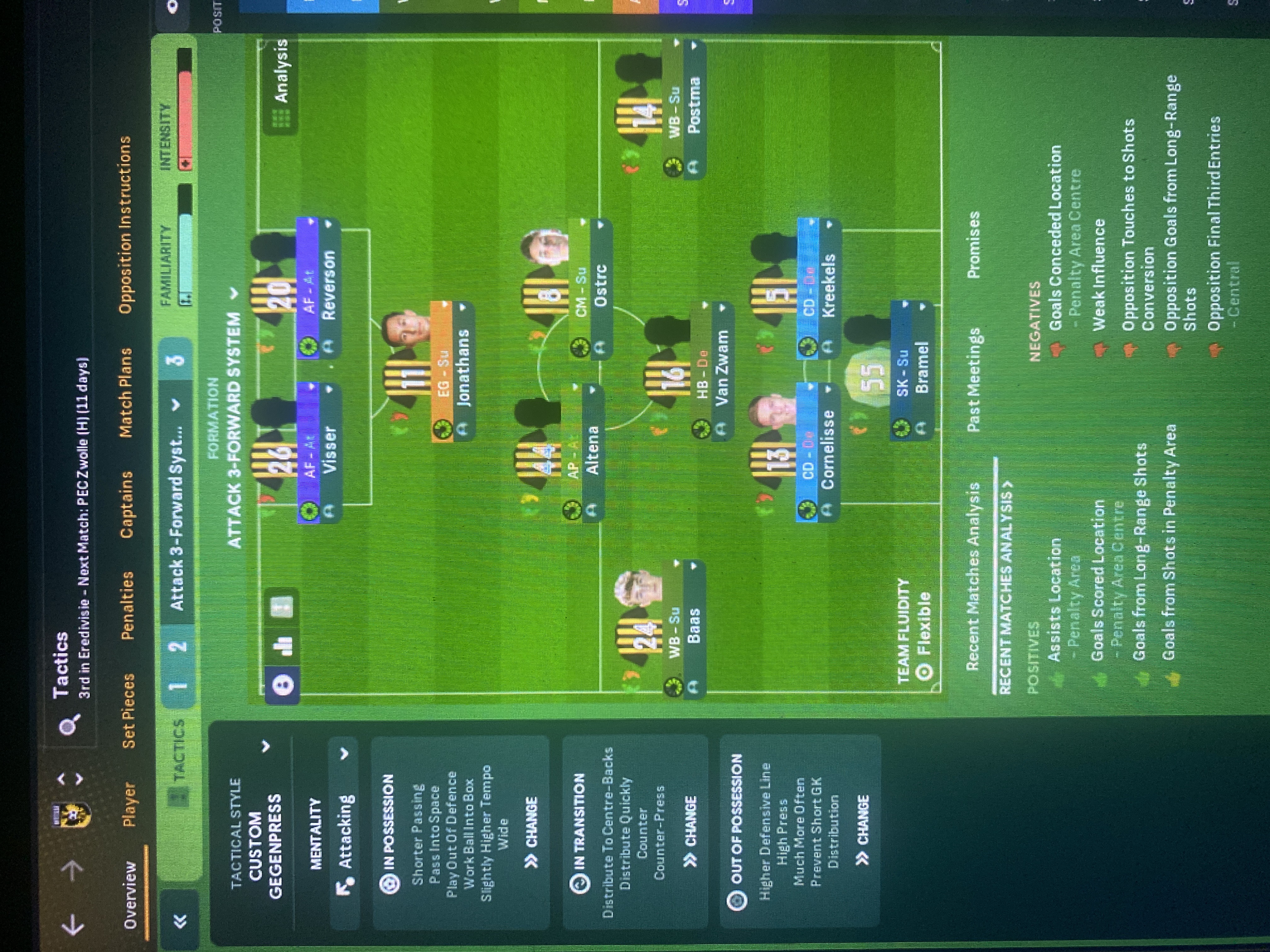
3-4-3
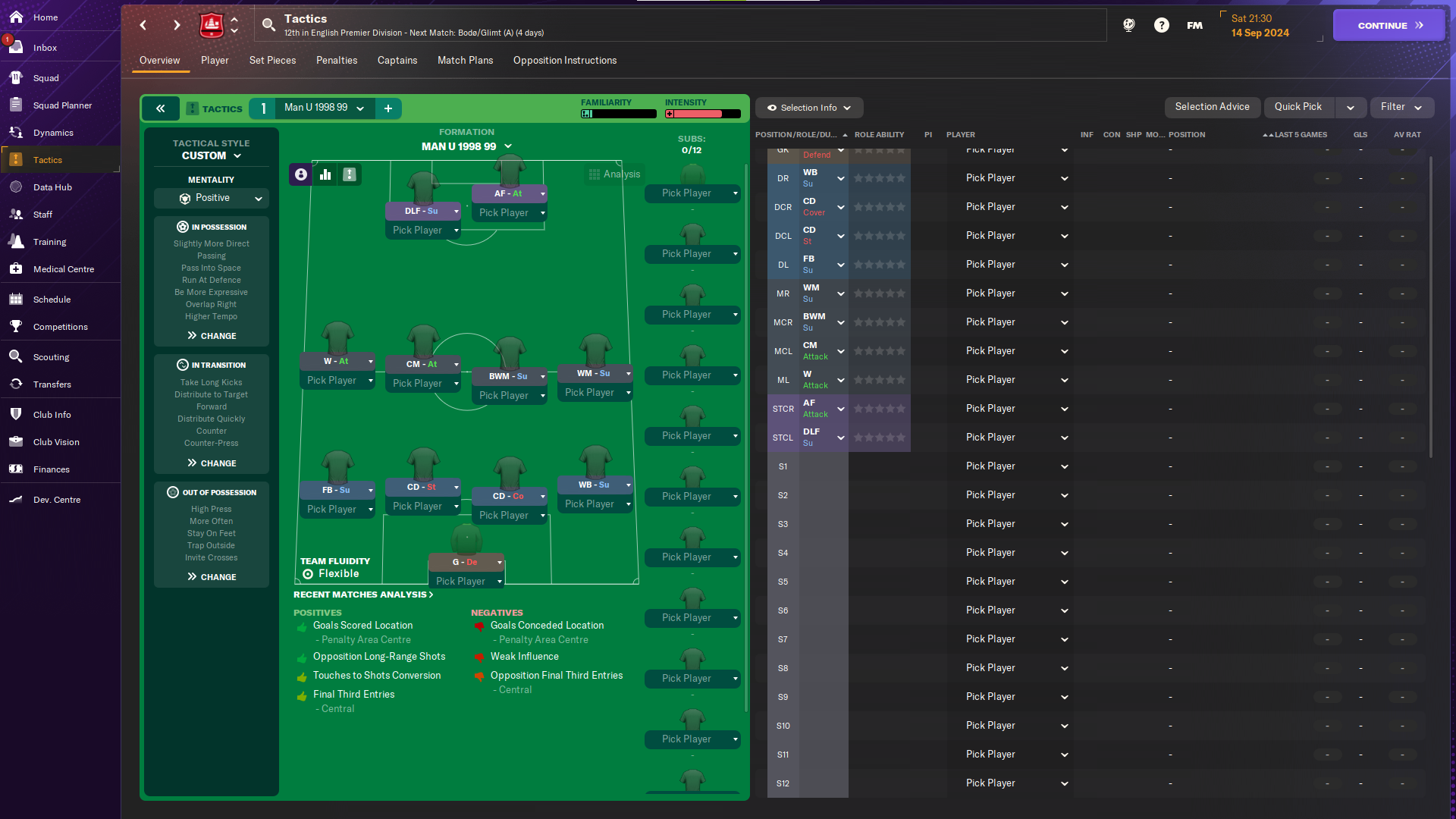
Having three forwards and wing-backs pushes the offensive players high up the pitch, creating multiple attacking options in the final third.
Loading tactical analysis...
Gegenpress
Attacking
3-4-3
Flexible
Shorter Passing
Pass Into Space
Play Out Of Defence
Slightly Higher Tempo
Distribute to Centre-Backs
Distribute Quickly
Higher Defensive Line
High Press
Much More Often Prevent Short GK Distribution
ST
Advanced Forward
Attack
ST
Advanced Forward
Attack
WM
Wide Midfielder
Support
CM
Central Midfielder
Support
WB
Wing-Back
Support
CD
Central Defender
Defend
Having three forwards and wing-backs pushes the offensive players high up the pitch, creating multiple attacking options in the final third.
The gegenpress style combined with a high defensive line increases the chances of regaining possession quickly after losing the ball.
A high defensive line may expose the team to quick counter-attacks, especially against fast-paced opponents.
The setup might leave gaps in midfield if the wing-backs push too far forward without sufficient cover.
How well does the team maintain composure under pressure?
Are the wing-backs able to track back quickly during counters?
Is the midfield able to provide sufficient support for the forwards?
How effective is the team in converting chances created?
Are the players able to adapt to a more defensive or conservative approach when needed?
What adjustments can be made if the gegenpress strategy isn’t working?
The tactical theory behind the 3-4-3: roles, instructions, and the trade-offs that decide whether the system holds up.
Long-ball football done well in FM. When direct, vertical play is the right choice, and what the Direct Passing TI actually changes.
Build the patient, control-the-tempo style without watching your opponents counter through the gaps you leave behind.
How Mentality, Duty, and Role interact in FM, why duty trumps mentality every time, and the role-on-top-of-duty composition rules.