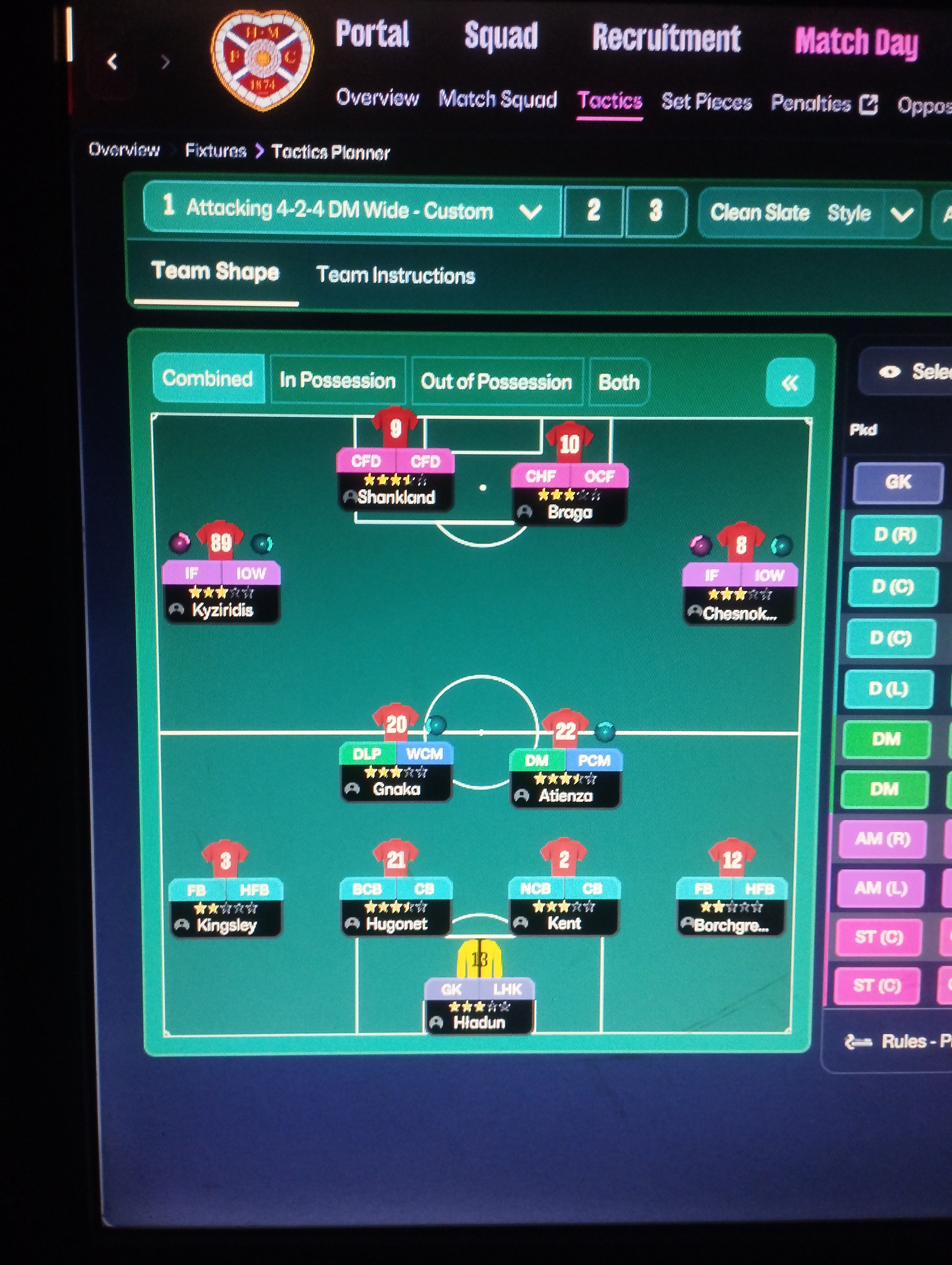
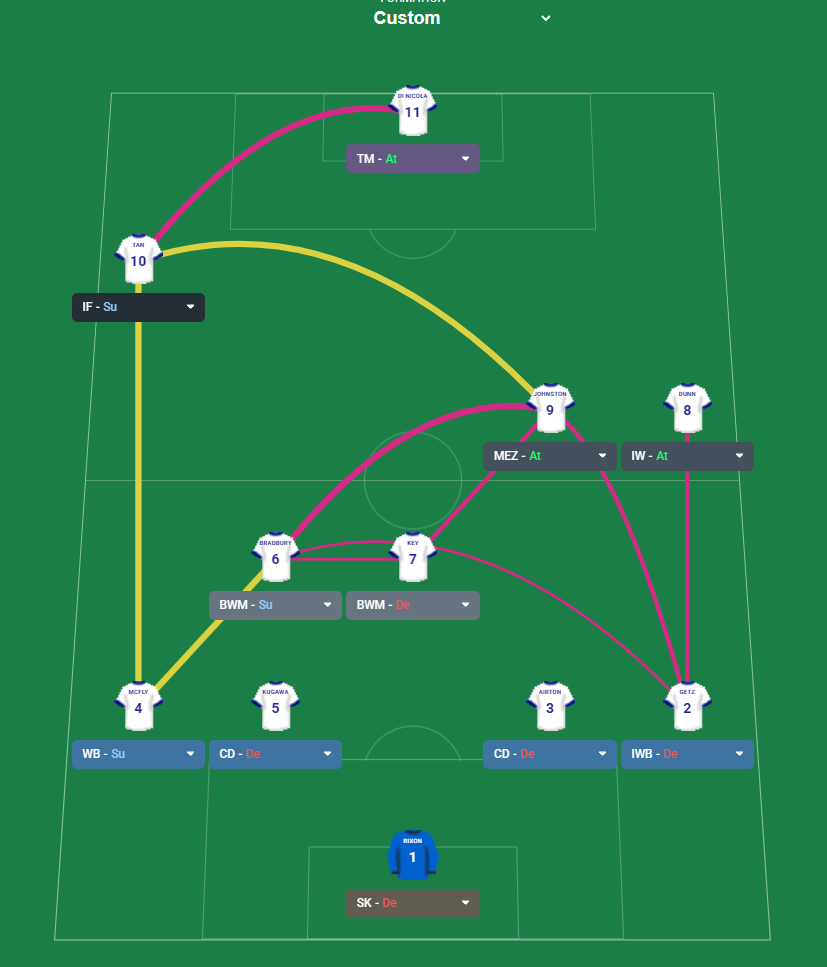
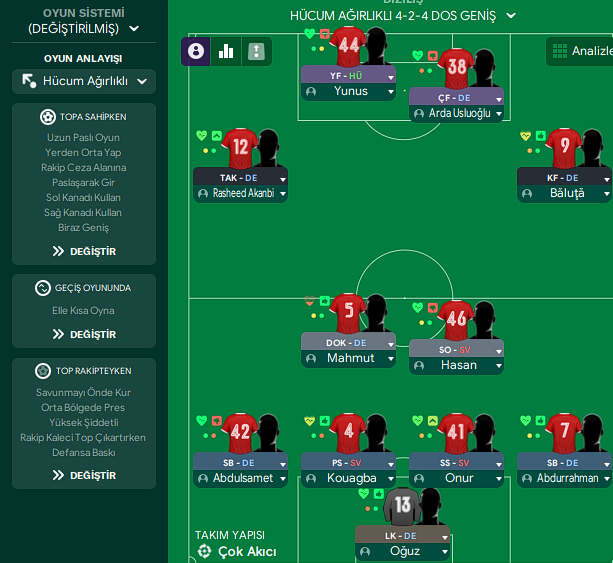
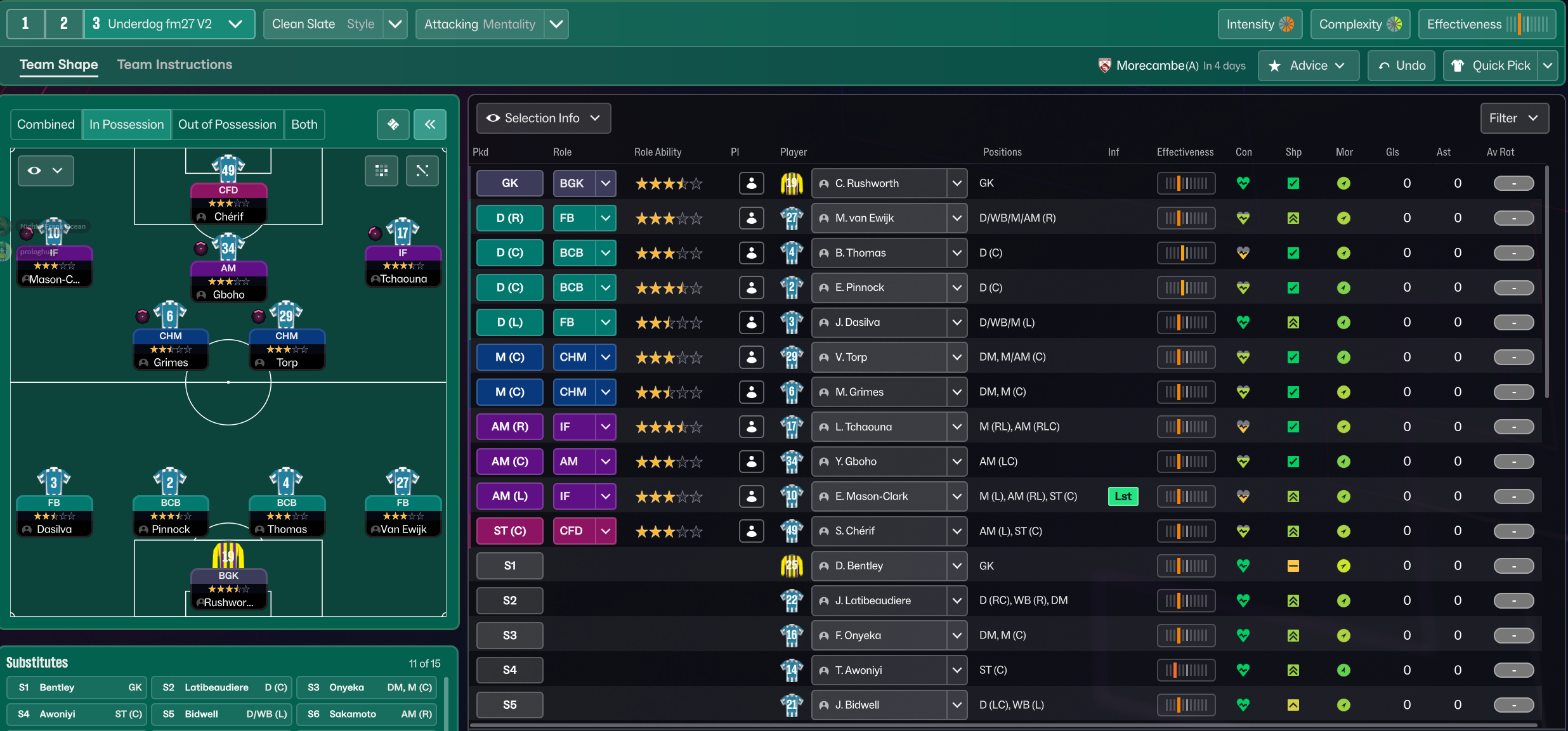
4-2-3-1 DM Wide
The 4-2-3-1 formation provides multiple attacking angles, making it hard for defenses to predict the source of threats.
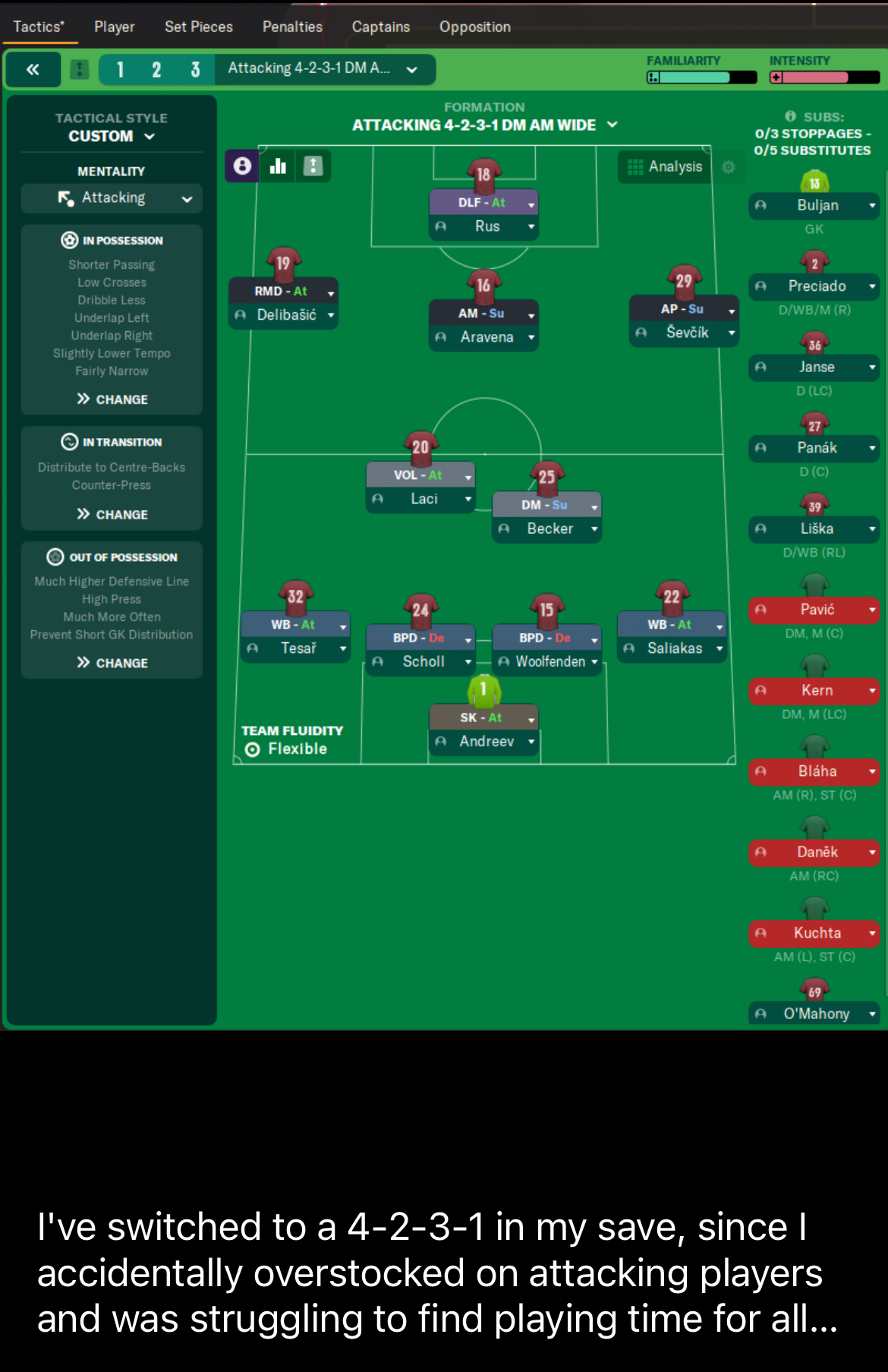
Loading tactical analysis...
Attacking
Attacking
4-2-3-1 DM Wide
Flexible
Shorter Passing
Low Crosses
Dribble Less
Underlap Left
Underlap Right
Slightly Lower Tempo
Fairly Narrow
Distribute to Centre-Backs
Counter-Press
Much Higher Defensive Line
High Press Often
Prevent Short GK Distribution
DLF
Deep Lying Forward
Attack
AM
Attacking Midfielder
Support
AP
Advanced Playmaker
Support
DM
Defensive Midfielder
Support
VOL
Volante
Attack
BPD
Ball Playing Defender
Defend
WB
Wing Back
Attack
SK
Sweeper Keeper
Attack
The 4-2-3-1 formation provides multiple attacking angles, making it hard for defenses to predict the source of threats.
The combination of the Advanced Playmaker and Attacking Midfielder creates space and opportunities for the deep-lying forward.
Having too many attacking players may lead to congested attacking zones and reduced effectiveness of the roles.
This can leave gaps in the defense if the counter-press is broken, exposing the backline to quick counters.
How can I optimize the roles to reduce congestion in attacking positions?
Would shifting to a deeper defensive line improve our defensive performance?
Are my wing backs being utilized effectively within this tactical setup?
How can I enhance the connections between my midfield players to control the game better?
Would a more traditional goalkeeper role benefit my team's defensive stability?
What adjustments can I make to ensure we are not overly exposed on counter-attacks?
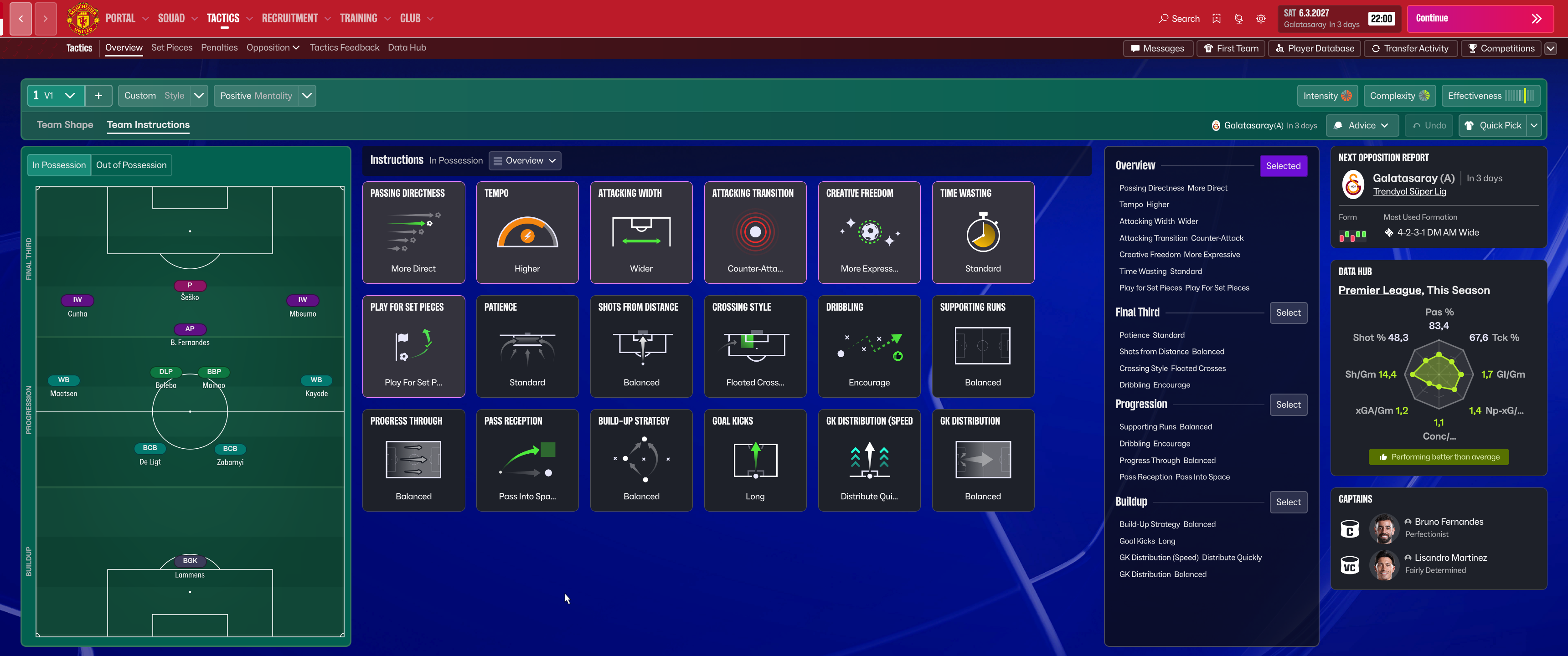
clean slate
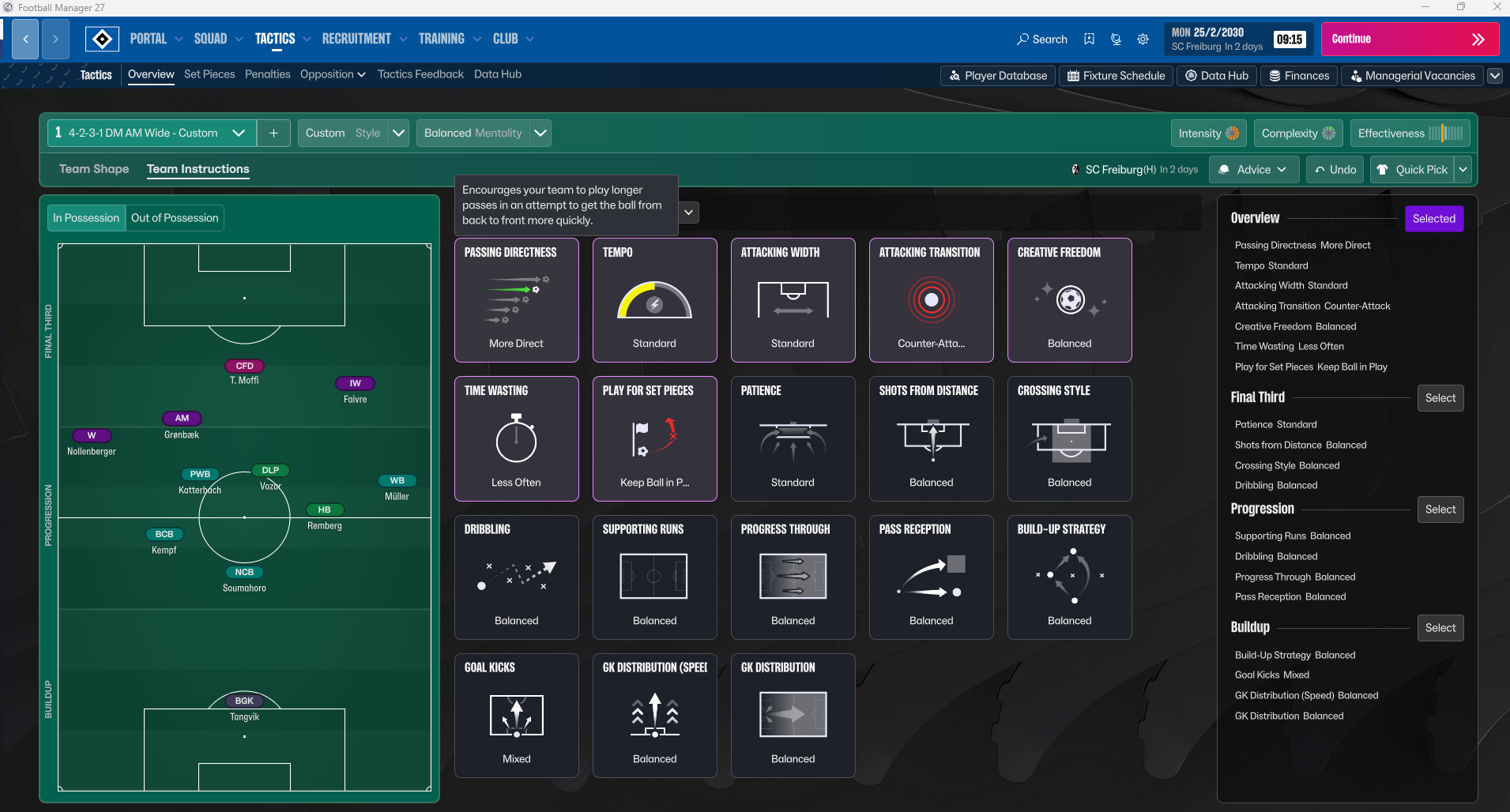
clean slate
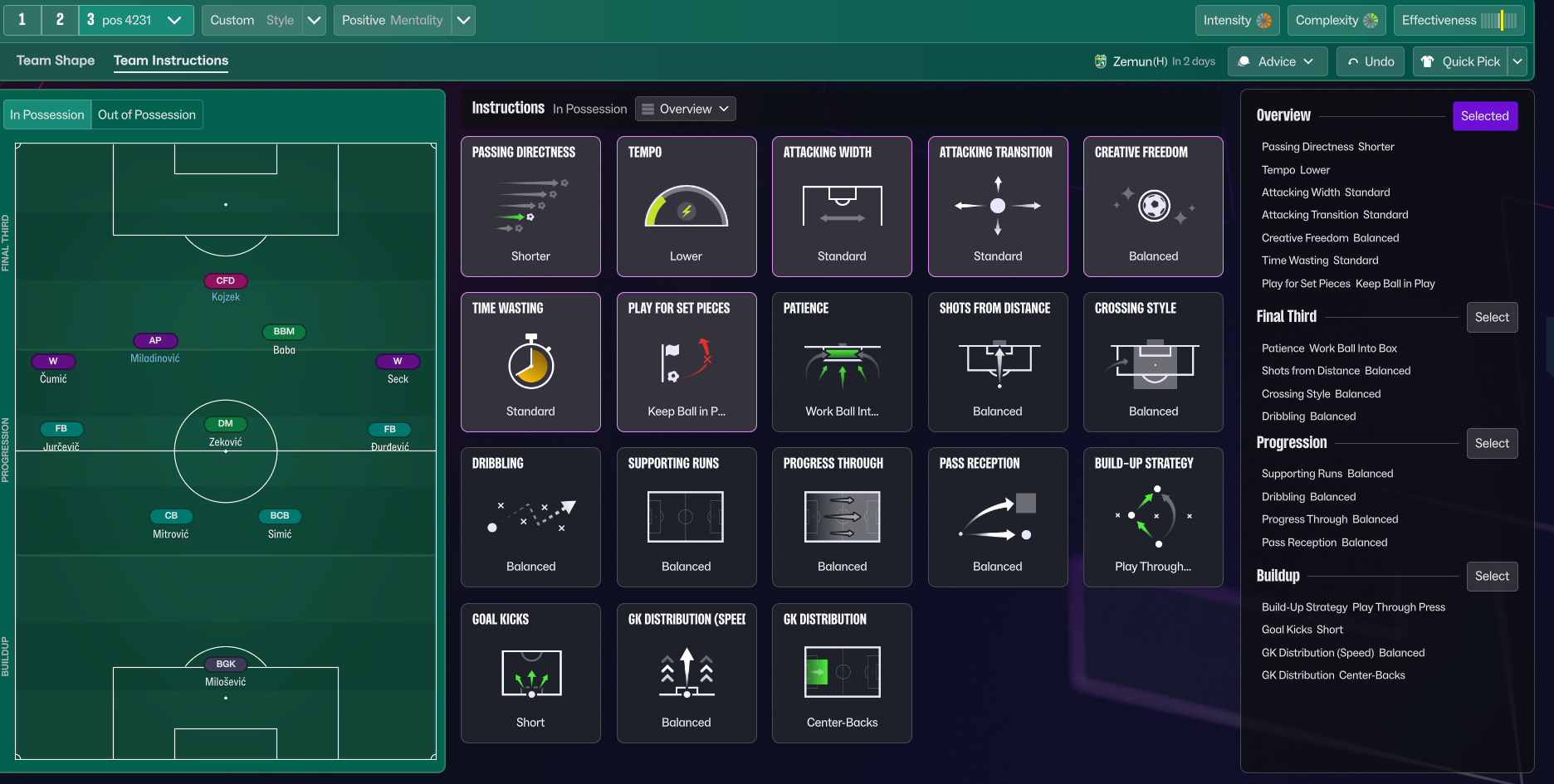
control possession
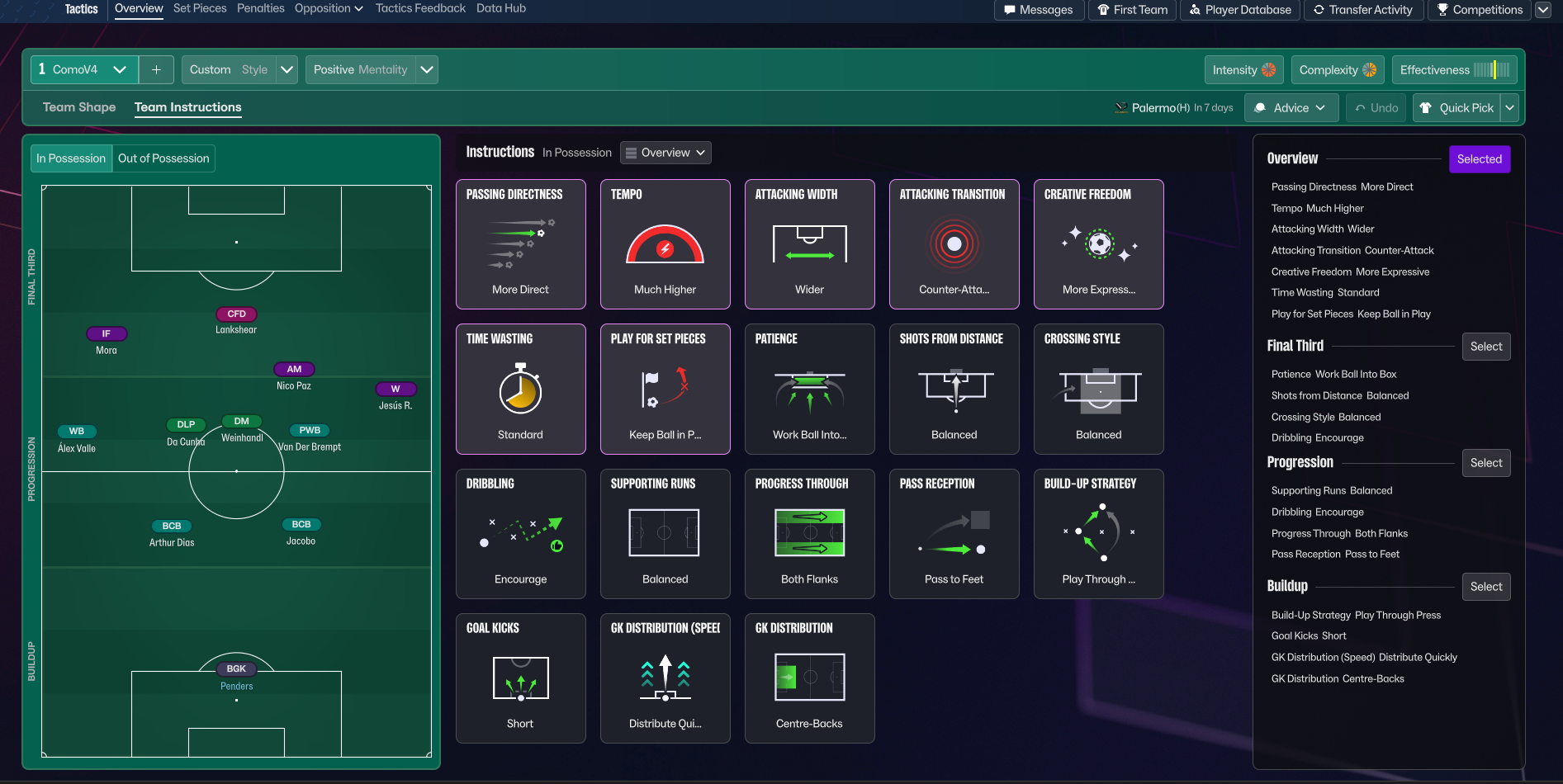
clean slate
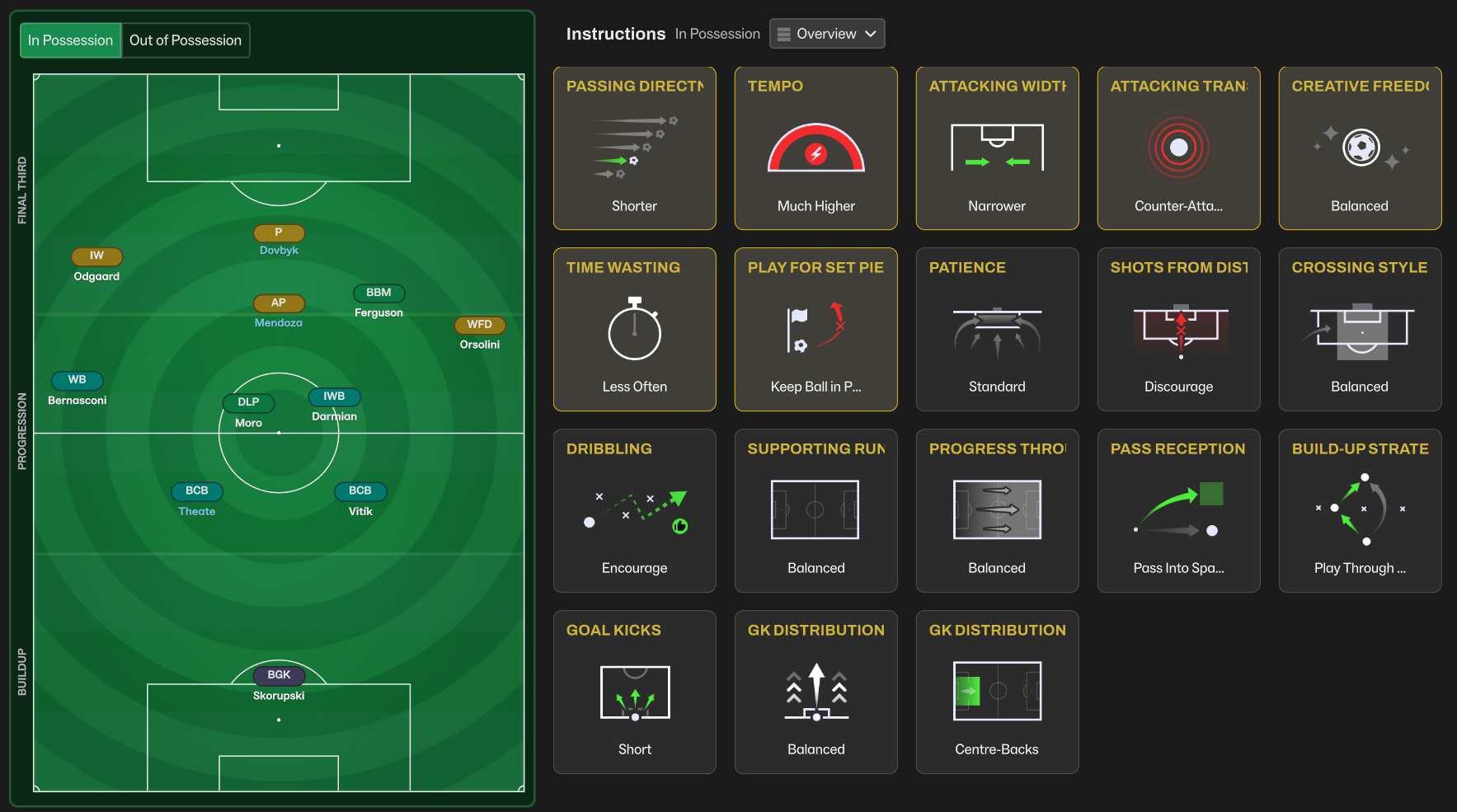
gegenpress
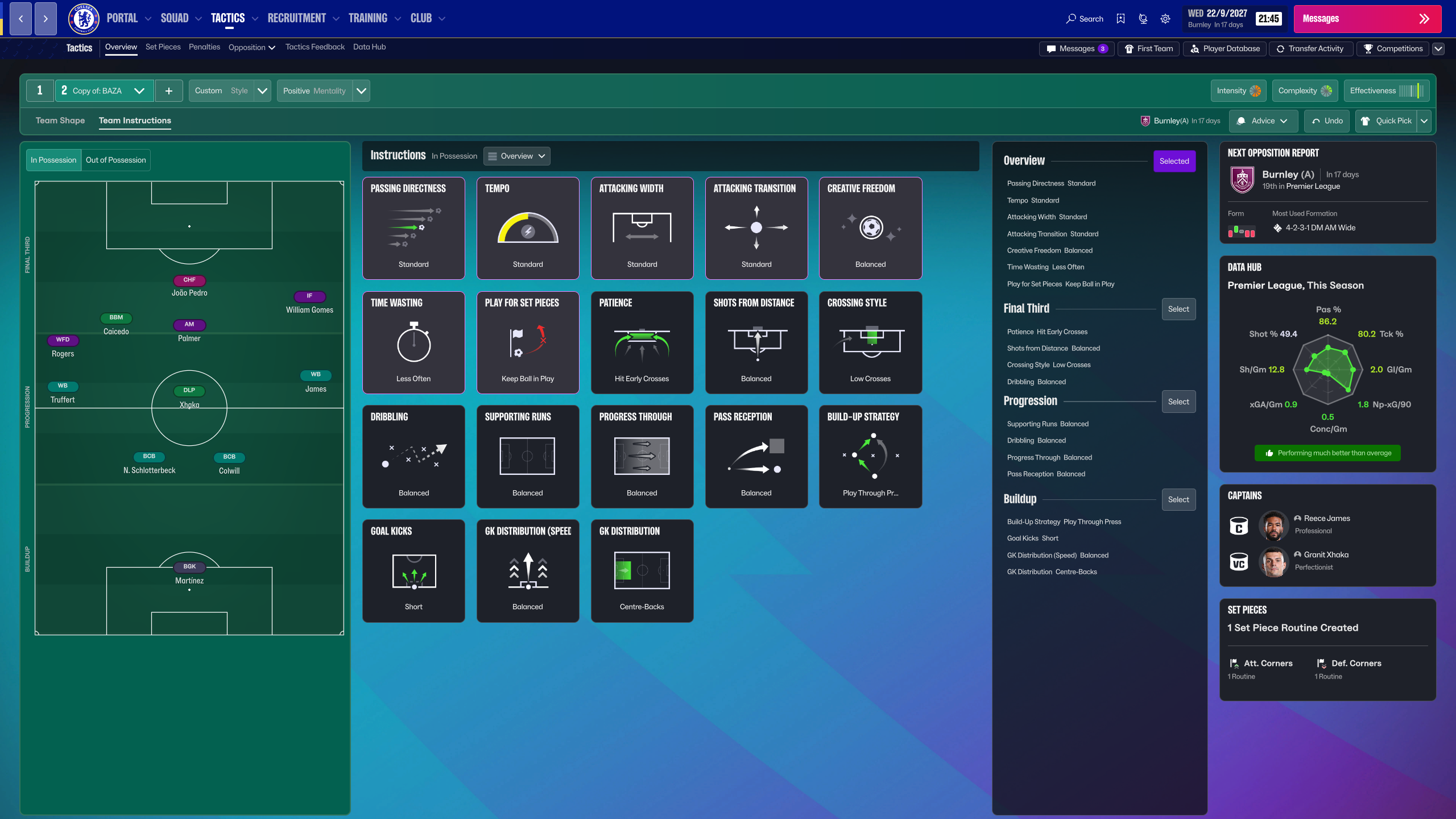
clean slate
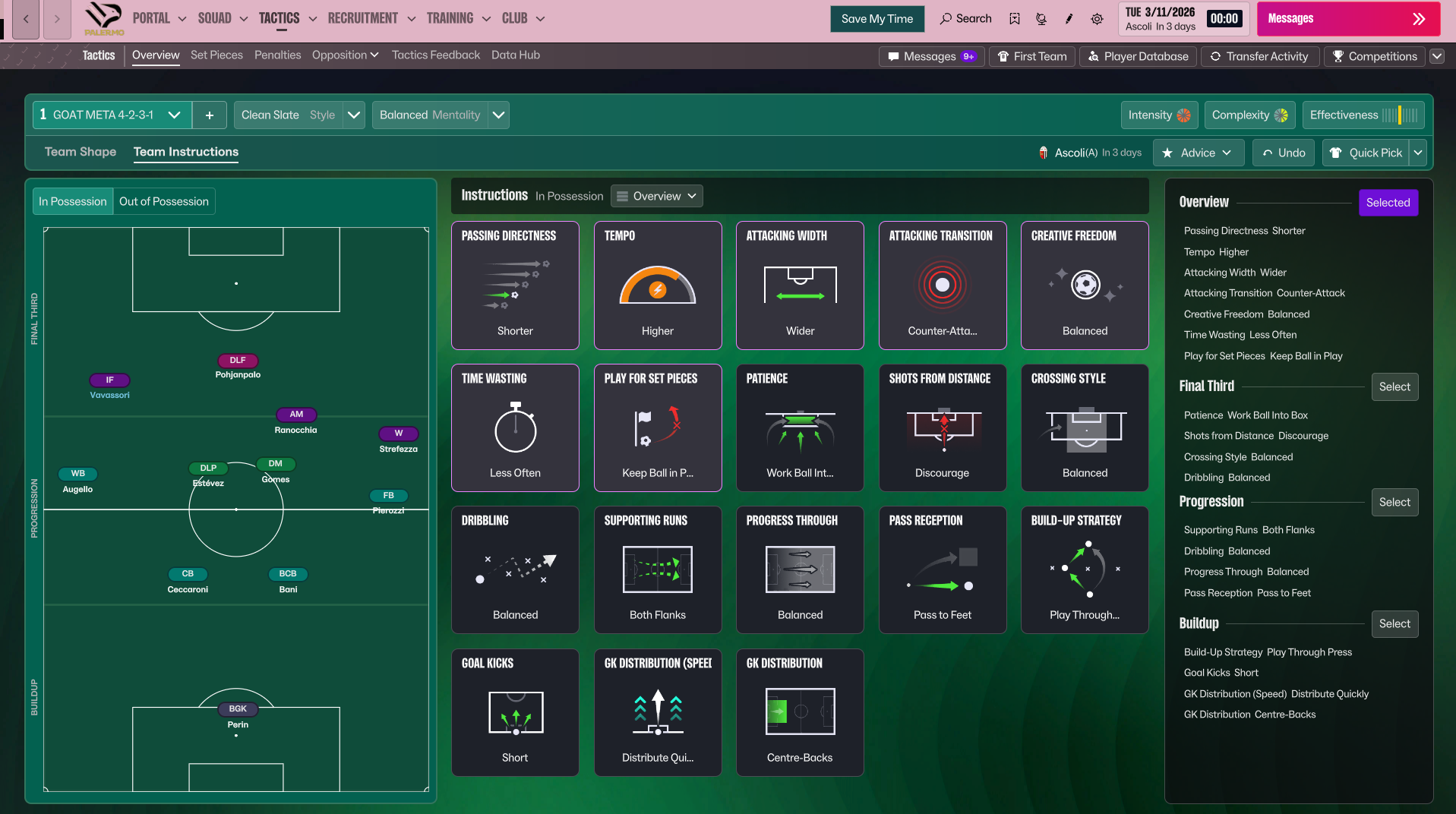
clean slate
clean slate
The tactical theory behind the 4-2-3-1 DM Wide: roles, instructions, and the trade-offs that decide whether the system holds up.
Double pivots and flat pairs in 4-2-3-1 and 4-4-2: when each pairing works, when it collapses, and the AMC unicorn that rescues both.
Klopp-style gegenpressing in FM, including squad profile, line-and-press pairing, sustainable workload, and the antipatterns to avoid.
How Mentality, Duty, and Role interact in FM, why duty trumps mentality every time, and the role-on-top-of-duty composition rules.