
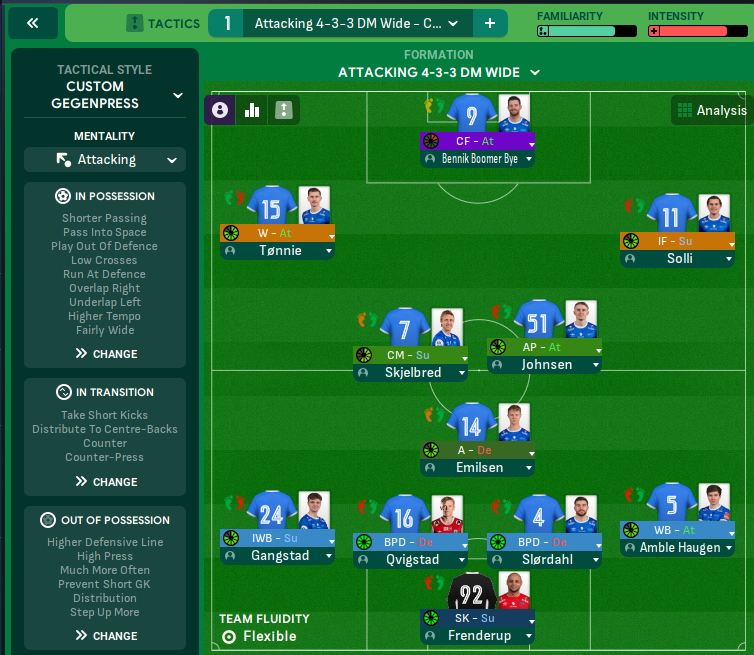
4-3-3 DM Wide
Utilizing wingers creates width, allowing for space in the middle where the advanced playmaker can operate effectively.
Loading tactical analysis...
Gegenpress
Attacking
4-3-3 DM Wide
Flexible
Shorter Passing
Pass Into Space
Play Out Of Defence
Low Crosses
Run At Defence
Higher Tempo
Fairly Wide
Take Short Kicks
Distribute To Centre-Backs
Counter
Counter-Press
Higher Defensive Line
High Press
Much More Often
Prevent Short GK Distribution
Step Up More
W
Winger
Attack
CF
Center Forward
Attack
W
Winger
Attack
CM
Central Midfielder
Support
AP
Advanced Playmaker
Attack
DM
Anchor Man
Defend
IWB
Inverted Wing Back
Support
BPD
Ball Playing Defender
Defend
BPD
Ball Playing Defender
Defend
WB
Wing Back
Attack
SK
Goalkeeper
Support
Utilizing wingers creates width, allowing for space in the middle where the advanced playmaker can operate effectively.
The gegenpressing style will put significant pressure on the opposition, aiming to win the ball back quickly after losing it.
While pushing high can be effective, it may leave the backline exposed against fast counters unless the team recovers possession quickly.
The inverted wing back may conflict with the wingers' need for space, possibly leading to congestion on the flanks.
How effective is the pressing strategy against teams that play out from the back?
Are the wingers able to retain width without interfering with the inverted wing back’s movements?
What adjustments can be made if the opposition exploits the high defensive line?
Is the advanced playmaker receiving adequate support from midfield during offensive plays?
Are the players maintaining the intended tempo consistently throughout the match?
How does the team respond defensively during transitional phases?
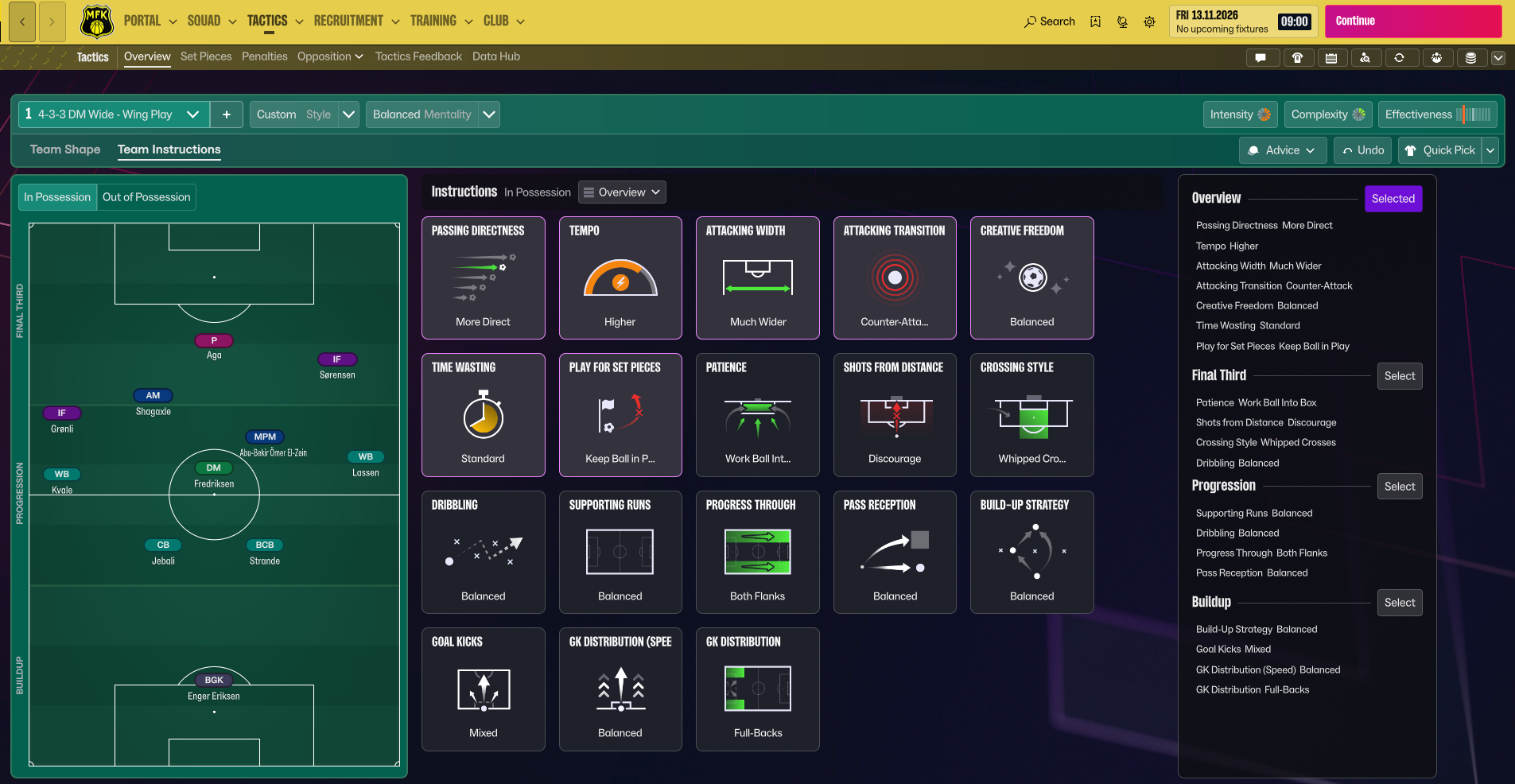
wing play
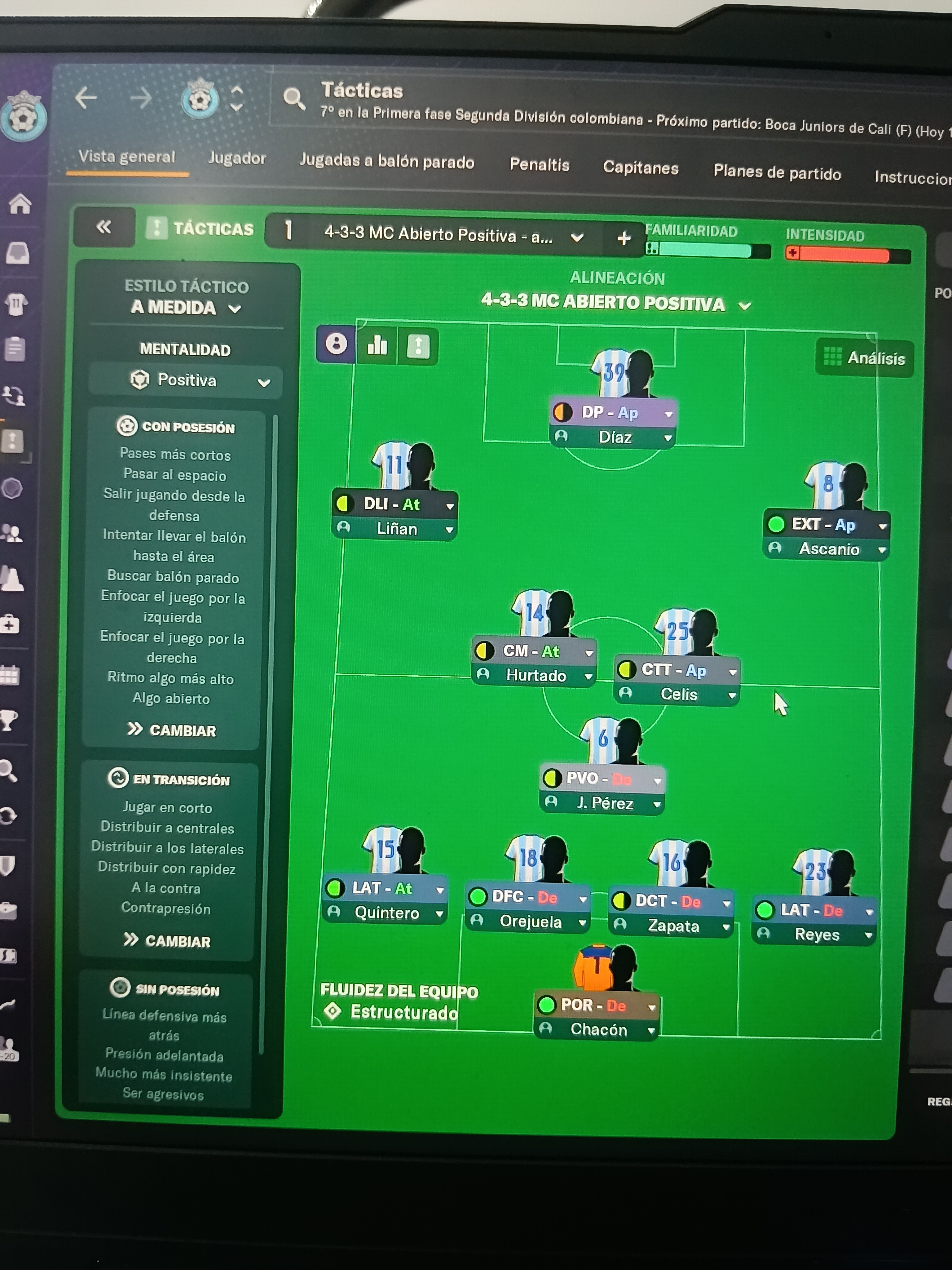
Gegenpress
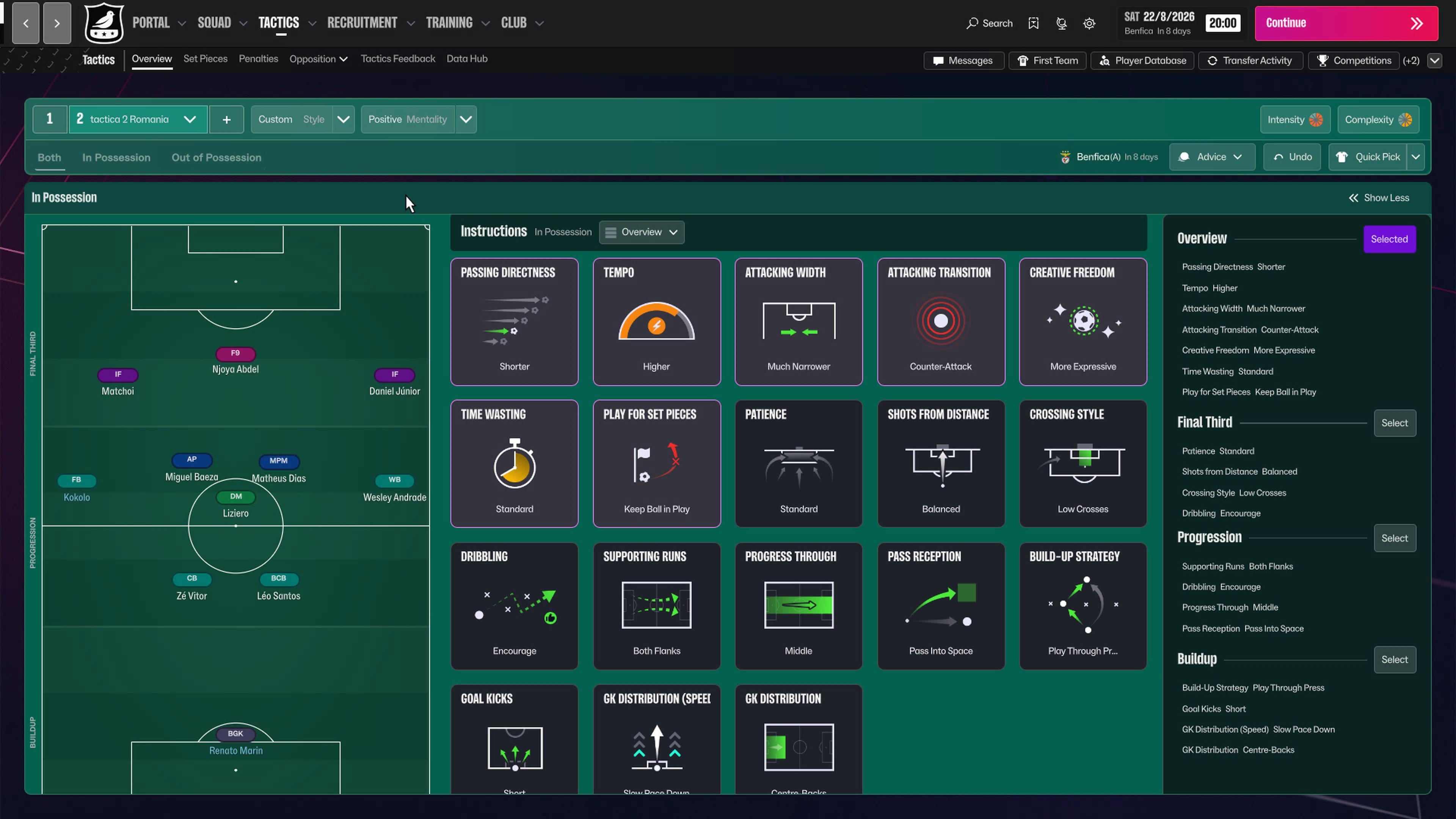
vertical tiki taka
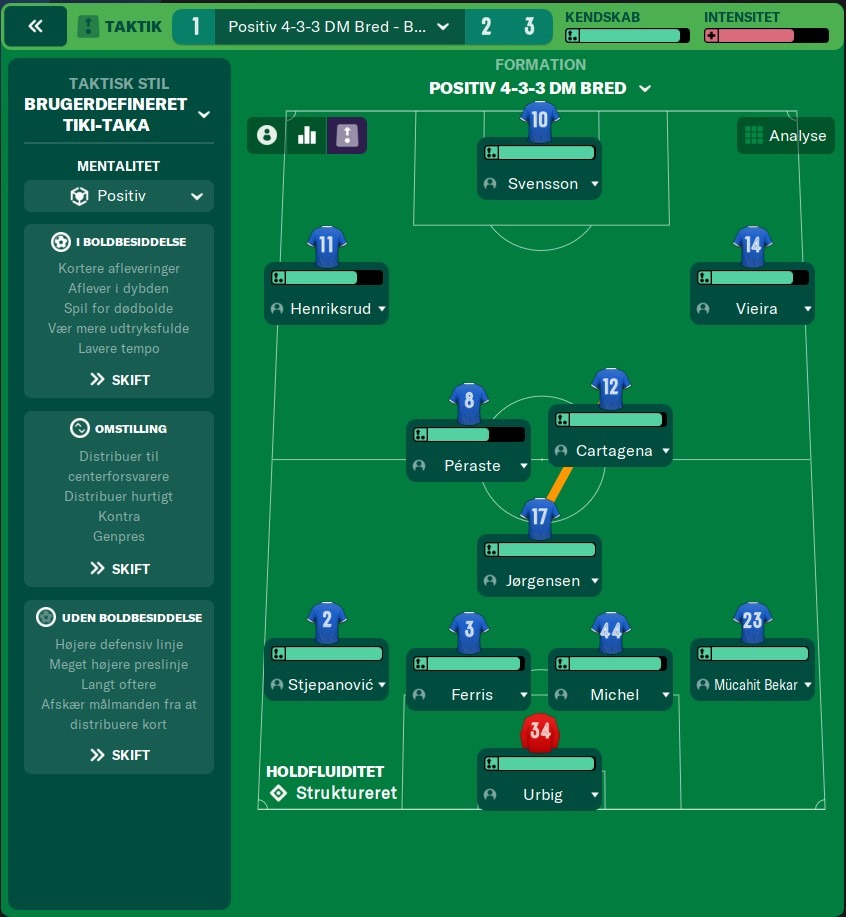
Tiki-Taka
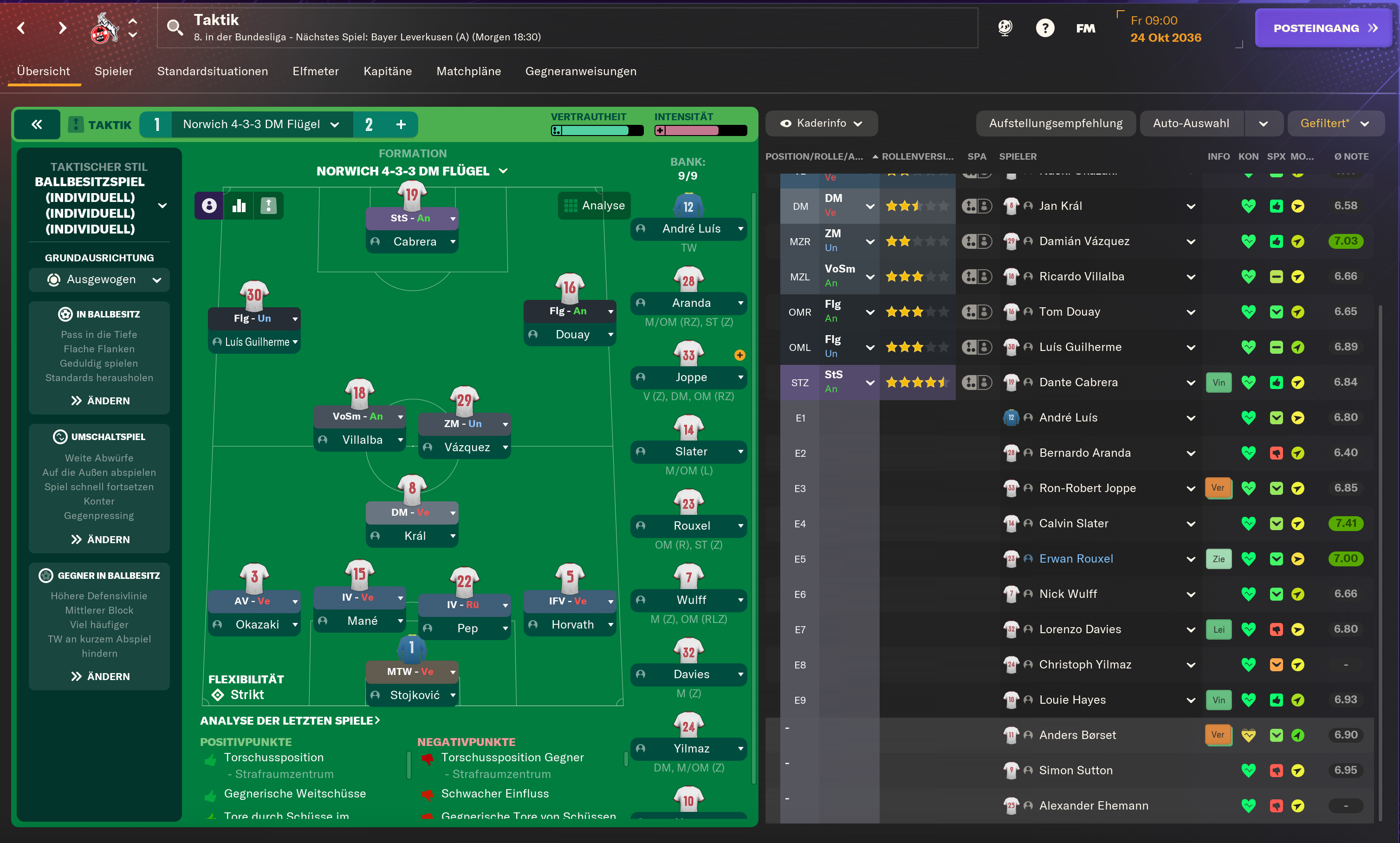
Wing Play
Vertical Tiki-Taka
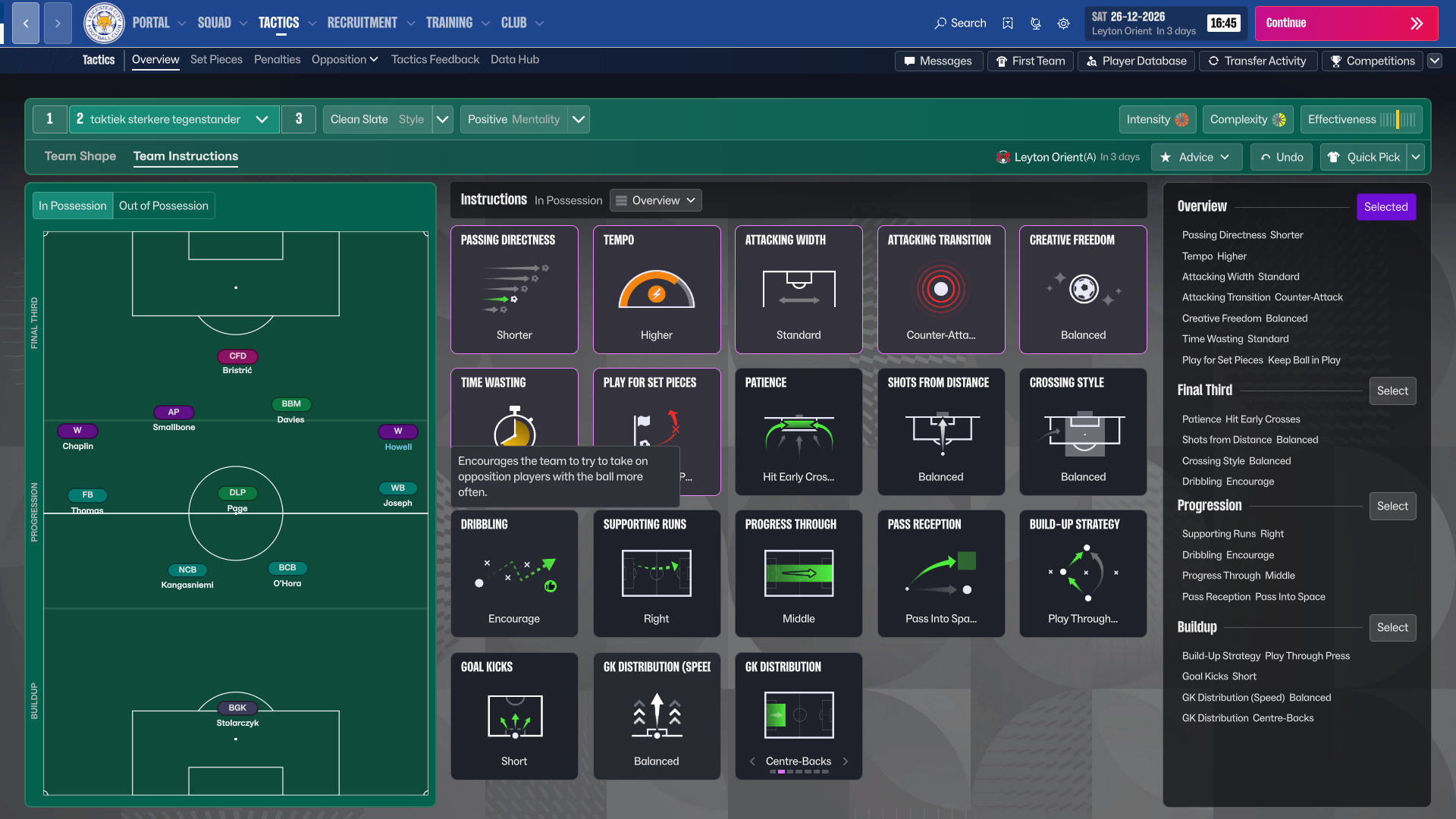
clean slate
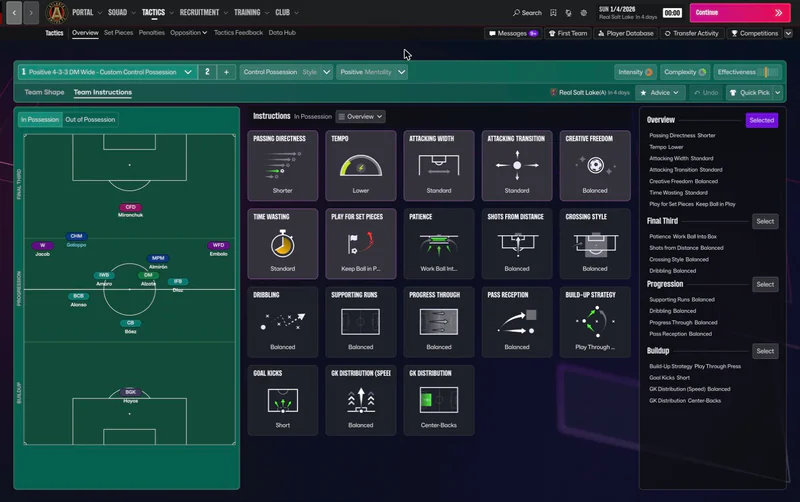
control possession
The tactical theory behind the 4-3-3 DM Wide: roles, instructions, and the trade-offs that decide whether the system holds up.
Klopp-style gegenpressing in FM, including squad profile, line-and-press pairing, sustainable workload, and the antipatterns to avoid.
Why circulation density and zonal occupation aren't the same thing in FM, and the half-space occupation rule that decides build-up.
Counter-Press, Regroup, Stand Off, Trigger Press: what each pressing instruction does in FM and how to pair them without contradicting.



