
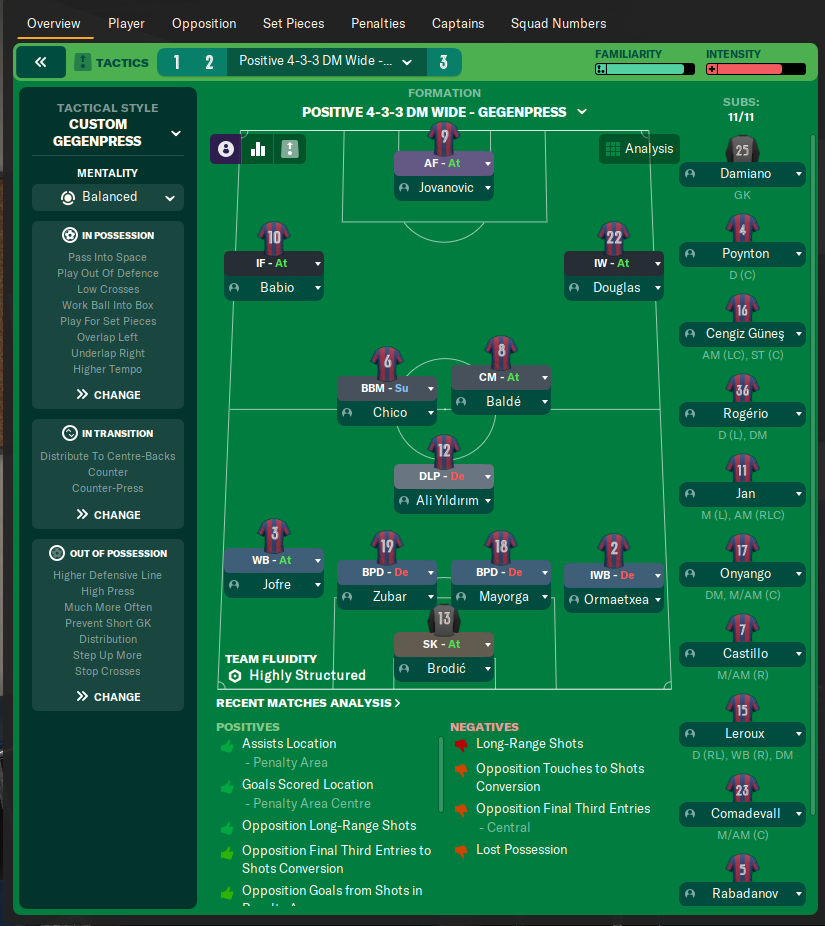
4-3-3 DM Wide
The combination of an advanced forward and inside forward allows for varied attacking runs, creating space for overlapping wingbacks.
Loading tactical analysis...
Gegenpress
Positive
4-3-3 DM Wide
Highly Structured
Pass Into Space
Play Out Of Defence
Low Crosses
Work Ball Into Box
Overlap Left
Underlap Right
Distribute To Centre-Backs
Counter
Counter-Press
Higher Defensive Line
High Press
Much More Often
Prevent Short GK Distribution
Step Up Crosses
ST
Advanced Forward
Attack
RW
Inside Forward
Attack
CM
Box-to-Box Midfielder
Support
CM
Deep-Lying Playmaker
Defend
CDM
Ball-Playing Defender
Defend
CDM
Ball-Playing Defender
Defend
LWB
Wing Back
Attack
GK
Sweeper Keeper
Attack
The combination of an advanced forward and inside forward allows for varied attacking runs, creating space for overlapping wingbacks.
The high pressing, coupled with a higher defensive line, can quickly force opponents into mistakes.
The deep-lying playmaker's more conservative style may limit the effectiveness of the counter-press if not integrated properly.
If the central defenders are not quick enough, the high line may leave the team exposed to counter-attacks.
How effective is the current high press against stronger opposition?
Are the wingbacks providing enough width and support in attacks?
Is the deep-lying playmaker connecting well with the attacking players?
How often do the players lose possession during transitions?
Are the advanced forward and inside forward effectively linking up?
Do the midfielders maintain shape during the counter-press actions?
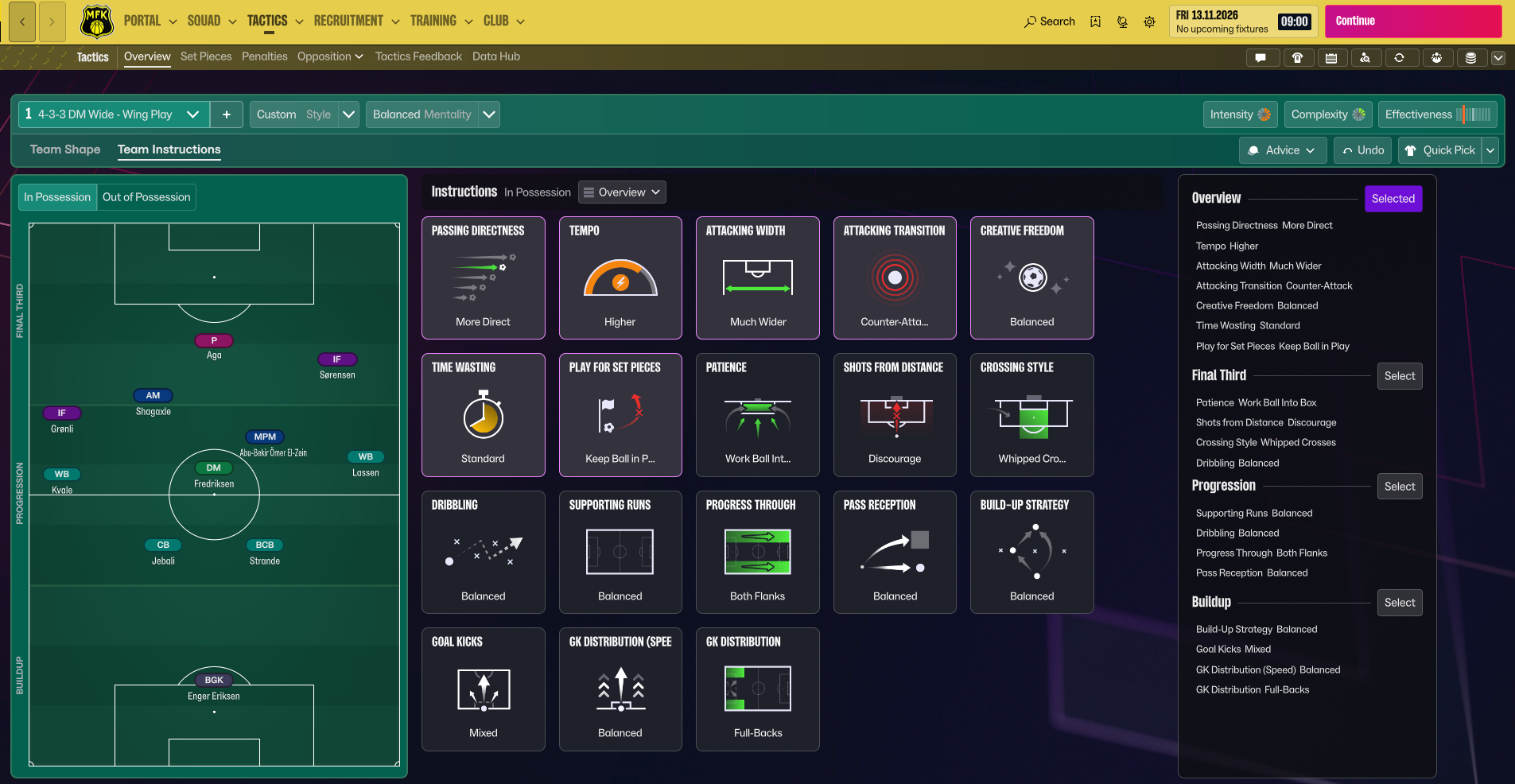
wing play
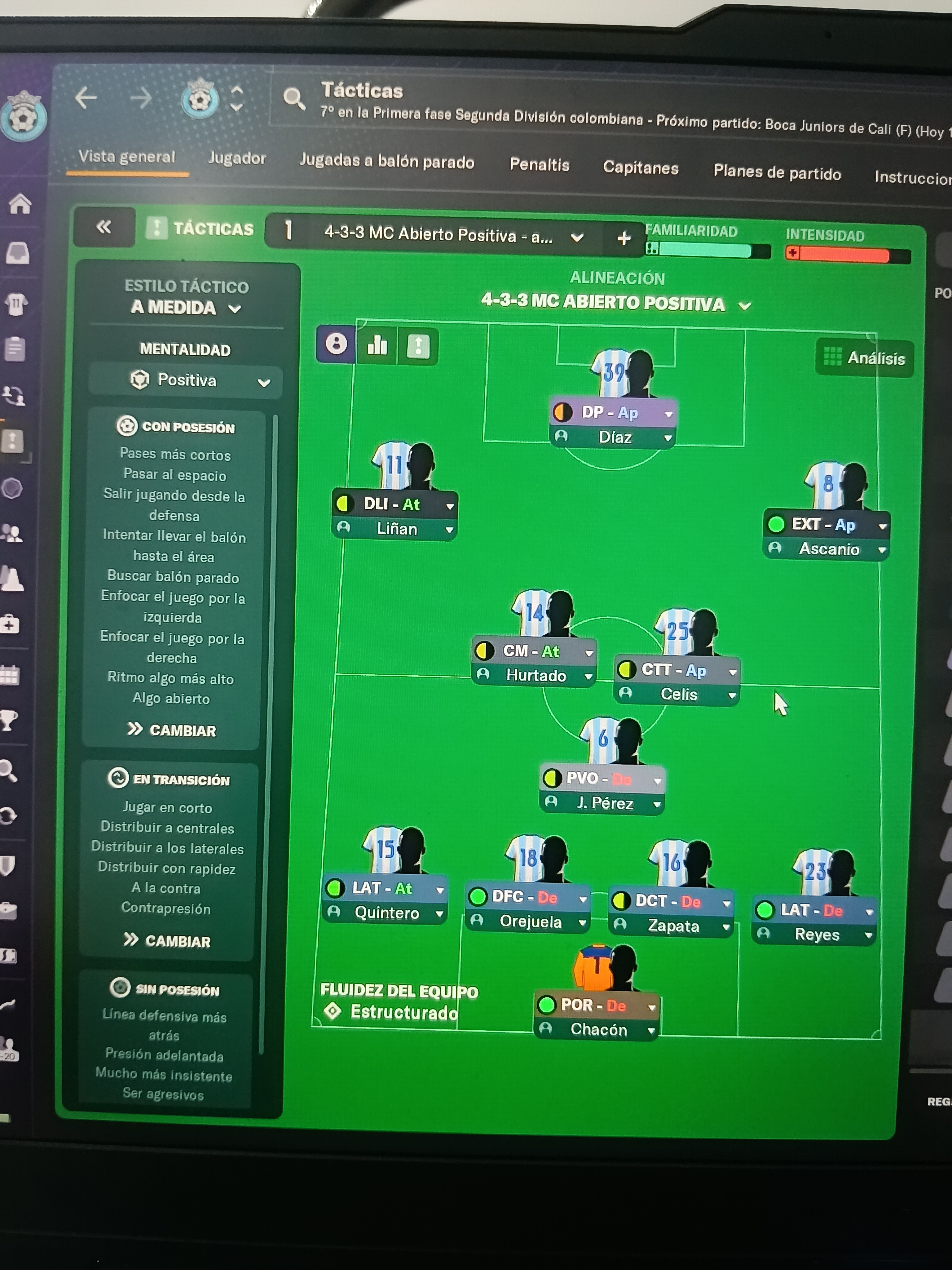
Gegenpress
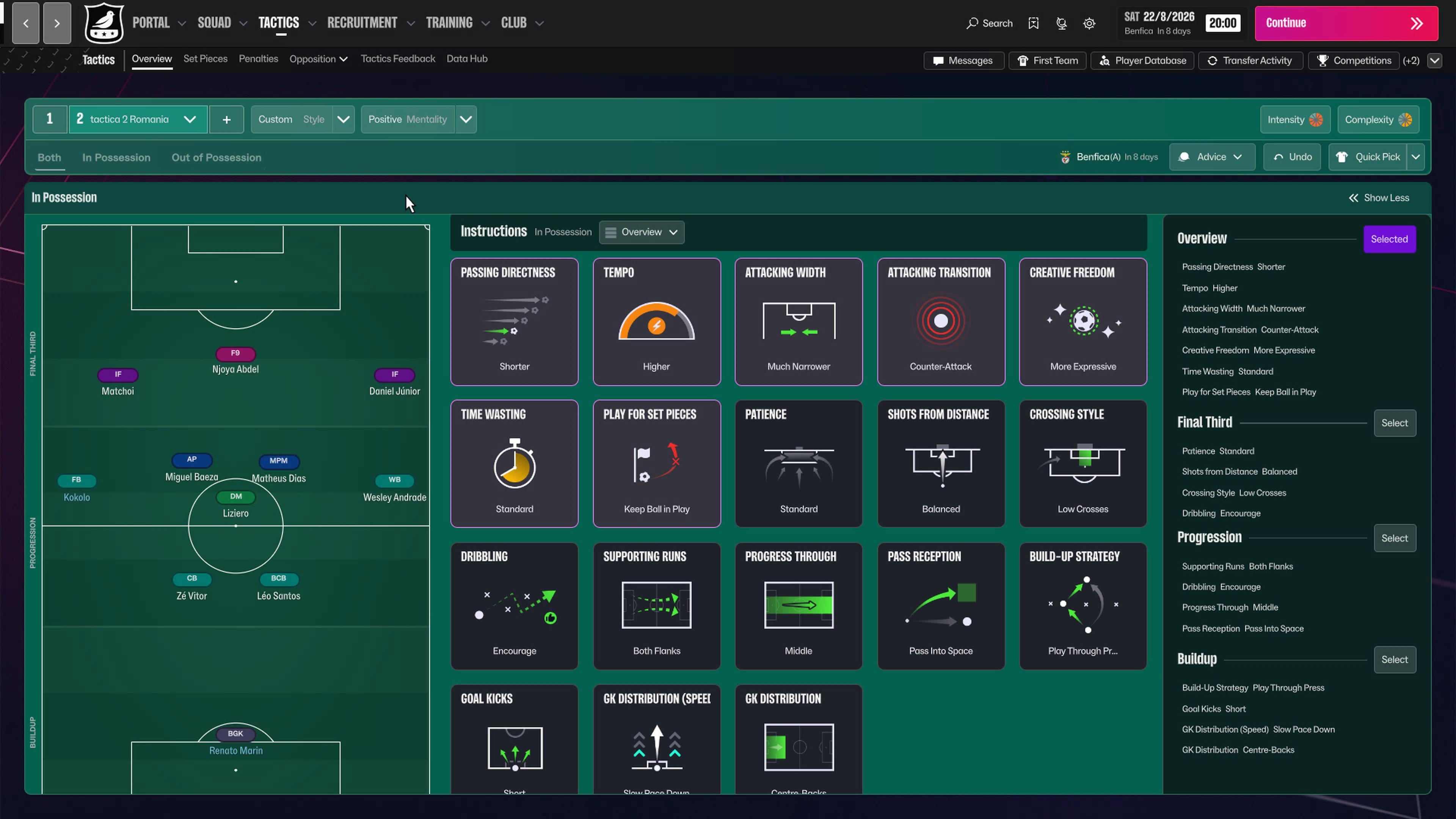
vertical tiki taka
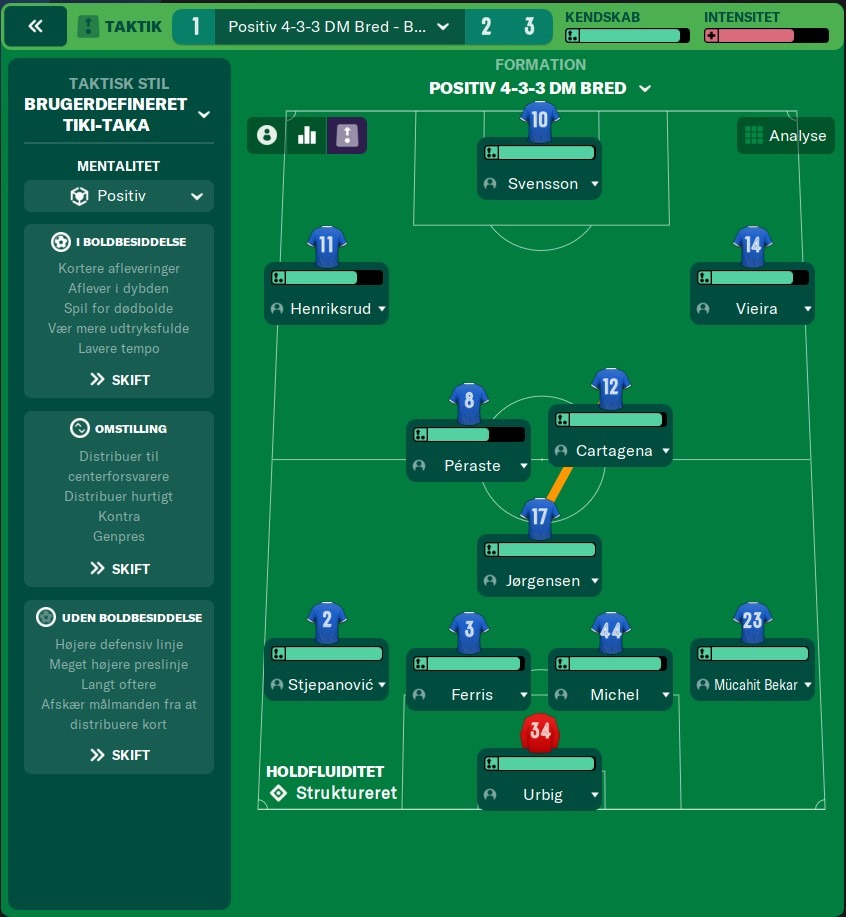
Tiki-Taka
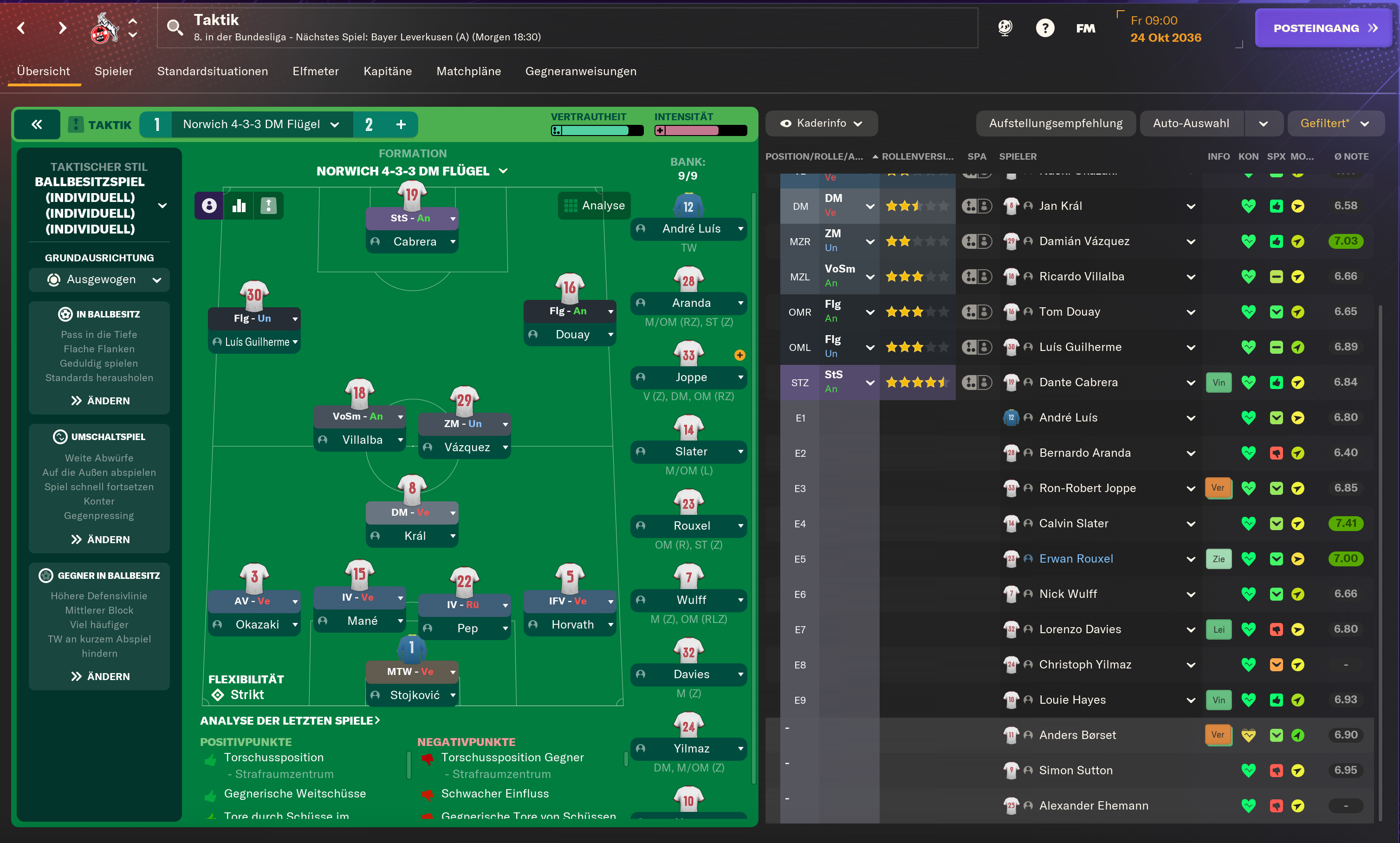
Wing Play
Vertical Tiki-Taka
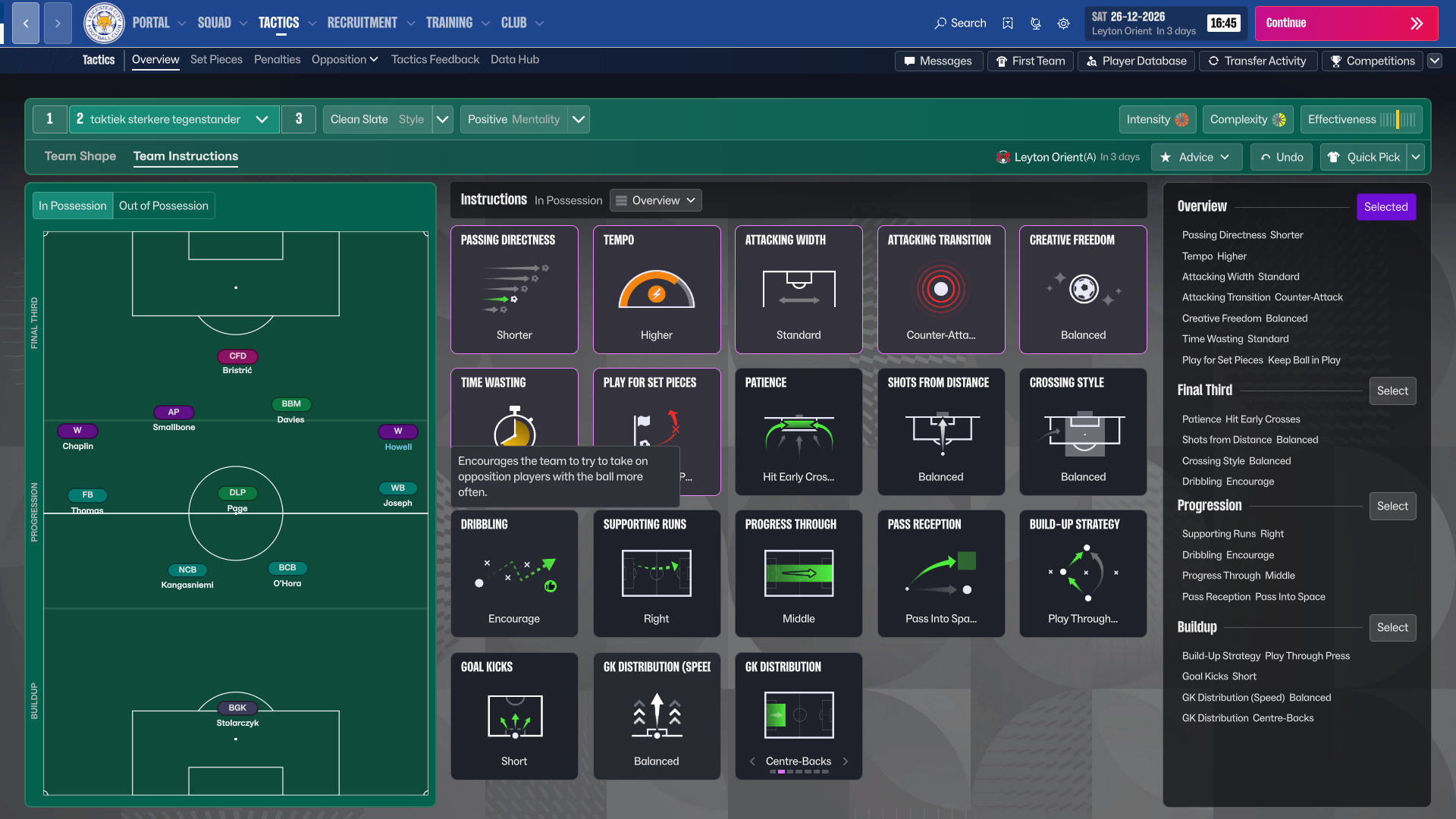
clean slate
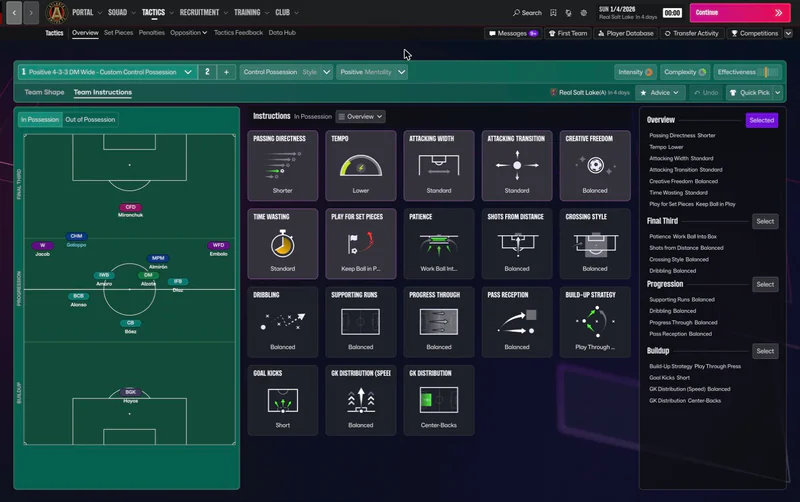
control possession
The tactical theory behind the 4-3-3 DM Wide: roles, instructions, and the trade-offs that decide whether the system holds up.
Master the classic 4-3-3: player roles, tactical variations, and the trade-offs that decide whether it sings or stalls.
Holder, runner, creator: the role distribution rule for three-man midfields, the AMC variants, and the antipatterns that break them.
How Mentality, Duty, and Role interact in FM, why duty trumps mentality every time, and the role-on-top-of-duty composition rules.



