Uploaded Tactic
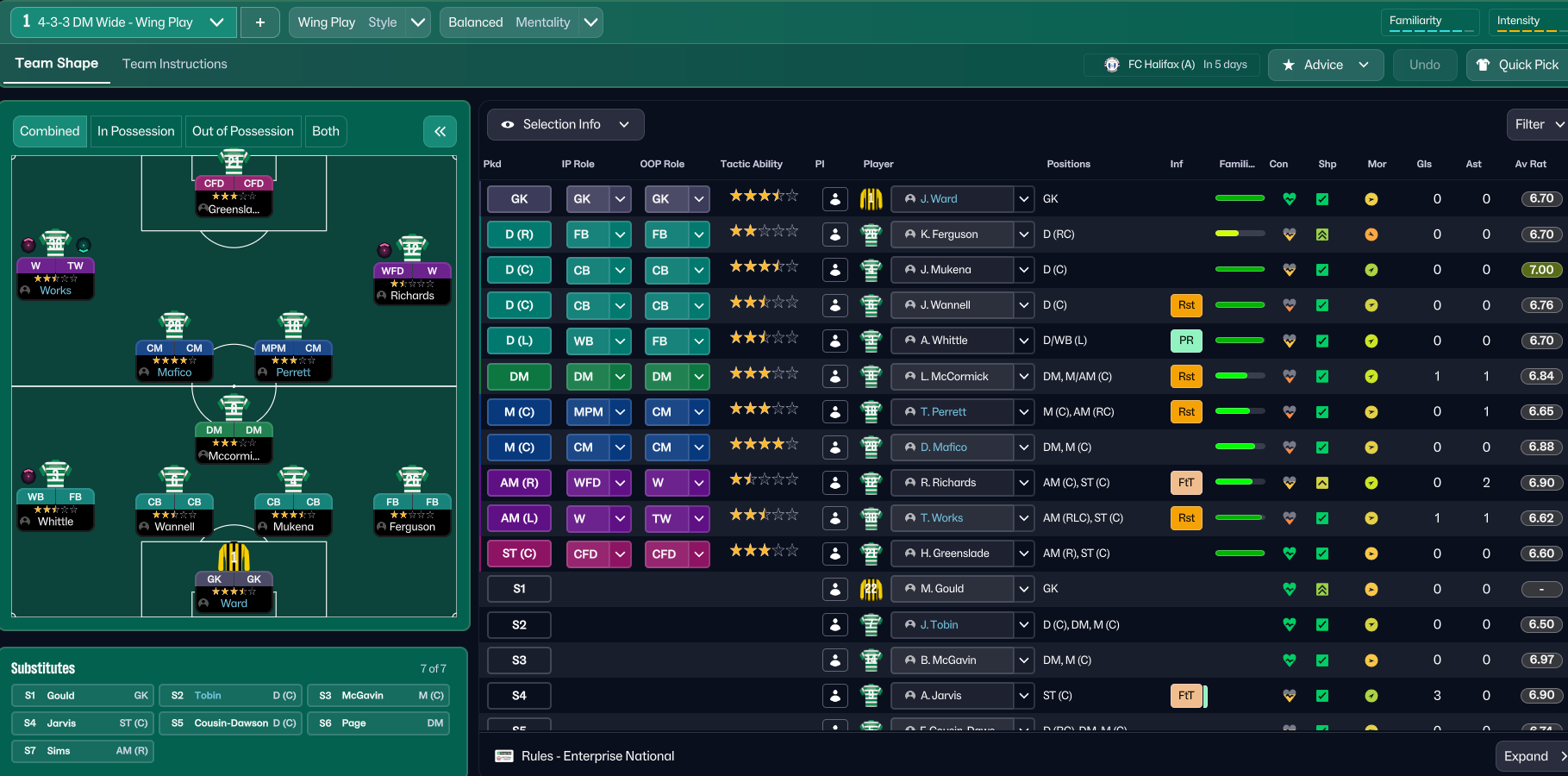
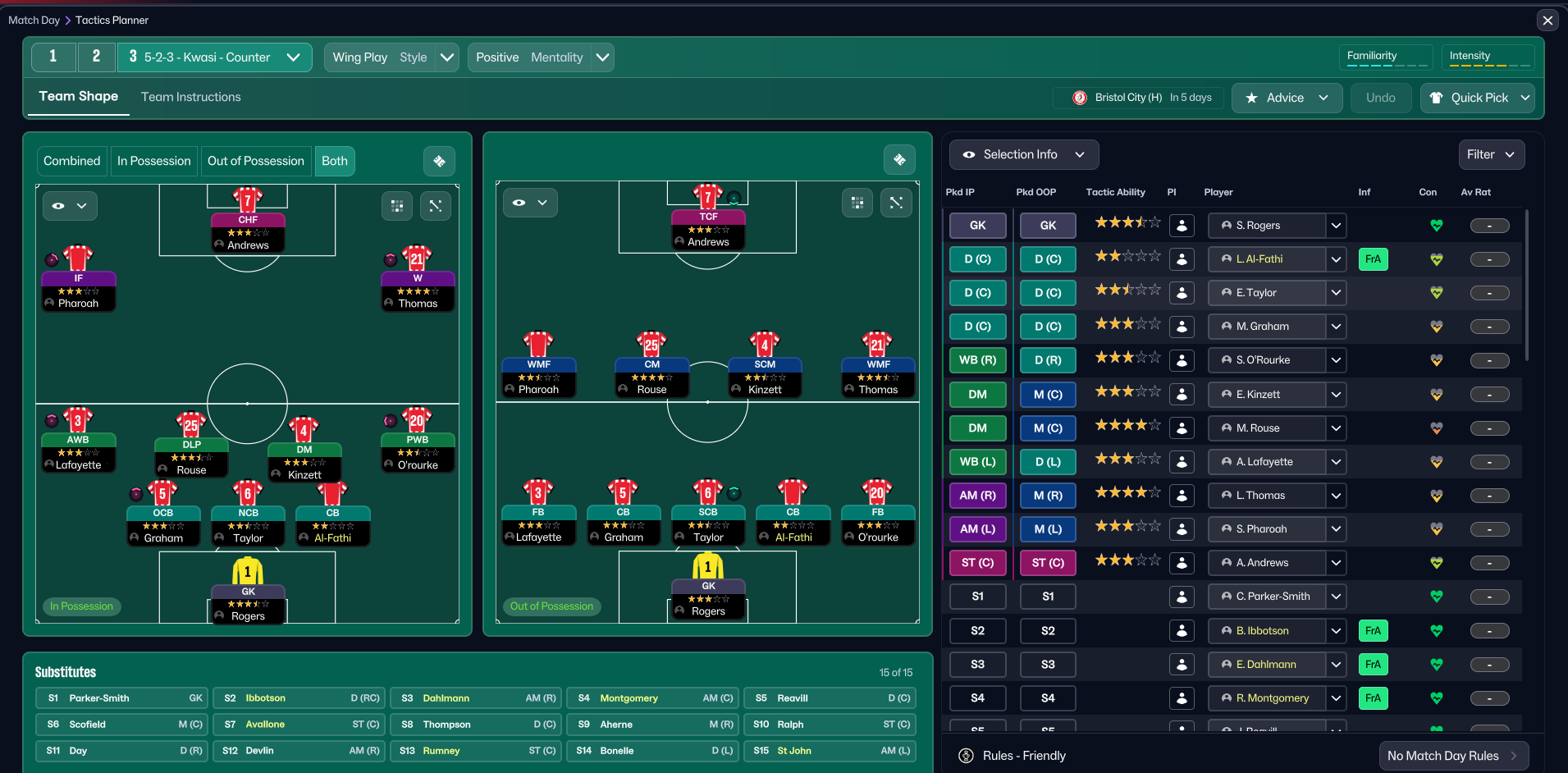
Formation & Style
Tactical Style:Wing Play
Mentality:Balanced
Formation:4-3-3 DM Wide
Team Fluidity:Structured
In Possession
Play Out of Defence
Work Ball into Box
Focus Play Down the Wings
In Transition
Counter
Counter-Press
Out of Possession
Higher Defensive Line
Higher Line of Engagement
Prevent Short GK Distribution
Team Shape Without Ball
Shape:Compact
Description:The team maintains a compact shape while defending, making it difficult for opponents to penetrate through the center.
Evidence:Higher Defensive Line and Higher Line of Engagement suggests an aggressive defensive posture, closing down the opposition quickly.
Team Shape With Ball
Shape:Expansive
Description:The team spreads wide to stretch the opposition, allowing more space for attacking plays through the center.
Evidence:Focus Play Down the Wings indicates a strategy aimed at exploiting wide areas for crosses and cutting inside.
Phase Description
Attacking Play
The team aims to exploit width using wingers and overlapping full-backs while maintaining possession through quick short passes.
Defensive Transition
Emphasizes rapid reshaping to maintain defensive discipline, utilizing counter-pressing to recover possession quickly.
Main Focus
Utilizing wing play to create goal-scoring opportunities, leveraging speed and crossing ability.
Key Strengths
Wide Play Exploitation
The tactic effectively utilizes the wingers and overlapping full-backs to create width, making it challenging for defenses to contain runs behind them.
Solid Midfield Control
The midfield structure supports both offensive and defensive transitions, allowing for quick ball recovery and playmaking capabilities.
Counter-Press Capability
The team is equipped to quickly regain possession when losing the ball, which can destabilize the opponent’s build-up.
Conflicting Directions
Vulnerability to Counter-Attacks
The higher defensive line increases the risk of being caught out of position during fast-breaks.
Overcommitment on Wings
Heavy reliance on wingers and full-backs may leave the central attacking options underutilized.
Dependence on Individual Brilliance
The success of wing play relies significantly on the individual talents of wingers, which could be inconsistent.
Tactical Suggestions
Increase Central Support Play
Encourage midfielders to make more forward runs to provide options in the central area to balance wing dependency.
Adjust Defensive Line
Consider dropping to a lower defensive line to minimize risks from fast counter-attacks.
Utilize More Player Instructions
Employ specific player instructions for full-backs to avoid leaving central defenders exposed.
Ask Questions About Your Lineup
Related Tactics
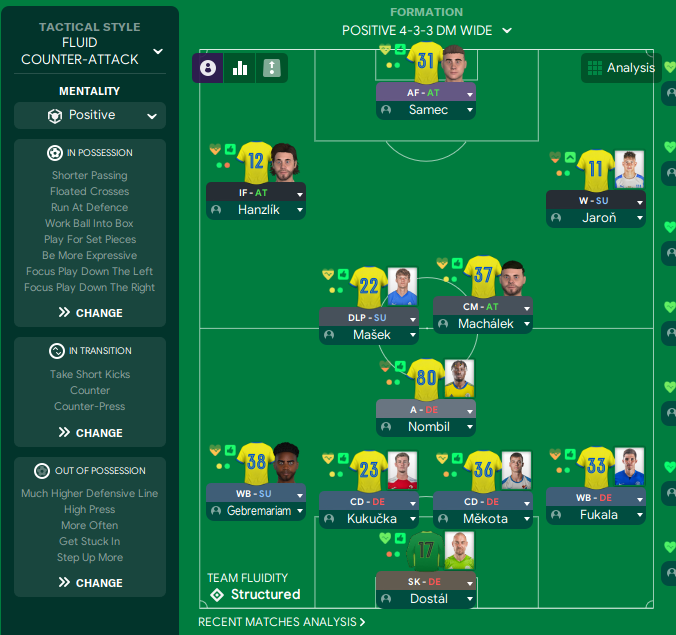
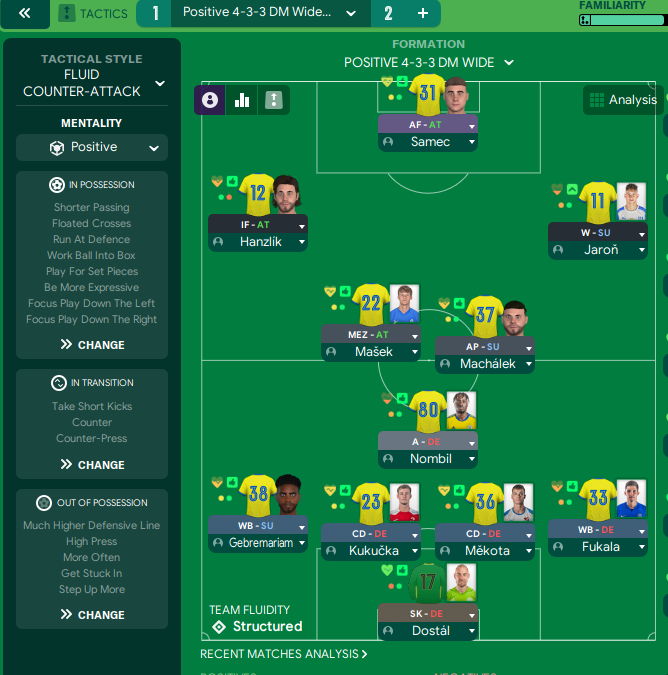
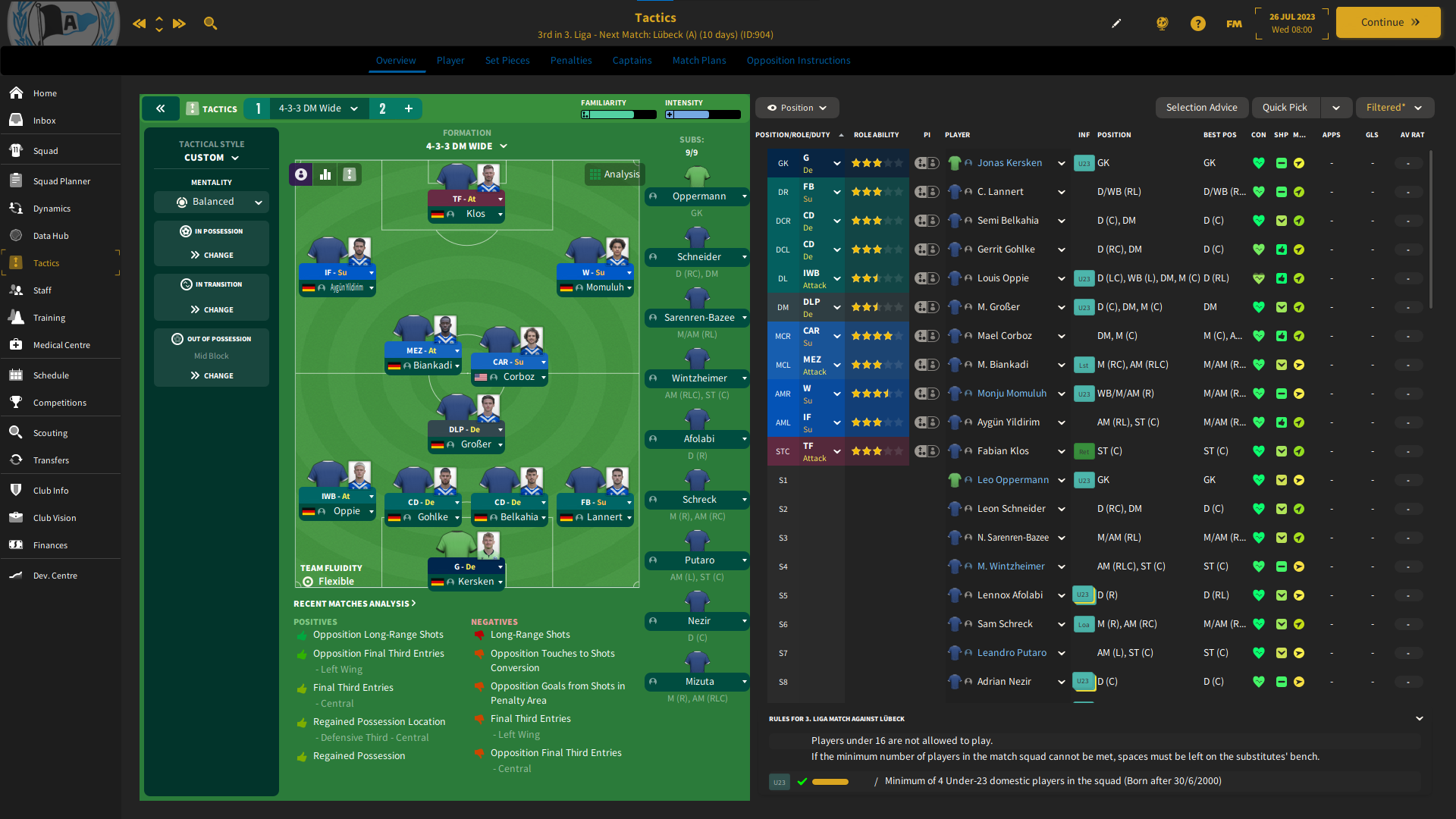
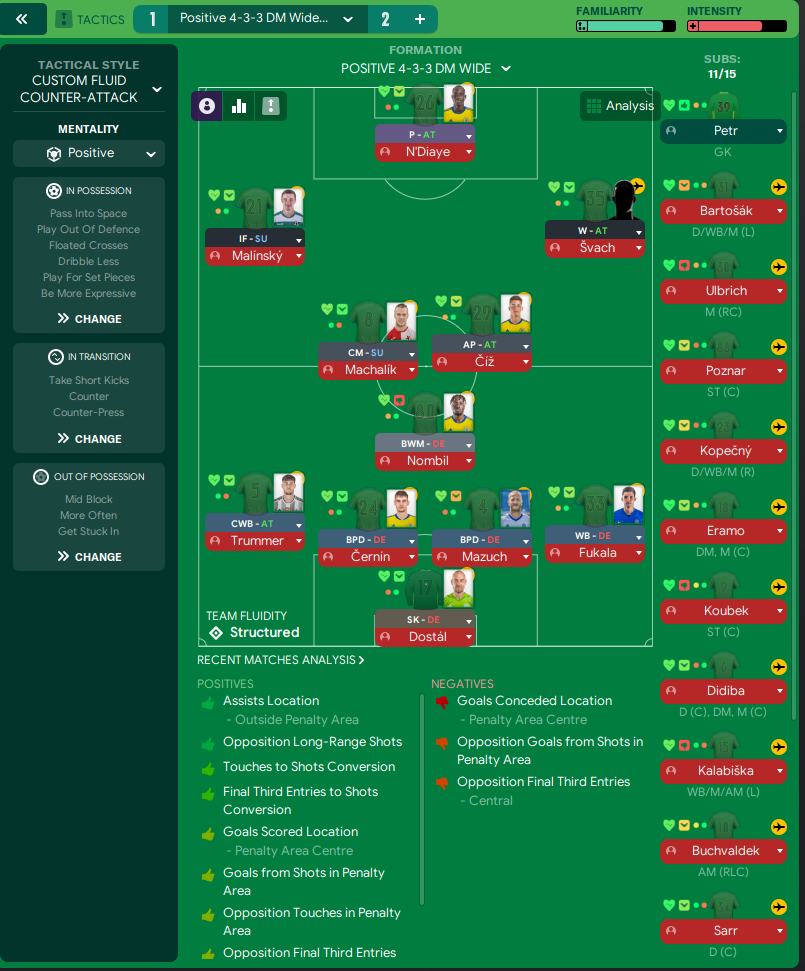
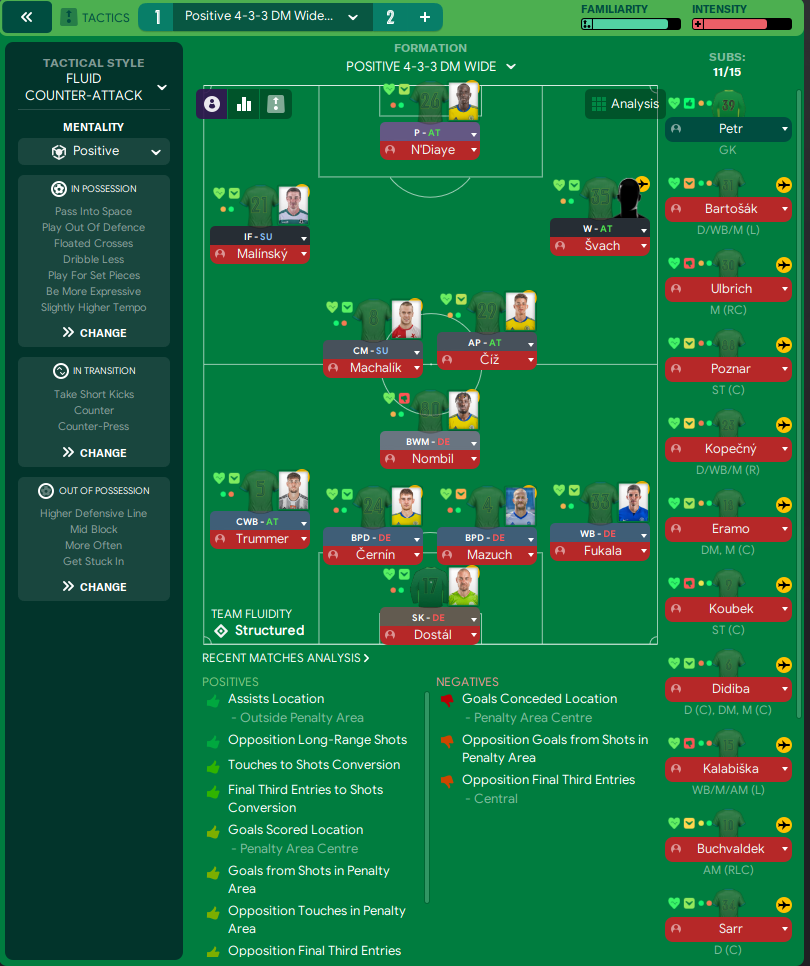
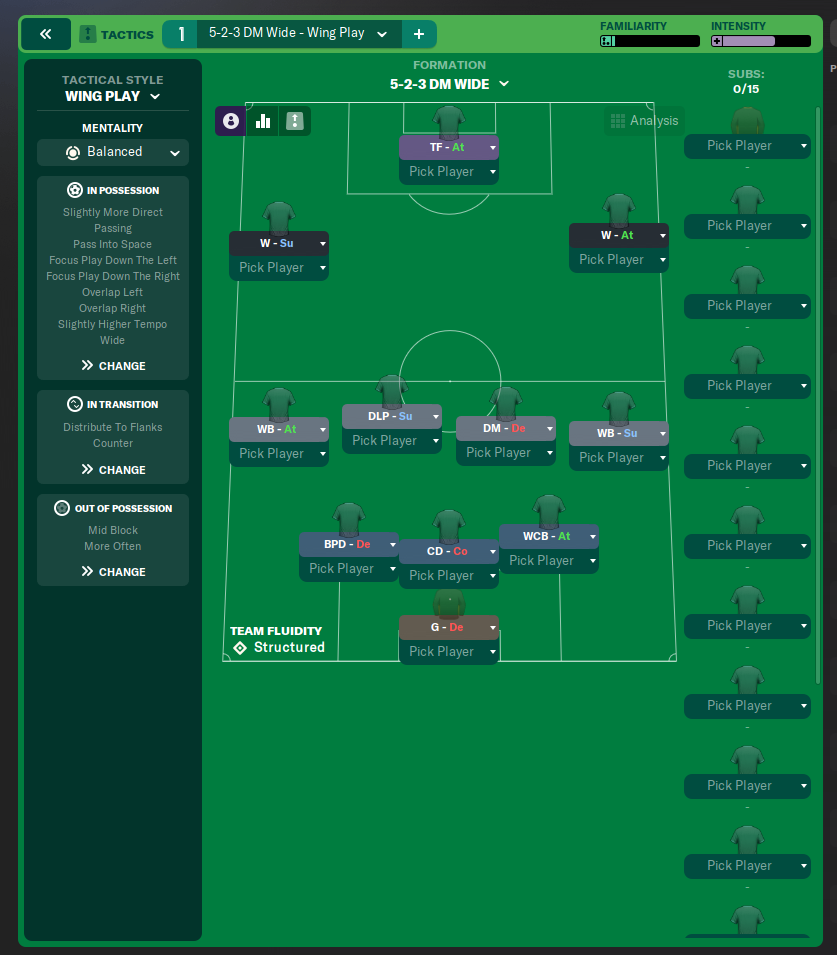
More Wing Play tactics
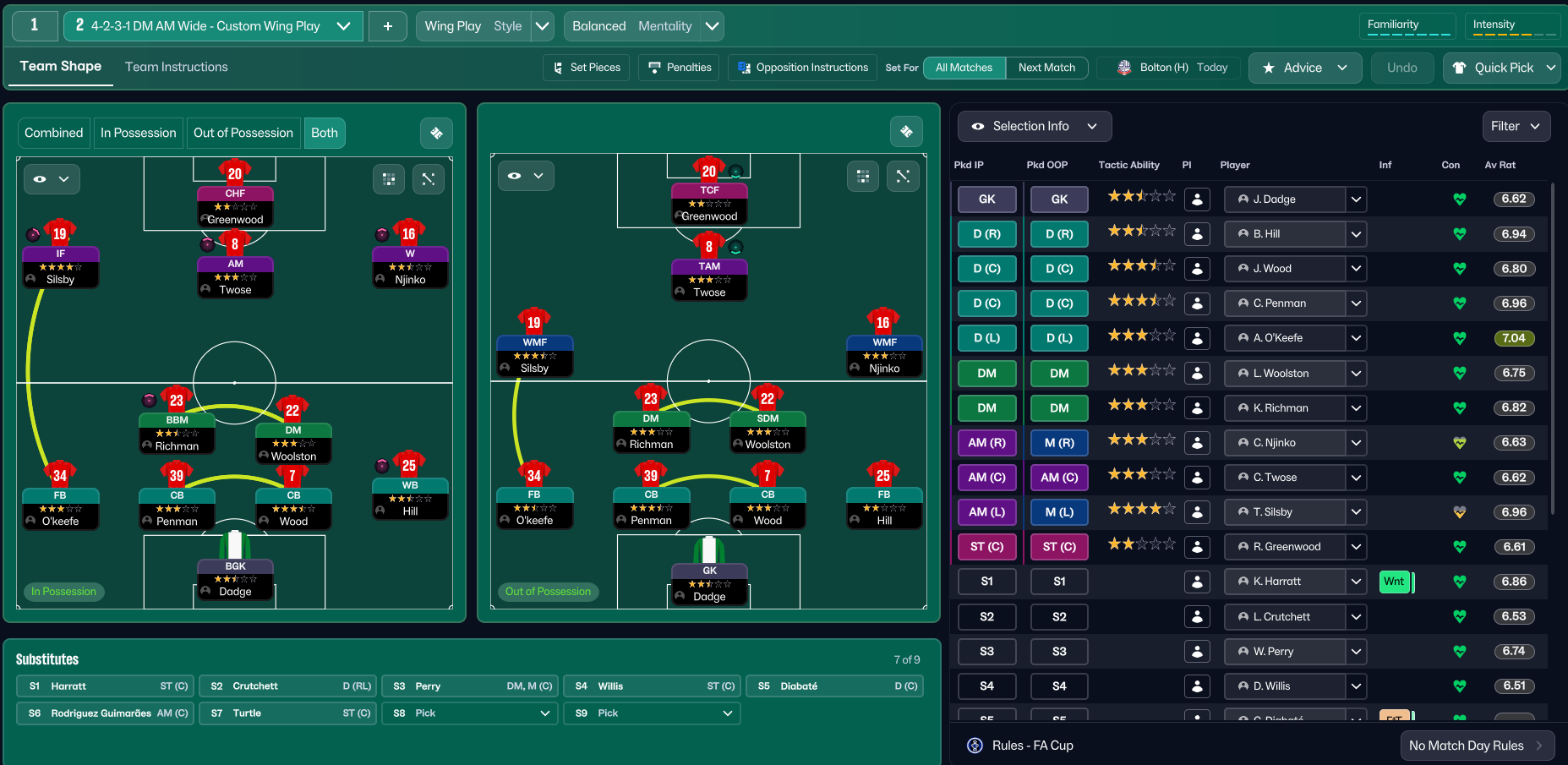
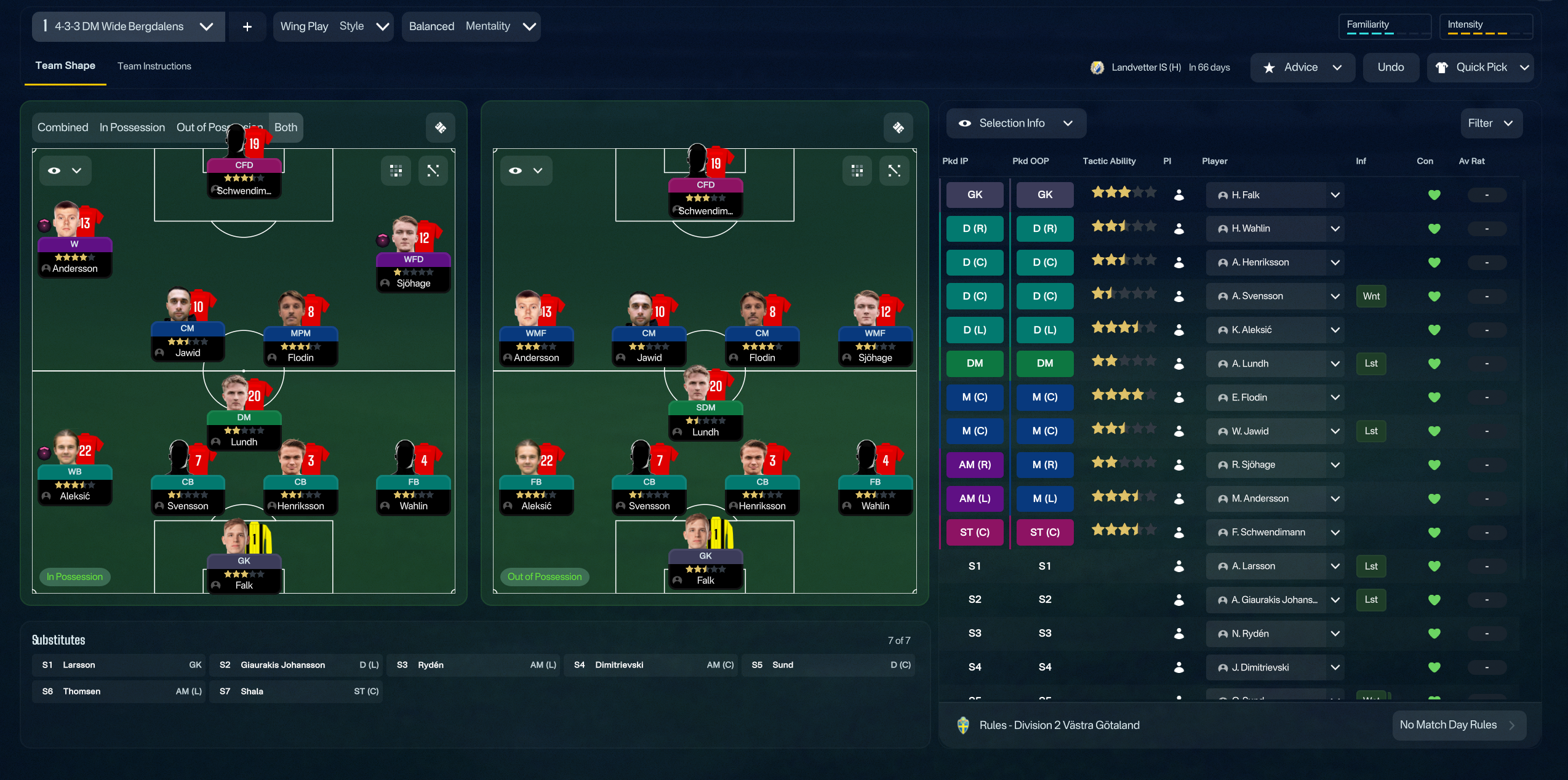
Guides for this formation
The tactical theory behind the 4-3-3 DM Wide: roles, instructions, and the trade-offs that decide whether the system holds up.
Foundations
Understanding the 4-3-3 Formation
Master the classic 4-3-3: player roles, tactical variations, and the trade-offs that decide whether it sings or stalls.
Read guide
Player pairings
Midfield Trios
Holder, runner, creator: the role distribution rule for three-man midfields, the AMC variants, and the antipatterns that break them.
Read guide
Playing styles
Gegenpressing: A Full Guide
Klopp-style gegenpressing in FM, including squad profile, line-and-press pairing, sustainable workload, and the antipatterns to avoid.
Read guide