
4-3-3 DM Wide
Utilizes intense pressing to win back possession quickly, allowing for fast breaks.
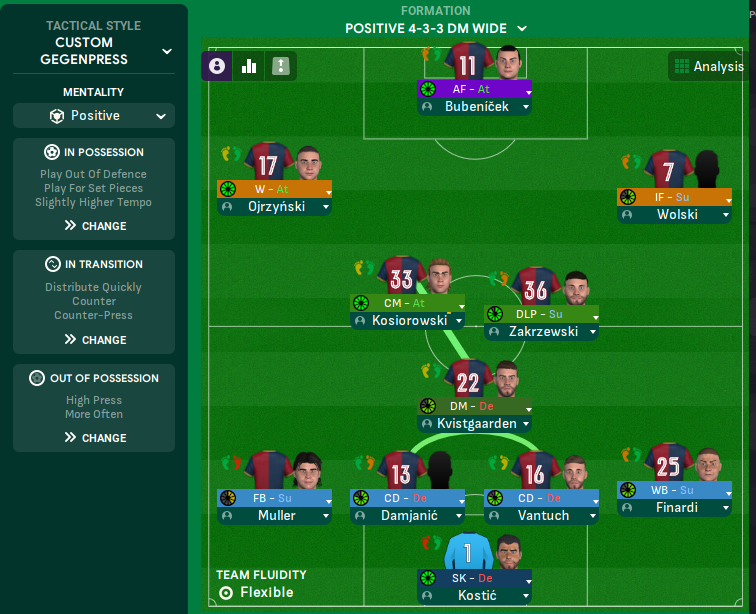
Loading tactical analysis...
Gegenpress
Positive
4-3-3 DM Wide
Flexible
Play Out Of Defence
Play For Set Pieces
Slightly Higher Tempo
Distribute Quickly
Counter
Counter-Press
High Press
ST
Advanced Forward
Attack
W
Winger
Attack
IF
Inside Forward
Support
CM
Central Midfielder
Attack
DLP
Deep-Lying Playmaker
Support
DM
Defensive Midfielder
Defend
FB
Full Back
Support
CD
Central Defender
Defend
WB
Wing Back
Support
SK
Sweeper Keeper
Defend
Utilizes intense pressing to win back possession quickly, allowing for fast breaks.
Combination play involving wingers and an advanced forward can create numerous scoring opportunities.
A high defensive line may leave the team vulnerable to fast counter-attacks if pressing fails.
Some players may struggle to balance their contributions in attack while maintaining defensive responsibilities.
How effective is the current pressing scheme against teams with strong counter-attacks?
Are the wingers consistently providing width, or do they often drift inside?
Is the midfield generating enough chances, or do we need more creativity?
How are the full backs performing defensively when caught out of position?
Are players executing their roles as intended, or is there confusion in their assignments?
What adjustments can be made to minimize the impact of lapses in pressing?
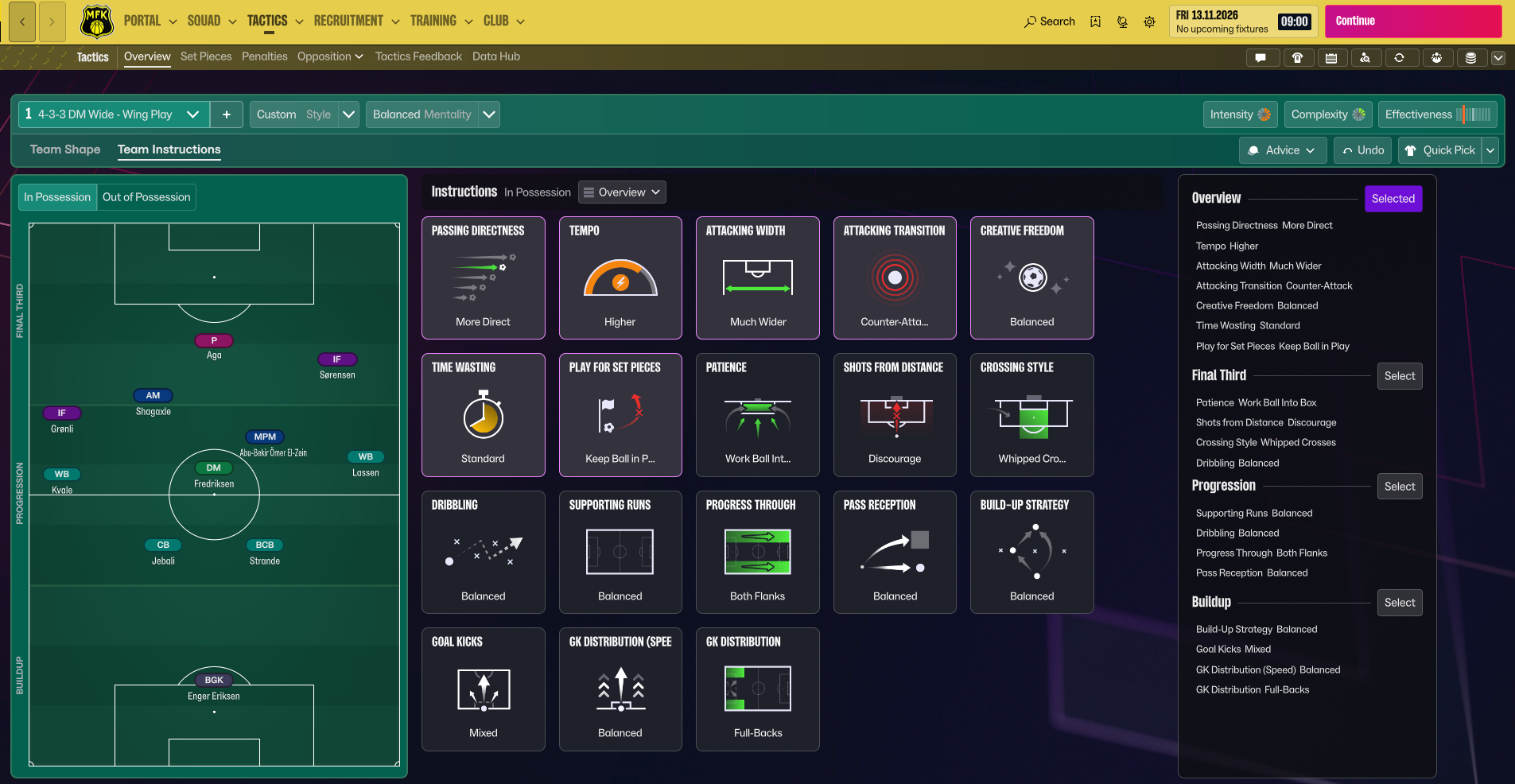
wing play
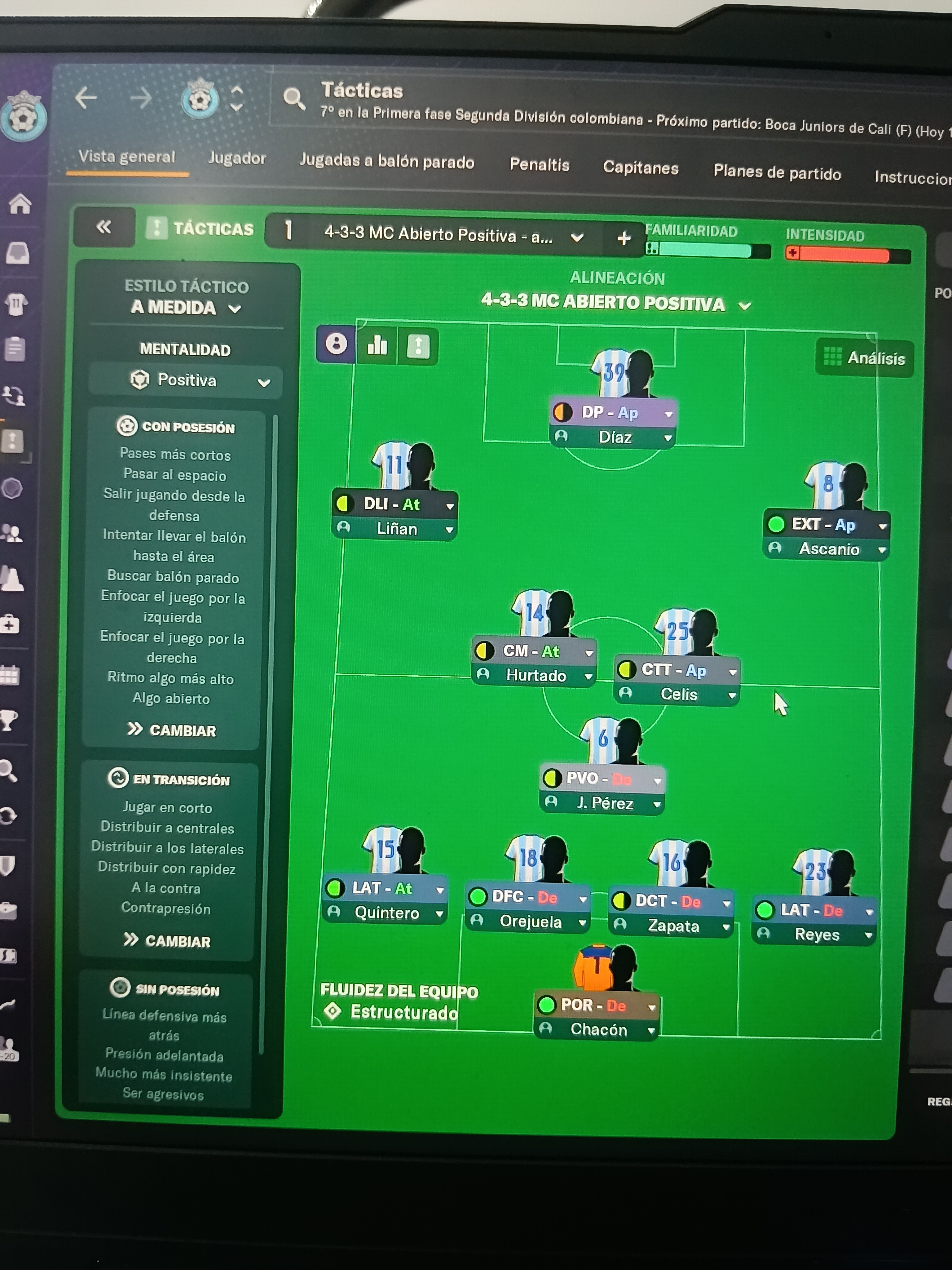
Gegenpress
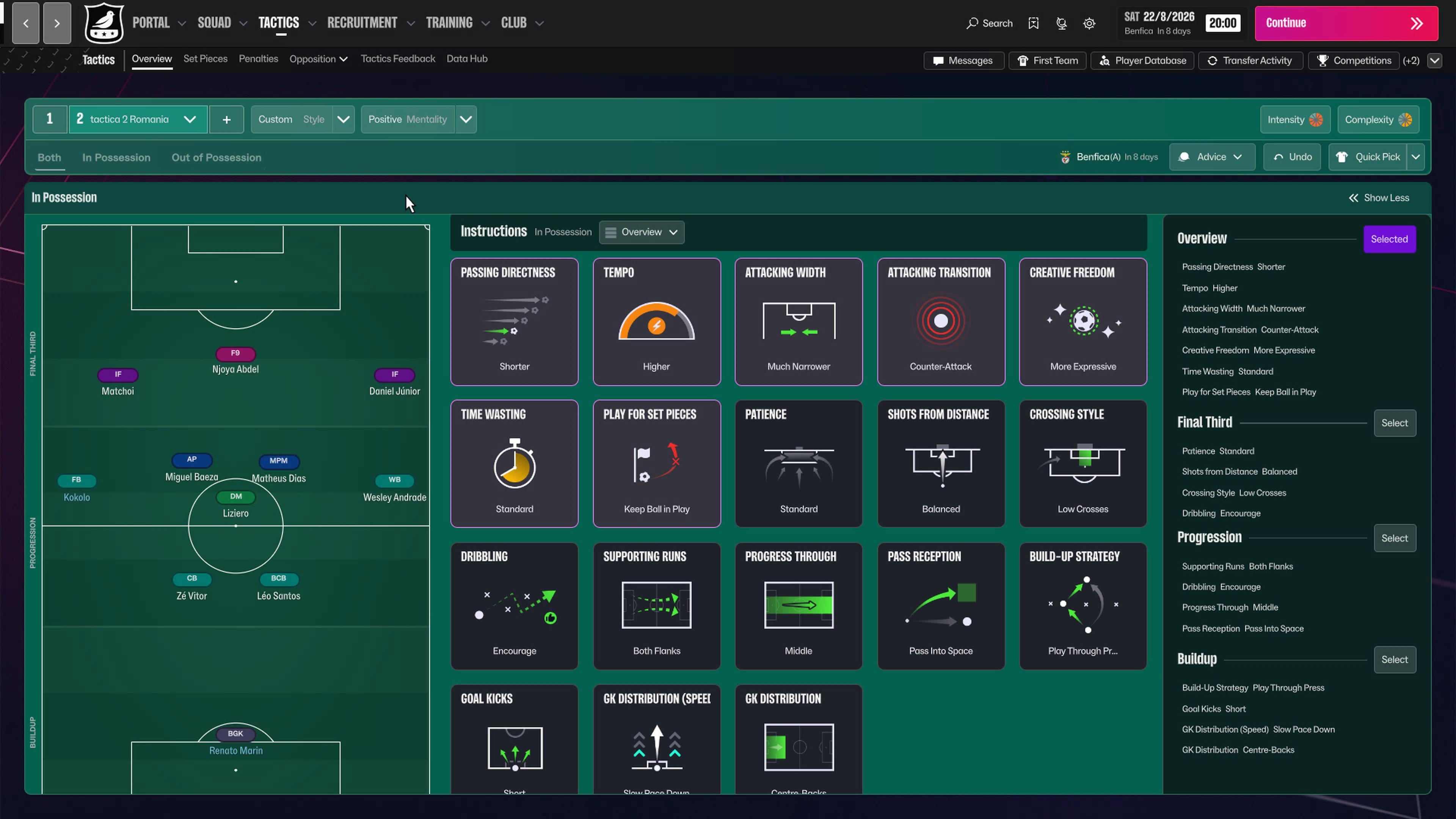
vertical tiki taka
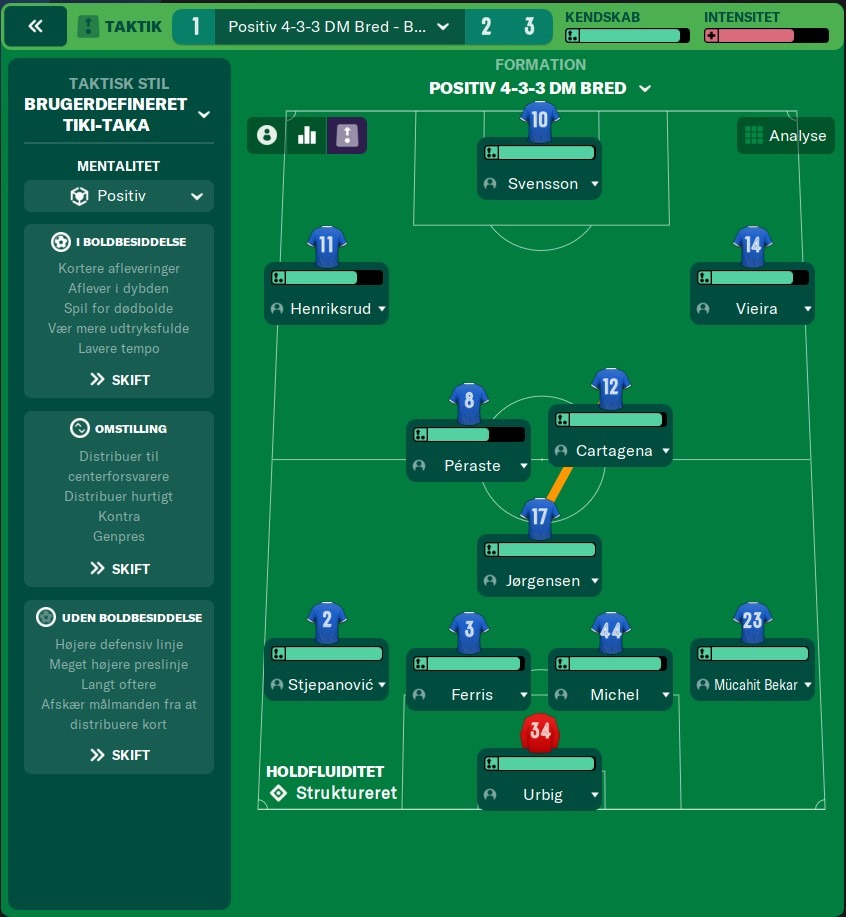
Tiki-Taka
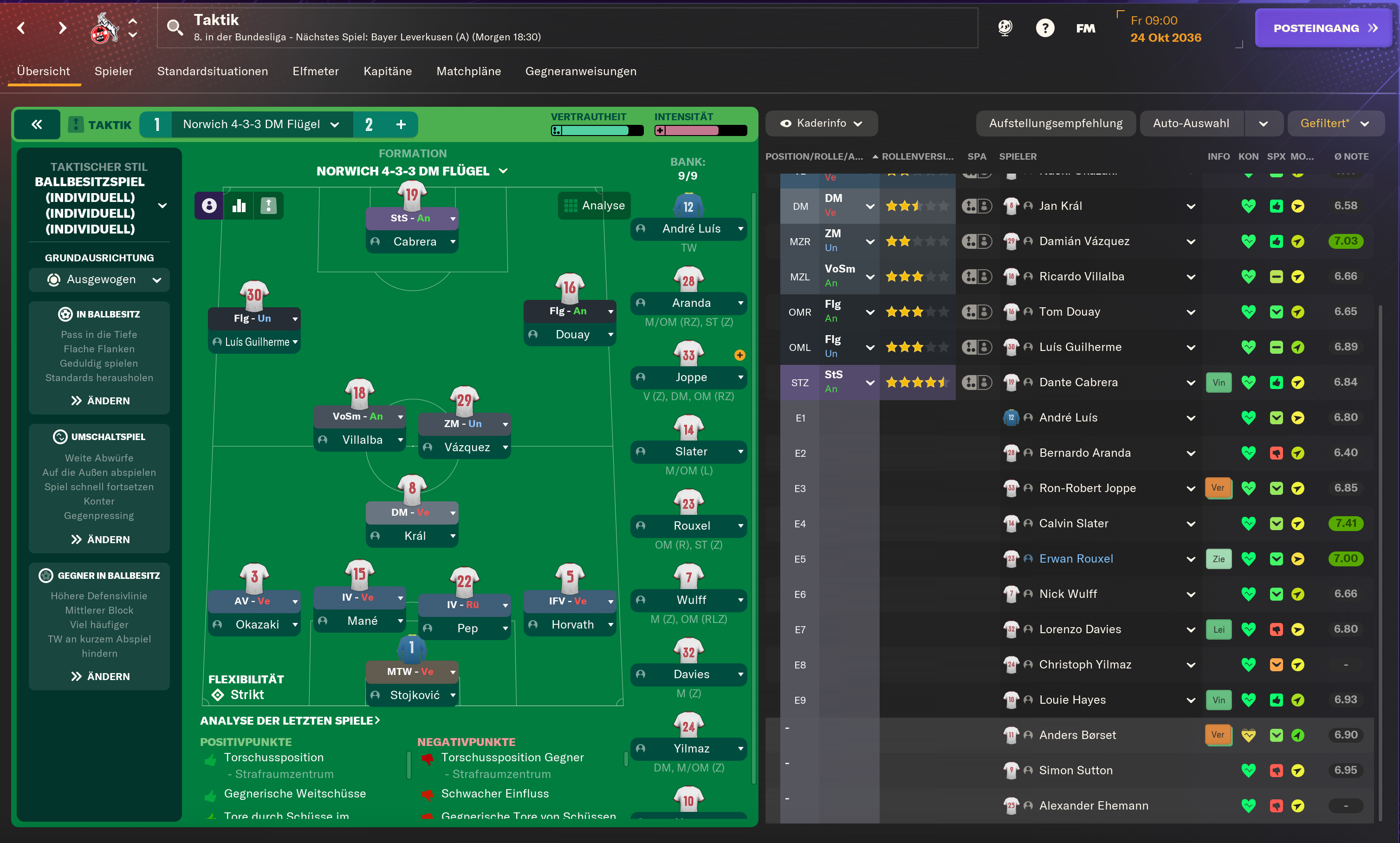
Wing Play
Vertical Tiki-Taka
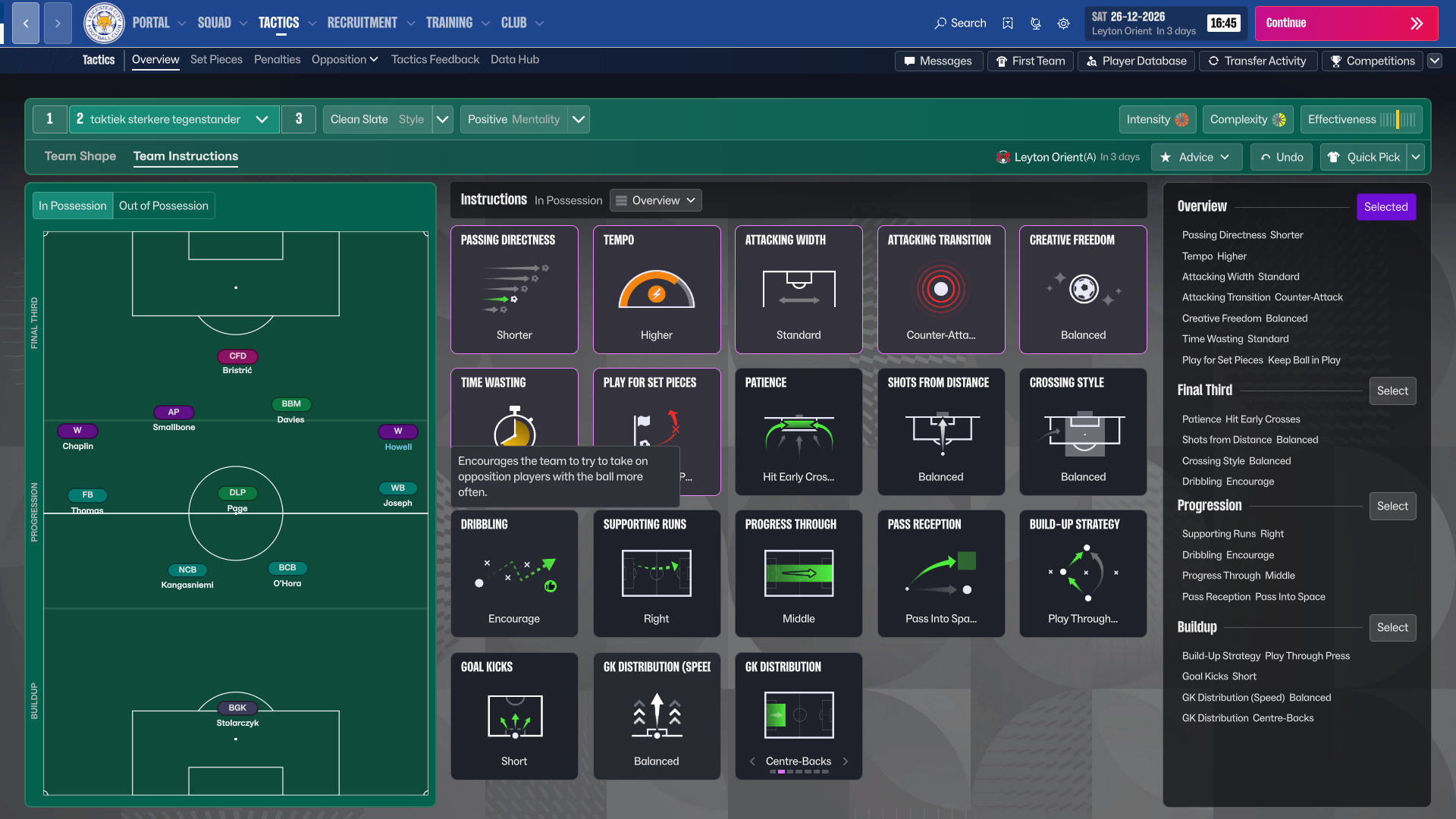
clean slate
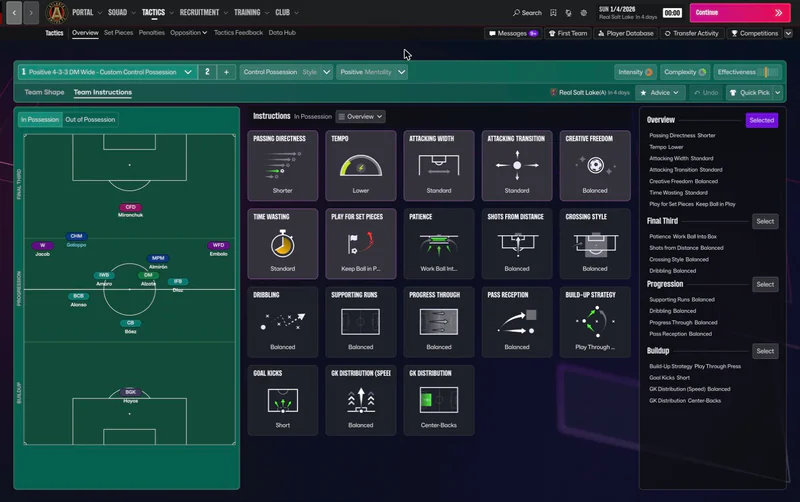
control possession
The tactical theory behind the 4-3-3 DM Wide: roles, instructions, and the trade-offs that decide whether the system holds up.
Why circulation density and zonal occupation aren't the same thing in FM, and the half-space occupation rule that decides build-up.
Build the patient, control-the-tempo style without watching your opponents counter through the gaps you leave behind.
The pairing rule for Defensive Line and Line of Engagement, all 9 combinations, and the gap that costs goals.



