
4-3-3 DM Wide
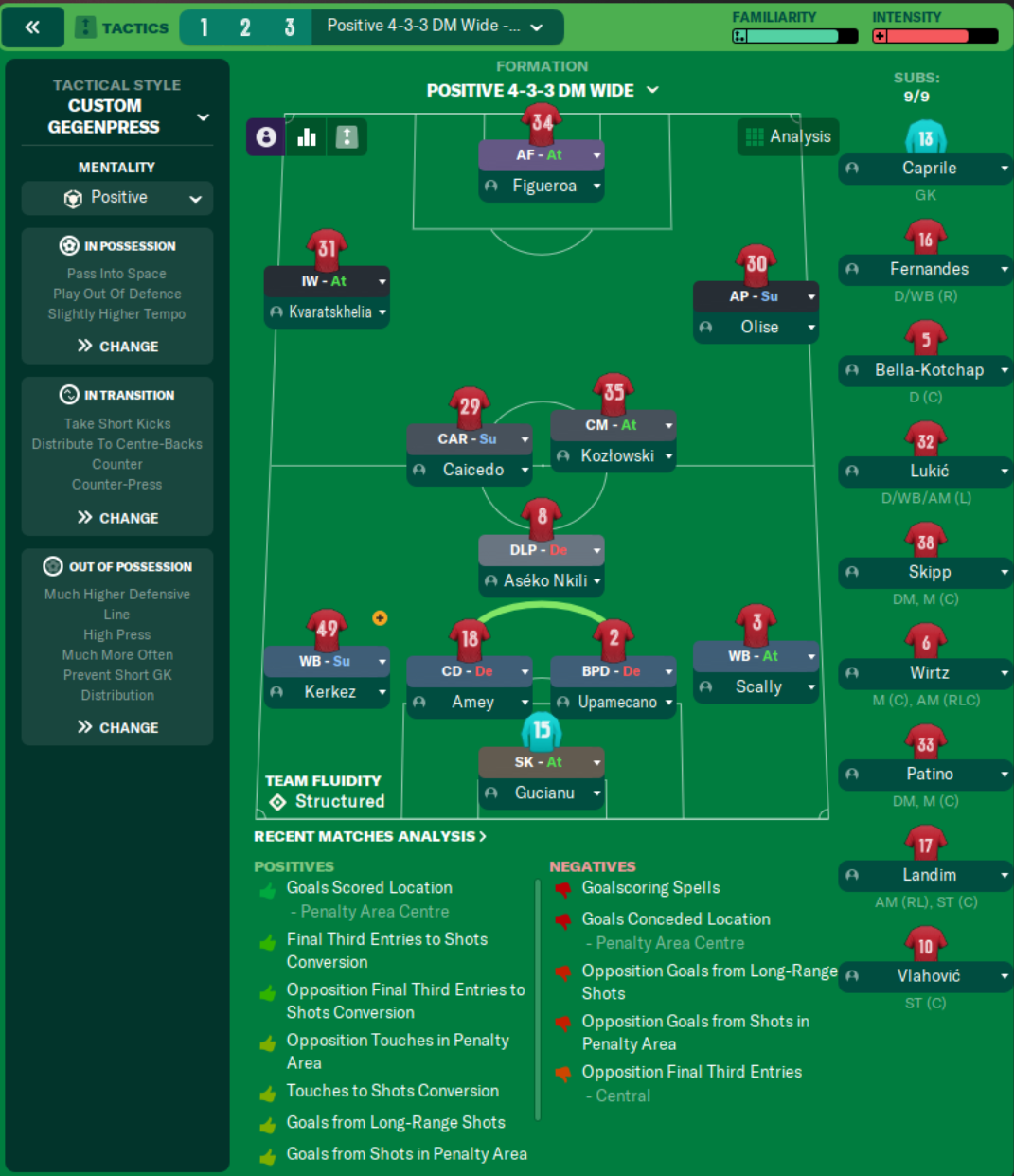
The Carillero and Central Midfielder work well to control possession and provide options in the middle, helping retain ball control.
Loading tactical analysis...
Gegenpress
Positive
4-3-3 DM Wide
Structured
Pass Into Space
Play Out of Defence
Slightly Higher Tempo
Take Short Kicks
Distribute To Centre-Backs
Counter-Press
Much Higher Defensive Line
High Press
Much More Often
Prevent Short GK Distribution
ST
Advanced Forward
Attack
LW
Inside Winger
Attack
RW
Advanced Playmaker
Support
CM
Carillero
Support
CM
Central Midfielder
Attack
CM
Deep-Lying Playmaker
Defend
LWB
Wing Back
Support
CD
Central Defender
Defend
BPD
Ball Playing Defender
Defend
RWB
Wing Back
Attack
GK
Goalkeeper
Defend
The Carillero and Central Midfielder work well to control possession and provide options in the middle, helping retain ball control.
The high pressing tactic aims to win back possession quickly, leveraging the athleticism of the forwards and midfielders.
The high press may conflict with the Deep-Lying Playmaker's role, as they may not advance quickly enough to join the press effectively.
A much higher defensive line can leave space exposed behind, especially with attacking wing-backs.
How do we adapt our press strategy against teams with strong backlines?
Is the wing play effectively creating space for the forwards?
How often are we winning second balls in midfield?
Can we afford to push our defensive line higher against certain opponents?
Are our wing-backs contributing effectively to both defence and attack?
Do we have adequate cover for the Deep-Lying Playmaker on the counter?
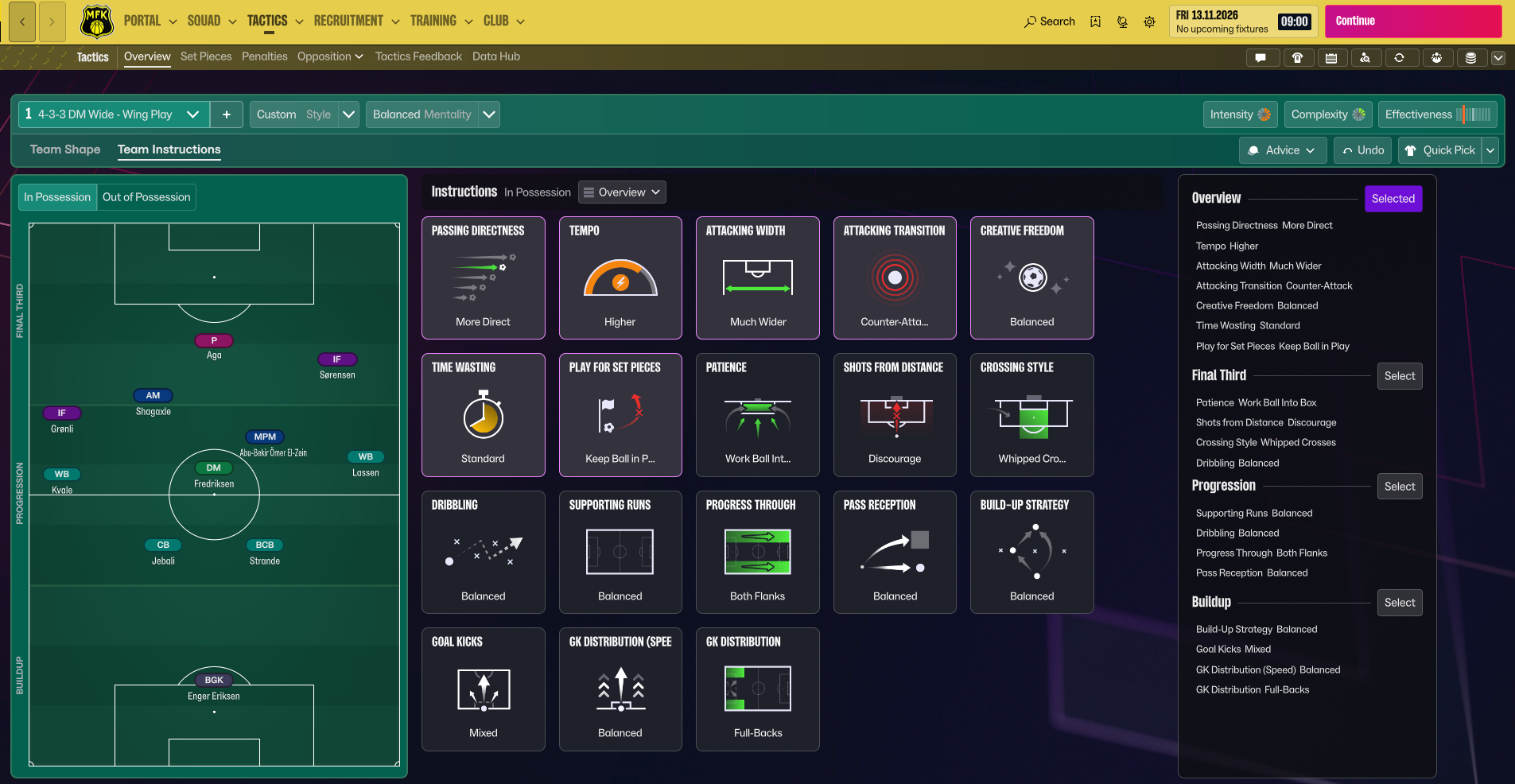
wing play
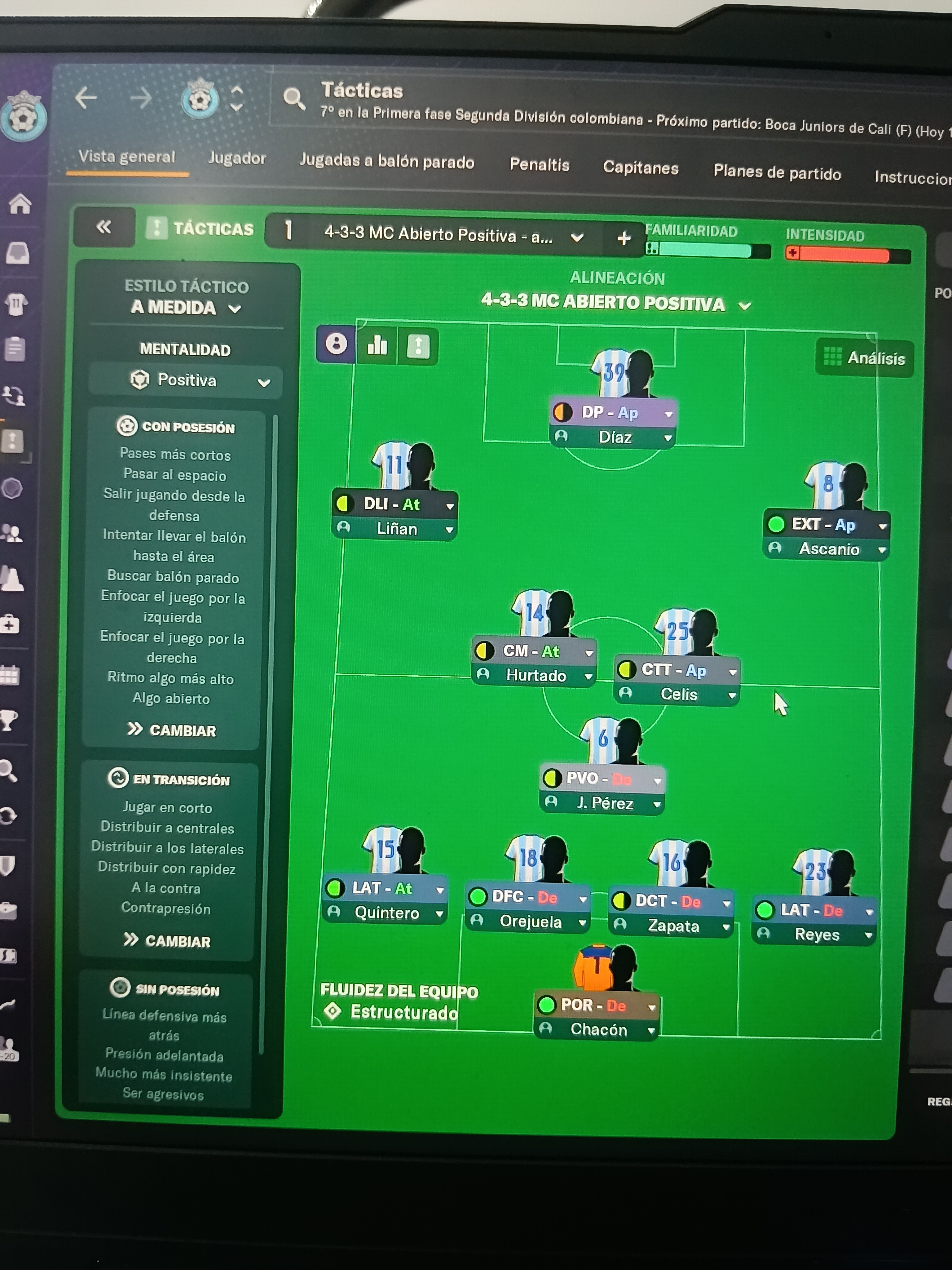
Gegenpress
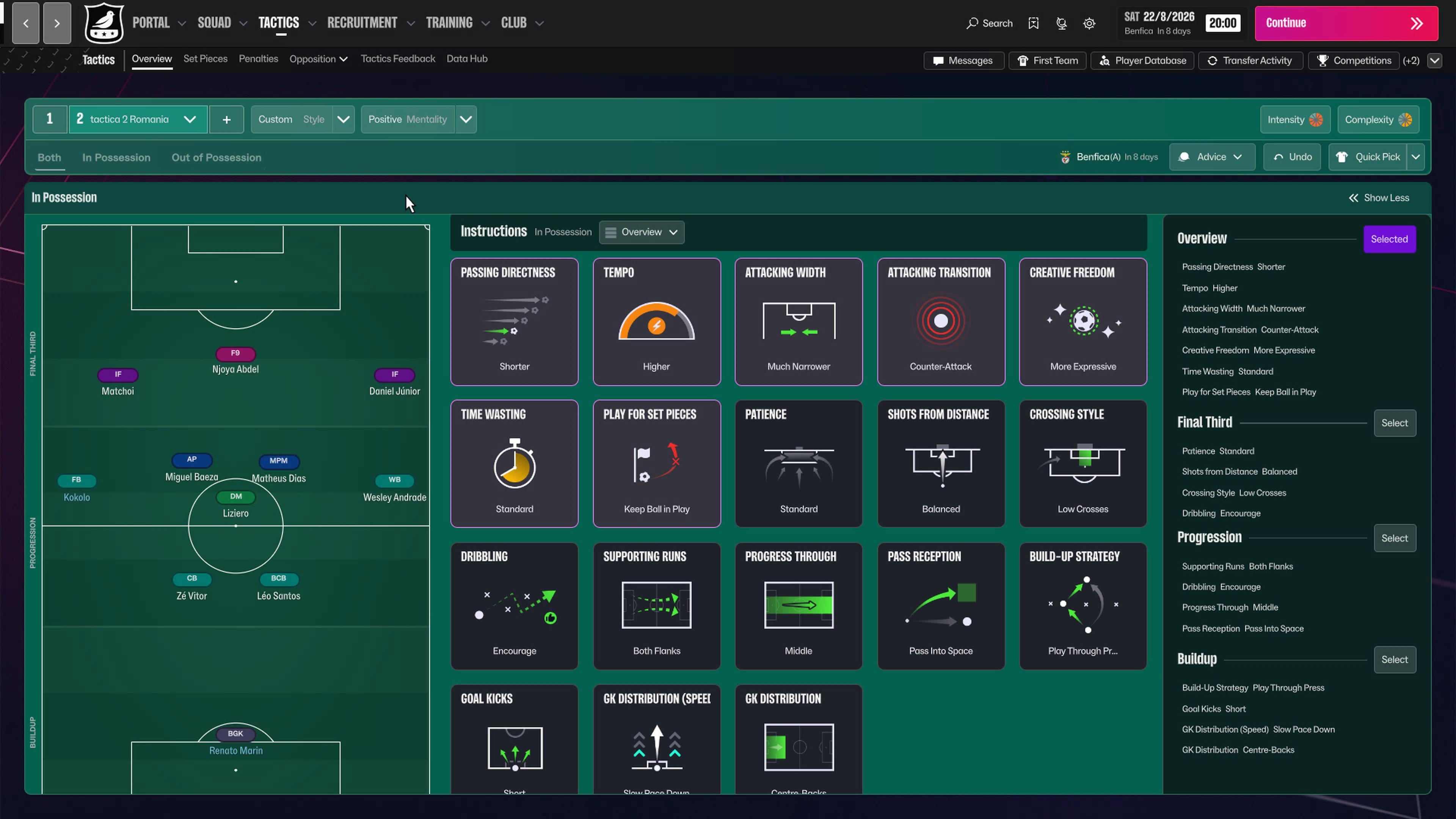
vertical tiki taka
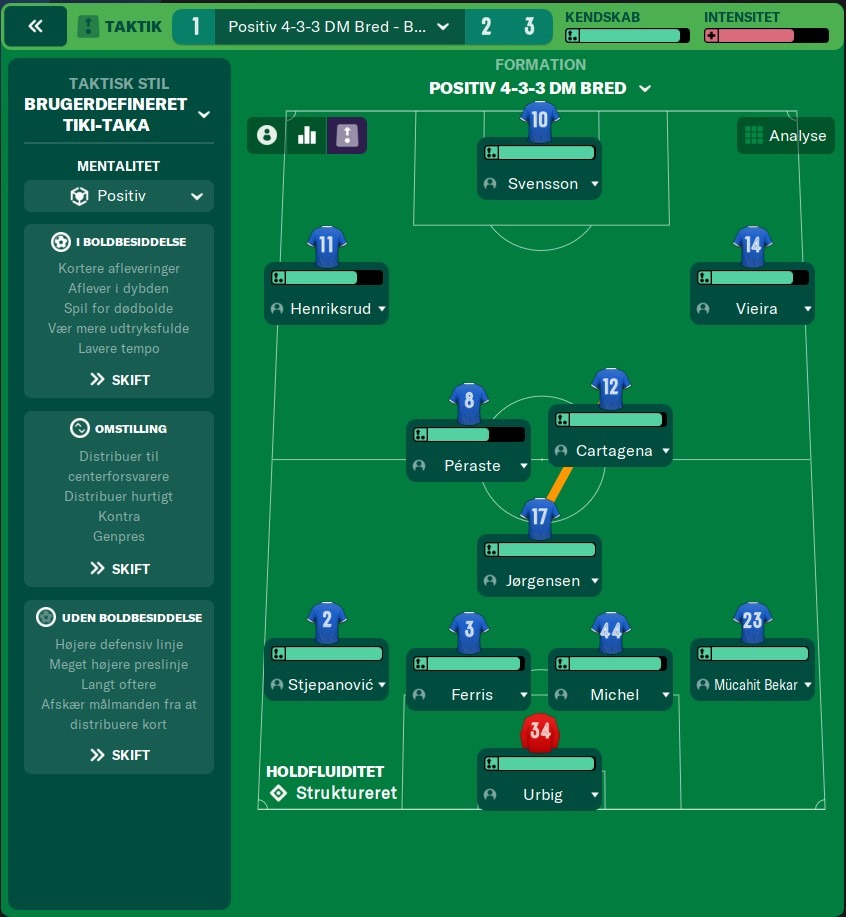
Tiki-Taka
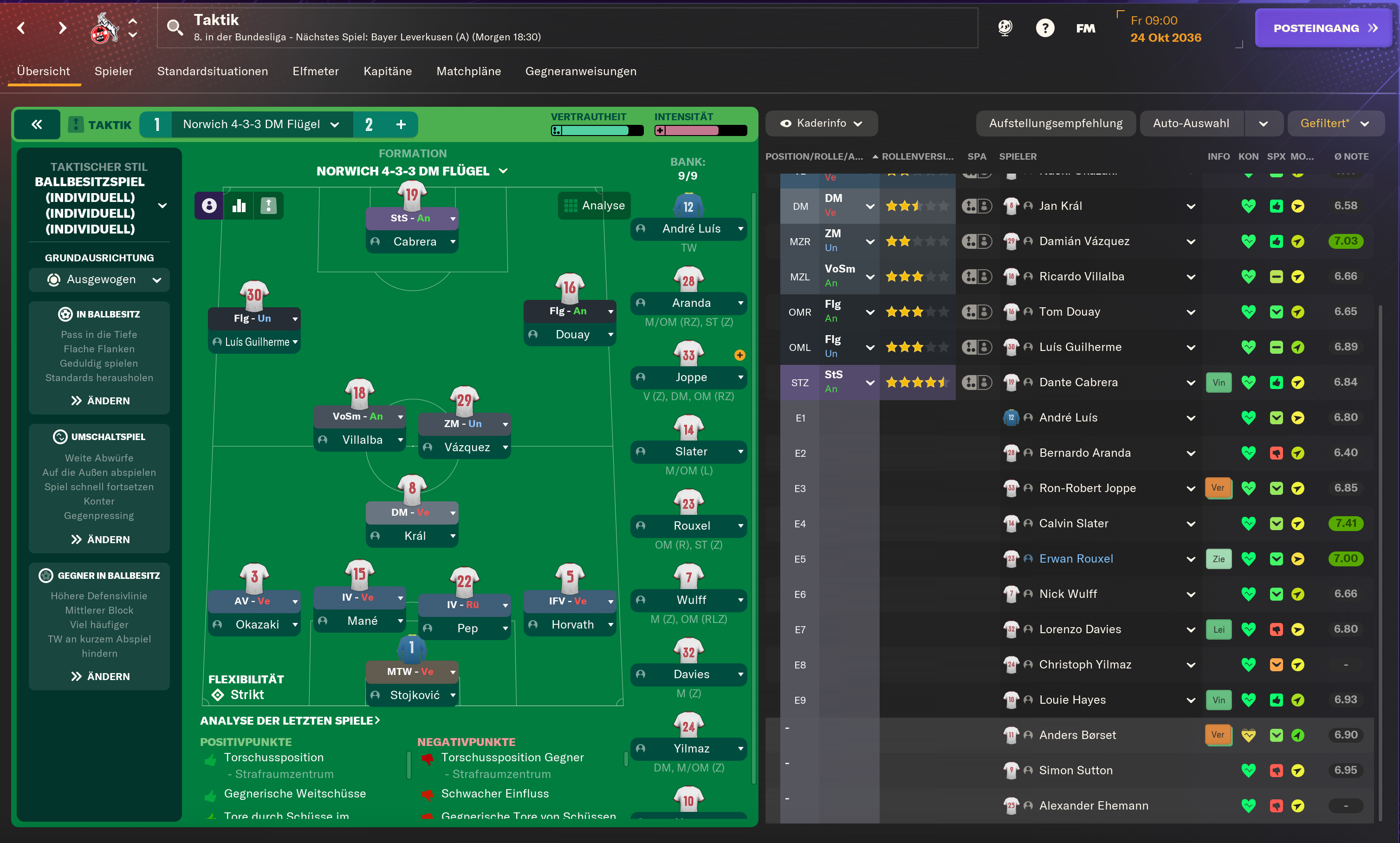
Wing Play
Vertical Tiki-Taka
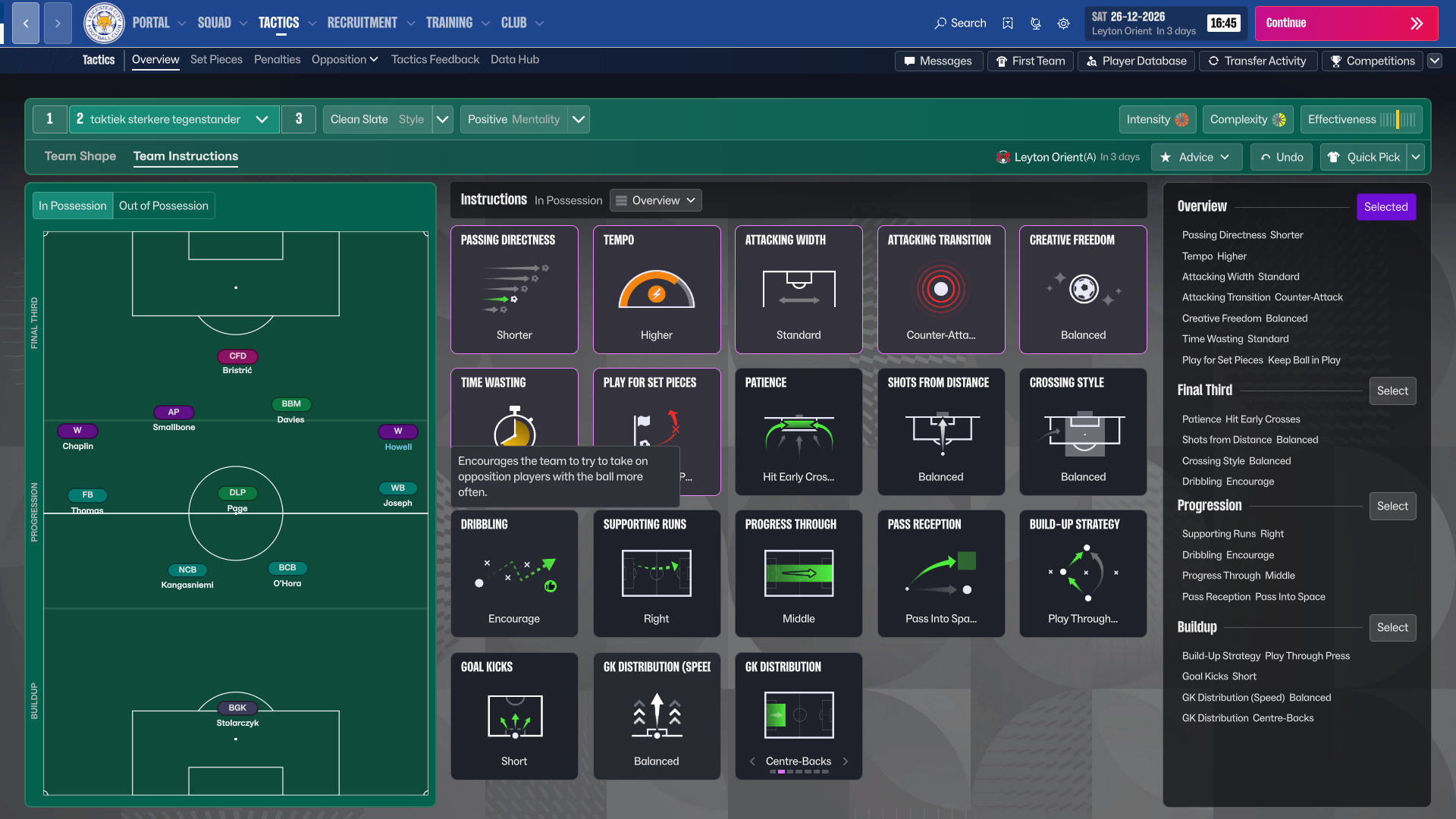
clean slate
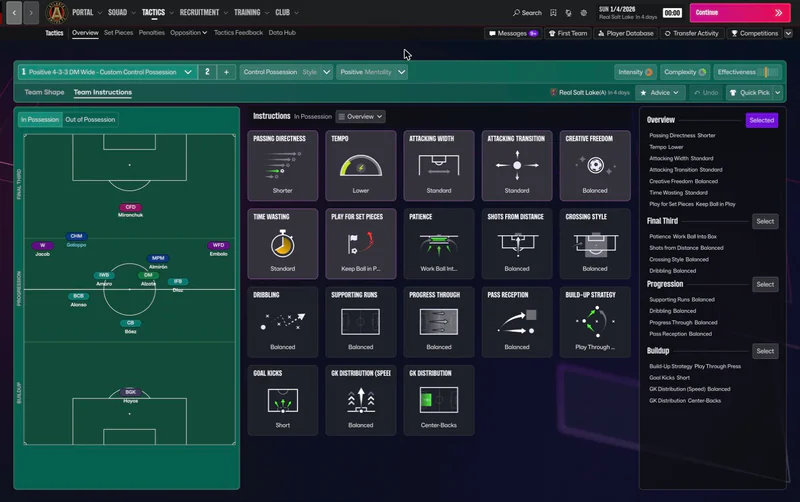
control possession
The tactical theory behind the 4-3-3 DM Wide: roles, instructions, and the trade-offs that decide whether the system holds up.
Klopp-style gegenpressing in FM, including squad profile, line-and-press pairing, sustainable workload, and the antipatterns to avoid.
Why circulation density and zonal occupation aren't the same thing in FM, and the half-space occupation rule that decides build-up.
Mentality, duty, role, instruction, sub. The change hierarchy from lightest to heaviest intervention, and 60th-minute patterns by game state.



