Uploaded Tactic
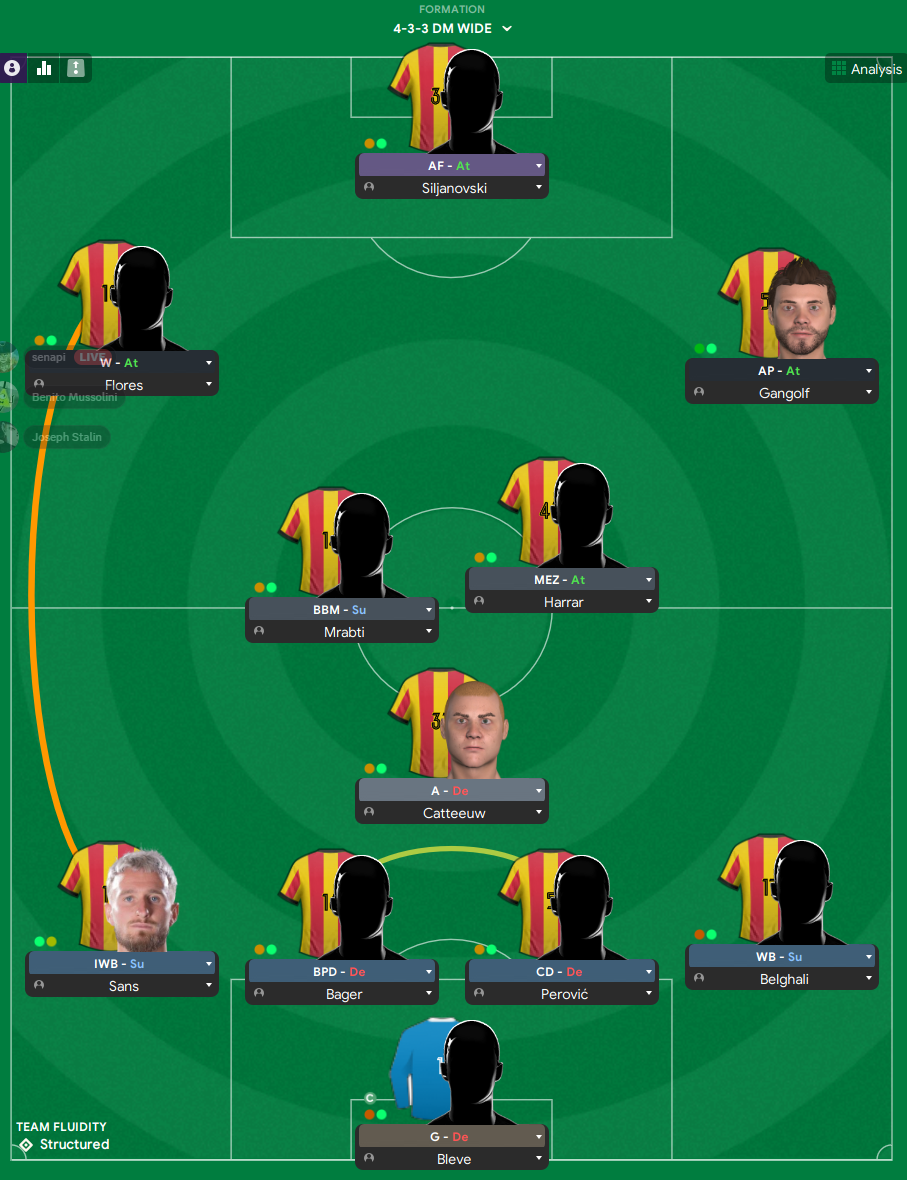
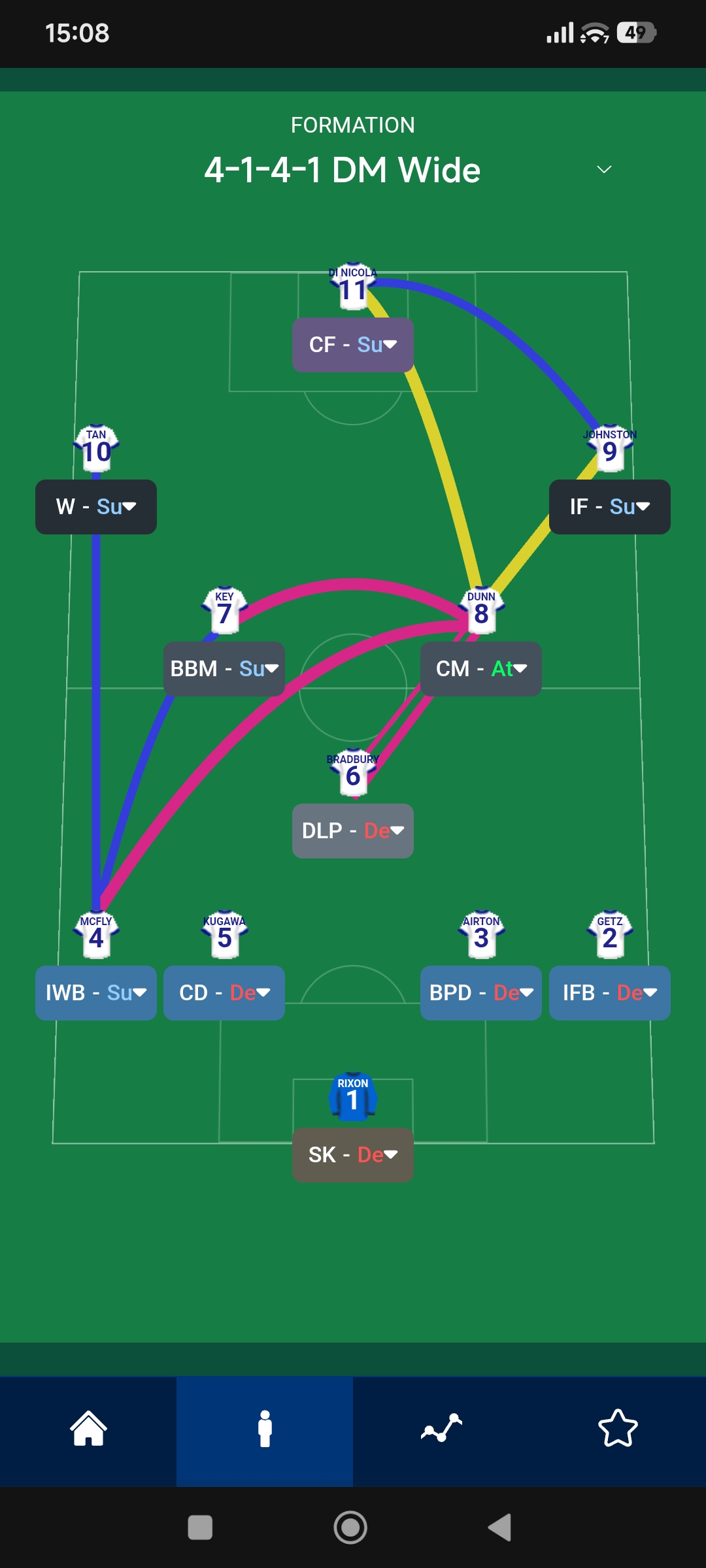
Formation & Style
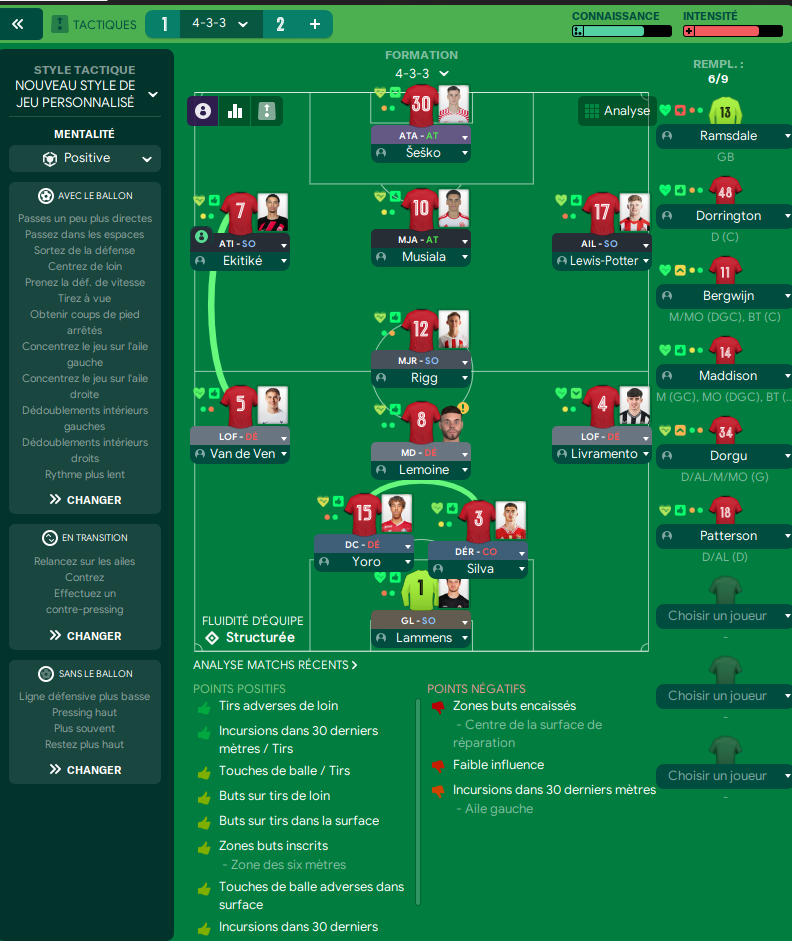
Tactical Style:DM Wide
Mentality:Attacking
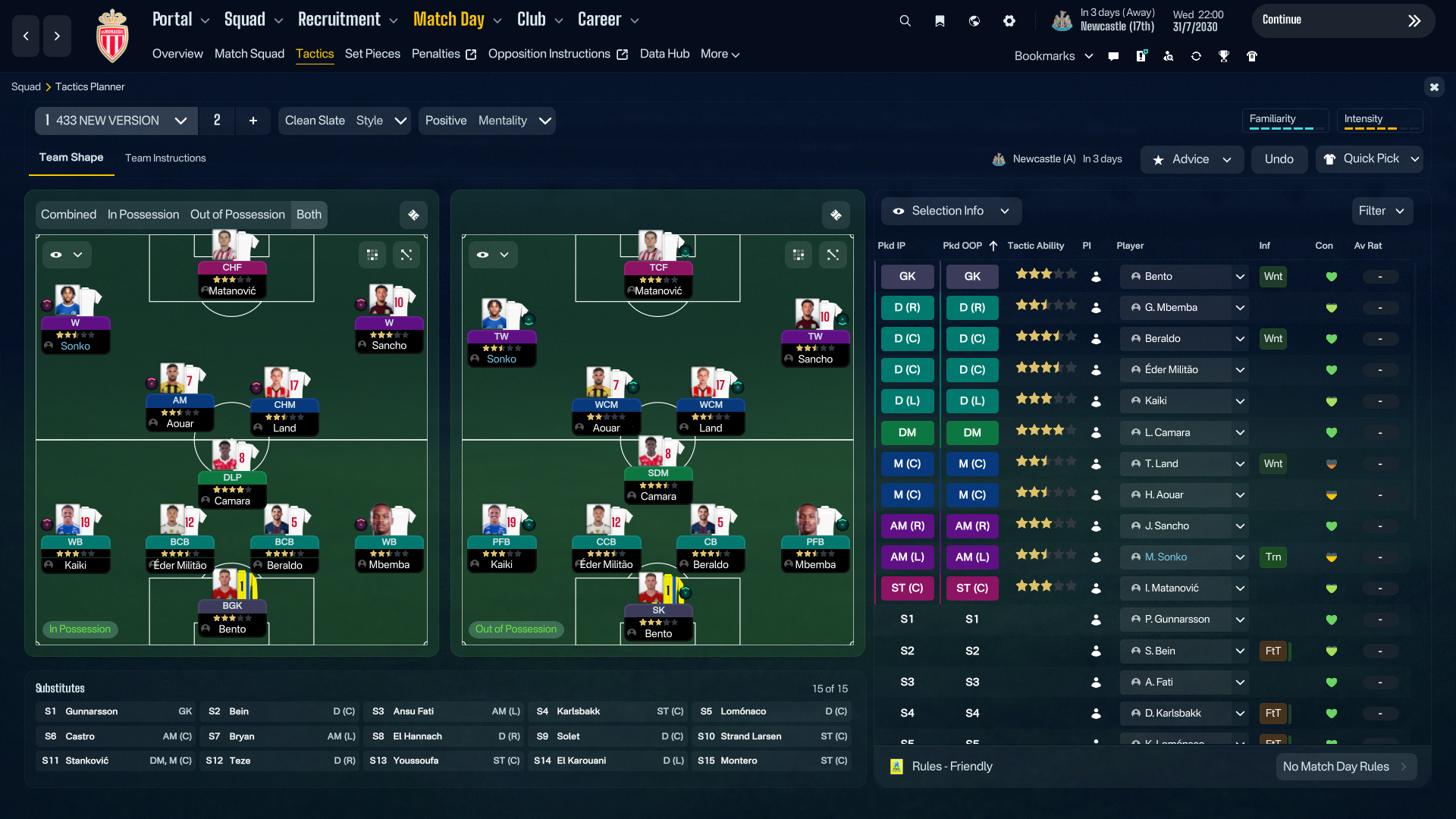
Formation:4-3-3
Team Fluidity:Structured
In Possession
Play Out of Defence
Work Ball Into Box
Pass Into Space
In Transition
Counter-Press
Counter
Out of Possession
Higher Defensive Line
Much Higher Line of Engagement
Trigger Press More Often
Team Shape Without Ball
Shape:4-3
Description:Tightly packed defensive line with a focus on retaining shape.
Evidence:BPD-De at [2,2] and CD-De at [2,3] creating a strong backline.
Team Shape With Ball
Shape:4-3-3
Description:Width provided by wingers complemented by central movement.
Evidence:LW-A at [6,1] and AF-A at [6,3] maximizing options in transition.
Phase Description
Attacking Play
Focus on creating overloads in wide areas while utilizing through balls to the strikers.
Defensive Transition
Quick recovery and pressing to regain possession immediately.
Main Focus
Utilizing the wide players to stretch the opposition and create goal-scoring opportunities.
Key Strengths
Wide Play and Fluidity
The combination of wingers and attacking midfielders offers width and depth in attack.
Midfield Versatility
The midfield roles allow for both defensive solidity and attacking creativity.
Pressing Ability
The higher line of engagement supports aggressive pressing to regain possession.
Conflicting Directions
High Defensive Line with Slow Build-Up
The current high press may be compromised if the team tries to play too slowly from the back.
Wide Play vs. Central Formation
Competing with a team that plays centrally might neutralize the wide advantage.
Excessive Width Leading to Isolation
Forwards may become isolated if the midfield does not maintain close support.
Tactical Suggestions
Consider Central Overload
Integrate midfielders more into attacking plays to overload the center.
Adjust Pressing Intensity
Monitor players’ stamina; consider reducing pressing intensity for longer matches.
Improve Defensive Communication
Ensure defenders are well-coordinated to handle counters effectively.
Ask Questions About Your Lineup
Related Tactics
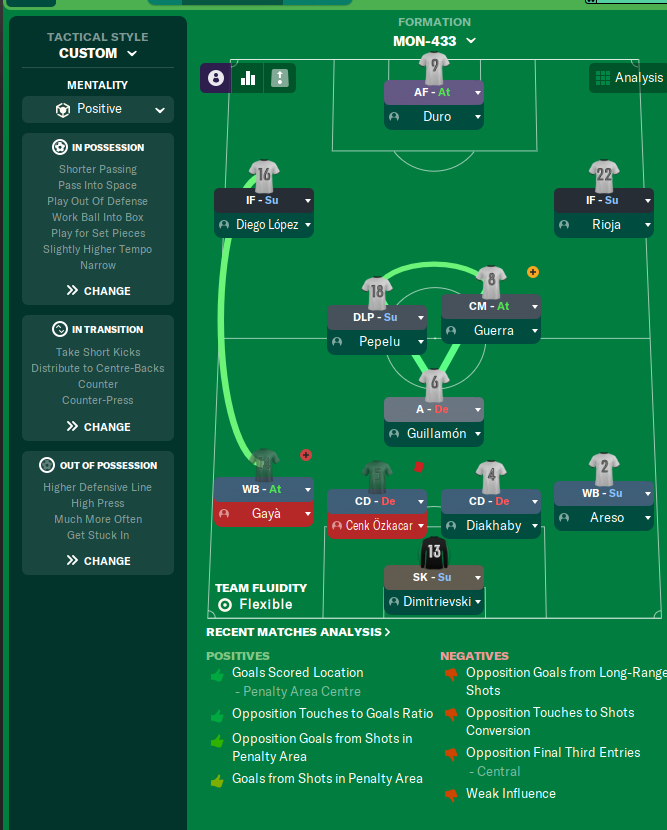
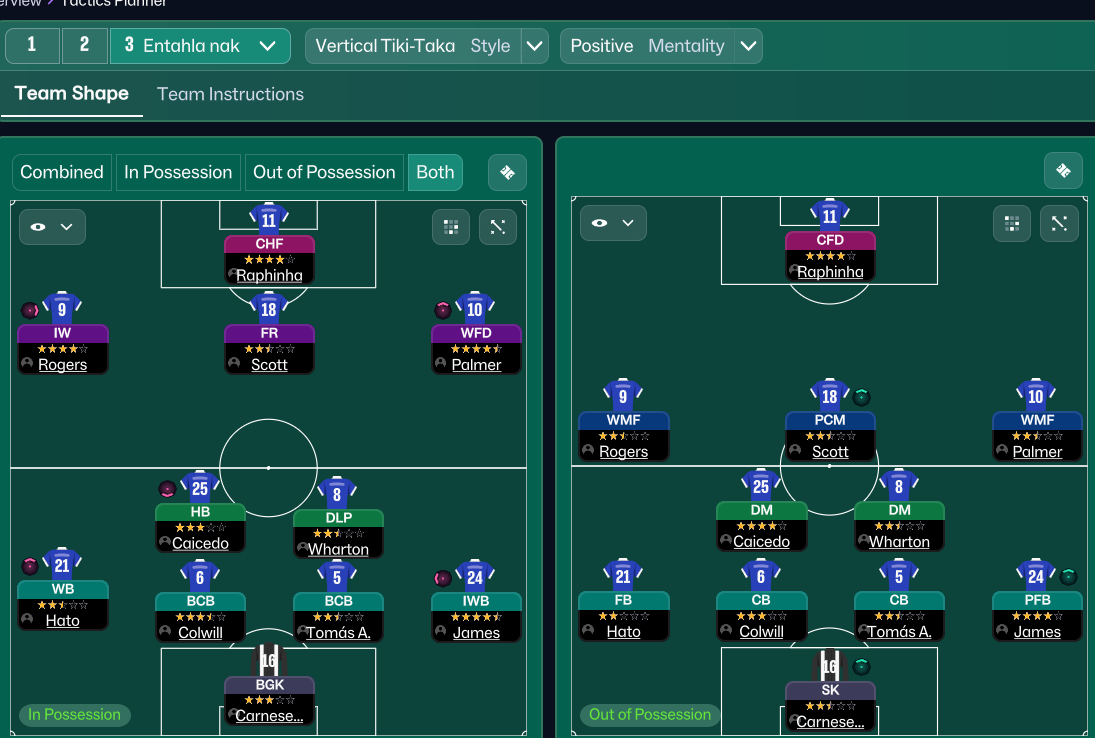
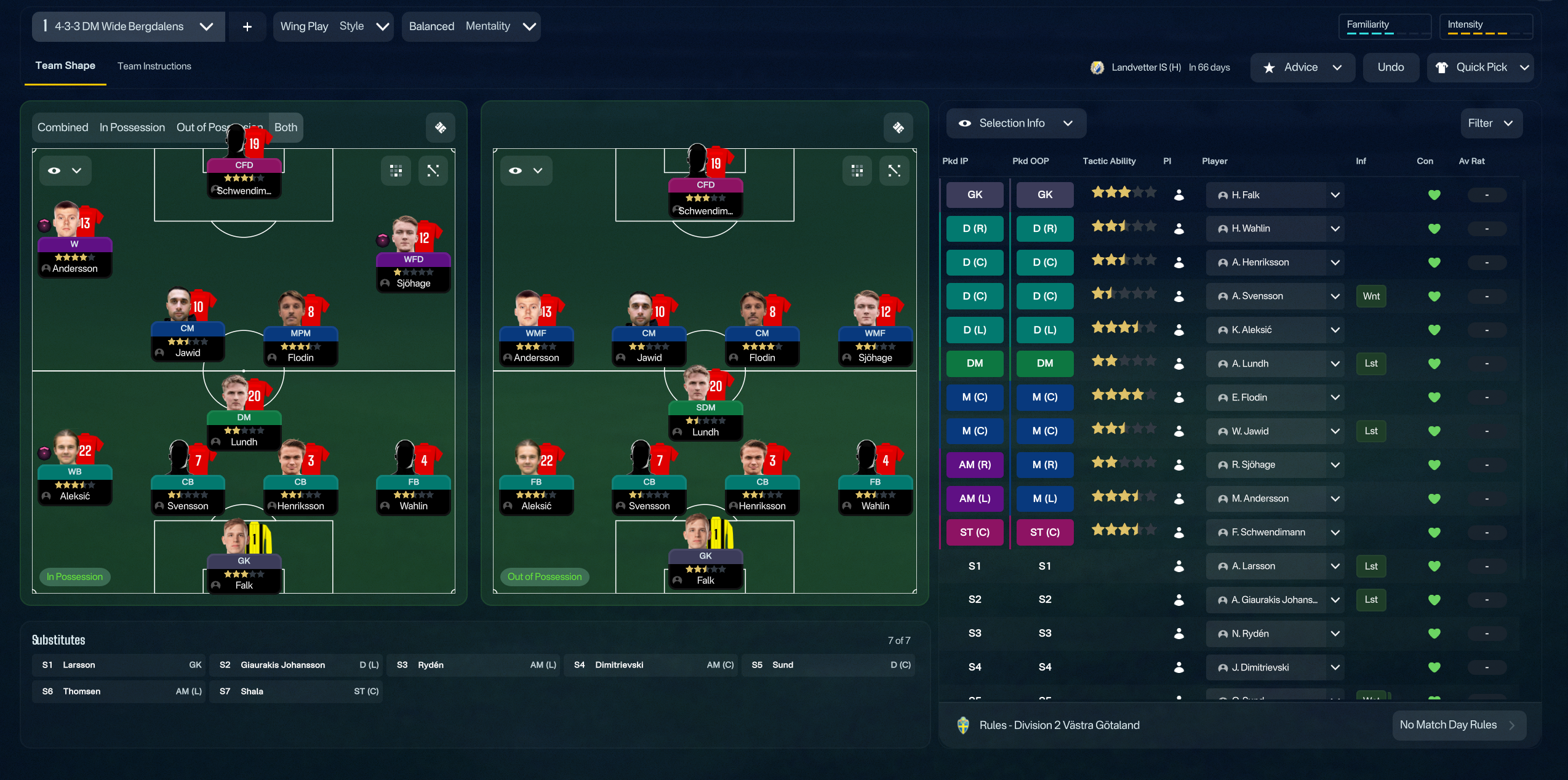
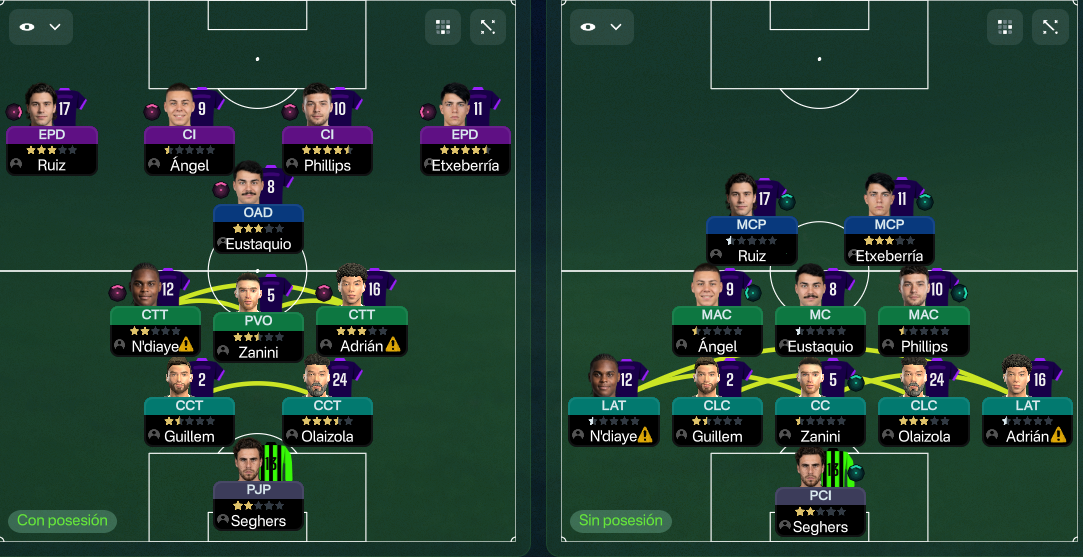
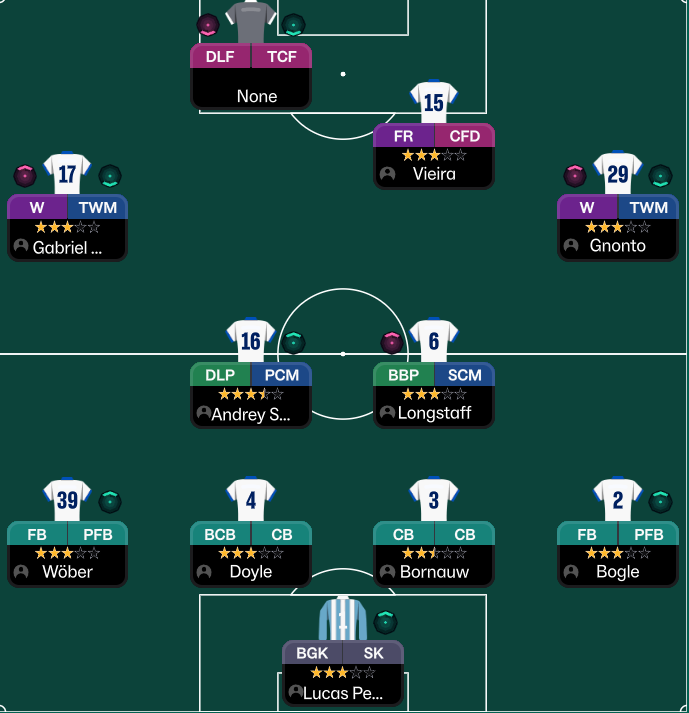
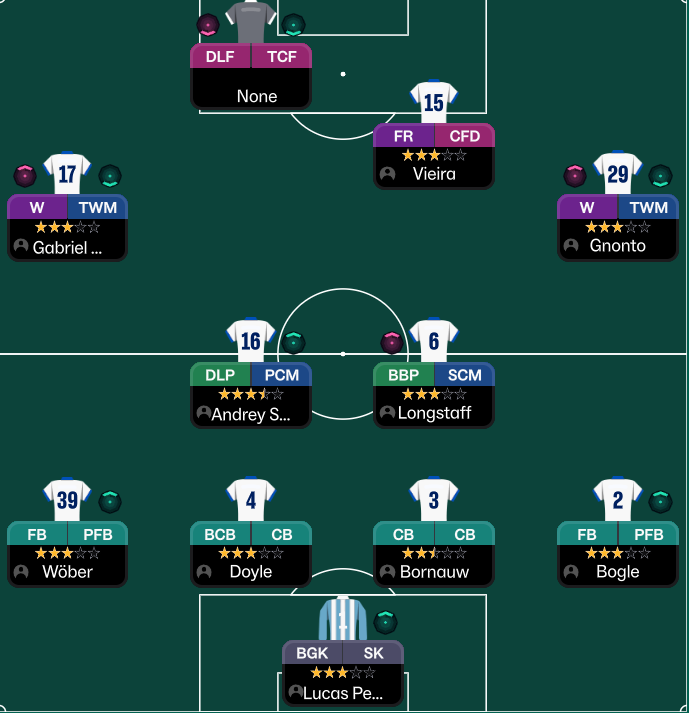
More DM Wide tactics
Guides for this formation
The tactical theory behind the 4-3-3: roles, instructions, and the trade-offs that decide whether the system holds up.
Foundations
Understanding the 4-3-3 Formation
Master the classic 4-3-3: player roles, tactical variations, and the trade-offs that decide whether it sings or stalls.
Read guide
Player pairings
Midfield Trios
Holder, runner, creator: the role distribution rule for three-man midfields, the AMC variants, and the antipatterns that break them.
Read guide
Playing styles
Gegenpressing: A Full Guide
Klopp-style gegenpressing in FM, including squad profile, line-and-press pairing, sustainable workload, and the antipatterns to avoid.
Read guide