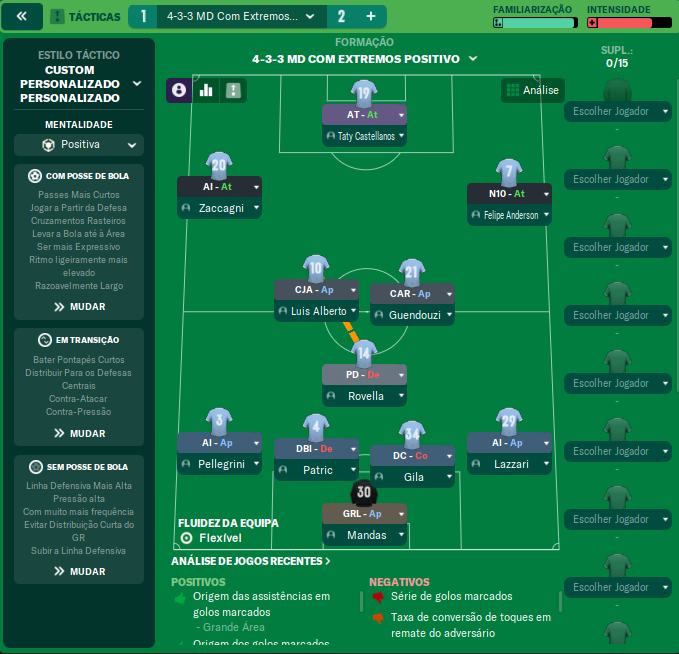
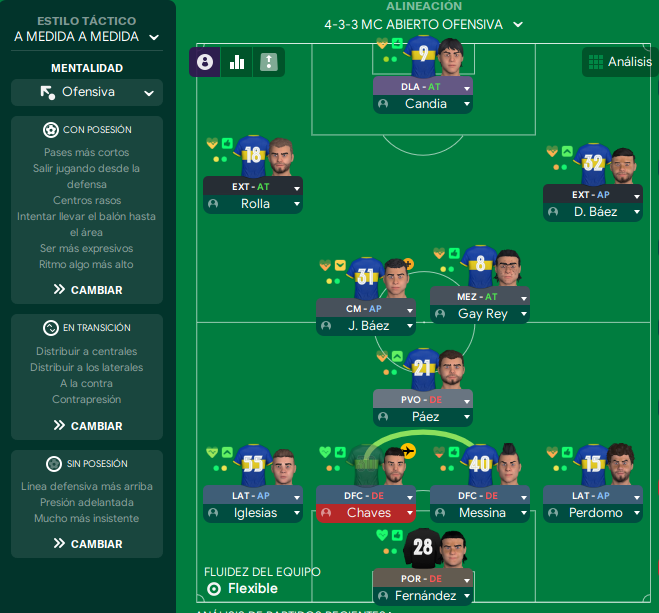
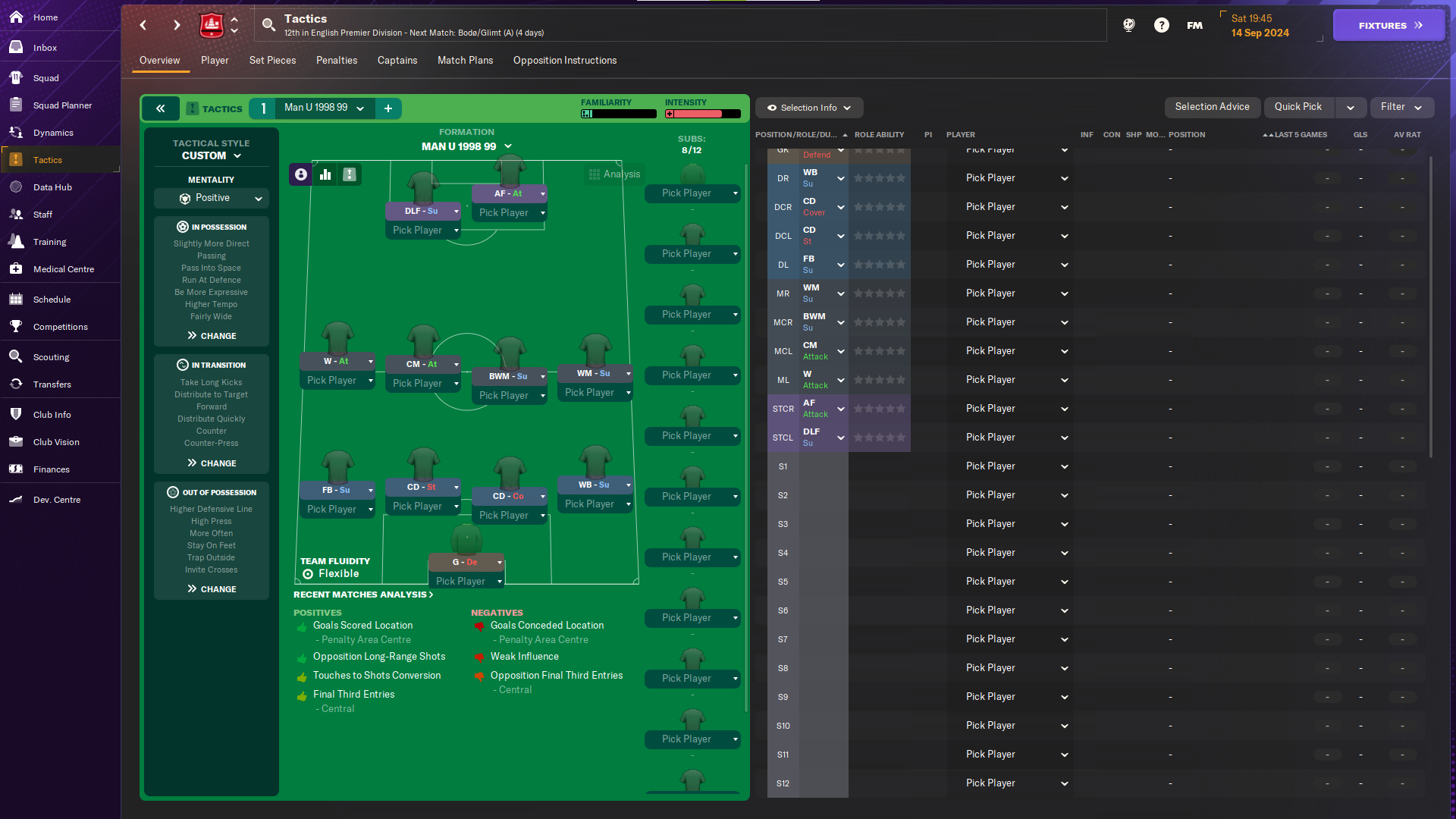
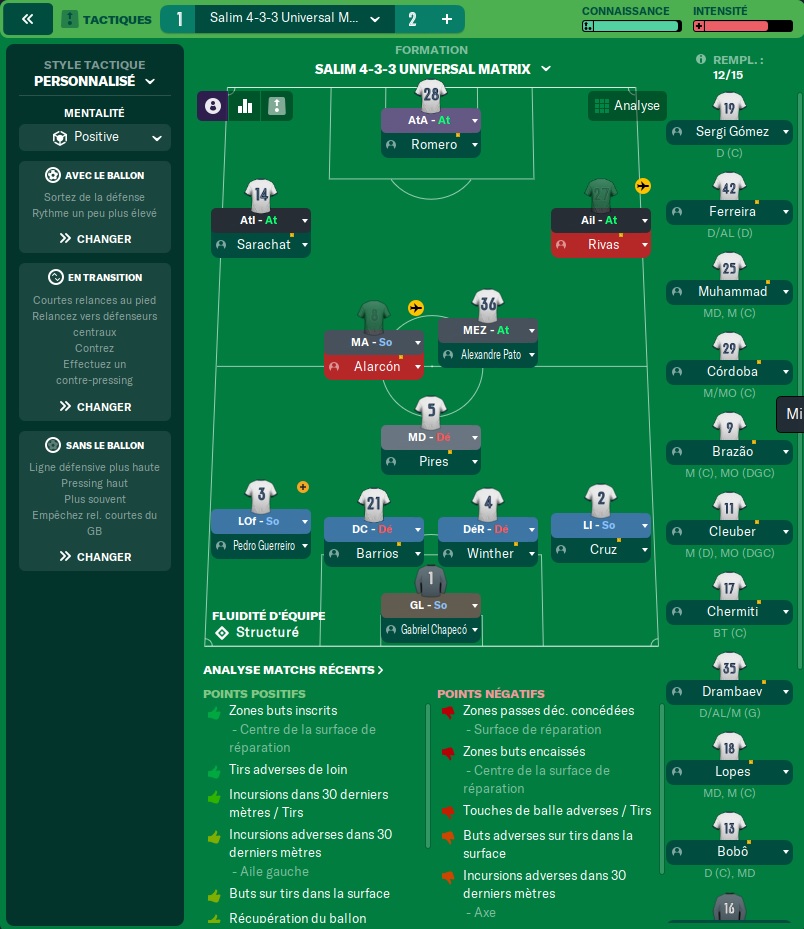
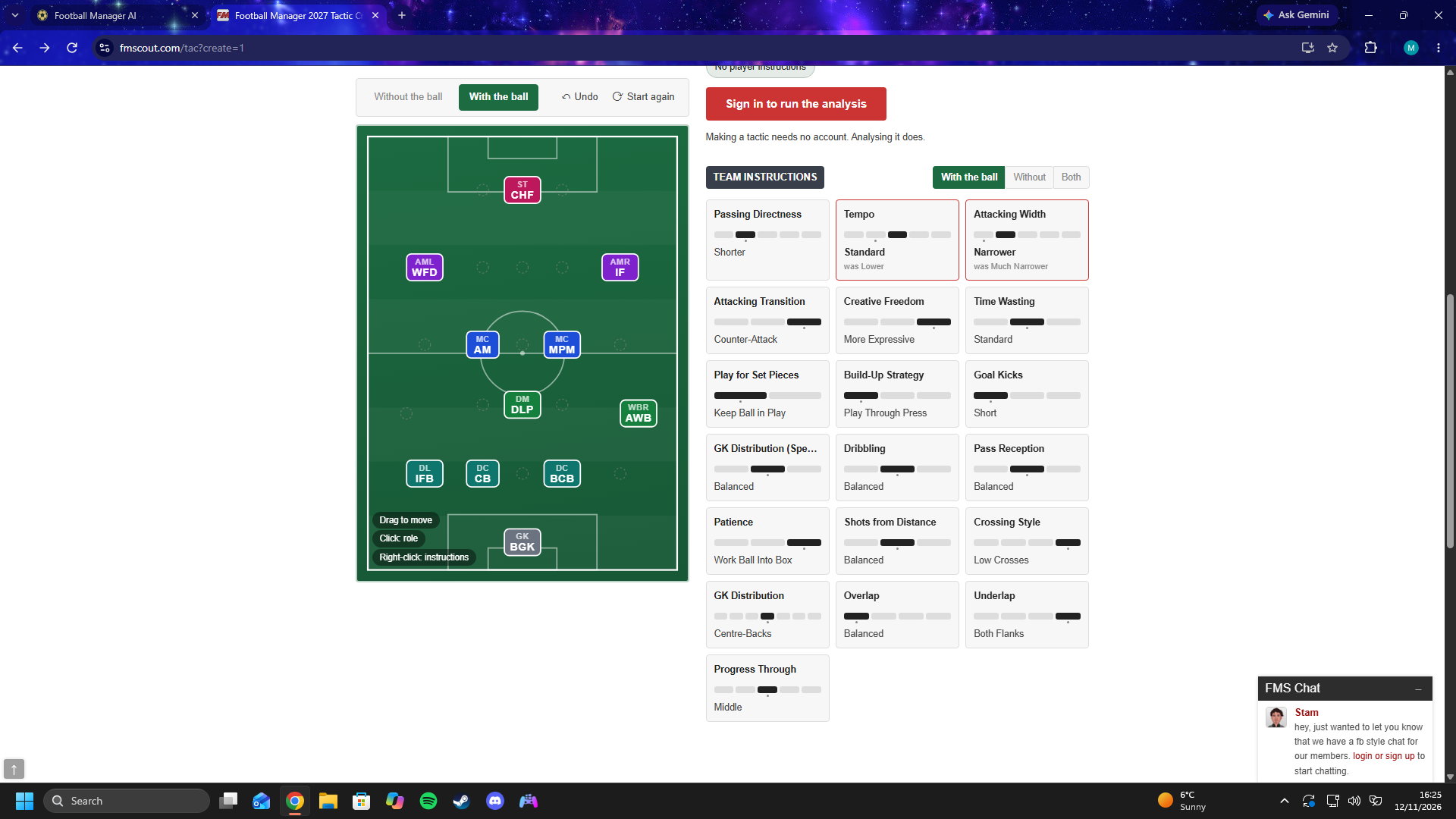
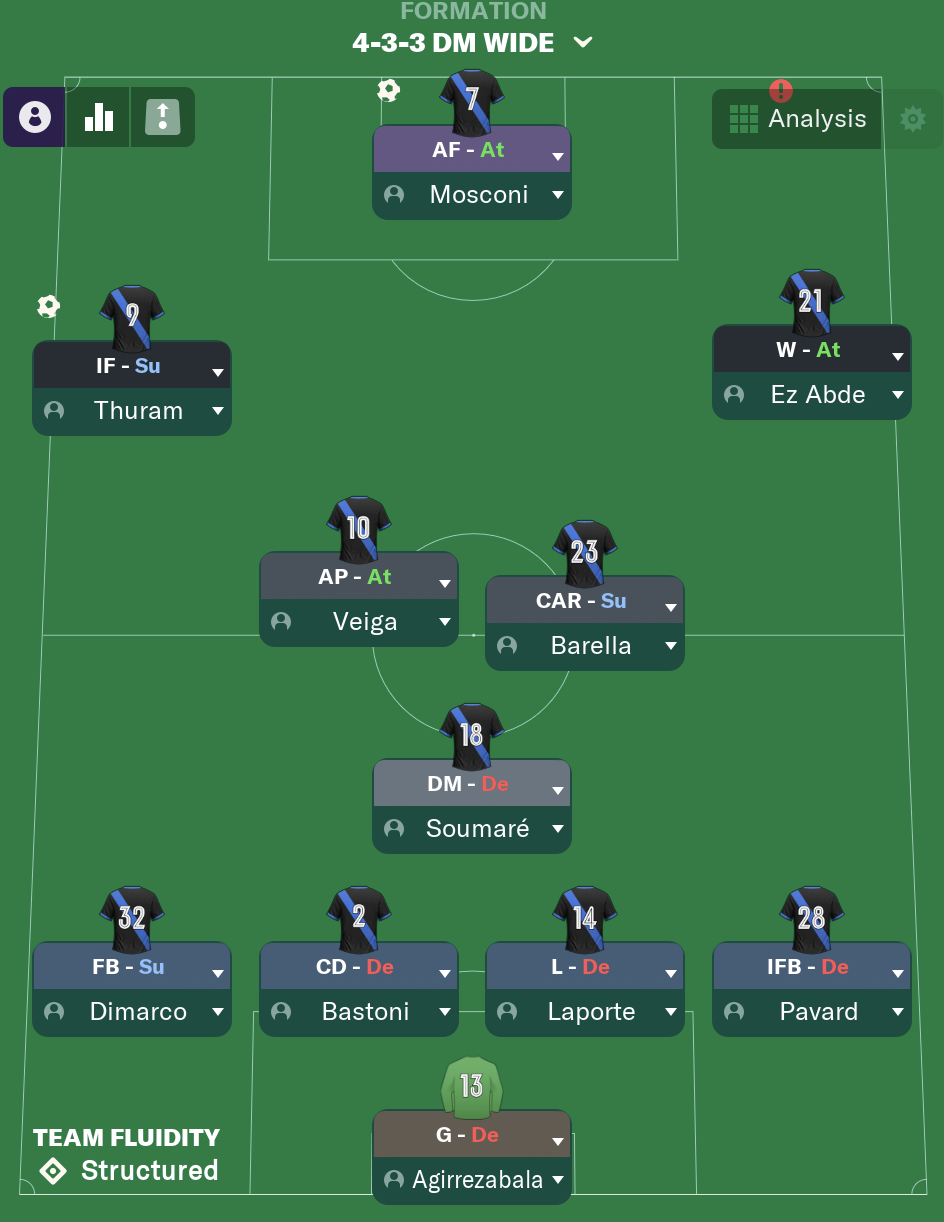
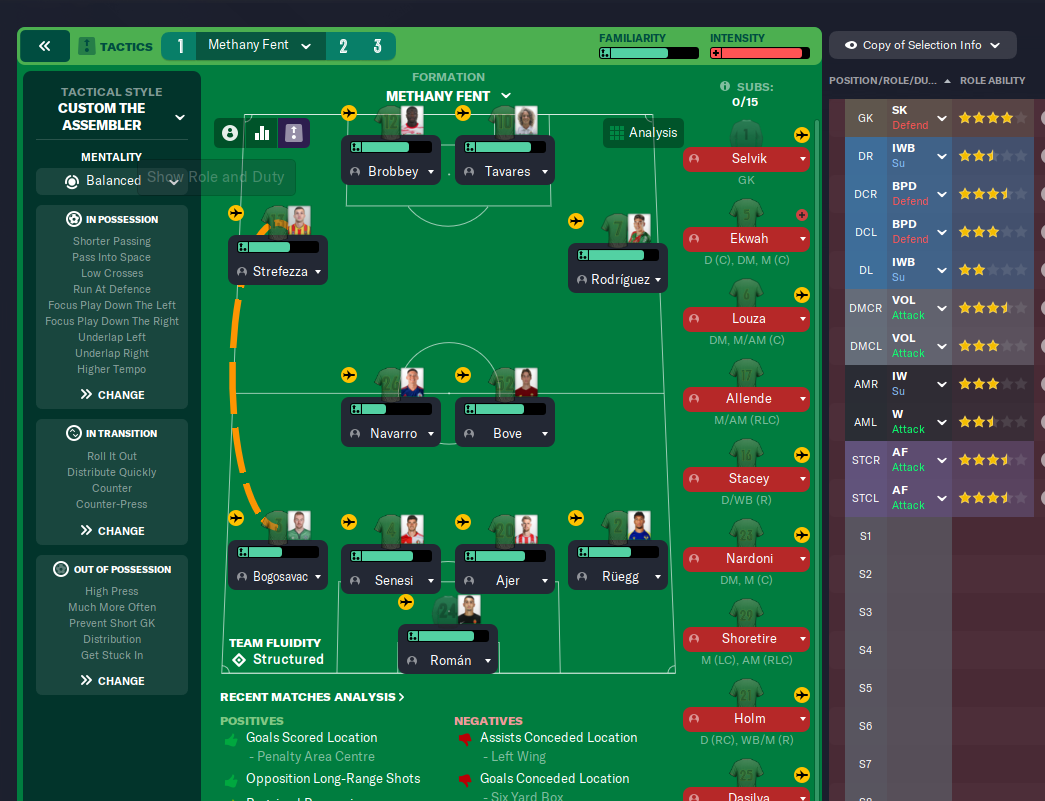
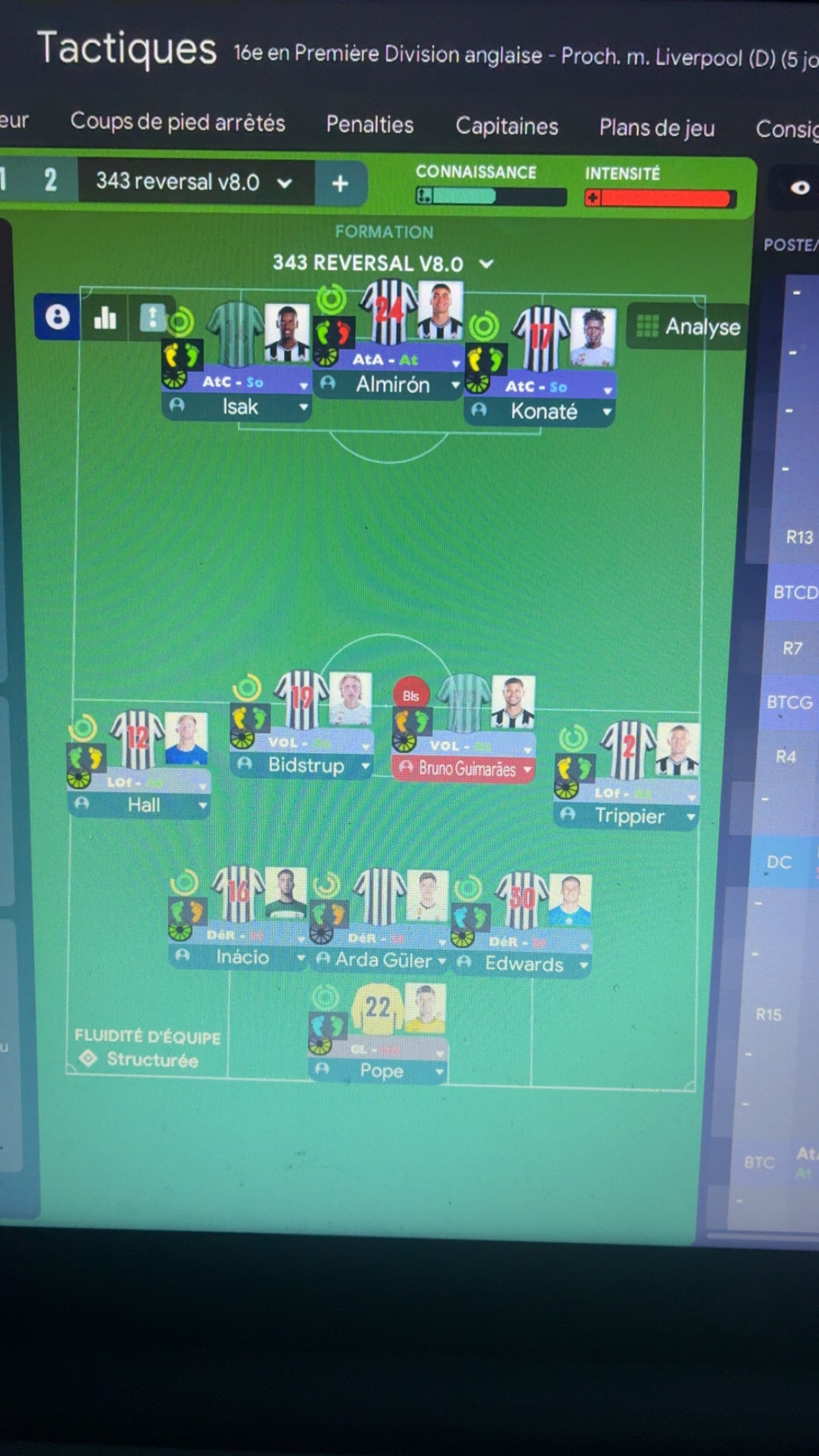
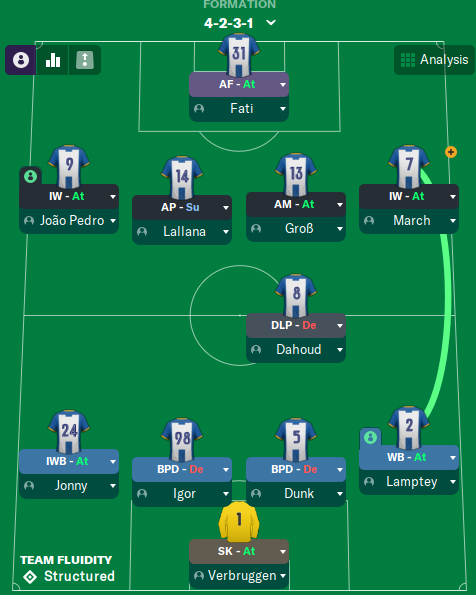
4-3-3
Utilizes wingers and an inside forward to stretch defenses, creating space for central players.
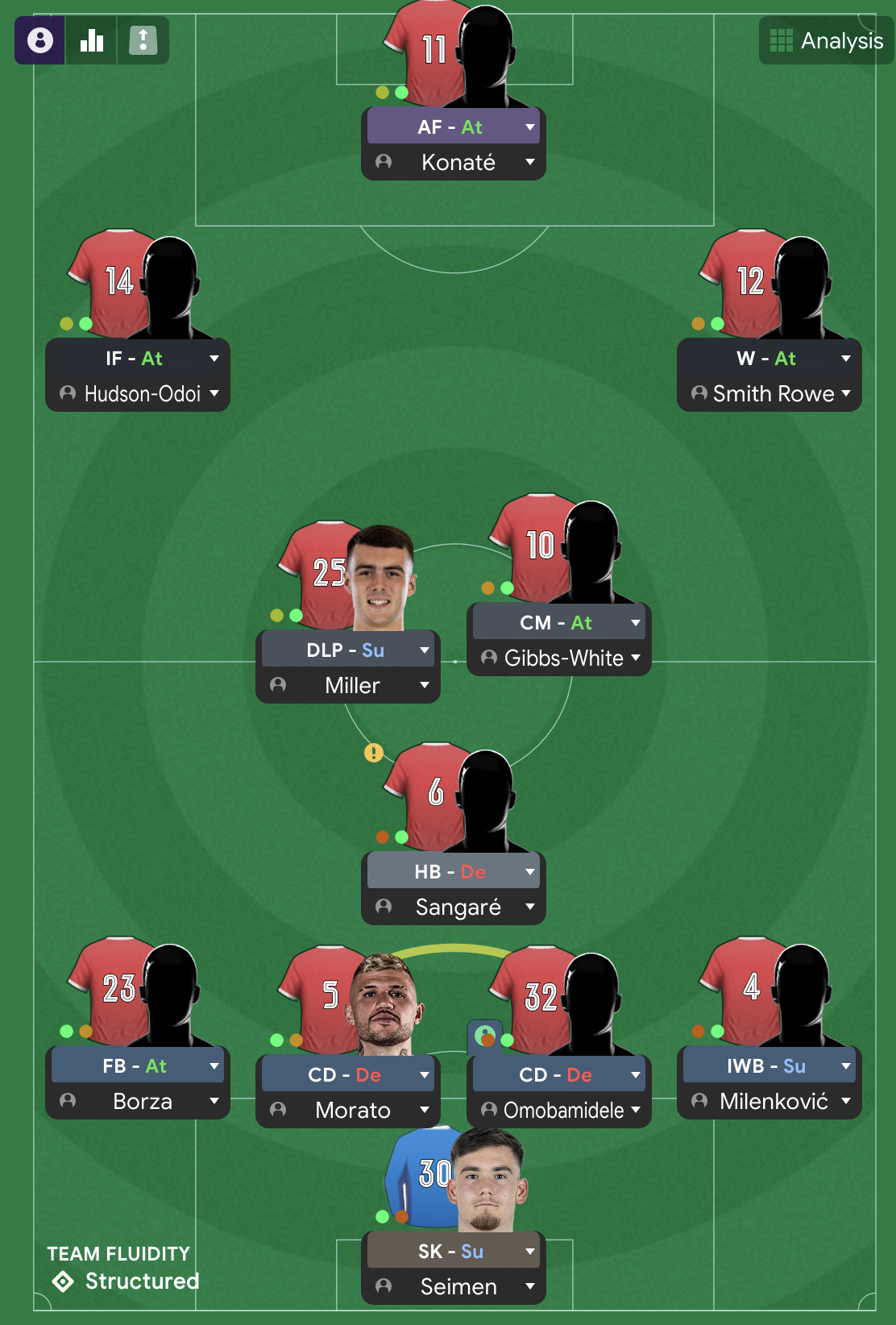
Loading tactical analysis...
Structured
Attacking
4-3-3
Structured
Focus Play Down the Wings
Run at Defence
Work Ball into Box
Counter-Press
Counter
Use Offside Trap
Higher Defensive Line
ST
Advanced Forward
Attack
RW
Inside Forward
Attack
LW
Winger
Attack
CM
Deep Lying Playmaker
Support
CM
Central Midfielder
Attack
CDM
Half Back
Defend
FB
Full Back
Attack
CD
Central Defender
Defend
CD
Central Defender
Defend
IWB
Inverted Wing Back
Support
GK
Sweeper Keeper
Support
Utilizes wingers and an inside forward to stretch defenses, creating space for central players.
The Half Back and Central Defenders provide a solid base, allowing wing-backs to support attacks.
While a high line can compress space, it may leave the team vulnerable to swift counter-attacks.
Heavy emphasis on width may limit central penetration unless midfielders link effectively.
How can we better utilize our midfielders to connect with the forwards?
Are our wing-backs providing enough defensive cover?
How should we adapt our high line against pacey attackers?
In what ways can we enhance our counter-attacking strategy?
Is there a need for more physical presence in midfield?
How can we improve our set-piece effectiveness?
The tactical theory behind the 4-3-3: roles, instructions, and the trade-offs that decide whether the system holds up.
Build the patient, control-the-tempo style without watching your opponents counter through the gaps you leave behind.
Master the classic 4-3-3: player roles, tactical variations, and the trade-offs that decide whether it sings or stalls.
FM27 keeps FM26's tactic system. Here is what stays the same, the small changes that can catch you out, and what the new Tactical Effectiveness system asks of you.