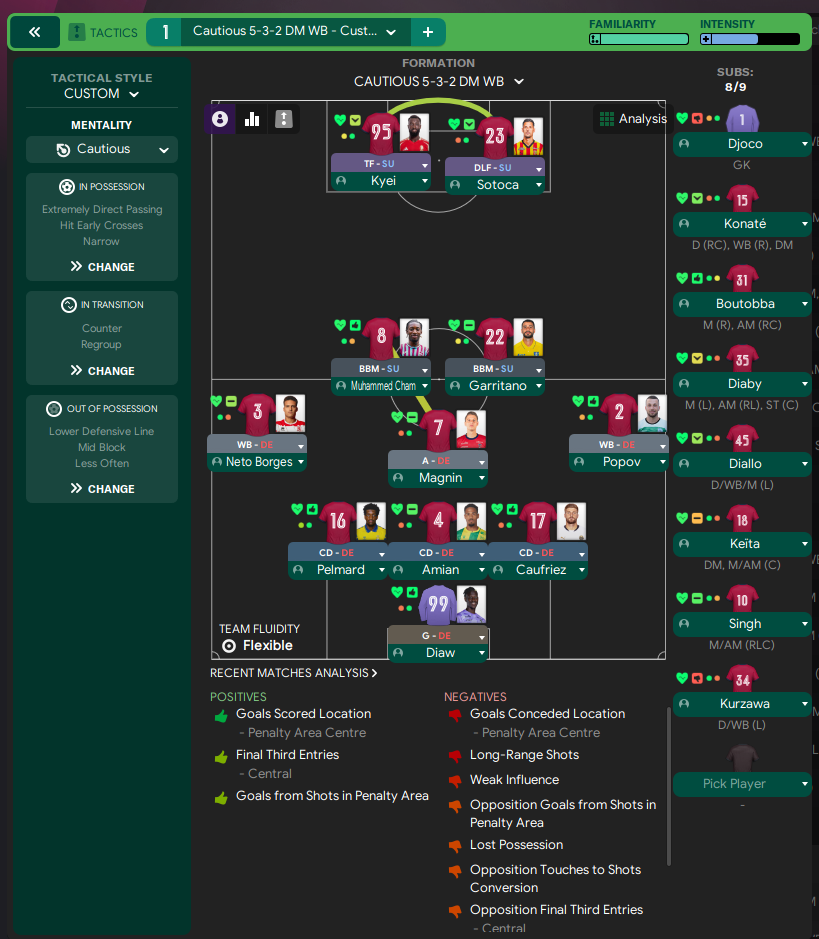
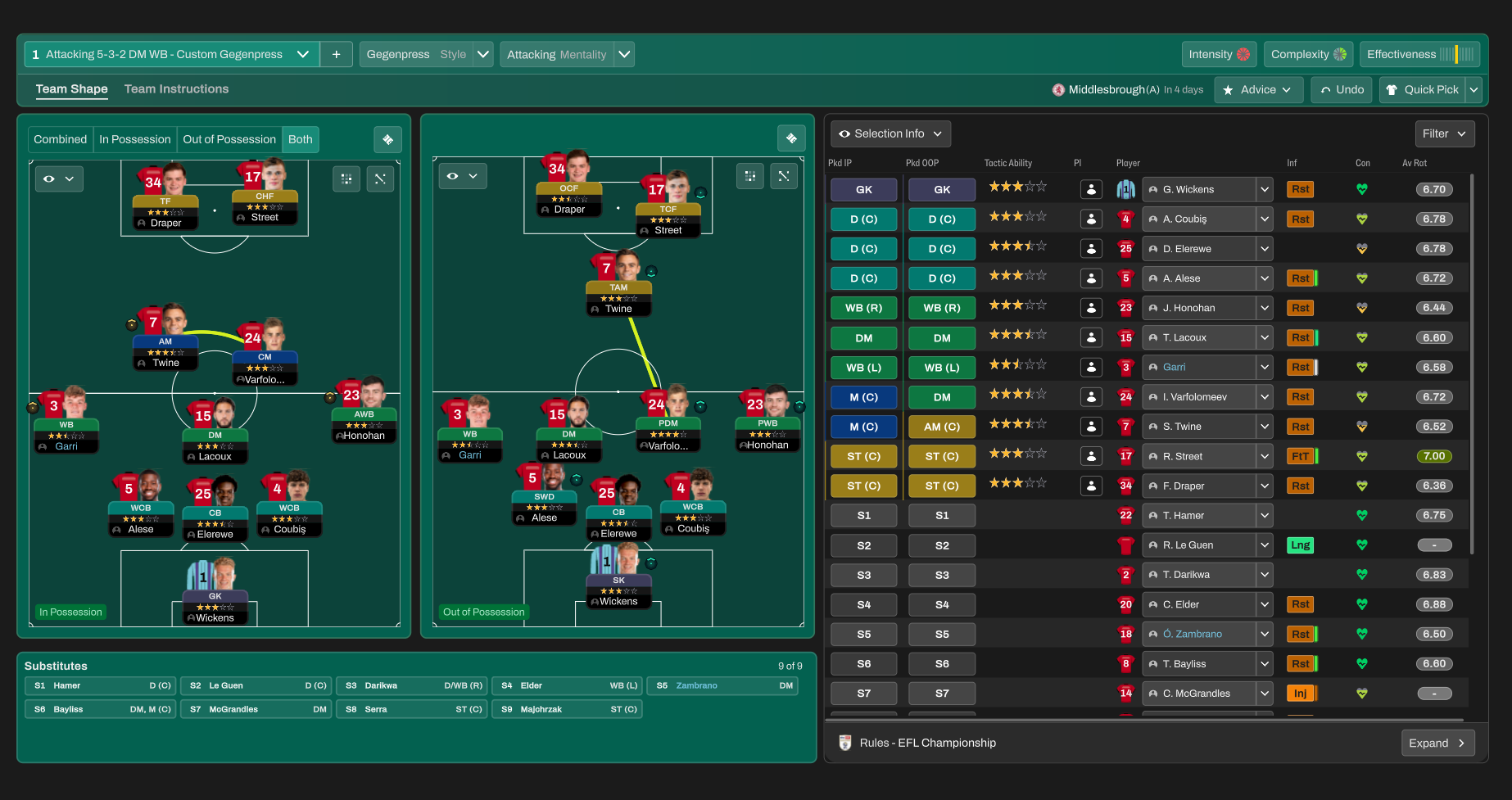
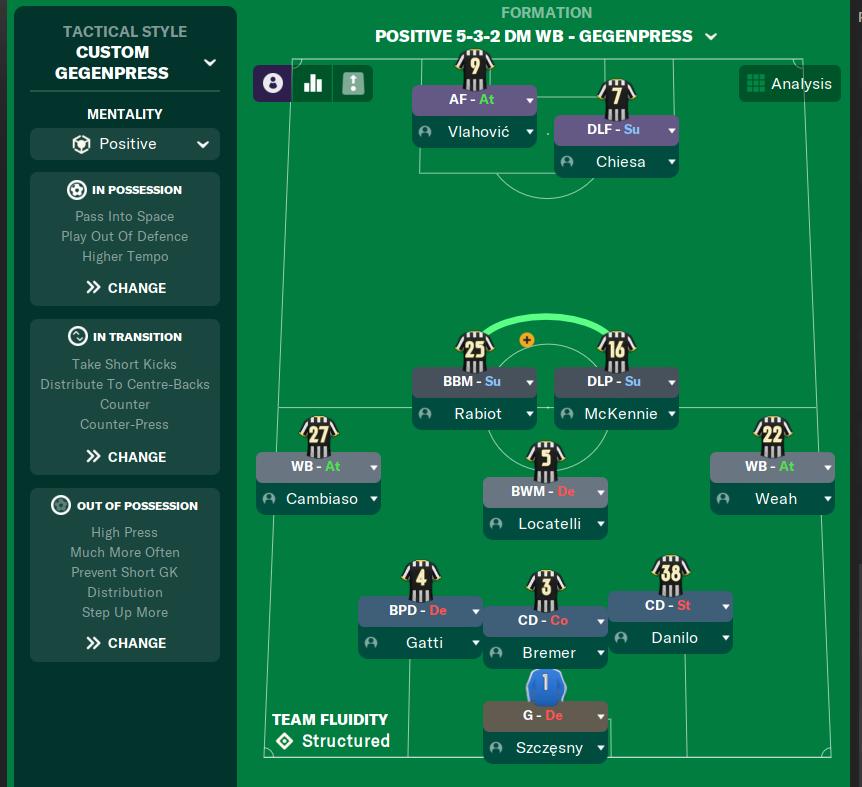
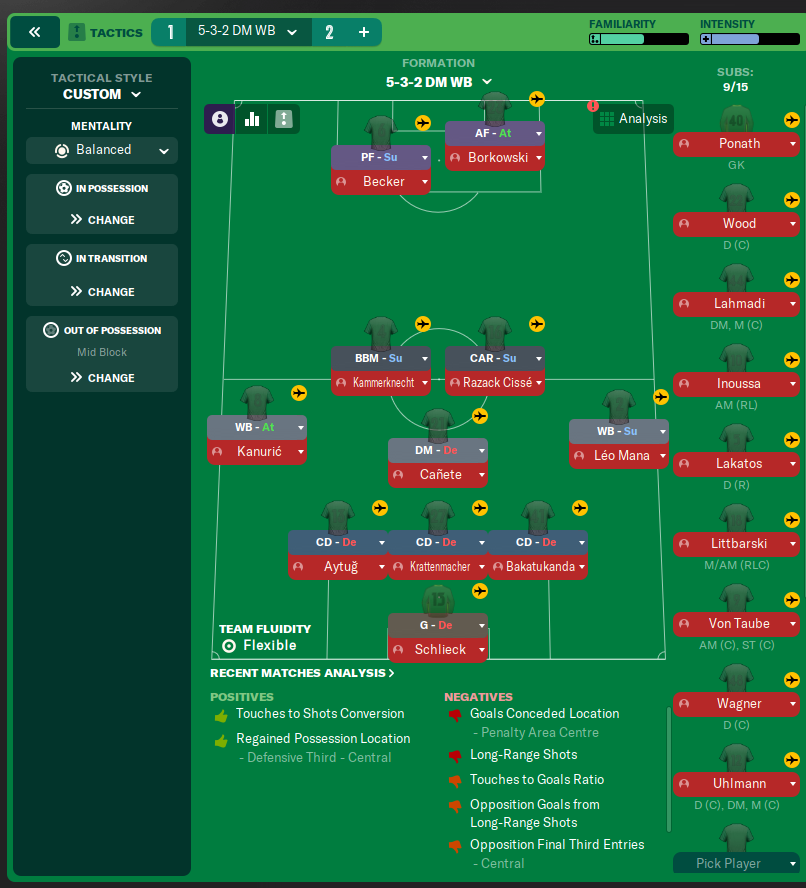
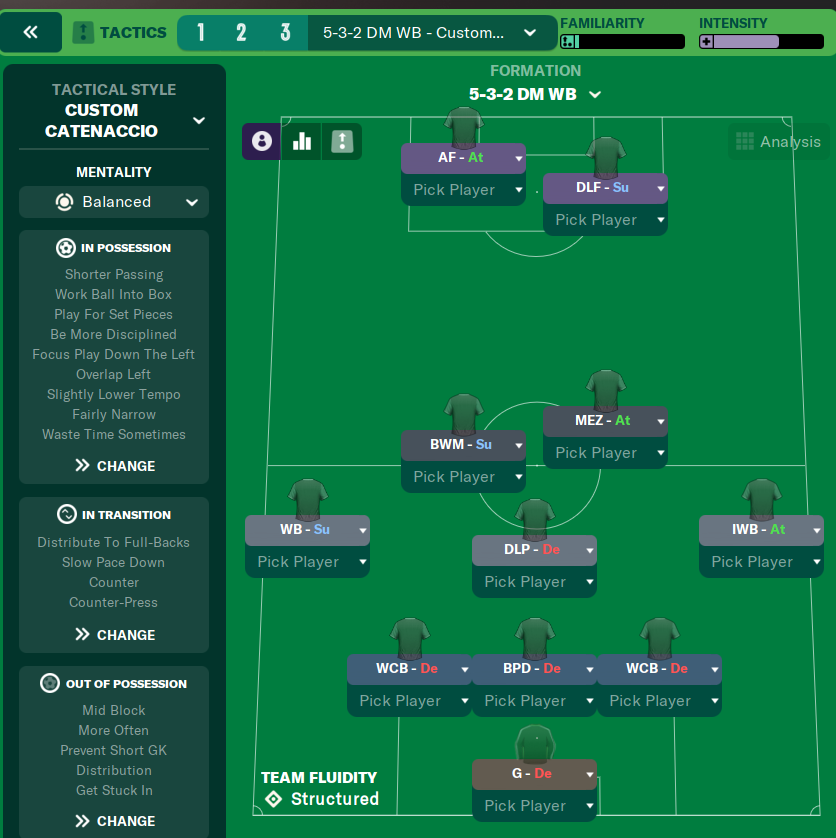
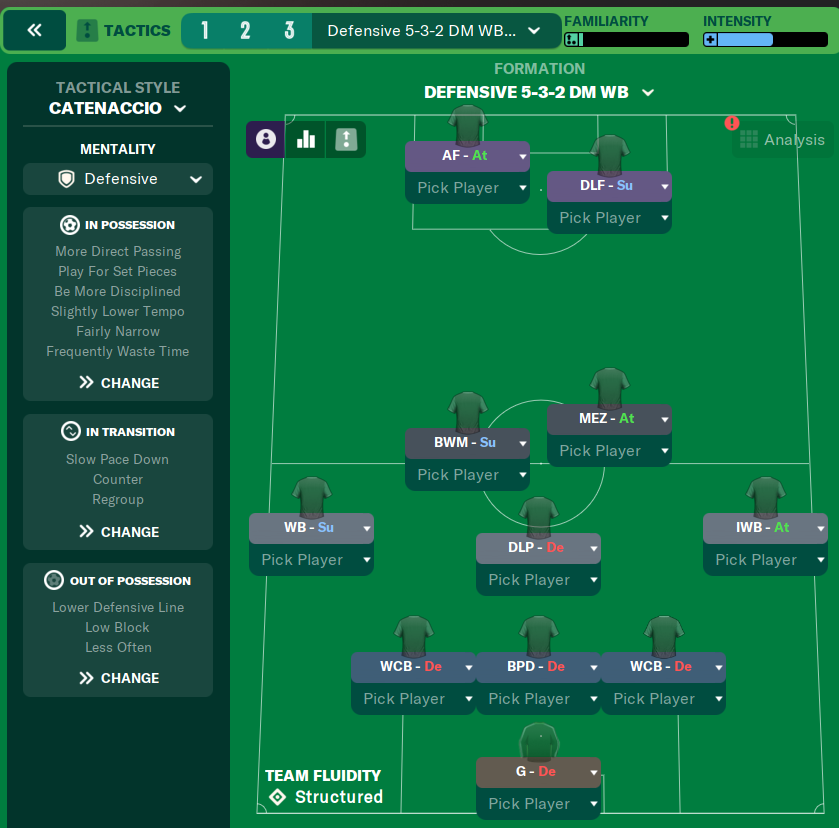
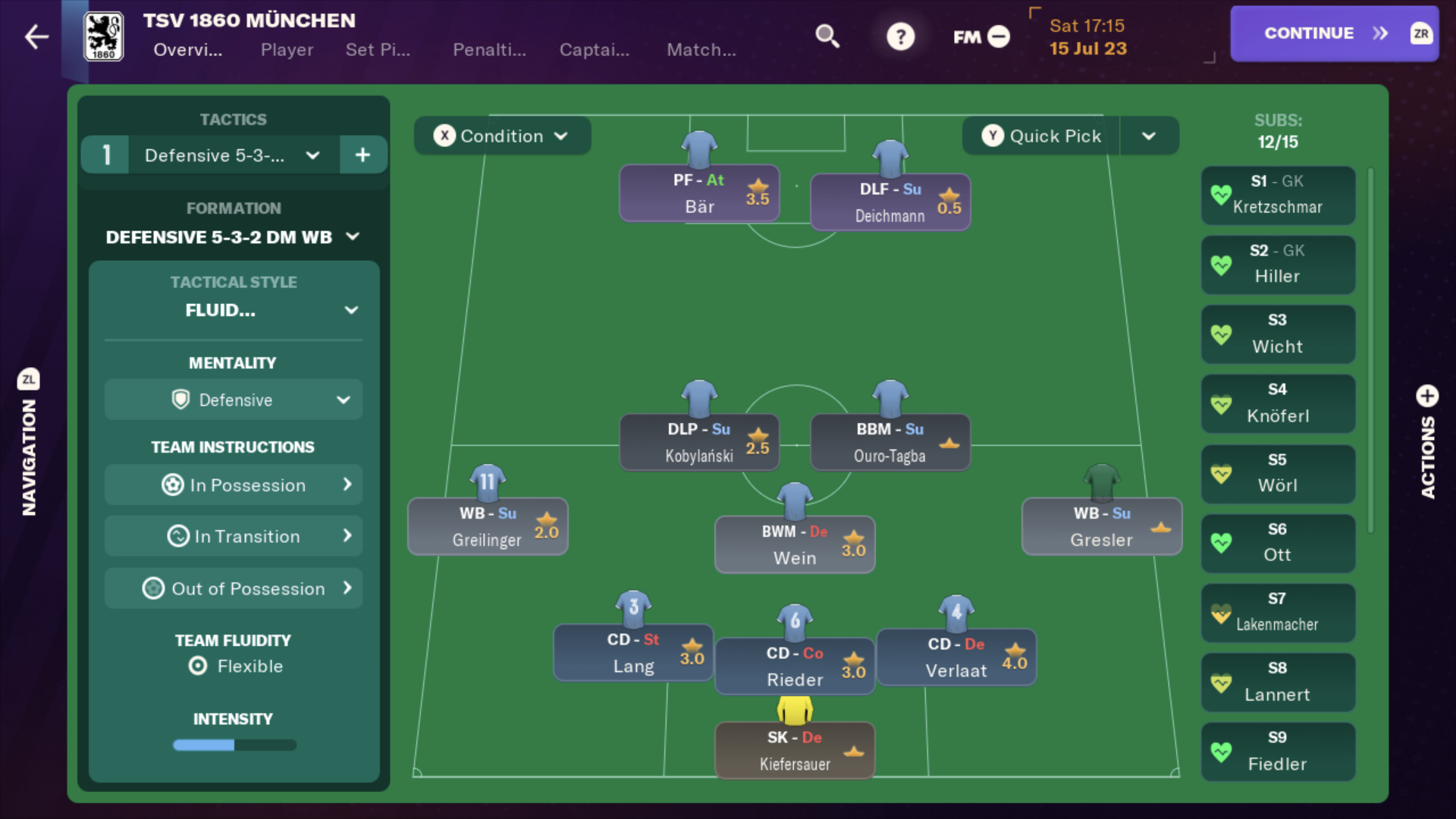
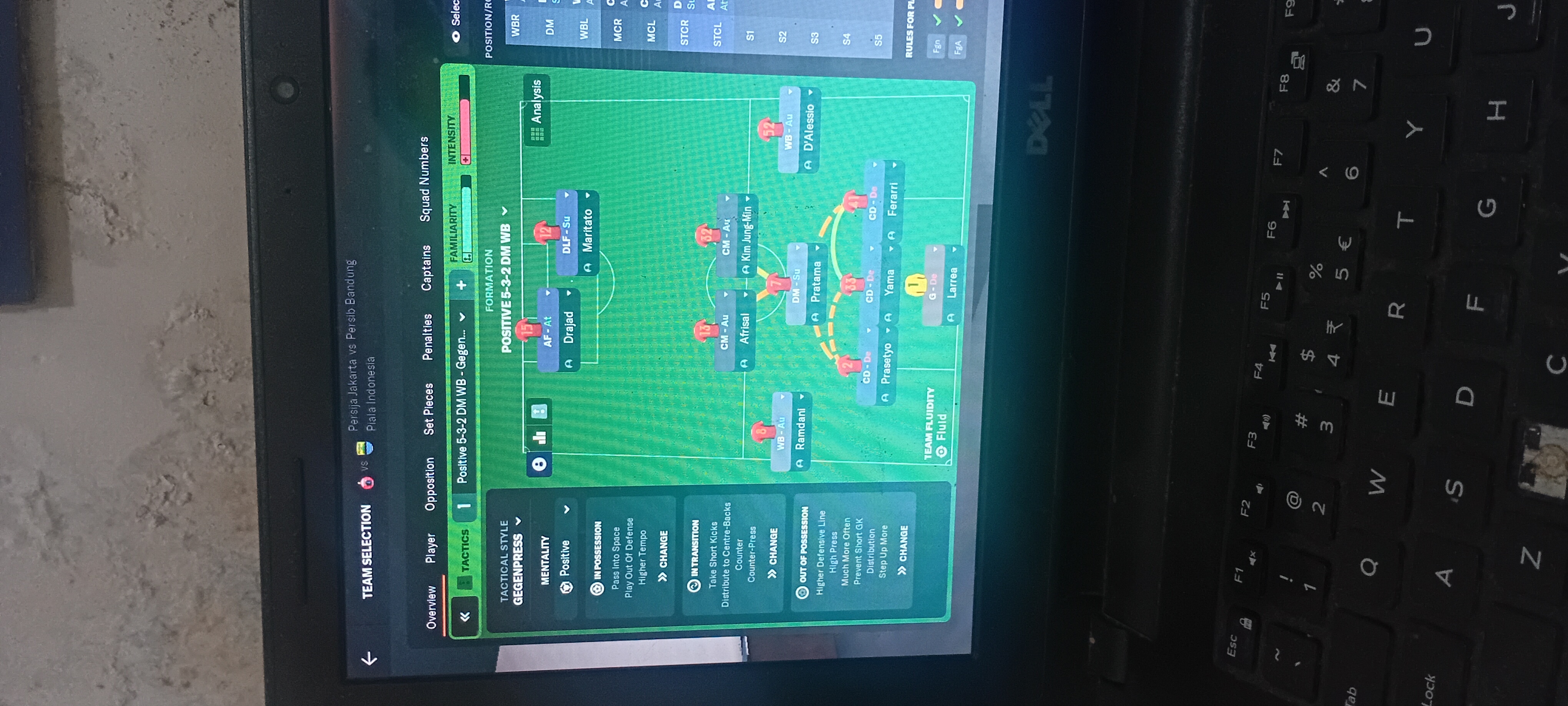
5-3-2 DM WB
The 5-3-2 formation provides a solid defensive base with three central defenders, making it hard for opponents to penetrate.
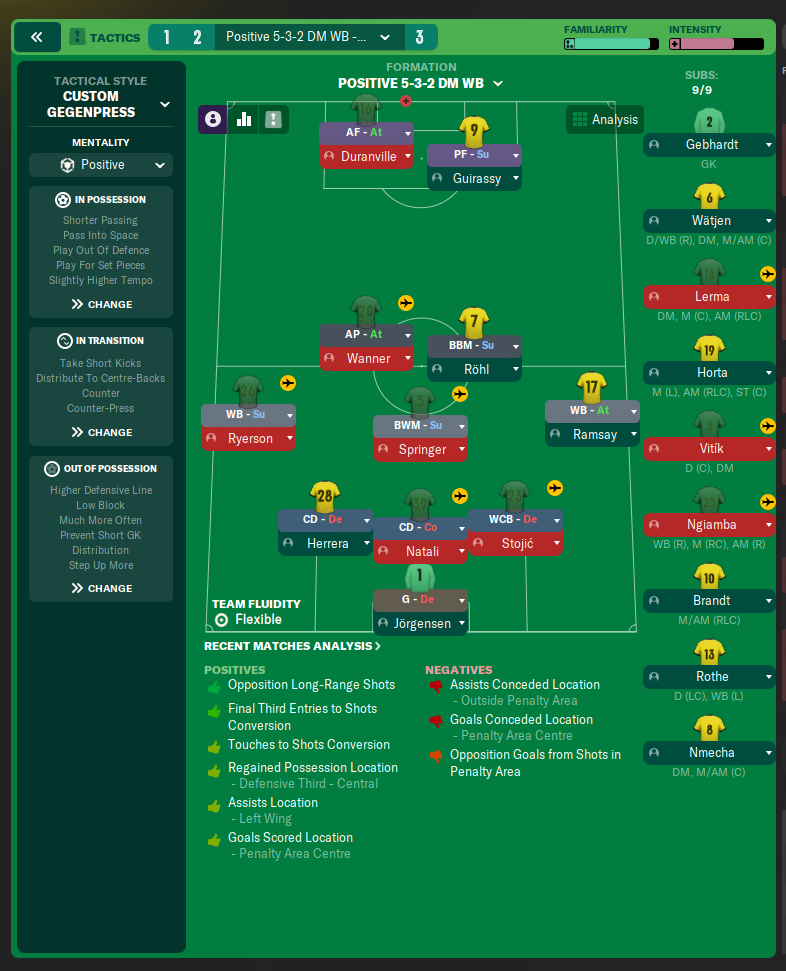
Loading tactical analysis...
Gegenpress
Positive
5-3-2 DM WB
Flexible
Shorter Passing
Pass Into Space
Play Out of Defence
Play for Set Pieces
Slightly Higher Tempo
Take Short Kicks
Distribute to Centre-Backs
Counter
Counter-Press
Higher Defensive Line
Low Block
Much More Often
Prevent Shot GK Distribution
Step Up Press
ST
Advanced Forward
Attack
ST
Pressing Forward
Support
AM
Advanced Playmaker
Attack
CM
Box to Box Midfielder
Support
WB
Wing Back
Support
CD
Central Defender
Defend
CB
Central Defender
Cover
WCB
Wing Back
Defend
GK
Goalkeeper
Defend
The 5-3-2 formation provides a solid defensive base with three central defenders, making it hard for opponents to penetrate.
The wing-backs can provide width and support in attack, while also retreating quickly to contribute defensively.
While wing-backs pushing high can enhance attack, it may leave the defense exposed against quick counters if they are caught upfield.
A higher defensive line could be risky against teams with fast attackers, leading to potential one-on-one situations with the goalkeeper.
How can we improve our finishing in the final third?
Are our wing-backs getting enough defensive cover?
What adjustments can be made to adapt to different opponents?
How is our team handling transition phases currently?
Are the attacking patterns effective in breaking down tight defenses?
What improvements can be made for defending set pieces?
The tactical theory behind the 5-3-2 DM WB: roles, instructions, and the trade-offs that decide whether the system holds up.
The deliberate underdog tactic in FM: formation choices, duty distribution, and why Counter-Press is exactly wrong inside a low block.
FM27 keeps FM26's tactic system. Here is what stays the same, the small changes that can catch you out, and what the new Tactical Effectiveness system asks of you.
How Mentality, Duty, and Role interact in FM, why duty trumps mentality every time, and the role-on-top-of-duty composition rules.