Control Possession 4-3-3 DM Wide (Balanced) Tactic
4-3-3 DM Wide
Controlled possession with dynamic movement in attack. The tactical style emphasizes possession, allowing control of the game.
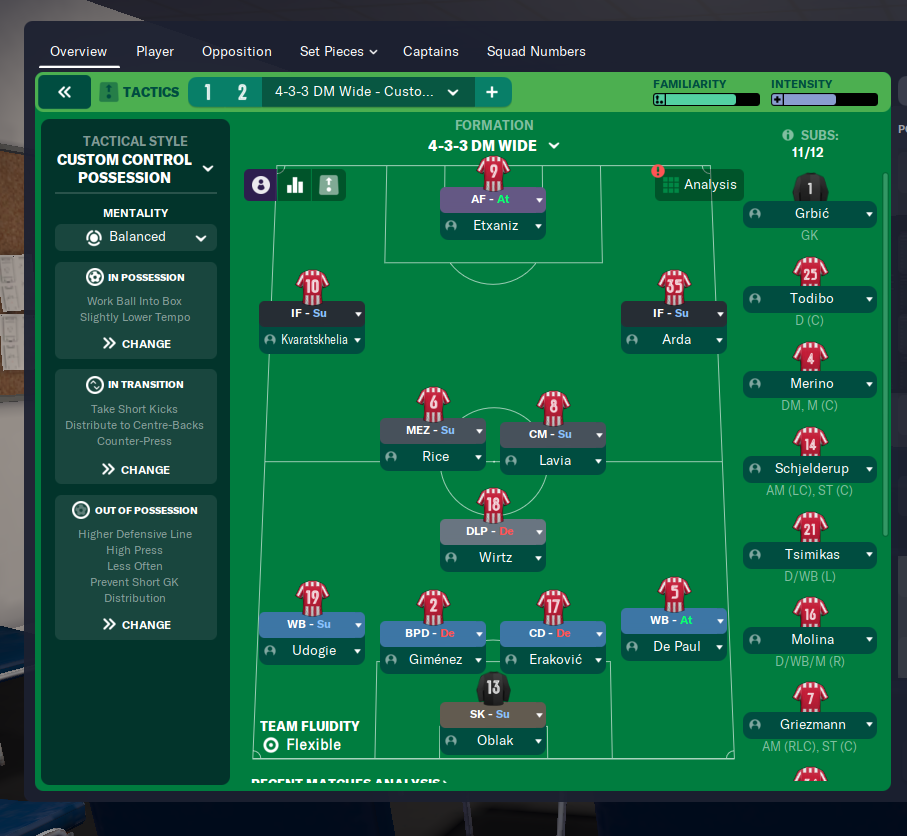
Loading tactical analysis...
Formation and style
Custom Control Possession
Balanced
4-3-3 DM Wide
Flexible
In possession
Work Ball Into Box
Slightly Lower Tempo
In transition
Take Short Kicks
Distribute to Centre-Backs
Counter-Press
Out of possession
Higher Defensive Line
High Press
Less Often
Prevent Short GK Distribution
Player roles
GK
Sweeper Keeper
Support
D
Ball-Playing Defender
Defend
D
Centre-Back
Defend
D
Wing-Back
Defend
CM
Deep-Lying Playmaker
Defend
CM
Mezzala
Support
CM
Central Midfielder
Support
AM
Inside Forward
Support
AM
Advanced Forward
Attack
AM
Inside Forward
Support
D
Wing-Back
Support
Phase description
Primarily focuses on possession with an emphasis on working the ball into the box and using inside forwards to exploit spaces.
Utilizes a counter-press strategy to regain possession quickly, relying on short distribution to center-backs.
Controlled possession with dynamic movement in attack.
Team shape defence
4-1-4-1
High defensive line aiding in pressuring the opposition in their half while maintaining solid defensive coverage.
Defensive strategy includes 'Higher Defensive Line' and 'High Press'.
Team shape attack
4-3-3
Attacking shape allows for width and creativity with inside forwards and an advanced forward in the middle.
Formation structure is a 4-3-3 with wing-backs providing width.
Key strengths
Controlled Possession
The tactical style emphasizes possession, allowing control of the game.
Instructions like 'Work Ball Into Box' and a balanced mentality support this.
Dynamic Midfield
Three midfielders with varied roles enhance creativity and support both defense and attack.
Utilization of Mezzala, Deep-Lying Playmaker, and Central Midfielder with supportive duties.
Conflicting tactics
Defensive Vulnerability
A high defensive line can be exposed to quick counter-attacks if the midfield fails to press effectively.
The combination of 'Higher Defensive Line' and 'High Press' requires high work rate from midfielders.
Dependence on Wing-Backs
The effectiveness of the attack relies heavily on the wing-backs providing width.
Wing-Backs on both sides marked as 'Support' and 'Defend' could limit offensive transitions.
Risk exposures
Risk Exposures
Items
Defensive Anchoring
With a high line and pressing system, the defence may struggle against fast transitions.
The reliance on a high defensive line and pressing strategy can backfire if not well-coordinated.
Width Exploitation
Too narrow positioning when attacking can lead to predictable play.
While using wing-backs and inside forwards, the exploitative width needs to be maintained.
Role synergies
Role Synergies
Items
Mezzala and Inside Forward
The Mezzala can create space for the Inside Forward by drawing defenders wide.
Mezzala (Su) at [4,2] and Inside Forward (Su) at [6,1] interact effectively.
Deep-Lying Playmaker and Ball-Playing Defender
The Ball-Playing Defender can facilitate play through the Deep-Lying Playmaker.
DLP (De) at [3,3] and BPD (De) at [2,2] provide a solid defensive foundation for build-up.
Suggested questions
How can tempo adjustments further enhance the attacking transition?
Should we reconsider our defensive line height against particular opponents?
In what scenarios could a more aggressive pressing strategy be beneficial?
Related Tactics
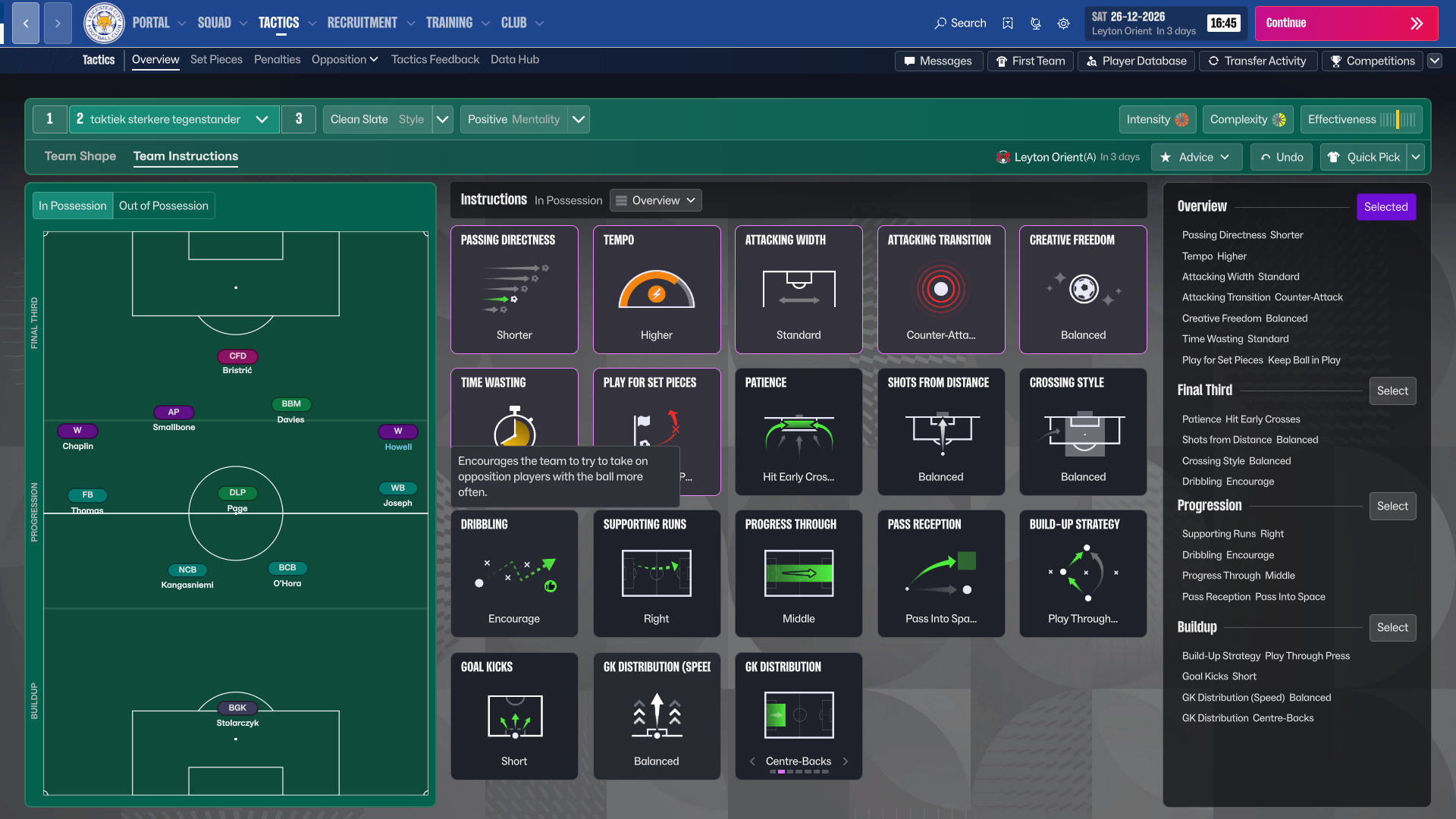
4-3-3 DM Wide Formation
clean slate
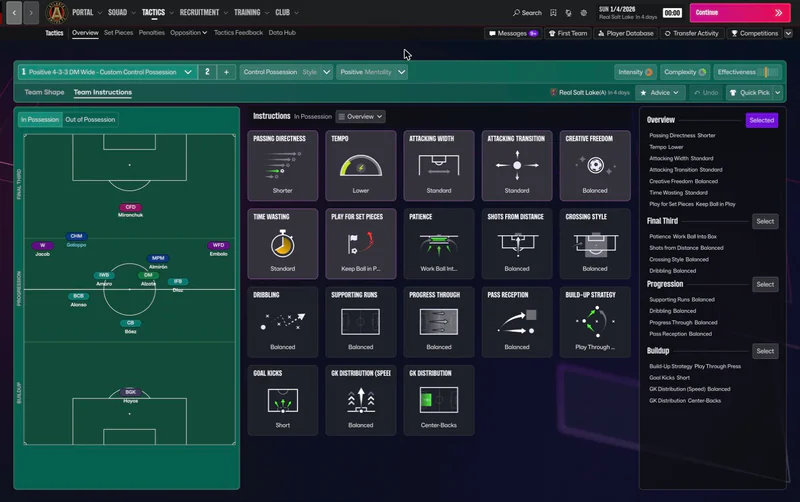
Control Possession 4-3-3 DM Wide
control possession
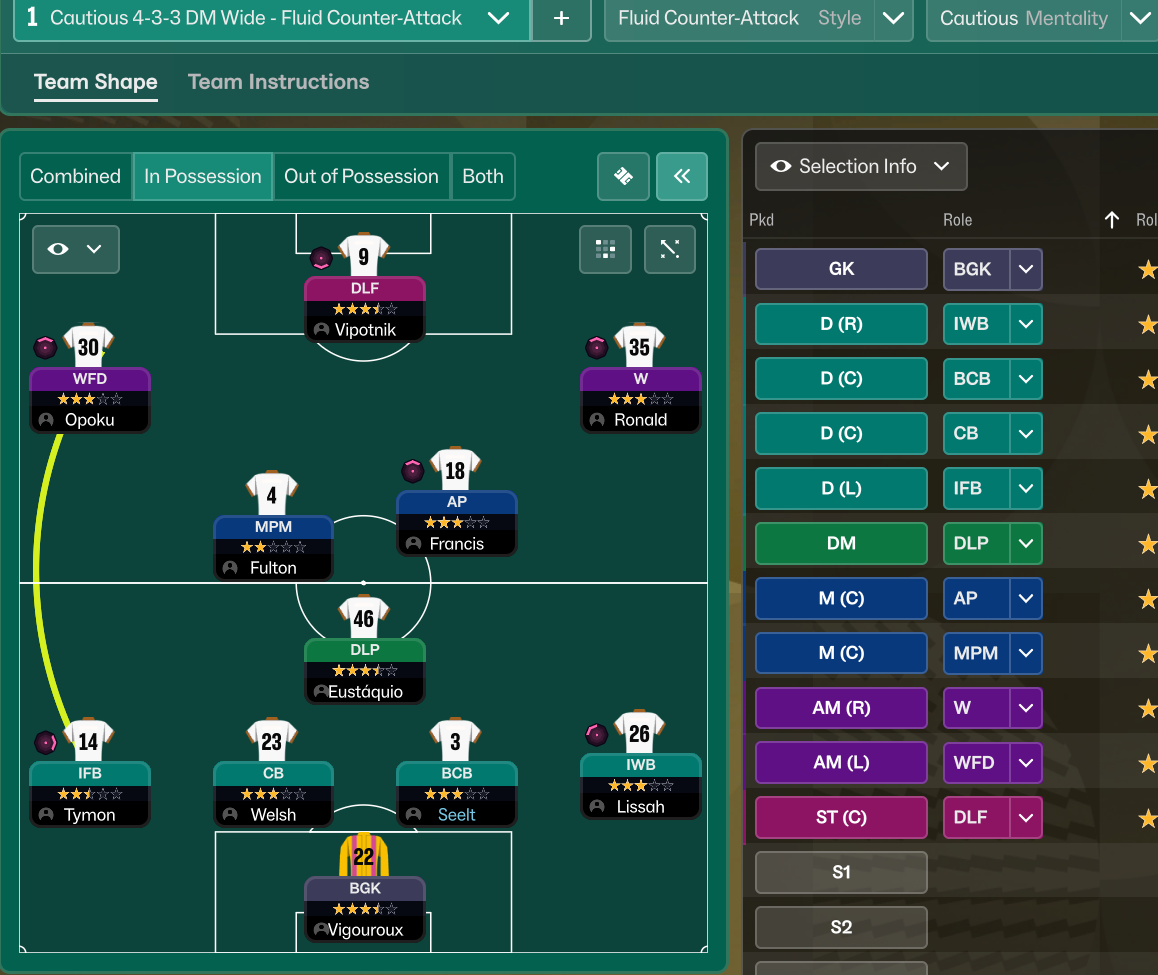
Fluid Counter-Attack 4-3-3 DM Wide
Fluid Counter-Attack
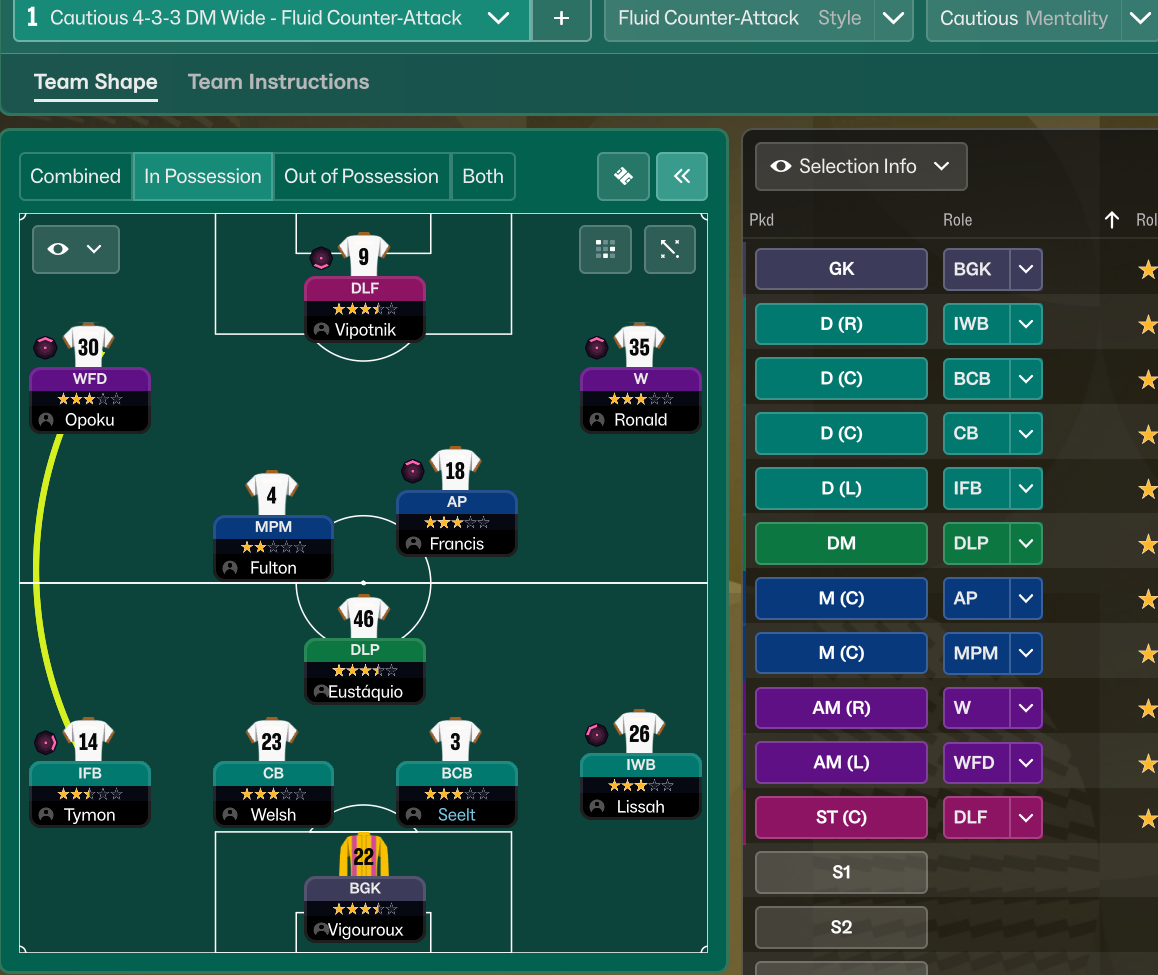
Fluid Counter-Attack 4-3-3 DM Wide
Fluid Counter-Attack
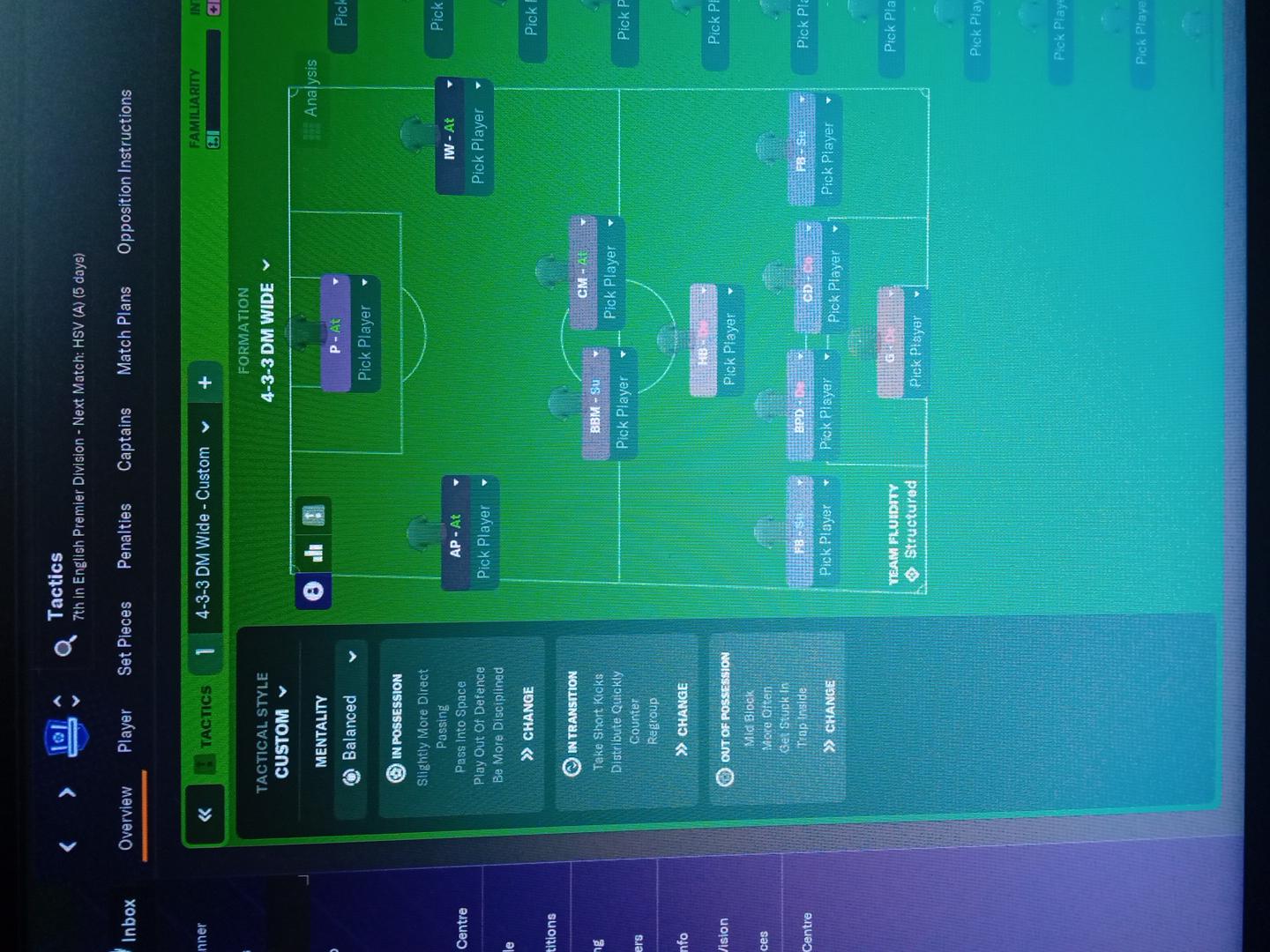
4-3-3 DM Wide Formation
Custom
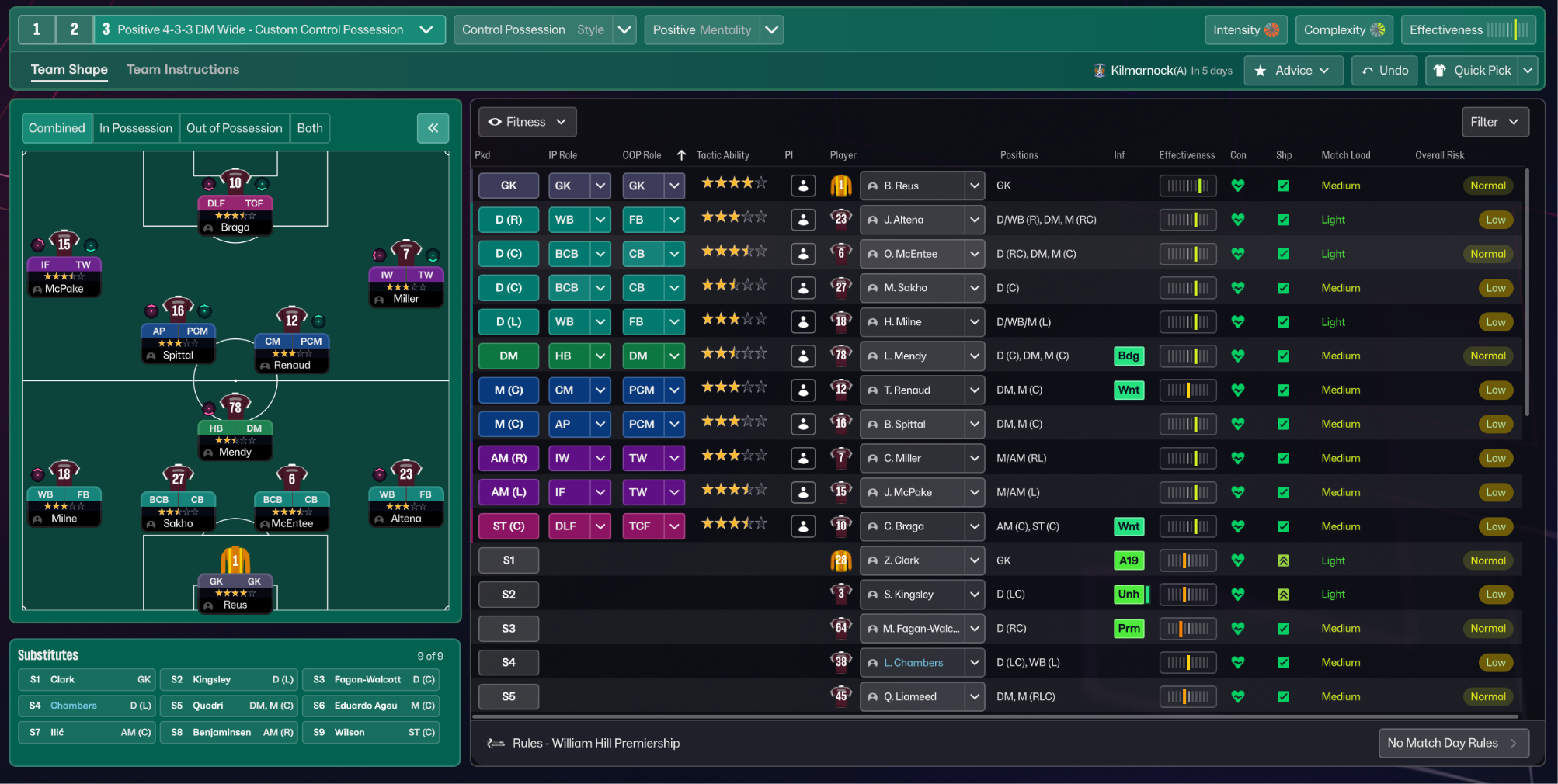
Control Possession 4-3-3 DM Wide
Control Possession
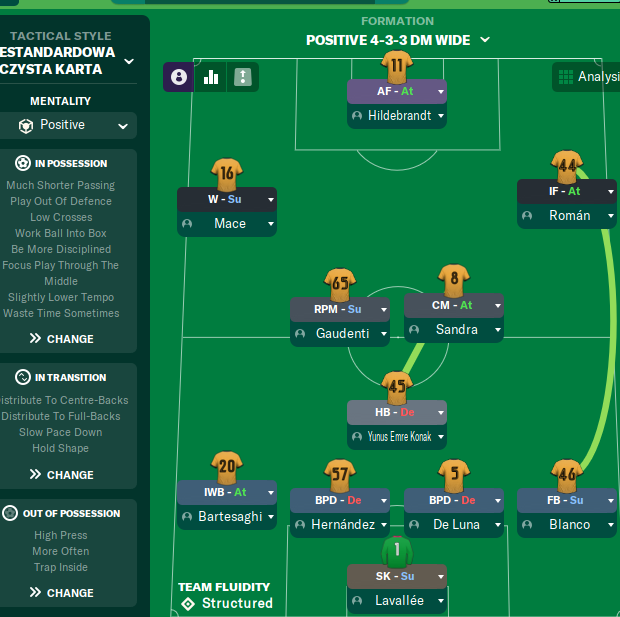
Positive 4-3-3 DM Wide
Positive
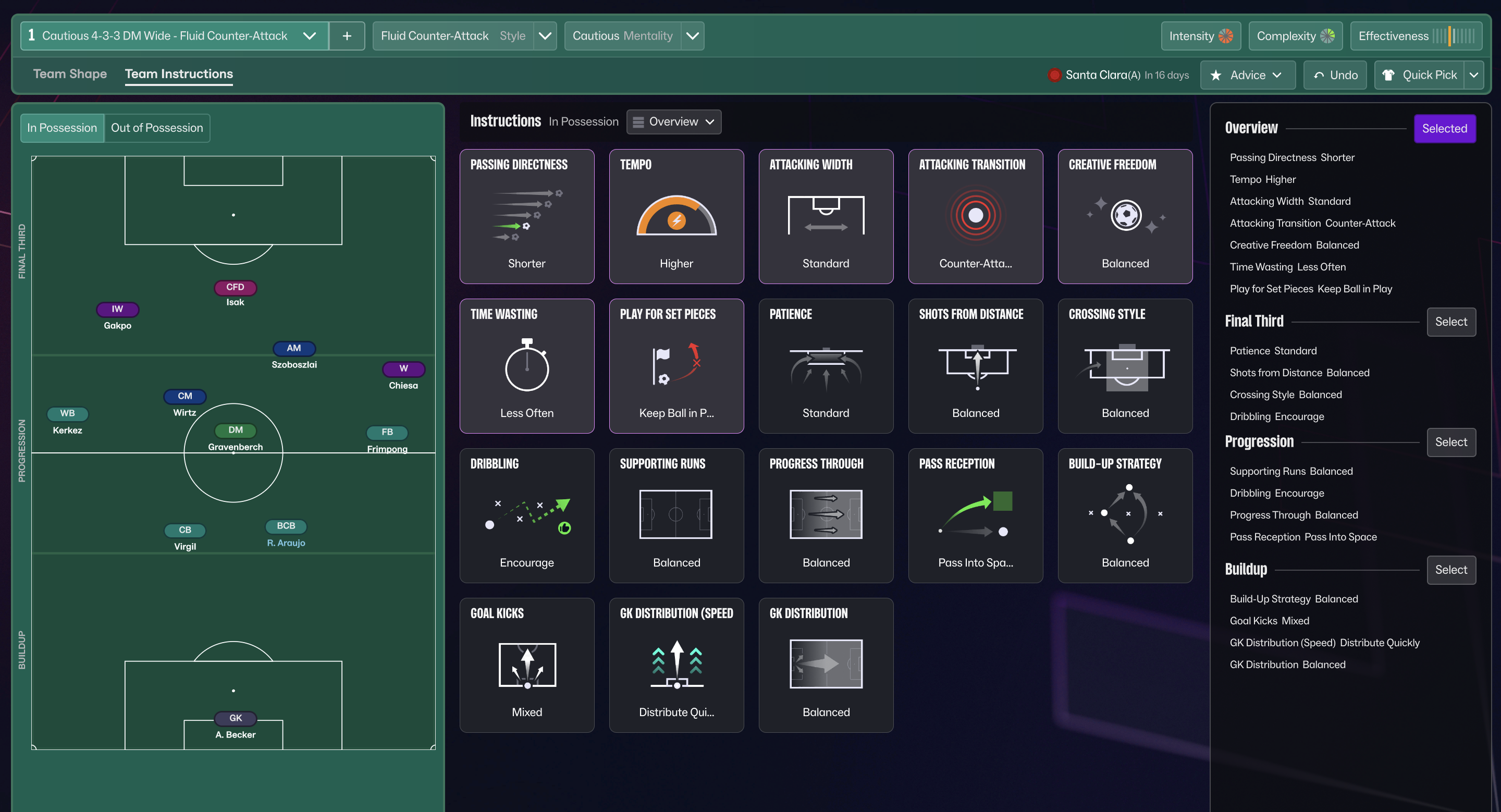
Fluid Counter-Attack 4-3-3 DM Wide
Fluid Counter-Attack
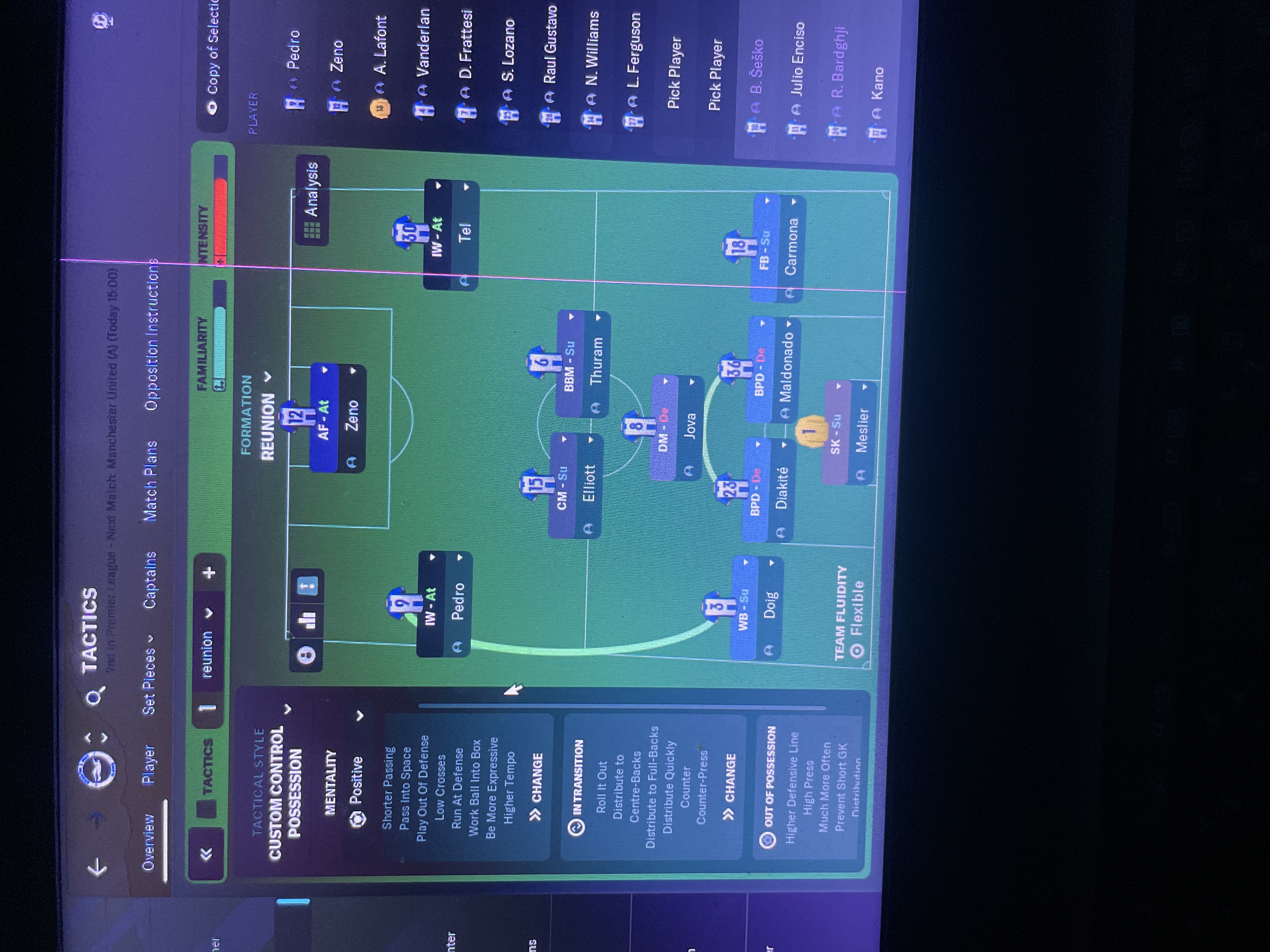
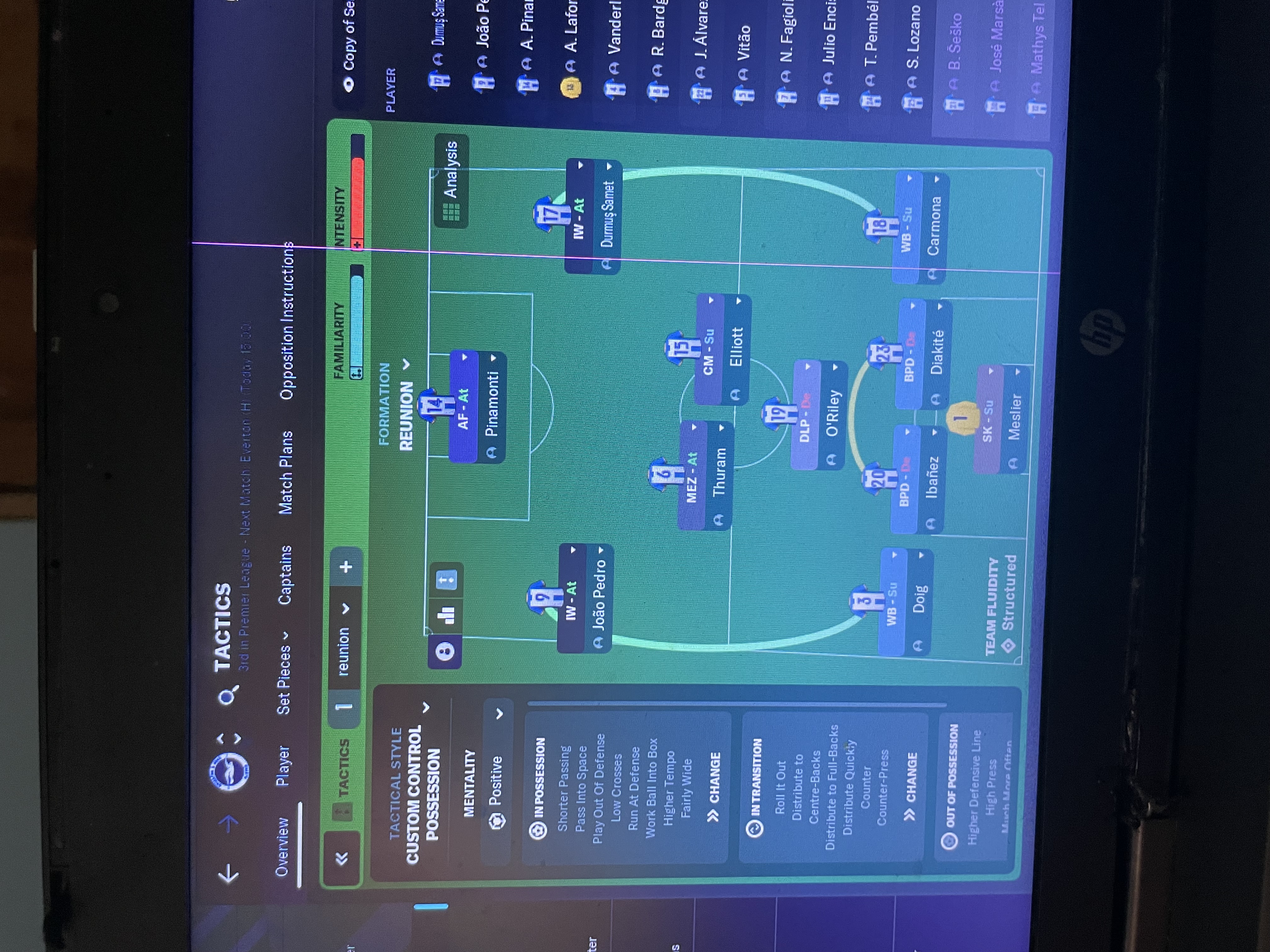
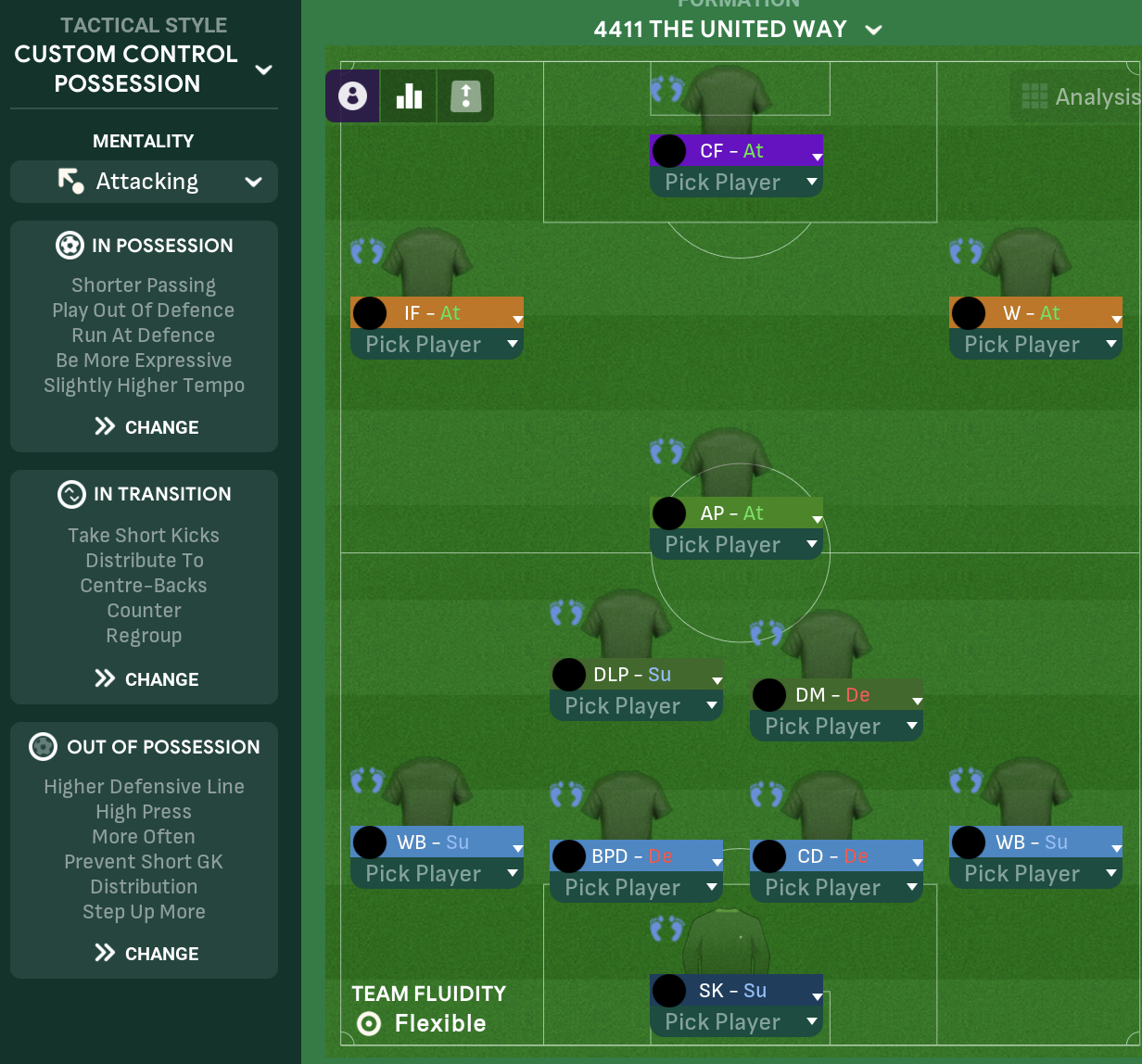
More Custom Control Possession tactics
Guides for this tactic
The tactical theory behind the 4-3-3 DM Wide: roles, instructions, and the trade-offs that decide whether the system holds up.
Player pairings
Midfield Trios
Holder, runner, creator: the role distribution rule for three-man midfields, the AMC variants, and the antipatterns that break them.
Read guide
Playing styles
Gegenpressing: A Full Guide
Klopp-style gegenpressing in FM, including squad profile, line-and-press pairing, sustainable workload, and the antipatterns to avoid.
Read guide
Match preparation
In-Match Tactical Changes
Mentality, duty, role, instruction, sub. The change hierarchy from lightest to heaviest intervention, and 60th-minute patterns by game state.
Read guide