Gegenpress 4-3-3 DM Wide (Balanced) Tactic
4-3-3 DM Wide
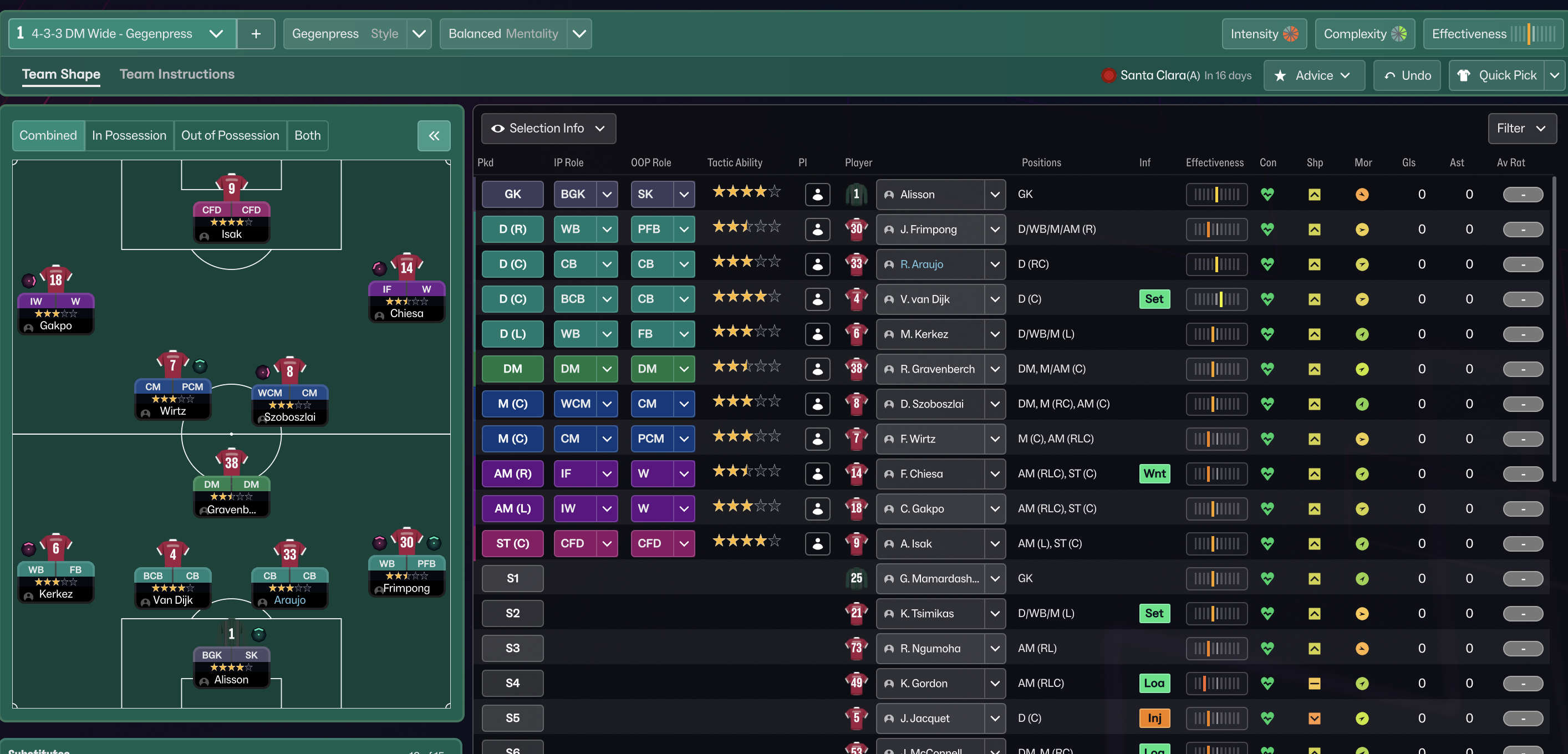
Combining quick passing with high pressing to unsettle opponent's build-up. The structure allows smooth transitions between defense and attack.
Loading tactical analysis...
Formation and style
Gegenpress
Balanced
4-3-3 DM Wide
In possession
Shorter Passing
Play Out of Defence
Work Ball into Box
In transition
Counter-Press
Counter
Out of possession
Higher Line of Engagement
Higher Defensive Line
Prevent Short GK Distribution
Trigger Press More Often
Player roles
GK
Sweeper Keeper
Support
DF (R)
Wing Back
Attack
DF (C)
Ball Playing Defender
Defend
DF (C)
Centre Back
Defend
DF (L)
Full Back
Support
DM
Defensive Midfielder
Support
CM
Deep-Lying Playmaker
Support
CM
Wide Central Midfielder
Support
AM (L)
Inside Forward
Attack
AM (R)
Winger
Support
ST
Complete Forward
Attack
Phase description
Utilizes quick transitions to exploit space with emphasis on width and overlapping wing-backs.
Engages in immediate pressing upon losing possession to regain control quickly.
Combining quick passing with high pressing to unsettle opponent's build-up.
Team shape defence
4-3-3
Compact shape with wing-backs participating in both defensive and attacking phases.
FB at [2,1], [2,5] provide width, CBs cover central areas.
Team shape attack
4-3-3
Aggressive with inside forwards stretching the play and a central striker occupying the defenders.
IF at [5,2], W at [6,1], and W at [6,5] create a strong front line.
Key strengths
Fluid Attack
The structure allows smooth transitions between defense and attack.
With WCM at [4,3], PCM at [4,2] and AMs at [5,1], [5,5], the formation promotes fluidity.
High Pressing
Effective in regaining possession quickly after losing it, disrupting opponent's flow.
In possession instructions and roles like DM at [3,3] contributing to pressing.
Conflicting tactics
Over-reliance on Width
Excessive width may lead to congested midfield areas, hampering progression.
Wingers at [5,1] and [5,5] might isolate the central midfielders.
Pressing Fatigue
Aggressive pressing can lead to player fatigue, especially in high-tempo matches.
Constant pressing might strain players like DM at [3,3] and WCM at [4,2].
Risk exposures
Risk Exposures
Items
Defense
Higher line may create susceptibility to ball over the top.
Higher Defensive Line with CB at [2,2], [2,3] increases risk.
Midfield
Weakness against counters if DM is isolated.
DM at [3,3] acts as the lone shield against attacks.
Role synergies
Role Synergies
Items
Winger and Full-Back
Creates overloads on the flanks, pulling defenders out of position.
FB at [2,1] and W at [6,5] work well together to create goal-scoring opportunities.
Defensive Midfielder and Centre Backs
Provides a strong defensive shield in front of the backline.
DM at [3,3] supports CBs at [2,2], [2,3] preventing through balls.
Suggested questions
How can we improve our transition defense?
Should we consider adjusting our midfield roles for better balance?
What adjustments can be made to enhance our attacking fluidity?
Related Tactics
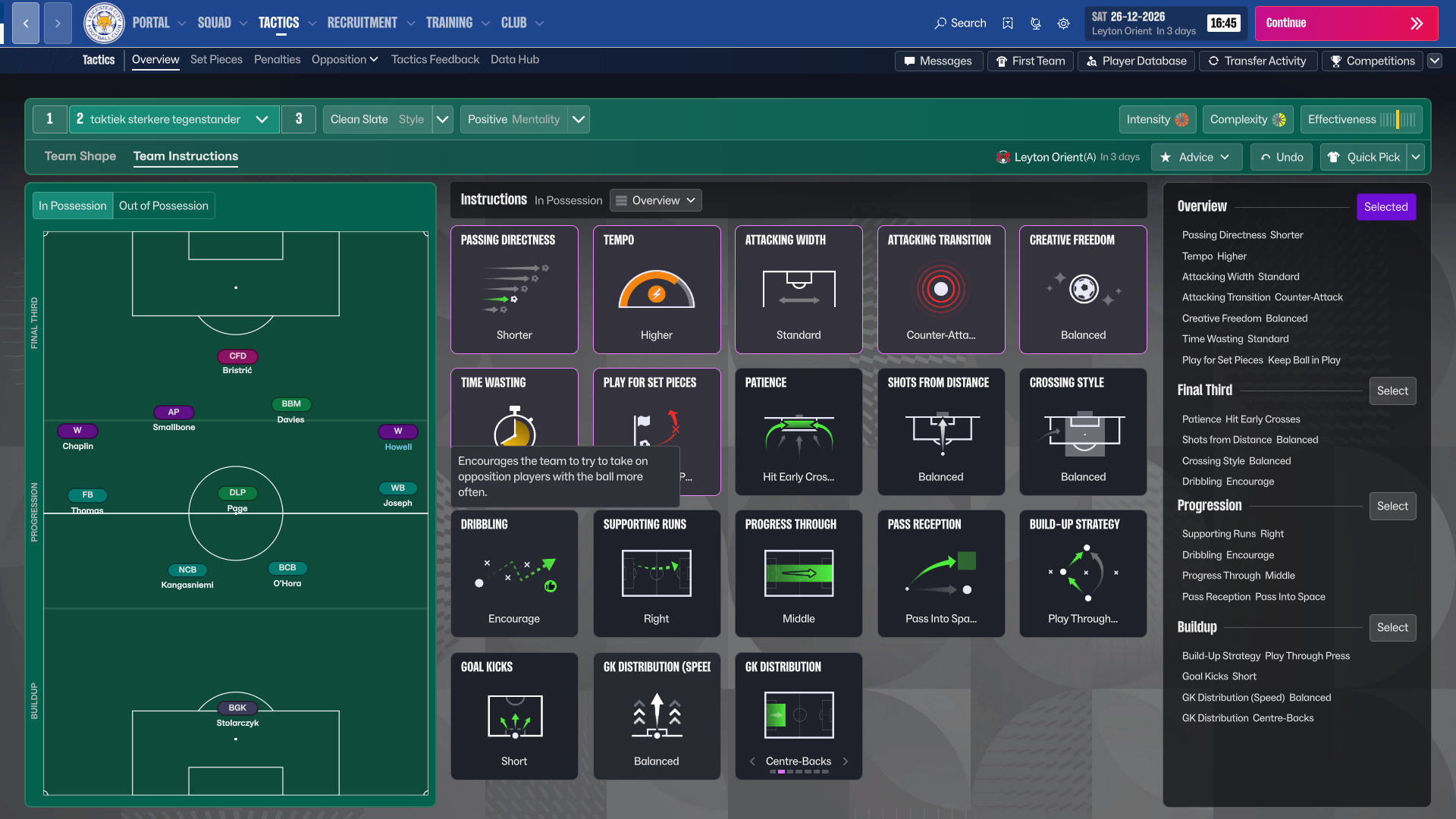
4-3-3 DM Wide Formation
clean slate
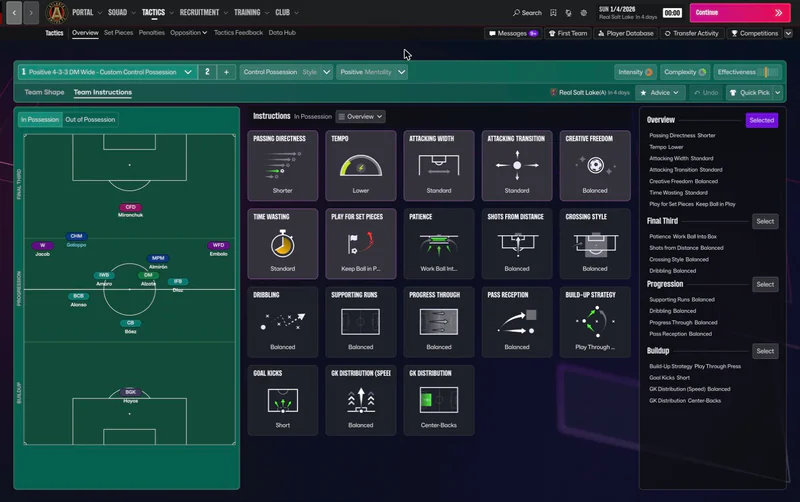
Control Possession 4-3-3 DM Wide
control possession
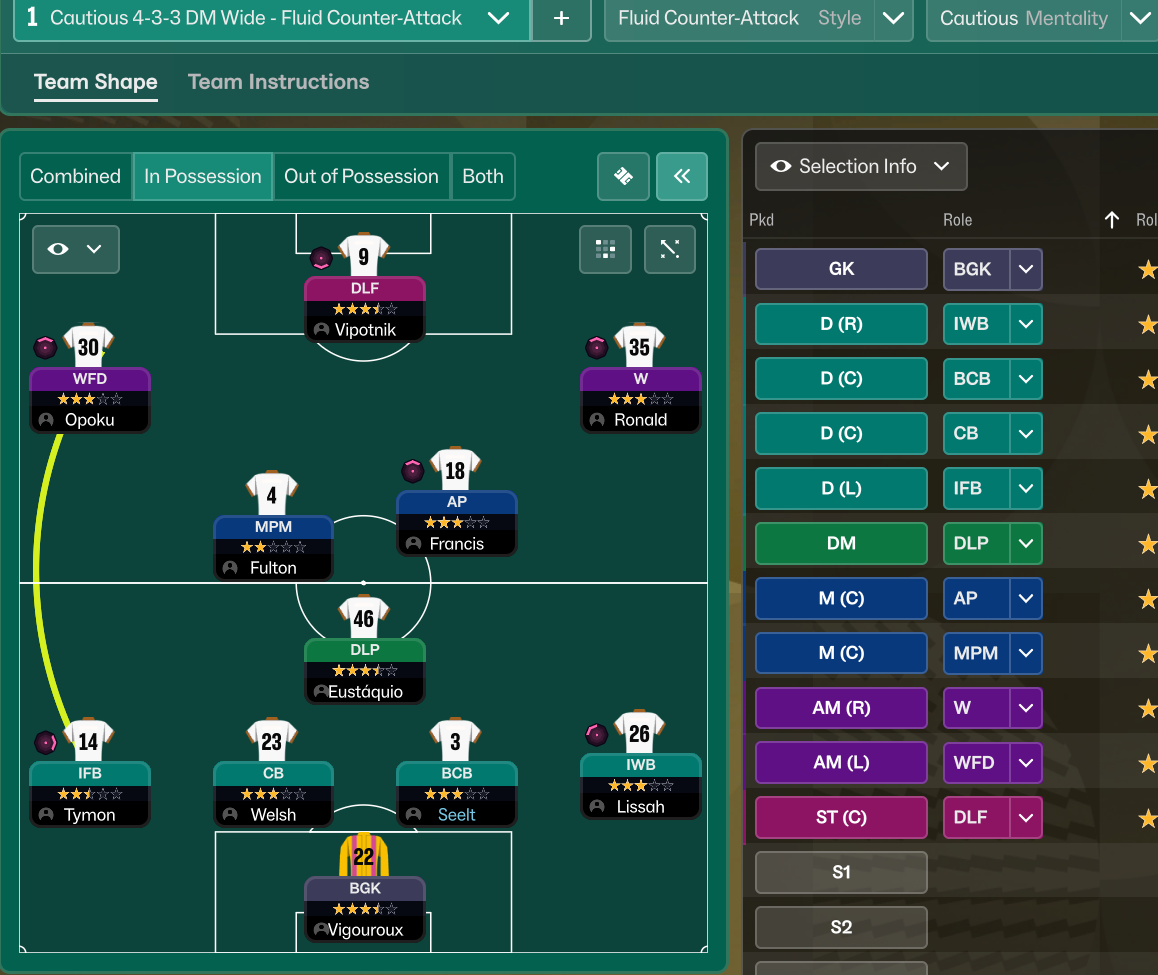
Fluid Counter-Attack 4-3-3 DM Wide
Fluid Counter-Attack
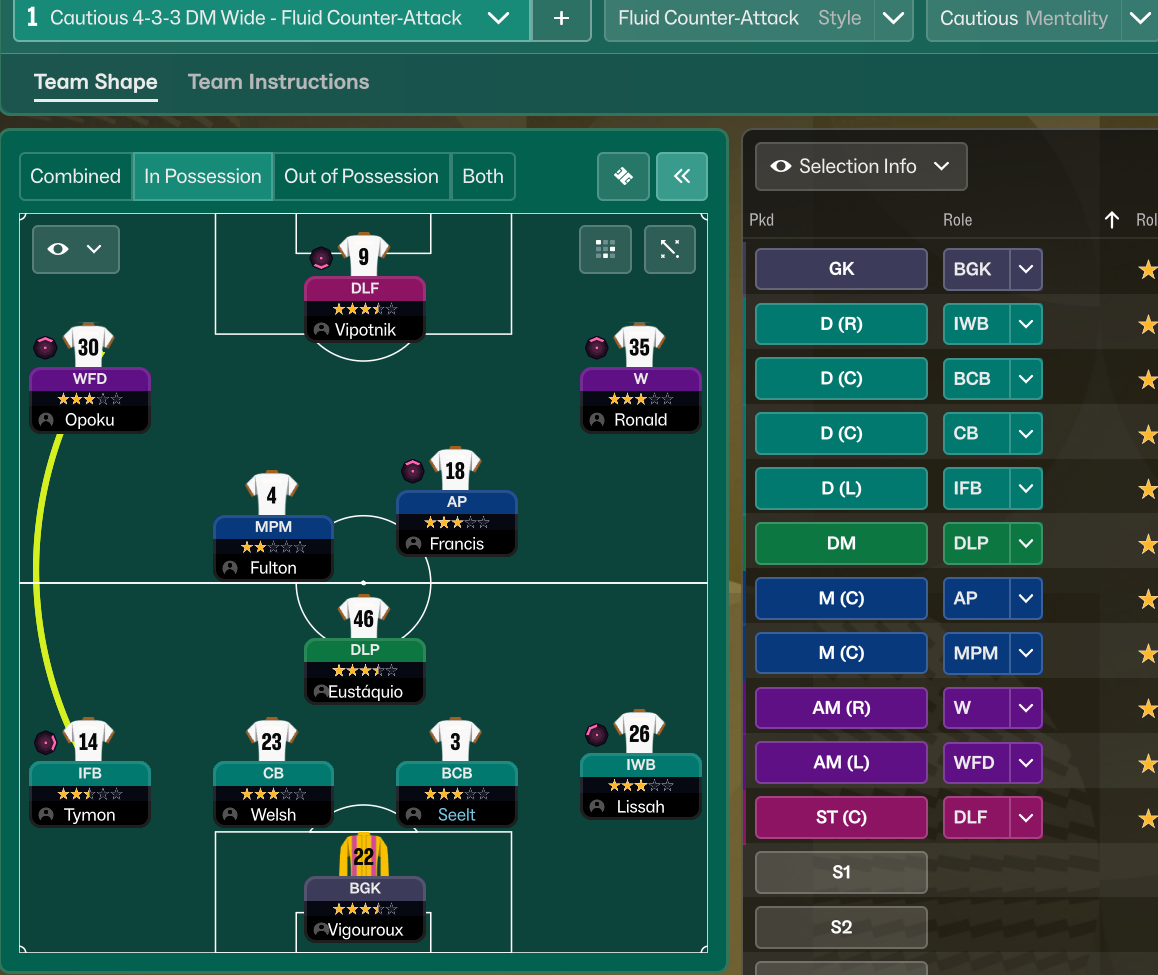
Fluid Counter-Attack 4-3-3 DM Wide
Fluid Counter-Attack
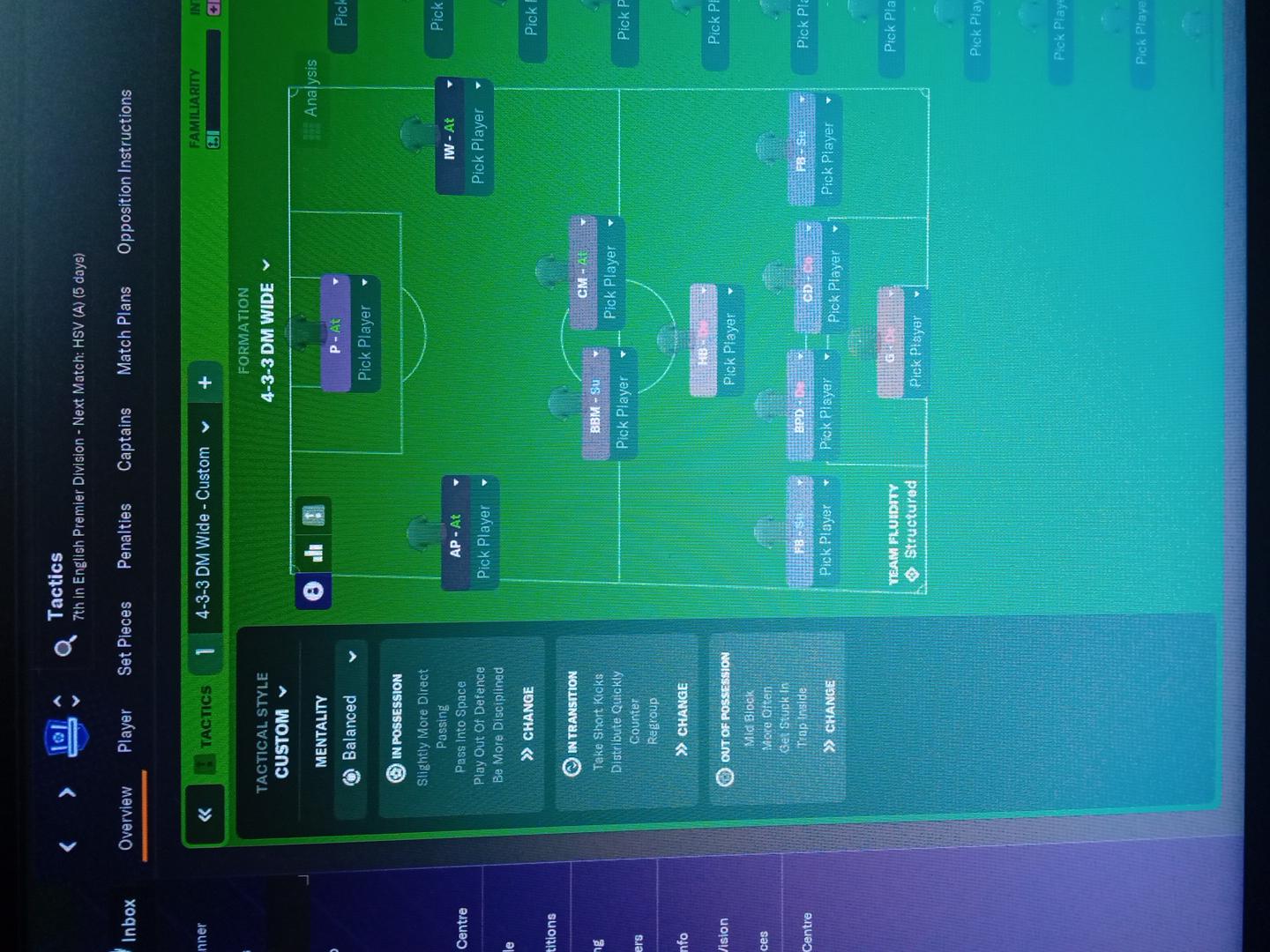
4-3-3 DM Wide Formation
Custom
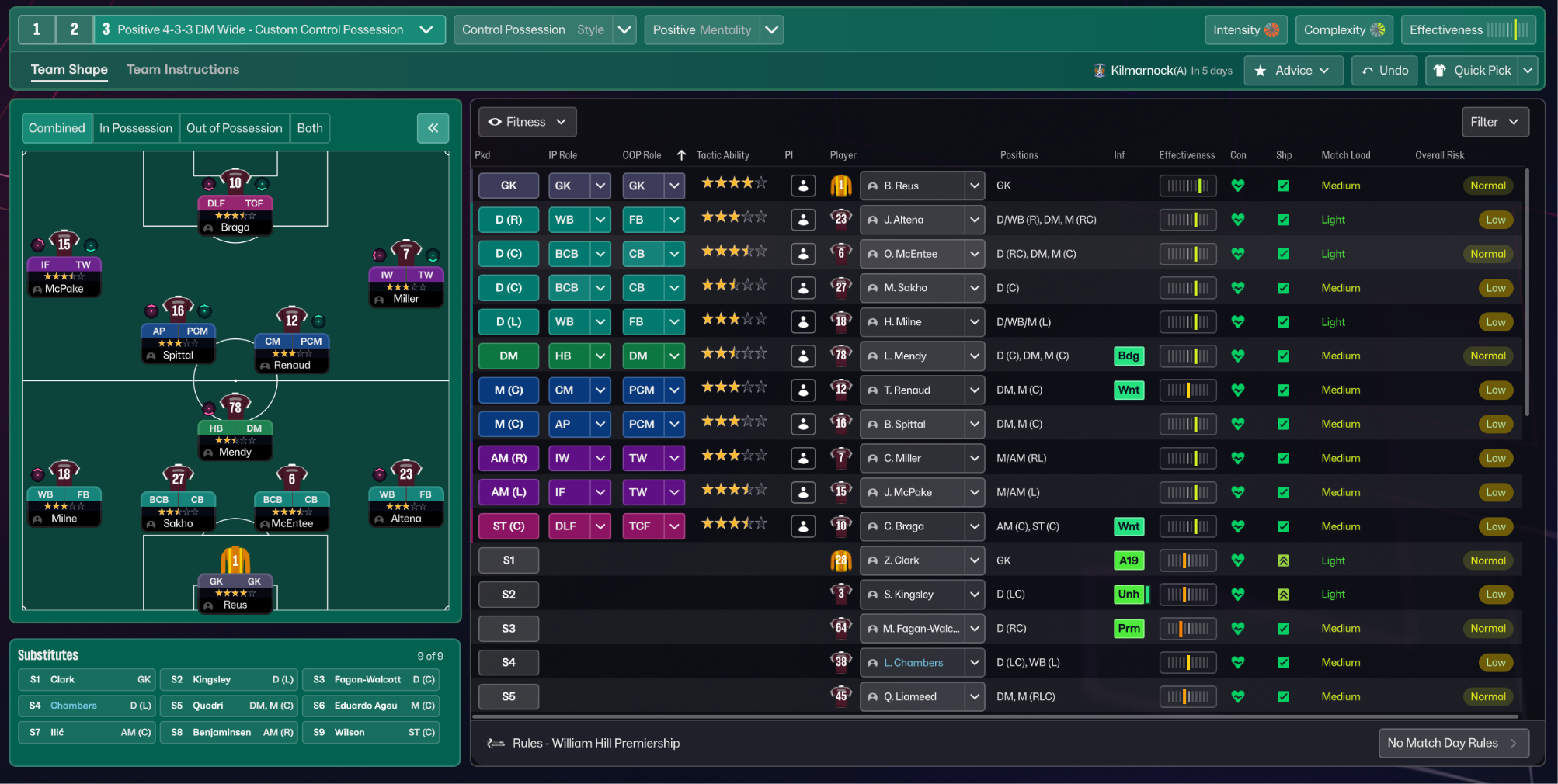
Control Possession 4-3-3 DM Wide
Control Possession
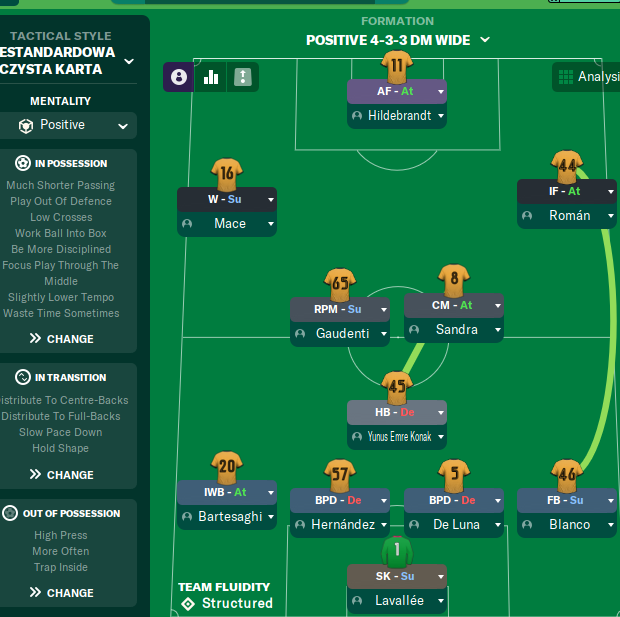
Positive 4-3-3 DM Wide
Positive
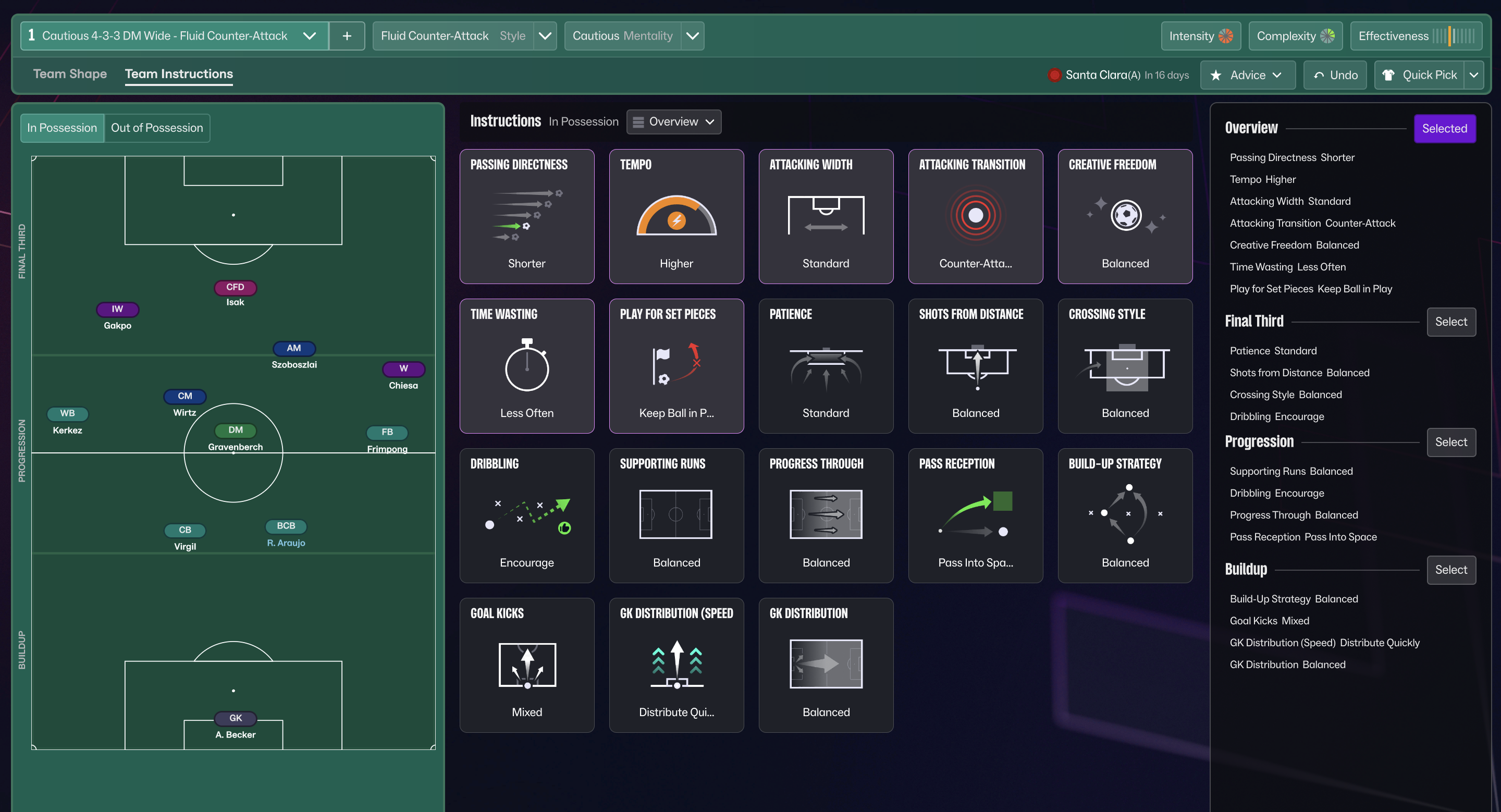
Fluid Counter-Attack 4-3-3 DM Wide
Fluid Counter-Attack
More Gegenpress tactics
Guides for this tactic
The tactical theory behind the 4-3-3 DM Wide: roles, instructions, and the trade-offs that decide whether the system holds up.
Foundations
Understanding the 4-3-3 Formation
Master the classic 4-3-3: player roles, tactical variations, and the trade-offs that decide whether it sings or stalls.
Read guide
Player pairings
Midfield Trios
Holder, runner, creator: the role distribution rule for three-man midfields, the AMC variants, and the antipatterns that break them.
Read guide
Match preparation
Reading the Match Tablet
Pass map, average position, xG, possession by zone: what each tablet panel tells you in FM and the tactical change it should trigger.
Read guide