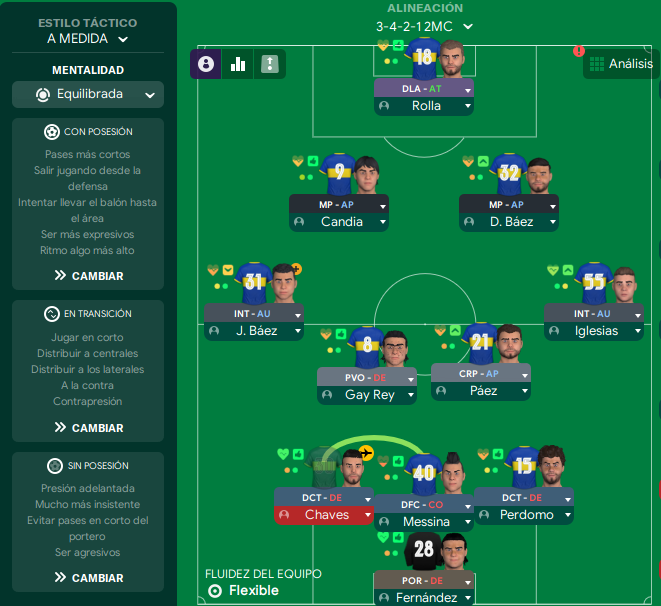
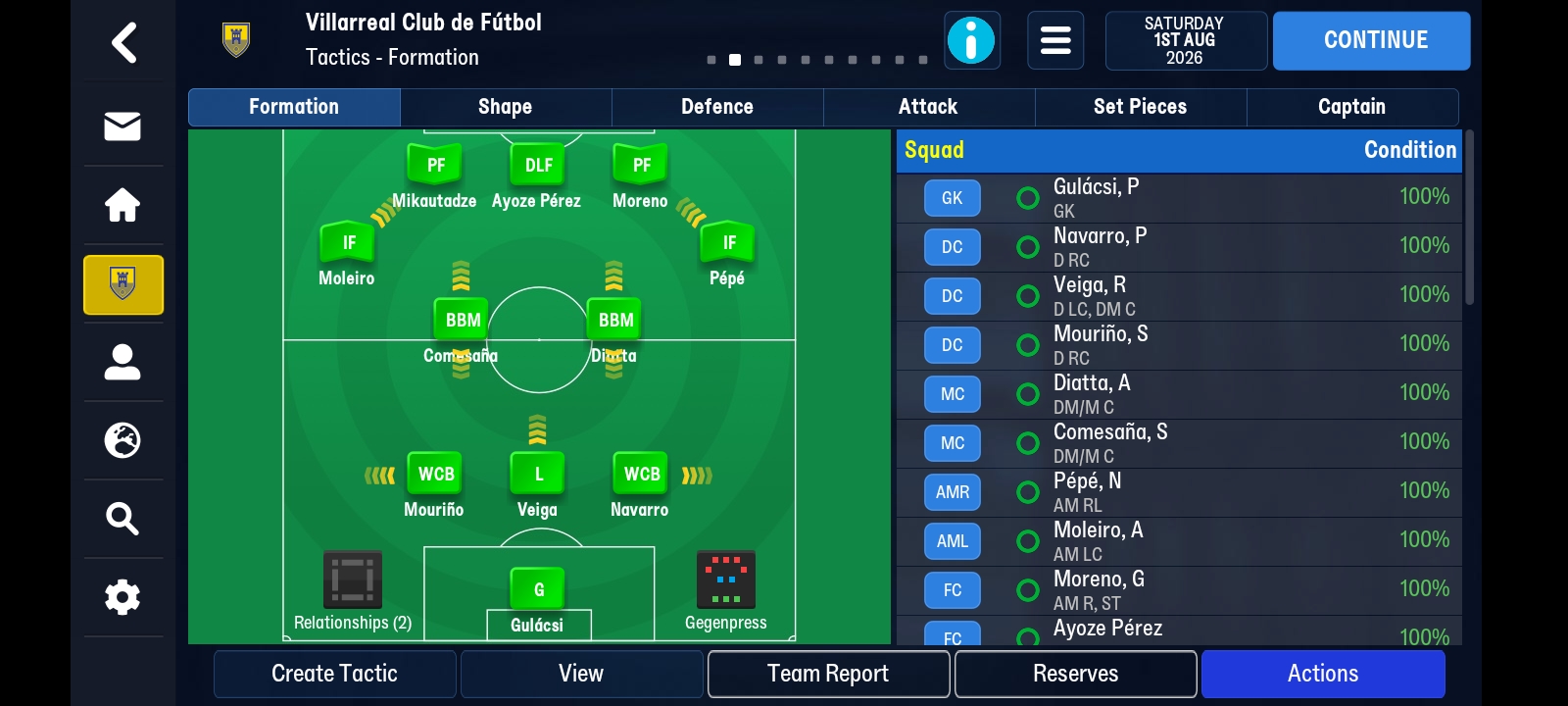
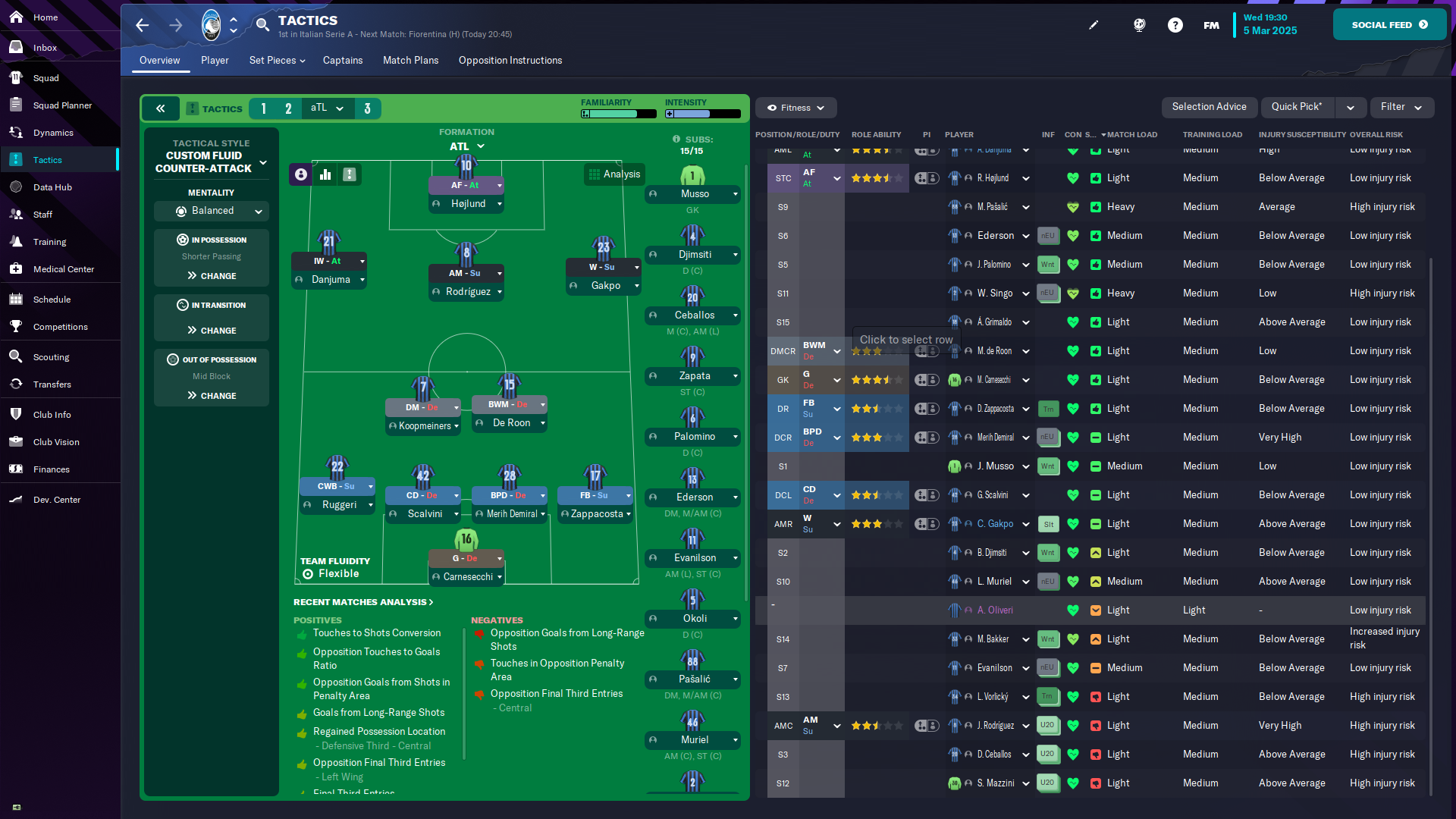
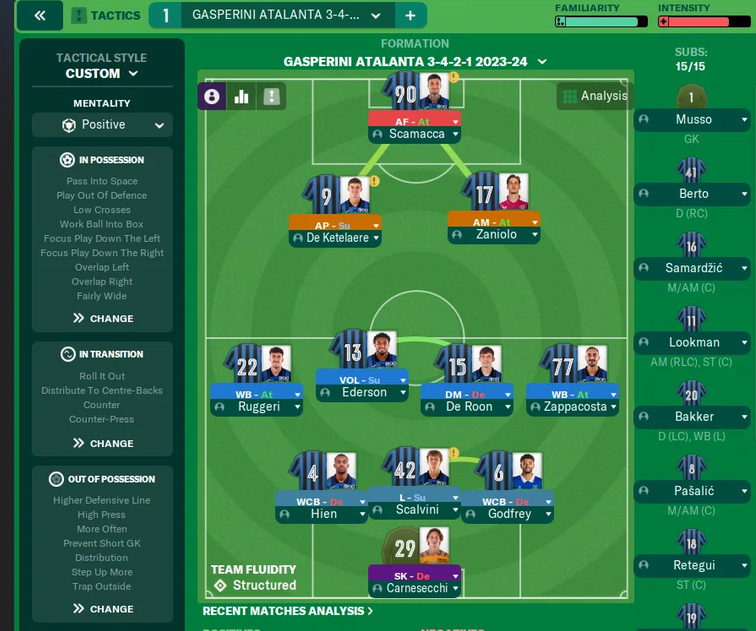
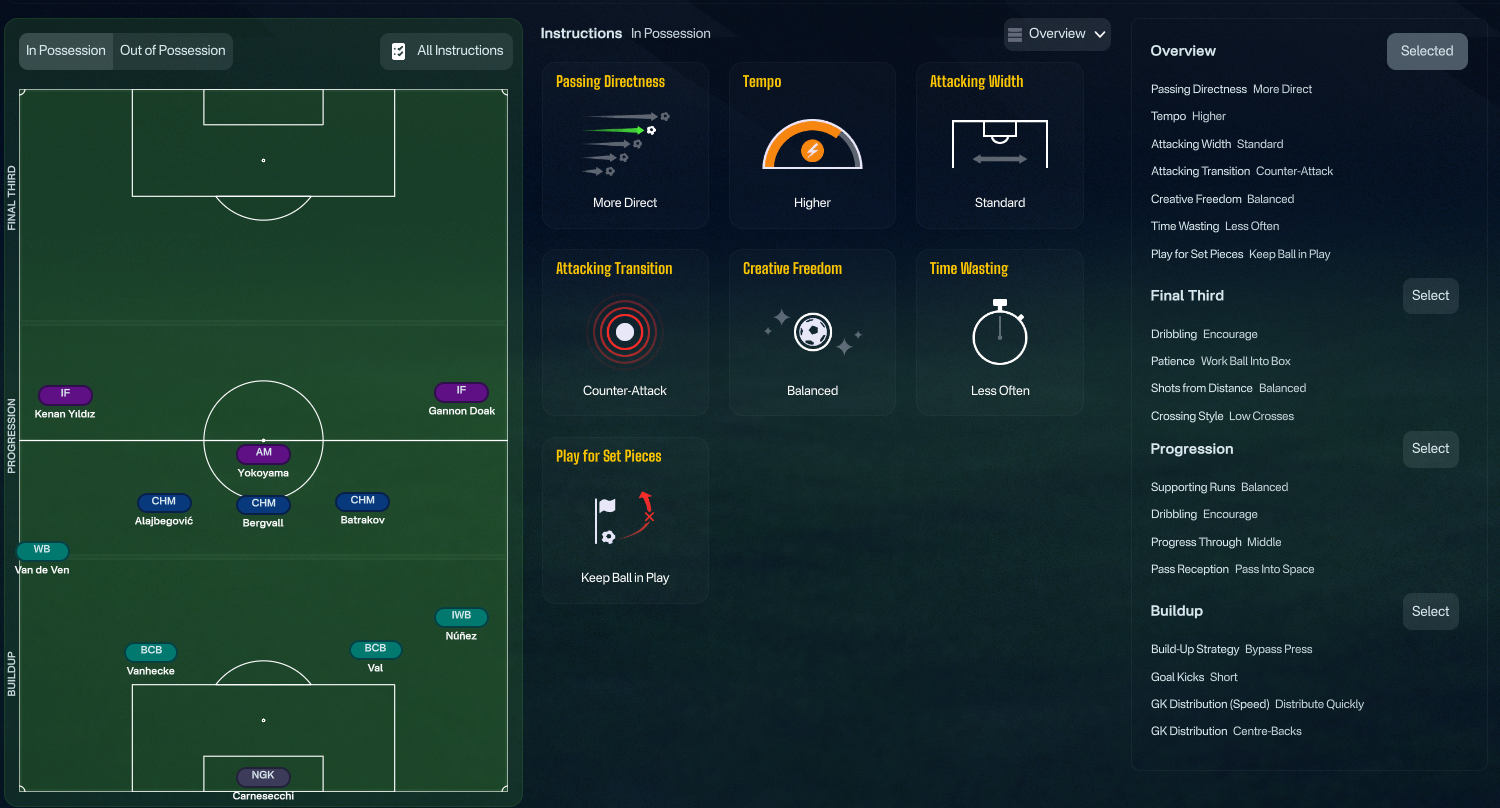
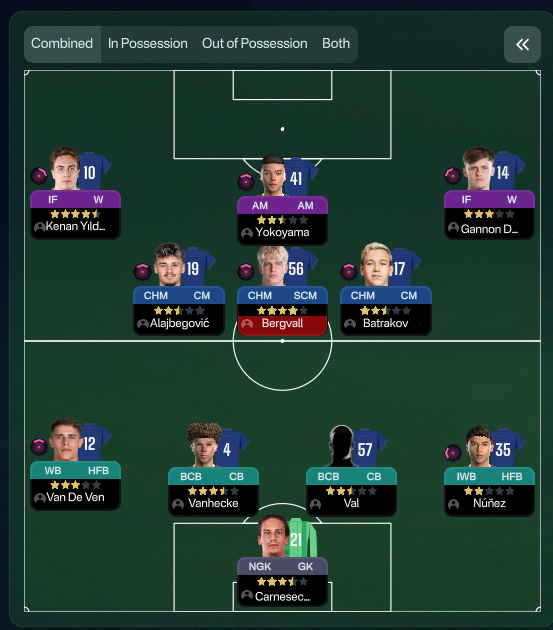
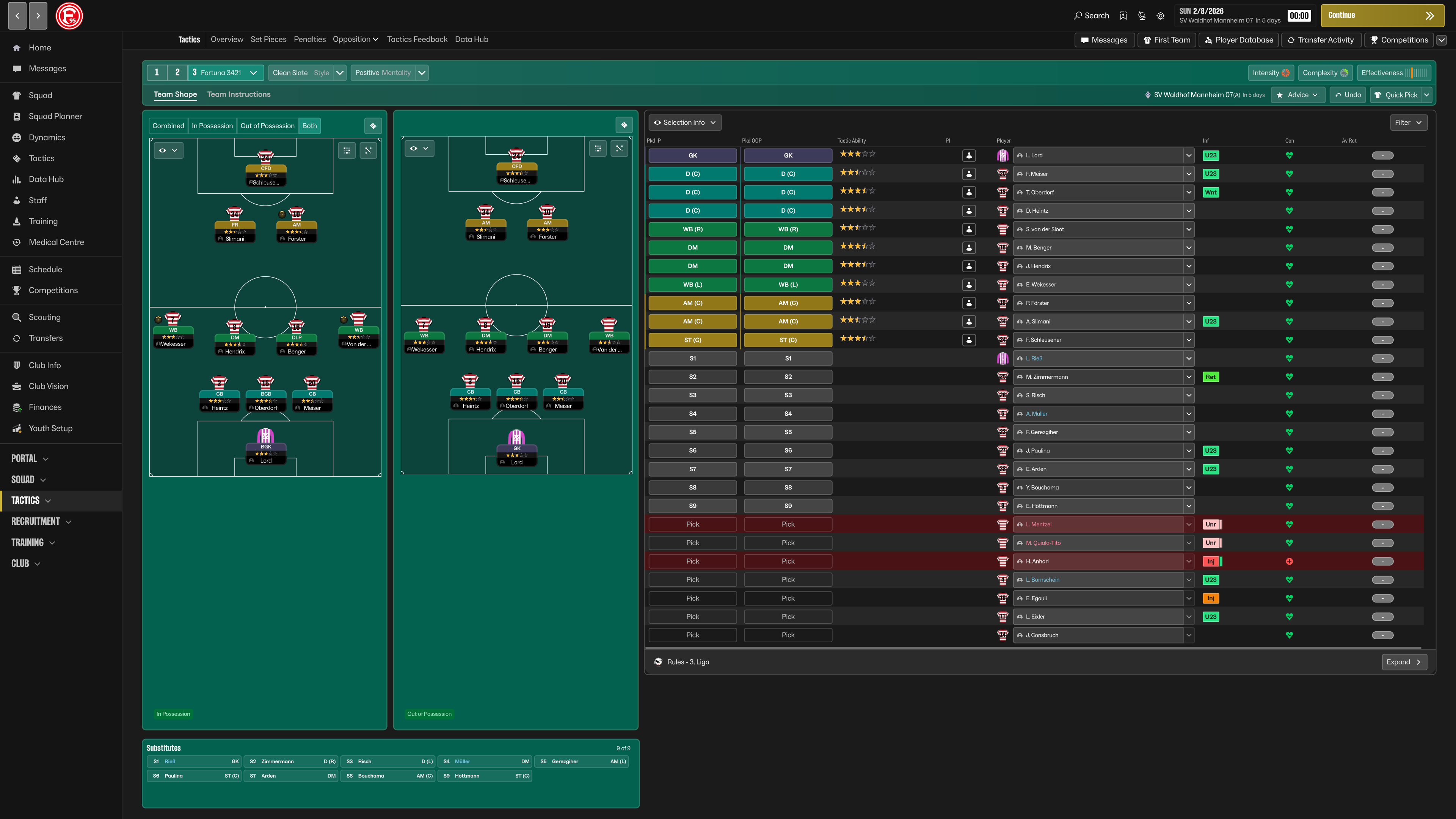
3-4-2-1
The use of wingers and advanced forward creates width and diverse attacking options, which can lead to increased goal-scoring opportunities.
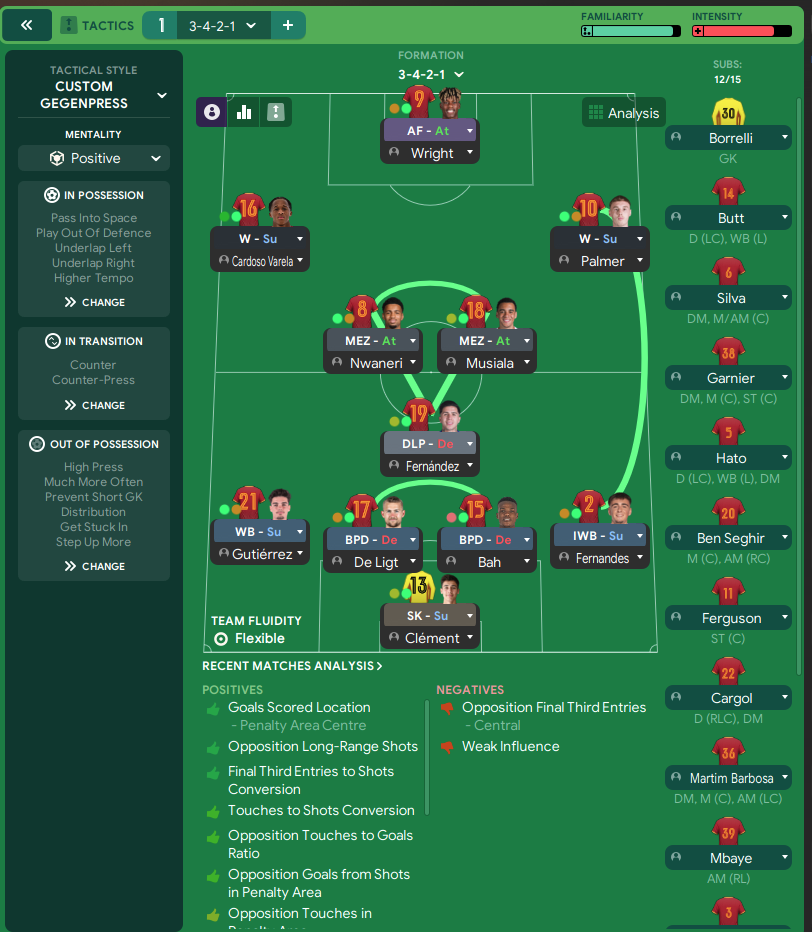
Loading tactical analysis...
Gegenpress
Positive
3-4-2-1
Flexible
Pass Into Space
Play Out of Defence
Underlap Left
Underlap Right
Higher Tempo
Counter
Counter-Press
High Press
Much More Often
Prevent Short GK Distribution
Get Stuck In
Step Up More
AF
Advanced Forward
Attack
W
Winger
Support
MEZ
Mezzala
Attack
DLP
Deep-Lying Playmaker
Defend
BPD
Ball Playing Defender
Defend
WB
Wing Back
Support
IWB
Inverted Wing Back
Support
SK
Sweeper Keeper
Support
The use of wingers and advanced forward creates width and diverse attacking options, which can lead to increased goal-scoring opportunities.
The high pressing style is effective in regaining possession quickly and disrupting opposition build-up.
With a high line and aggressive pressing, central defenders may be exposed to quick counter-attacks if the midfield does not recover quickly.
The Wing Backs may become over-reliant on the support from midfielders, creating vulnerabilities if they are caught upfield.
How can I improve player roles to better support transitions?
Are my wingers effectively providing width, or should I adjust their duties?
What training focus areas can better prepare my players for a high-pressing game?
How can I optimize my midfield structure to balance attack and defense?
Is my defensive line too high, and should I adjust it against specific opponents?
Are my player instructions too complex for the squad's skill level?
The tactical theory behind the 3-4-2-1: roles, instructions, and the trade-offs that decide whether the system holds up.
Pass map, average position, xG, possession by zone: what each tablet panel tells you in FM and the tactical change it should trigger.
FM27 keeps FM26's tactic system. Here is what stays the same, the small changes that can catch you out, and what the new Tactical Effectiveness system asks of you.
How Mentality, Duty, and Role interact in FM, why duty trumps mentality every time, and the role-on-top-of-duty composition rules.