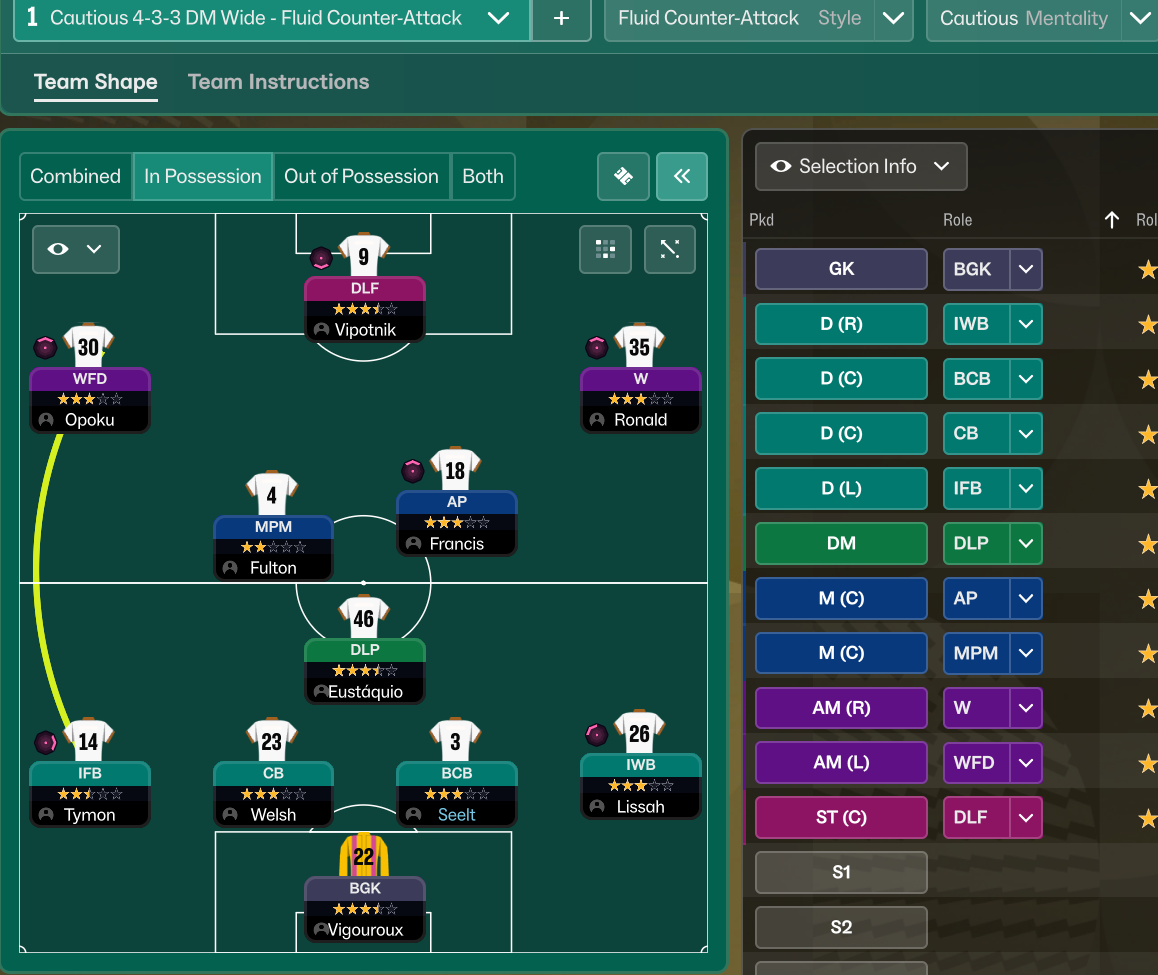
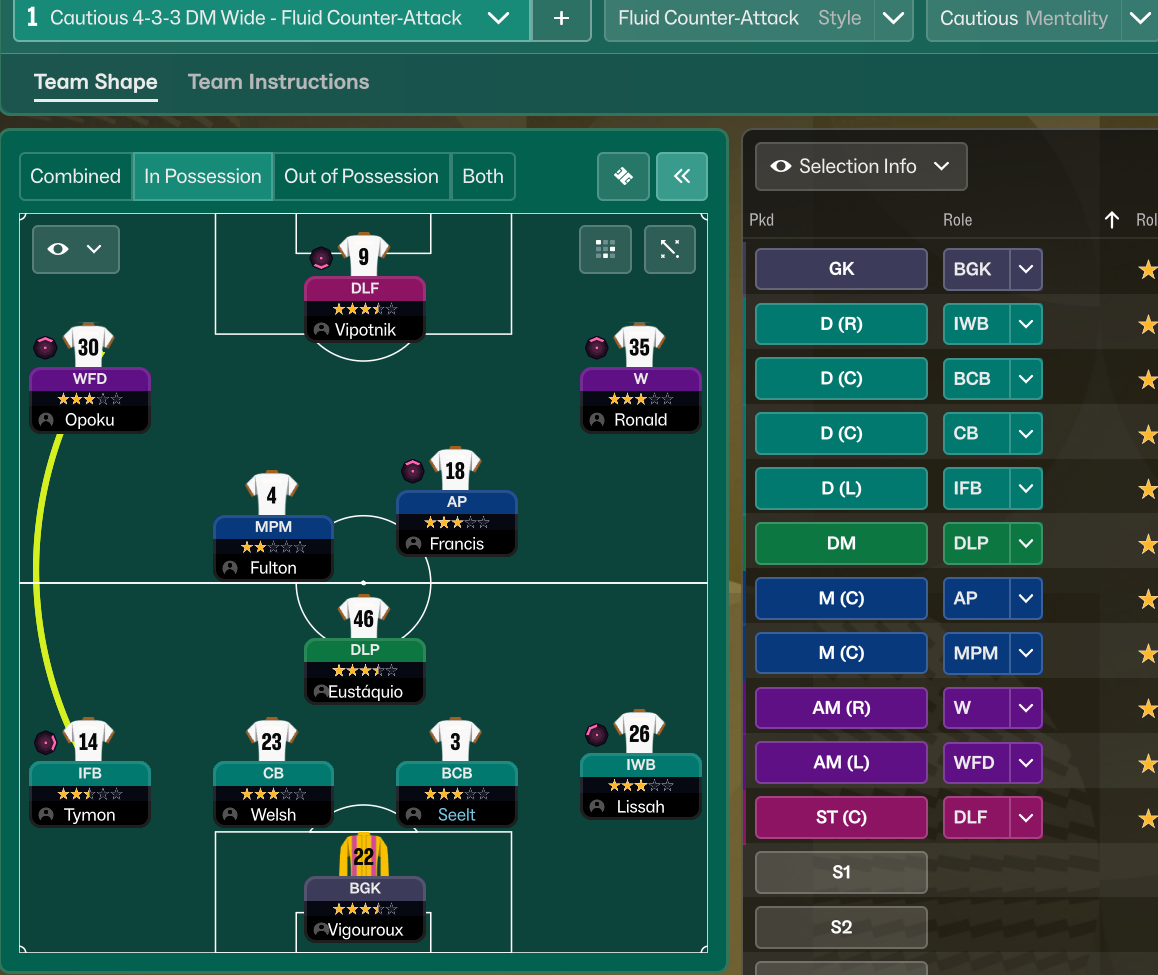
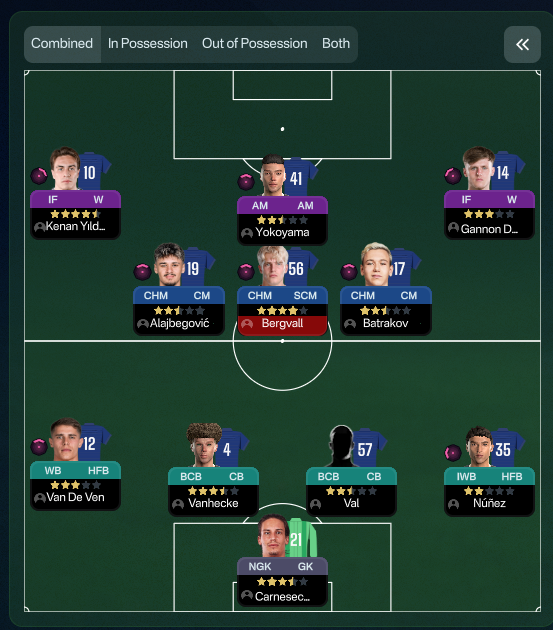
4-2-3-1 Wide
Creating overloads on the flanks. Utilization of wingers to stretch the opposition and create space.
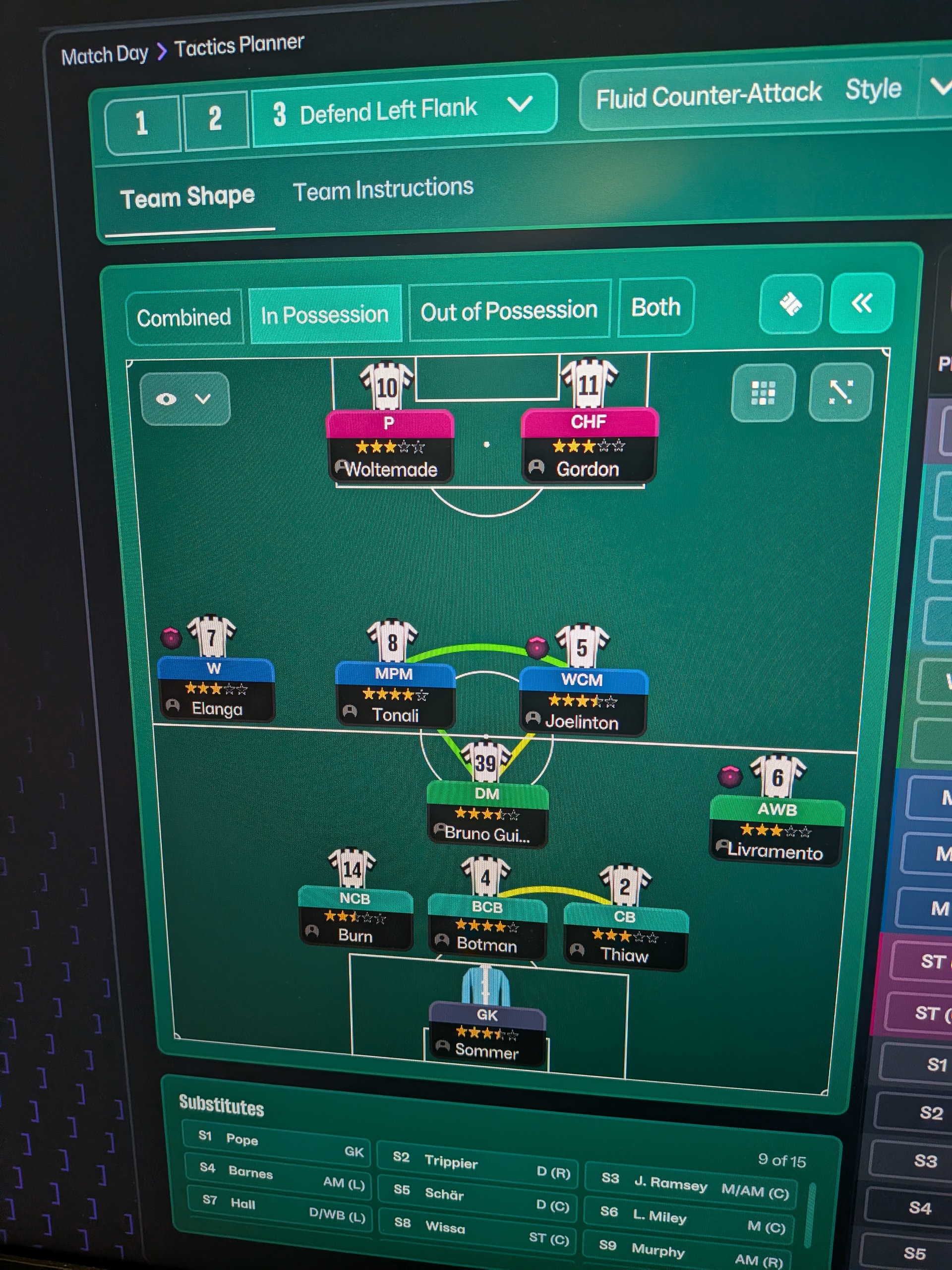
Loading tactical analysis...
Fluid Counter-Attack
4-2-3-1 Wide
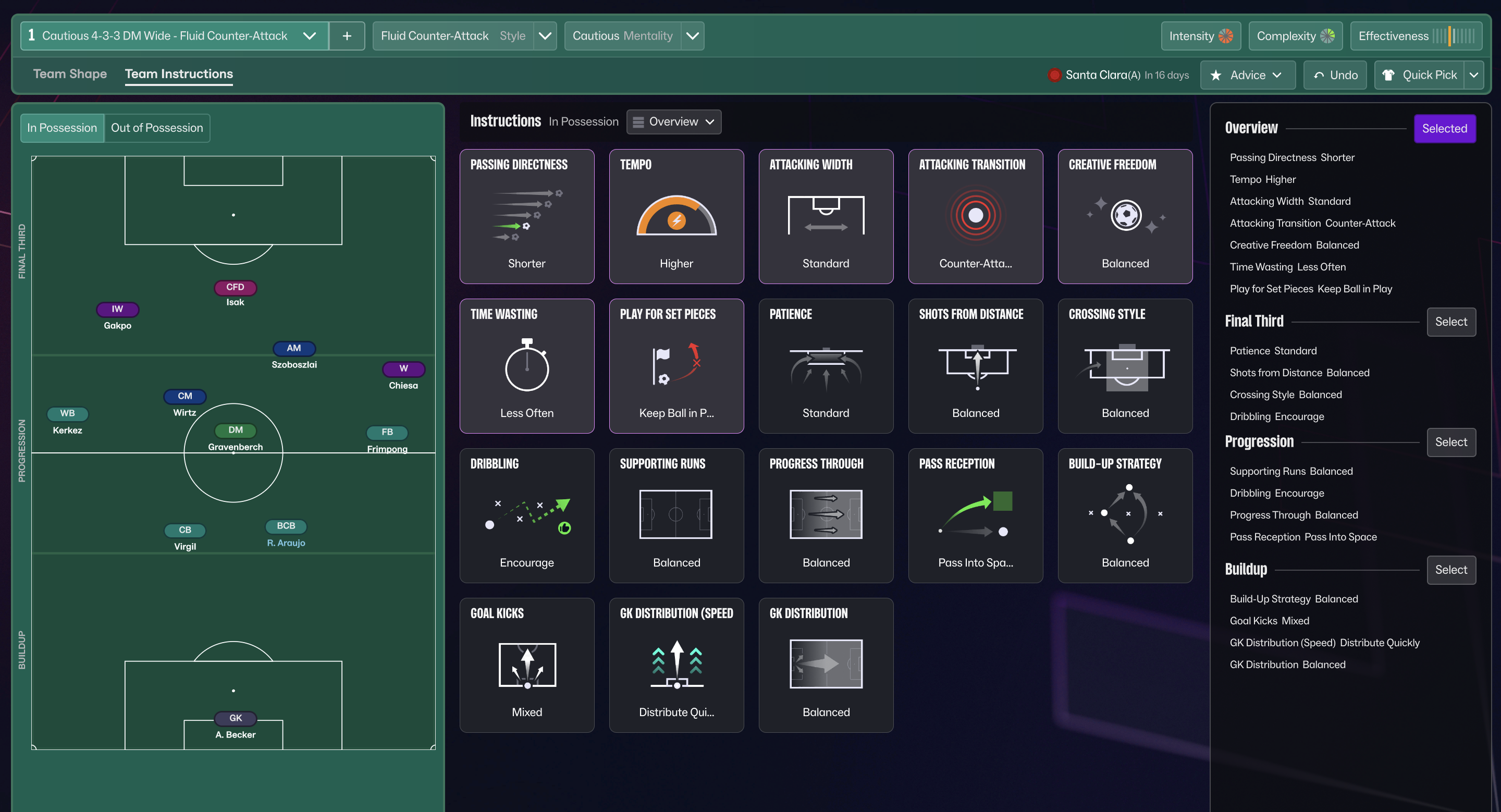
Play Out of Defence
Work Ball Into Box
Focus Play Down Left
Counter
Counter Press
Standard Defensive Line
Standard Line of Engagement
Prevent Short GK Distribution
GK
Goalkeeper
De
LB
No-Nonsense Full-Back
De
CB
No-Nonsense Centre-Back
De
CB
Ball-Playing Defender
De
RB
Wing-Back
At
DM
Defensive Midfielder
De
CM
Mezzala
Su
CM
Advanced Playmaker
Su
LW
Winger
At
ST
Pressing Forward
At
RW
Complete Forward
At
Quick transitions utilizing the wings to exploit width and create opportunities inside.
Aggressive counter-pressing to regain possession quickly.
Creating overloads on the flanks.
4-2
Compact shape with a clear focus on defending wide areas.
Defensive Midfielder (DM) at [3,3] supporting two centre-backs and full-backs.
4-3-3
Fluid transition into attack with emphasis on wide play and quick ball movement.
Winger (W) at [6,1] and Complete Forward (CF) at [6,3] extending the defensive line.
Utilization of wingers to stretch the opposition and create space.
Winger (W) at [6,1] and Wing-Back (WB) at [2,5], focusing play down the left.
A solid backline complemented by a defensive midfielder provides stability.
DM (Defensive Midfielder) at [3,3] with two centre-backs providing cover.
Possibility of gaps in defense if full-backs push too far forward.
Wing-Back (WB) at [2,5] may create imbalances if caught upfield.
If the opposition pressures the midfield, passing options may be cut off.
Mezzala (MEZ) at [4,2] can be isolated if not supported properly.
Wings
Wingers can be marked out of the game, limiting width.
Winger (W) at [6,1] heavily relied upon for width.
Midfield Isolation
Mezzala (MEZ) can be overpowered without support.
Tonal's role at [4,2] is pivotal in ball retention.
Pressing Forward + Advanced Playmaker
Creates opportunities for the striker through pressing high.
PF (Pressing Forward) at [6,3] and AP (Advanced Playmaker) at [5,3].
Winger + Wing-Back
Overlapping runs can create space for both players.
WB (Wing-Back) at [2,5] and W (Winger) at [6,1].
How can we enhance our pressing strategy?
What adjustments can be made to ensure midfield stability?
Should we consider varying our defensive structure during different phases of the match?
The tactical theory behind the 4-2-3-1 Wide: roles, instructions, and the trade-offs that decide whether the system holds up.
Klopp-style gegenpressing in FM, including squad profile, line-and-press pairing, sustainable workload, and the antipatterns to avoid.
Double pivots and flat pairs in 4-2-3-1 and 4-4-2: when each pairing works, when it collapses, and the AMC unicorn that rescues both.
Counter-Press, Regroup, Stand Off, Trigger Press: what each pressing instruction does in FM and how to pair them without contradicting.