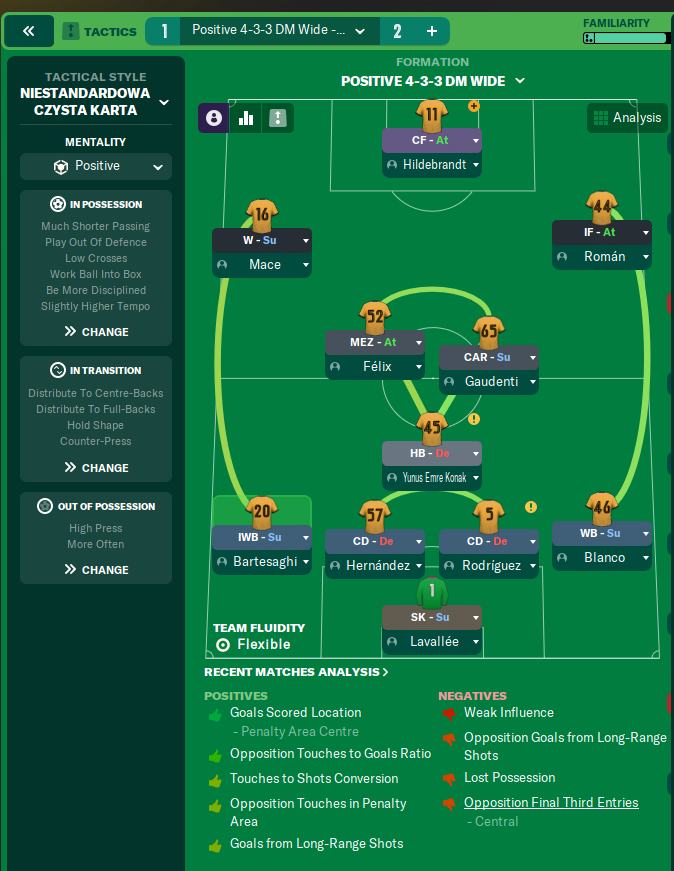
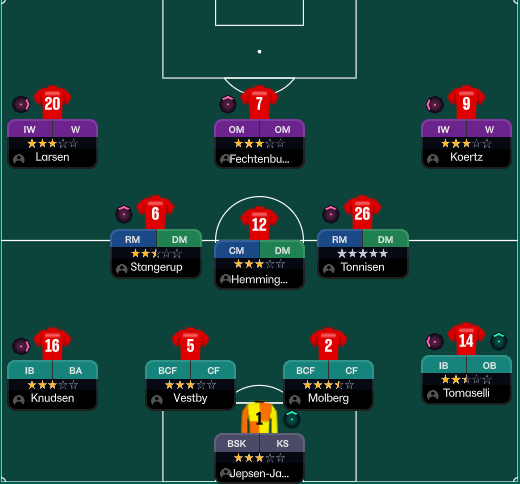
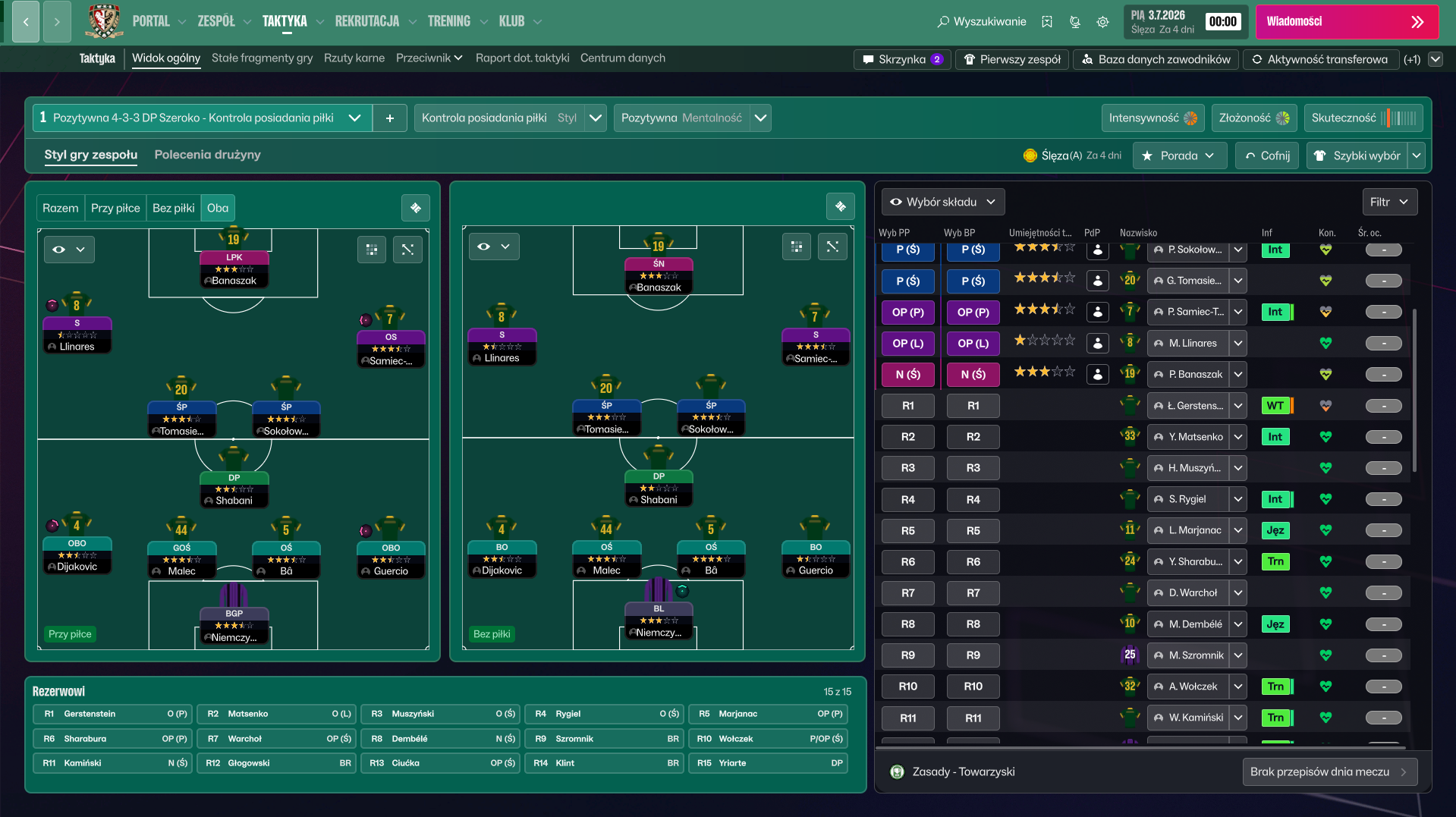
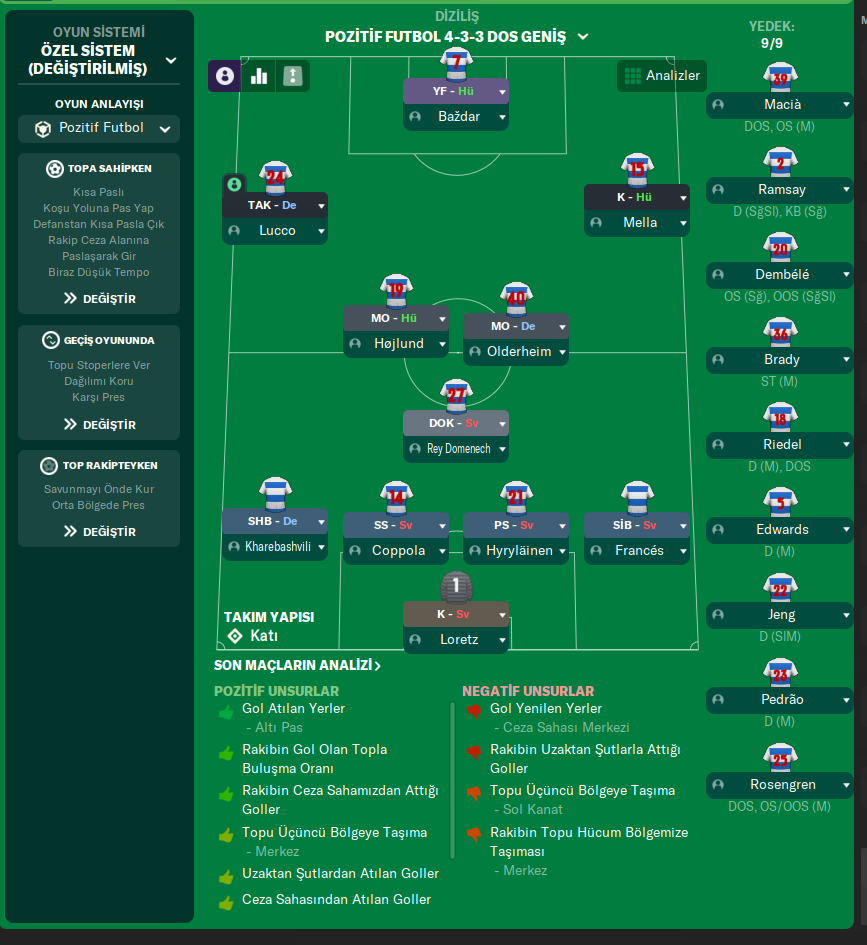
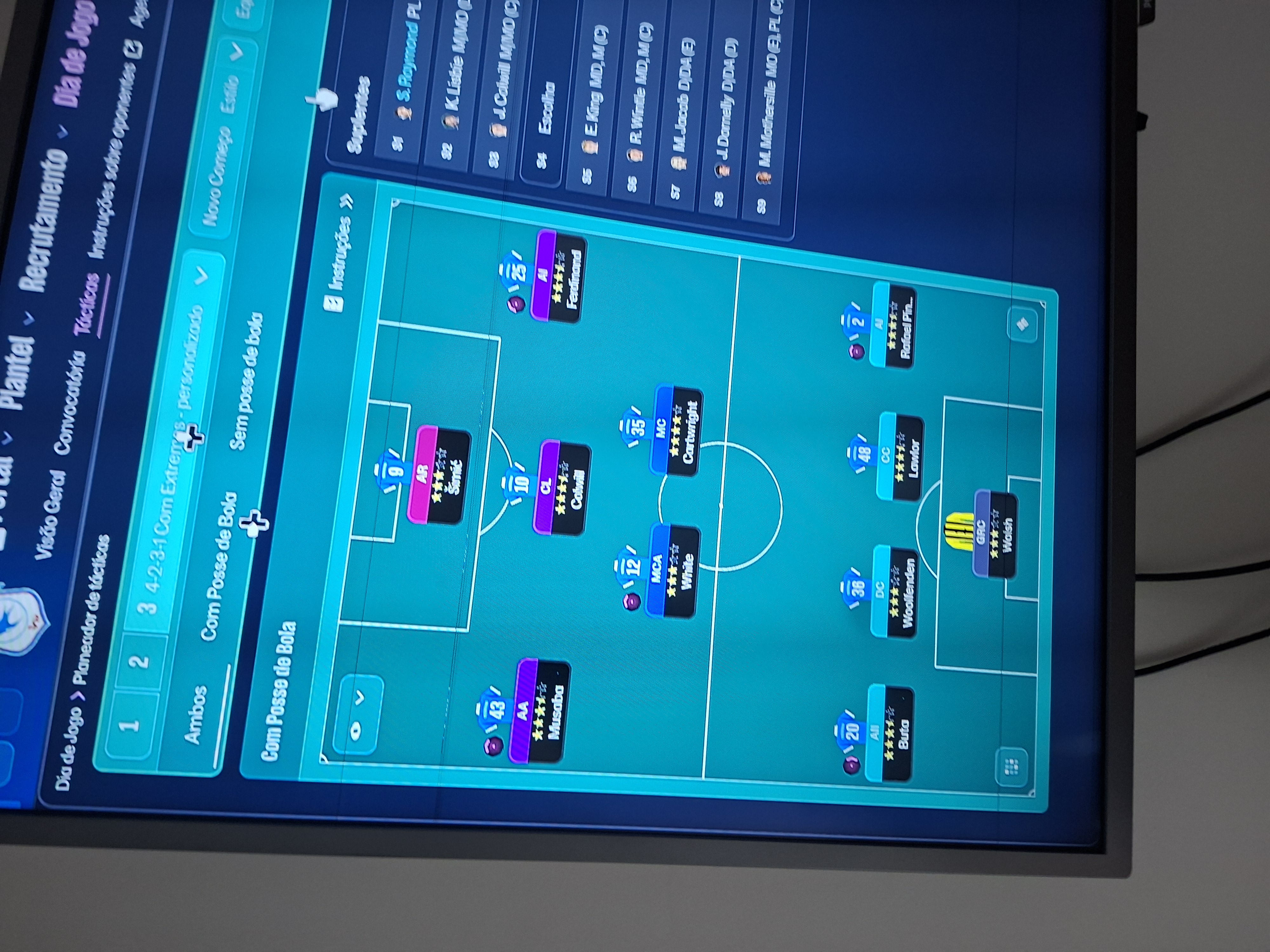
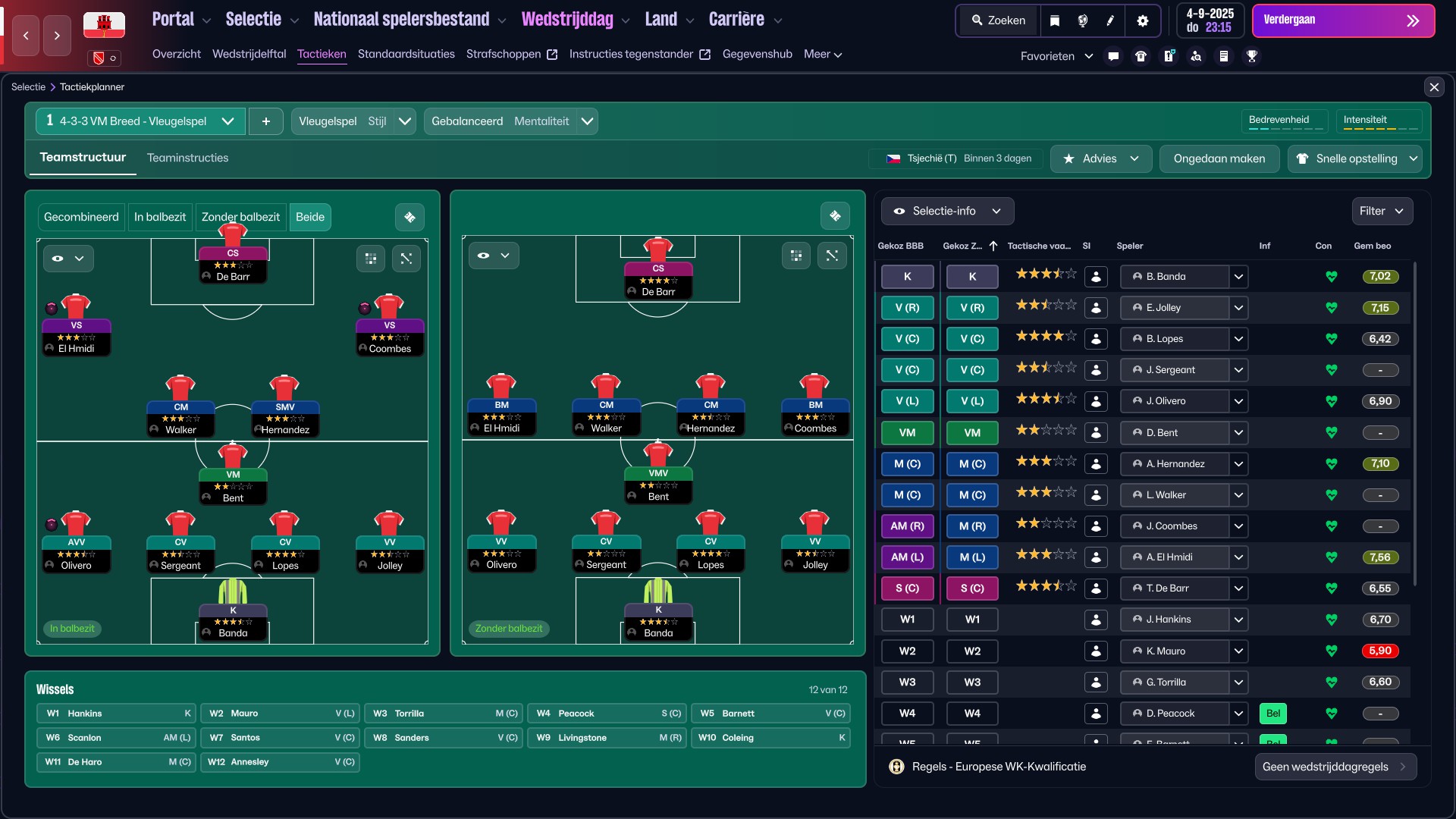
4-3-3 Wide
Maximizing width and maintaining possession before transitioning to quick attacks. The midfield triangle creates a balance between attack and defense,…
Loading tactical analysis...
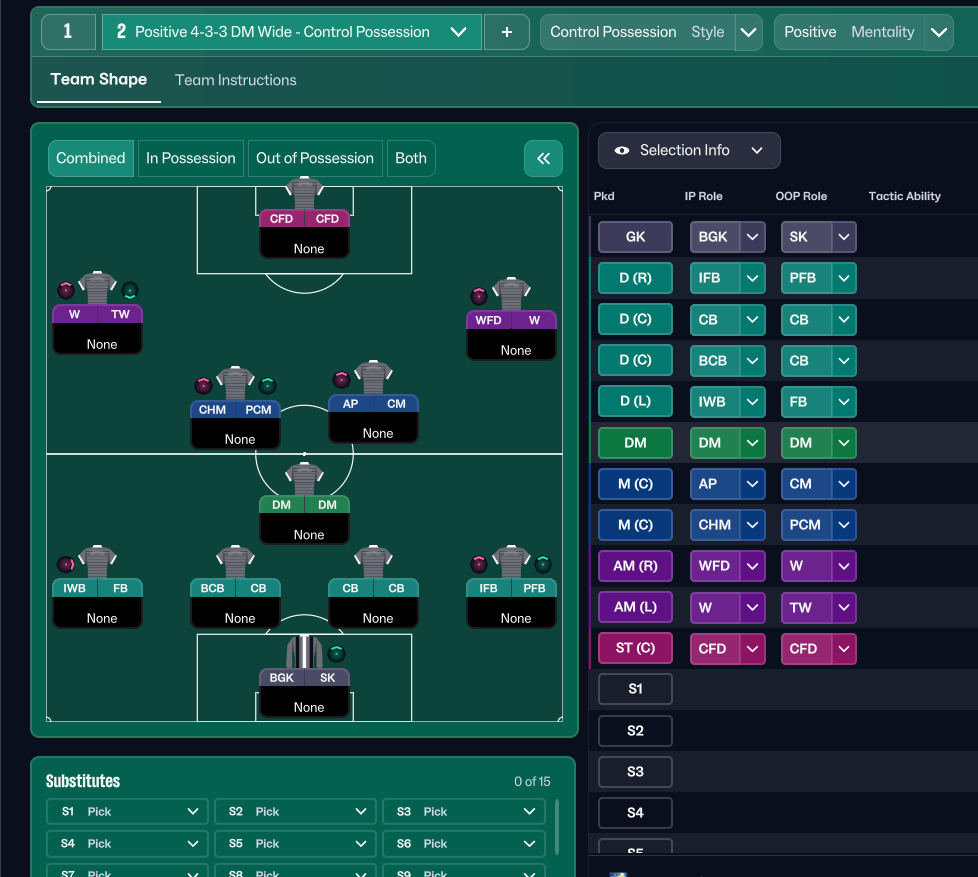
Possession Football
Balanced
4-3-3 Wide
Fluid
Play Out of Defence
Shorter Passing
Play Wider
Pass Into Space
Be More Expressive
Counter-Press
Counter
Higher Defensive Line
Higher Line of Engagement
Prevent Short GK Distribution
Trigger Press More Often
GK
Goalkeeper
Defend
LB
Wing-Back
Attack
CB
Ball-Playing Defender
Defend
CB
Ball-Playing Defender
Defend
RB
Wing-Back
Attack
CM
Central Midfielder
Support
CM
Segundo Volante
Support
CM
Advanced Playmaker
Attack
LW
Wide Forward
Support
RW
Wide Forward
Support
CF
Complete Forward
Support
Focus on patient build-up play and moving the ball wide before delivering into the area.
Quickly reorganize and engage opponents high up the pitch to regain possession.
Maximizing width and maintaining possession before transitioning to quick attacks.
Compact Shape
Defenders maintain a compact formation to limit space for opposition players.
The presence of a higher defensive line and trigger pressing suggests a proactive defensive approach.
Wide Attack
Utilizes width from the wing-backs and wide forwards to stretch the opposition.
Instructions to Play Wider and incorporate Wing-Backs in the attack enhance flank utilization.
The midfield triangle creates a balance between attack and defense, enhancing possession.
CMs with diverse roles like 'Advanced Playmaker' and 'Segundo Volante' at [4,3], [4,4] provide versatility.
Exploiting width through wingers and supporting central striker allows varied attacking threats.
Wide Forwards at [6,2] and [6,4] combined with a Complete Forward at [6,3].
While beneficial for press, it may expose vulnerabilities against fast counter-attacks.
Higher Defensive Line and Higher Line of Engagement requires quick recovery from the back.
Heavy reliance on wing-backs may lead to weaknesses if they are caught out of position.
Wing-Backs on Attack duties at [2,1] and [2,5] means they may stretch too far upfield.
Defensive Transitions
Opportunities for the opposing team to exploit spaces left in transition.
High engagement and pressing increases chances of being countered effectively.
Wing Vulnerability
If wing-backs are caught high, opposition can exploit the space left behind.
Attack duties assigned to wing-backs could create significant gaps when losing possession.
Advanced Playmaker and Complete Forward
Creates effective chemistry in playmaking and finishing roles.
The presence of 'Advanced Playmaker' at [4,4] supports the 'Complete Forward' at [6,3].
Wing-Backs and Wide Forwards
Enables dynamic overlap and creates confusion in opposition marking.
Wing-Backs on Attack can create space for Wide Forwards to cut inside.
How can I further enhance defensive stability?
What adjustments can I make for better counter-attack effectiveness?
Are there specific player traits I should look for to optimize these roles?
The tactical theory behind the 4-3-3 Wide: roles, instructions, and the trade-offs that decide whether the system holds up.
Build the patient, control-the-tempo style without watching your opponents counter through the gaps you leave behind.
Master the classic 4-3-3: player roles, tactical variations, and the trade-offs that decide whether it sings or stalls.
Build through the wide areas or through the middle? A working framework for picking the right one for your squad.