4-2-3-1 Wide
Creating goal-scoring opportunities through width and intelligent movement off the ball. Utilizes width effectively to stretch opposition defenses.
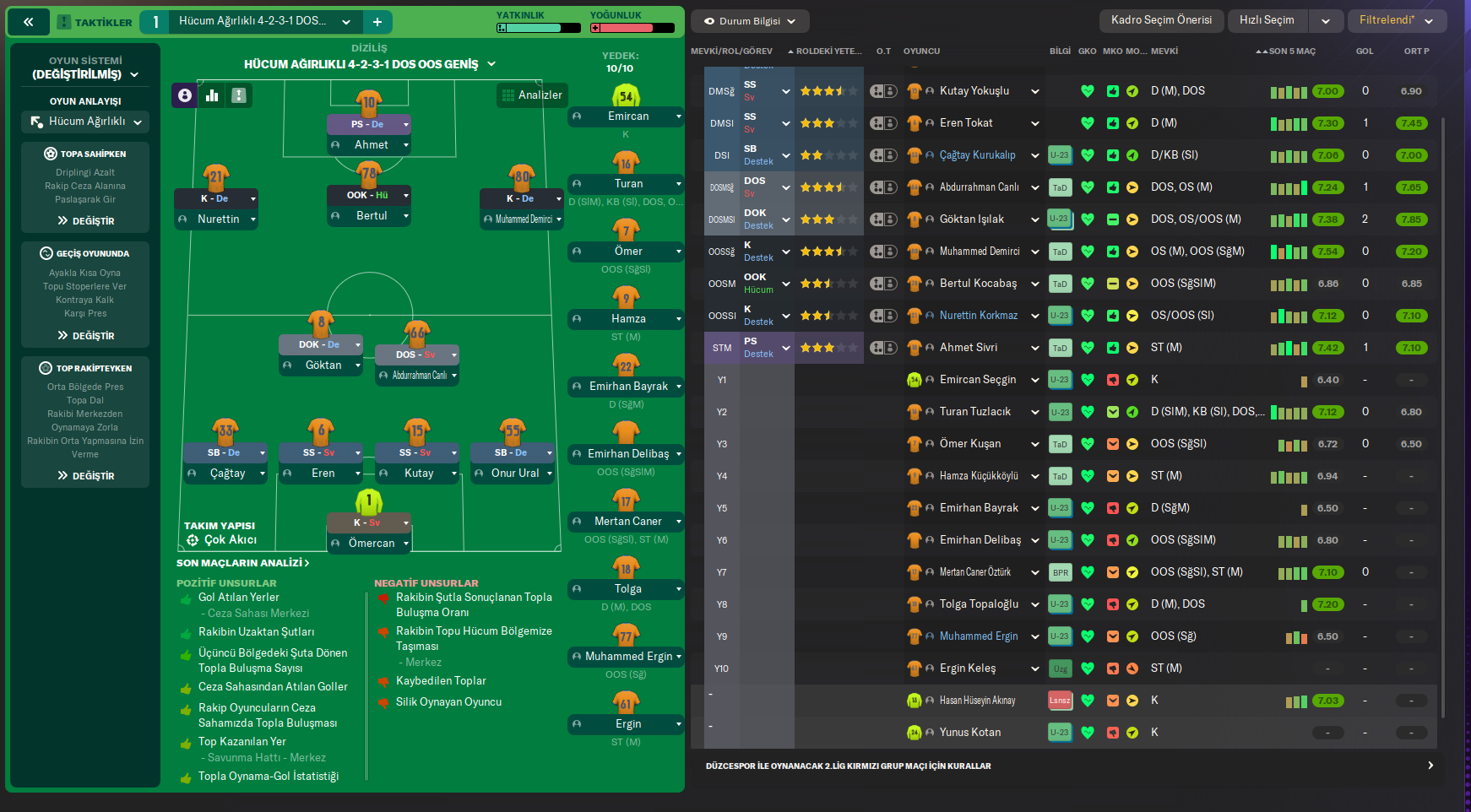
Loading tactical analysis...
Attacking
Positive
4-2-3-1 Wide
Fluid
Shorter Passing
Work Ball Into Box
Play Out of Defence
Run At Defence
Counter-Press
Counter
Higher Defensive Line
Higher Line of Engagement
Prevent Short GK Distribution
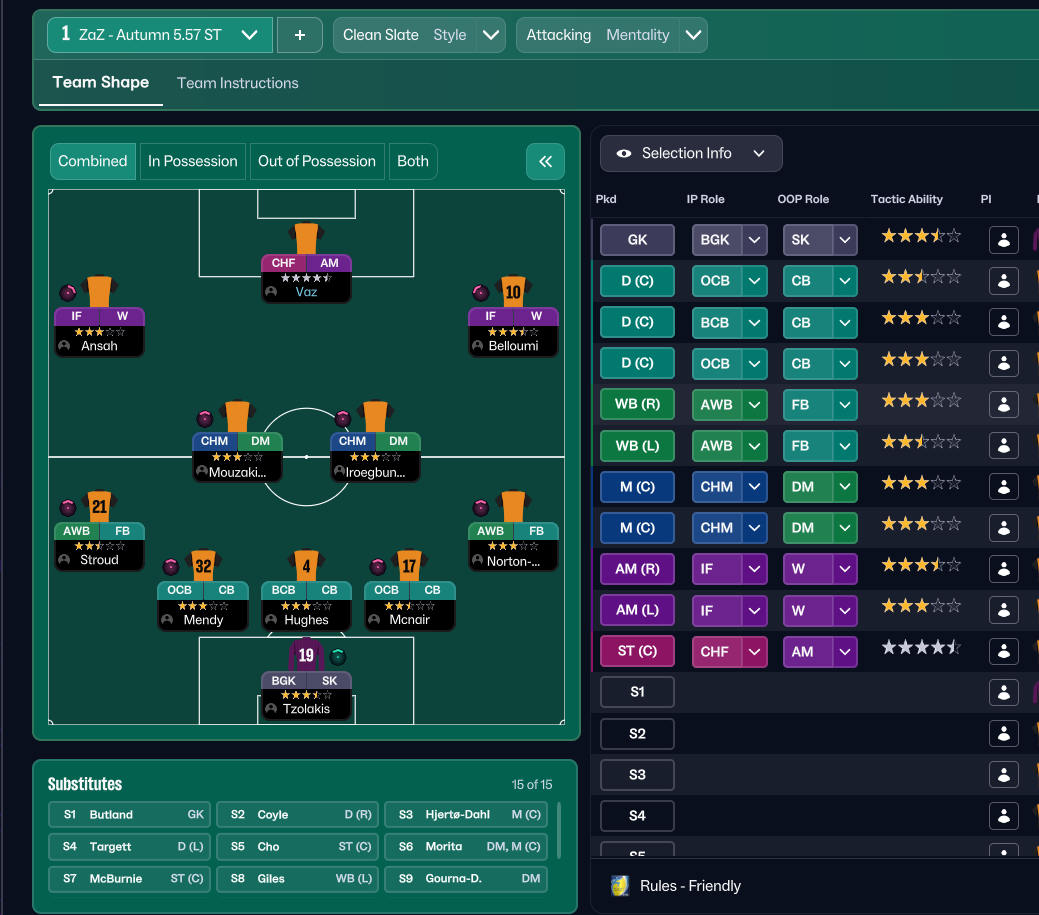
GK
Sweeper Keeper
Support
RB
Wing-Back
Support
CB
Ball-Playing Defender
Defend
CB
No-Nonsense Centre-Back
Defend
LB
Wing-Back
Support
CM
Segundo Volante
Support
CM
Deep-Lying Playmaker
Defend
AM
Attacking Midfielder
Support
RW
Inside Forward
Attack
LW
Winger
Support
ST
Pressing Forward
Attack
Utilizes wing play and quick transitions to penetrate defensive lines.
Quickly shifts to pressing opponents and recovering the ball quickly.
Creating goal-scoring opportunities through width and intelligent movement off the ball.
4-2
A compact shape that allows for quick counter-pressing after losing possession.
Higher Defensive Line and Prevent Short GK Distribution instructed.
4-3
Wide setup with attacking intent primarily from wingers and an advanced attacking midfielder.
Use of Inside Forward and Winger in attack slots.
Utilizes width effectively to stretch opposition defenses.
Roles of Inside Forward at [6,4] and Winger at [6,1].
The combination of a Segundo Volante and Deep-Lying Playmaker helps maintain possession.
Segundo Volante at [4,3] and DLP at [3,2].
Exposes the backline to fast transitions from opponent's attackers.
Higher Defensive Line instruction may be risky against pacey forwards.
High pressing may leave gaps if the initial press fails.
Counter-Press and Higher Line of Engagement may cause spaces for counter-attacks.
Transition Phases
Vulnerability during transitions due to high pressing.
Counter-Press may expose the team's shape.
Wide Areas
Potential for being outnumbered by opposing wingers and full-backs.
Winger and Inside Forward stretching the width often.
SP + AM
Pressing forward creates space for the attacking midfielder.
Pressing Forward at [6,3] draws defenders, allowing AM at [5,3] to exploit space.
WB (S) + IF
Inside forward can exploit space created by overlapping wing-back.
Inside Forward at [6,4] benefits from support from Wing-Back at [2,4].
How can defensive stability be improved?
What adjustments can be made to enhance creativity in midfield?
Are the current pressing tactics suitable for the opponent?
The tactical theory behind the 4-2-3-1 Wide: roles, instructions, and the trade-offs that decide whether the system holds up.
Klopp-style gegenpressing in FM, including squad profile, line-and-press pairing, sustainable workload, and the antipatterns to avoid.
Double pivots and flat pairs in 4-2-3-1 and 4-4-2: when each pairing works, when it collapses, and the AMC unicorn that rescues both.
What Higher Tempo, Wider, and Narrower actually do in FM, plus the dial contradictions and antipatterns players run into most often.