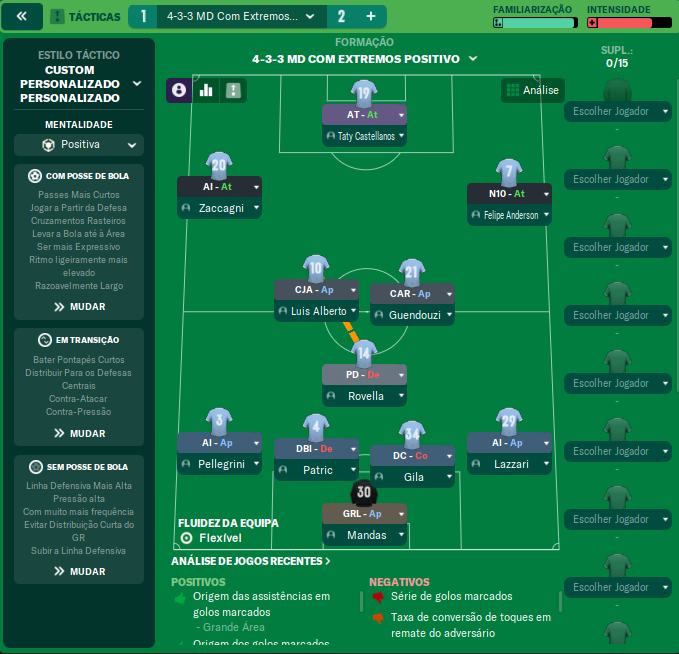
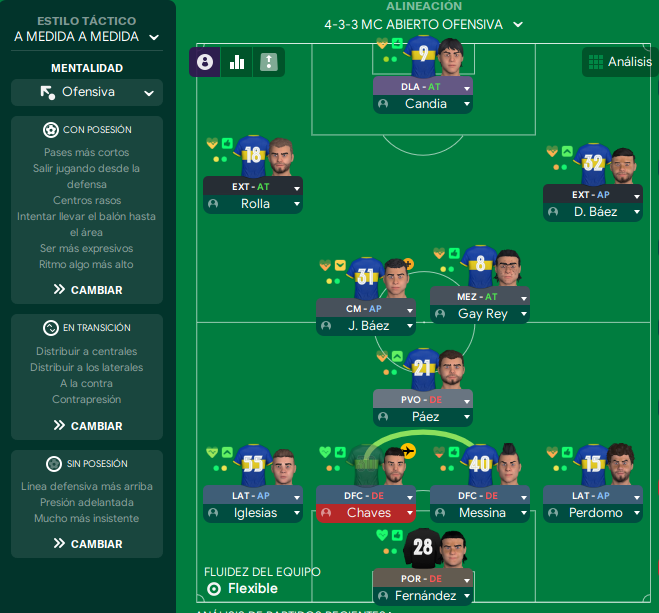
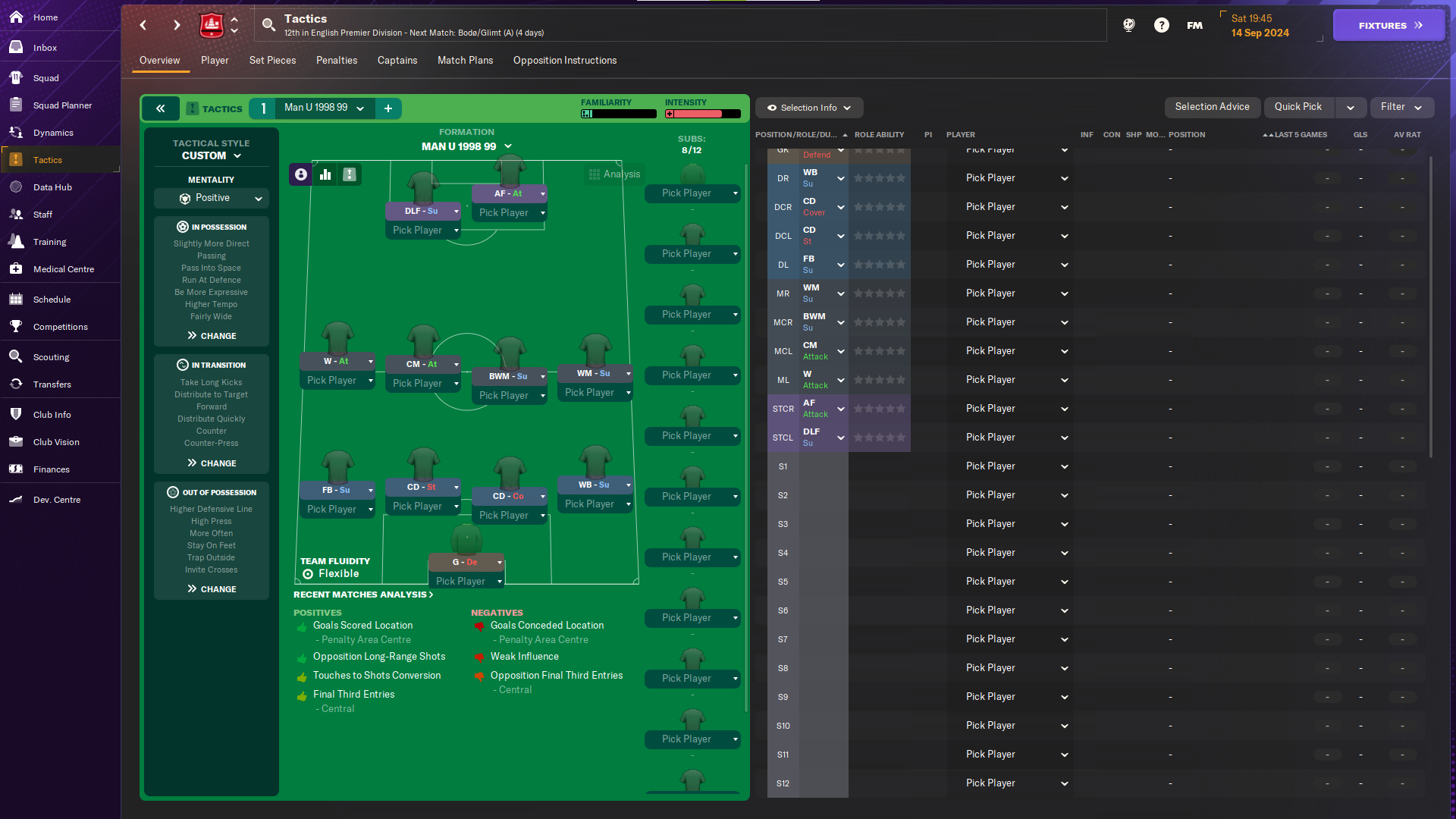
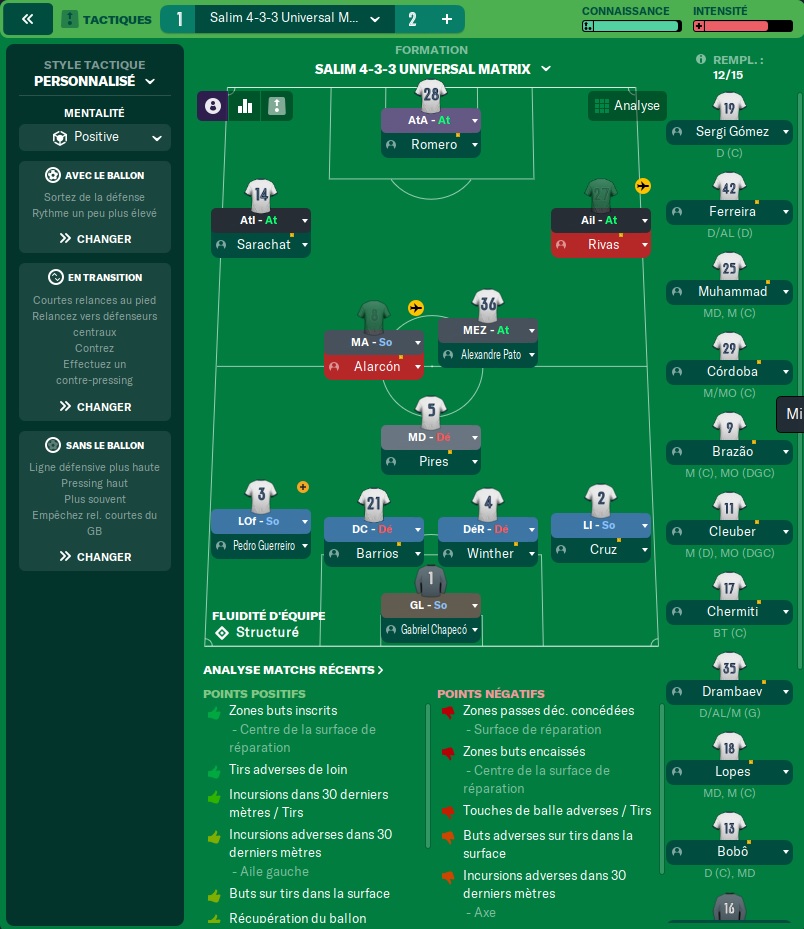
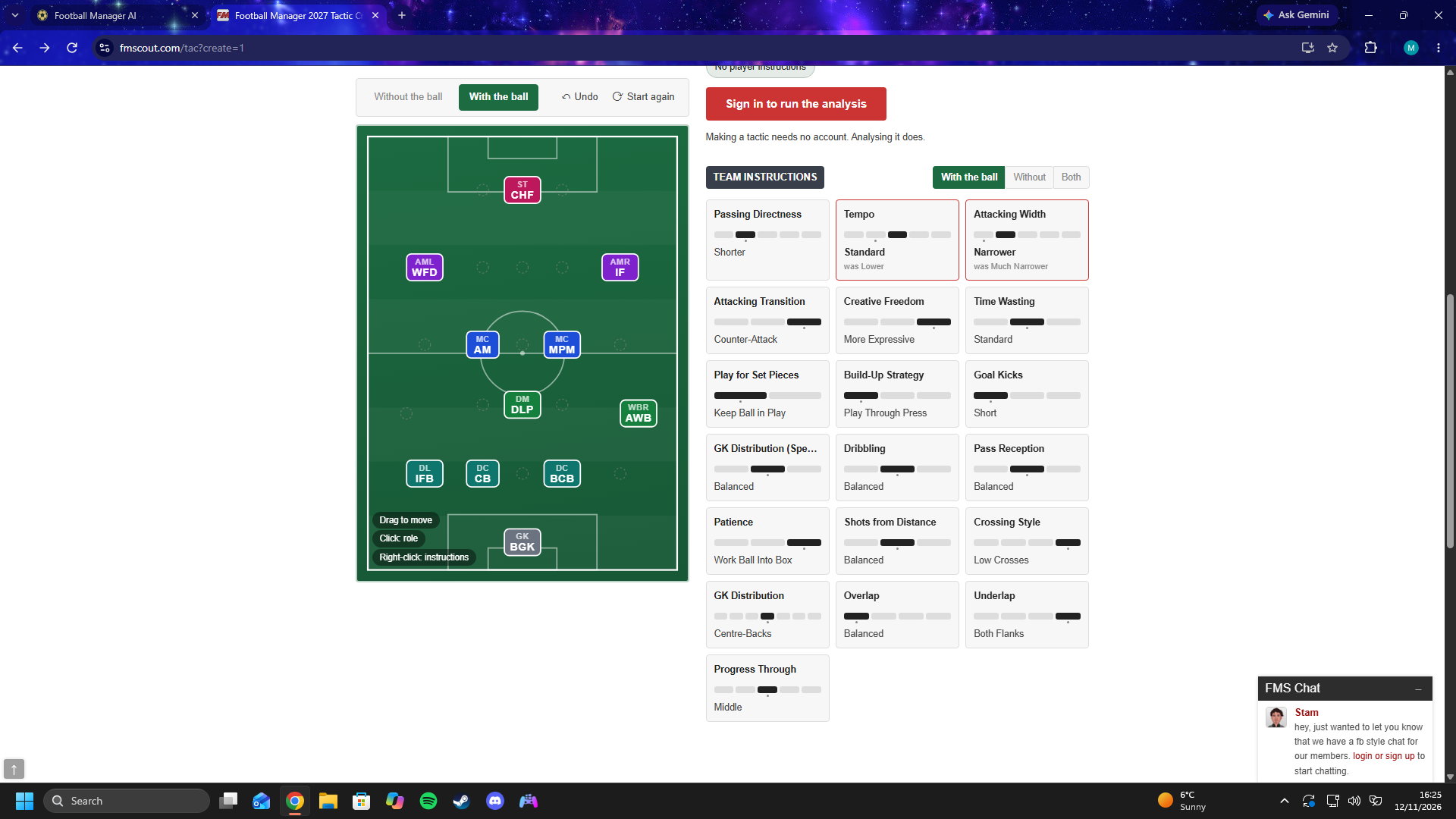
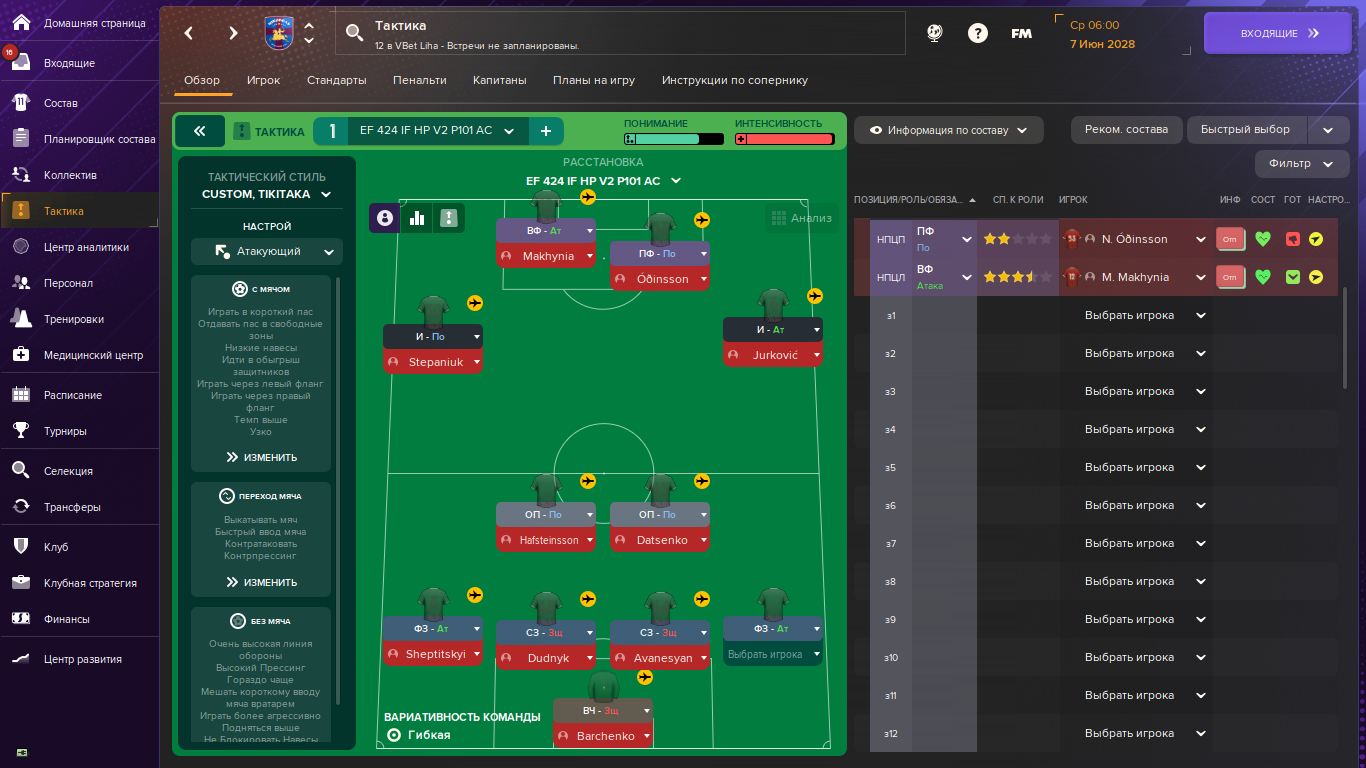
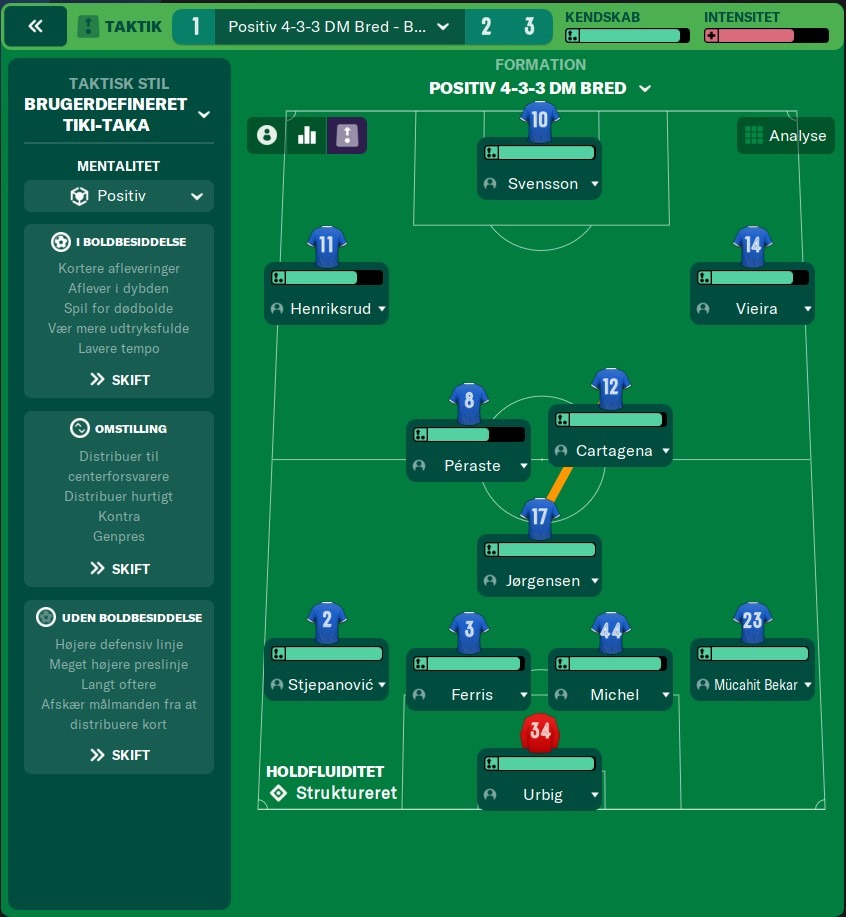
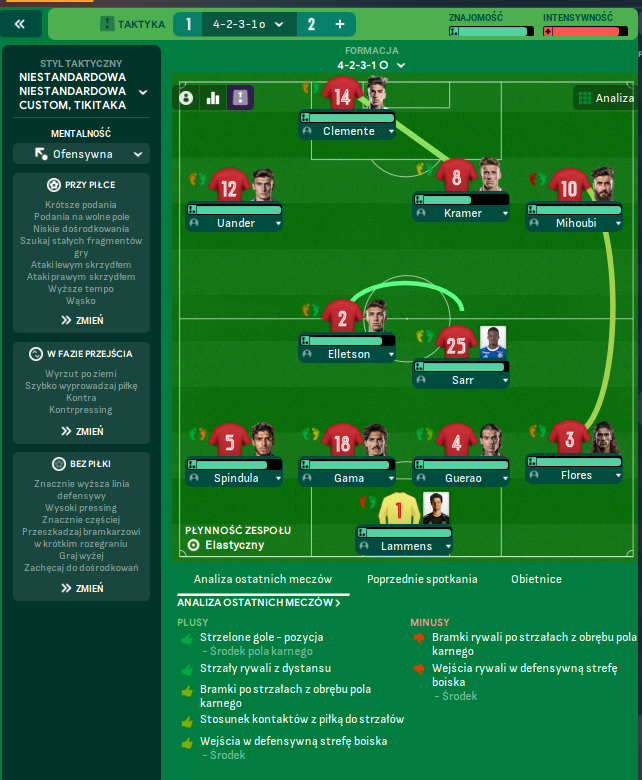
4-3-3
Keep possession and build through the defence, then press aggressively to recover the ball high. Tiki-Taka, shorter passing, a lower tempo and Play Out of…
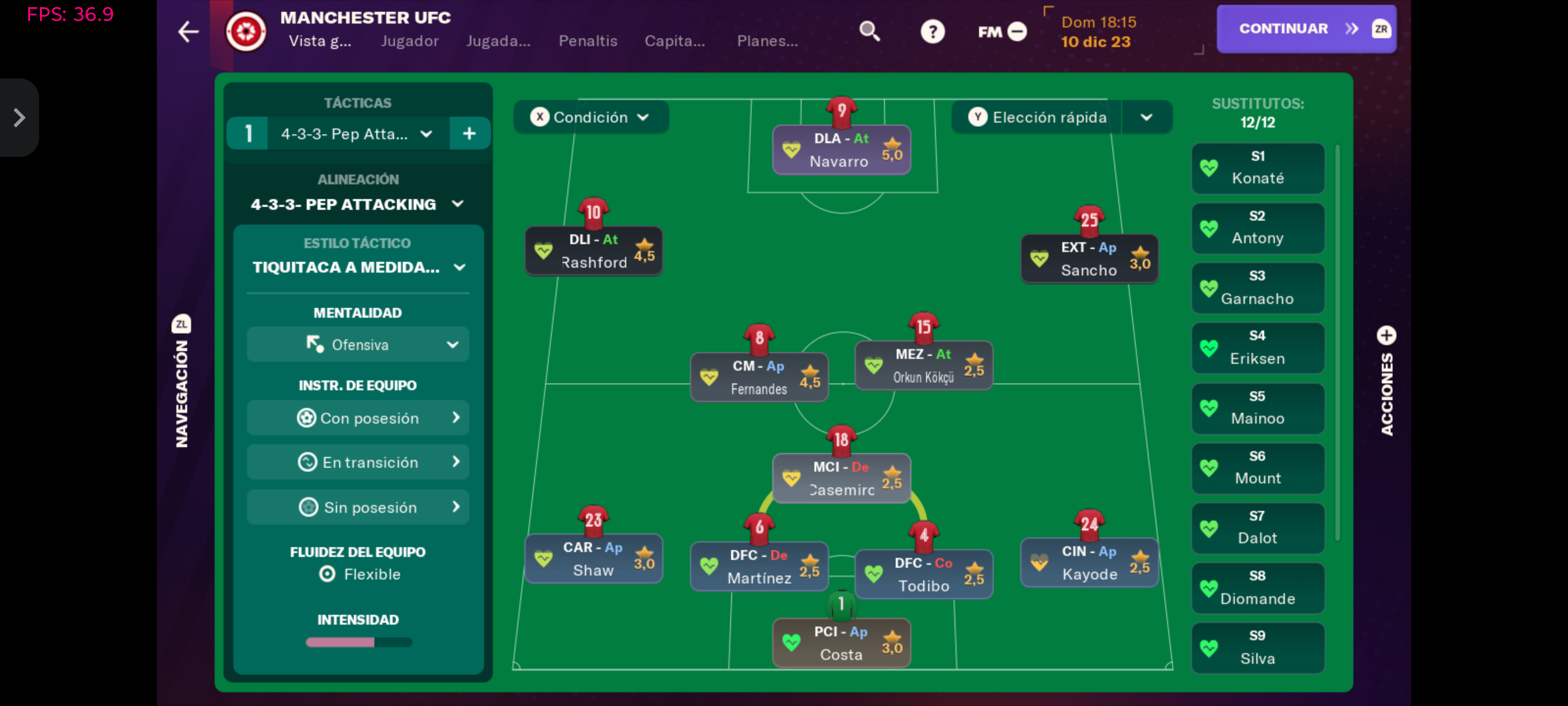
Loading tactical analysis...
Tiki-Taka
Attacking
4-3-3
Fluid
GK
Sweeper Keeper
Support
DL
Wing-Back
Support
DC
Centre-Back
Defend
DC
Centre-Back
Defend
DR
Wing-Back
Support
DM
Defensive Midfielder
Defend
MC
Central Midfielder
Support
MC
Mezzala
Attack
AML
Inverted Winger
Attack
AMR
Winger
Support
ST
Complete Forward
Attack
Shorter Passing
Play Out of Defence
Lower Tempo
Standard Attacking Width
Work Ball Into Box
Low Crosses
Counter-Press
Distribute to Centre-Backs
Prevent Short GK Distribution
Higher Defensive Line
Higher Line of Engagement
More Urgent Pressing
Prevent Short GK Distribution
Tiki-Taka, shorter passing, a lower tempo and Play Out of Defence support patient circulation from the back.
The SK and both CB roles are supported by Shorter Passing and Play Out of Defence.
The defensive midfielder can anchor the midfield while the attacking mezzala advances to support the front three.
The DM (De) sits behind the CM (Su) and MEZ (At).
Attacking mentality pushes for a more assertive approach, while lower tempo and shorter passing can slow progression and allow opponents to recover their shape.
The CM (Su) and MEZ (At) support a patient approach built around Shorter Passing and Lower Tempo despite attacking mentality.
Low deliveries are less naturally suited to a central forward asked to attack the box, particularly if he is contested by physically strong defenders.
The CF (At) is the central target for Low Crosses.
Space behind the defensive line
The high defensive line can leave space for balls in behind, especially when the team loses possession and its defenders are exposed before the press recovers.
The CB roles are positioned behind a Higher Defensive Line while Counter-Press is selected.
medium
Transitions around the central anchor
The lone defensive midfielder has substantial responsibility for screening the centre while the mezzala attacks, which may leave central space if possession is lost.
The DM (De) is the only holding midfielder behind the CM (Su) and MEZ (At).
medium
Defensive anchor and advancing mezzala
The holding midfielder can protect the centre while the mezzala moves forward to provide a goal threat from midfield.
The DM (De) plays behind the MEZ (At).
Defensive anchor and advancing mezzala
Wide support around an attacking forward
The inverted winger can move inside while the winger offers width, creating different routes to support the central forward.
The IW (At), W (Su) and CF (At) occupy the front line.
Wide support around an attacking forward
How can I protect the space behind my higher defensive line?
What should I look for in a centre-forward to make low crosses and this possession approach more effective?
What could I change to create chances faster without losing the short-passing style?
Patient, short-passing build-up from the back, with work into the box and low crosses; the inverted winger and attacking mezzala provide forward support.
Counter-press after losing possession; the goalkeeper is directed to the centre-backs when a save is made.
Keep possession and build through the defence, then press aggressively to recover the ball high.
High-pressing 4-3-3
A higher defensive line and higher engagement line, backed by more urgent pressing, aim to contest possession high up the pitch.
The CB roles play with Higher Defensive Line and Higher Line of Engagement, supported by More Urgent Pressing.
Possession-oriented 4-3-3
The team builds from the back with shorter passes and lower tempo, with a defensive midfielder anchoring an advanced mezzala and the wide attackers supporting the centre-forward.
The SK and CB roles support Play Out of Defence; the DM (De), MEZ (At), IW (At), W (Su) and CF (At) form the attacking structure.
This is a coherent possession-oriented 4-3-3 with a clear high-pressing identity: short passing from the back, a holding midfielder behind an attacking mezzala, and varied wide roles supporting the centre-forward. The main concern is that attacking mentality paired with lower tempo may make progression too patient, while the high line carries some risk from balls in behind. Consider standard tempo first, and review whether the forward is well suited to low crosses.
The tactical theory behind the 4-3-3: roles, instructions, and the trade-offs that decide whether the system holds up.
Klopp-style gegenpressing in FM, including squad profile, line-and-press pairing, sustainable workload, and the antipatterns to avoid.
Why circulation density and zonal occupation aren't the same thing in FM, and the half-space occupation rule that decides build-up.
The pairing rule for Defensive Line and Line of Engagement, all 9 combinations, and the gap that costs goals.