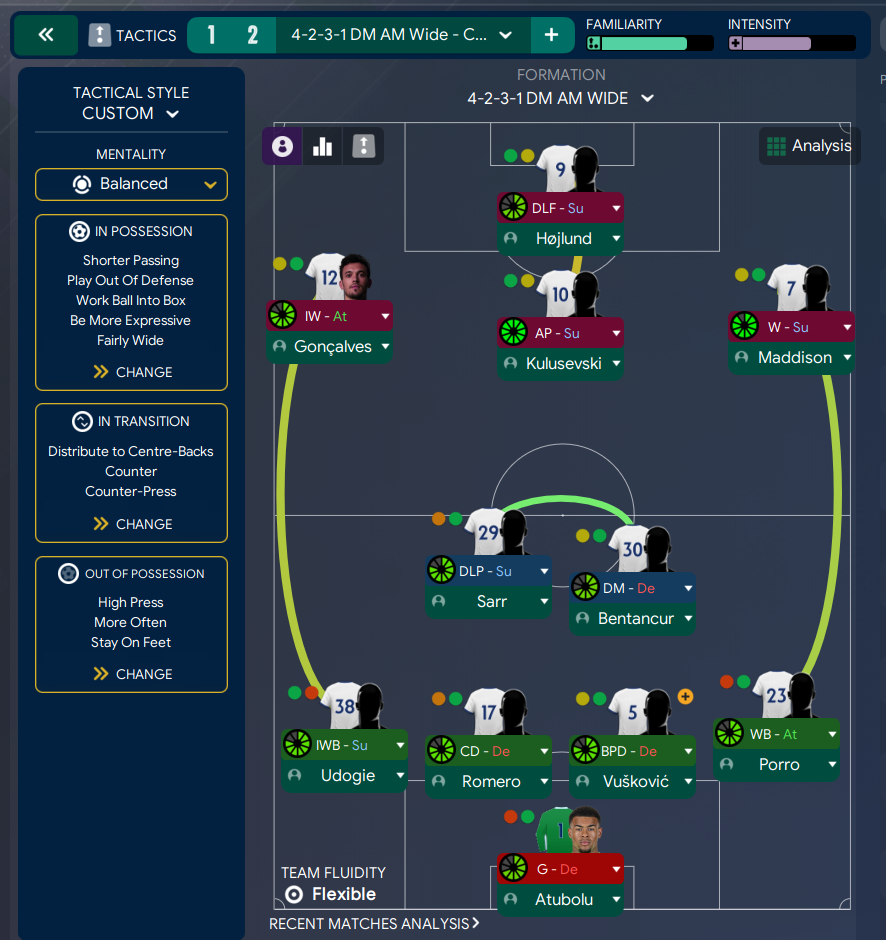
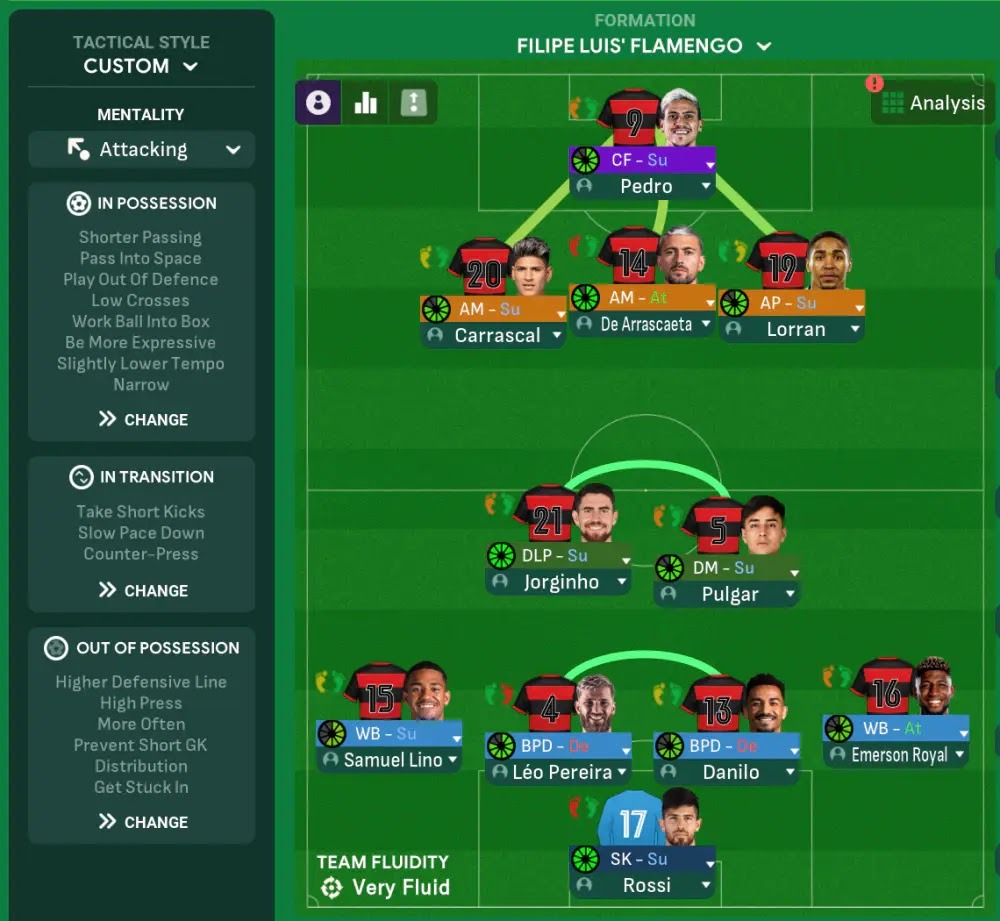
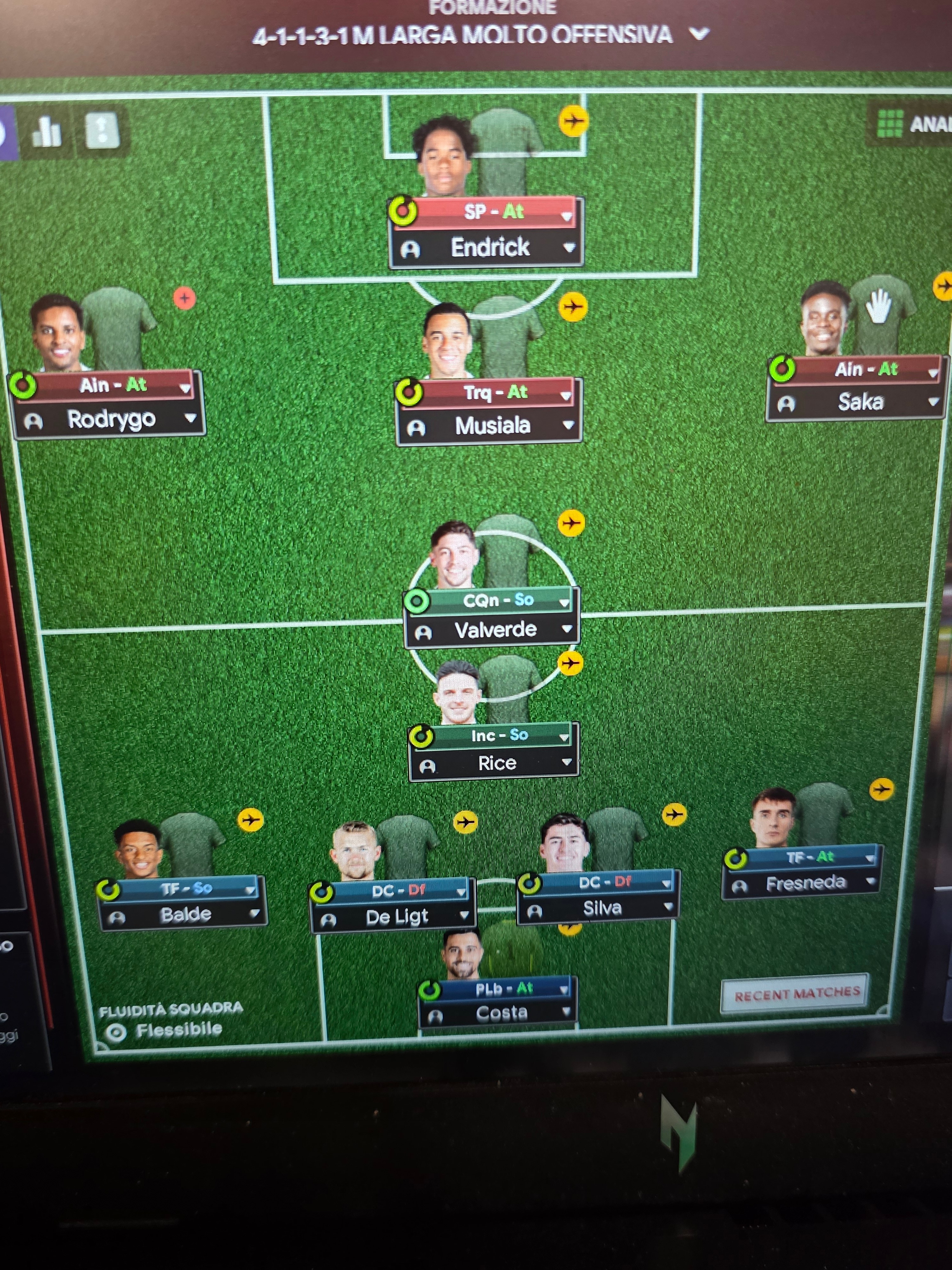
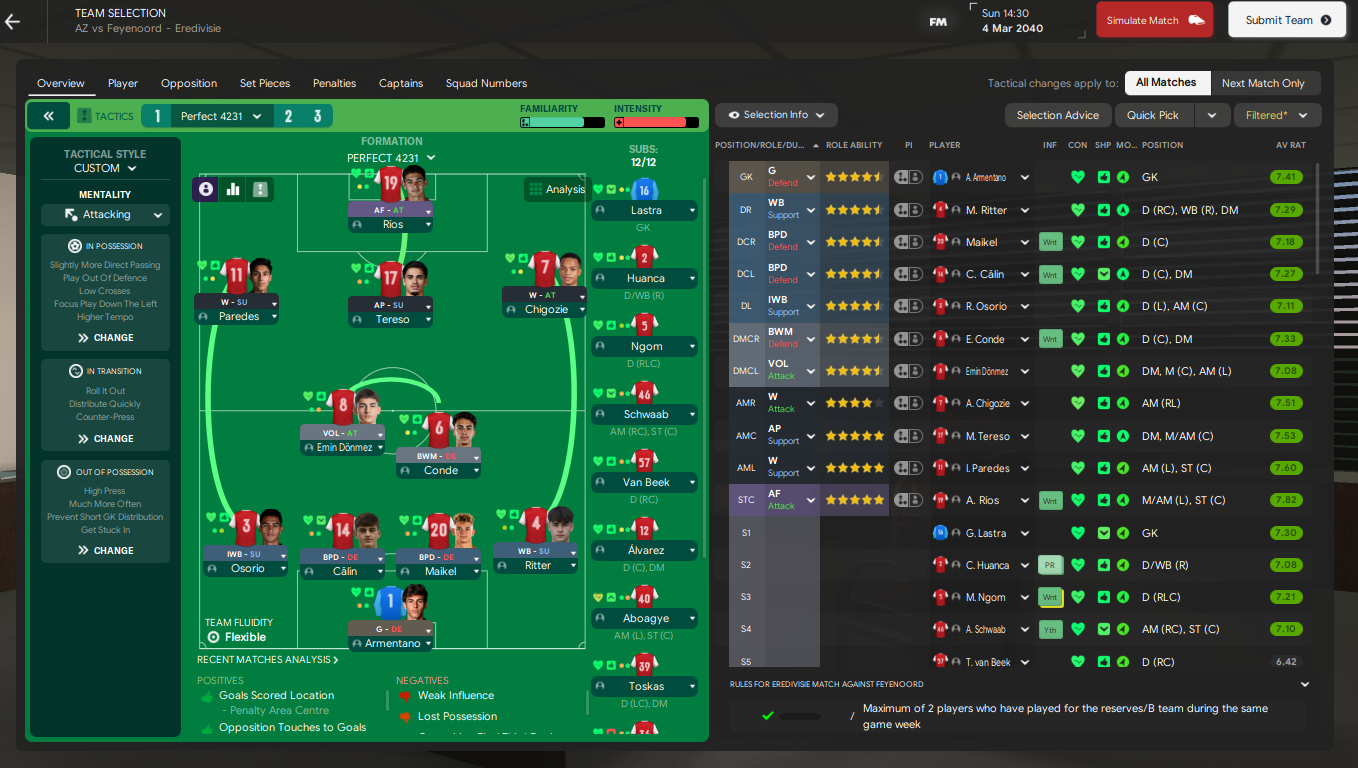
4-2-3-1
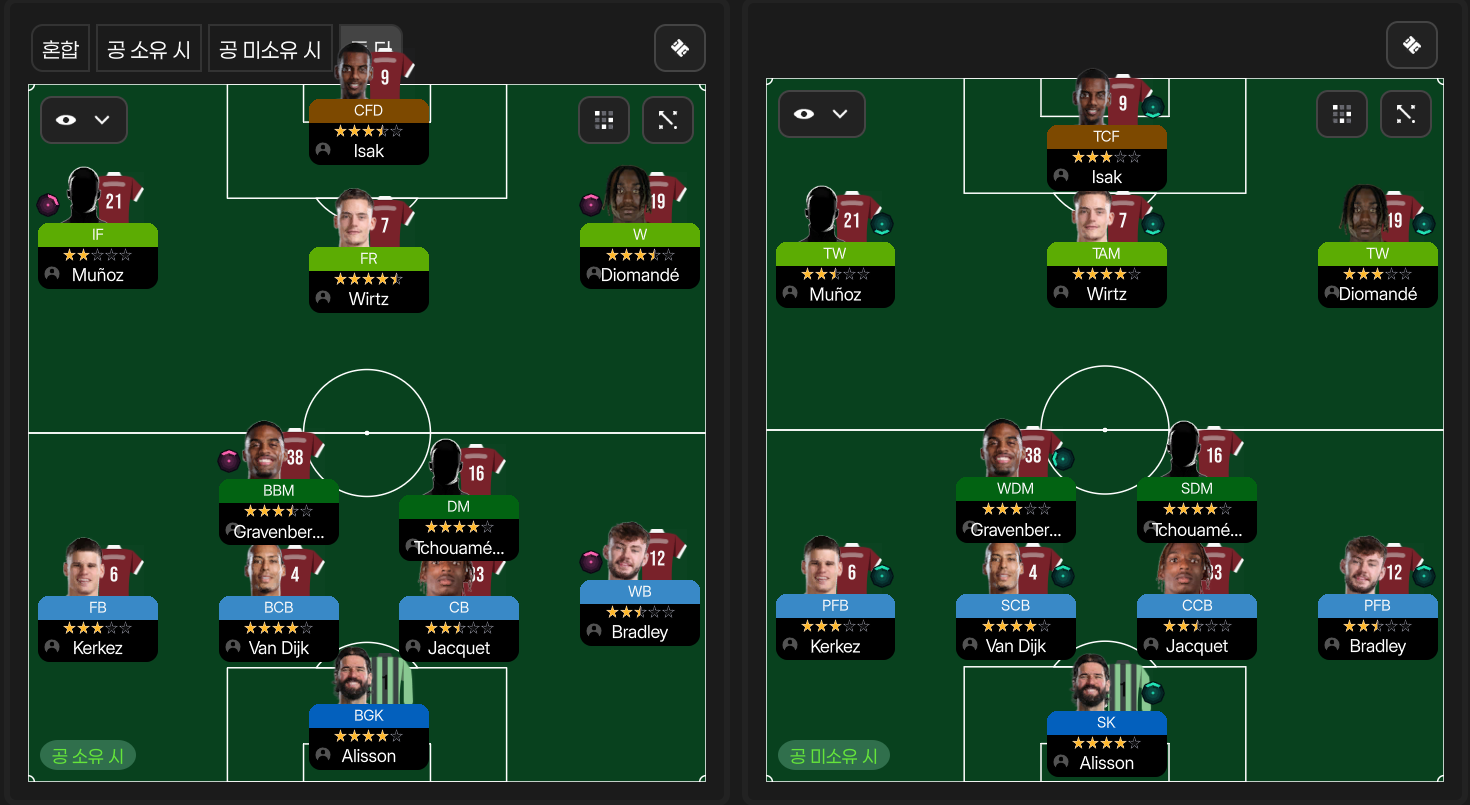
Dominating the midfield and creating pocket spaces for the attacking units. The use of a DM and a BBM ensures control and transitional support.
Loading tactical analysis...
4-2-3-1
Work Ball Into Box
Run At Defence
Counter-Press
Counter
Higher Defensive Line
Higher Line of Engagement
Prevent Short GK Distribution
GK
Sweeper Keeper
Support
FB
Full-Back
Support
CB
Ball-Playing Defender
Defend
CB
No-Nonsense Centre-Back
Defend
DM
Defensive Midfielder
Defend
BBM
Box-to-Box Midfielder
Support
TAM
Trequartista
Support
W
Winger
Attack
IF
Inside Forward
Attack
CF
Complete Forward
Attack
Focus on utilizing the inside forward and winger to stretch the opposition, complemented by a trequartista to link play.
Quick counter-pressing to recover possession immediately after losing the ball.
Dominating the midfield and creating pocket spaces for the attacking units.
4-2-3-1
Compact shape allowing for both a strong defensive presence and quick transitions.
High defensive line combined with a DM and two center-backs provides solid coverage.
4-2-3-1
Utilizes width through wingers while maintaining depth with an attacking midfielder.
The Combination of a CF and wide players enhances goal-scoring options.
The use of a DM and a BBM ensures control and transitional support.
DM at [3,3] backed by BBM at [4,2] allows for quick ball recovery.
The combination of a trequartista and inside forward creates numerous passing channels.
TAM at [5,3] and IF at [6, 2] provide depth and variations in attacking plays.
Heavy reliance on counter-pressing can leave gaps if the press is bypassed.
High line engagement combined with 'Counter-Press' may expose gaps in the defensive shape.
Full-backs pushing high can lead to vulnerabilities on the flanks if not covered.
FB at [2,1] can expose space on the wings during transitions.
Defensive Structure
High pressing may lead to exposed defensive gaps during counter-attacks.
Higher Defensive Line combined with 'Counter-Press' without sufficient cover.
Wing Deficiencies
With both FBs attacking, counter plays may leave flanks vulnerable.
Overlapping FB at [2,1] increases risk of counter-attacks on opposite wing.
BBM and TAM
BBM can support transitions and link play effectively with the trequartista.
BBM at [4,2] providing forward runs to complement TAM at [5,3].
CF and IF
The CF can hold up play while IF creates spaces for goal-scoring opportunities.
CF at [6,3] allows IF at [6,2] to exploit defenses.
What is the primary objective of the current tactical setup?
How does the team adapt to opposition with differing styles?
What adjustments can be made to enhance defensive solidity?
The tactical theory behind the 4-2-3-1: roles, instructions, and the trade-offs that decide whether the system holds up.
Klopp-style gegenpressing in FM, including squad profile, line-and-press pairing, sustainable workload, and the antipatterns to avoid.
Double pivots and flat pairs in 4-2-3-1 and 4-4-2: when each pairing works, when it collapses, and the AMC unicorn that rescues both.
How Mentality, Duty, and Role interact in FM, why duty trumps mentality every time, and the role-on-top-of-duty composition rules.