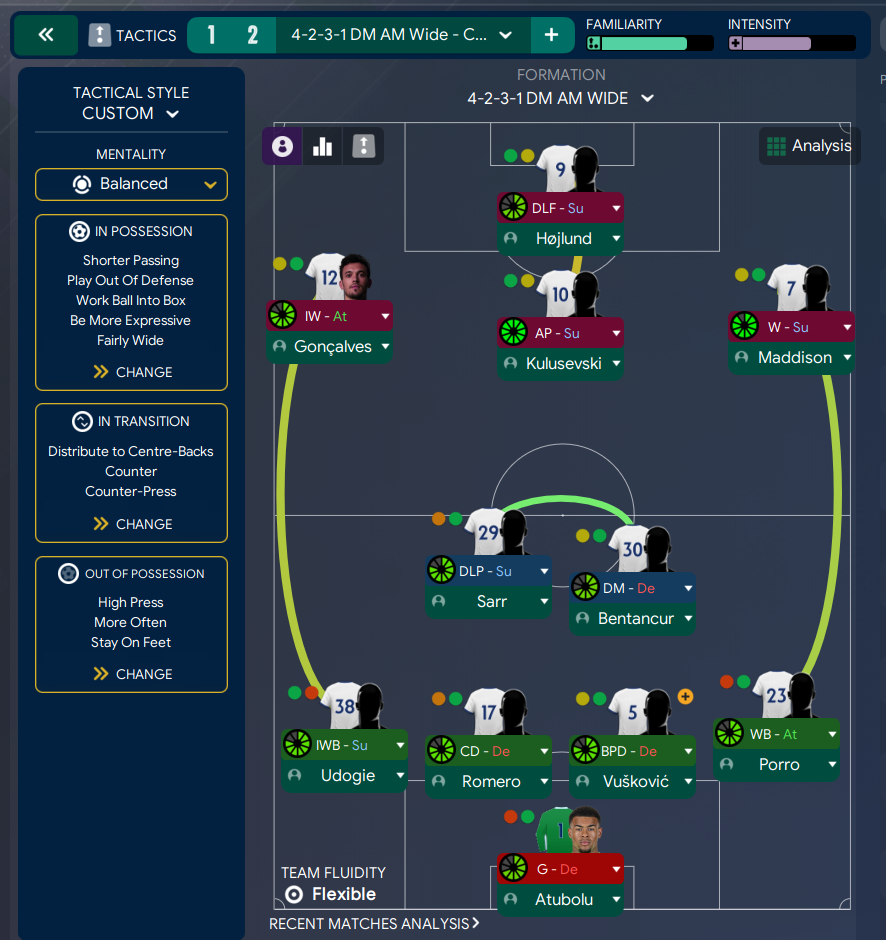
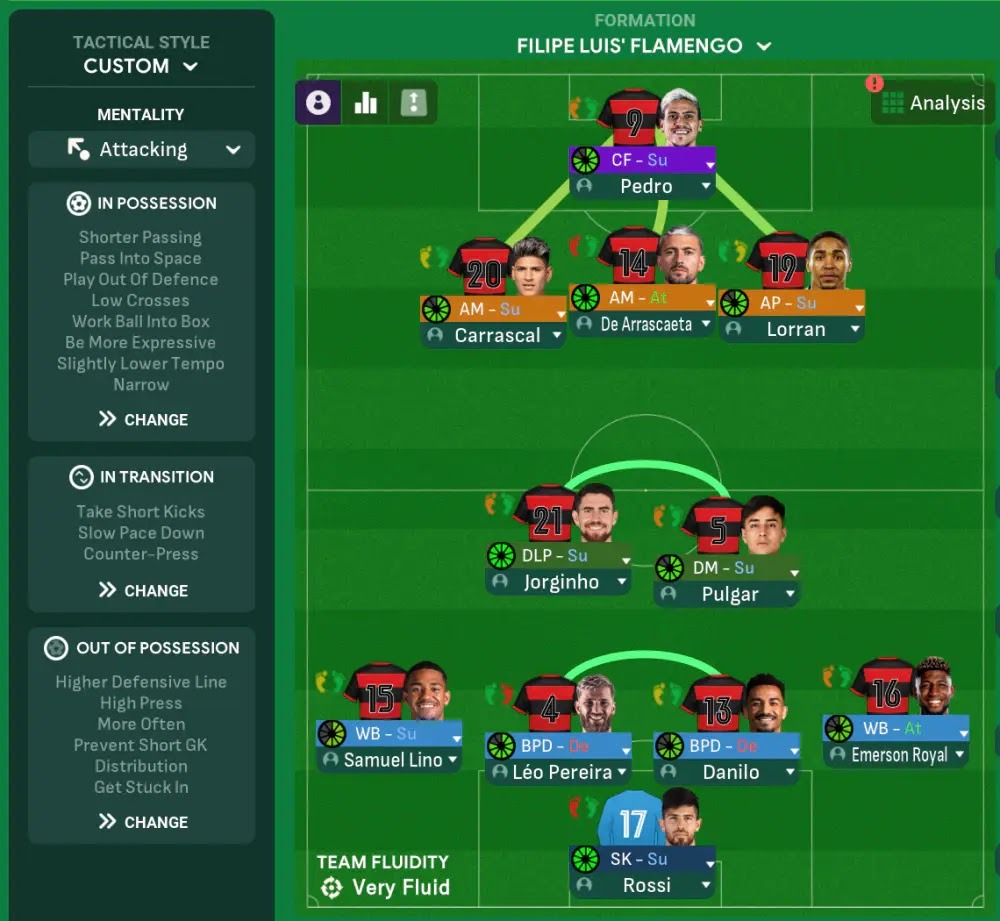
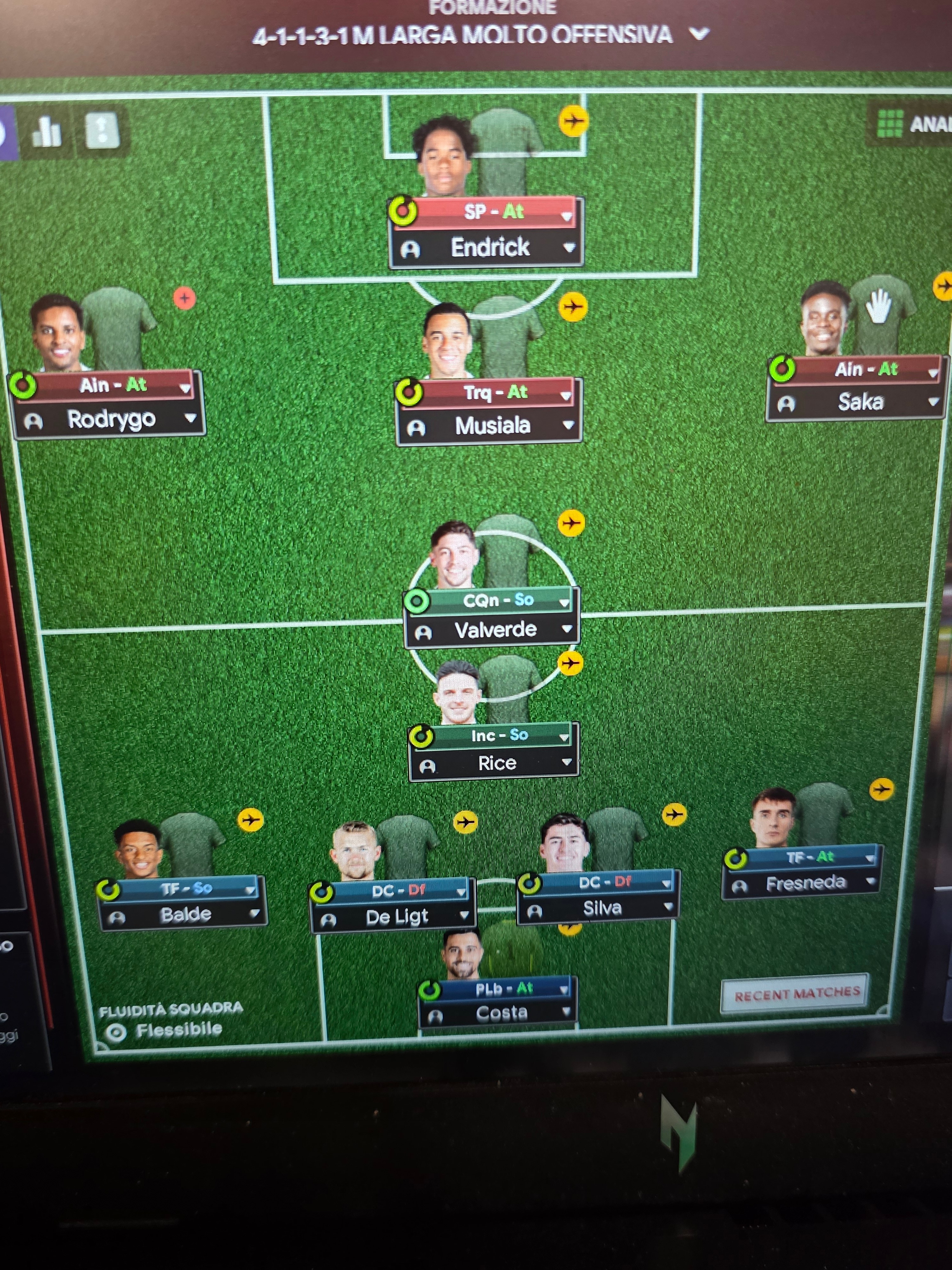
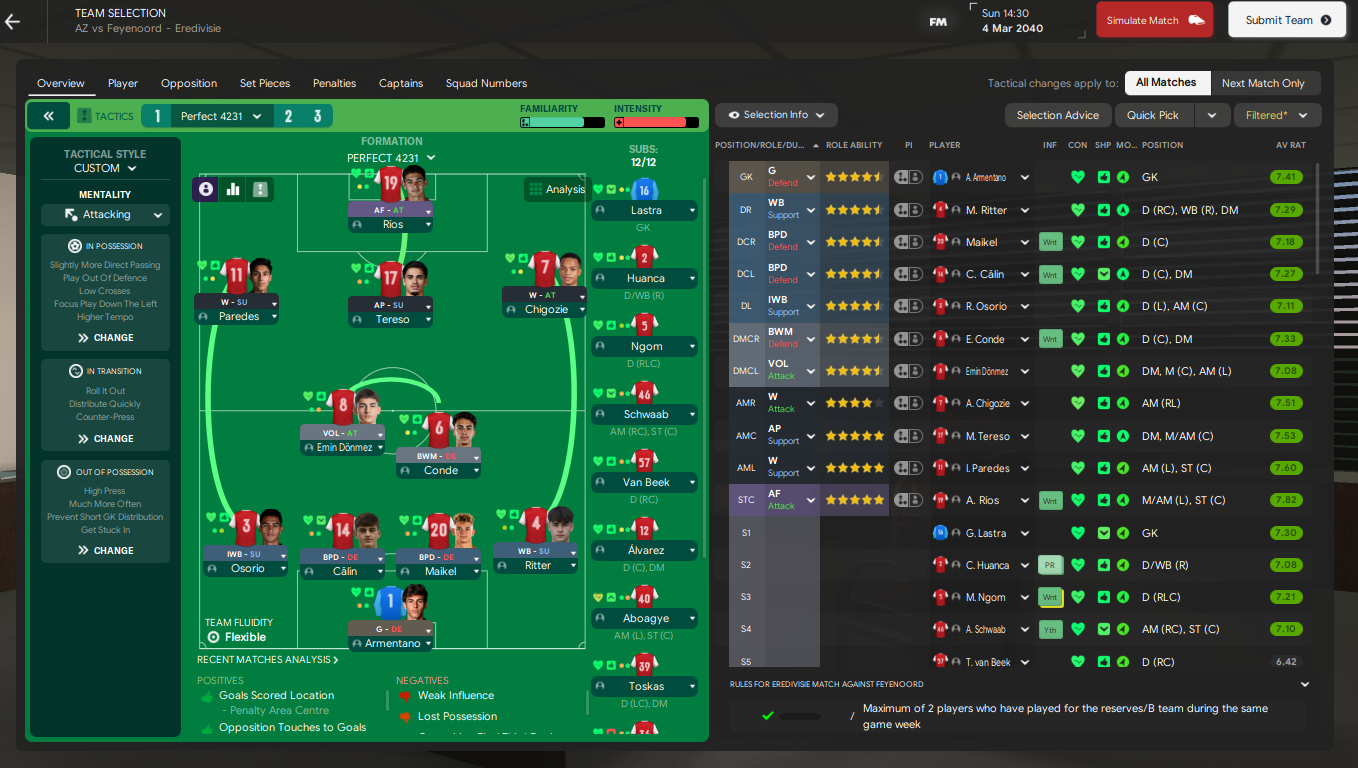
4-2-3-1
The combination of a Ball-Playing Defender and Central Defender provides solid coverage.
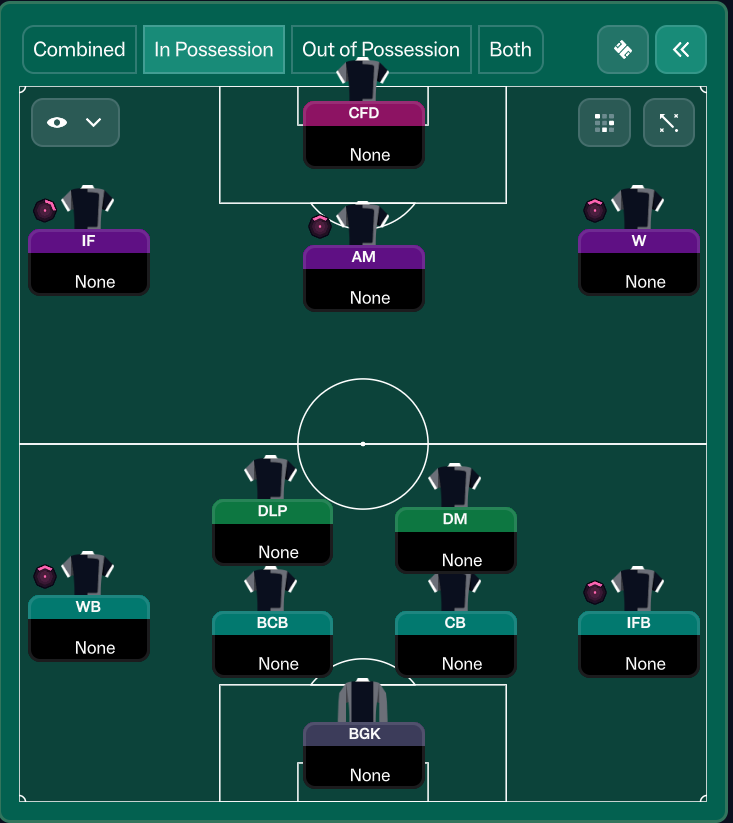
Loading tactical analysis...
4-2-3-1
GK
Goalkeeper
None
CB
Central Defender
None
CB
Ball-Playing Defender
None
WB
Wing-Back
None
IF
Inside Forward
None
AM
Attacking Midfielder
None
W
Winger
None
DM
Defensive Midfielder
None
DLP
Deep-Lying Playmaker
None
CF
Complete Forward
None
Standard
Maintains a traditional 4-2 defensive structure with a focus on width.
CB at [2,2], BCB at [2,3]; WB at [2,1].
Width and Depth
Utilizes wingers and an attacking midfielder to create space for central striker.
IF at [6,1], AM at [5,3], W at [5,5].
The combination of a Ball-Playing Defender and Central Defender provides solid coverage.
CB at [2,2] and BCB at [2,3] ensure a strong central line.
Inside forward and Winger create width and allow depth in attacking phases.
IF at [6,1] and W at [5,5] offer diverse pathways for attacking.
The Complete Forward might become isolated without sufficient support from the midfield.
CF at [6,3] lacks immediate connections from midfield line.
If wing-backs are not utilized offensively, the attack may become predictable.
WB at [2,1] must contribute to offensive build-up to avoid stagnation.
Defensive Midfield
Only one DM may lead to loss of ball recovery in counter situations.
DM at [3,2] presents a singular anchor point without support.
Front Three Dynamics
Lack of overlapping runs might render wide players ineffective.
IF at [6,1] and W at [5,5] need synergy with midfielders.
DLP and AM
Creates a strong link between midfield and attack, allowing for fluid offensive movements.
DLP at [3,2] can release AM at [5,3] into advanced positions.
IF and W
Utilizing both allows vertical space and mismatches against opposition full-backs.
IF at [6,1] can cut inside while W at [5,5] stretches the defence.
The tactical theory behind the 4-2-3-1: roles, instructions, and the trade-offs that decide whether the system holds up.
Klopp-style gegenpressing in FM, including squad profile, line-and-press pairing, sustainable workload, and the antipatterns to avoid.
Double pivots and flat pairs in 4-2-3-1 and 4-4-2: when each pairing works, when it collapses, and the AMC unicorn that rescues both.
Build through the wide areas or through the middle? A working framework for picking the right one for your squad.