Uploaded Tactic
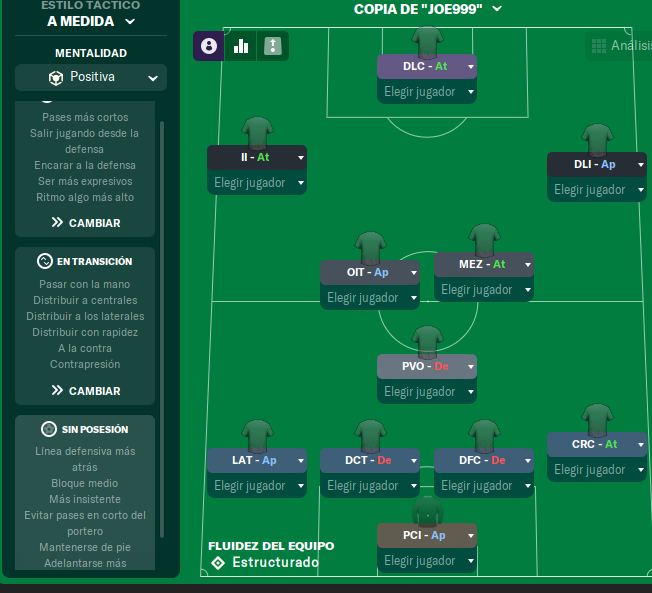
Formation & Style
Tactical Style:Estructurado
Mentality:Positiva
Formation:4-2-3-1
Team Fluidity:Estructurado
In Possession
Pases más cortos
Salirr jugado desde la defensa
Encara a la defensa
Ser más expresivos
Ritmo algo más alto
In Transition
Pasar con la mano
Distribuir a centrales
Distribuir con rapidez
A la contra
Contrapresión
Out of Possession
Línea defensiva más atrás
Bloque medio
Más intensidad
Evitar pases en corto del portero
Mantenerse de pie
Acelerar las líneas
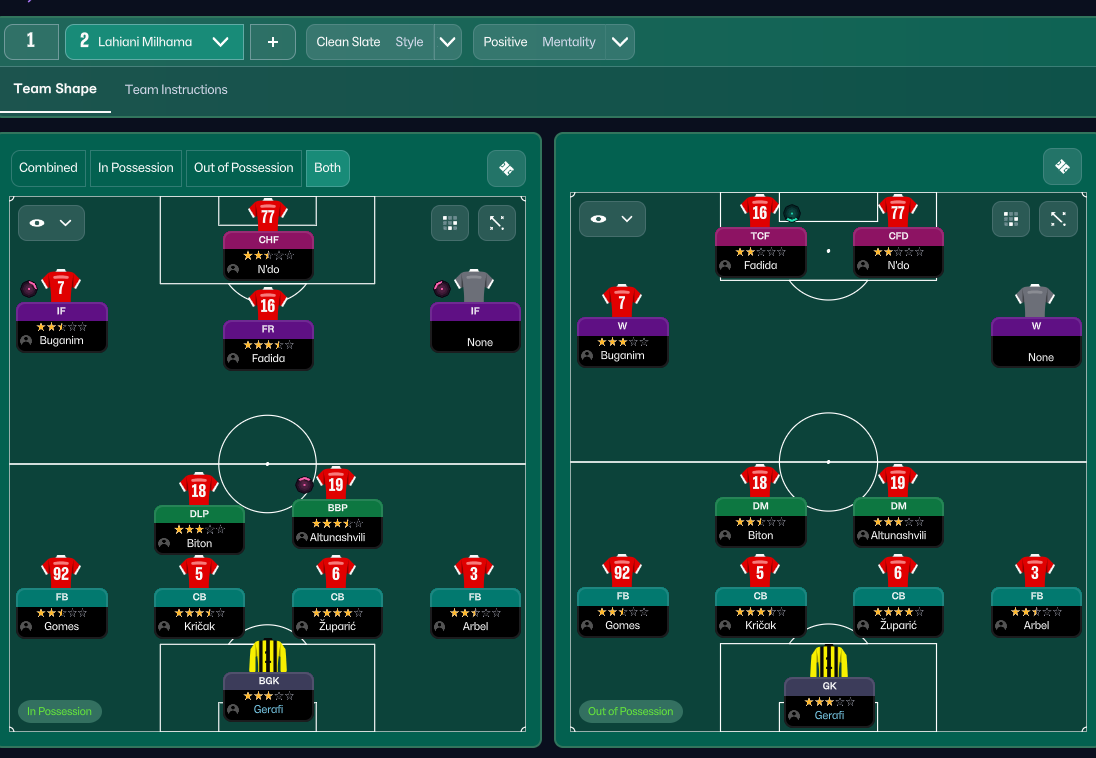
Team Shape Without Ball
Shape:4-2
Description:The team maintains a solid 4-2 formation when defending, ensuring that there are bodies in central and wide areas.
Evidence:PVO-De at [3,3] and DCT-De & DFC-De at [2,2] & [2,3] ensure a compact mid-block.
Team Shape With Ball
Shape:4-3-3
Description:In possession, the team stretches the opposition wide with wingers and a central striker.
Evidence:Interior Izquierdo - II-At at [5,1] and Delantero Completo - DLC-At at [6,3].
Phase Description
Attacking Play
Focus on short, expressive passing while trying to penetrate the opposition's defense.
Defensive Transition
React swiftly by transitioning into a pressing system once possession is lost.
Main Focus
Utilizing the width and movement of attacking midfielders to create goal-scoring opportunities.
Key Strengths
Dynamic Attacking Play
Utilizing multiple attacking players in advanced roles to outnumber the defense.
Solid Defensive Structure
A strong backline that can adapt to various attacking threats.
Quick Transitions
Effective quick transitions to exploit gaps in the opponent's formation.
Conflicting Directions
Slow Build-Up
The current positive mentality prioritizes swift attacking play, which may conflict with slower build-up strategies.
Excessive Pressing
While counter-pressing is implemented, over-commitment could leave gaps in defense.
Inflexibility Against Low Blocks
The current setup relies on width which may be ineffective against compact defenses.
Tactical Suggestions
Consider Inverting Wingers
Inverting your wingers could enhance central penetration and create goal-scoring opportunities between the lines.
Adjust Team Mentality
Consider shifting to a more balanced or cautious approach when playing against stronger opponents.
Introduce Variation in Set Pieces
Adding variety to set pieces can create additional threats and avoid being predictable.
Ask Questions About Your Lineup
Related Tactics
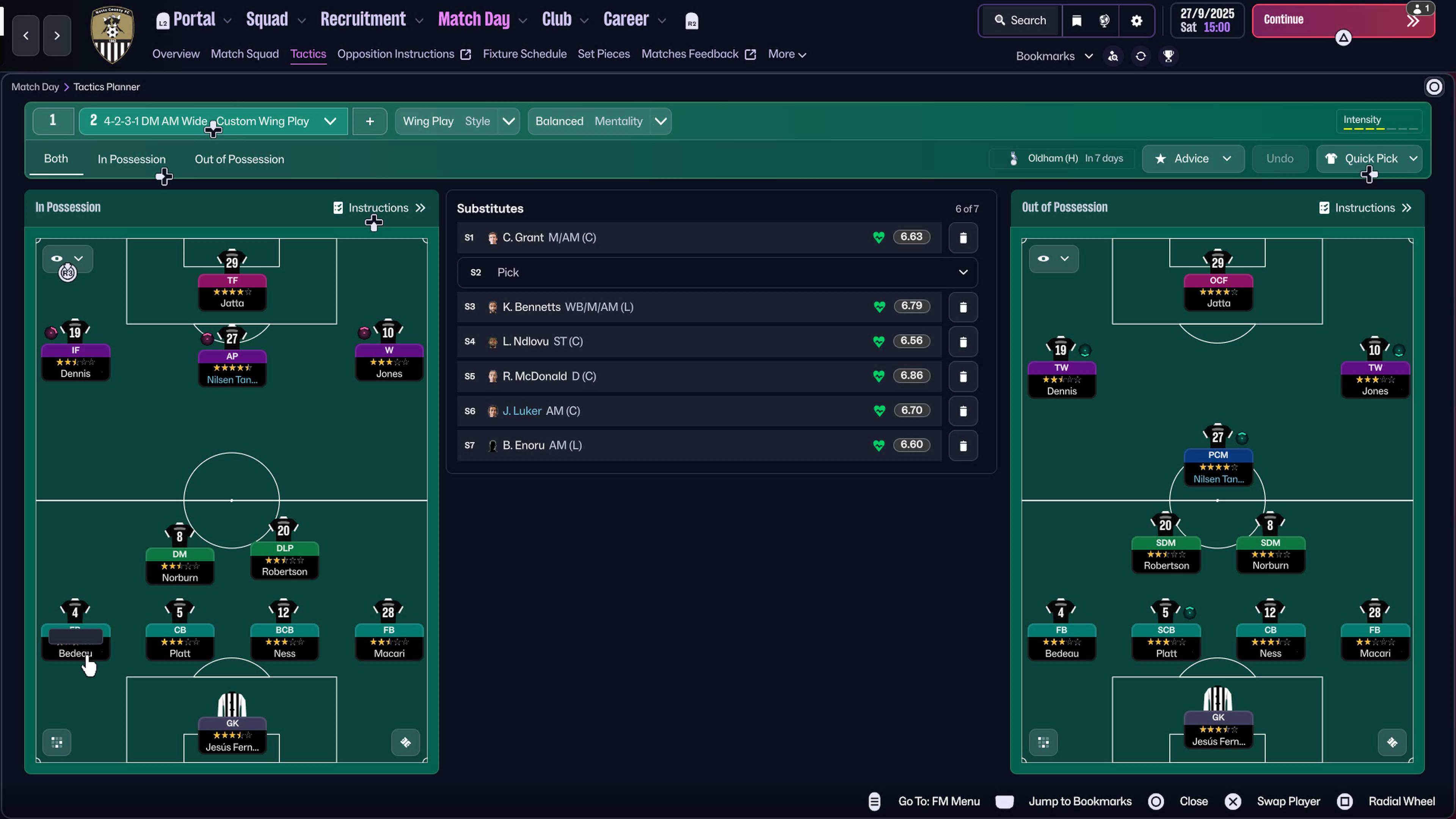
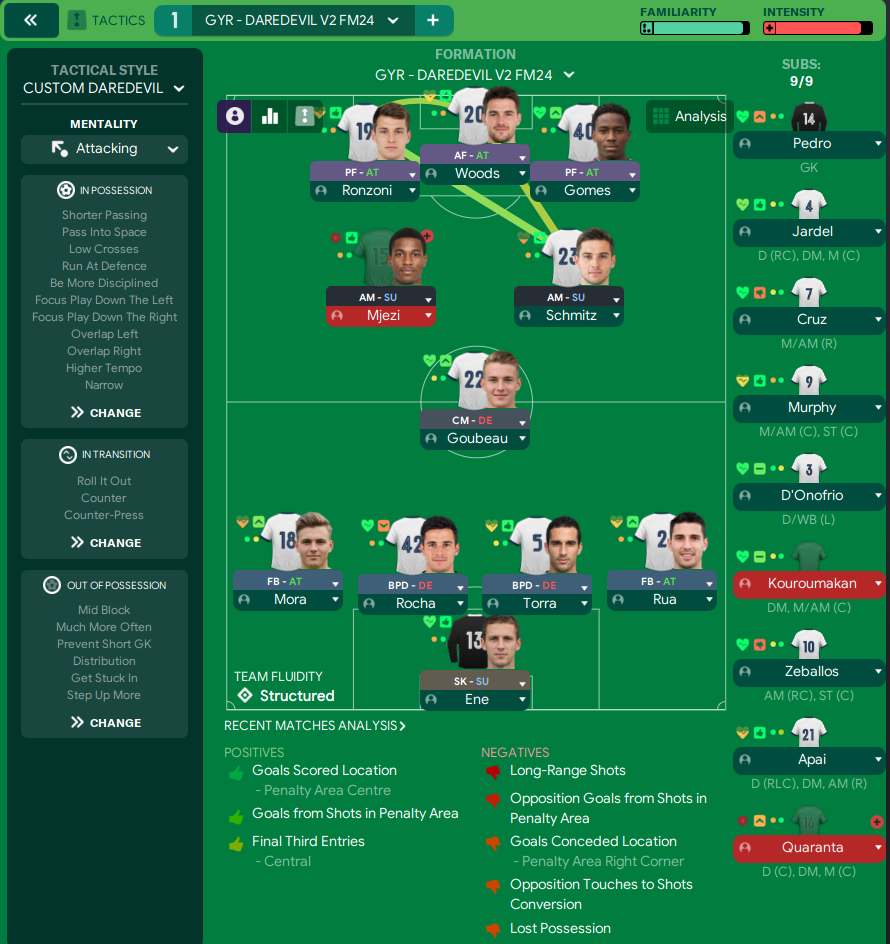
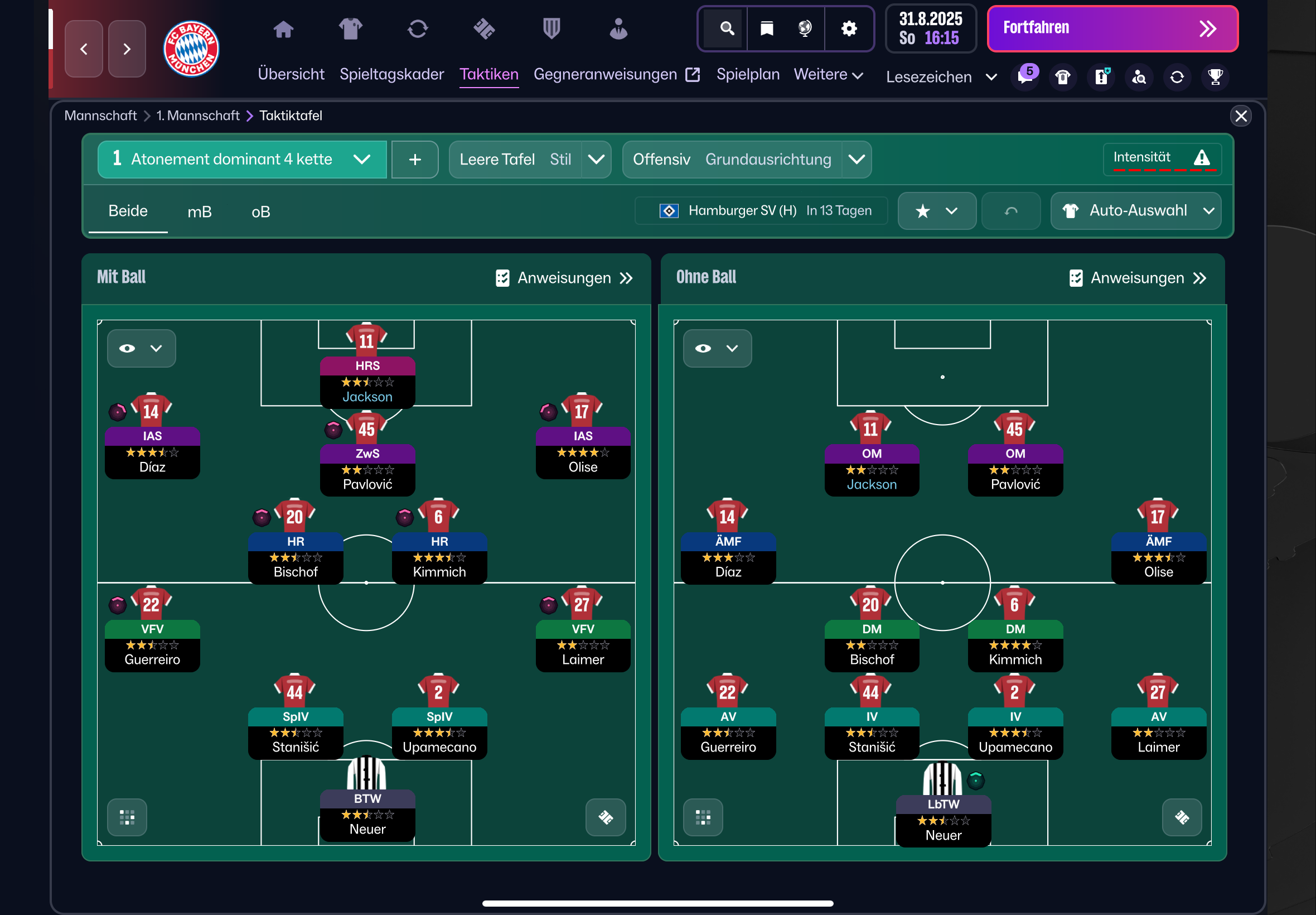
Guides for this formation
The tactical theory behind the 4-2-3-1: roles, instructions, and the trade-offs that decide whether the system holds up.
Player pairings
Midfield Pairs in 4-2-3-1 and 4-4-2
Double pivots and flat pairs in 4-2-3-1 and 4-4-2: when each pairing works, when it collapses, and the AMC unicorn that rescues both.
Read guide
Playing styles
Gegenpressing: A Full Guide
Klopp-style gegenpressing in FM, including squad profile, line-and-press pairing, sustainable workload, and the antipatterns to avoid.
Read guide