4-2-3-1
Utilizing width and attacking down the flanks. The combination of a Deep-Lying Playmaker and Ball-Winning Midfielder provides both defensive stability and…
Loading tactical analysis...
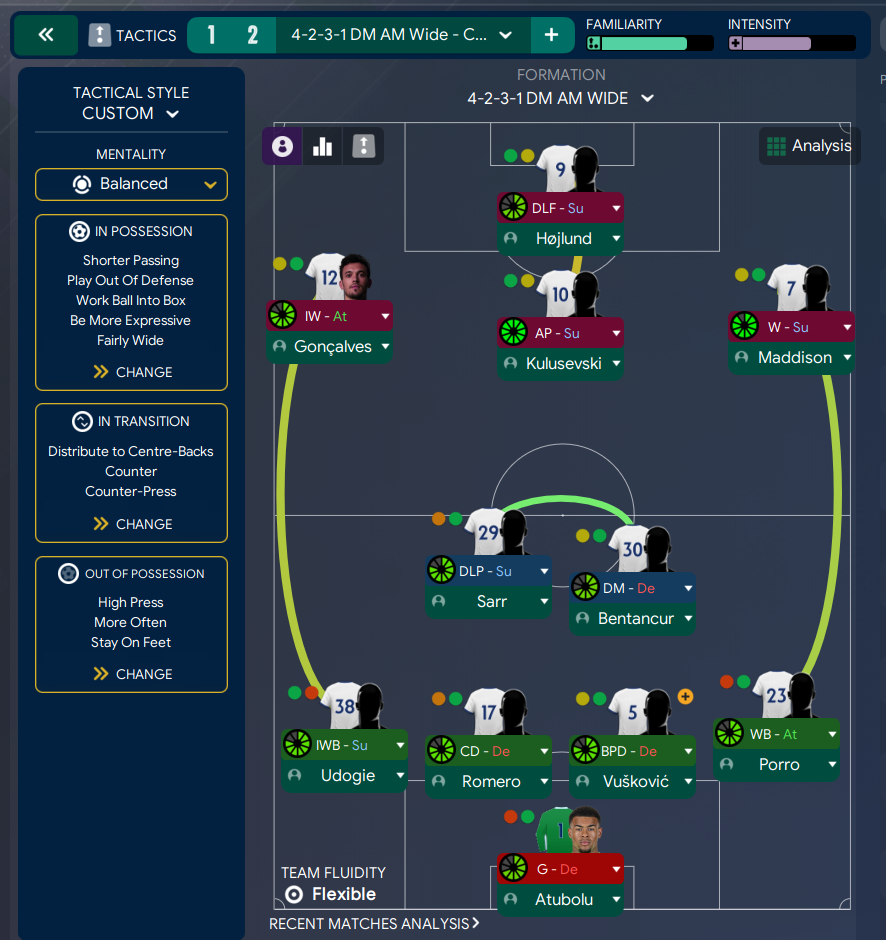
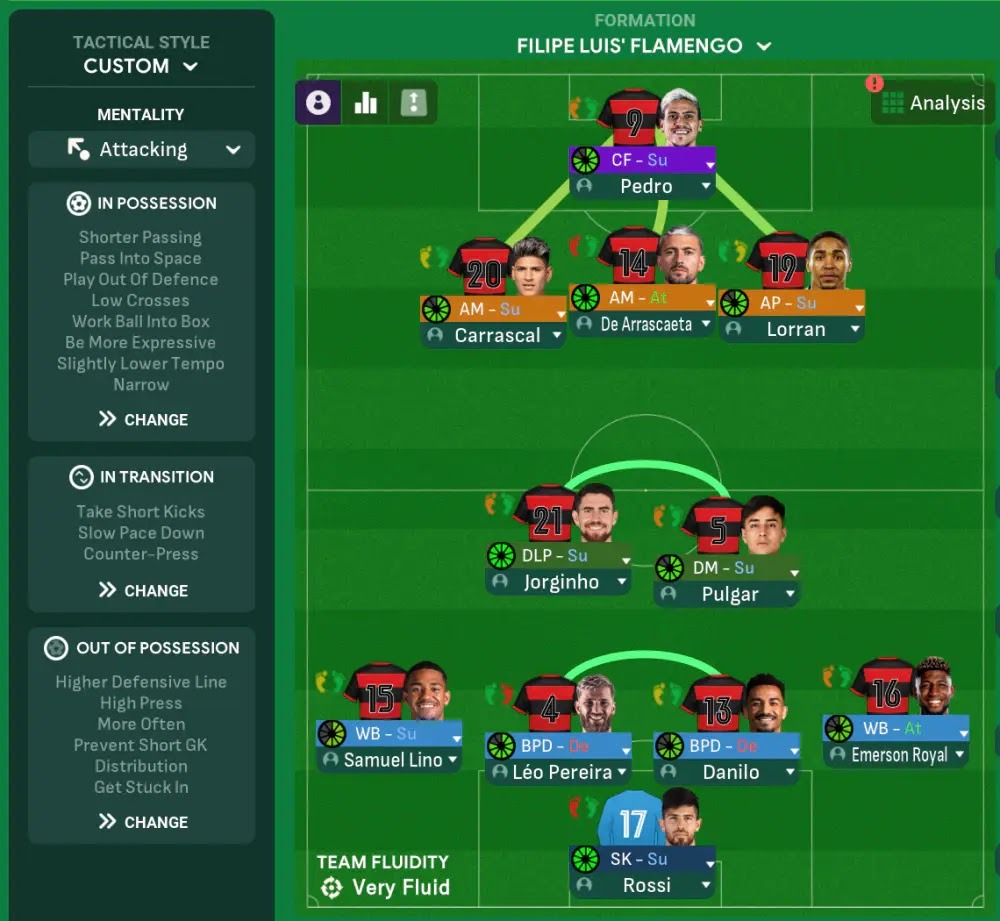
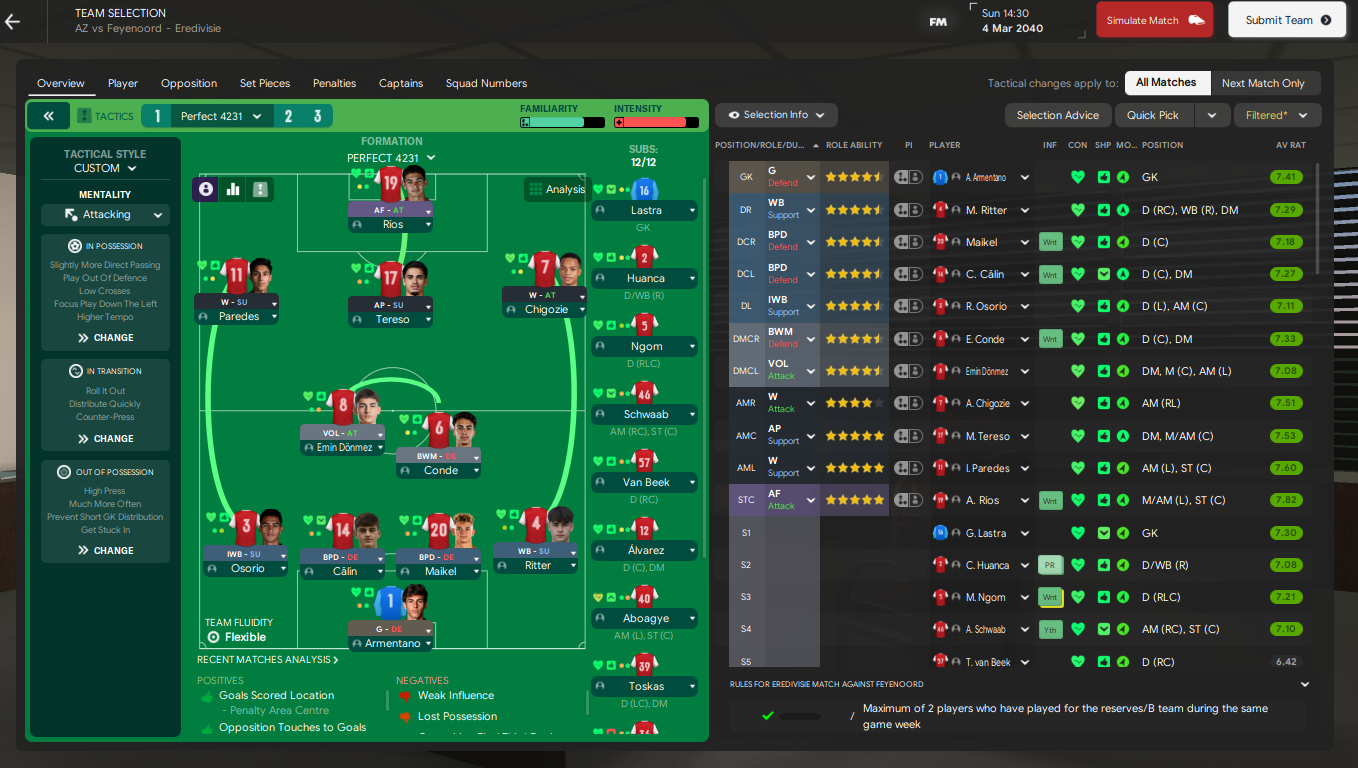
4-2-3-1
Use Width
Keep Possession
Play Out of Defence
Counter-Press
Counter
Higher Defensive Line
Higher Line of Engagement
Use Offside Trap
GK
Goalkeeper
Defend
DL
Full-Back
Attack
DC
Centre-Back
Defend
DC
Centre-Back
Defend
DR
Full-Back
Attack
DM
Deep-Lying Playmaker
Support
DM
Ball-Winning Midfielder
Defend
AM
Advanced Playmaker
Support
AM
Winger
Attack
ST
Advanced Forward
Attack
Focus on maintaining possession and building attacks through the midfield.
Quick recovery to press opponents upon losing the ball.
Utilizing width and attacking down the flanks.
Compact
Tight defensive shape to deny space between the lines.
Higher Defensive Line with 'Use Offside Trap'.
Attacking Width
Utilizes wingers to stretch the opposition's defence.
Roles of Winger and Advanced Playmaker creating depth.
The combination of a Deep-Lying Playmaker and Ball-Winning Midfielder provides both defensive stability and playmaking ability.
DLP-S at [3,3] and BWM-D at [3,4].
Wingers in advanced positions allow for effective width in attacking play.
Winger-A at [5,1] and Advanced Playmaker-S at [5,3].
A high defensive line may leave the team vulnerable to quick counter-attacks.
Higher Defensive Line with Higher Line of Engagement.
Heavy pressing could lead to fatigue over the course of a match.
Counter-Press under in-transition instructions.
Defensive Vulnerabilities
High line leaves space behind for fast attackers.
Higher Defensive Line and use of Offside Trap.
Transitioning from Attack to Defence
Counter-pressing may leave gaps if not executed efficiently.
Counter-Press instruction.
DLP-S and Winger-A
Creates chances from deep, allowing wingers to stretch the play.
DLP-S at [3,3] and Winger-A at [5,1].
BWM-D and Advanced Forward-A
Provides support for pressing while the forward can exploit defensive confusion.
BWM-D at [3,4] and AF-A at [6,3].
How can I better balance my midfield roles?
What adjustments can mitigate counter-attack vulnerabilities?
Are there alternative formations that suit my player's strengths?
The tactical theory behind the 4-2-3-1: roles, instructions, and the trade-offs that decide whether the system holds up.
Double pivots and flat pairs in 4-2-3-1 and 4-4-2: when each pairing works, when it collapses, and the AMC unicorn that rescues both.
Klopp-style gegenpressing in FM, including squad profile, line-and-press pairing, sustainable workload, and the antipatterns to avoid.
Build through the wide areas or through the middle? A working framework for picking the right one for your squad.