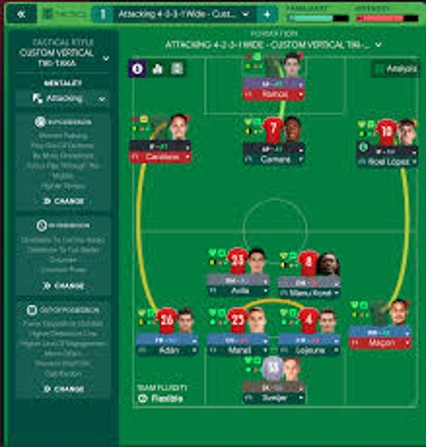
4-2-3-1 Wide
The focus on shorter passing helps in maintaining possession and establishing rhythm.
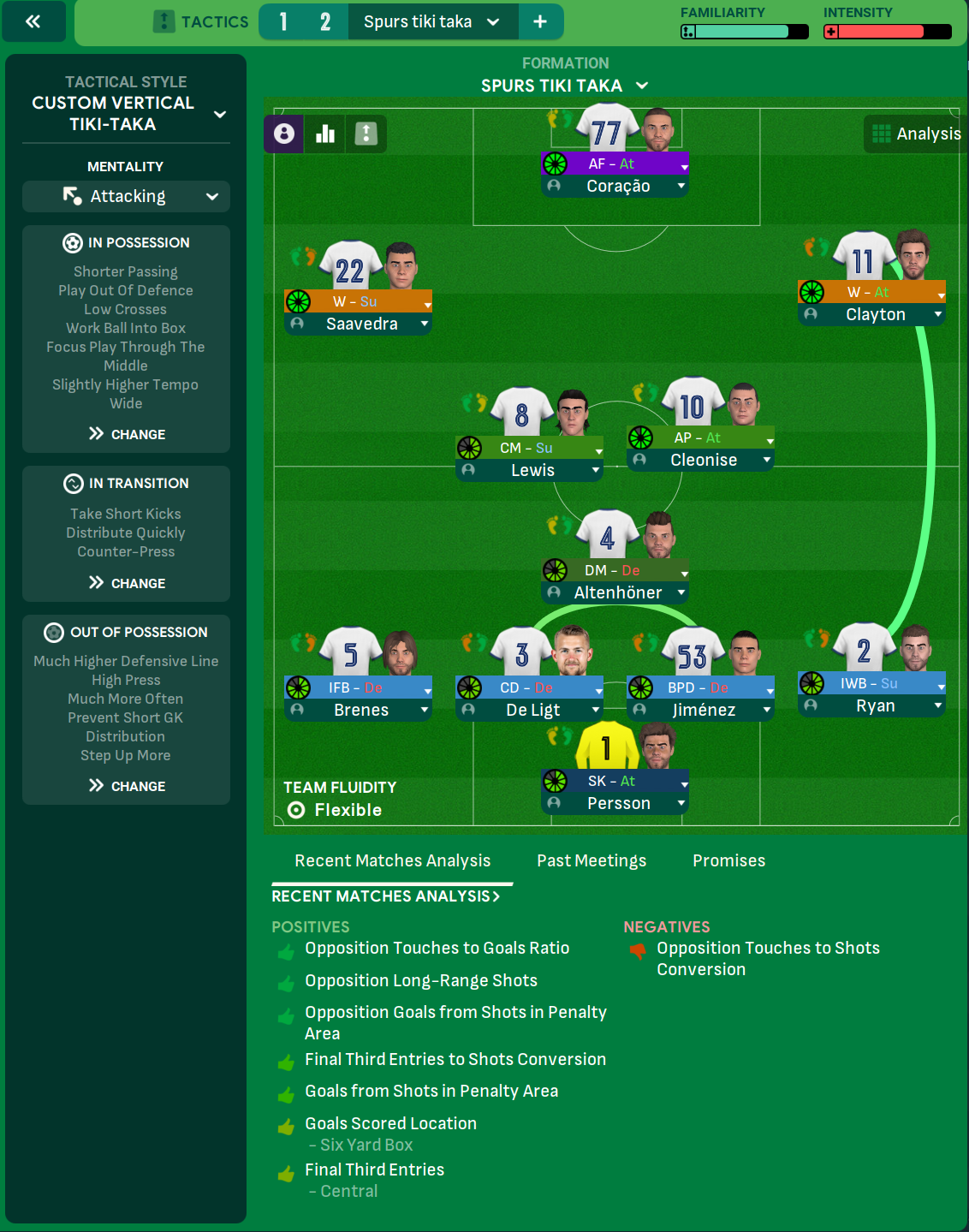
Loading tactical analysis...
Custom Vertical Tiki-Taka
Attacking
4-2-3-1 Wide
Flexible
Shorter Passing
Play Out Of Defence
Low Crosses
Work Ball Into Box
Focus Play Through The Middle
Slightly Higher Tempo
Wide
Take Short Kicks
Distribute Quickly
Counter-Press
Much Higher Defensive Line
High Press
More Often Prevent Short GK Distribution
Step Up More
ST
Advanced Forward
Attack
W
Winger
Support
W
Winger
Attack
CM
Central Midfielder
Support
DM
Defensive Midfielder
Defend
CD
Centre Back
Defend
IFB
Inverted Wing Back
Defend
BPD
Ball Playing Defender
Defend
SK
Sweeper Keeper
Attack
The focus on shorter passing helps in maintaining possession and establishing rhythm.
This increases pressure on opposition attackers, reducing their space and time on the ball.
While high pressing is effective, it can leave gaps behind the high defensive line if players are not well-coordinated.
Central midfielders should balance their support roles with defensive duties, ensuring coverage when pressing.
How can we improve our counter-press after losing possession?
Are the current player roles maximizing our attacking potential?
What adjustments are needed against teams with fast counter-attacks?
Is our defensive line too high considering the opposition's speed?
How can we better utilize our wingers in the final third?
What tactical changes should we consider during different match scenarios?
The tactical theory behind the 4-2-3-1 Wide: roles, instructions, and the trade-offs that decide whether the system holds up.
Double pivots and flat pairs in 4-2-3-1 and 4-4-2: when each pairing works, when it collapses, and the AMC unicorn that rescues both.
Klopp-style gegenpressing in FM, including squad profile, line-and-press pairing, sustainable workload, and the antipatterns to avoid.
How Mentality, Duty, and Role interact in FM, why duty trumps mentality every time, and the role-on-top-of-duty composition rules.