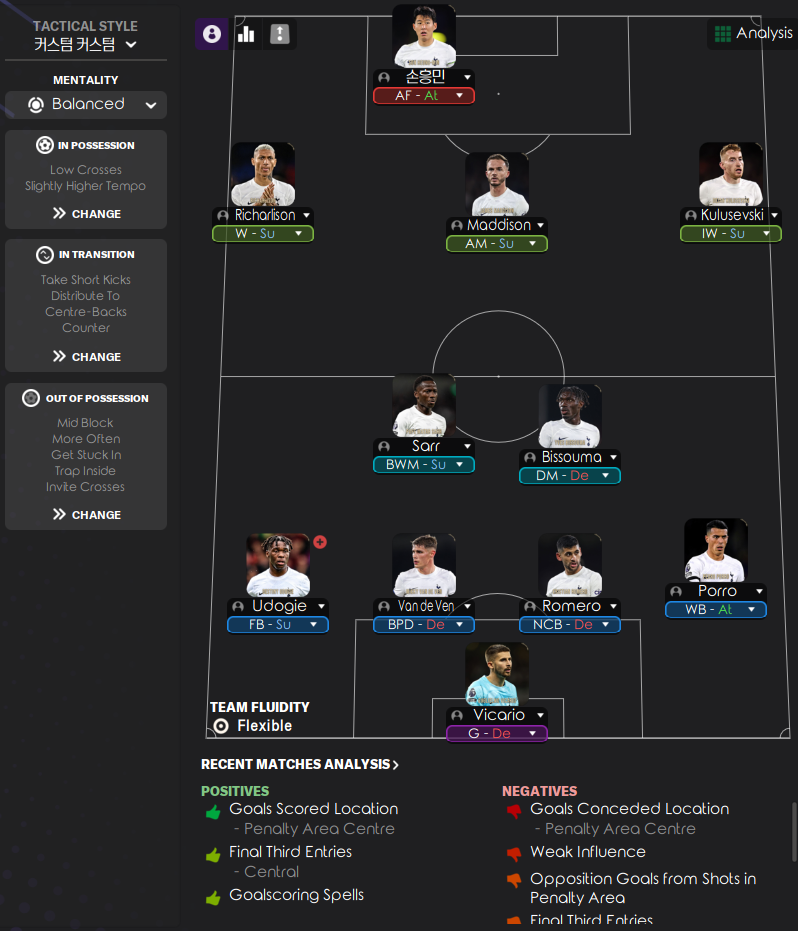
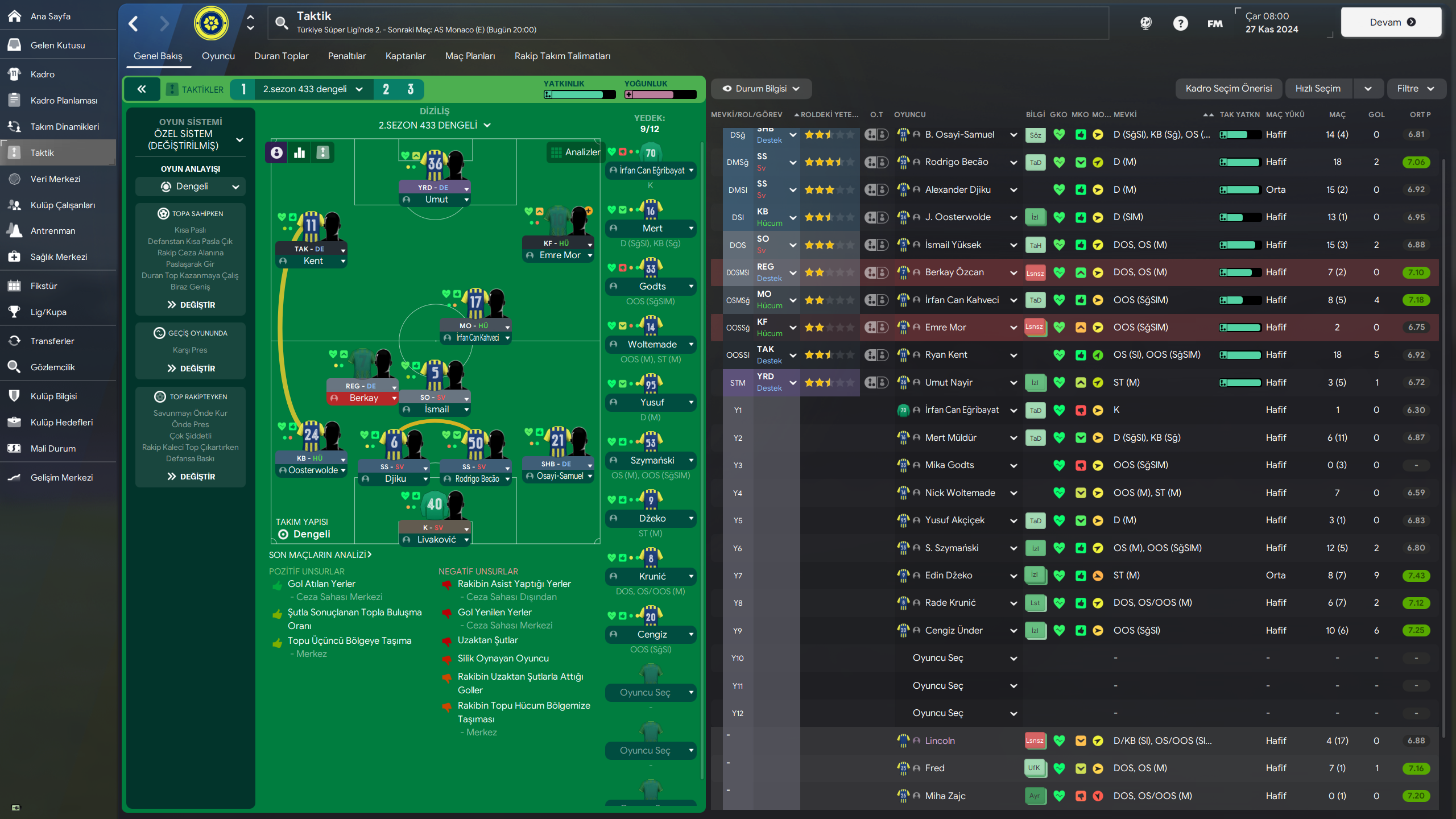
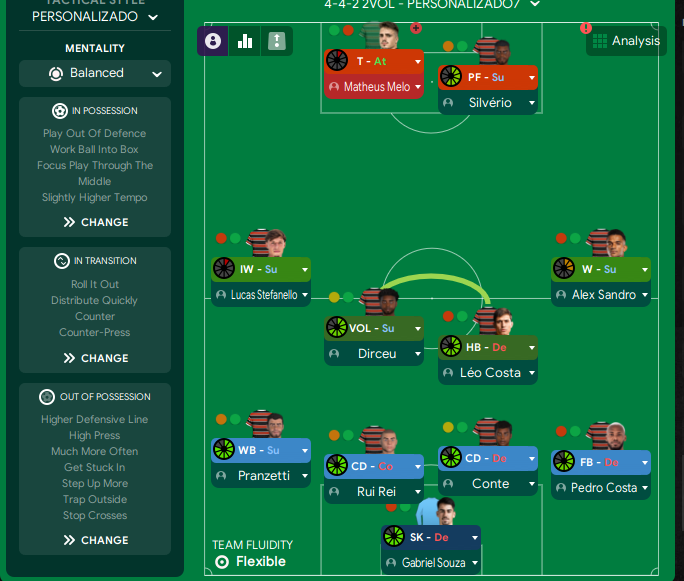
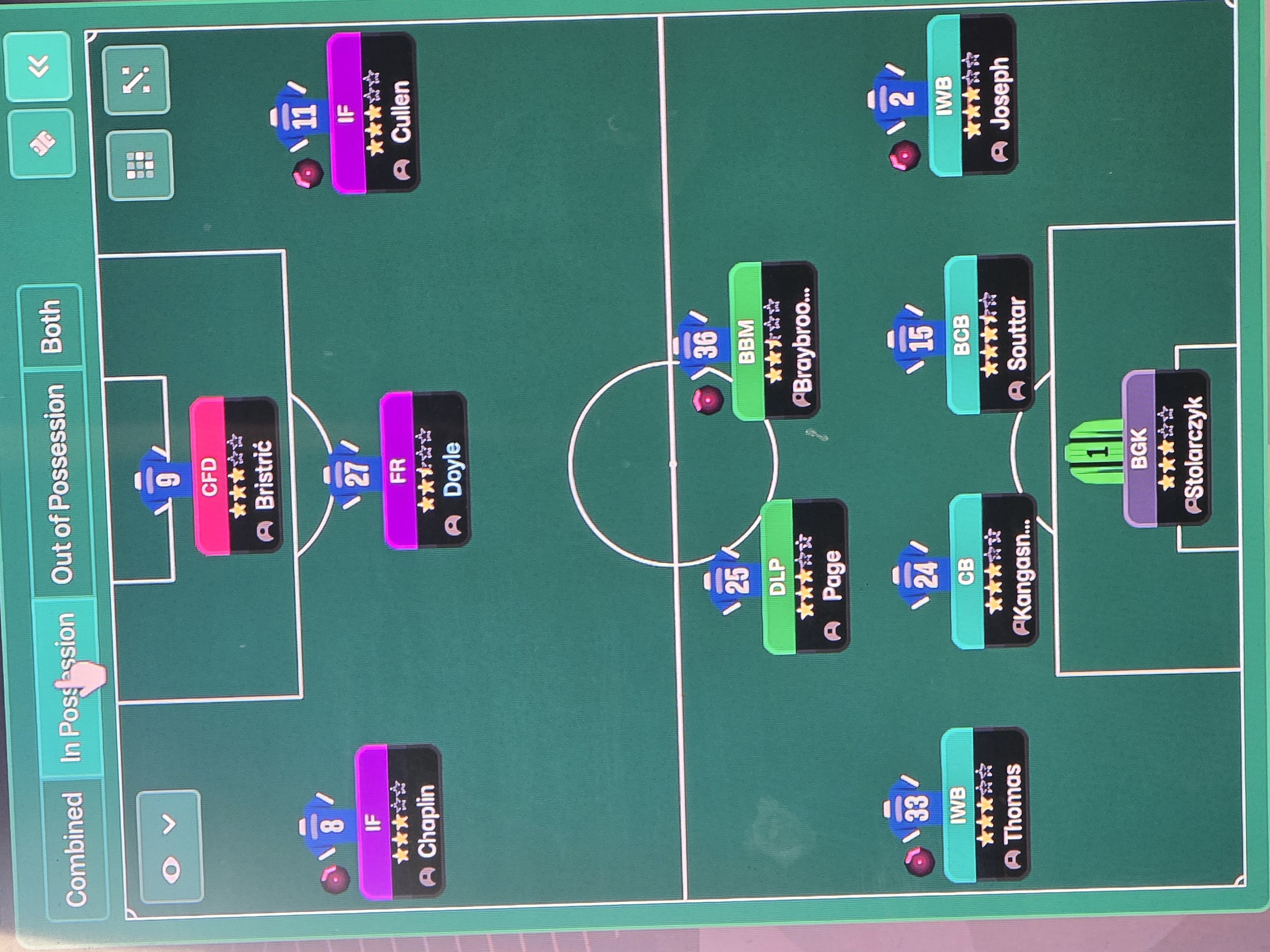
4-2-3-1 Wide
Utilizing width to exploit defensive spaces. The wingers and central players can interchange roles effectively.
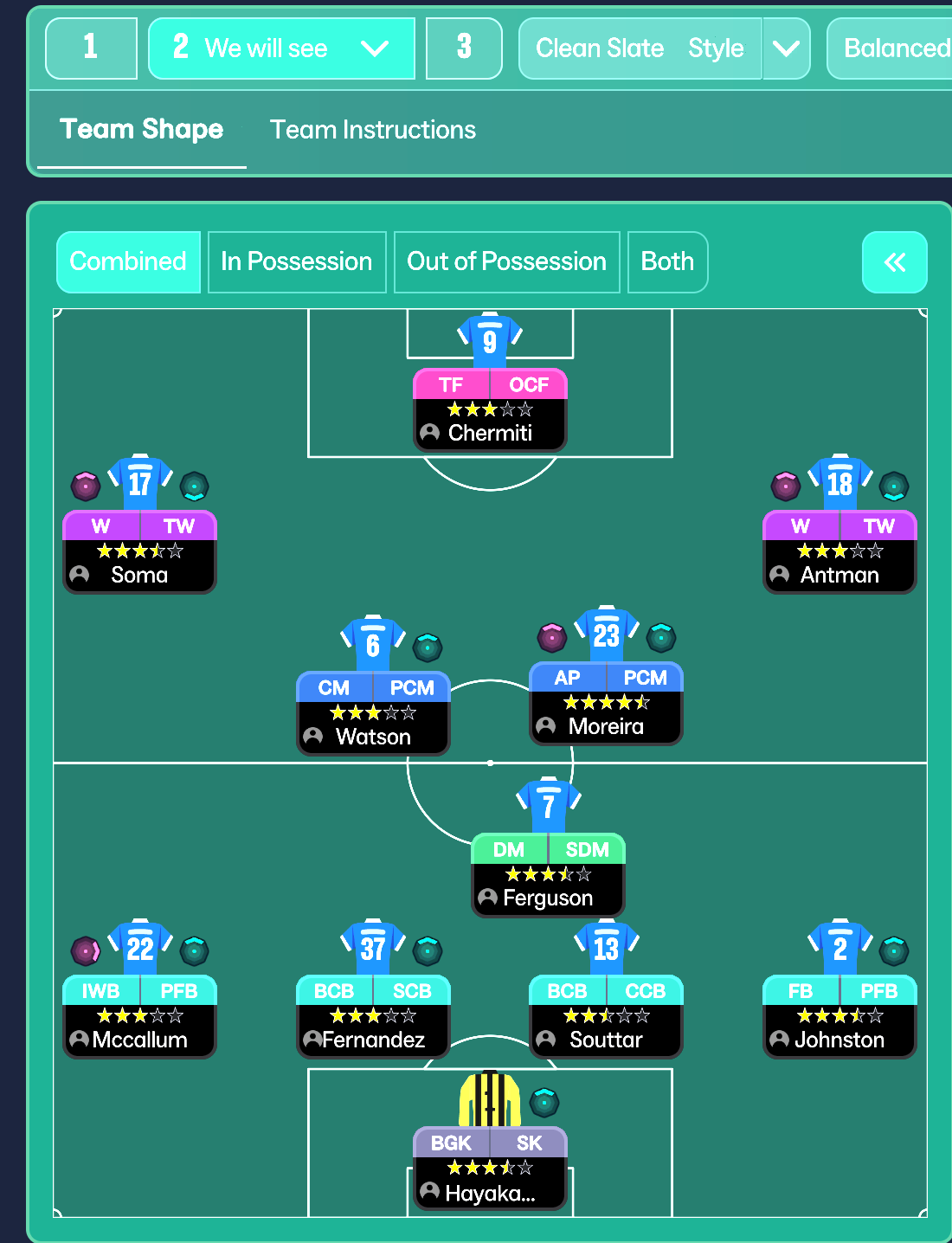
Loading tactical analysis...
Balanced
Balanced
4-2-3-1 Wide
Clean Slate
Play Out of Defence
Work Ball Into Box
Take Short Kicks
Counter
Counter Press
Higher Defensive Line
Higher Line of Engagement
Trigger Press More Often
GK
Goalkeeper
Defend
CB
Ball-Playing Defender
Defend
CB
Central Defender
Defend
CB
Ball-Playing Defender
Defend
FB
Full-Back
Support
IWB
Inverted Wing-Back
Support
CM
Central Midfielder
Support
CM
Advanced Playmaker
Support
AM
Winger
Attack
AM
Winger
Attack
ST
Target Forward
Attack
ST
Complete Forward
Support
Focuses on ball retention and creating space on the wings.
Immediate pressing upon losing possession to regain control quickly.
Utilizing width to exploit defensive spaces.
Compact
Defensive line holds a higher position, combined with a pressing approach, limits opponent's forward progression.
Higher Defensive Line and Trigger Press More Often shows an aggressive defensive strategy.
Fluid
Attacking players interchange positions, with width provided by wingers.
Wingers have attack duties; Play Out of Defence allows sustained possession.
The wingers and central players can interchange roles effectively.
Winger roles on [5, 1] and [5, 5] support width with the Target Forward at [6, 3].
The midfield setup allows for strong defensive cover and ball progression.
Central Midfielder (CM) at [4, 3] with Advanced Playmaker (AP) at [4, 4] emphasizes midfield control.
The defensive approach may conflict with higher pressing strategy.
The combination of Higher Defensive Line and Counter Press can lead to gaps if not executed well.
IWB role may reduce width, conflicting with wingers’ roles.
Inverted Wing-Back at [2, 1] may crowd the central areas, impacting wing play.
Wing Vulnerability
With full-backs pushed higher, the team may become vulnerable to counter-attacks.
FB roles at [2, 5] and IWB at [2, 1] could expose the flanks.
Midfield Gaps
Too rigid midfield may lead to a lack of fluidity in transitions.
Dual pivot roles at [3, 3] and [3, 4] could lead to disjointed attacking phases.
Winger and Target Forward
Dynamic interplay allows for space creation and goal-scoring opportunities.
Winger roles at [5, 1] and Target Forward at [6, 3] can work together to penetrate defences.
Inverted Wing-Back and Advanced Playmaker
Creates overloads in central zones, facilitating progressive passes.
IWB at [2, 1] can support AP at [4, 4], enhancing midfield dynamics.
How does the team adapt to various match situations?
What specific strengths do individual players bring to tactical setups?
Are there specific opponents that could exploit the current formation?
The tactical theory behind the 4-2-3-1 Wide: roles, instructions, and the trade-offs that decide whether the system holds up.
Double pivots and flat pairs in 4-2-3-1 and 4-4-2: when each pairing works, when it collapses, and the AMC unicorn that rescues both.
Klopp-style gegenpressing in FM, including squad profile, line-and-press pairing, sustainable workload, and the antipatterns to avoid.
Counter-Press, Regroup, Stand Off, Trigger Press: what each pressing instruction does in FM and how to pair them without contradicting.