
4-2-3-1 Wide
The combination of an Advanced Forward, Secondary Striker, and Inside Forward creates a fluid attacking dynamic that can exploit defensive weaknesses.
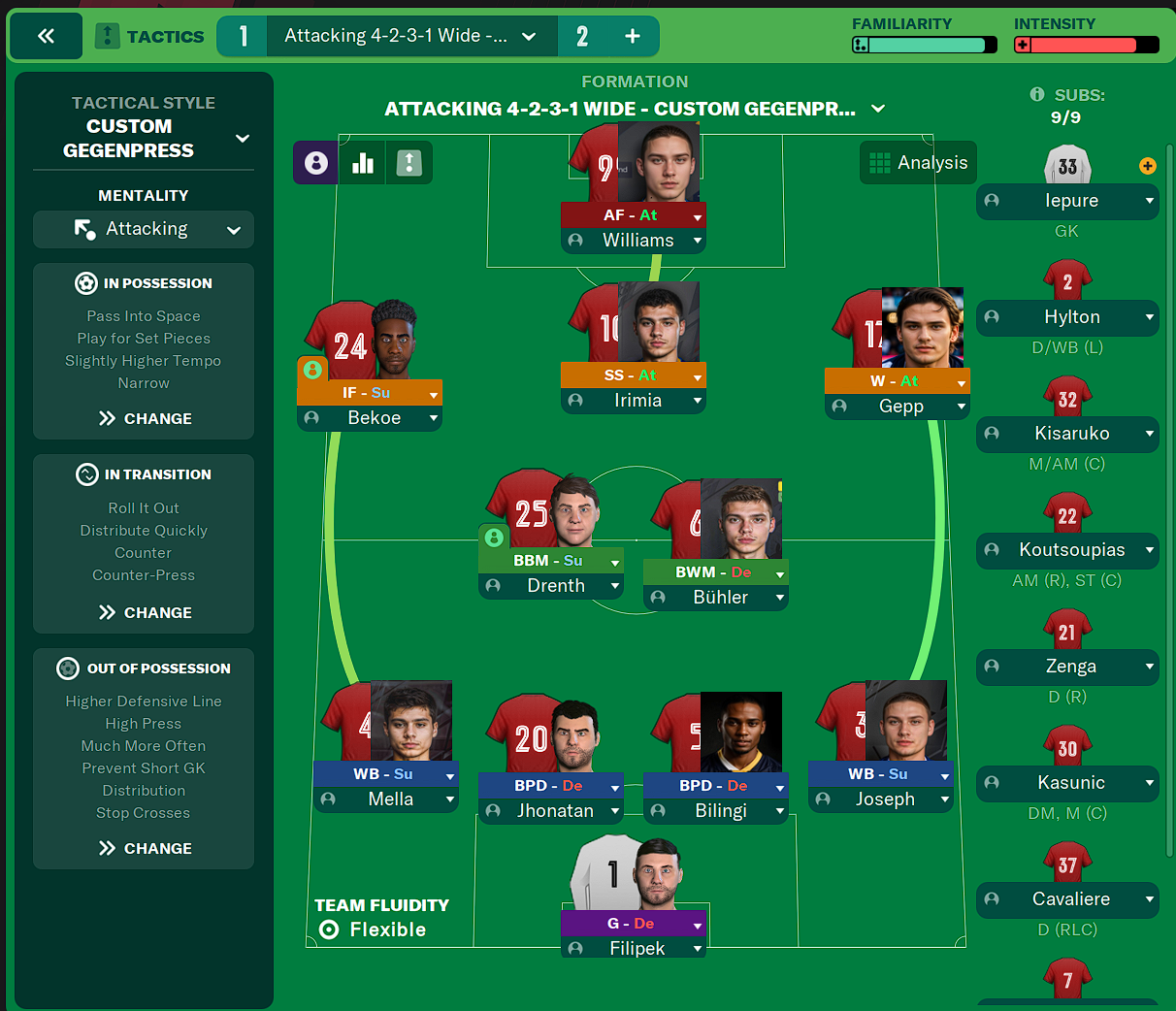
Loading tactical analysis...
Gegenpress
Attacking
4-2-3-1 Wide
Flexible
Pass Into Space
Play for Set Pieces
Slightly Higher Tempo
Narrow
Roll It Out
Distribute Quickly
Counter
Counter-Press
Higher Defensive Line
High Press
Prevent Short GK Distribution
Stop Crosses
AF
Advanced Forward
Attack
SS
Secondary Striker
Attack
IF
Inside Forward
Support
W
Winger
Attack
BBM
Box to Box Midfielder
Defend
BWM
Ball Winning Midfielder
Defend
WB
Wing Back
Support
BPD
Ball Playing Defender
Defend
G
Goalkeeper
Defend
The combination of an Advanced Forward, Secondary Striker, and Inside Forward creates a fluid attacking dynamic that can exploit defensive weaknesses.
High pressing and counter-pressing tactics will disrupt the opponent’s build-up play and create opportunities for quick transitions.
The higher defensive line may be susceptible to fast counter-attacks, especially if the team is caught out of position during pressing.
Having Inside Forwards may conflict with the role of Wingers, leading to congestion in wide areas and a lack of width.
Which player performs best in the Advanced Forward role in the current setup?
Is the high press creating defensive vulnerabilities against specific opponents?
How often are the Wing Backs supporting the attack and tracking back?
Which areas of the midfield are most prone to pressure under current tactics?
How can player roles be adjusted to create better balance between attack and defense?
Are the Inside Forwards creating enough goal-scoring opportunities?
The tactical theory behind the 4-2-3-1 Wide: roles, instructions, and the trade-offs that decide whether the system holds up.
Klopp-style gegenpressing in FM, including squad profile, line-and-press pairing, sustainable workload, and the antipatterns to avoid.
Double pivots and flat pairs in 4-2-3-1 and 4-4-2: when each pairing works, when it collapses, and the AMC unicorn that rescues both.
The five seconds after losing the ball decide most matches. Counter-press, drop-and-recover, and how to know which one you should be doing.











