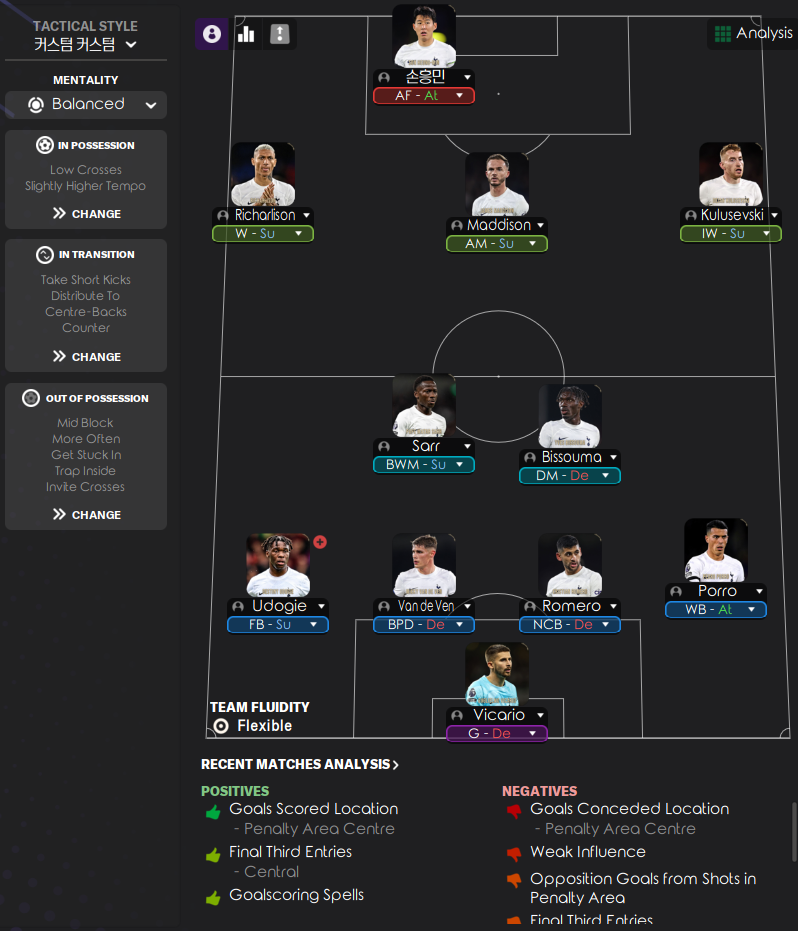
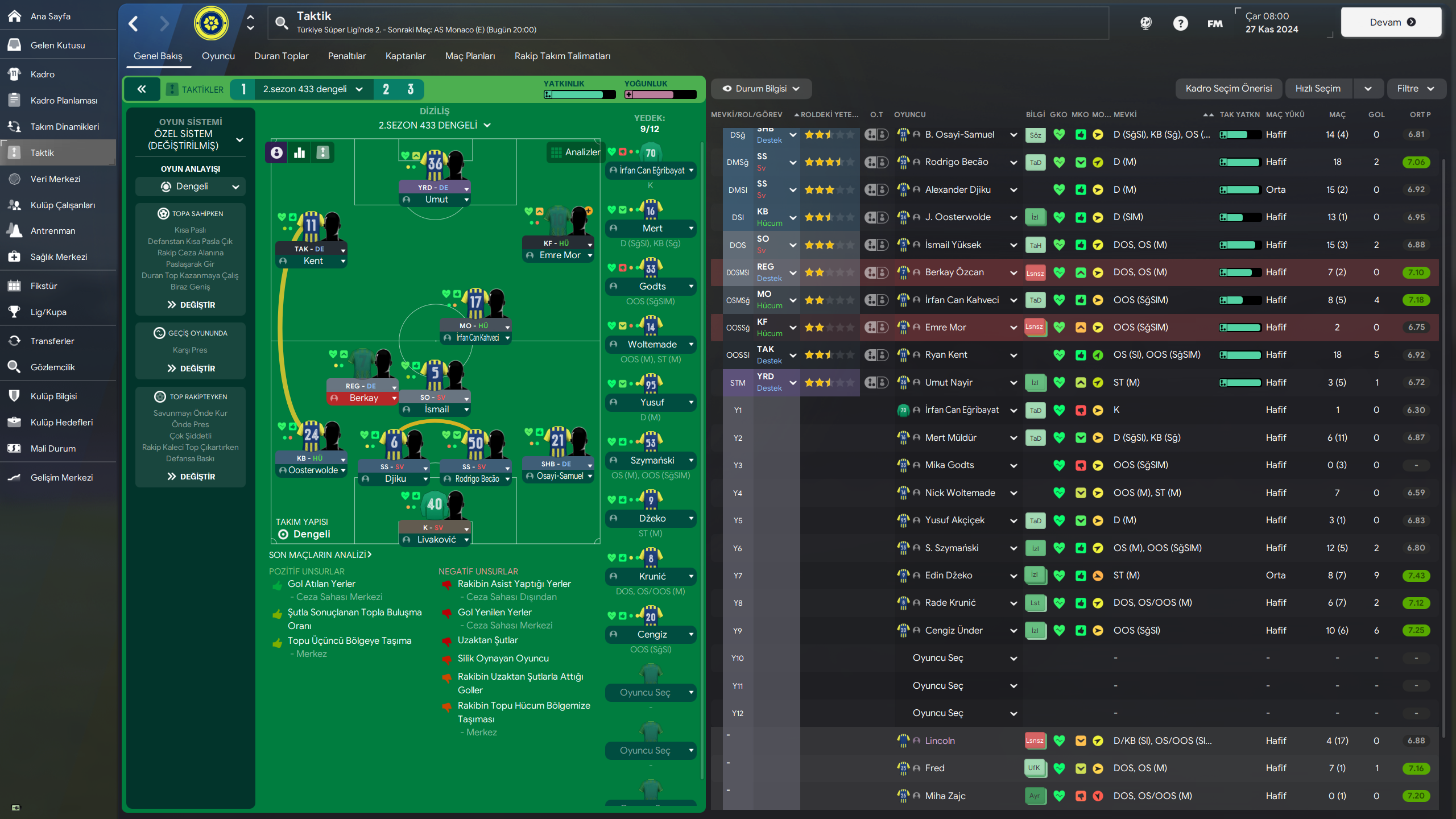
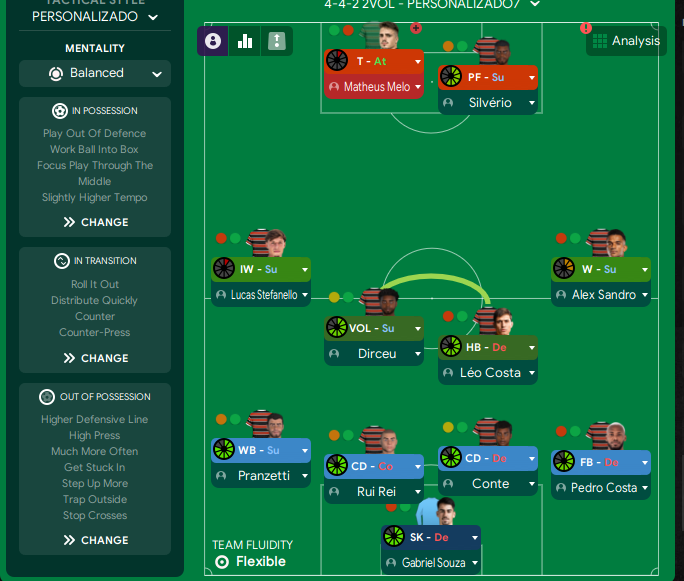
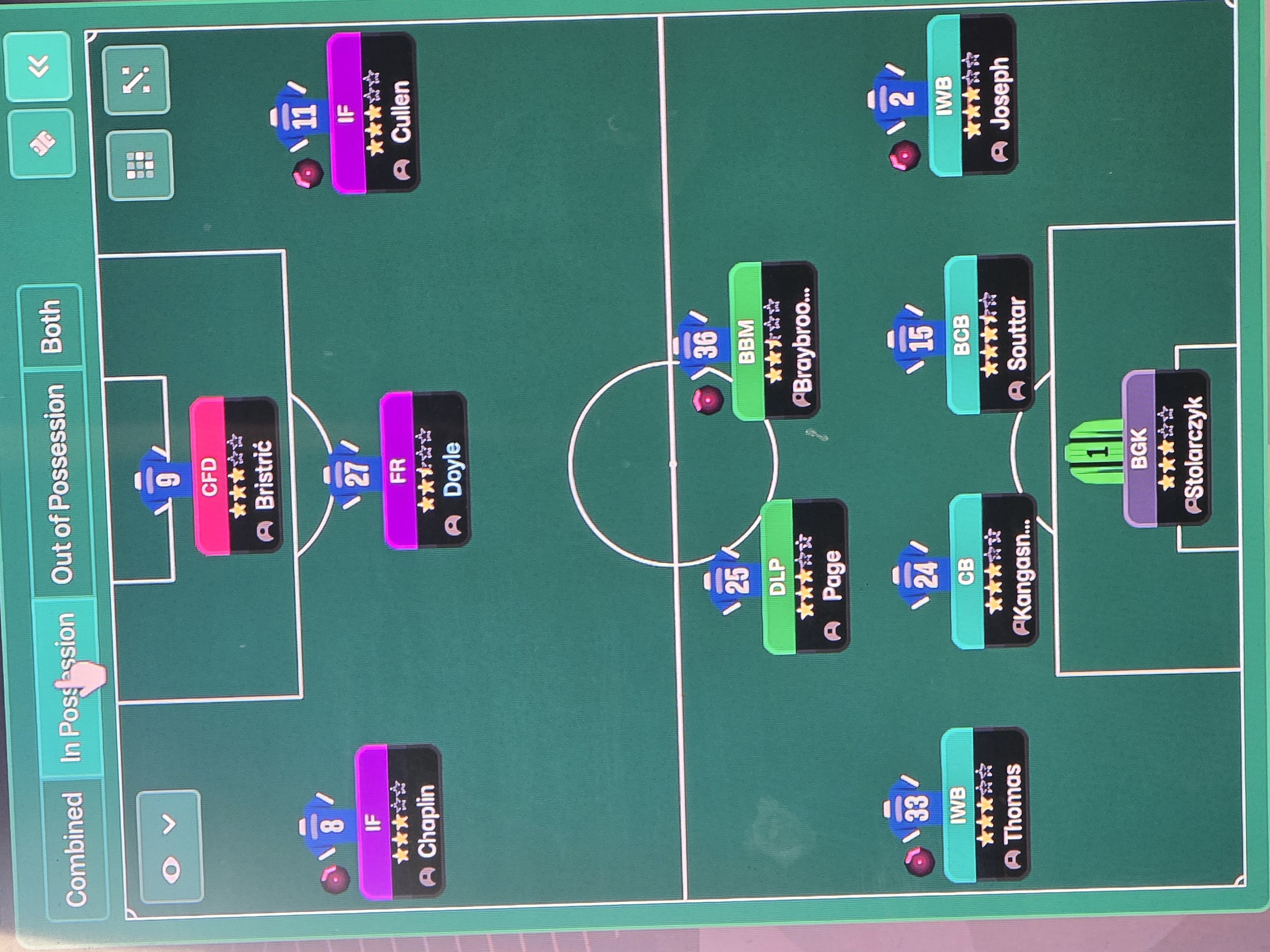
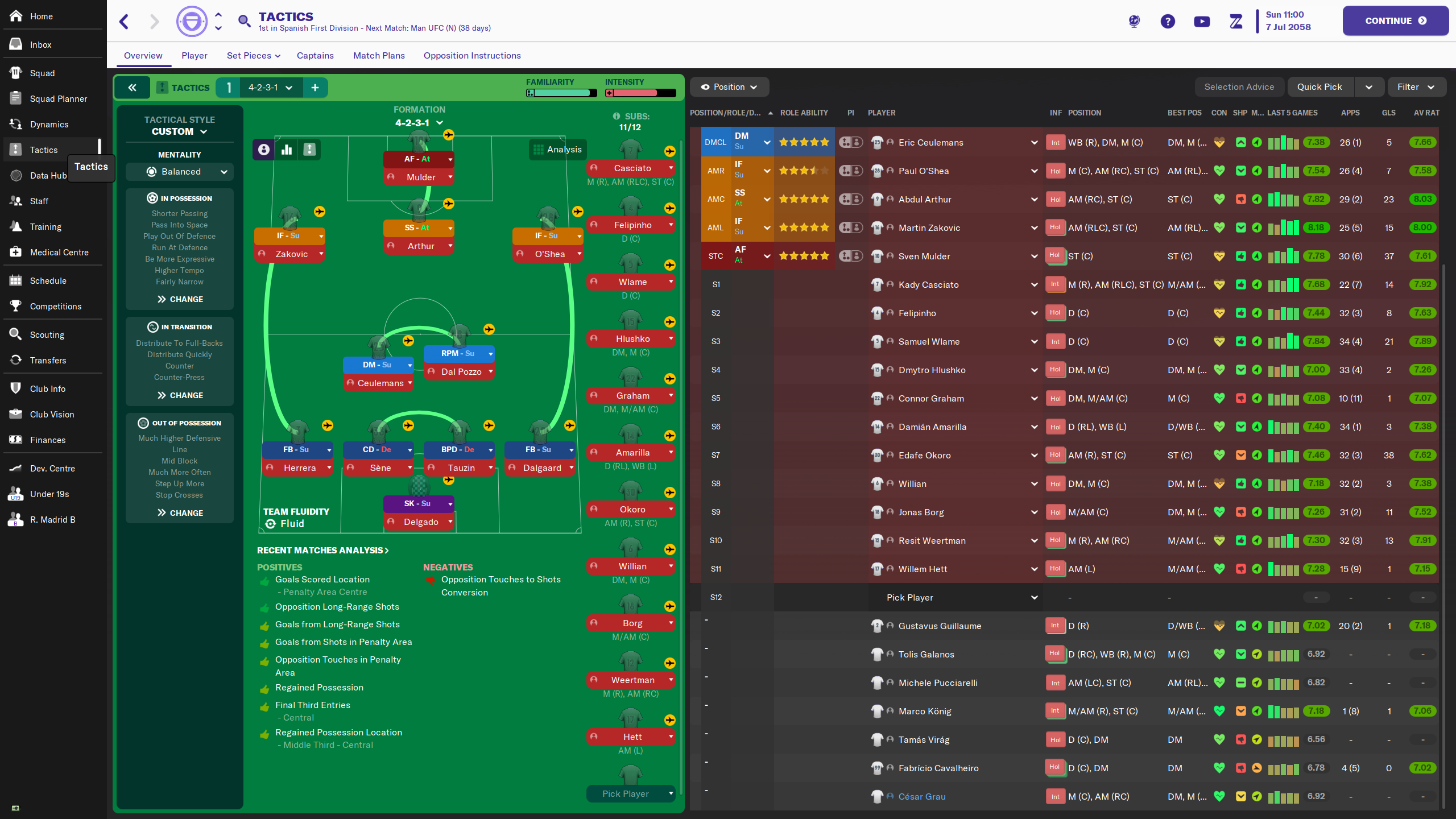
4-2-3-1 Wide
The use of a wide formation allows for multiple attacking avenues, creating overloads on the flanks.
Loading tactical analysis...
Balanced
Positive
4-2-3-1 Wide
Fluid
Shorter Passing
Play Out of Defence
Higher Tempo
Fairly Narrow
Distribute to Full-Backs
Counter-Press
Much Higher Defensive Line
Mid Block
Step Up More
DM
Support
Support
RPM
Support
Support
IF
Support
Support
SS
Attack
Attack
ST
Advanced Forward
Attack
The use of a wide formation allows for multiple attacking avenues, creating overloads on the flanks.
Having both a Deep Lying Playmaker and a Regista provides strong control in midfield for ball retention.
While a higher defensive line is set, the midfield is set to a more balanced approach, which can lead to vulnerabilities against quick counter-attacks.
Having two support roles in the midfield can create confusion on who needs to push forward during attacks, leading to missed attacking opportunities.
How can I better utilize my full-backs to balance defensive responsibilities and offensive contributions?
Are my midfield roles effectively supporting both defense and attack, and how can they be optimized?
What changes could improve my team's cohesion during counter-pressing situations?
How do my attacking combinations hold up against more compact defensive setups?
Are there any specific attributes I should focus on when scouting for players capable of executing this tactic?
How can I enhance my set-piece effectiveness with this formation?
The tactical theory behind the 4-2-3-1 Wide: roles, instructions, and the trade-offs that decide whether the system holds up.
Klopp-style gegenpressing in FM, including squad profile, line-and-press pairing, sustainable workload, and the antipatterns to avoid.
Double pivots and flat pairs in 4-2-3-1 and 4-4-2: when each pairing works, when it collapses, and the AMC unicorn that rescues both.
FM27 keeps FM26's tactic system. Here is what stays the same, the small changes that can catch you out, and what the new Tactical Effectiveness system asks of you.