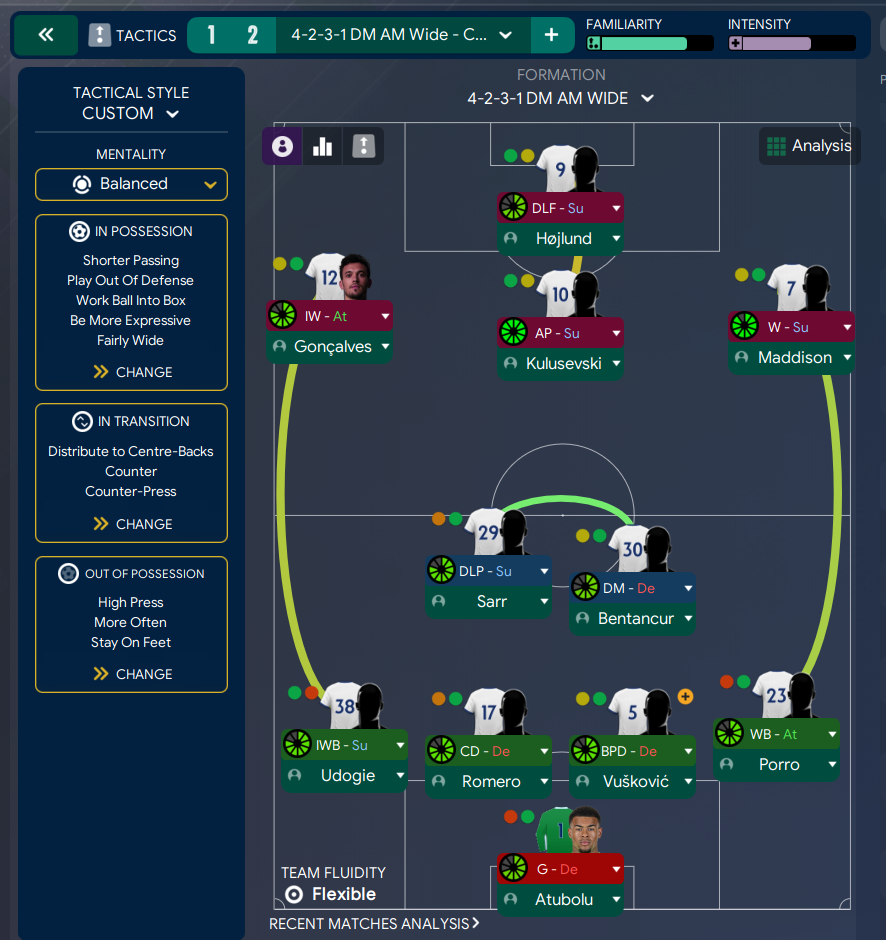
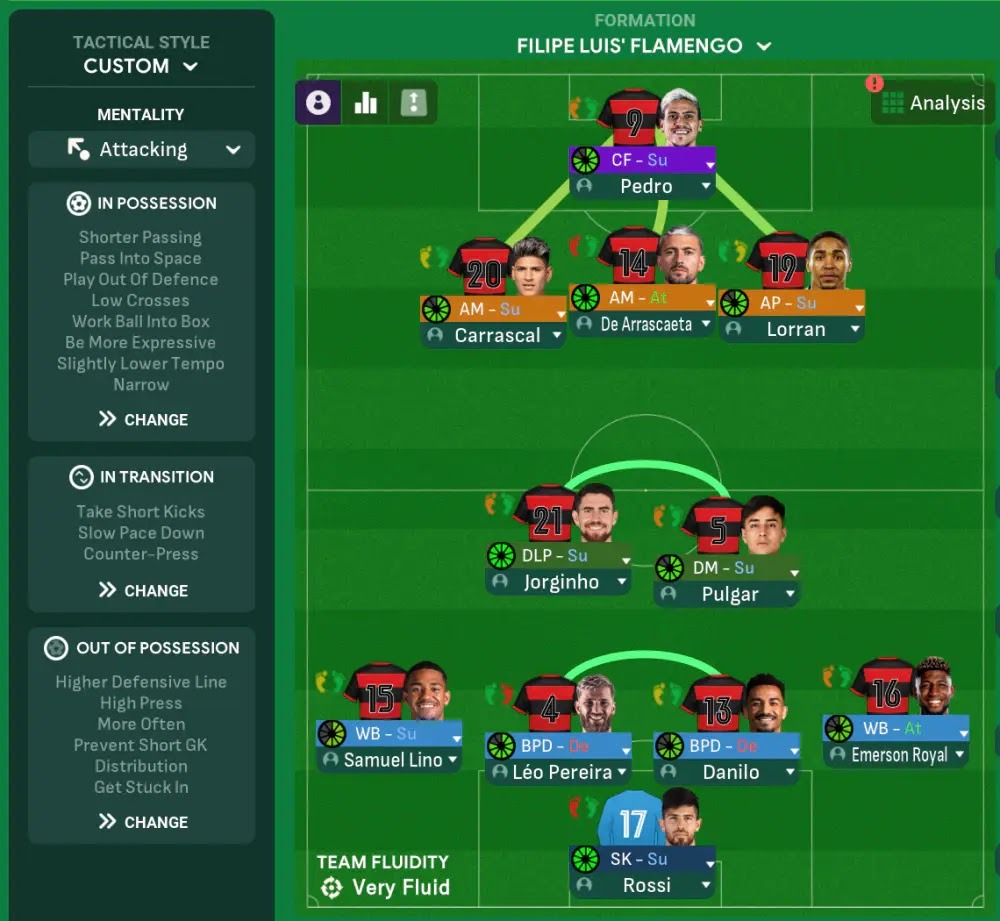
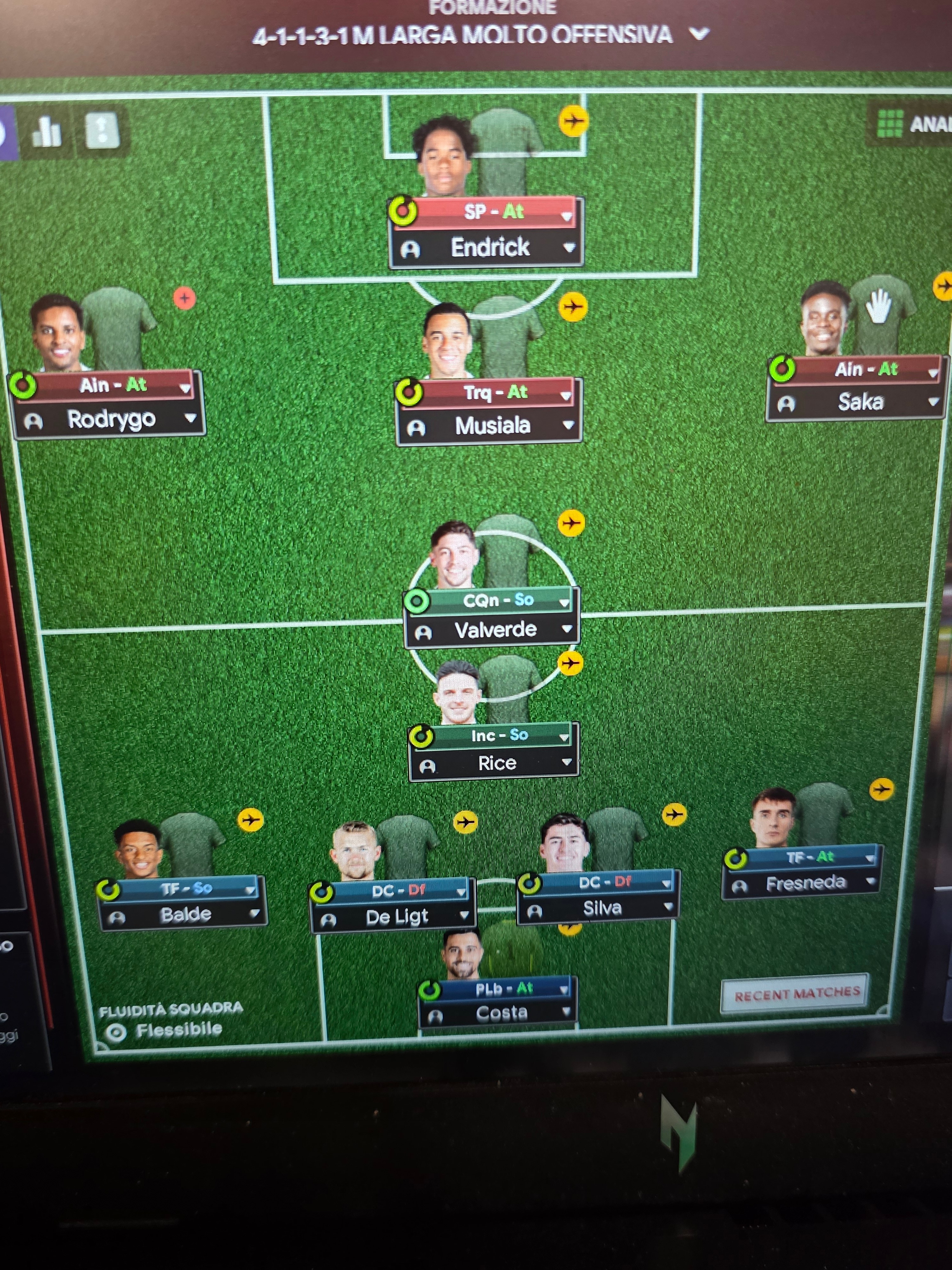
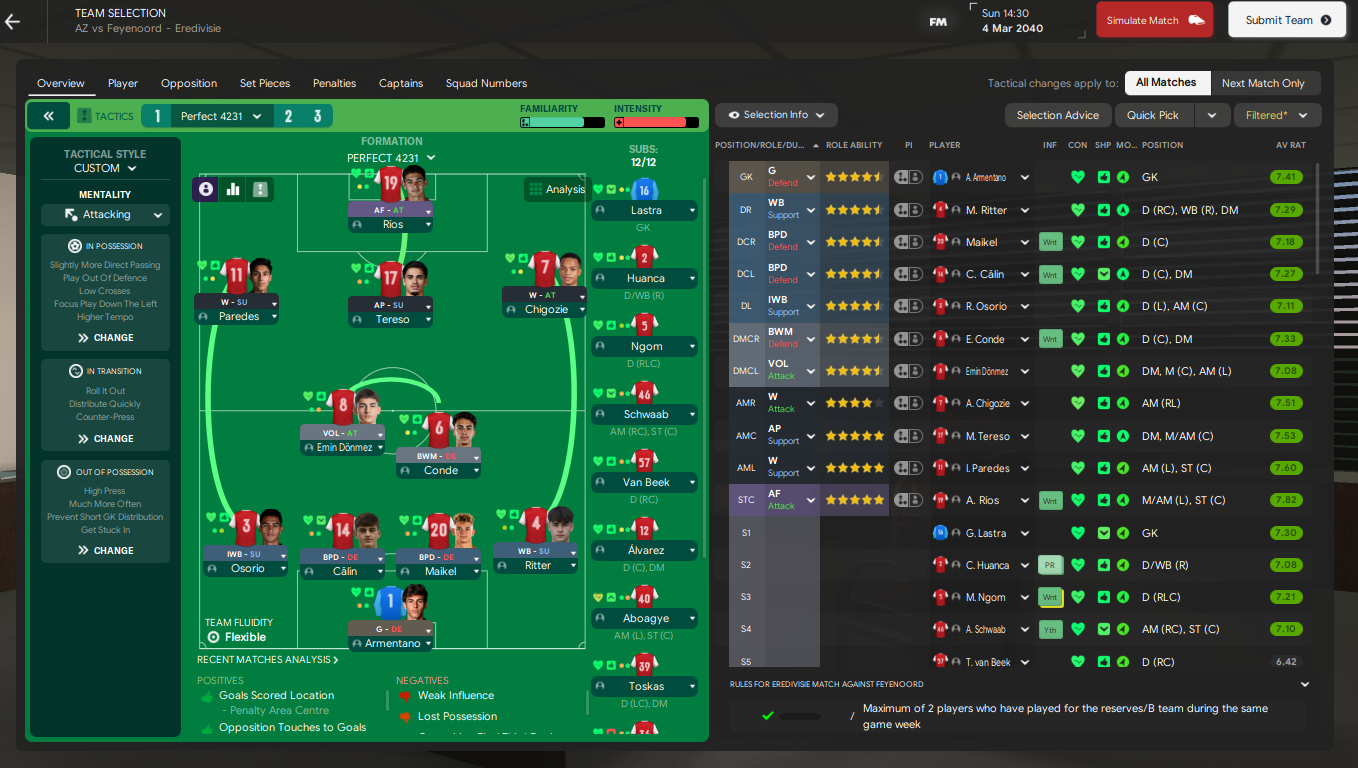
4-2-3-1
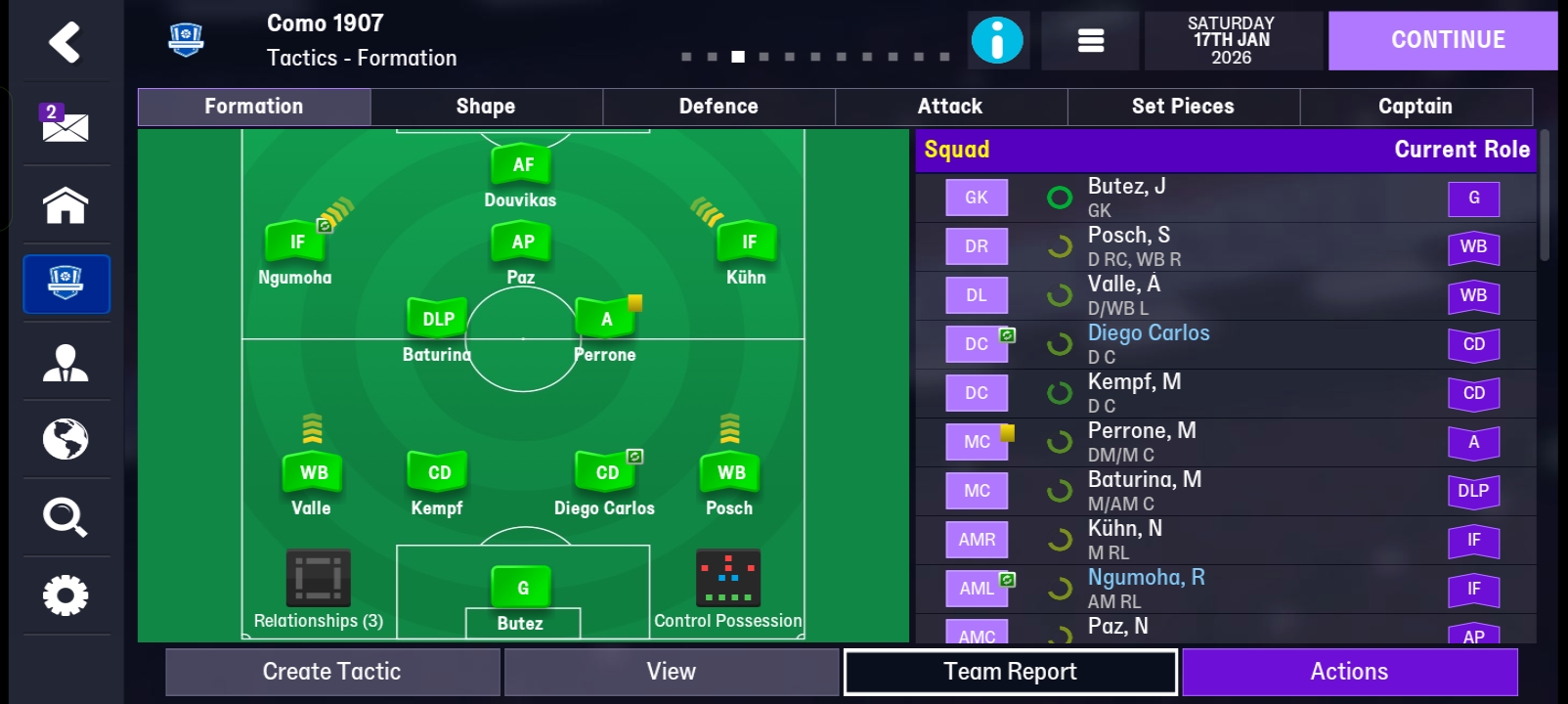
Utilizing the interplay between the advanced playmaker and inside forwards. Double pivot allows for better ball retention and support during build-up.
Loading tactical analysis...
Control Possession
Attacking
4-2-3-1
Structured
Play Out of Defence
Work Ball Into Box
Lower Tempo
Counter-Press
Counter
Higher Defensive Line
Higher Line of Engagement
Prevent Short GK Distribution
GK
G
DL
WB
A
DC
CD
DC
CD
DR
WB
A
DM
DLP
S
MC
A
AMC
AP
AML
IF
AMR
IF
ST
AF
Focus on maintaining possession and creating chances through the middle.
Immediate counter-pressing to regain ball control.
Utilizing the interplay between the advanced playmaker and inside forwards.
4-2-3-1
Compactness with two central midfielders dropping deep when defending.
CD at [2,2] and [2,3] forming a solid core.
4-2-3-1
Full-backs overlapping with inside forwards creating width.
WB-A at [2,1] and [2,5] providing support for the attack.
Double pivot allows for better ball retention and support during build-up.
DLP-S at [3,3] paired with A at [4,3] creating a balanced midfield.
Three advanced players offer versatile options in the final third.
AF at [6,3], AP at [5,3], and IFs at [5,2] and [5,4] combining effectively.
Full-backs pushing high may leave spaces at the back during transitions.
WB-A at [2,1] and [2,5] risk exposure on counter-attacks.
Inside forwards may isolate wide areas leaving full-backs with defensive duties.
IFs at [5,2] and [5,4] could lead to 2v1 situations against WB.
Defensive Vulnerability
Higher defensive line and aggressive full-backs may lead to gaps.
High positioning at [2,1] and [2,5] could be exploited.
Isolated Flanks
Inside forwards may create isolated situations for full-backs.
IFs at [5,2] and [5,4] leave full-backs exposed.
DLP and A
The deep-lying playmaker supplies passes to the more advanced midfielder, facilitating transitional play.
DLP-S at [3,3] alongside A at [4,3] for smooth ball progression.
AP and IFs
The advanced playmaker links with the inside forwards, allowing for creative movement.
AP at [5,3] providing service to IFs at [5,2] and [5,4].
How can the team adjust to better handle counter-attacks?
Would adjusting the mentality improve overall performance?
What roles could provide more defensive cover?
The tactical theory behind the 4-2-3-1: roles, instructions, and the trade-offs that decide whether the system holds up.
Double pivots and flat pairs in 4-2-3-1 and 4-4-2: when each pairing works, when it collapses, and the AMC unicorn that rescues both.
Klopp-style gegenpressing in FM, including squad profile, line-and-press pairing, sustainable workload, and the antipatterns to avoid.
Counter-Press, Regroup, Stand Off, Trigger Press: what each pressing instruction does in FM and how to pair them without contradicting.