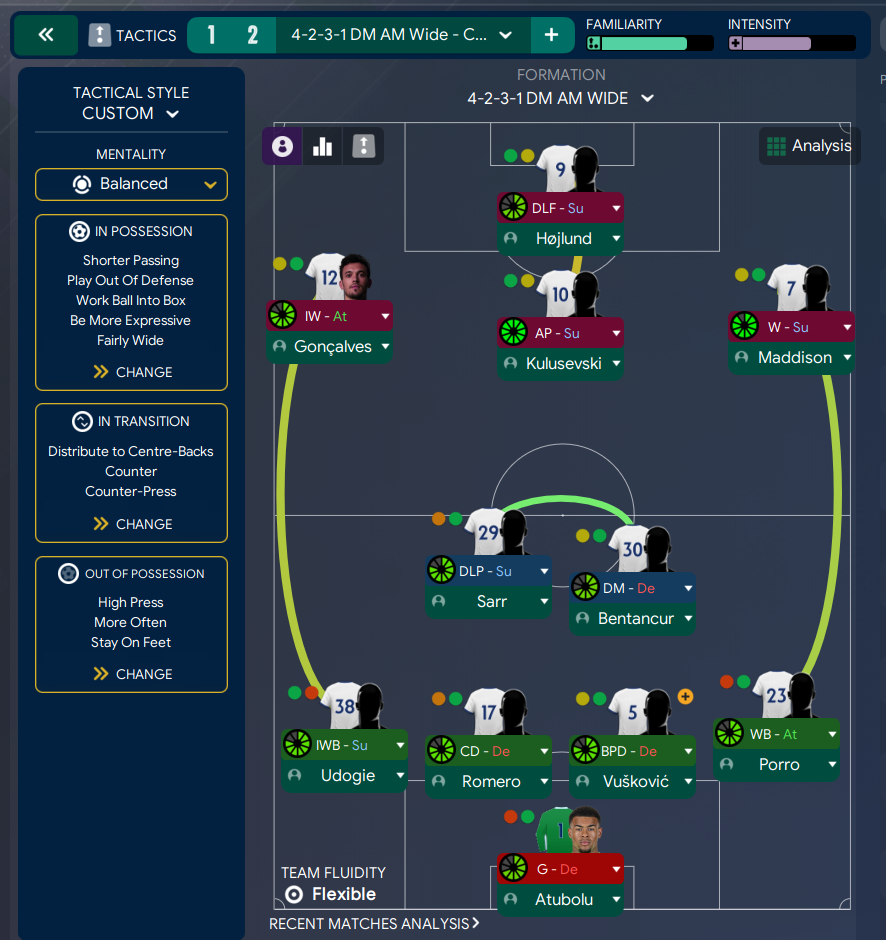
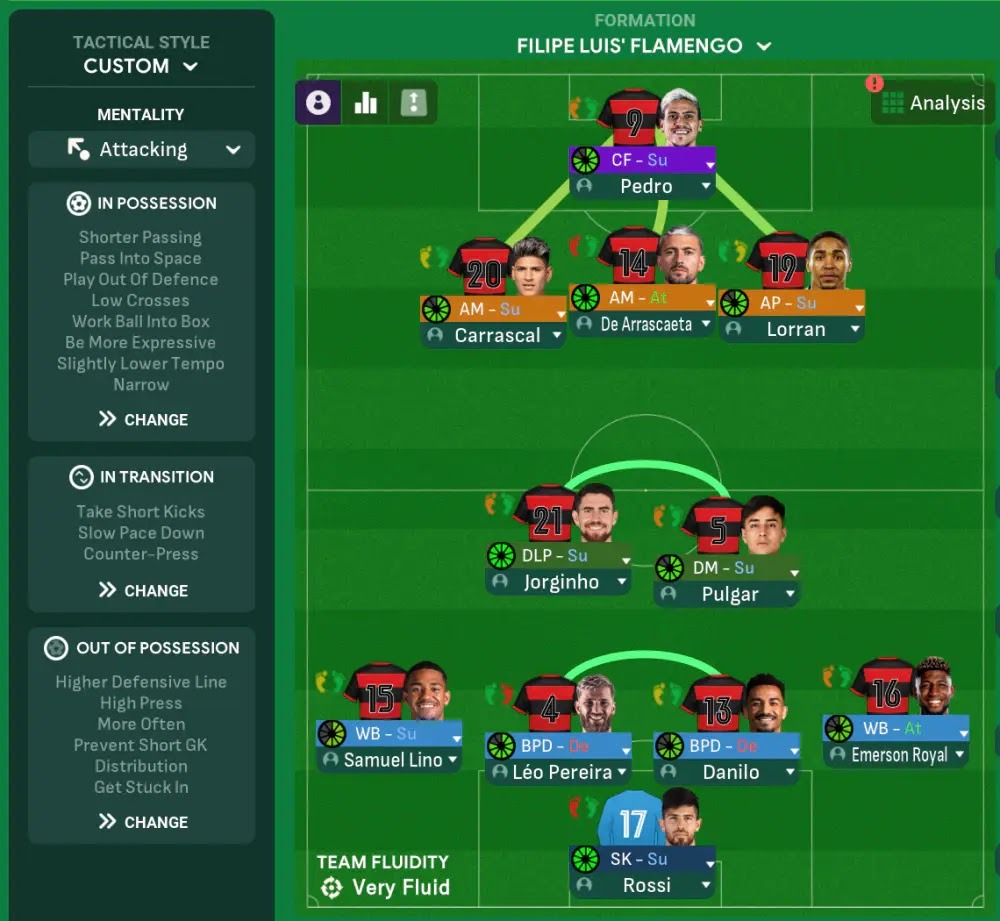
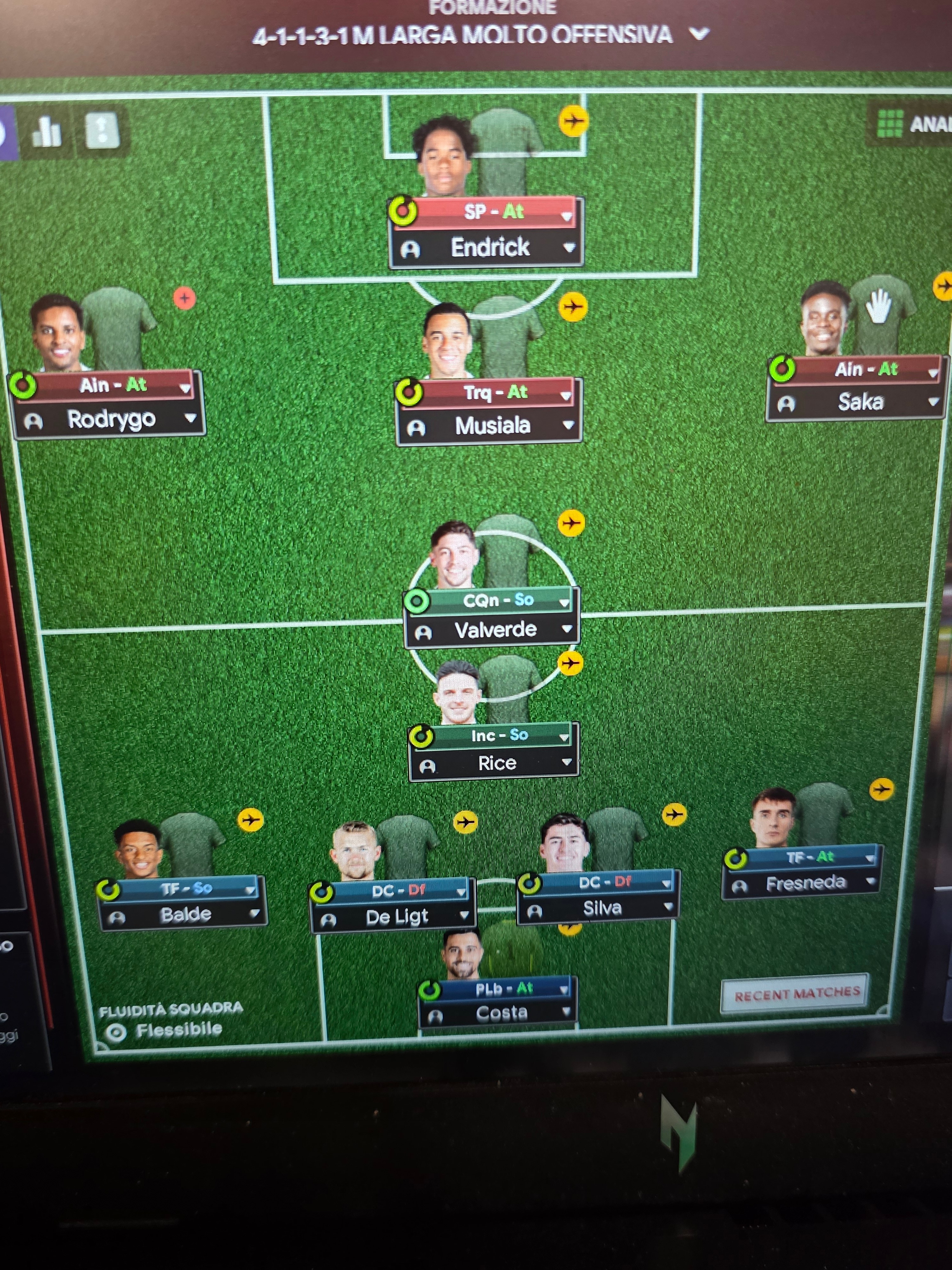
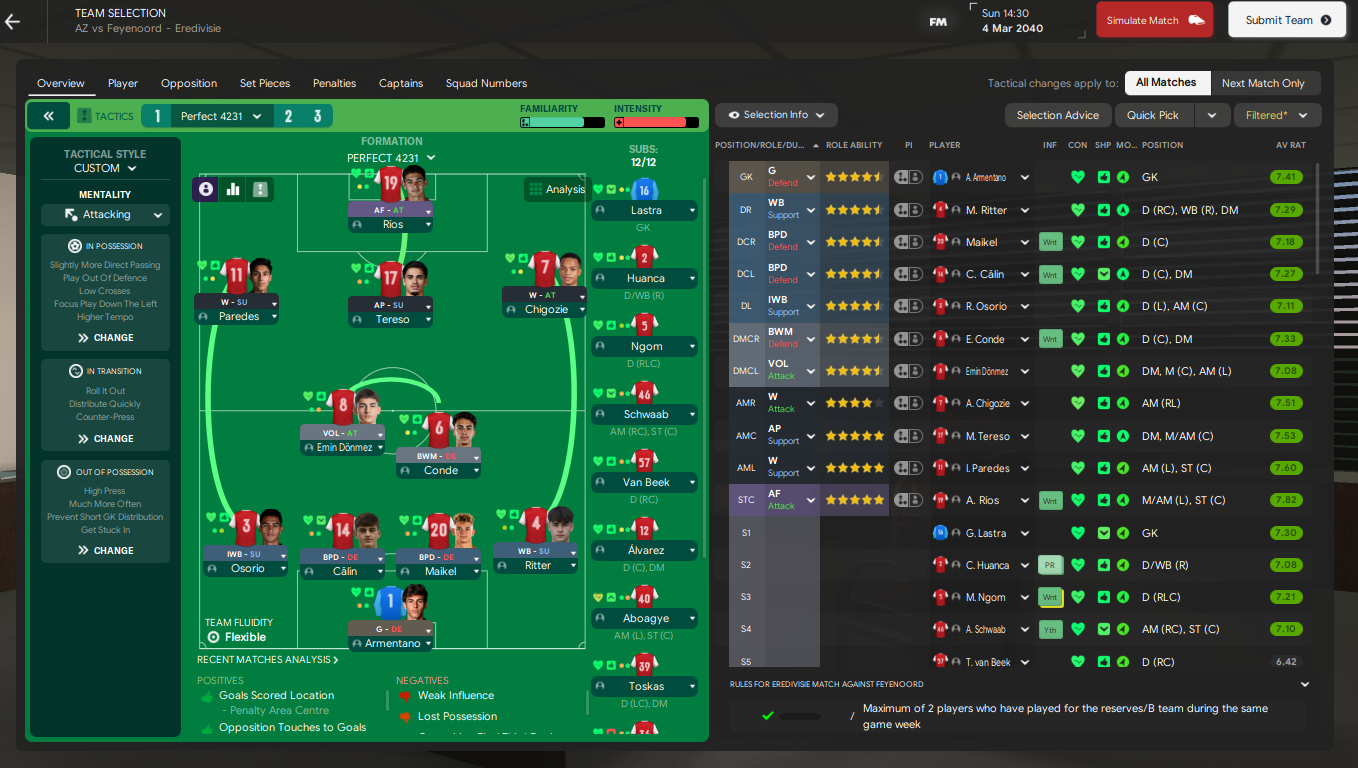
4-2-3-1
The combination of Winger and Advanced Forward offers width and penetrating runs, creating goal-scoring opportunities.
Loading tactical analysis...
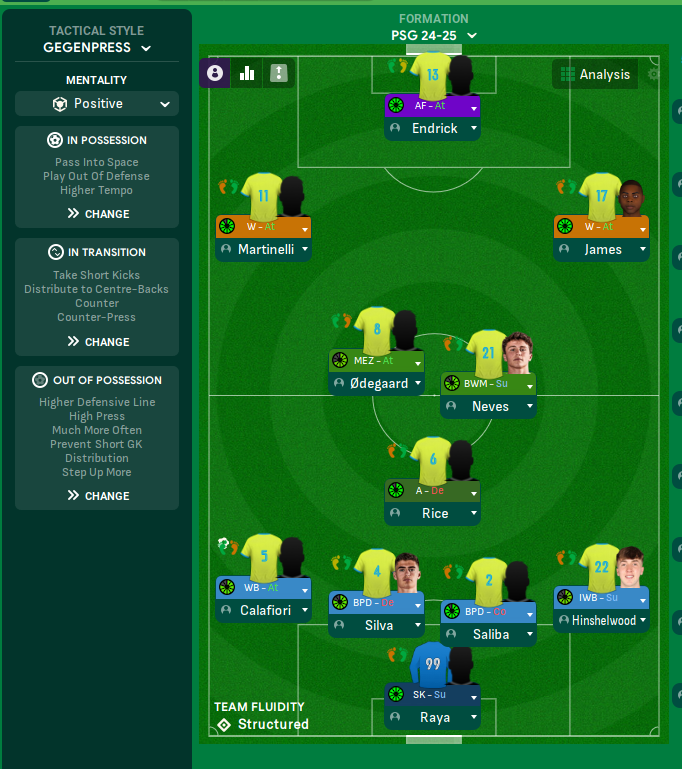
Gegenpress
Positive
4-2-3-1
Structured
Pass Into Space
Play Out Of Defense
Higher Tempo
Take Short Kicks
Distribute to Centre-Backs
Counter
Counter-Press
Higher Defensive Line
High Press
Much More Often
Prevent Short GK Distribution
Step Up More
ST
Advanced Forward
Attack
W
Winger
Attack
M
Mezzala
Attack
M
Box-to-Box Midfielder
Support
D
Ball Playing Defender
Defend
D
Centre Back
Defend
D
Wing Back
Attack
GK
Sweeper Keeper
Support
The combination of Winger and Advanced Forward offers width and penetrating runs, creating goal-scoring opportunities.
Effective counter-pressing strategy helps regain possession quickly and disrupts opponent's build-up.
A structured approach might limit the fluidity in attacking transitions, potentially affecting the pace of counter-attacks.
The presence of wingers could overcrowd the central midfield dynamic, impacting the Mezzala's effectiveness.
How can the formation be adjusted to improve midfield control?
What are the best ways to utilize the wing play effectively?
Is the current high press truly effective against all opposition?
How can we adapt the counter-pressing strategy?
Can the roles of the full-backs be optimized for better overlapping runs?
What defensive adjustments should be considered against counter-attacking teams?
The tactical theory behind the 4-2-3-1: roles, instructions, and the trade-offs that decide whether the system holds up.
Klopp-style gegenpressing in FM, including squad profile, line-and-press pairing, sustainable workload, and the antipatterns to avoid.
Double pivots and flat pairs in 4-2-3-1 and 4-4-2: when each pairing works, when it collapses, and the AMC unicorn that rescues both.
FM27 keeps FM26's tactic system. Here is what stays the same, the small changes that can catch you out, and what the new Tactical Effectiveness system asks of you.