4-2-3-1 Wide
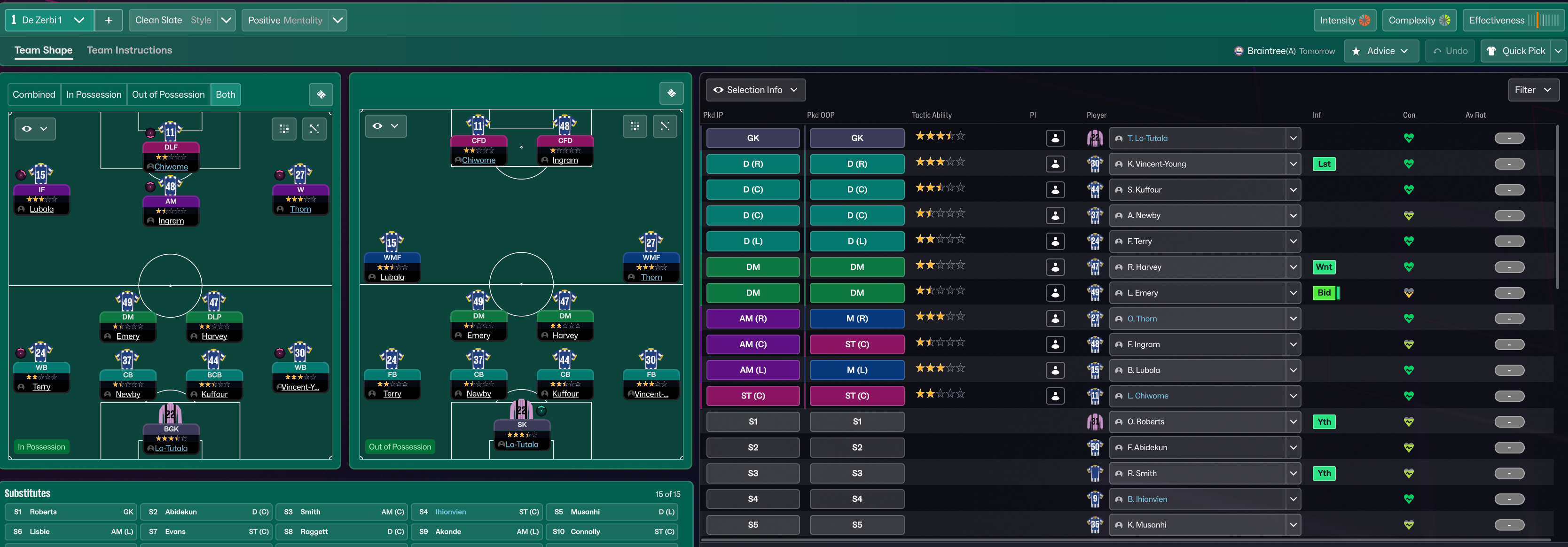
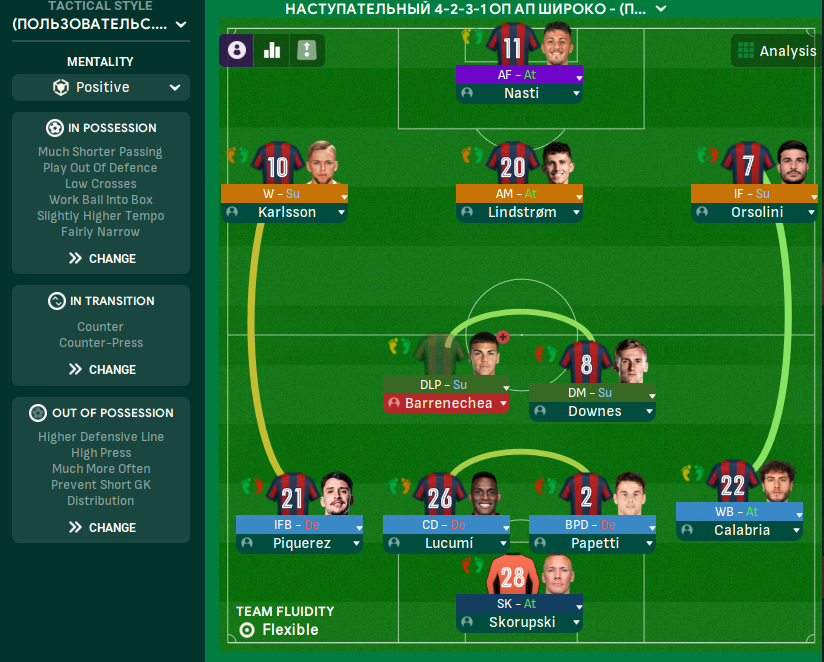
The structure allows for synergistic movements between the Advanced Forward and the Attacking Midfielder, creating chances and confusion for defenders.
Loading tactical analysis...
Positive
Positive
4-2-3-1 Wide
Flexible
Much Shorter Passing
Play Out Of Defence
Low Crosses
Work Ball Into Box
Slightly Higher Tempo
Fairly Narrow
Counter
Counter-Press
Higher Defensive Line
High Press
Prevent Short GK Distribution
ST
Advanced Forward
Attack
AM
Attacking Midfielder
Attack
W
Winger
Support
IF
Inside Forward
Support
DLP
Deep-Lying Playmaker
Support
DM
Defensive Midfielder
Support
WB
Wing Back
Attack
CD
Central Defender
Defend
BPD
Ball Playing Defender
Defend
IFB
Inverted Full Back
Defend
GK
Sweeper Keeper
Attack
The structure allows for synergistic movements between the Advanced Forward and the Attacking Midfielder, creating chances and confusion for defenders.
With a high defensive line and counter-pressing, the team can quickly regain possession in the opponent's half, disrupting their build-up play.
The higher defensive line could be vulnerable to quick counter-attacks, especially if the Back Three are not adequately quick.
While high pressing is effective, it requires significant stamina, and may lead to fatigue if not managed, leaving gaps defensively.
How effective is the current defensive setup in containing opponent counters?
Are the players maintaining their roles without confusion during transitional phases?
Is the attacking coordination between the Advanced Forward and Attacking Midfielder enhancing goal-scoring opportunities?
Can adjustments to the width or depth provide better flexibility in adapting to different opponents?
How is stamina management perceived during pressing situations in the second half?
What adjustments can be made to optimize set pieces given this tactical setup?
The tactical theory behind the 4-2-3-1 Wide: roles, instructions, and the trade-offs that decide whether the system holds up.
Double pivots and flat pairs in 4-2-3-1 and 4-4-2: when each pairing works, when it collapses, and the AMC unicorn that rescues both.
Klopp-style gegenpressing in FM, including squad profile, line-and-press pairing, sustainable workload, and the antipatterns to avoid.
The five seconds after losing the ball decide most matches. Counter-press, drop-and-recover, and how to know which one you should be doing.