Attacking 4-2-3-1 (Positive) Tactic
4-2-3-1
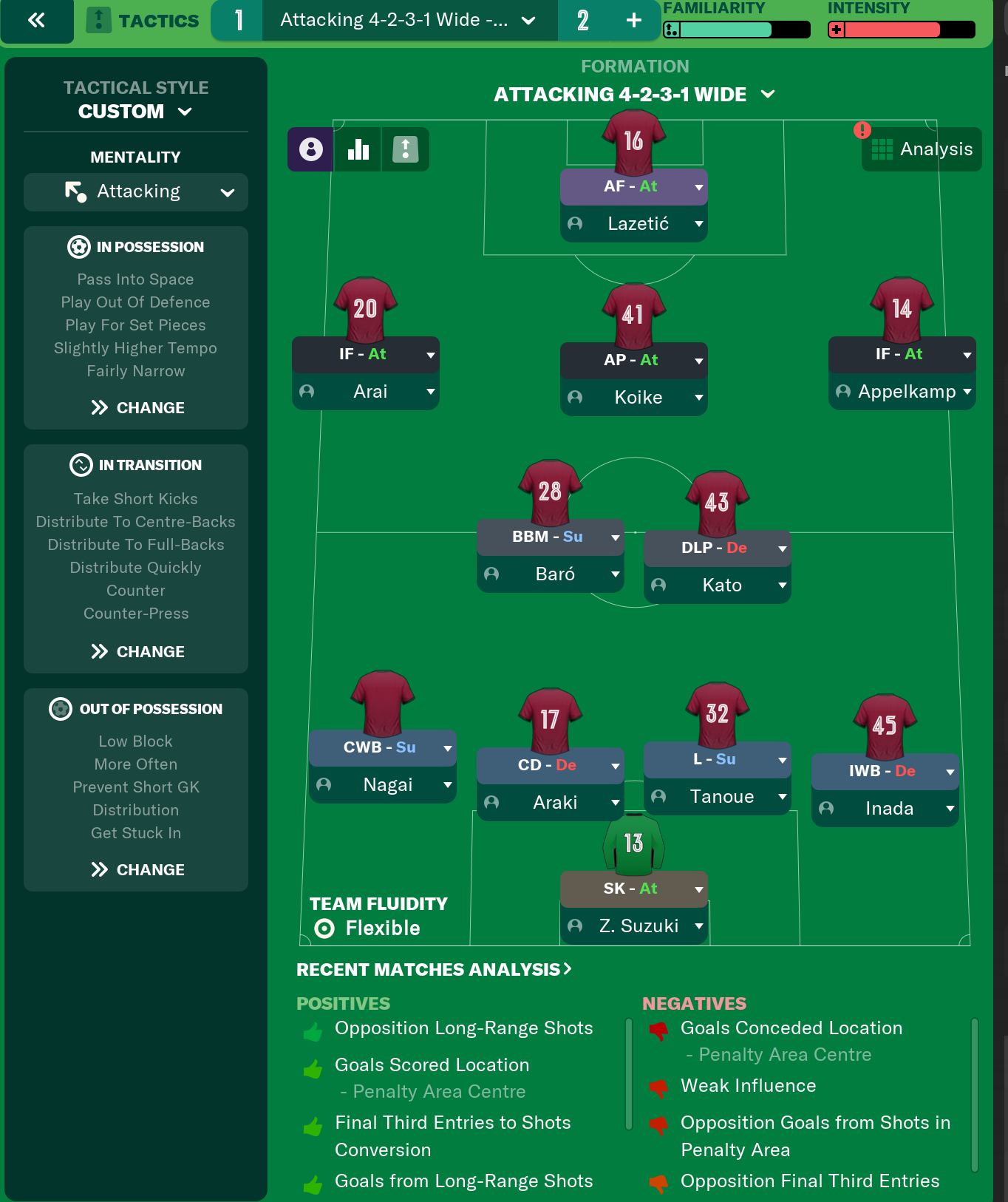
Create goal-scoring opportunities through quick interplay and utilizing wingbacks. The use of wing-backs and shadows strikers allows for unpredictable…
Loading tactical analysis...
Formation and style
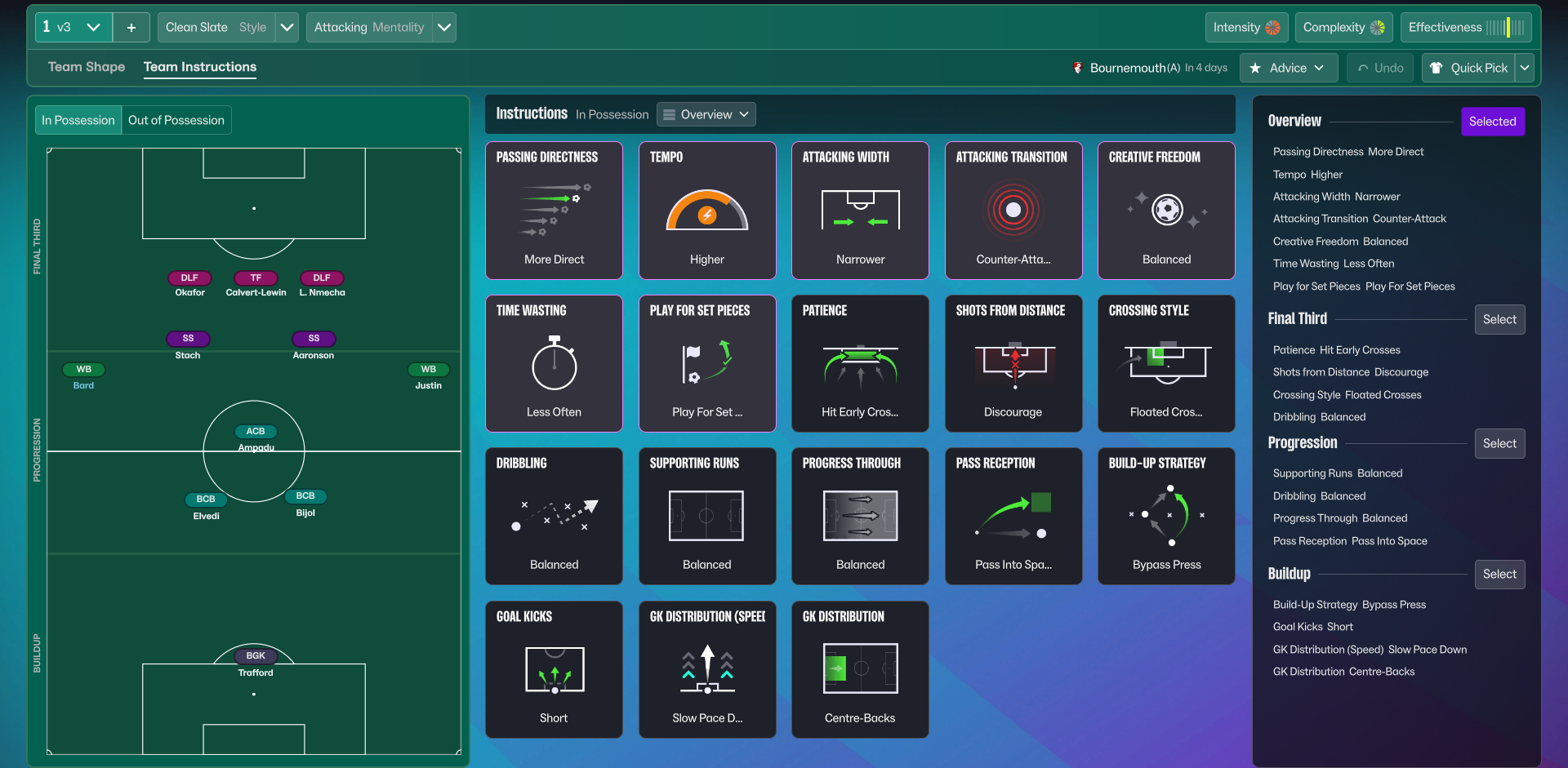
Attacking
Positive
4-2-3-1
Balanced
In possession
More Direct
Higher
Narrower
Counter-Attack
Balanced
Less Often
Play For Set Pieces
In transition
Counter-Press
Balanced
Out of possession
Bigger Pressing Intensity
Prevent Short GK Distribution
Player roles
GK
Goalkeeper
Defend
CB
Ball-Playing Defender
Defend
CB
Ball-Playing Defender
Defend
ACB
Centre-Back
Defend
WB
Wing-Back
Attack
WB
Wing-Back
Attack
CM
Deep-Lying Playmaker
Support
CM
Central Midfielder
Support
SS
Shadow Striker
Attack
SS
Shadow Striker
Attack
Phase description
Utilizing width through wingbacks to stretch opposition, with quick transitions to committed runs into channels.
Immediately press opponents after losing the ball, aiming to recover possession promptly.
Create goal-scoring opportunities through quick interplay and utilizing wingbacks.
Team shape defence
Compact
Defensive shape formed by two lines of four players
Two CBs and ACB providing depth and support, alongside wingbacks tracking back.
Team shape attack
Fluid
Front three interchanging positions and creating space for overlapping wingbacks.
SS pulls wider to allow space in the center for DLF and TF.
Key strengths
Dynamic Attack
The use of wing-backs and shadows strikers allows for unpredictable movements.
SS at [6,2] and [6,3] creates overlaps with WB at [2,1] and [2,5].
Strong Build-up Play
Three central players can effectively control possession and dictate play.
DLP-S at [3,3] and CM at [4,3] supplying through balls to strikers.
Conflicting tactics
Spacing Issues
Narrow attack may congest central spaces and lead to inefficiency.
'Narrower' attacking width could hinder wingback effectiveness at [2,1] and [2,5].
High Press Risks
Aggressive pressing might expose defensive line if countered.
'Bigger Pressing Intensity' combined with pressing triggers.
Risk exposures
Risk Exposures
Items
Defensive Line
Vulnerability to quick counters.
'Higher Line of Engagement' without adequate cover.
Wing Play
Could be exploited if wing-backs are caught too high.
Wing-backs at [2,1] and [2,5] pushing high may leave gaps behind.
Role synergies
Role Synergies
Items
DLP-S and DLF
Great synergy for creating chances through central spaces.
DLP-S at [3,3] utilizing playmaking for DLF's runs.
WBs and SSs
Effective overlaps create space and crossing opportunities.
Wing-Backs at [2,1] and [2,5] supporting SS at [6,2] and [6,3].
Suggested questions
How can I enhance the offensive output in the final third?
What adjustments should I make to reduce the risk of counter-attacks?
Are there specific player roles that might better fit my current setup?
Related Tactics
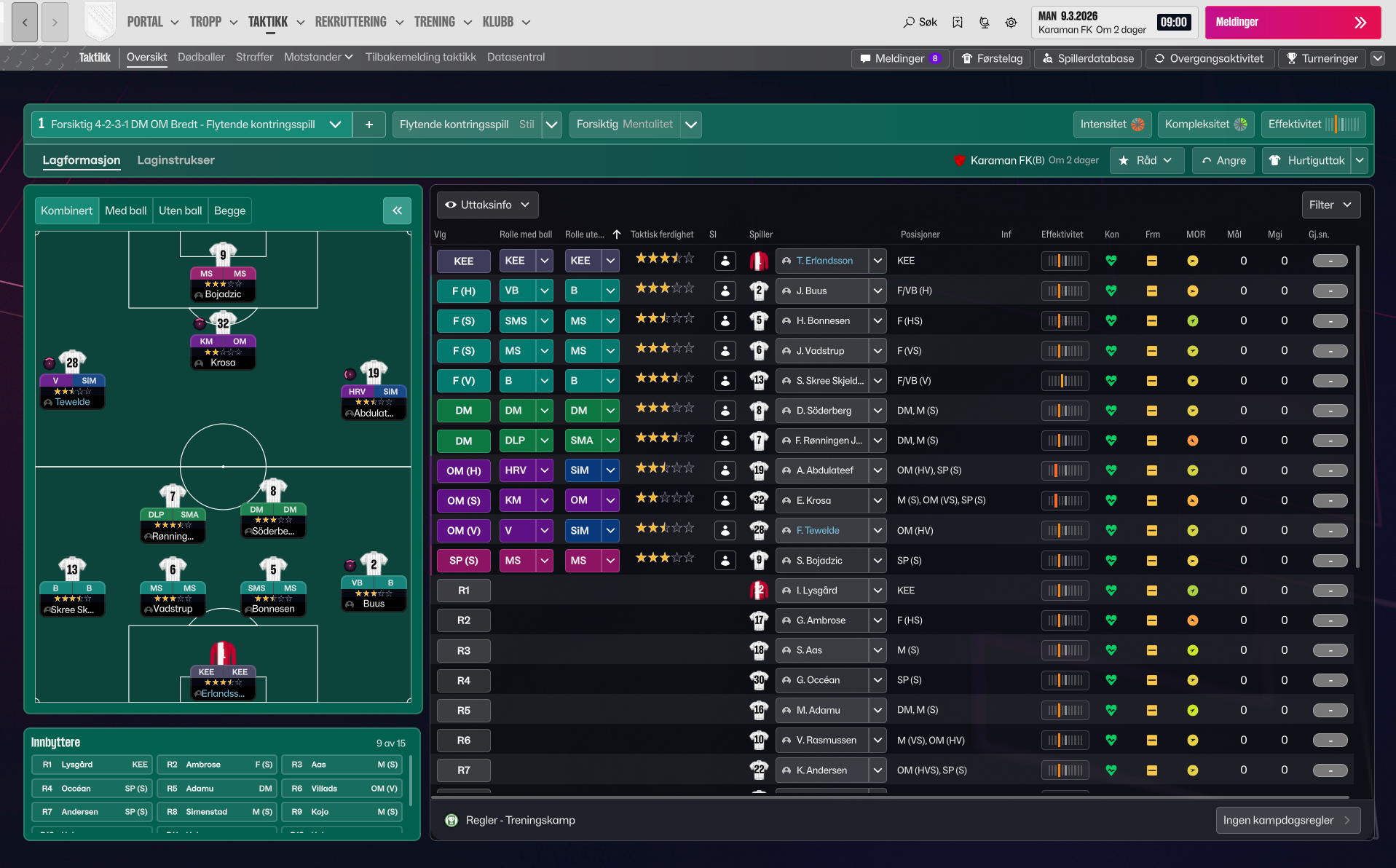
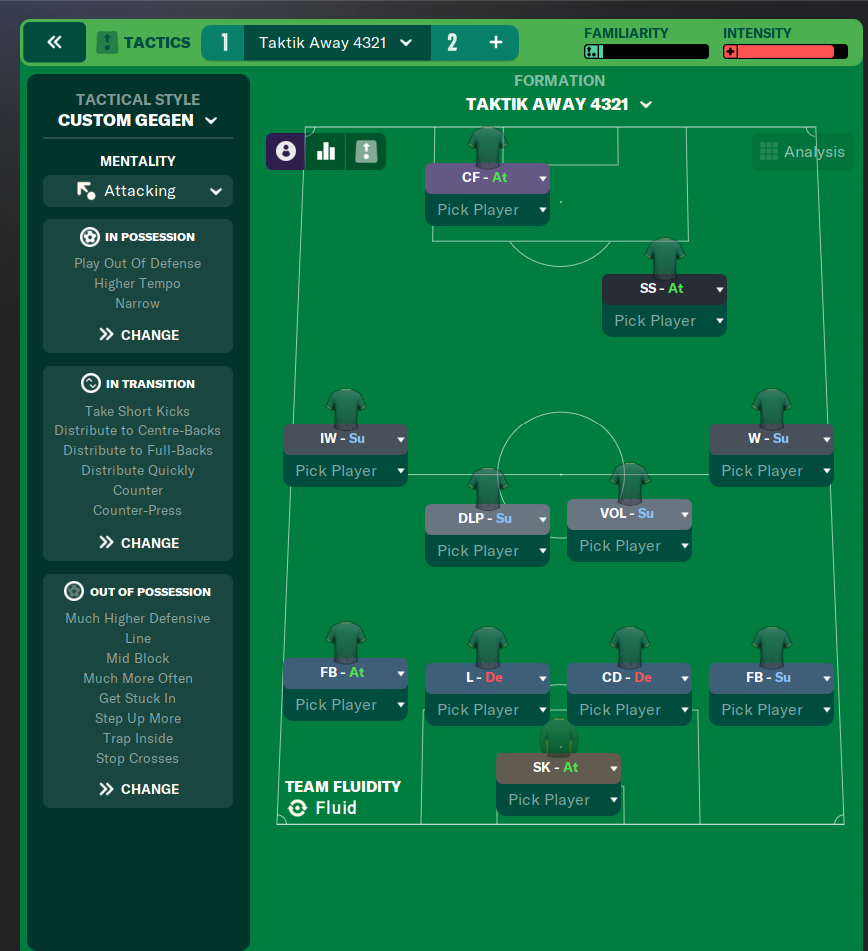
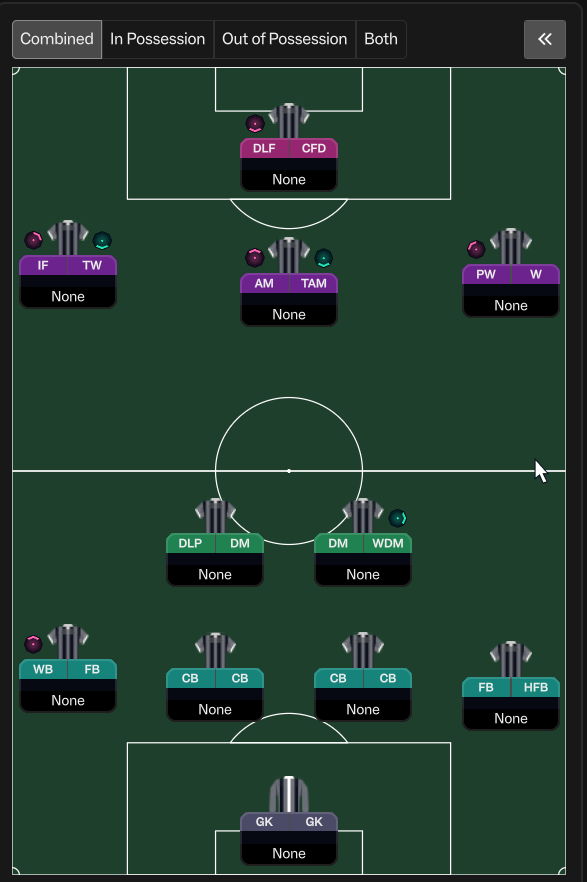
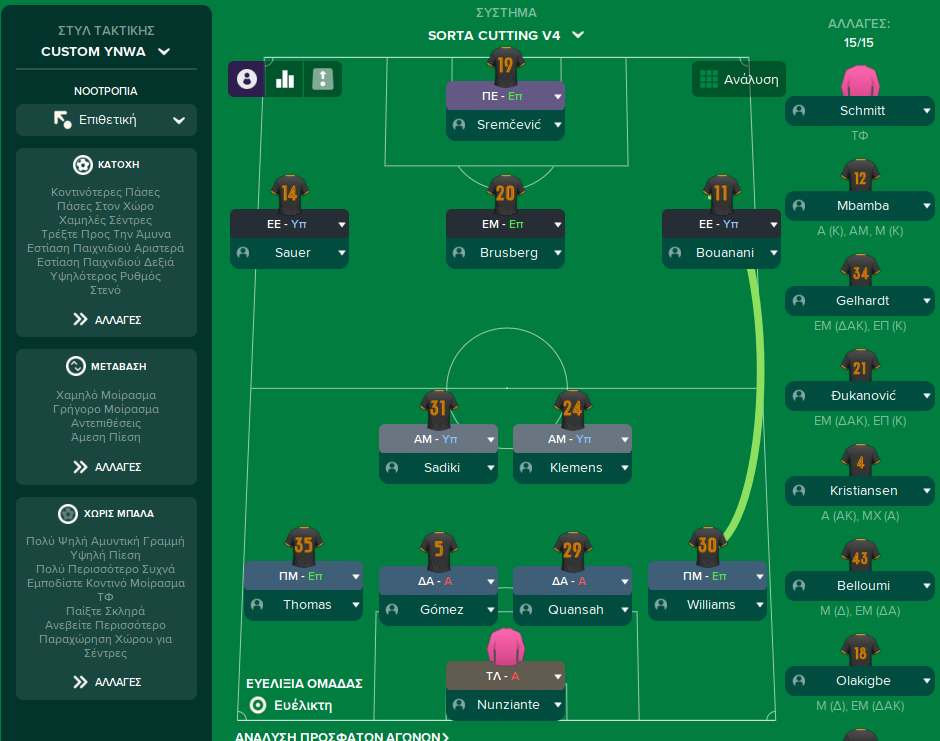
More Attacking tactics
Guides for this tactic
The tactical theory behind the 4-2-3-1: roles, instructions, and the trade-offs that decide whether the system holds up.
Playing styles
Gegenpressing: A Full Guide
Klopp-style gegenpressing in FM, including squad profile, line-and-press pairing, sustainable workload, and the antipatterns to avoid.
Read guide
Player pairings
Midfield Pairs in 4-2-3-1 and 4-4-2
Double pivots and flat pairs in 4-2-3-1 and 4-4-2: when each pairing works, when it collapses, and the AMC unicorn that rescues both.
Read guide
Foundations
FM27 Tactics: What Changed from FM26
FM27 keeps FM26's tactic system. Here is what stays the same, the small changes that can catch you out, and what the new Tactical Effectiveness system asks of you.
Read guide